
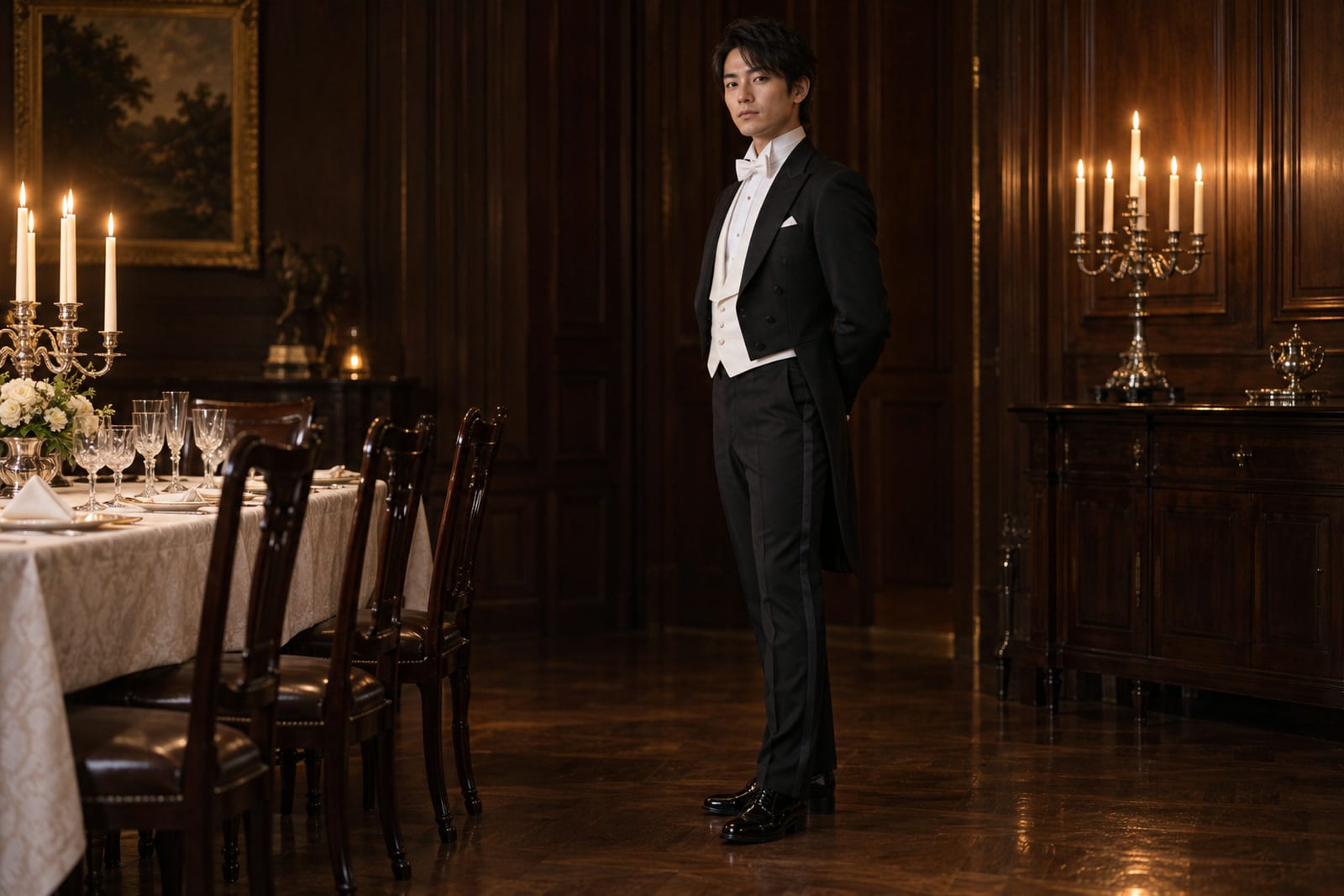
The Colour of the Bow Tie
White with tails, black with a dinner jacket.
About The Colour of the Bow Tie
The colour of a butler's bow tie is the clear sign by which evening dress is told apart. A white bow tie goes with the tailcoat; a black bow tie goes with the dinner jacket. The butler does not merely choose the colour: he sets the knot at the centre of the collar and composes coat and posture as a single attire.
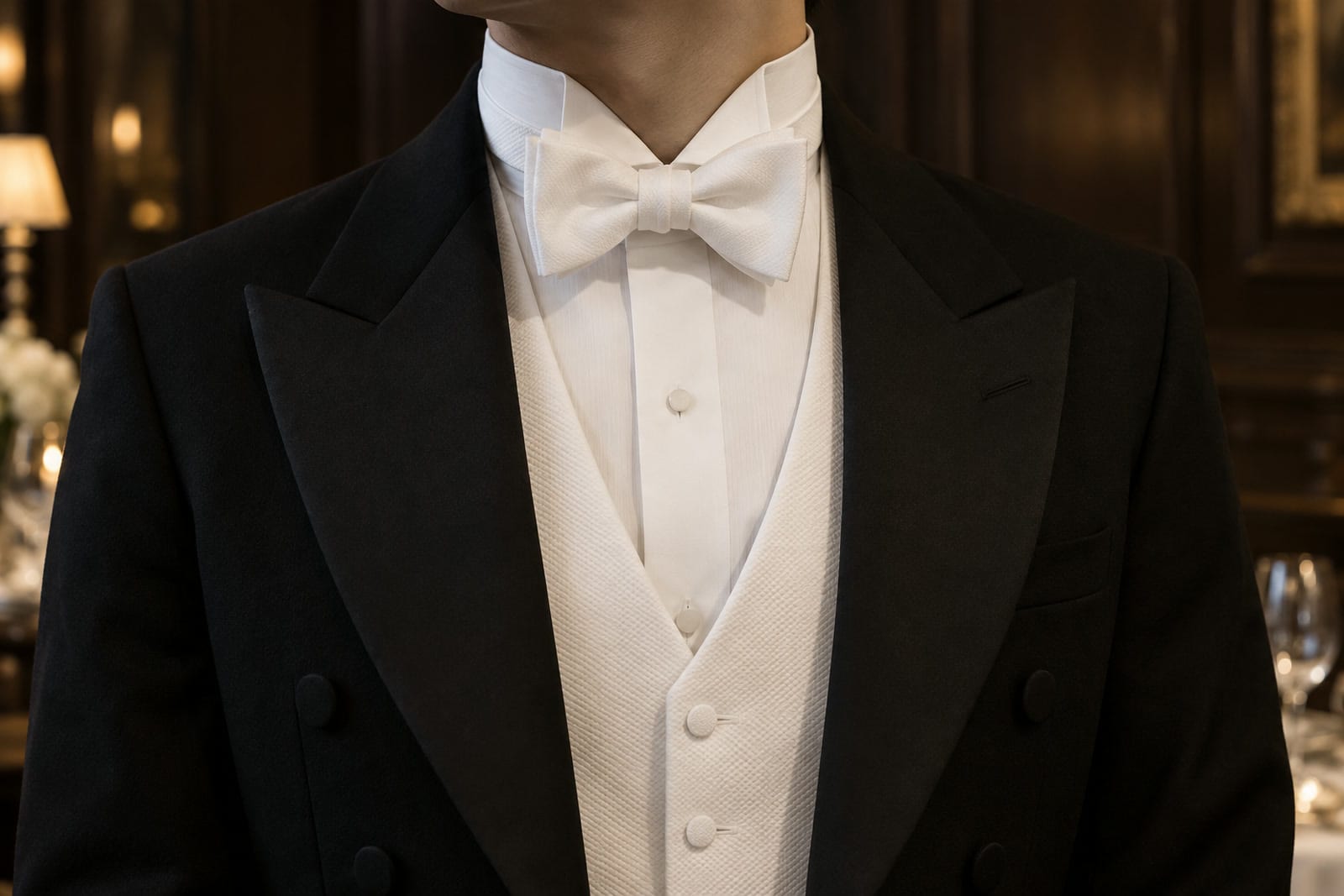
With the tailcoat, a white bow tie
The tailcoat is evening dress, and its bow tie is white. That small sign of white marks the difference from the dinner jacket, which takes a black bow tie.
The butler settles the knot at the centre of face and collar, and checks from the front that the two wings sit in balance. The small white seen each time he turns to the master is the sign that this is a tailcoat.
Told apart by white with tails and black with a dinner jacket
| Formal dress | Bow tie | Occasion |
|---|---|---|
| Tailcoat | White | Evening |
| Dinner jacket | Black | Evening |
| Morning coat | Daytime formal dress, apart from the two evening attires divided by white and black bow ties | Daytime |
Two points to remember: white with tails, black with a dinner jacket.
With the dinner jacket, a black bow tie
The dinner jacket is evening wear, and its bow tie is black. Paired in memory with the white tie of the tailcoat, the two are told apart without hesitation.
Female and male butlers alike compose the same combination according to the occasion. The butler checks not only the knot but collar and coat as one attire, keeping the balance seen from the front.
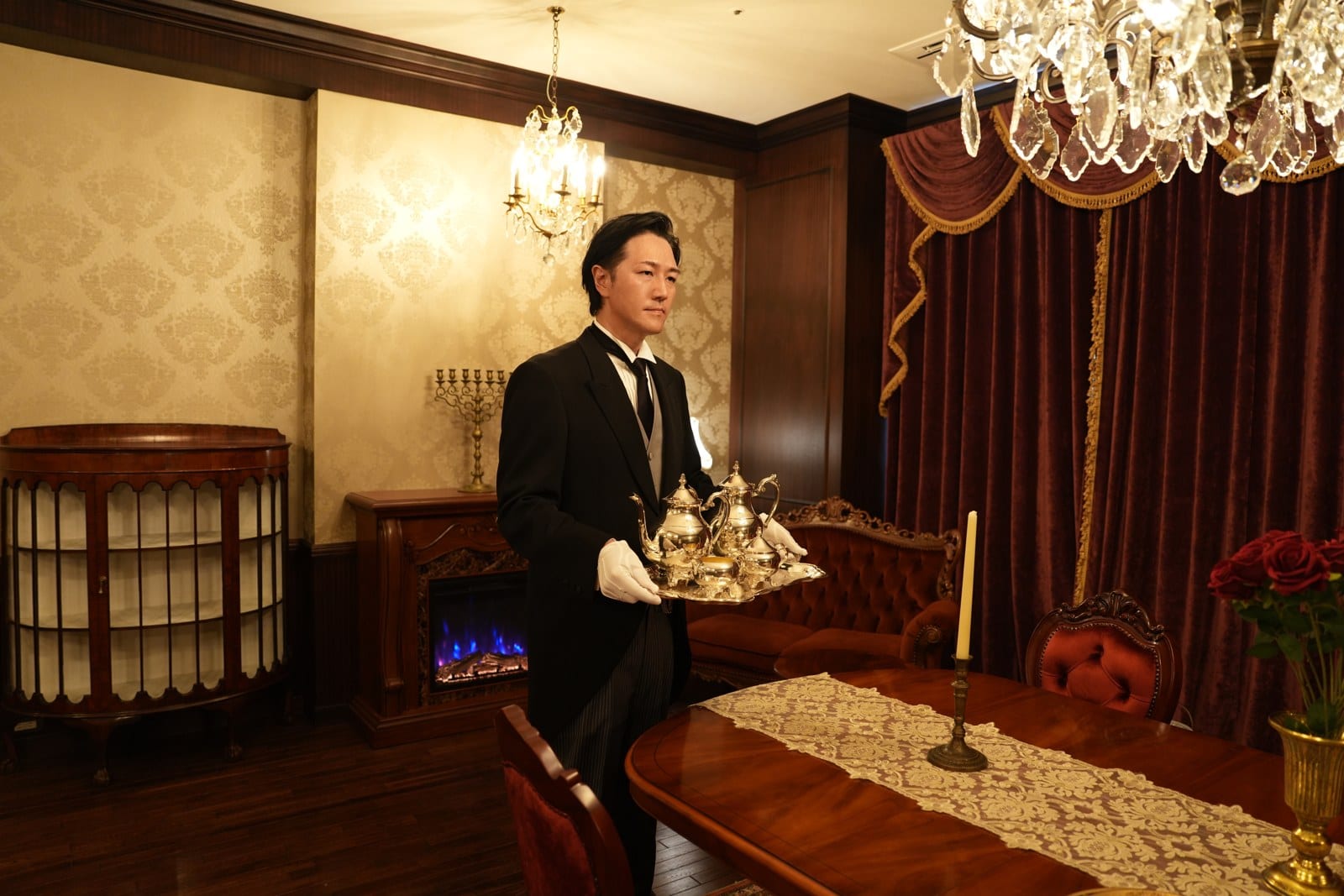
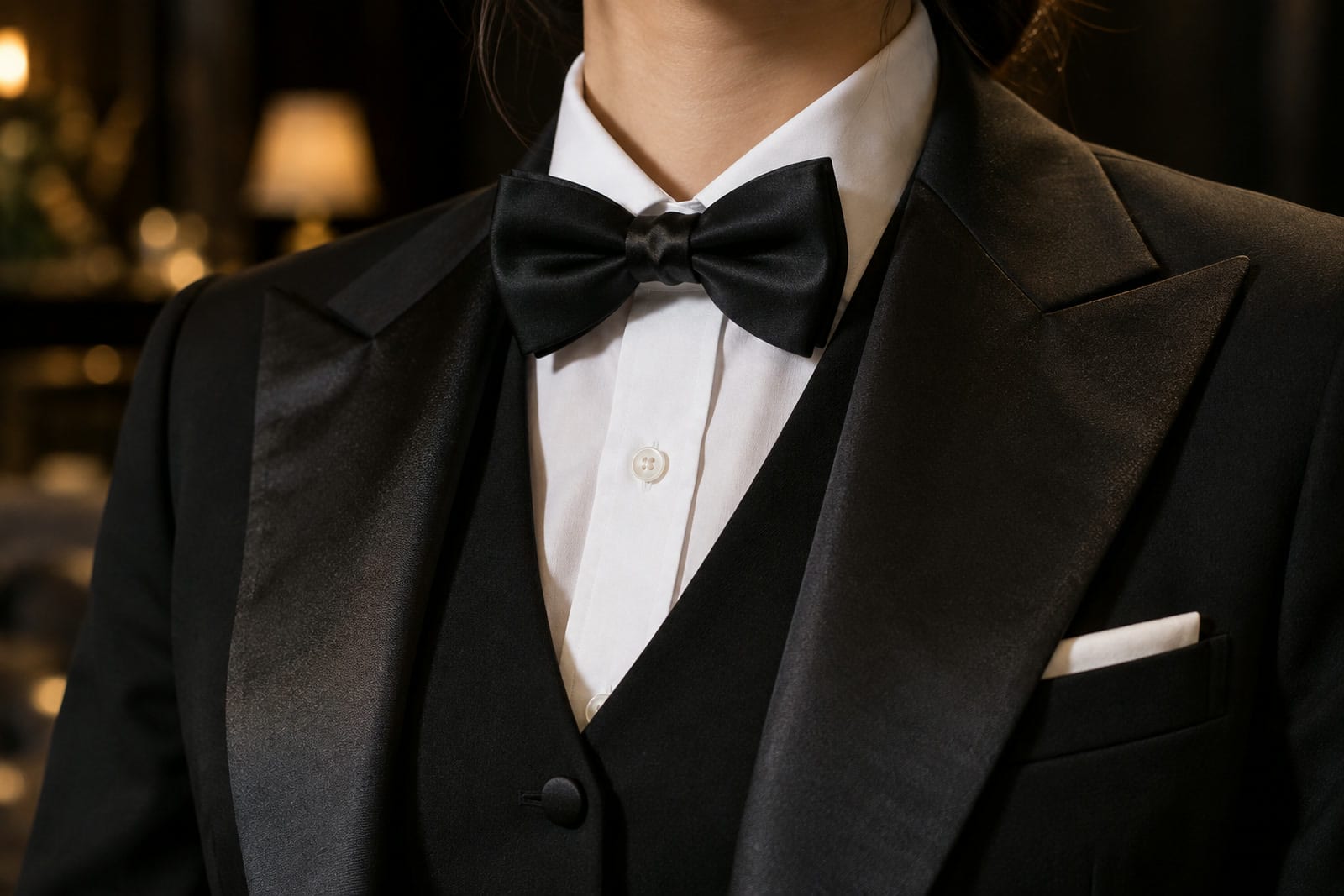
The butler checks not only the colour, but from the collar to the whole stance
| Colour | White with the tailcoat, black with the dinner jacket: the division of evening dress |
|---|---|
| Hour | First separate the daytime morning coat from the two evening attires, and confirm the coat that suits the occasion |
| Position | Settle the knot of the bow tie on the centre line of face and collar |
| Left and right | Compare the size and set of the two wings from the front |
| Collar | Look at how the bow tie meets the white collar, checking for lifting or tilting |
| Shirt | Arrange the white shirt below the knot so that it sits at the centre of the chest |
Remember the two colours together with the evening scene
See a white bow tie, and it is a tailcoat; see a black bow tie, and it is a dinner jacket. Set side by side, the difference is a single word each. Both are evening wear, but since the colour at the collar differs, looking first to the bow tie makes them easy to tell apart.
A butler's attire does not end at the bow tie. Only when the knot sits at the centre of the collar and its meeting with the coat is checked is the whole complete. Once you know the rule of colour, look at where that colour sits within the attire as a whole.
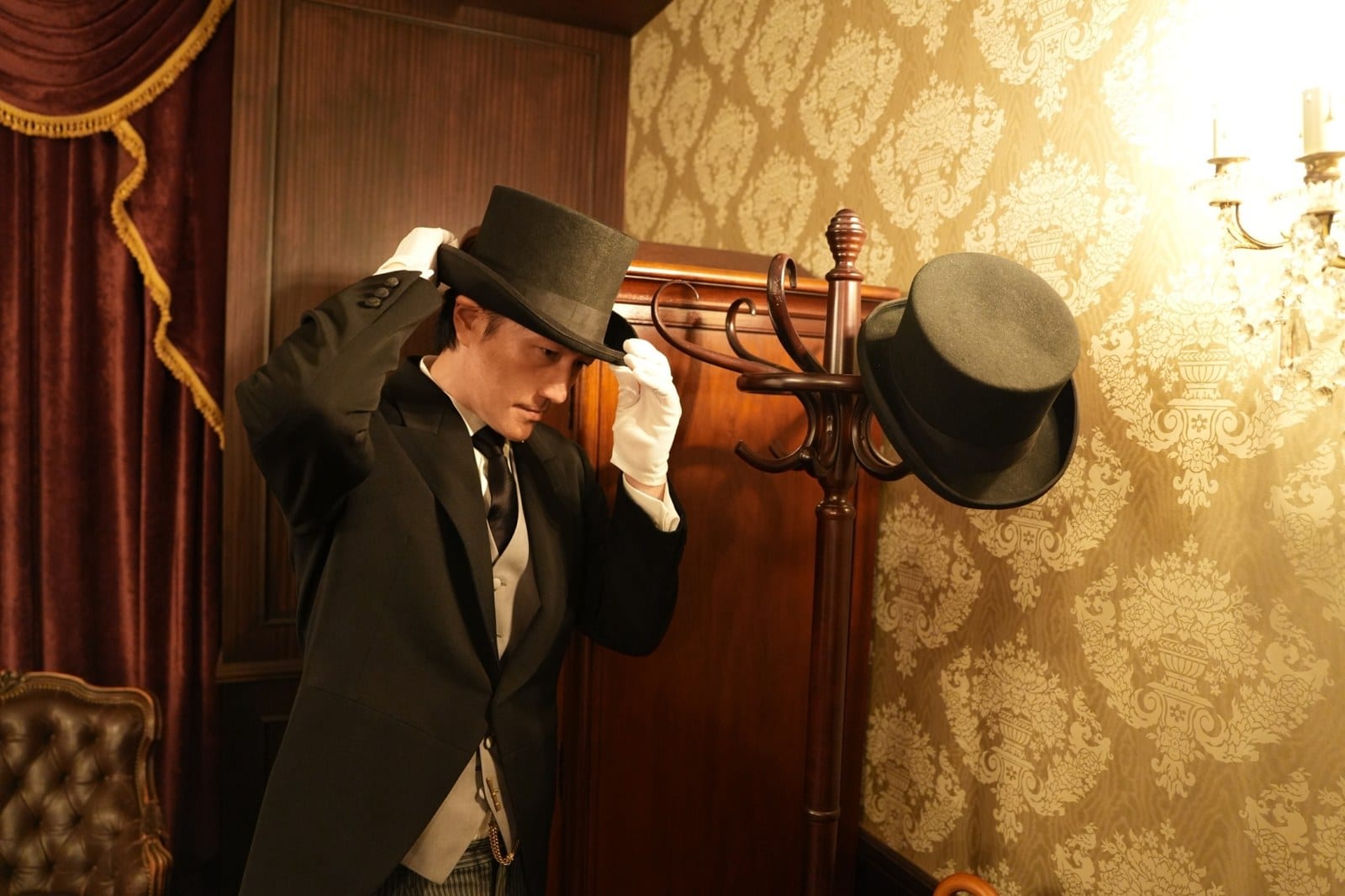
The daytime morning coat belongs to a different occasion from the two evening attires divided by white and black. Confirm the hour, look at the outline of the coat, read the colour at the collar. The butler composes the attire that suits the occasion and receives the master.
From the colour, onward to the rest of the attire
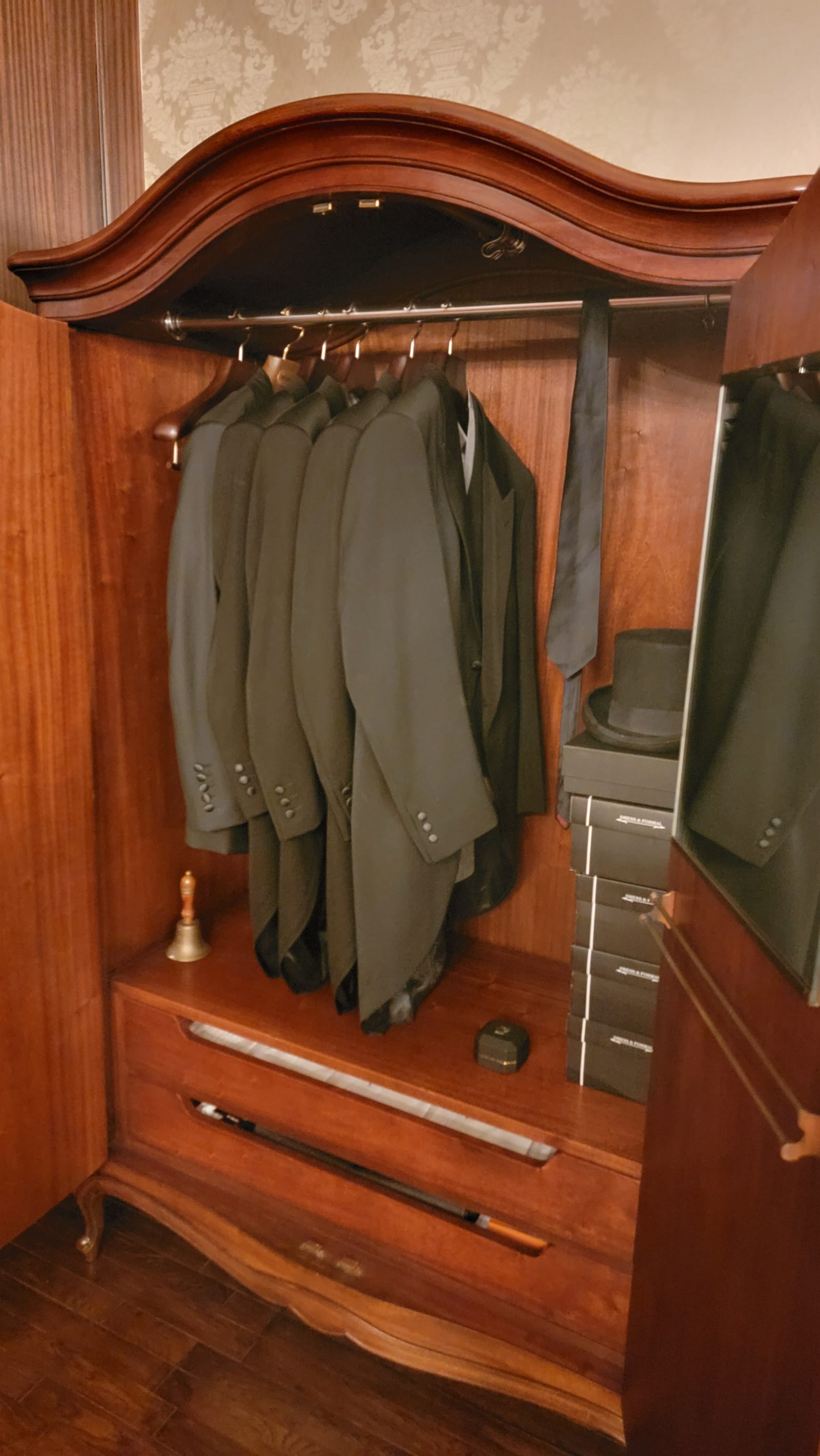
A view across daytime and evening dress
With the colour of the bow tie as your entry, see how the morning coat, the tailcoat and the dinner jacket relate.
Read more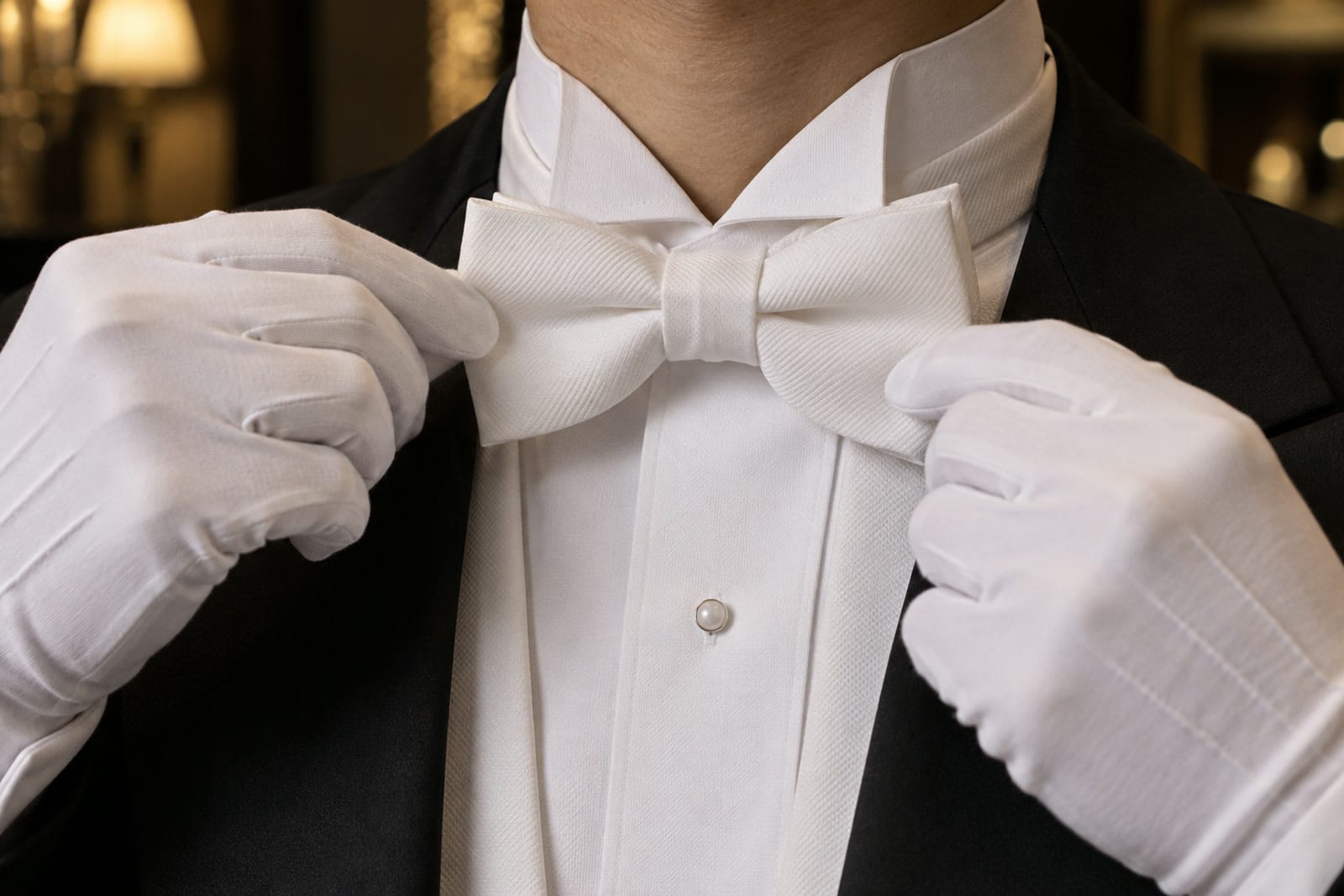
On to the waistcoat and shirt
With the tailcoat's white bow tie goes a white piqué waistcoat; with the dinner jacket's black bow tie, a black waistcoat or cummerbund.
Read moreFive clues for reading attire from the collar
Confirm the hour
The butler first confirms whether it is daytime or evening dress, and so decides the kind of coat.
Look at the outline of the coat
Tell tailcoat from dinner jacket, and confirm the colour to set at the collar.
Choose white or black
Keep the pairing unbroken: white with the tailcoat, black with the dinner jacket.
Set the knot at the centre
The butler checks from the front that face, collar and knot fall on a single centre line.
Move, and look again
After bowing and turning back to the master, check that the two wings have not shifted greatly.
What the rule of colour tells you
- That a white bow tie goes with the tailcoat
- That a black bow tie goes with the dinner jacket
- That tailcoat and dinner jacket are both distinguished as evening wear
- That male and female butlers use the same pairing of colours
- That from the difference of white and black, the eye can widen to the outline of the coat, the collar, the shirt and the chest
What colour alone cannot tell you
- The colour of the bow tie alone does not complete the attire
- This is not a suggestion that white and black may be swapped at a butler's personal whim
- The daytime morning coat is not told apart by these two colours alone
- The knot should not be made prominent or considered apart from the coat and the posture
Points to see in the attire as a whole
- Hour and occasion
- The outline of the coat
- The centre of the collar
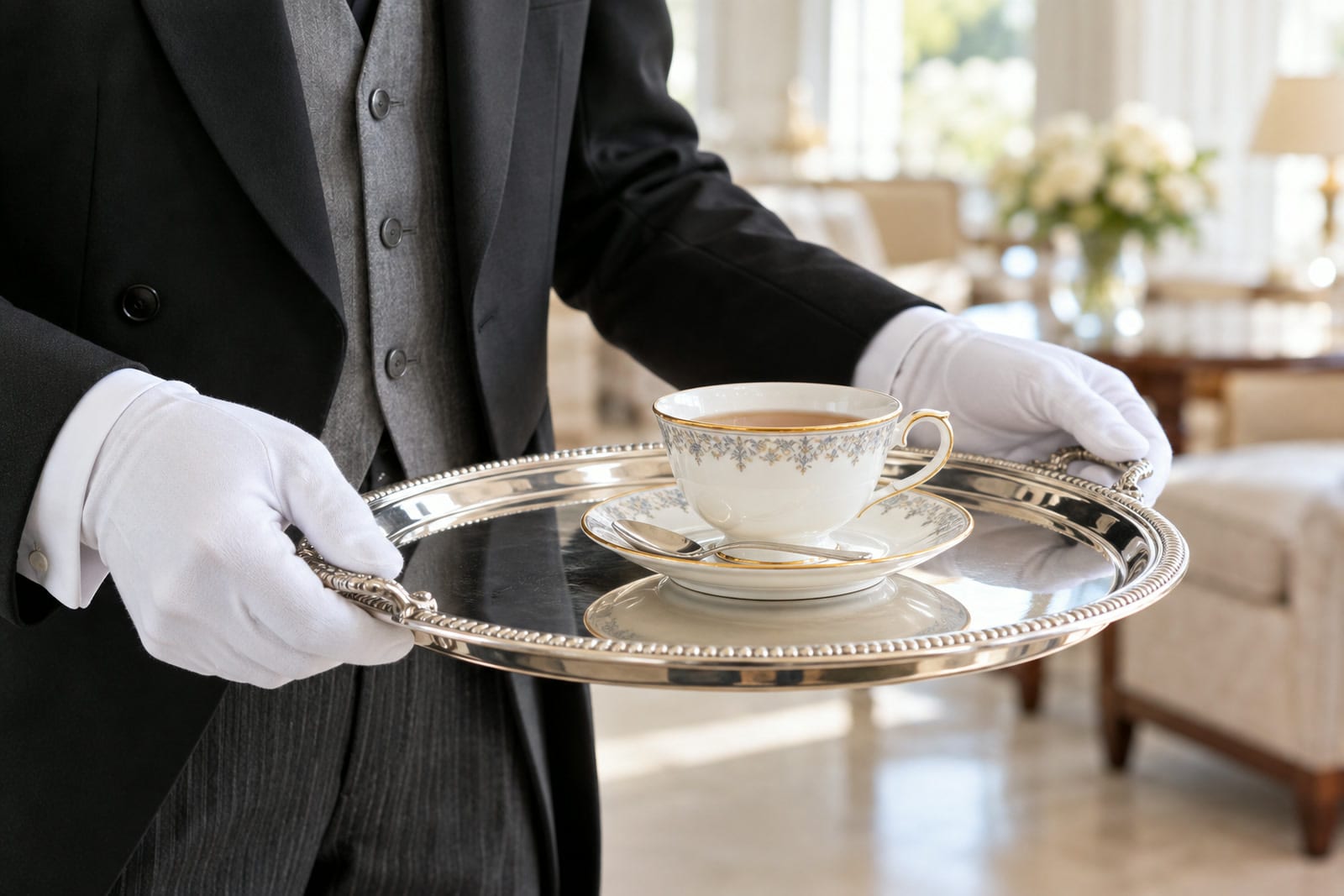
- The connection with waistcoat, shirt, shoes and white gloves
- Whether the knot returns to its place after a bow
- Whether preparation is finished before the welcome, rather than being adjusted before the master
From one rule, a view across three attires
The colour of the bow tie is the first clue for telling evening dress apart. White for the tailcoat, black for the dinner jacket. Paired, each recalls the other. Yet the butler never chooses the colour in isolation. First he confirms the hour, separating the daytime morning coat from the two of the evening.
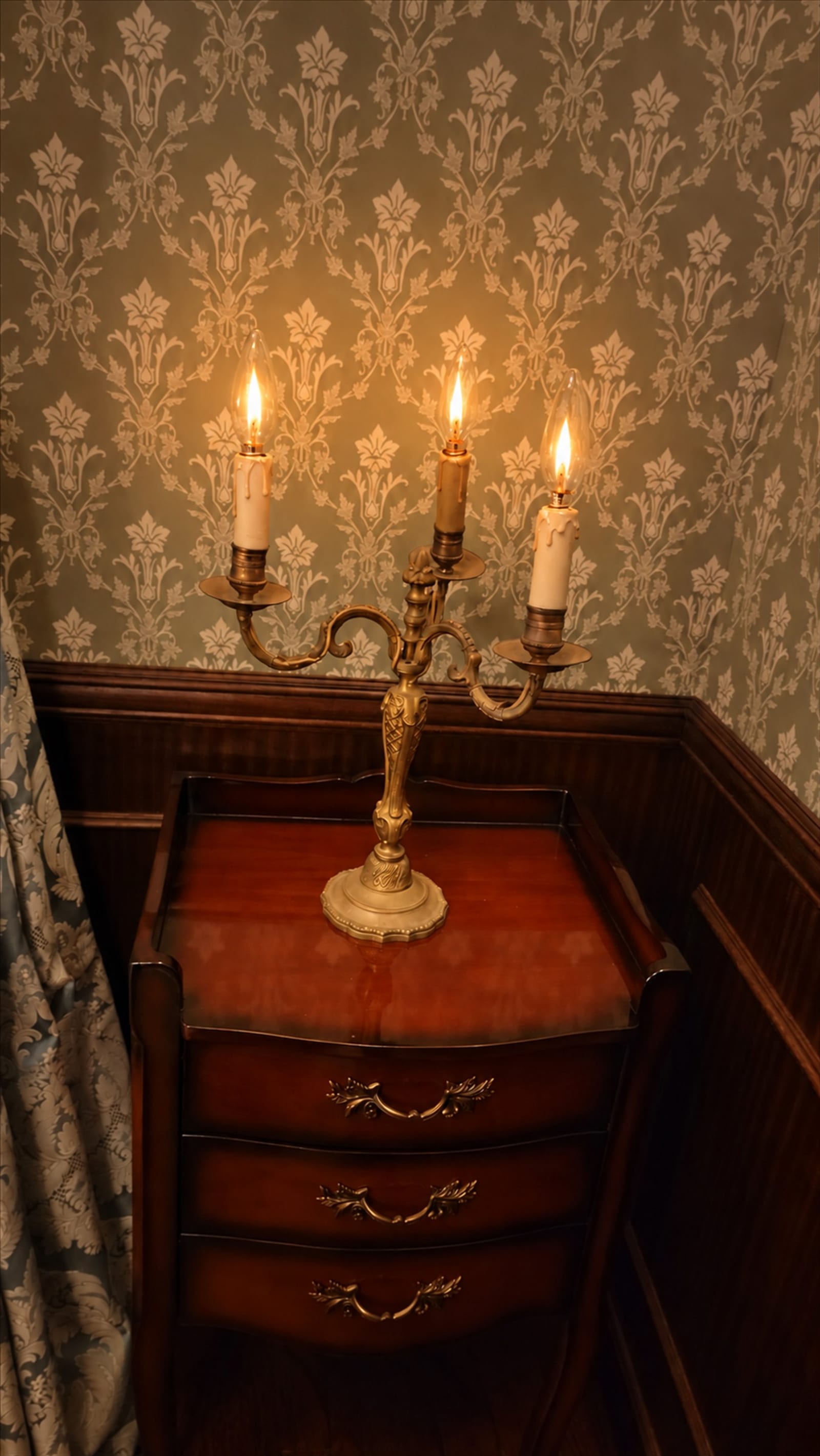
Next he looks at the outline of the coat, and last decides the colour to set at the collar. Seen in that order, day and evening, coat, then colour, the place of each of the three attires becomes clear. In the Manor at night, as the candlesticks are lit, the white knot sets a small brightness at the collar of the black tailcoat, while the black knot rests quietly at the chest of the dinner jacket.
To set the collar is not only to match the colour, but to join the centres of face, collar and knot as one. The butler compares the two wings before the mirror and, once the coat is on, looks at the whole chest. He also checks that the knot does not tilt greatly on bowing, and that no disorder appears between knot and collar as he turns back to the master.
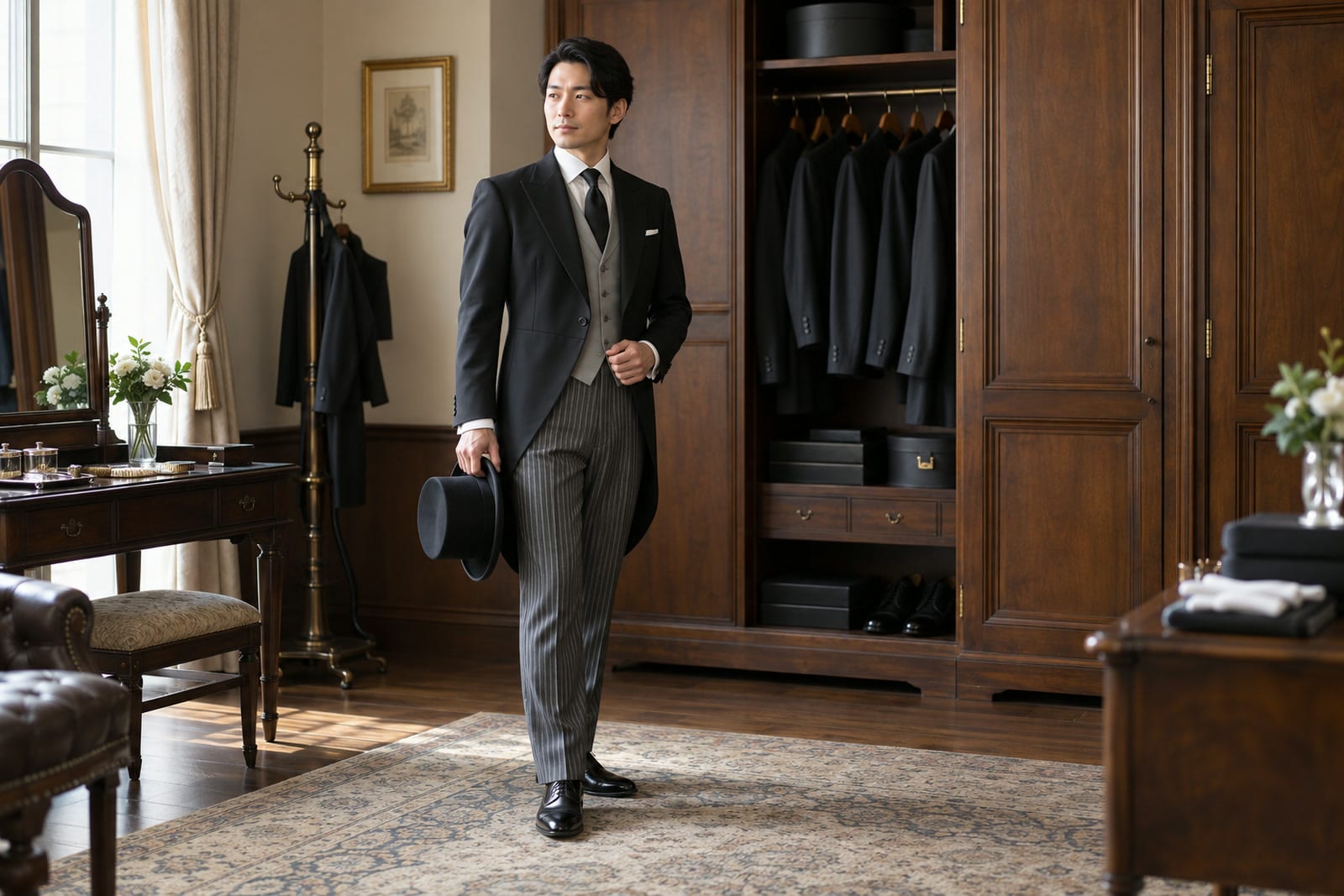
The butler sets the knot before receiving the master
Preparation of attire does not end with putting the garments on. The butler confirms whether it is a tailcoat or a dinner jacket, sets a white or black bow tie at the collar, and looks at how shirt, waistcoat and coat meet. Before the mirror he compares the two wings and the centre; in profile he checks that nothing lifts away from the collar.
Male and female butlers look at one another's collars, catching the tilt that is hard to see in oneself. So as not to keep the master waiting beyond the door, preparation is quietly finished before the welcome.
In the movement of the bow, the knot so close to the face moves too. Because the butler bows with the whole posture rather than the head alone, he sees to it that the collar returns to its first position. Thereafter, as he puts a hand to the door and leads into the Manor, he does not touch or adjust the bow tie as he walks.
QWhat colour is the bow tie with a tailcoat?
White. As the sign of the tailcoat, the evening dress, a white bow tie is set at the centre of the collar.
QWhat colour is the bow tie with a dinner jacket?
Black. It is the sign of the other evening attire, distinct from the tailcoat's white. The butler composes it together with the meeting of the black coat.
QMay white and black be swapped by preference?
The pairing of formal dress is white for the tailcoat and black for the dinner jacket. Rather than swapping the colour by preference alone, the coat and the occasion are confirmed together.
QDo female butlers wear the same colours?
Yes. Female and male butlers alike set white at the collar with the tailcoat and black with the dinner jacket. The colour indicates the kind of formal dress, not the sex of the wearer.
QIs the morning coat also told apart by the colour of the bow tie?
The morning coat is daytime formal dress, considered apart from the two evening attires divided by white and black. First separate day from evening, then look at the coat and the collar.
QCan the attire be read from the bow tie alone?
White and black are strong clues, but it is surer to look at the outline of the coat and the hour as well. The butler composes not only the knot but the collar, the chest and the whole stance.
You may also wish to read
The tailcoat
The evening dress that takes a white bow tie, explained through the two clues of hour and colour.
Read more
The dinner jacket
The other evening attire, which takes a black bow tie.
Read more
The Salon
The Manor where male and female butlers, attire composed, attend to the master's hours. Having learnt the evening attire, see the scenes in which a butler waits.
Read more

From white and black, trace the evening attire.
With the colour of the bow tie as your clue, see how the tailcoat and the dinner jacket differ. Once you have confirmed the rule of white with tails and black with a dinner jacket, read on from the guide to butler attire: the daytime morning coat, the grey waistcoat and white dress shirt, the black shoes and white gloves.