
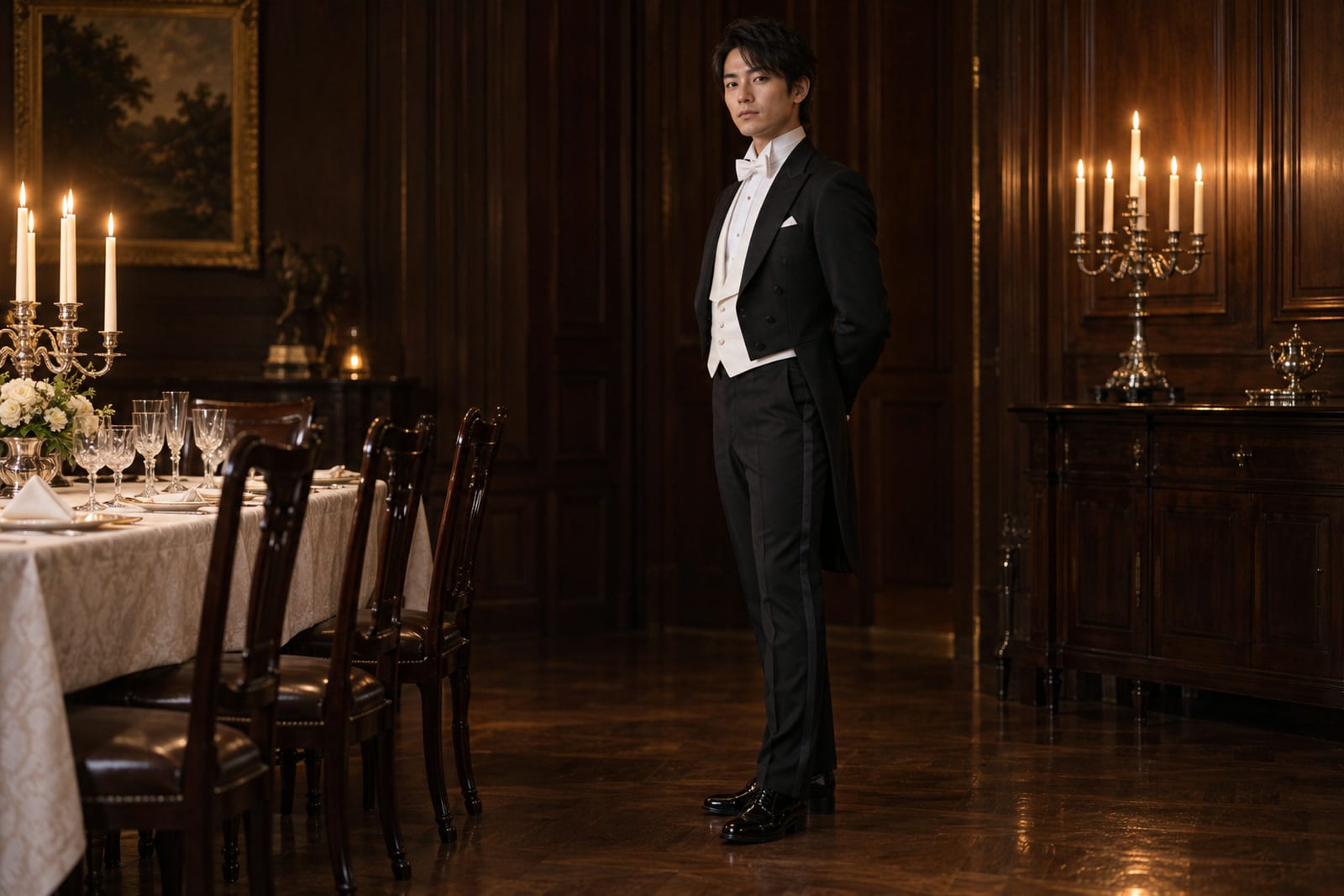
The Tailcoat
For evening duty, a white bow tie.
About The Tailcoat
The tailcoat is the formal dress a butler wears in the evening. The bow tie is white. A white tie means a tailcoat, a black tie means a tuxedo: this difference is the clear key to telling the two forms of evening dress apart. A butler dresses according to the hour and the occasion.
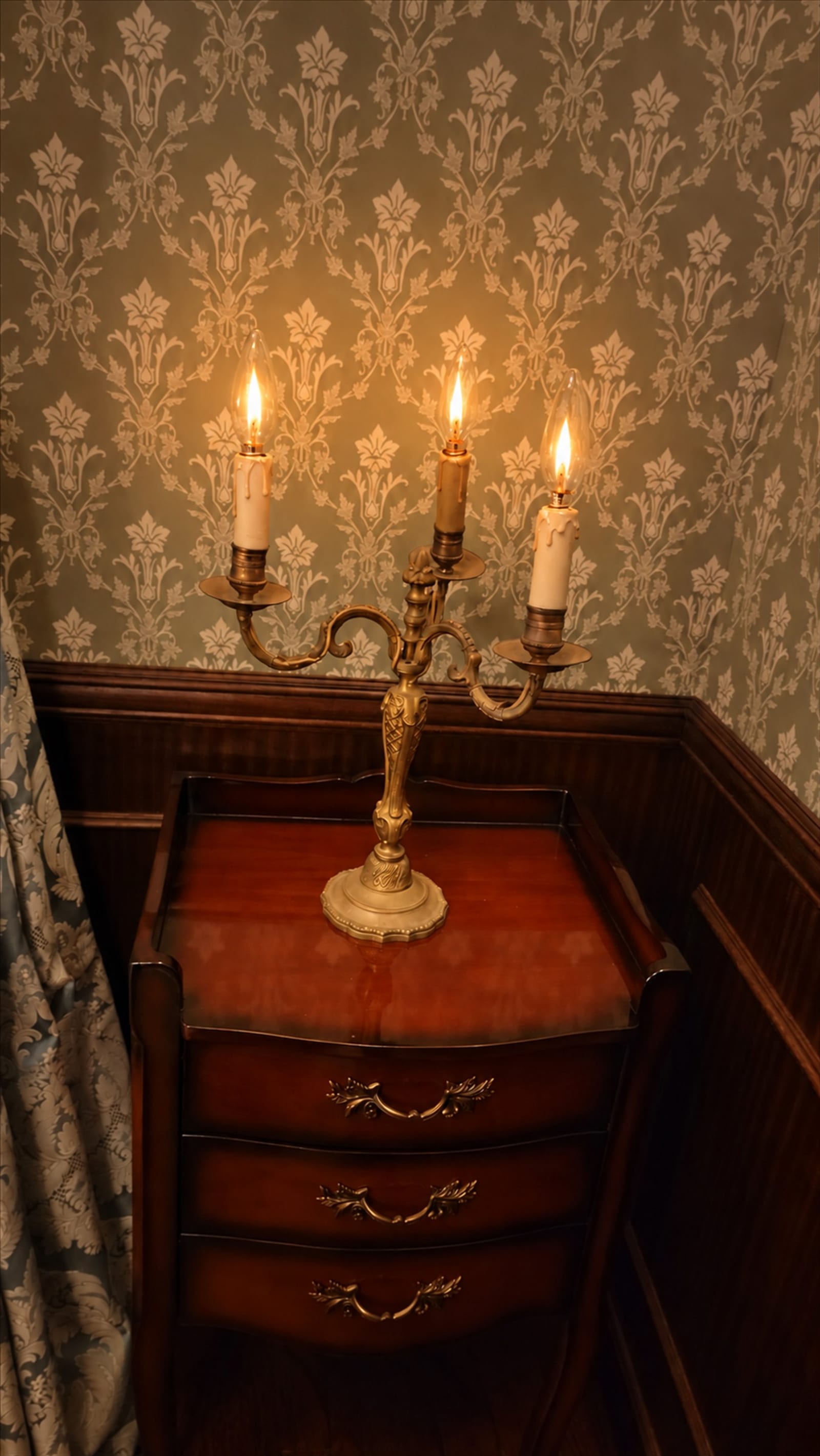
In candlelight, a white bow tie comes into view
Evening dress is how a butler reflects the hour and the duty in what is worn, for formal occasions after nightfall. When a butler enters the hall in the evening, the sign that marks a tailcoat is the white bow tie. Set the hour of evening beside the colour white, and the difference from the tuxedo, worn with a black bow tie, becomes clear.
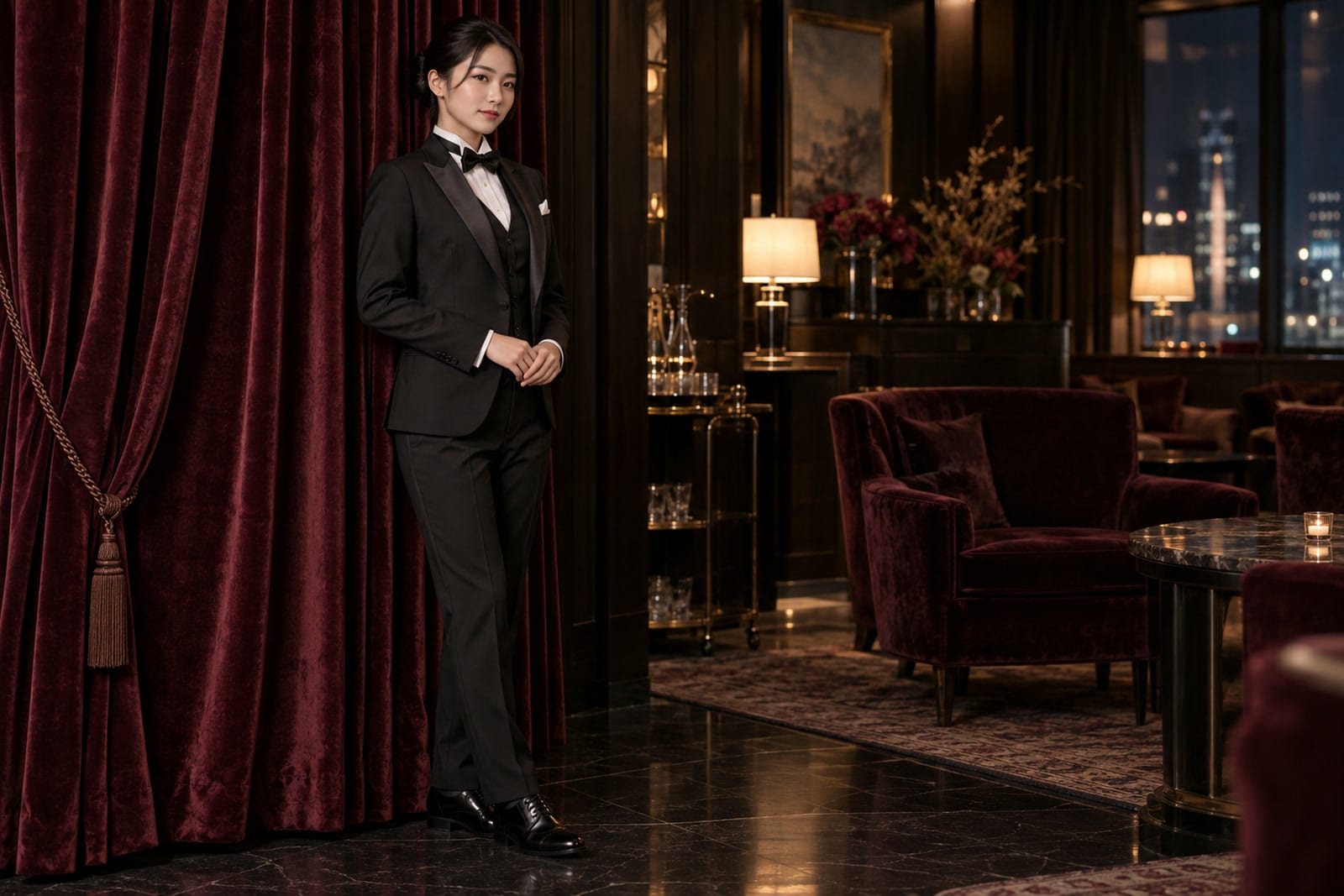
The tailcoat shows that the butler has taken in the hour and the occasion. Male and female butlers alike do not divide their dress by gender, but prepare according to the evening duty they will perform. The very act of tying the white tie and checking the coat and collar is the signal of entering into service.
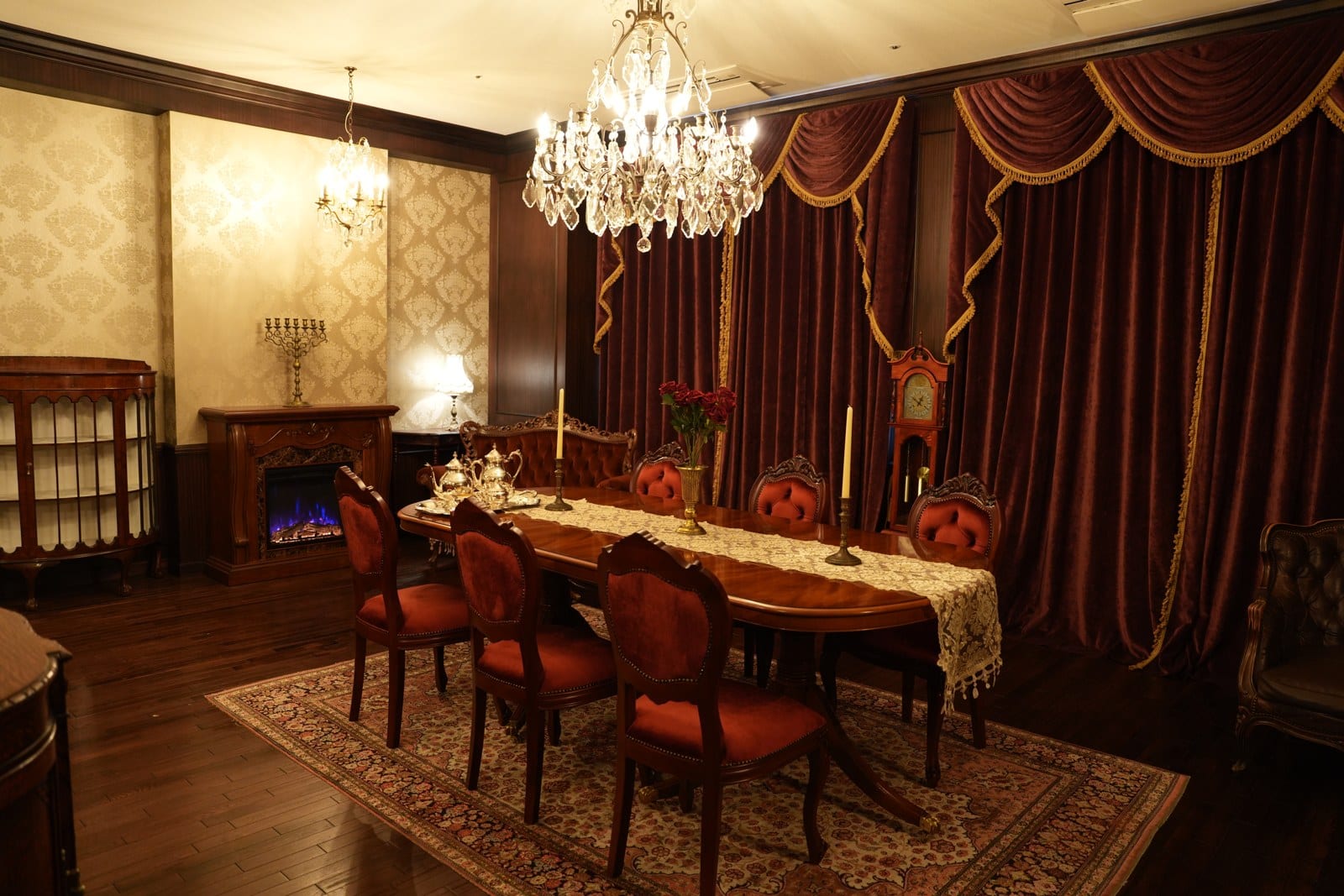
Candlesticks and chandeliers quietly bring out the white knot and the collar of the shirt. A butler does not finish dressing in bright light alone, but checks the effect in the evening light in which the master is actually served. Not only from the front: the profile turned towards the door and the figure in a bow are brought into a single outline.
The essentials for recognising a tailcoat
| Name of the dress | The tailcoat. We present it as the dress a butler prepares for formal evening occasions. |
|---|---|
| When it is worn | In the evening. As the lights of the Manor settle, the butler takes in the hour and the place of duty and begins to dress. |
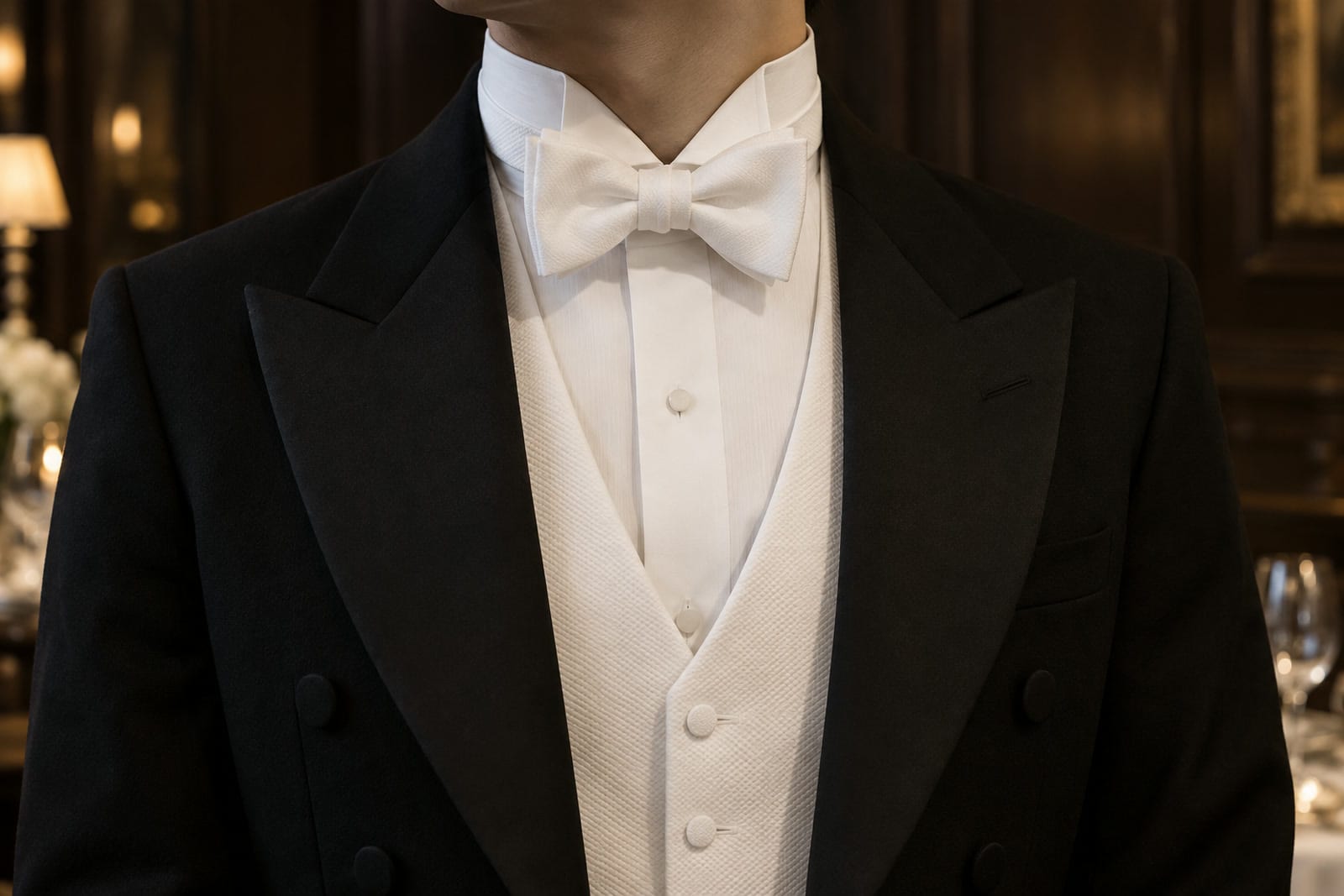
| Bow tie | White. The knot is placed at the centre of the collar, and the two wings, the collar and the layering of the shirt are all checked. |
| Its evening counterpart | The tuxedo is worn with a black bow tie. The same evening dress can be told apart by the colours white and black. |
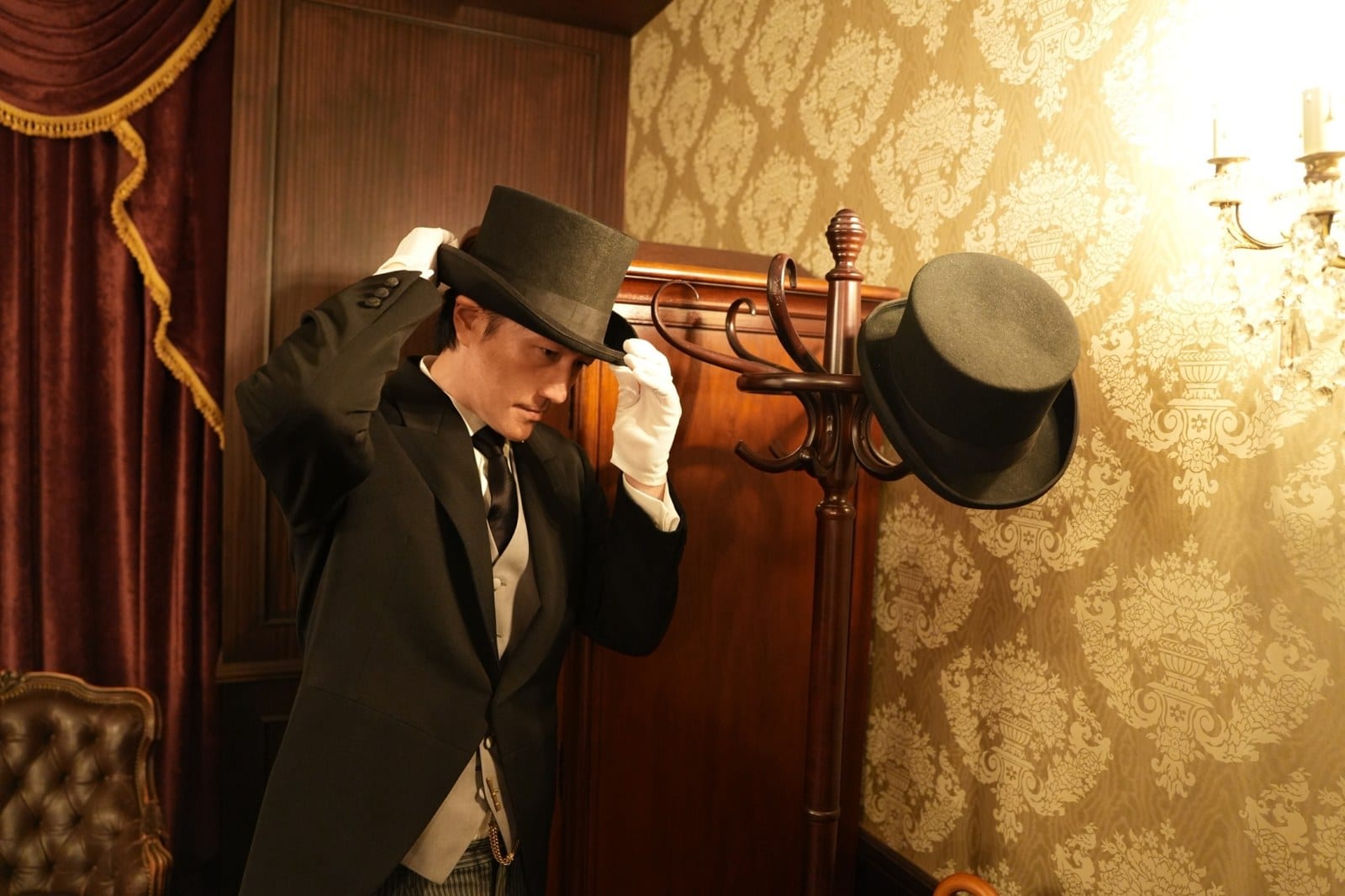
| Daytime formal dress | Dress worn during the day is presented as the morning coat. Separating the hour first makes the relationship clear. |
| The butlers of this house | Both men and women, who prepare dress and bearing according to the occasion rather than gender. |
The butler sets the white knot at the centre
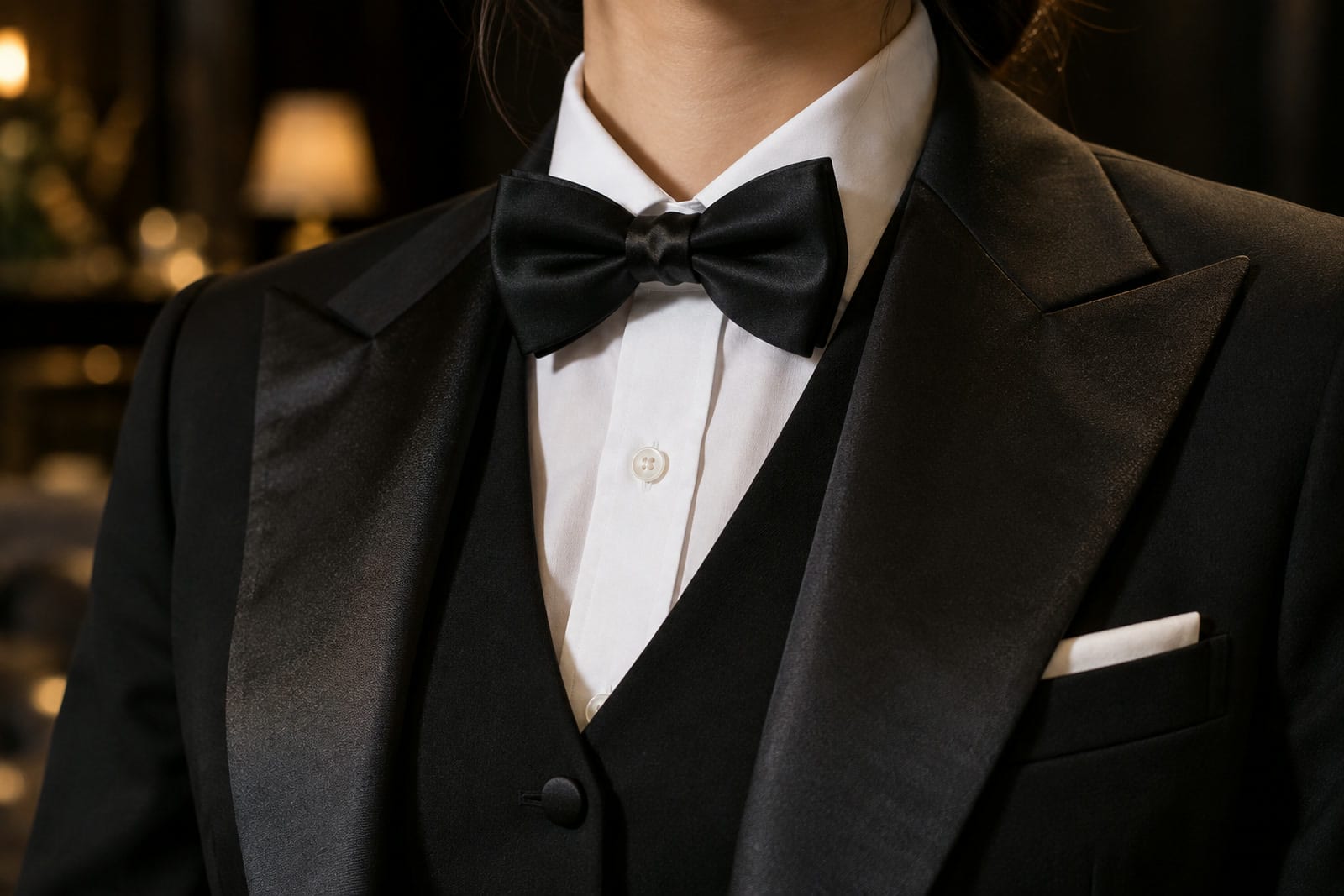
The white bow tie is the sign that marks a tailcoat and places the centre of the evening dress at the collar. A butler checks that the knot sits at the centre of the collar and that the two wings appear even. Precisely because we attend close to you, even a small misalignment is not left as it is.
Male and female butlers alike prepare their dress not by gender but by the occasion. Taking in the hour of evening, the tailcoat is worn with a white bow tie. That rule leads to the quiet order of the Manor.
We do not stop at the knot, but check the white tie, collar, shirt and coat together as a single form. When the head is raised, when the body turns to the door, when a bow is made: does the centre still hold? A butler looks at both the still figure in the mirror and the moving figure at work.
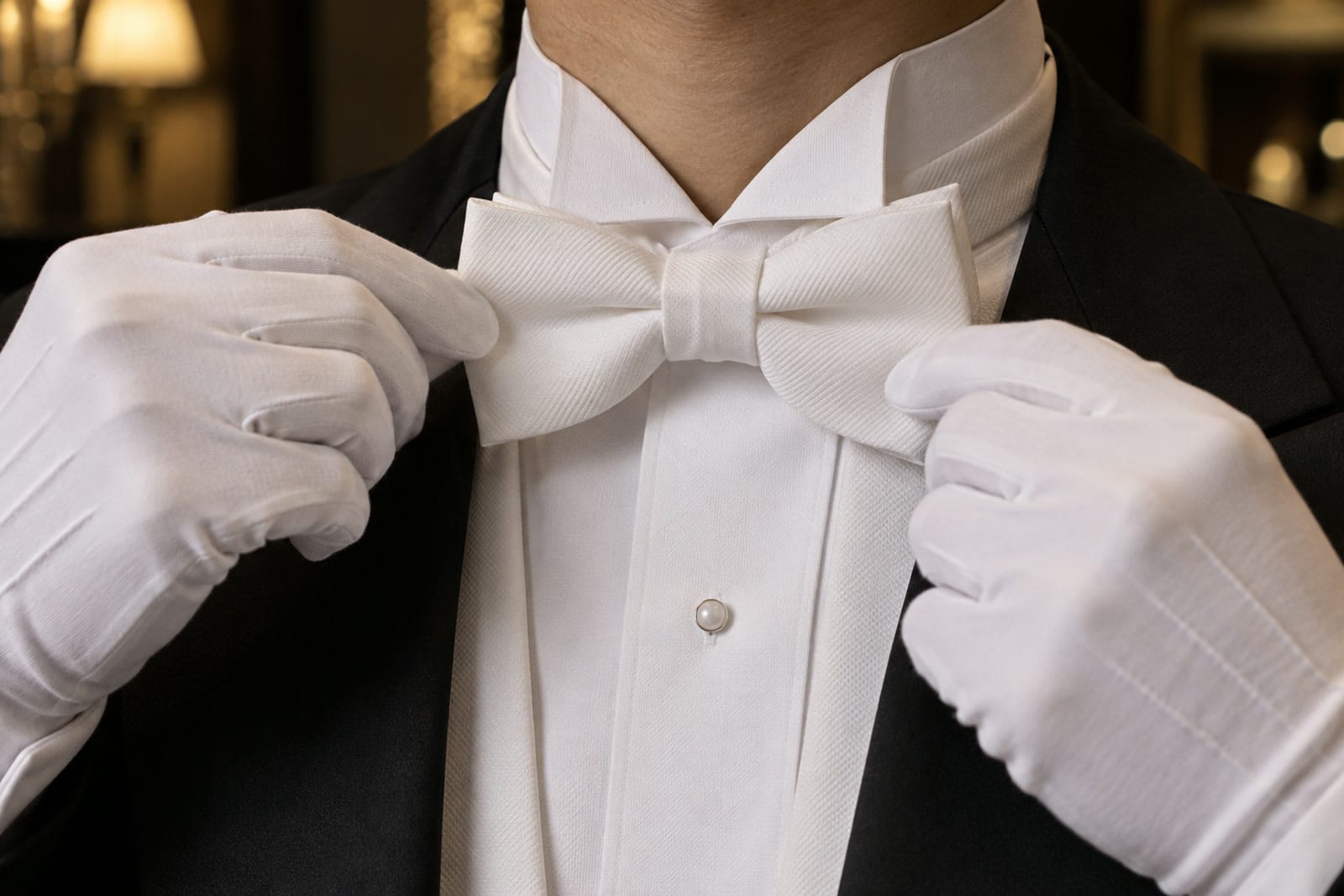
Telling the two forms of evening dress apart
| Where to look | Tailcoat | Tuxedo |
|---|---|---|
| When it is worn | Evening. The butler takes in the hour and the place of duty, and dresses | Evening. The same hour as the tailcoat, but the colour at the collar differs |
| Bow tie | White. We look at the knot, the two wings, and the layering of collar and shirt | Black. We look at the knot set against the white shirt |
| How to remember | A white tie in the evening is a tailcoat | A black tie in the evening is a tuxedo |
| Reading the whole | From the white tie, the eye widens to collar, coat, cuffs and bearing | From the black tie, the eye widens to shirt, coat, cuffs and bearing |
Both the tailcoat and the tuxedo are evening dress. First separate them from the daytime morning coat by the hour, then check the white or black of the bow tie.
Read the attire in order: the hour, the coat, the collar
The first thing to check is the hour. On this site, the tailcoat is presented as evening dress and the morning coat as daytime dress. Simply separating day from evening narrows the possibilities.
Next, compare the two evening forms. The tailcoat and the tuxedo differ in the colour of the bow tie: white for the tailcoat, black for the tuxedo. Checking these two points in order ties the dress to the occasion, rather than merely memorising names.
Finally, look at the attire as a whole. A butler does not make the bow tie stand out alone, but brings collar, coat and bearing into a single outline. The rule does not end as knowledge; it appears in the figure that receives you. When looking at photographs too, do not search only for the white, but see where the butler stands, in what light, and doing what.
From the colour white to related attire
The White Bow Tie
The tailcoat is worn with white. Look beyond the knot to the layering with collar, shirt and coat, and the evening dress can be seen as a single outline.
Read more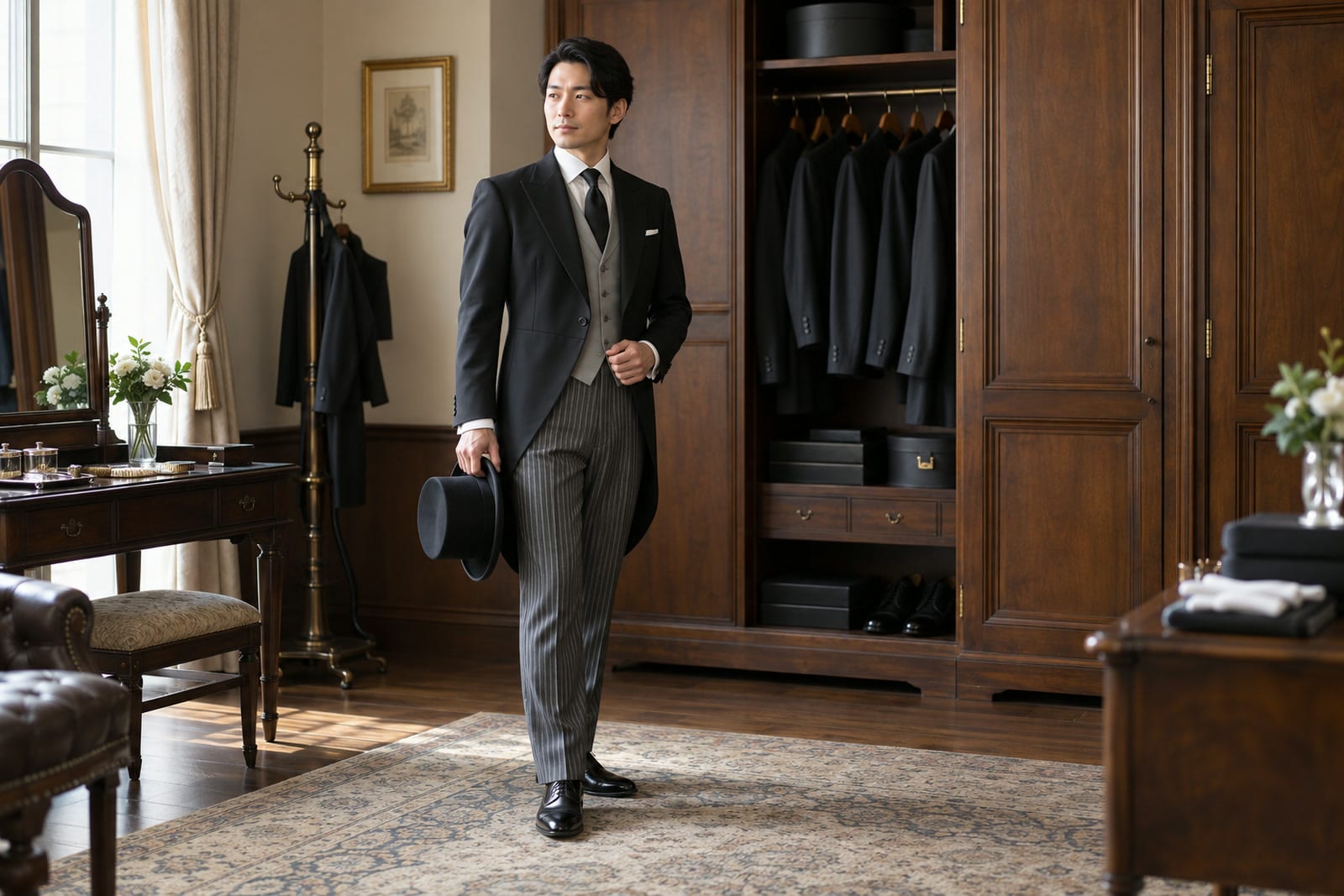
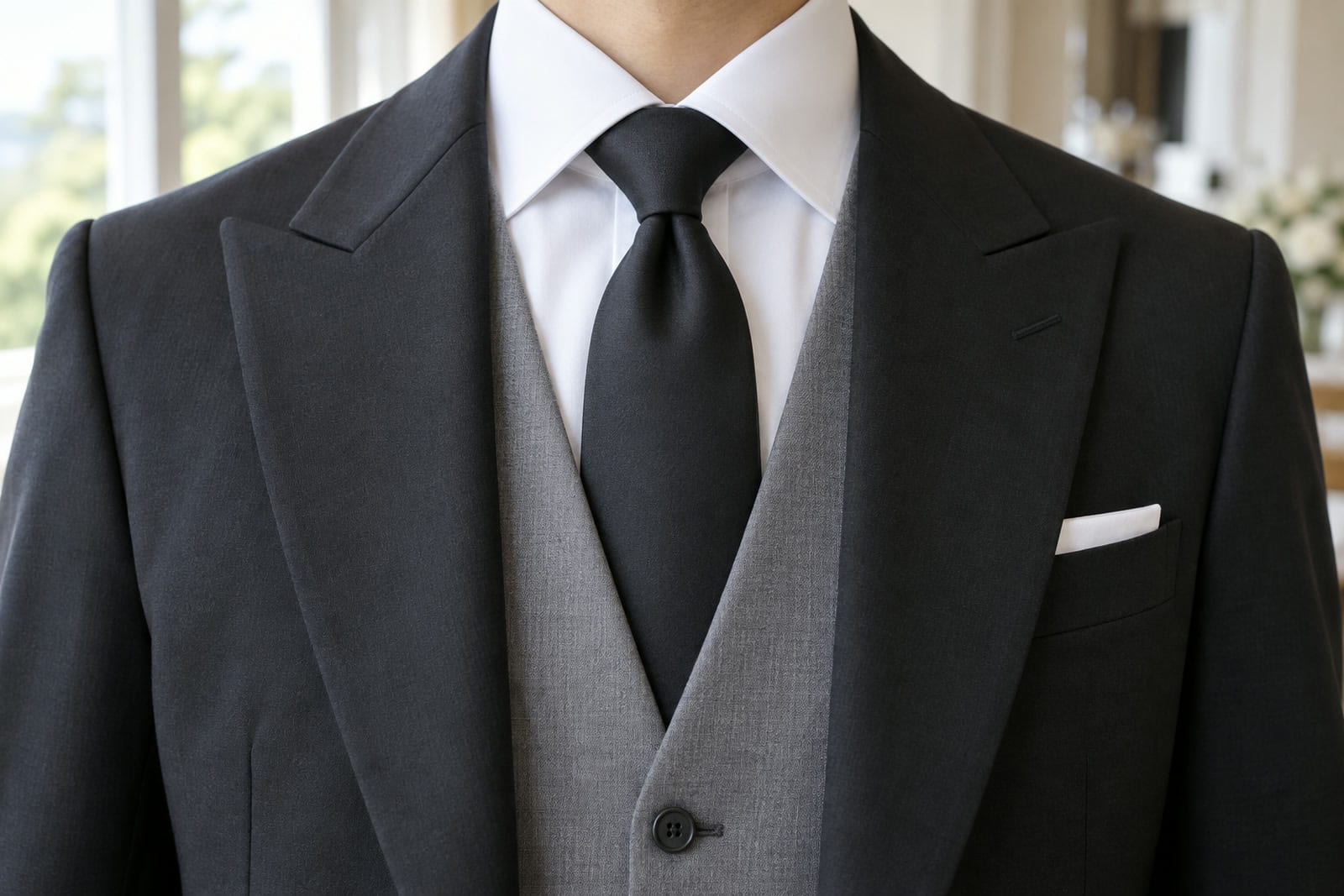
The Daytime Morning Coat
Compared with the evening tailcoat, it reveals how a butler chooses dress by the hour. Separate day from evening first, then move on to the colour at the collar.
Read moreBefore evening duty, a butler checks the attire in five steps
Take in the evening occasion
The butler confirms the hour and the place of duty, and chooses the tailcoat as evening dress. Whether to attend at the door, the table or the hall is also part of the decision.
Set the shirt and coat
The butler surveys collar, shoulders, chest and cuffs, and arranges the layering of coat and white. Not only from the front: the side view with arms lowered is also checked.
Tie the white tie
The butler places the knot at the centre of the collar and checks that the two wings appear even, choosing a position where the outline is not lost against the white shirt.
Look from the front and the side
The butler reviews not only the front in the mirror, but the profile turned to the door and the figure in a bow. If the knot or collar has shifted after moving, it is set right there and then.
Check in the evening light
The butler confirms that the white tie and collar look neat even beneath candlesticks and chandeliers. It matters to look in the very light in which the master is served.
A butler's dress announces the hour of the house before a word is spoken
As you enter the Manor, the butler's dress conveys the occasion before any words. The morning coat seen in daylight; the tailcoat seen by evening light. The butler passes the hour into the dress, and supports the natural change in the air of the house. The way into understanding the tailcoat: it is evening dress, and the bow tie is white.
Once you know the dress, please look also at the butler's bearing. The centre of the collar set, the shoulders quietly placed, the front turned towards you. The rules of dress take their meaning together with the manner in which the butler faces the occasion.
On an evening spent quietly alone, the butler keeps a little distance while remaining within call. On an evening of conversation among several guests, the butler chooses a position that blocks no one's view and keeps every hand in sight. The tailcoat is the same, but where to stand and when to move change with how you spend the time.
What to check when looking at a tailcoat
- Confirming first that it is evening dress, and taking in the lights of the Manor and the place of duty
- Setting the white bow tie at the centre of the collar, and checking the two wings and the border with the shirt
- Seeing tie, collar, coat, cuffs and bearing as a single outline, and looking at the figure in motion too
- Male and female butlers preparing for the evening by the same standard, and choosing where to attend according to how you spend the time
- Looking in turn at the profile with a hand at the door, the standing figure beside the table and the collar in a bow, and confirming that the white tie stays centred throughout the duty
What to avoid when telling them apart
- Finding only the white bow tie, and considering the butler's setting and whole attire seen
- Treating it as the same as the black-tie tuxedo, and confusing the two colours
- Confusing the hour with the daytime morning coat, and remembering by name alone
QWhen is the tailcoat worn?
It is the formal dress for evening occasions. A butler dresses according to the hour and the occasion.
QWhat colour is the bow tie with a tailcoat?
White. They can be told apart by the pairing: white with the tailcoat, black with the tuxedo.
QAre the tailcoat and the morning coat the same?
No. We present the tailcoat as evening dress and the morning coat as daytime dress. Checking the hour first makes them easier to tell apart.
QDo female butlers wear the tailcoat too?
Our butlers include both men and women. Female butlers prepare the same formal dress according to the occasion.
QHow do I tell a tailcoat from a tuxedo?
On this site we present the colour of the bow tie as the clear key. White for the tailcoat, black for the tuxedo.
QWhere should I begin when looking at a tailcoat?
First confirm that it is an evening occasion, then look at the white bow tie, the collar, the coat and the bearing, in that order. Seen as a single outline, the butler's preparation comes through.
You may also wish to read
The Tuxedo
See in detail how the evening dress worn with a black bow tie differs, using the two keys of hour and colour.
Read more
Shoes and White Gloves
See the footwear that supports evening dress, and how the hands that handle the furnishings near the master are prepared.
Read more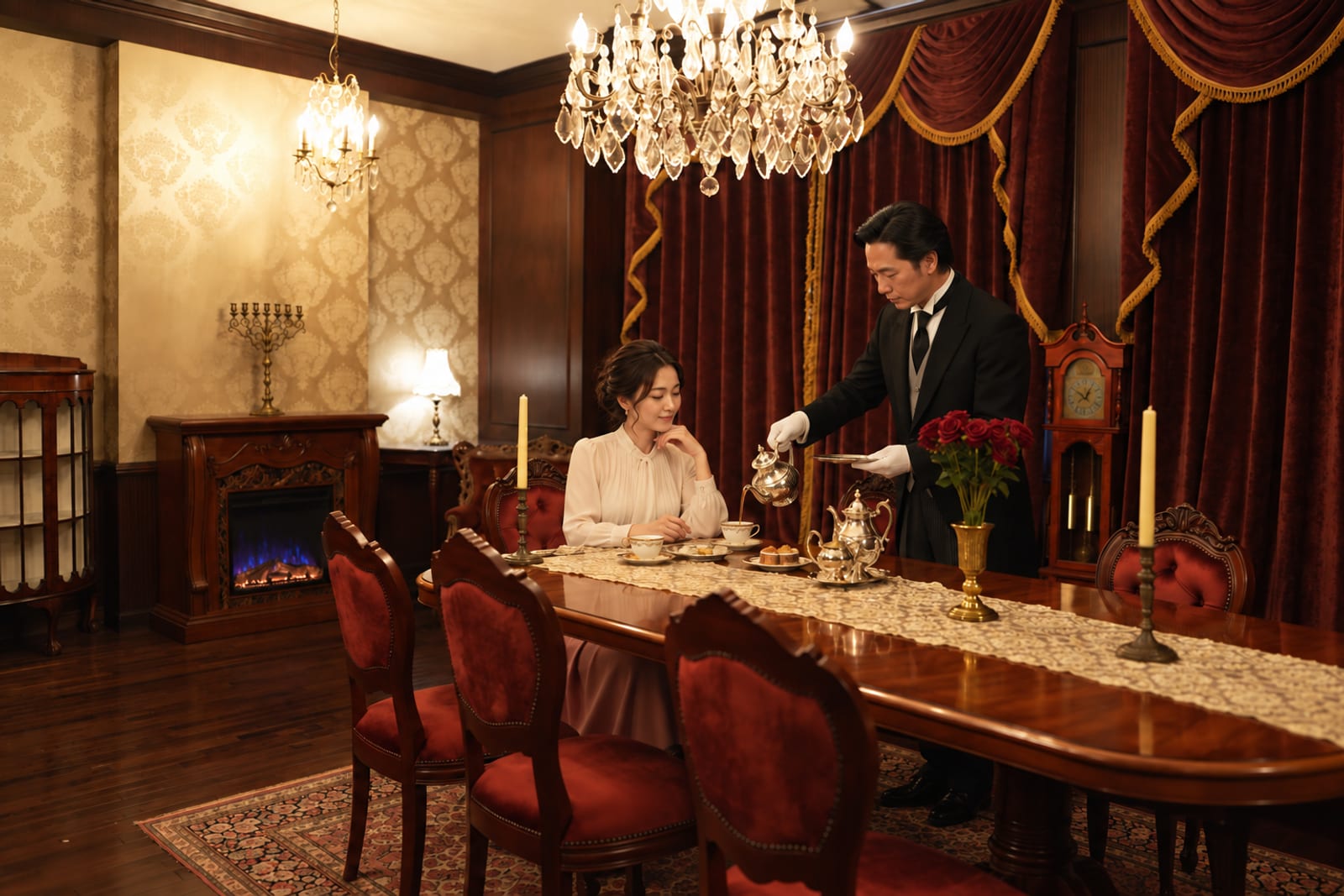
The Salon
Discover in more detail the Manor where male and female butlers, correctly dressed, attend at your side, in the quiet scenes of evening.
Read more

One step further into evening dress.
Continue with the meaning of the white bow tie, and how it differs from the tuxedo worn with a black tie.