
The Collection
Pieces of different eras and origins, read within a single house.
About The Collection
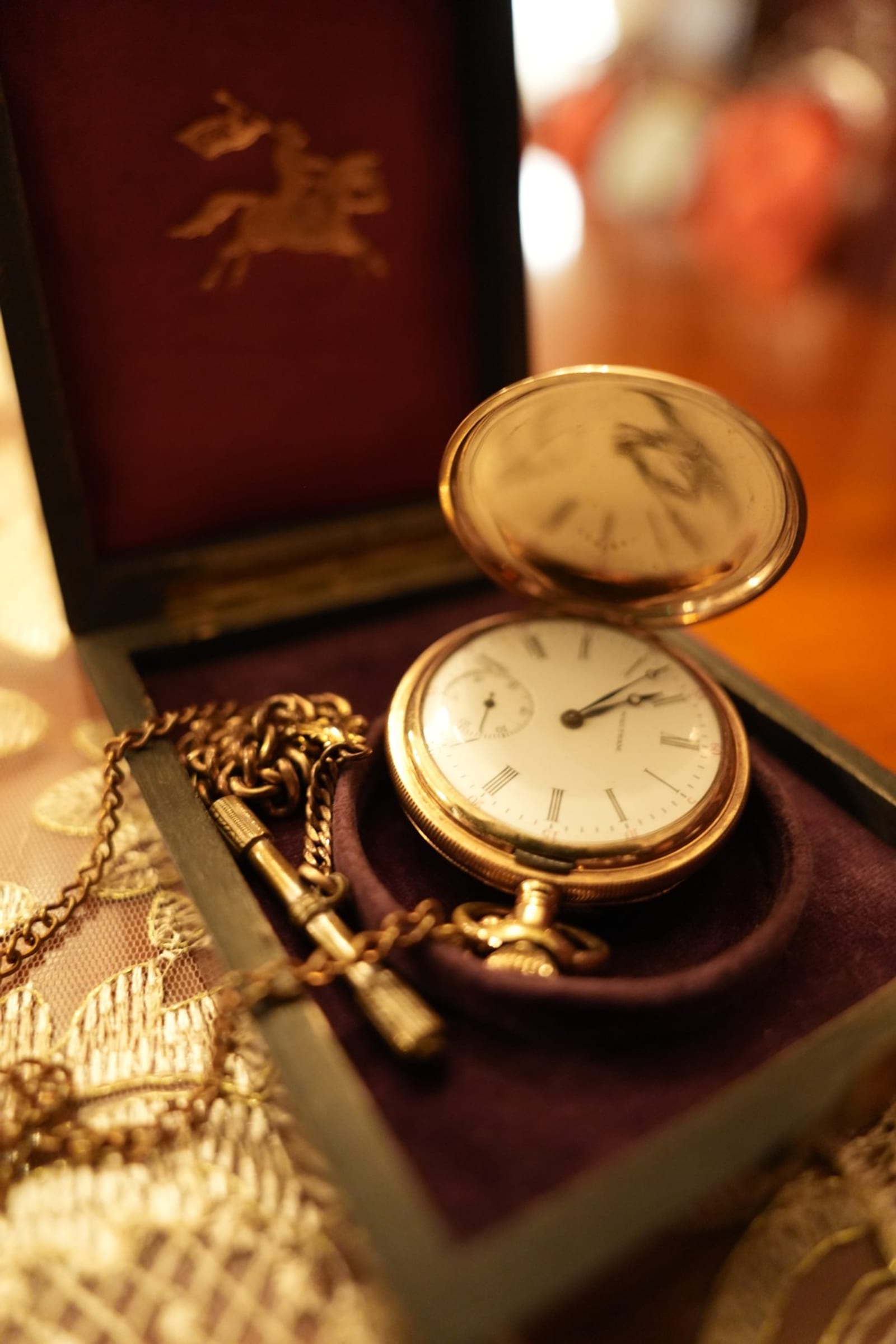
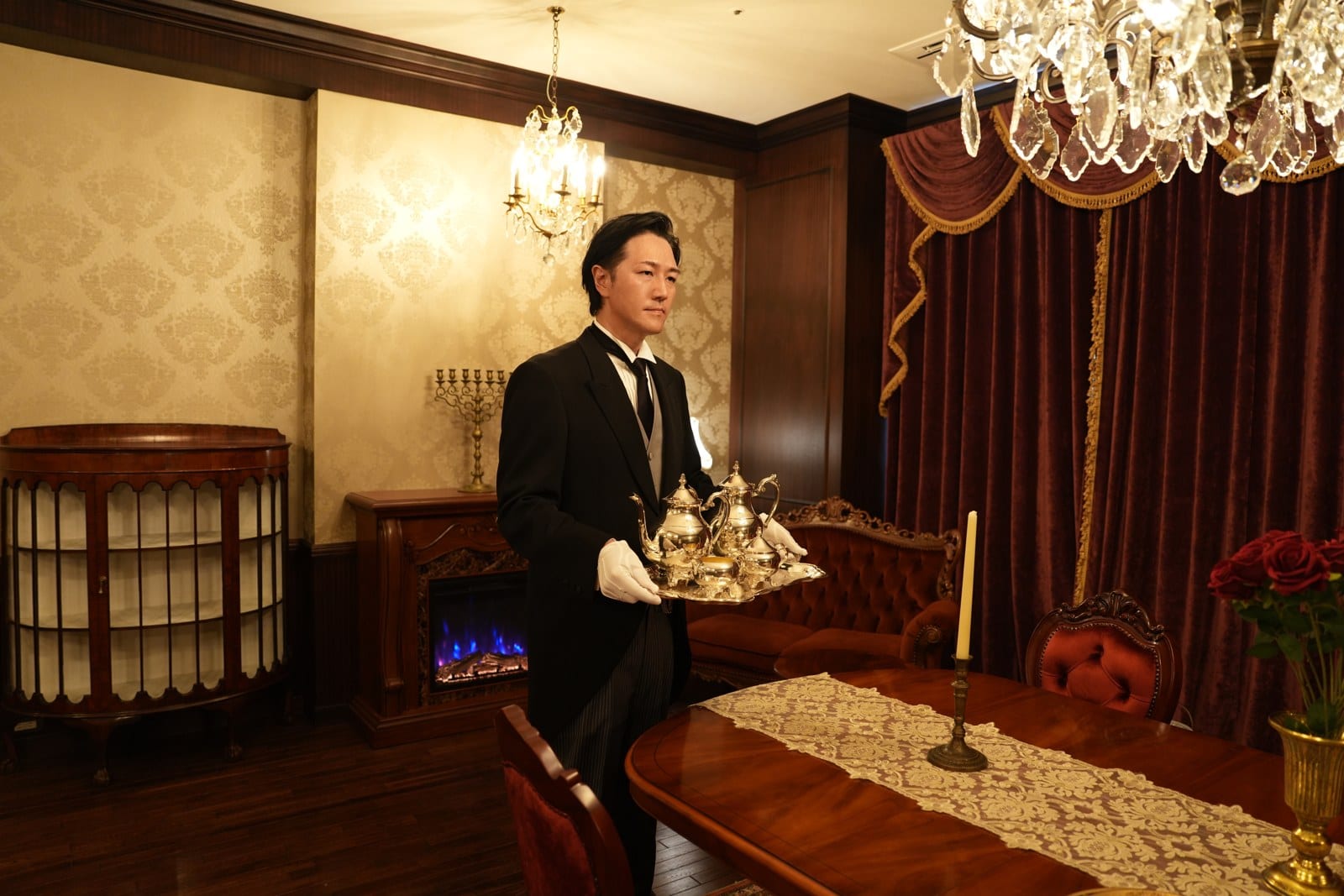
The Collection is our guide to the furniture and lighting of the Manor, read through their origin, period and style. The pieces, from England, France, Austria, Italy and Japan, were never chosen to match in age; they layer different moments in time. A butler is always at your side to introduce the eight key pieces and the highlights of each room.

On a first visit, begin with the form of each piece and where it stands
The furnishings of the Manor are not ornaments to be admired for their age alone. They receive the gestures of a day: opening a door, taking a seat at the table, turning a page in the study. Your butler first sets a respectful distance from the materials, then guides you through the grain, the carving, the play of light, and the relationship between each piece and the body.
Begin with the long table and nine-light chandelier of the Dining Room, then move to the desk and suit of armour in the Study, the mantelpiece in the Lounge and the basket-shaped bed in the Bedroom, and the reason the Queen's Butler Manor layers different eras becomes easier to grasp. Our butlers, women and men alike, share the highlights with white-gloved hands and quiet words.
For those who wish to take photographs, we suggest the order of wide view and detail; for those who wish to sit, we show you where it is safe to do so. For parties of up to six, your butler separates the places where everyone looks together from those examined up close, so no piece is ever crowded.
See how a visit unfolds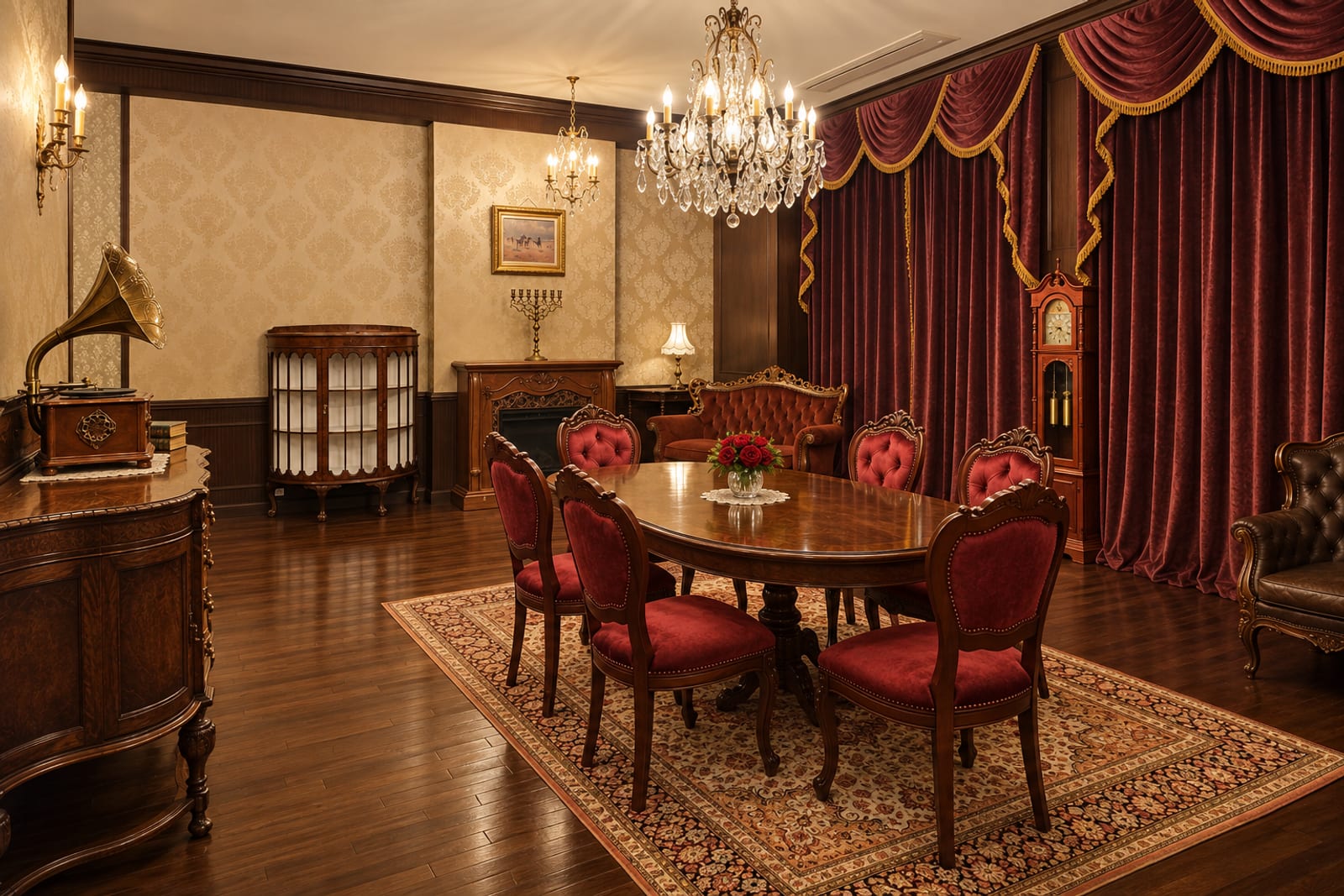
Eight key pieces mark the story of the house
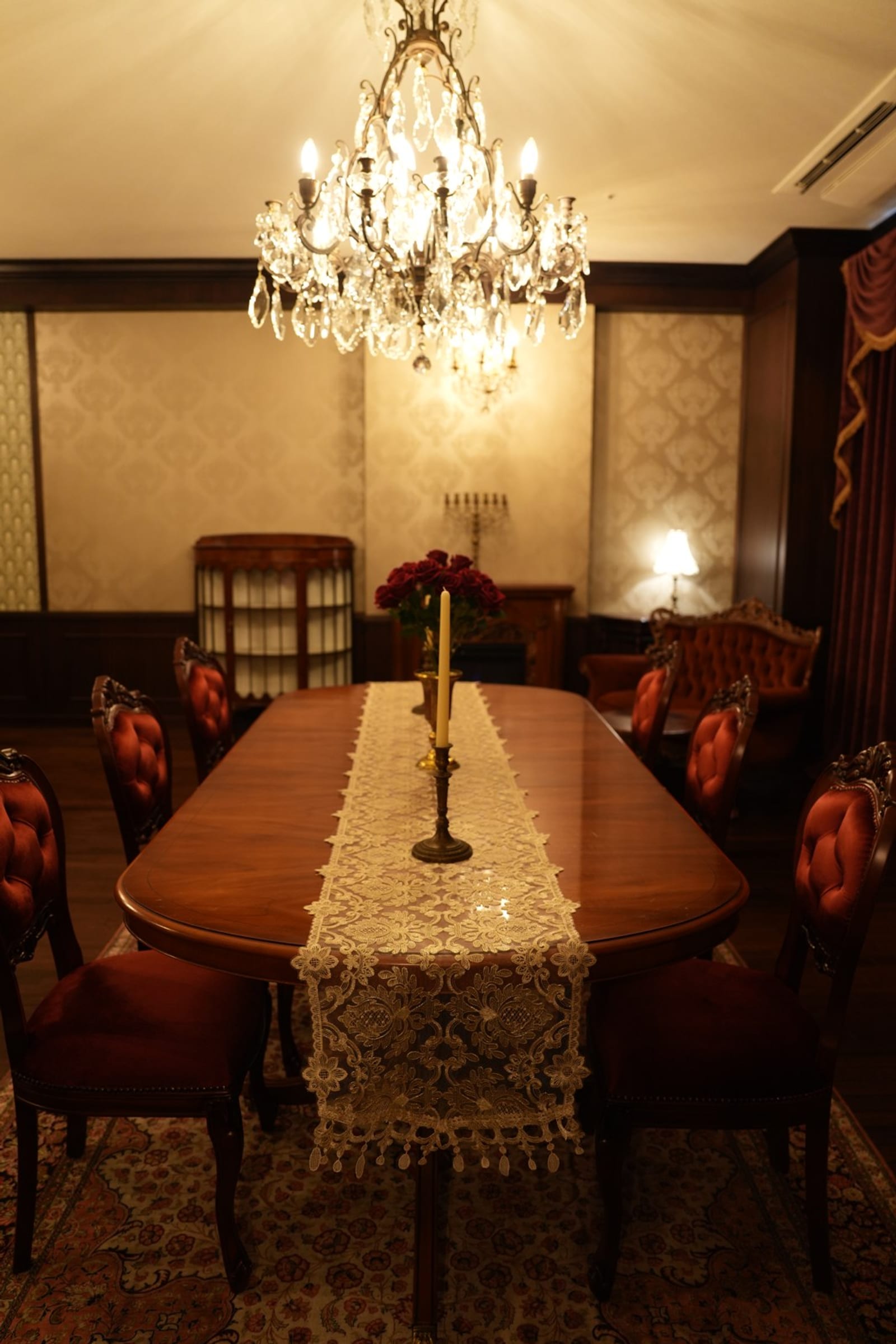
Bradley Yew Dining Table
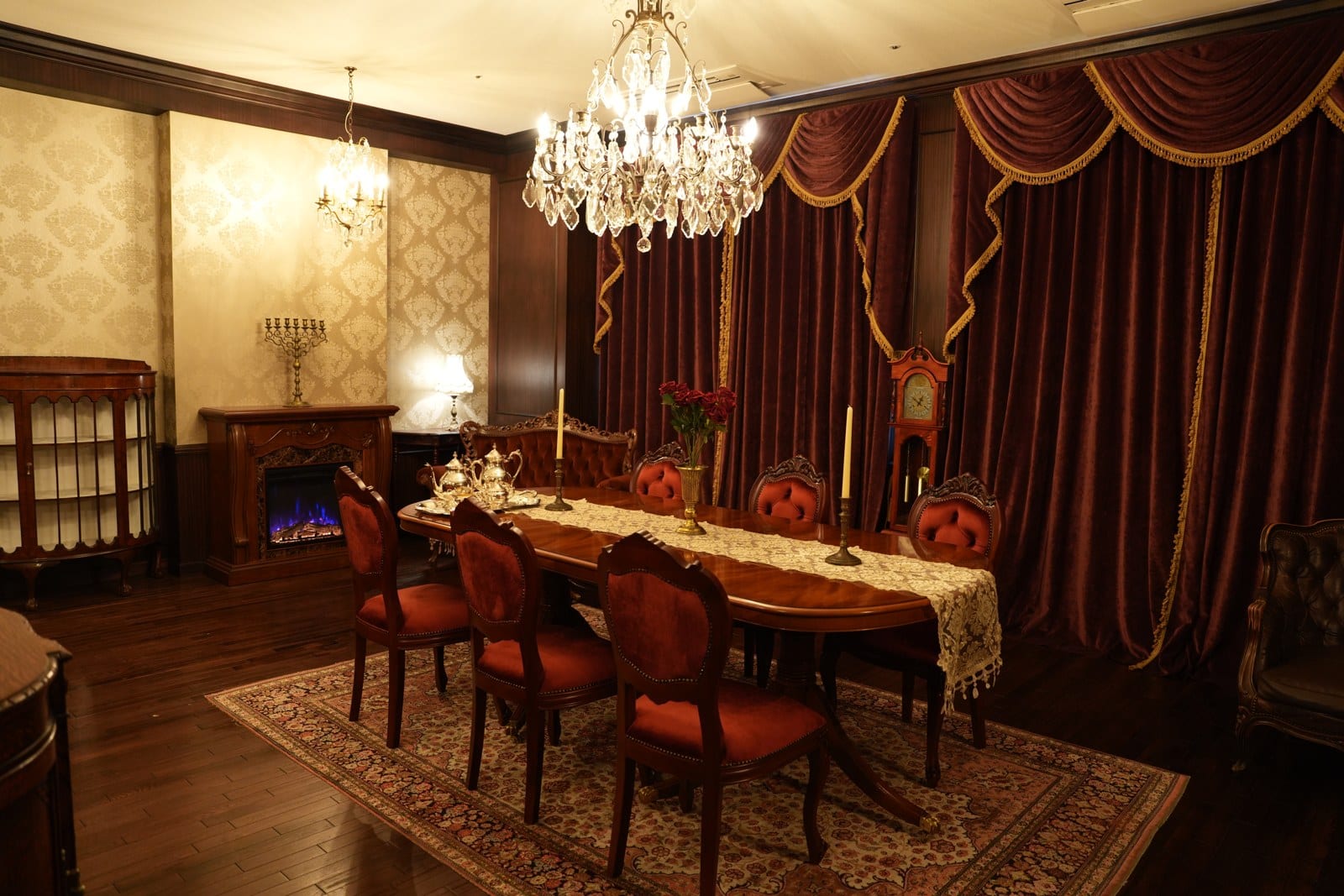
England, 1980s. A table 2,286 mm in length, combining yew wood with the pedestal form of formal dining.
Read more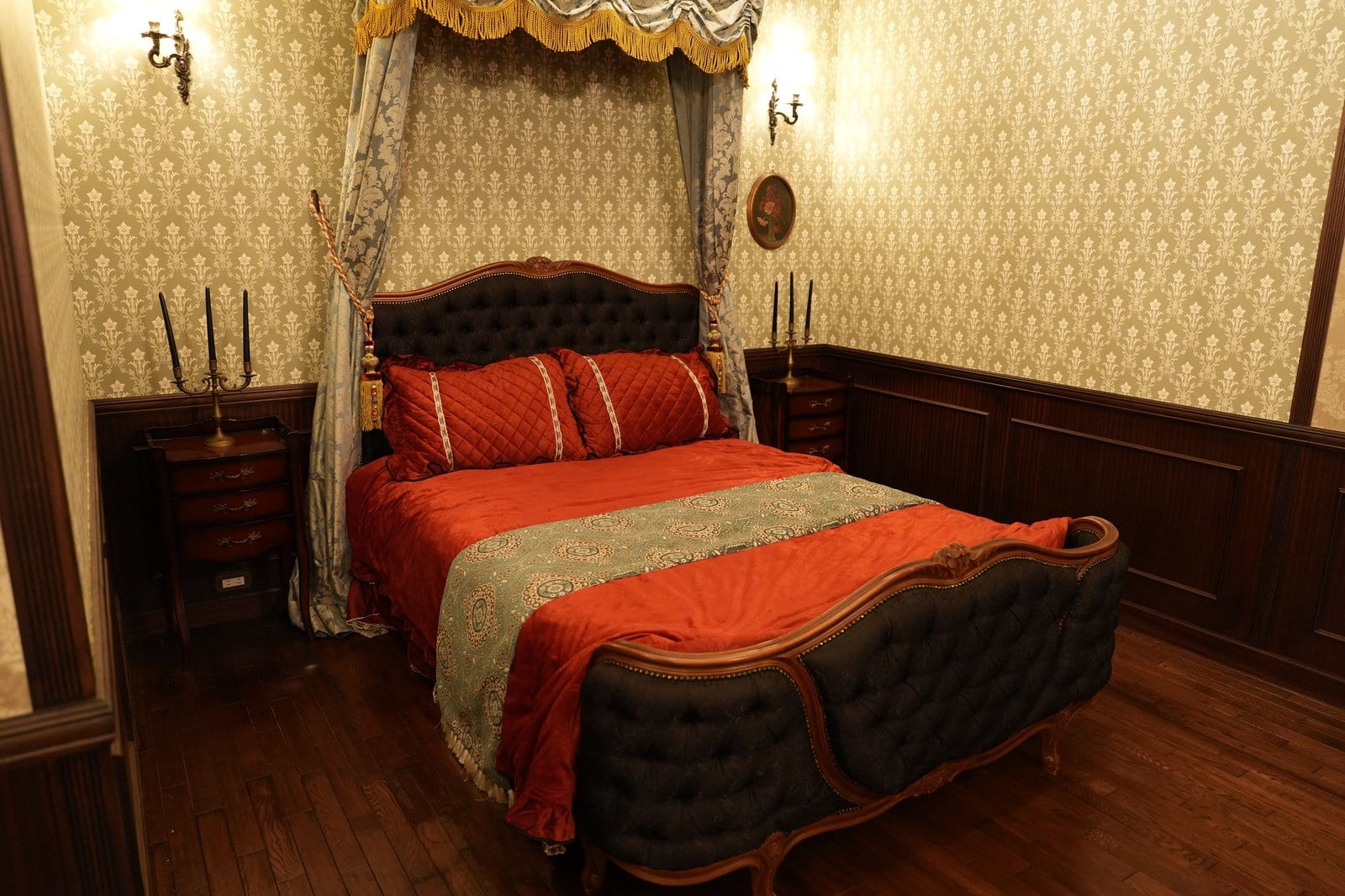
Maria Theresa Nine-Light Chandelier
A style with eighteenth-century Viennese origins. Look up from the nine lights to the acanthus medallion on the ceiling.
Read more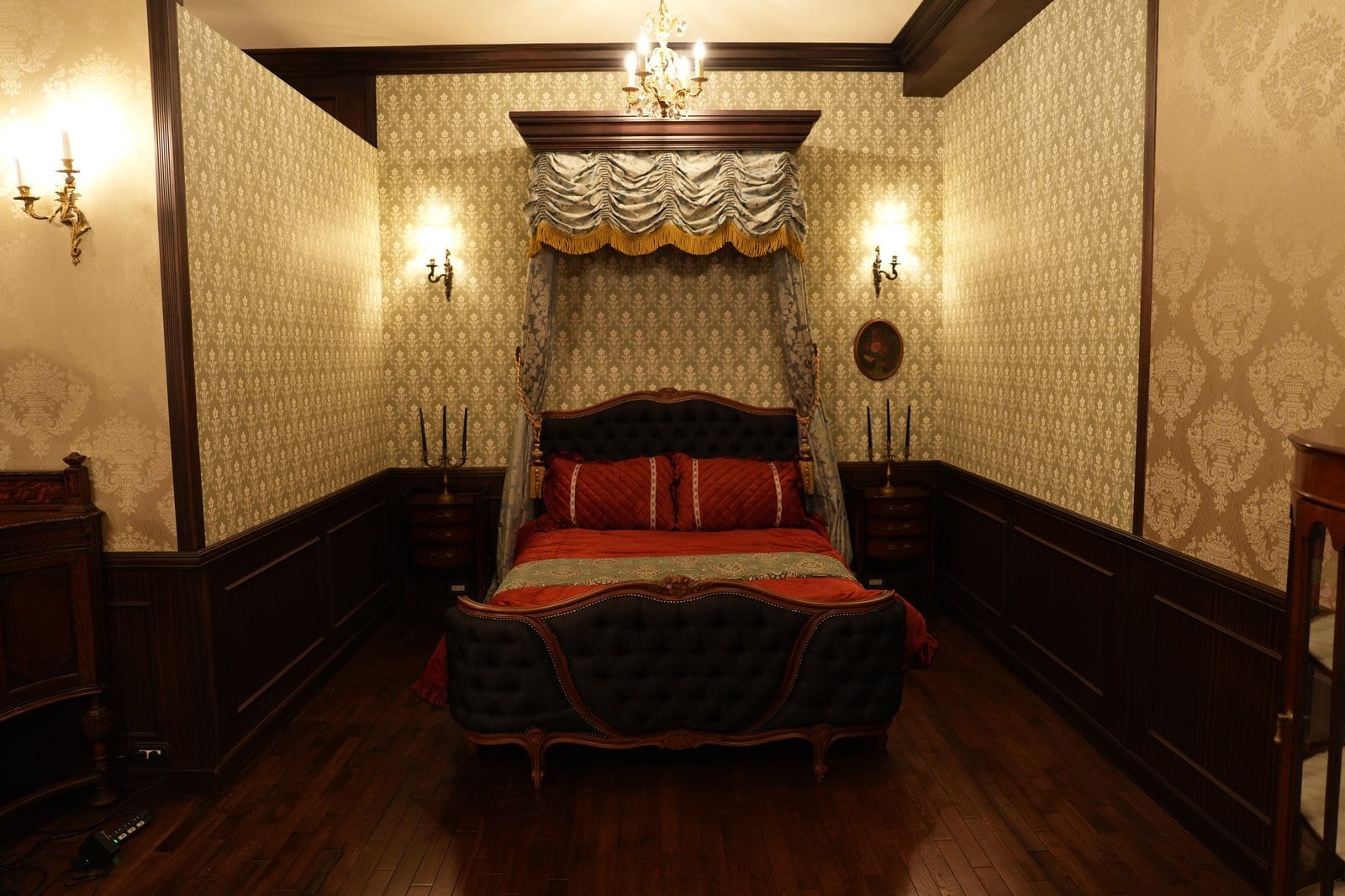
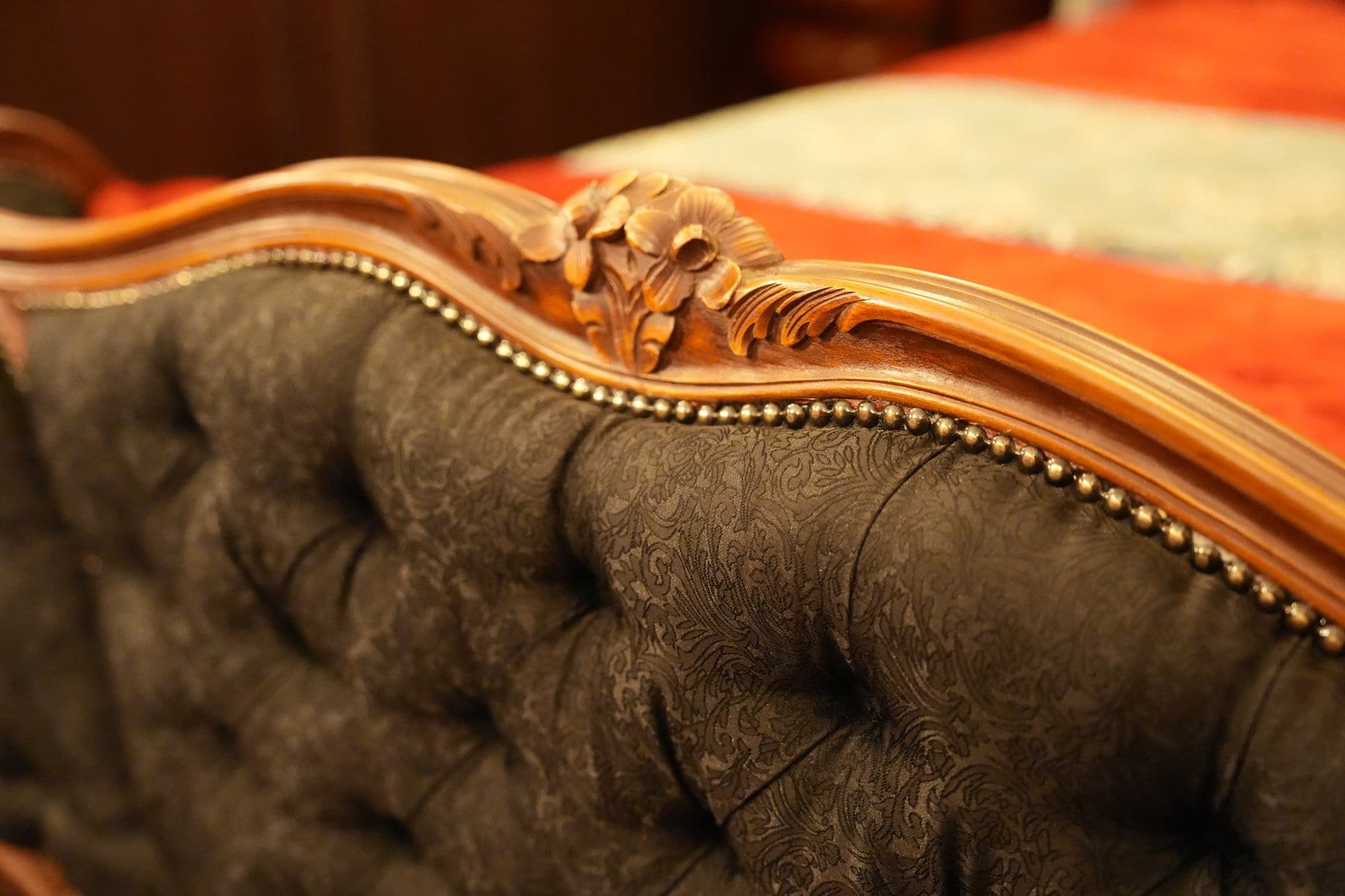
Nineteenth-Century French Corbeille Bed
Note the basket-like curve, black silk damask, capitonné upholstery and carving throughout.
Read more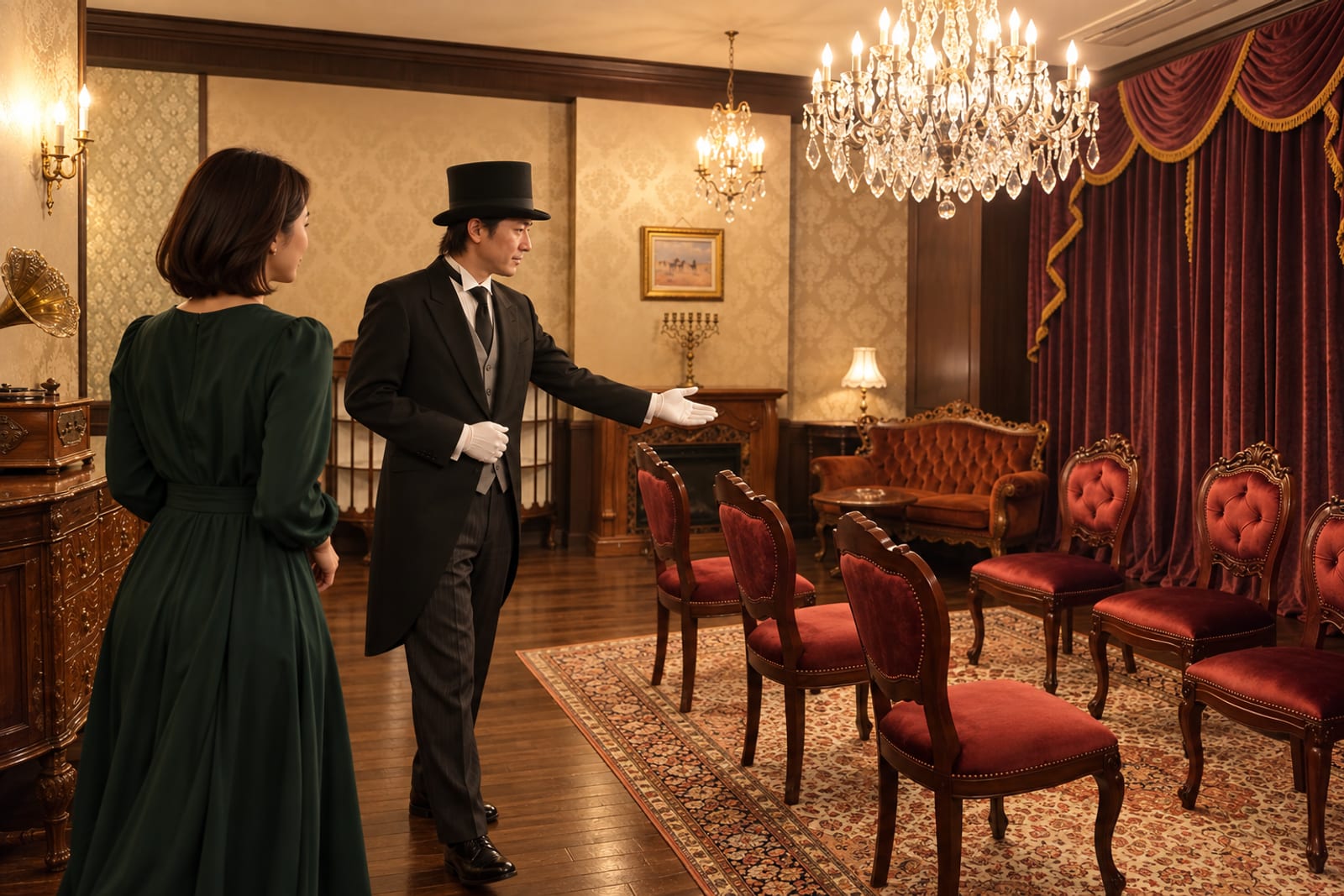
Knight's Armour
Made in Italy, 185 cm tall, with sword. It stands at the entrance to the Study, dividing the everyday from the story.
Read more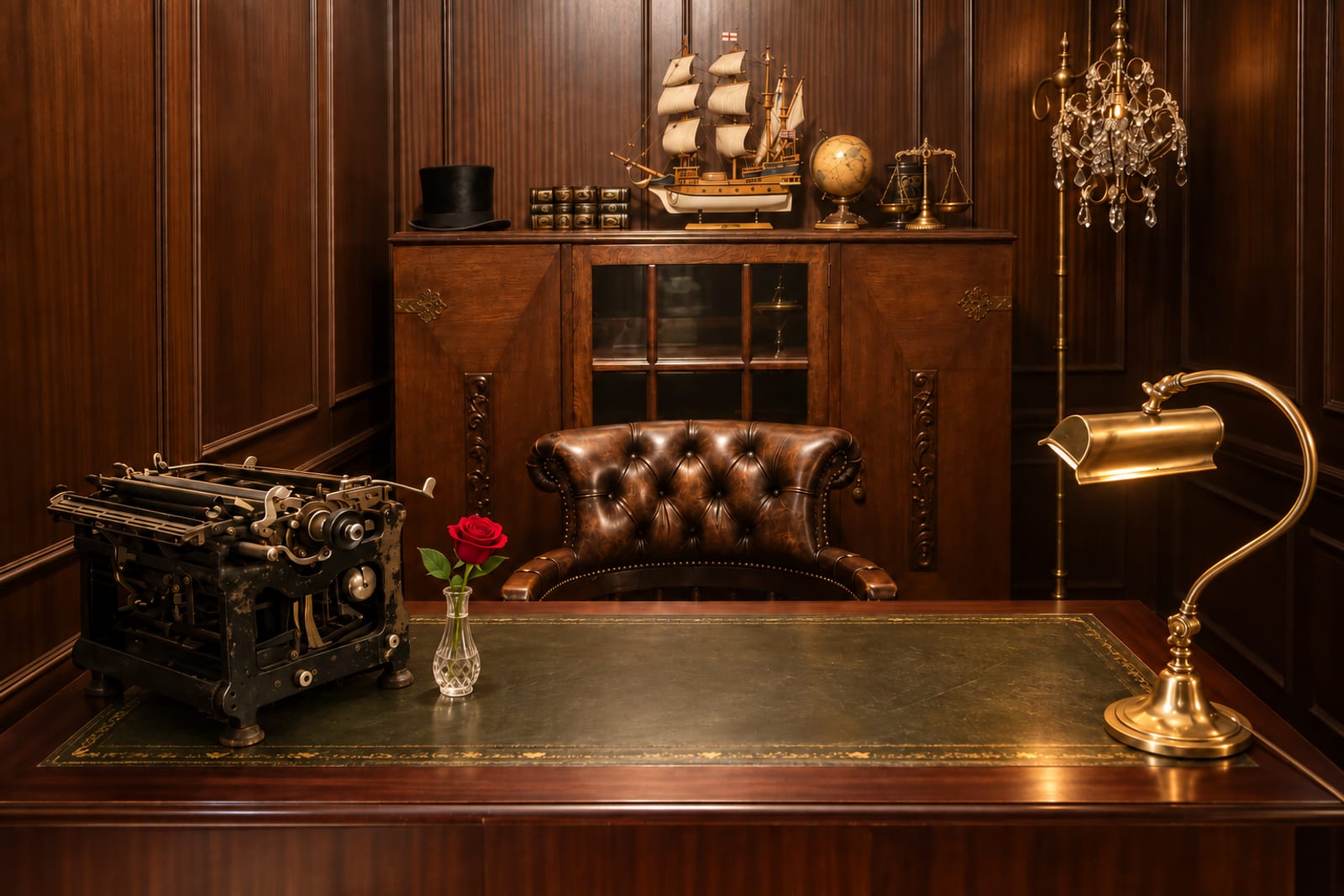
Twin Pedestal Desk
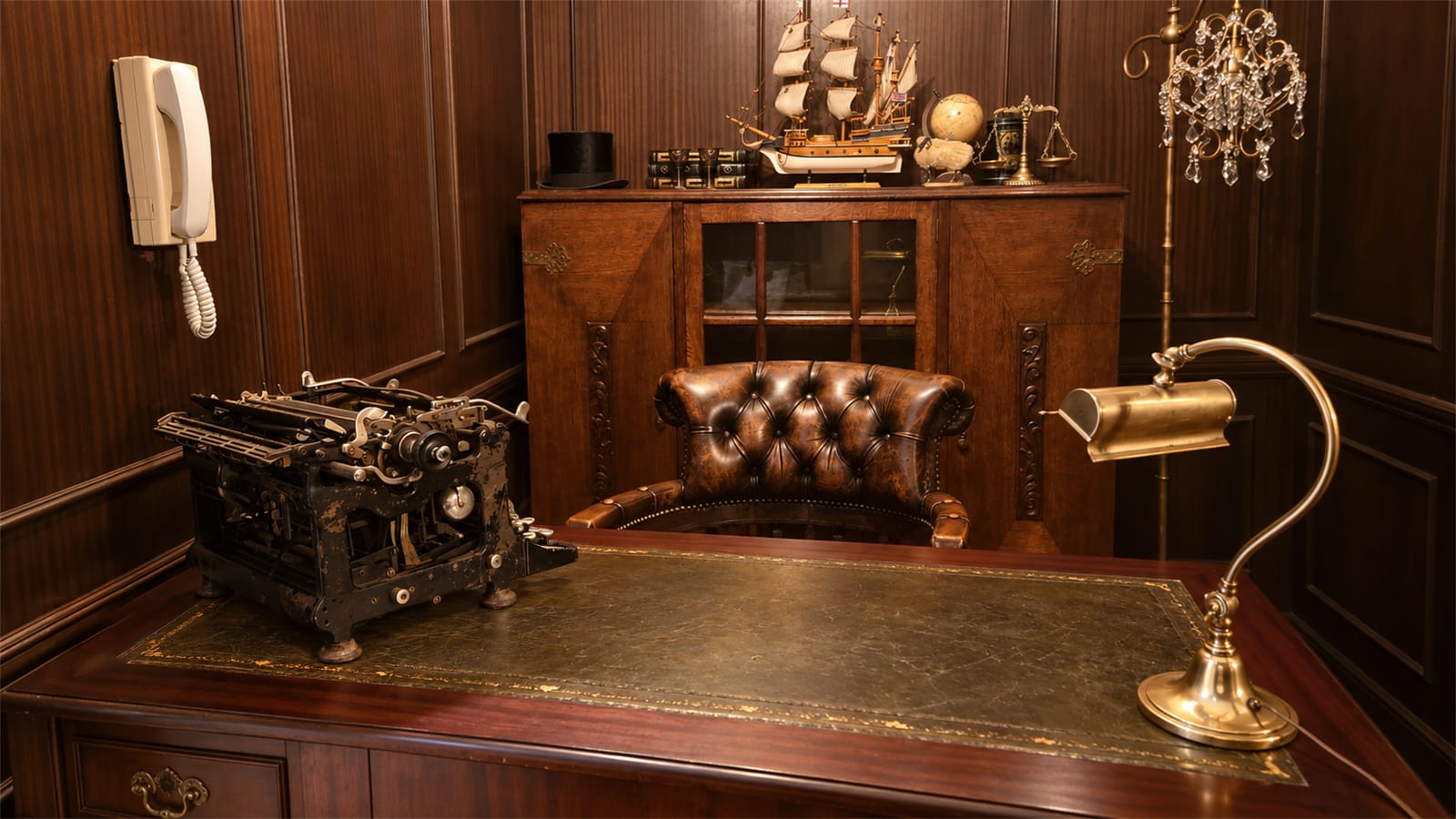
England, 1980s. The mahogany pedestals and leather top keep a practical heritage alive.
Read more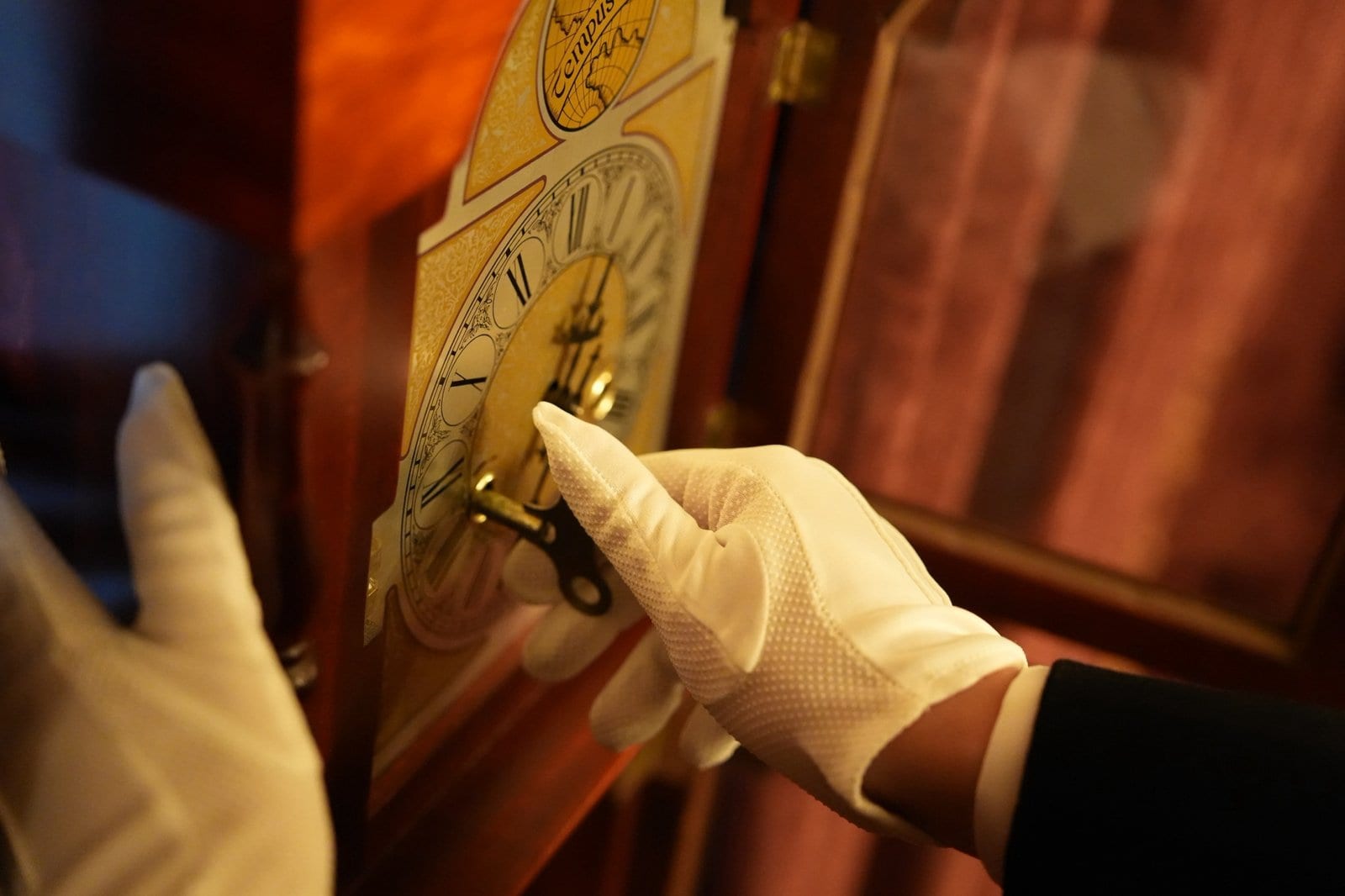
Hall Clock
A pendulum clock 155 cm tall. Its sound shapes the space, and it can be silenced when the occasion calls for it.
Read more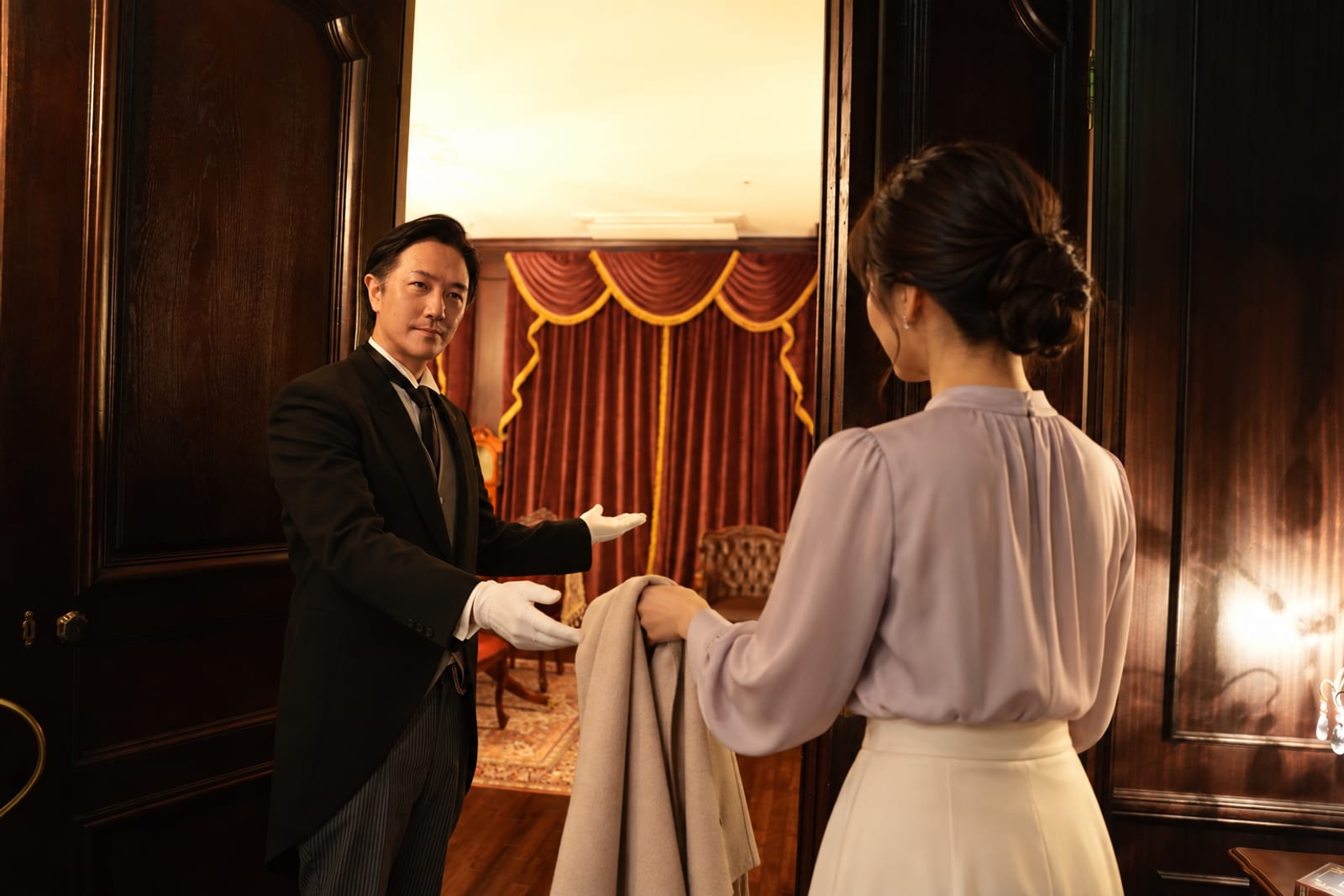
French Oak Double Doors
Approximately 2,480 mm tall. The butler's gesture of opening both leaves is itself part of the piece's expression.
Read more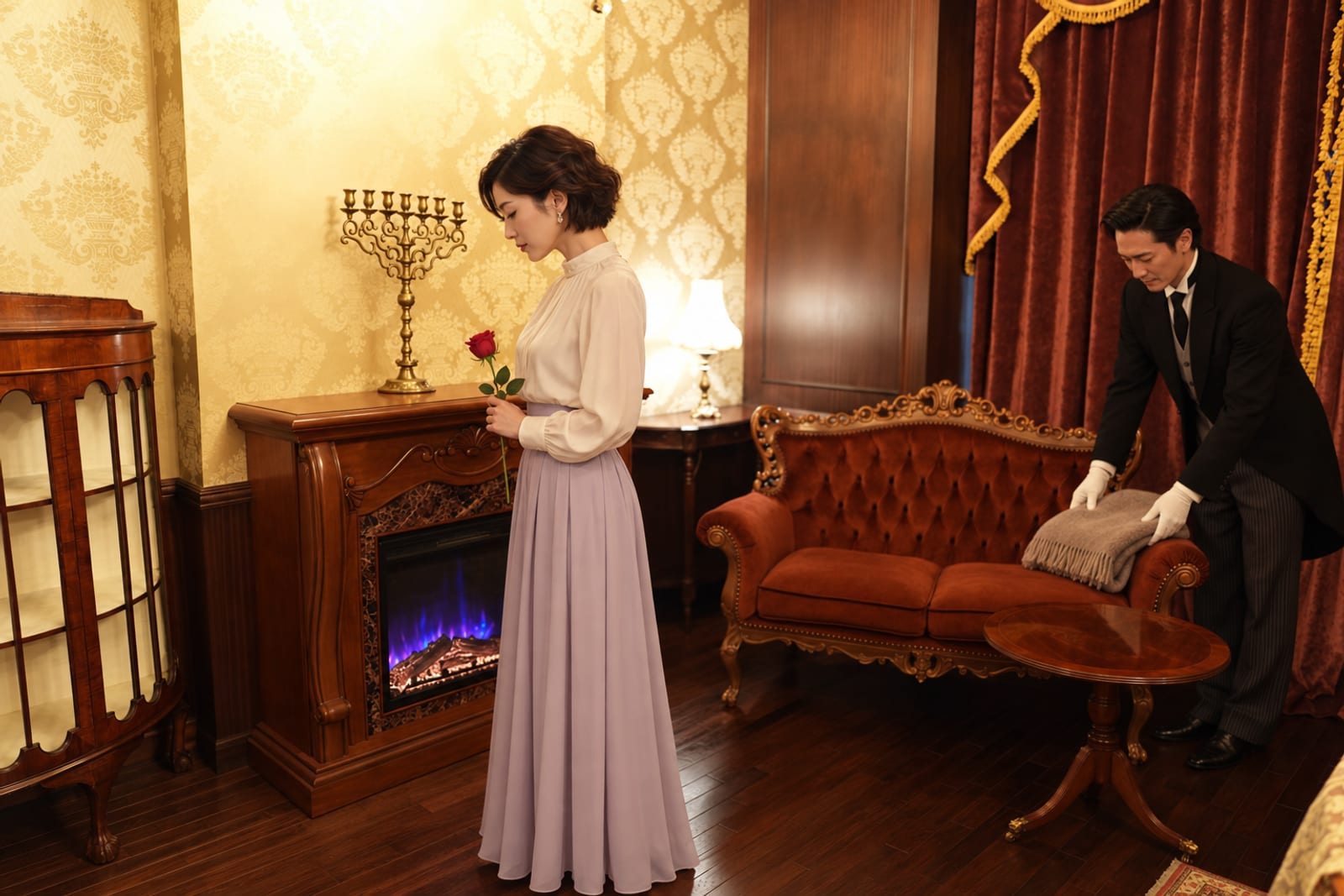
Mantelpiece and Fireplace
Walnut with a marble-effect surround. Take in the electric flame, the mirror, the candlesticks and the oil painting together.
Read moreComparing origins and periods reveals a house that was never over-matched
| Region | Pieces to see in the Manor | When the style arose |
|---|---|---|
| England | The Bradley table, the study desk, the captain's chair, the bookcase, the cabinet | Late seventeenth-century styles, forms perfected in the eighteenth century, the nineteenth century, the 1980s |
| France | The corbeille bed, JOGLAR lighting, the French oak doors | The nineteenth century, the 1920s, and French oak as a material |
| Viennese-origin style | The nine-light chandelier in the Maria Theresa style | Eighteenth-century origins. This does not indicate the date of manufacture of the piece on display |
| Italy | The knight's armour, the dining chairs, the brass lighting | For the armour and chairs, please refer to the provenance we share in the Manor |
| Japan | Karimoku Domani chairs, Okura Art China porcelain | English and French design meets Japanese craftsmanship in the same house |
The period of a style is the moment in history when a form or decoration became established. In the Manor we distinguish the provenance of each piece from the period of its style, and your butler introduces the appeal of both with care.
Inside the Manor, five stages lead the eye from material to gesture
The threshold at the double doors
Your butler opens both leaves, showing the weight of the wood and the movement of a person together.
Floor and ceiling in the Dining Room
Raise your eyes from the yew table to the nine-light chandelier and consider the relationship between the two.
Close detail in the Study
Quietly observe the leather top, the quill pen, the inkwell, and the distance between desk and chair.
Crossing the threshold beside the armour
Nothing is moved or touched; your butler guides you to a safe place to stand.
Light in the Lounge
Compare the electric flame, the chandelier and the light returned by the mirror from each seat.
What your butler arranges for the collection
- Pieces handled with white gloves are held by the butler and turned for the best view
- For photographs, a distance between walkway and furniture is kept, and we guide you from wide view to detail
- Before you use a chair or the bed, your butler checks its condition first
- A Queen's Butler butler adjusts the clock chime and lighting to the purpose of your day
- You are welcome to bring food and drink; your butler shows you where to place it
What the Manor does not offer
- Moving the armour or the hall clock without a butler
- Handling silver, porcelain or antique furniture unattended
- Removing or lending out any piece of the collection
- Meals served by the butler
- Information on the price or purchase of any piece
A few terms help explain the reason behind each form
| Twin pedestal | A form in which two columns support the top. On a table it frees the legroom; on a desk the drawers of each pedestal become the support |
|---|---|
| Capitonné | An upholstery technique in which fabric is buttoned into a diamond pattern to create a padded surface |
| Plaster medallion | A circular plaster ornament set into the ceiling. The Manor uses an acanthus pattern |
| Mantelpiece | The decorative surround and shelf of a fireplace. It becomes the focal point for a clock, candlesticks and a mirror |
| Hall clock | A tall floor-standing clock that marks the hours in a gallery or hall. The Manor's is a pendulum clock |
| Gilt frame | A frame finished in gold. It lifts the outline of the mirror above the fireplace or of a painting into the light |
QMay I visit simply to see the collection?
Please let us know this as the purpose of your booking. A Queen's Butler butler will always be at your side, guiding you while keeping watch over safety and the condition of each piece.
QMay I touch the antiques?
It depends on the piece and the occasion. Silver and porcelain may be held in your own hands under your butler's guidance, and you can watch the butler's handling up close. Chairs and desks are offered after checking their condition; the armour and hall clock are handled by the butler only.
QMay I take photographs?
Commemorative photographs in the Manor are welcome. If you plan to bring large equipment or to shoot a portfolio, please tell us the purpose and the number of people in advance.
QCan I be guided on my own?
You are most welcome alone. For those who wish to examine the details at leisure, your butler follows the order of your gaze.
QHow many people may visit together?
Up to six. Your butler separates the time for wide views from the time for close observation, and guides the order so that the walkways are never blocked.
QMay I be guided by a female butler?
We have both female and male butlers. If you have a preference, please let us know when booking.
You may also wish to read

Tell your butler which pieces you wish to see
Let us know the pieces that interest you when booking, and your butler will arrange the route through the Manor.