
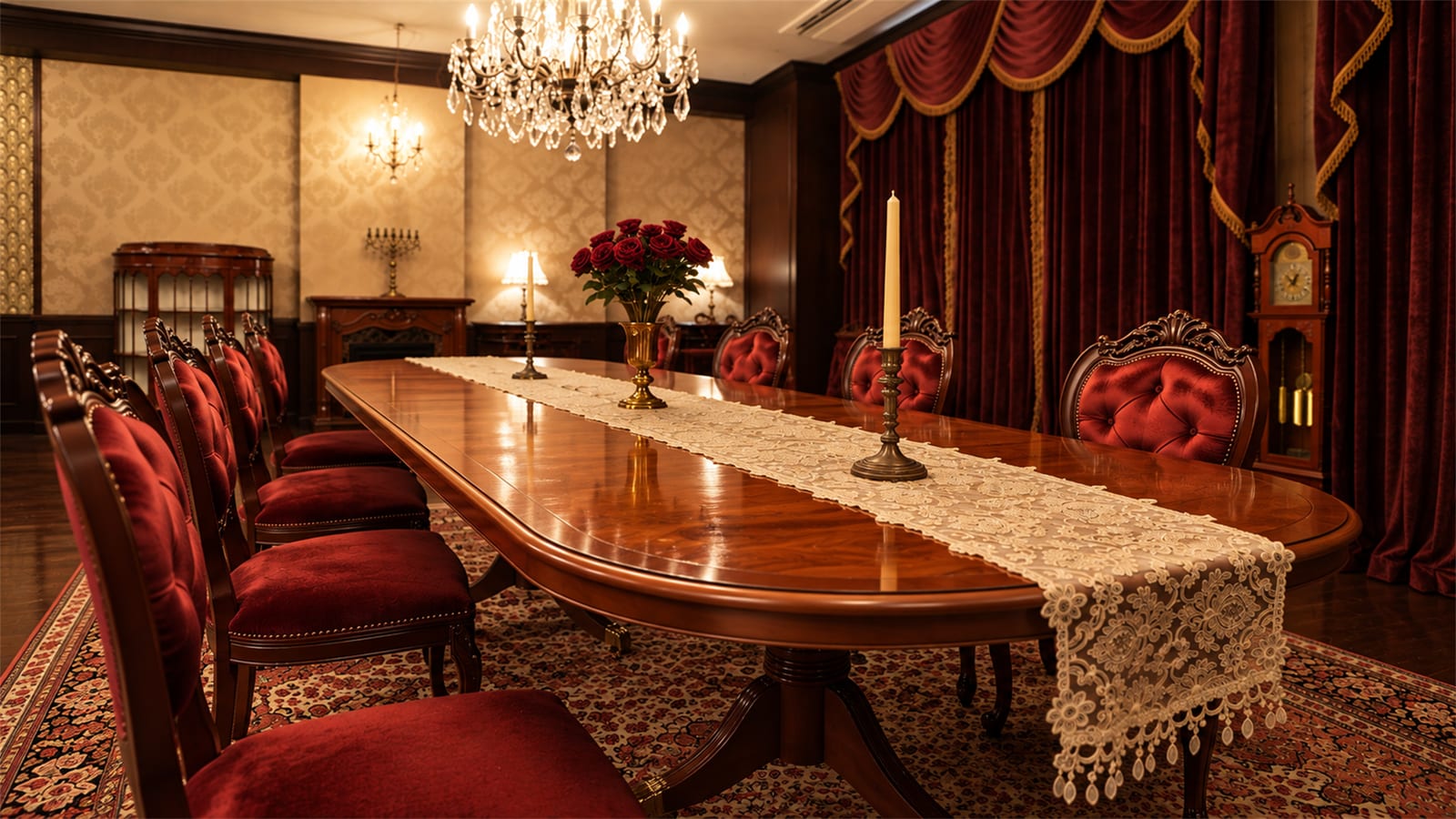
Bradley Yew Table
Dining on the wood that shaped English history.
About Bradley Yew Table
The Bradley yew table is the twin-pedestal extending table in yew, made by Bradley of England, that stands at the centre of the Dining Room. England, 1980s. Length 2,286 mm, top height 787 mm. It is the master of this house's table.

We begin by confirming the period, the timber and the dimensions
| Name | Yew twin-pedestal extending table |
|---|---|
| Maker | Bradley, England |
| Period | 1980s |
| Timber | Yew |
| Dimensions | Width 1,000 mm, top height 787 mm, length 2,286 mm |
| Form | Twin pedestal, supported on two columns |
Yew is the English tree of churchyards and longbows
The yew was planted as a sacred tree in the churchyards of England, and ancient specimens more than a thousand years old still stand across the country. In medieval England it was the timber of the longbow, and it armed the English archers who broke the French knights at Agincourt in 1415.
What first catches the eye at the Manor is the intricate figure of the wood, shifting from golden brown to deeper tones. Rather than throwing strong light straight onto the top, your butler will guide you to where the lamplight glides across it at an angle. Up close, study the fine ripples of the grain; step back, and take in the long horizontal line of its 2,286 mm length.
The table itself dates from England in the 1980s. The tales of ancient yews and longbows are offered as the story of how this timber has travelled through English history.
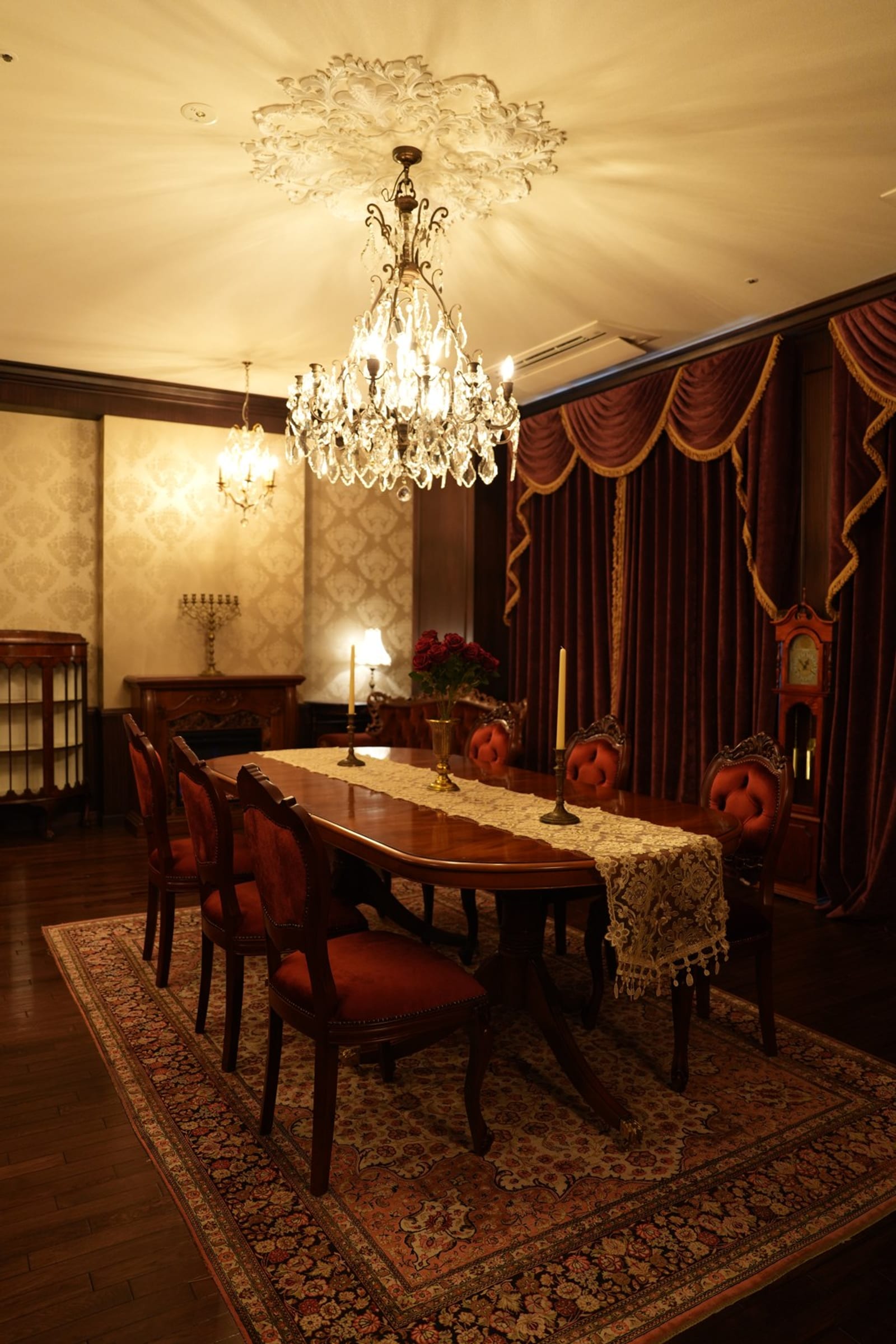
The twin pedestal is a form that gives those seated more room for their feet
A twin-pedestal table supports its top on two columns rather than on legs at the four corners. The form was perfected in Georgian England in the 18th century as a table for formal dining; with no legs close to the seats, a chair can be drawn back easily from any position. Beyond the dignity of its design, it preserves a practical thought for the moment a person sits down.
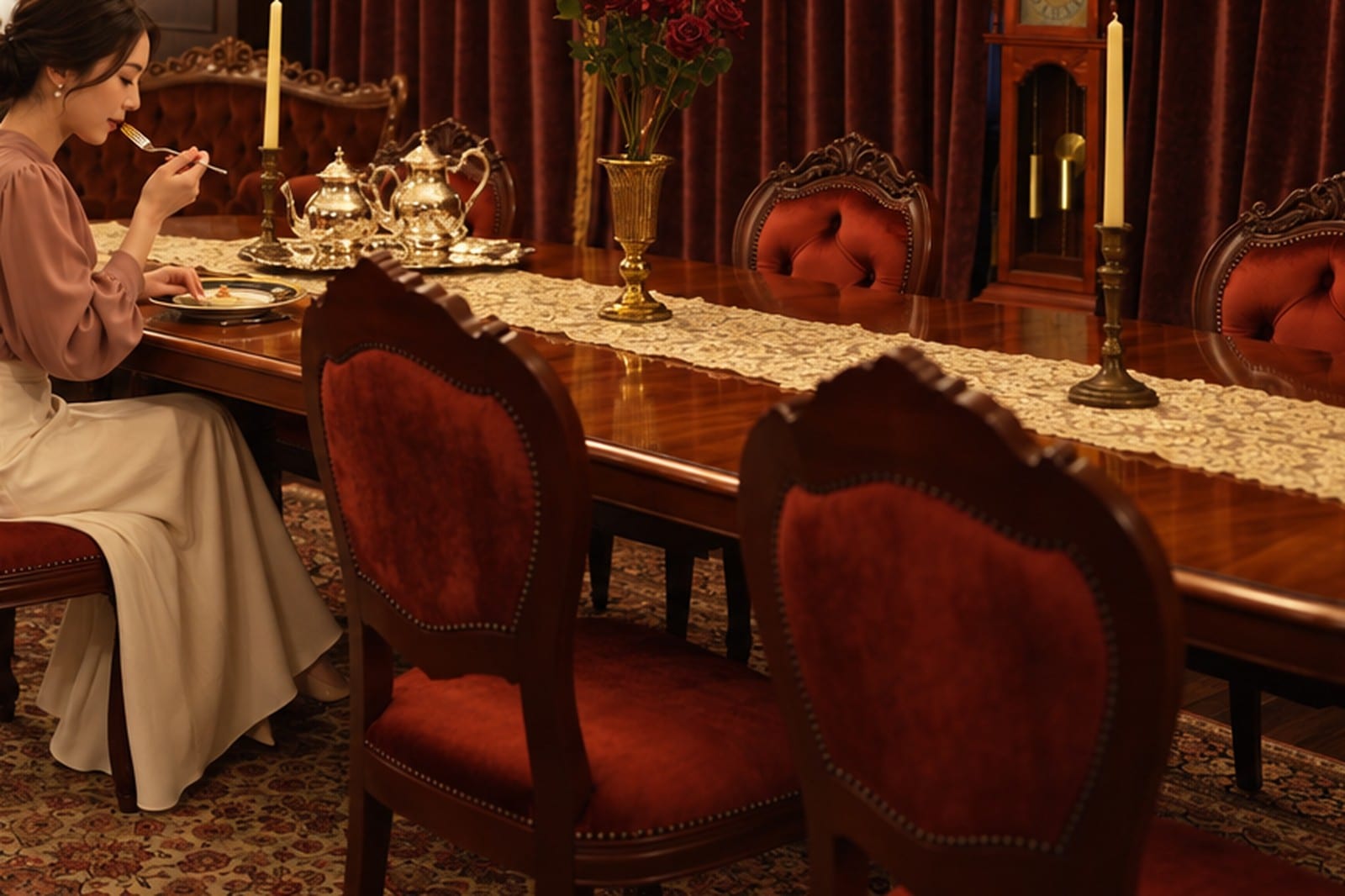
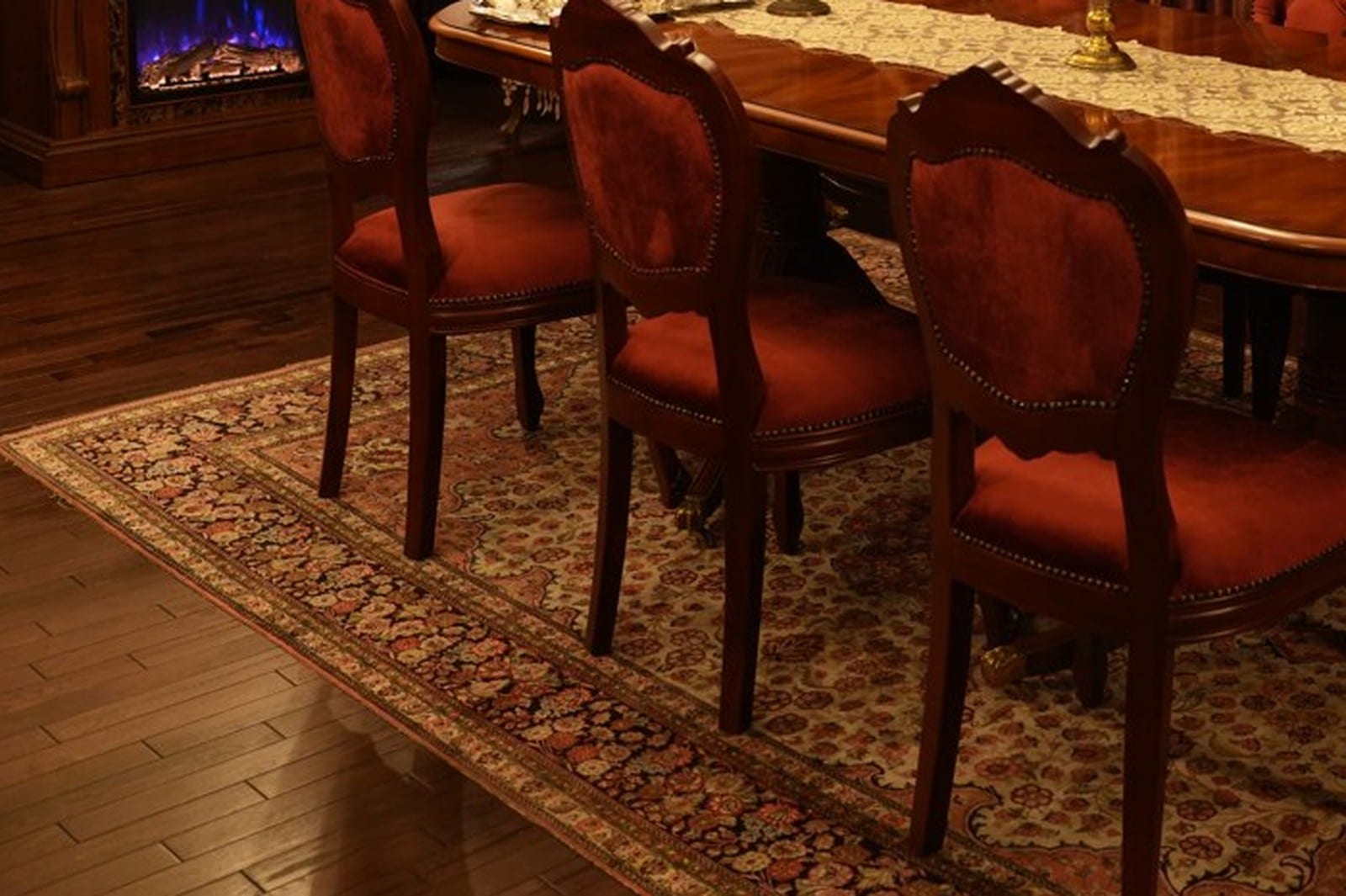
The chairs paired with the table at the Manor are Italian, in wine red and mahogany, with a seat height of 47 cm. Against a top height of 78.7 cm, the difference is 31.7 cm. When your butler draws the chair straight back and checks the position of your knees against the pedestal before you sit, you feel the meaning of the pedestal form in your own body.
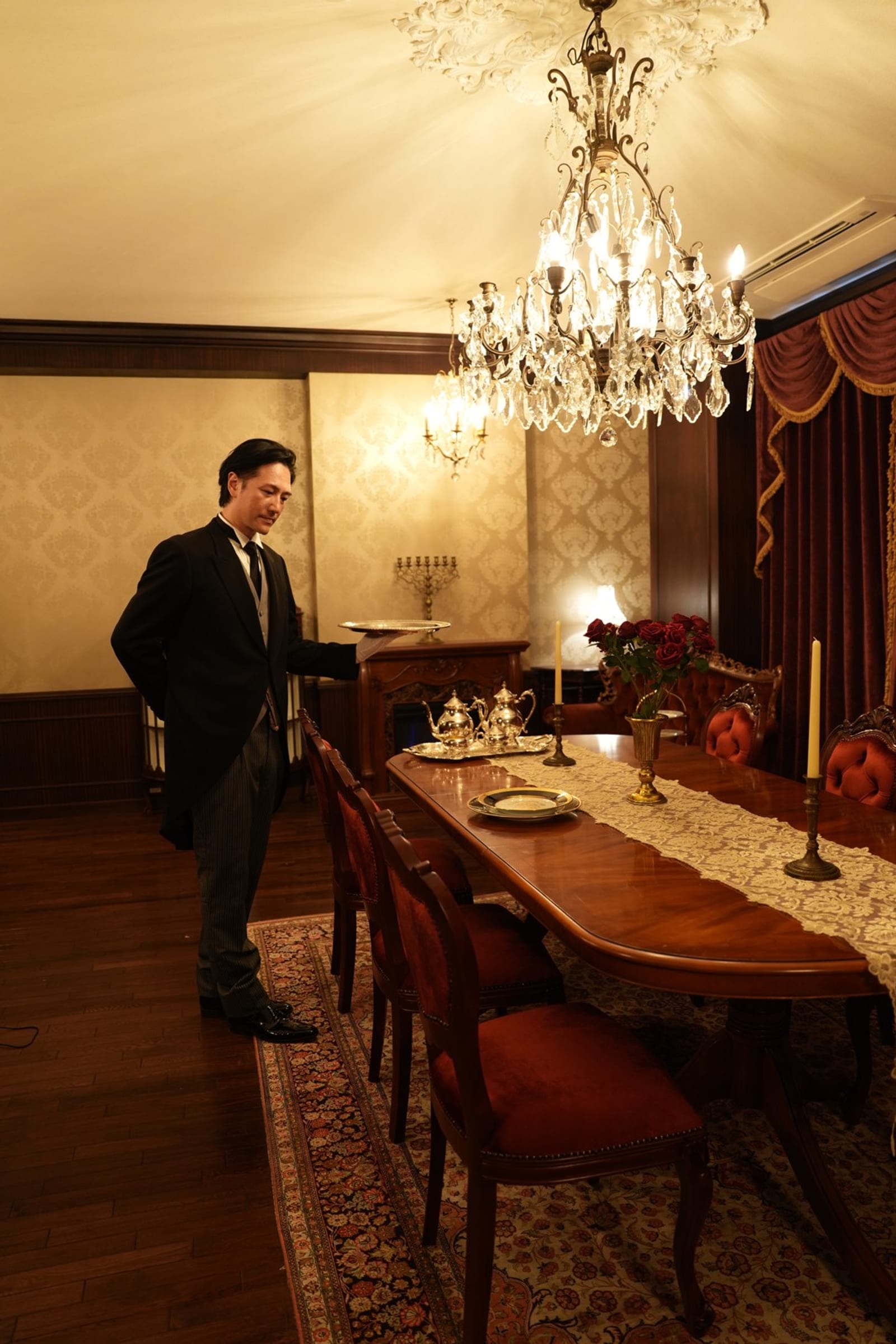
For one guest we choose the seat where the grain shows best; for two, a placement that lets you feel the length of the table; for up to six, positions where every gaze can meet. Your butler never drags the chair across the floor, but rests a hand on its back and draws it quietly, matching the pace at which you sit.
The record of the piece and its historical background are read separately in one table
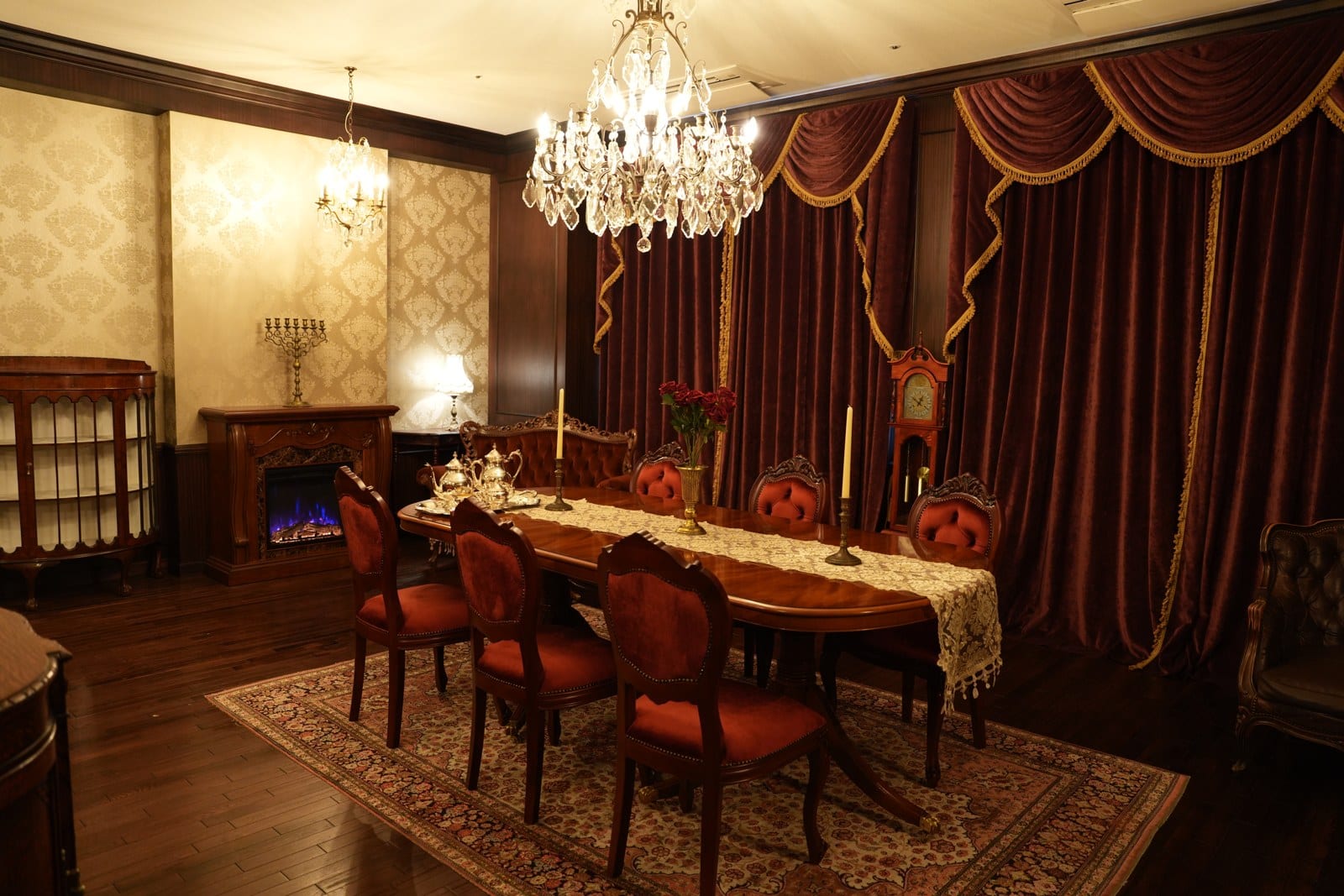
| Aspect | The piece at the Manor | Historical background |
|---|---|---|
| Period | England, 1980s | The twin-pedestal form was perfected in the 18th century |
| Material | Yew | Sacred tree of the churchyard; timber of the medieval English longbow |
| Size | Length 2,286 mm, top height 787 mm | Measured from the piece on display, not a historical standard |
| Base | Two column pedestals | A dining design that avoids corner legs so guests may sit with ease |
| Appearance | Warm, intricate figure | A timber that graced English furniture in the heyday of reproduction pieces |
Follow five points of observation, from the whole room to your own hands
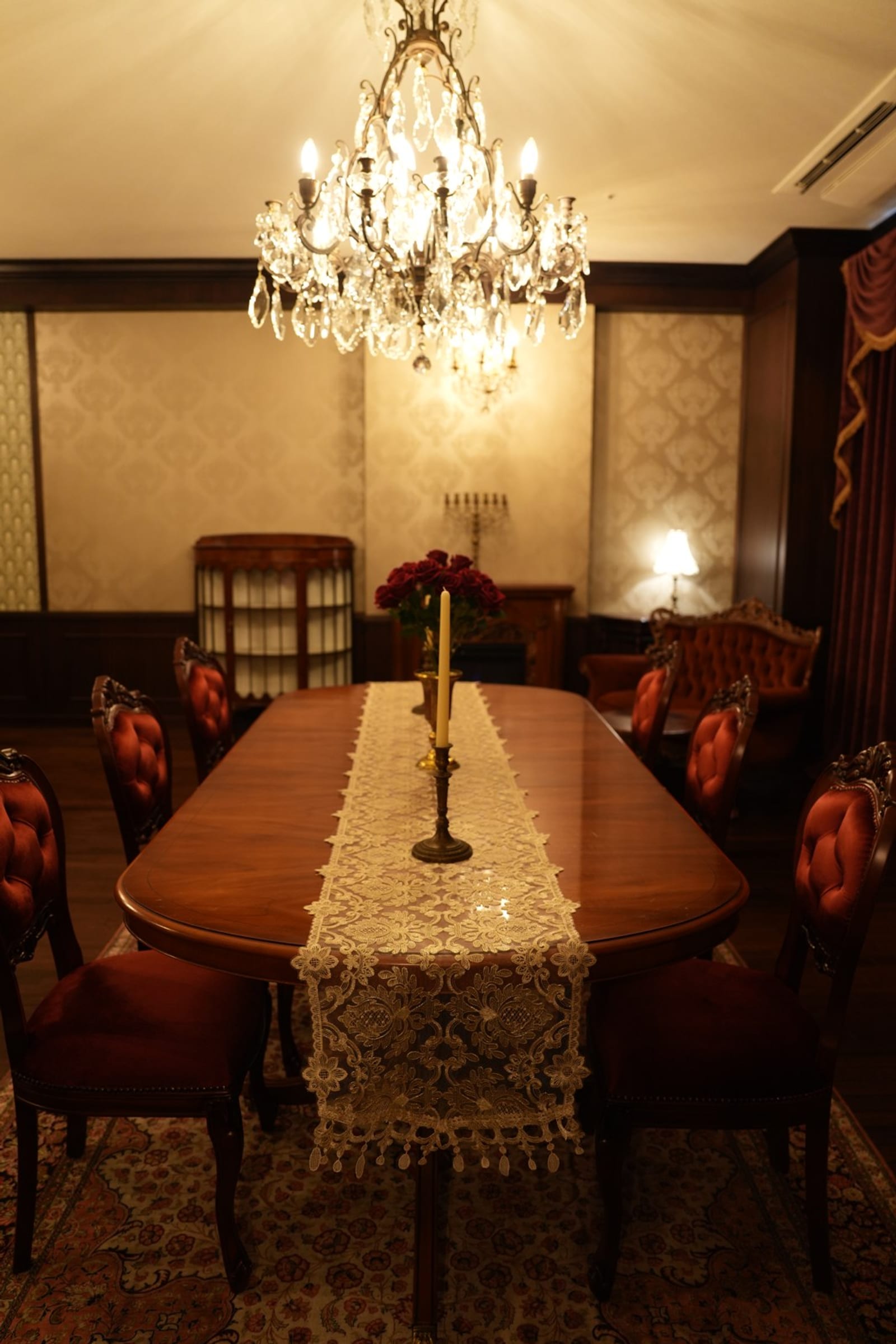
The long horizontal line
From the doorway, take in the full length and see how the table forms the axis of the Dining Room.
Read more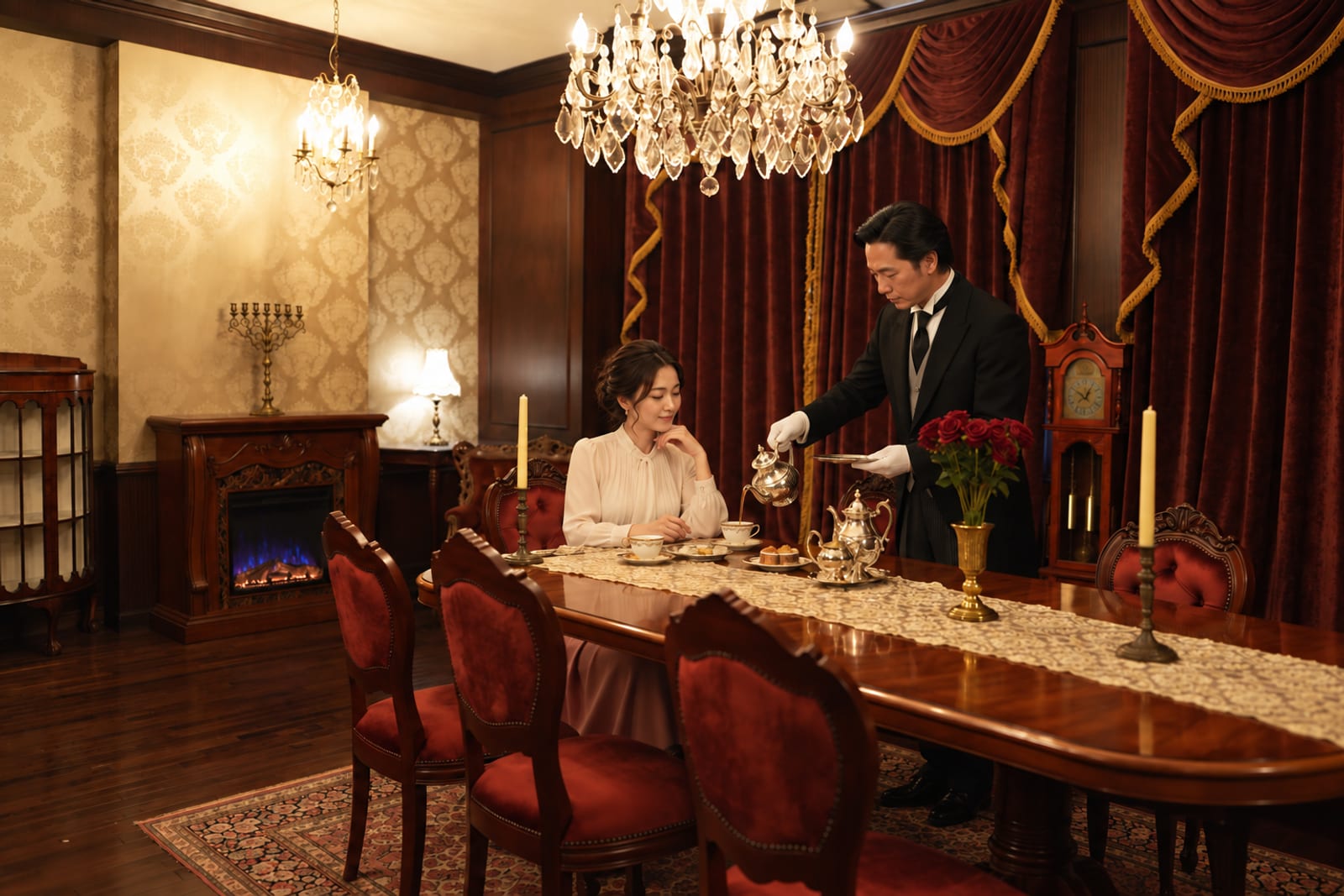
Light and shade in the grain
In raking light, look closely at the warm colour and intricate figure of the yew.
Read more
The two pedestals
From the end of the table, look at the base and confirm the design that places no legs at the corners.
Read more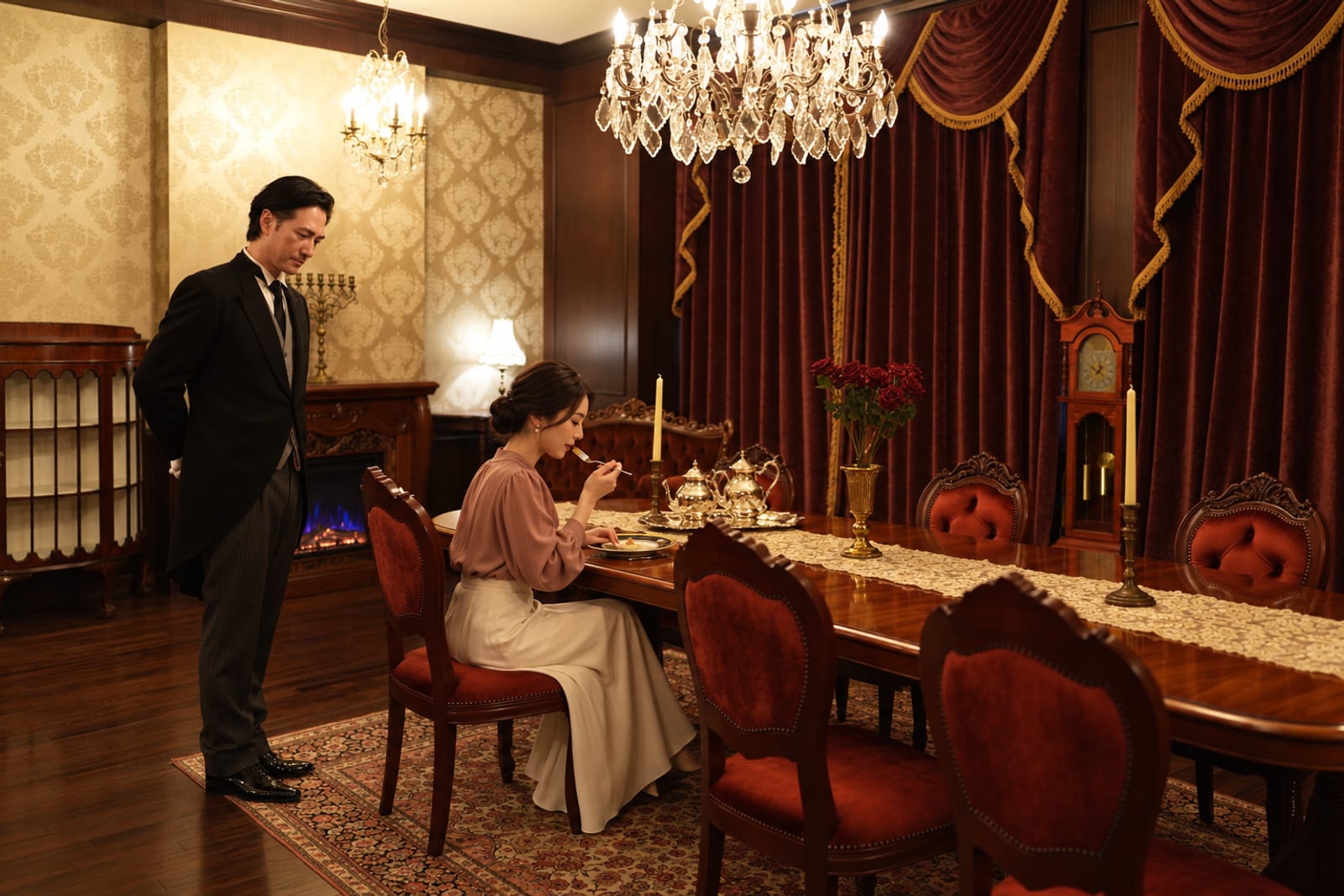
The height of the chairs
As your butler draws the chair, notice how the difference between top and seat supports the act of sitting.
Read more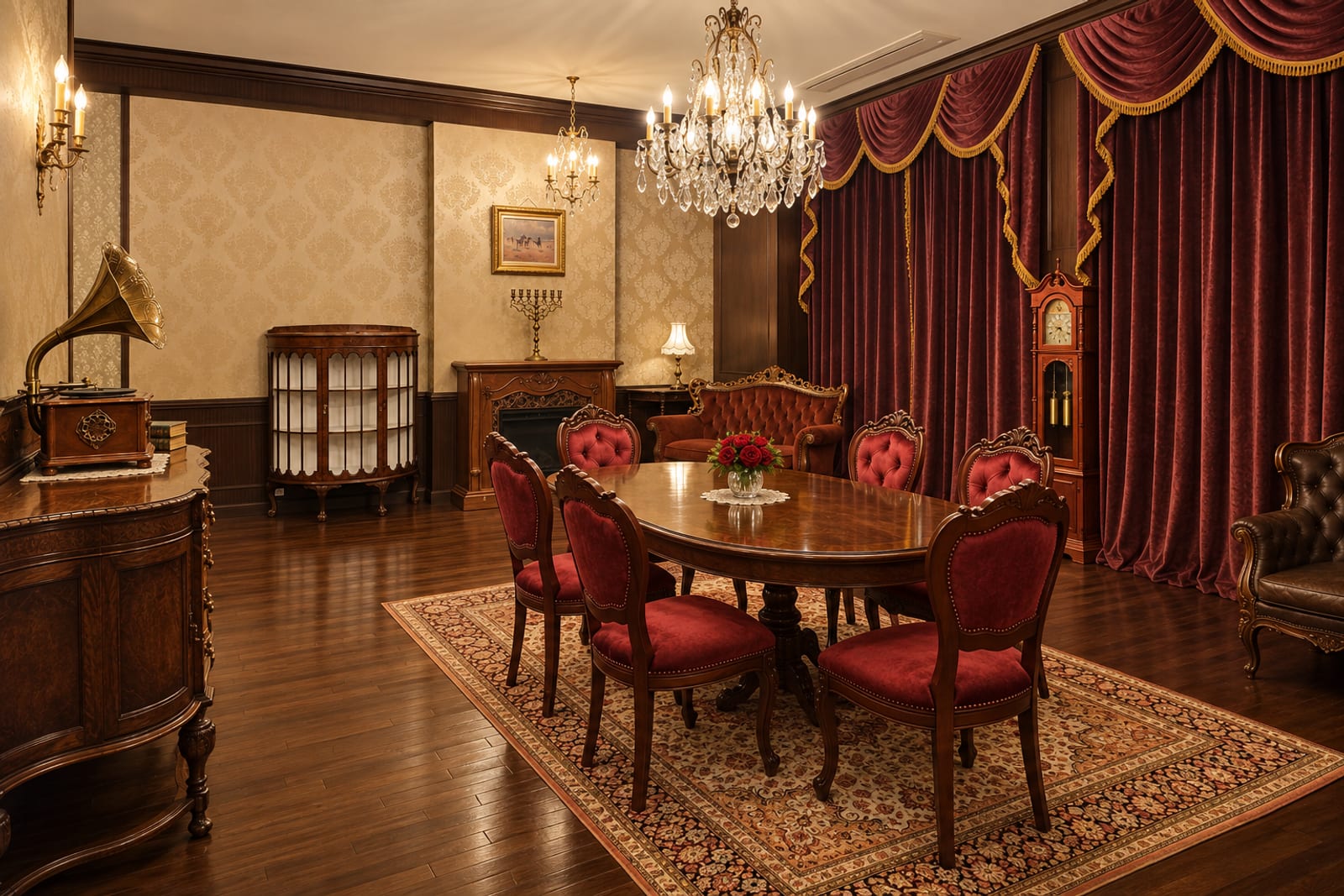
The centre line with the nine lights
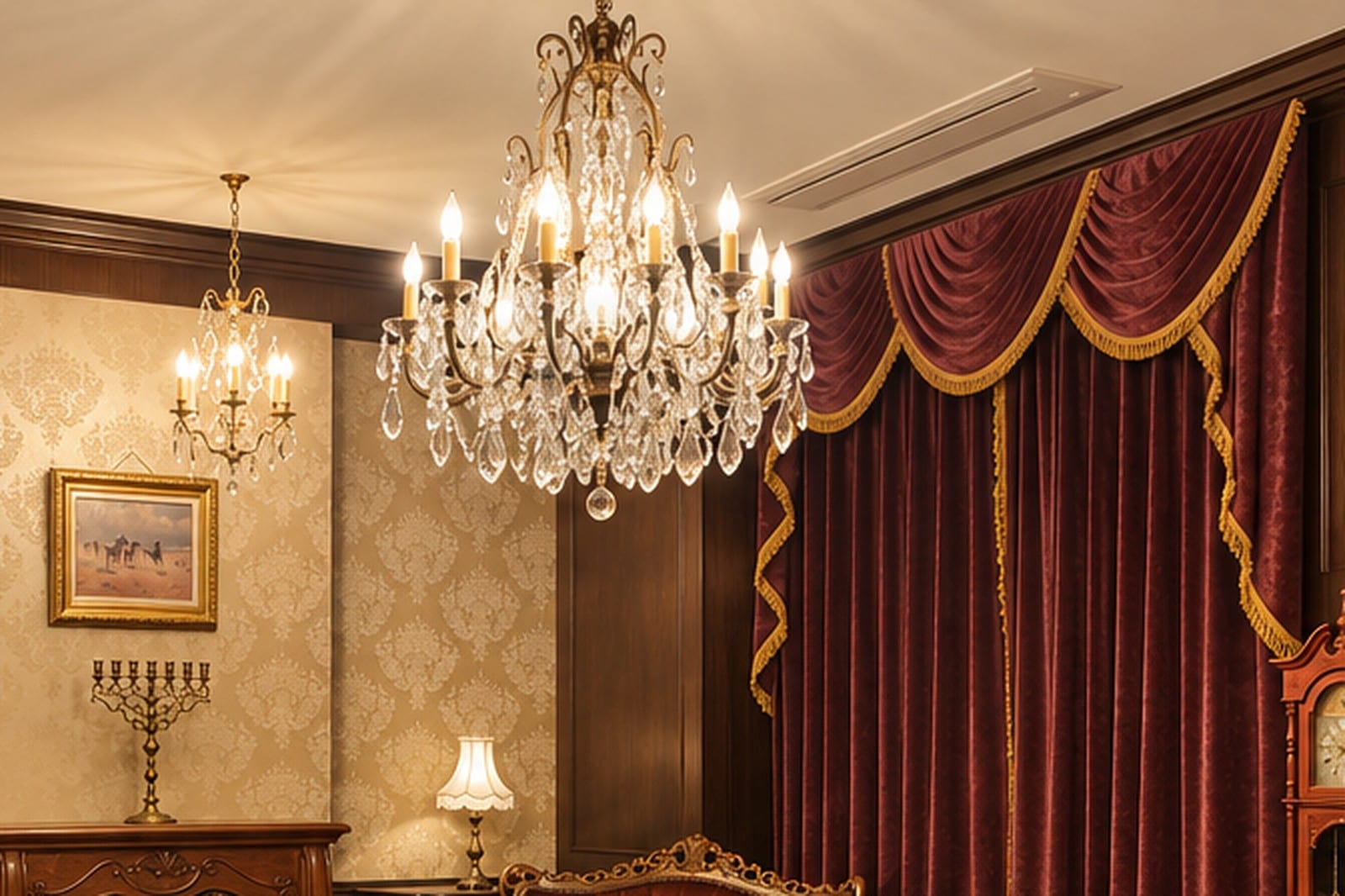
Look up from the middle of the top and read how the chandelier aligns with the axis of the table.
Read moreYour butler seats you in five movements
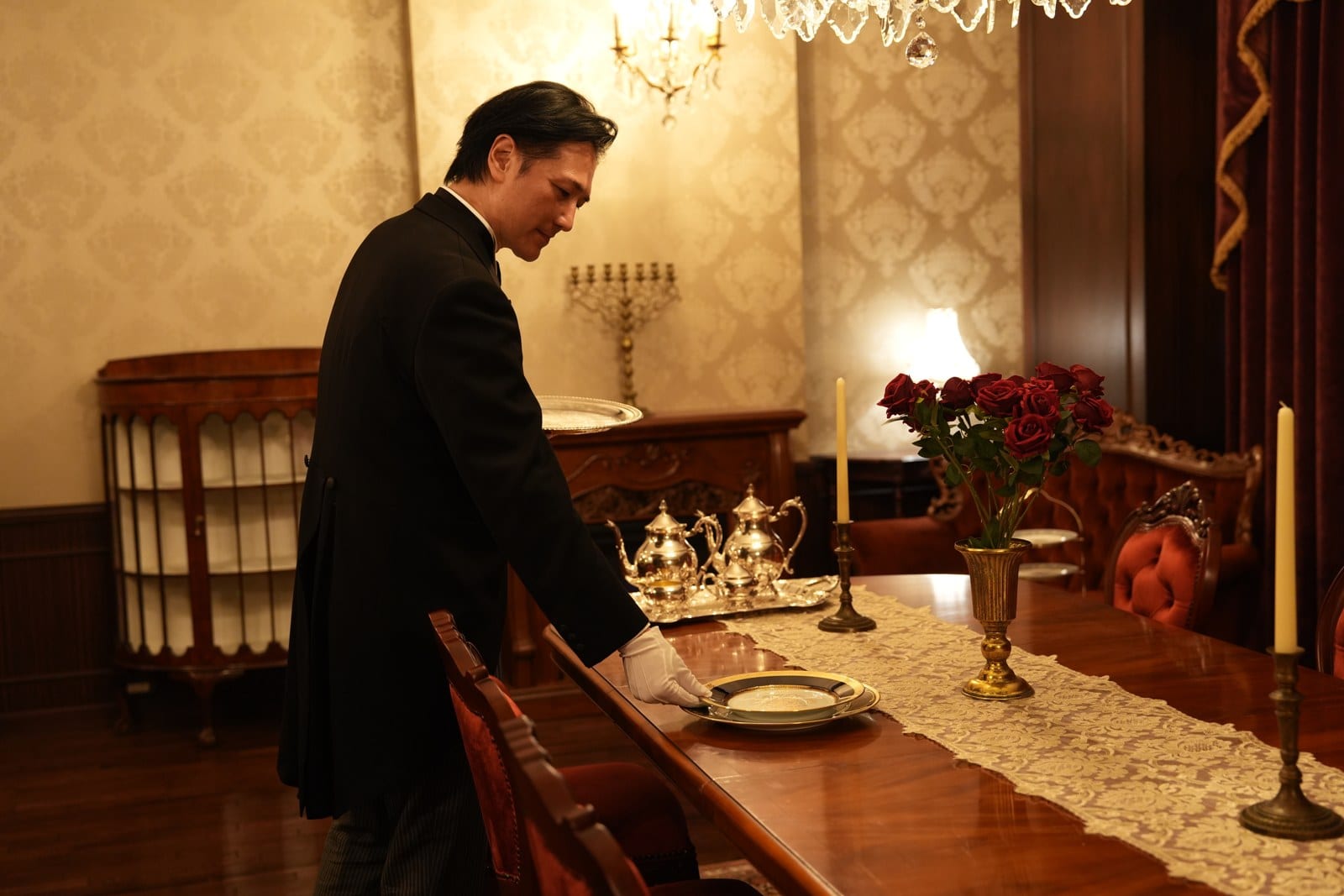
Checking the table
The surface of the wood and the spacing of what lies upon it are checked, so the space is safe.
Showing you the way through
Watching the pedestals and the chairs, your butler guides you to the side that is easiest to walk along.
A hand on the back of the chair
The chair is drawn straight and quietly, never dragged across the floor.
Waiting for your pace
Without hurrying you, your butler waits until your distance from the top feels natural.
Returning the chair
As you sit, the chair is moved forward to a position that is comfortable for your feet.
What you may do at the table
- Being seated and studying the grain under your butler's guidance
- Commemorative photographs and scenes of dining within the Manor
- Meetings and small gatherings of up to six
- Bringing your own food and drink
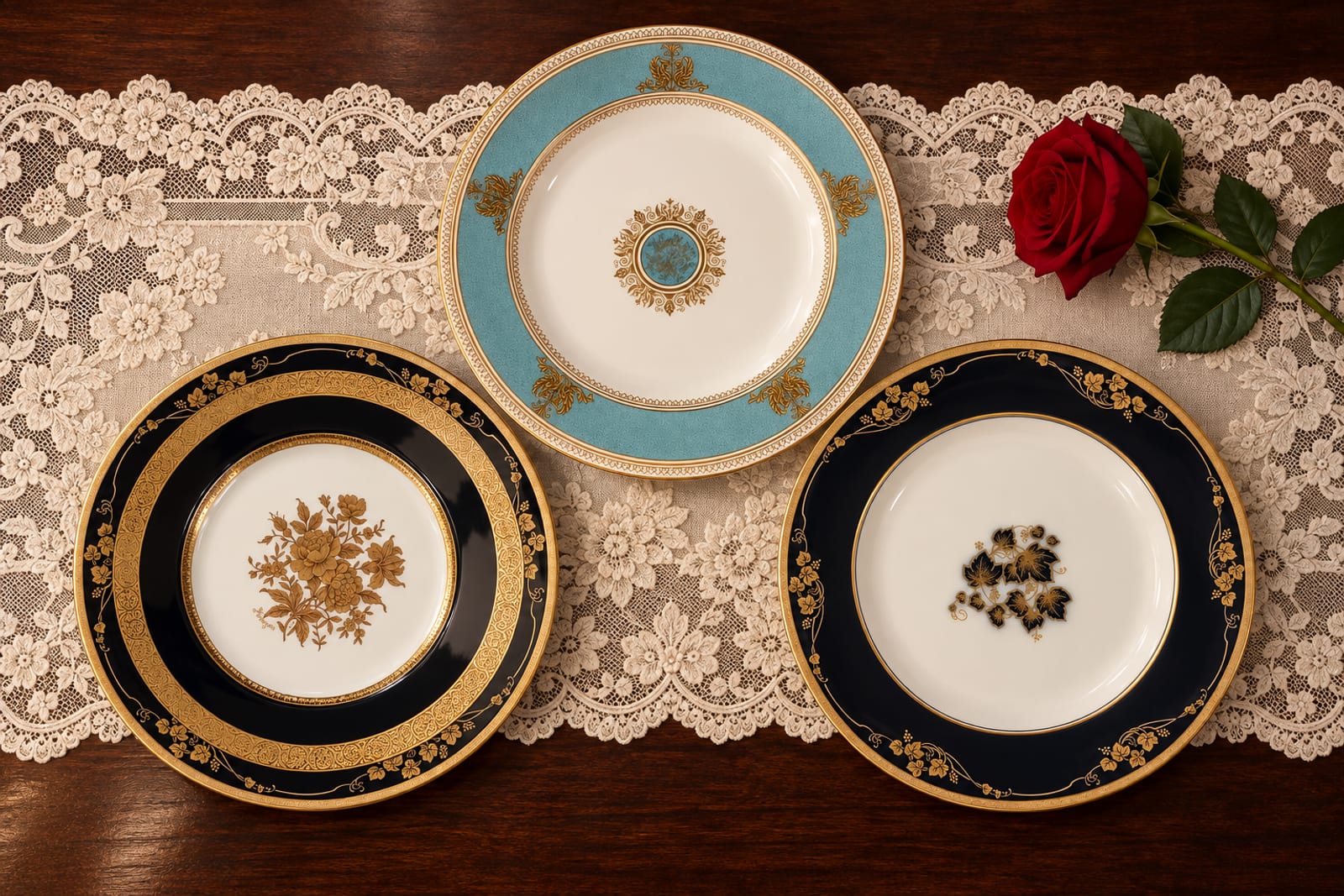
- Watching your butler handle the silver and porcelain
What we ask you to refrain from
- Use of the Manor without a butler present
- Dragging the table or moving the pedestals
- Placing hot or wet items directly on the top
- Sitting or standing on the table
- Meals served by the butler
How does the same yew change its expression between day and night?
By day, the flow of the grain and the full length of the table are easiest to read. Pause as you enter the Dining Room and look across the top from end to end, and the intricate figure joins into a single surface. Your butler also keeps the space clear before silver and porcelain are set, so your eye can reach the material itself.
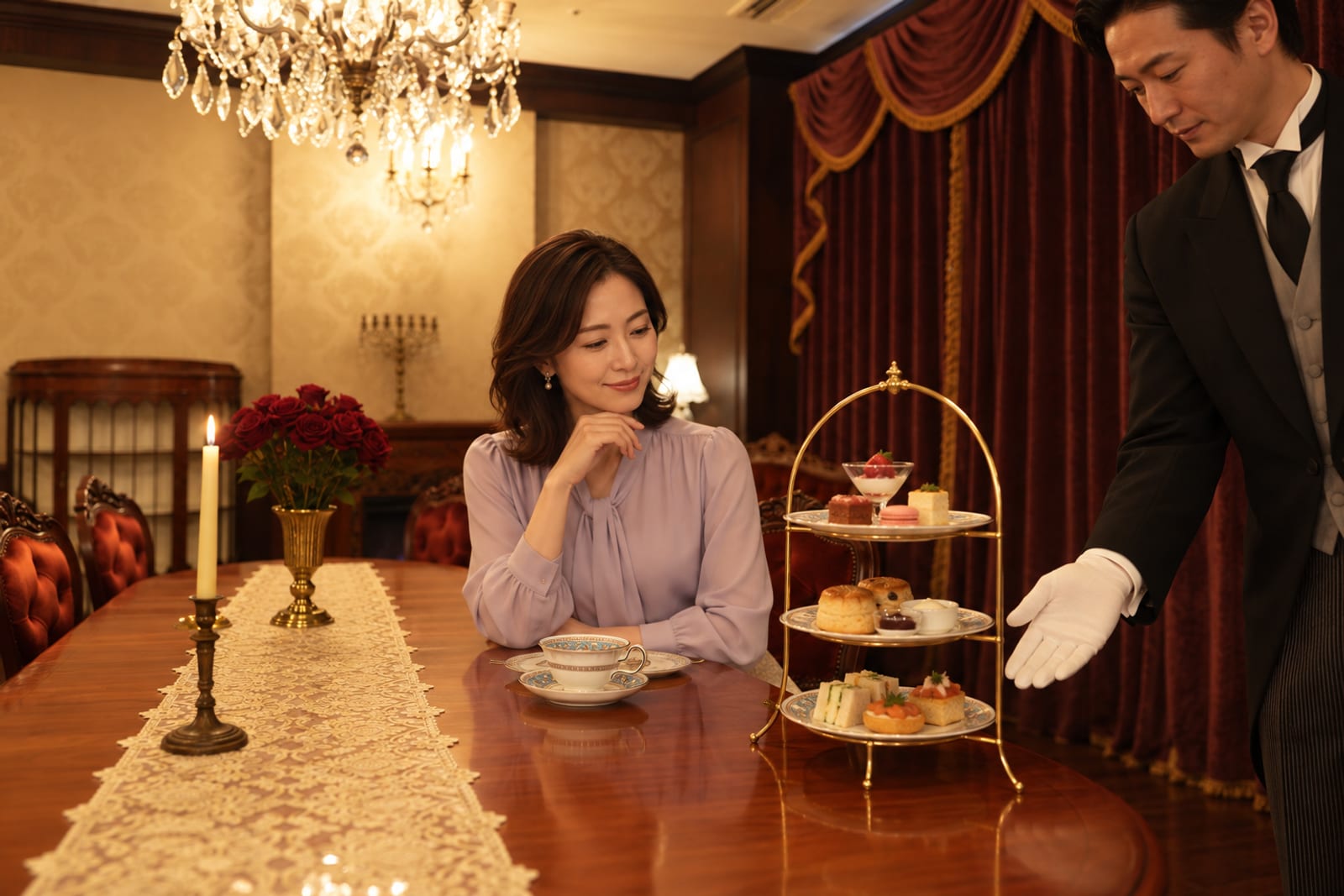
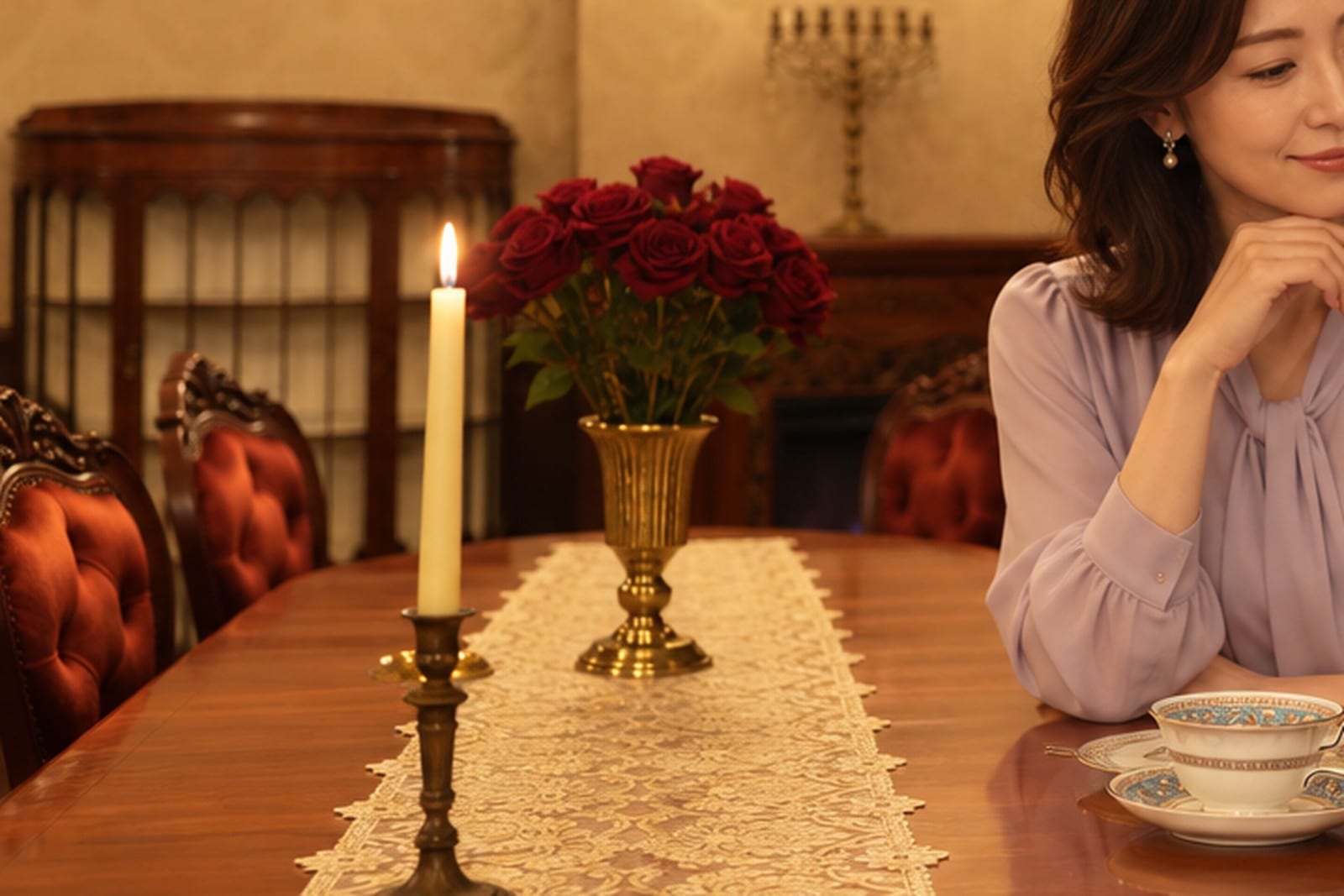
For an afternoon tea you have brought with you, white porcelain, the gleam of silver and the warm colour of yew come together. Your butler does not serve meals, but will quietly show you where to set what you have brought so that it is safe, the spacing that protects the top, and the order in which to reach for what is at hand.
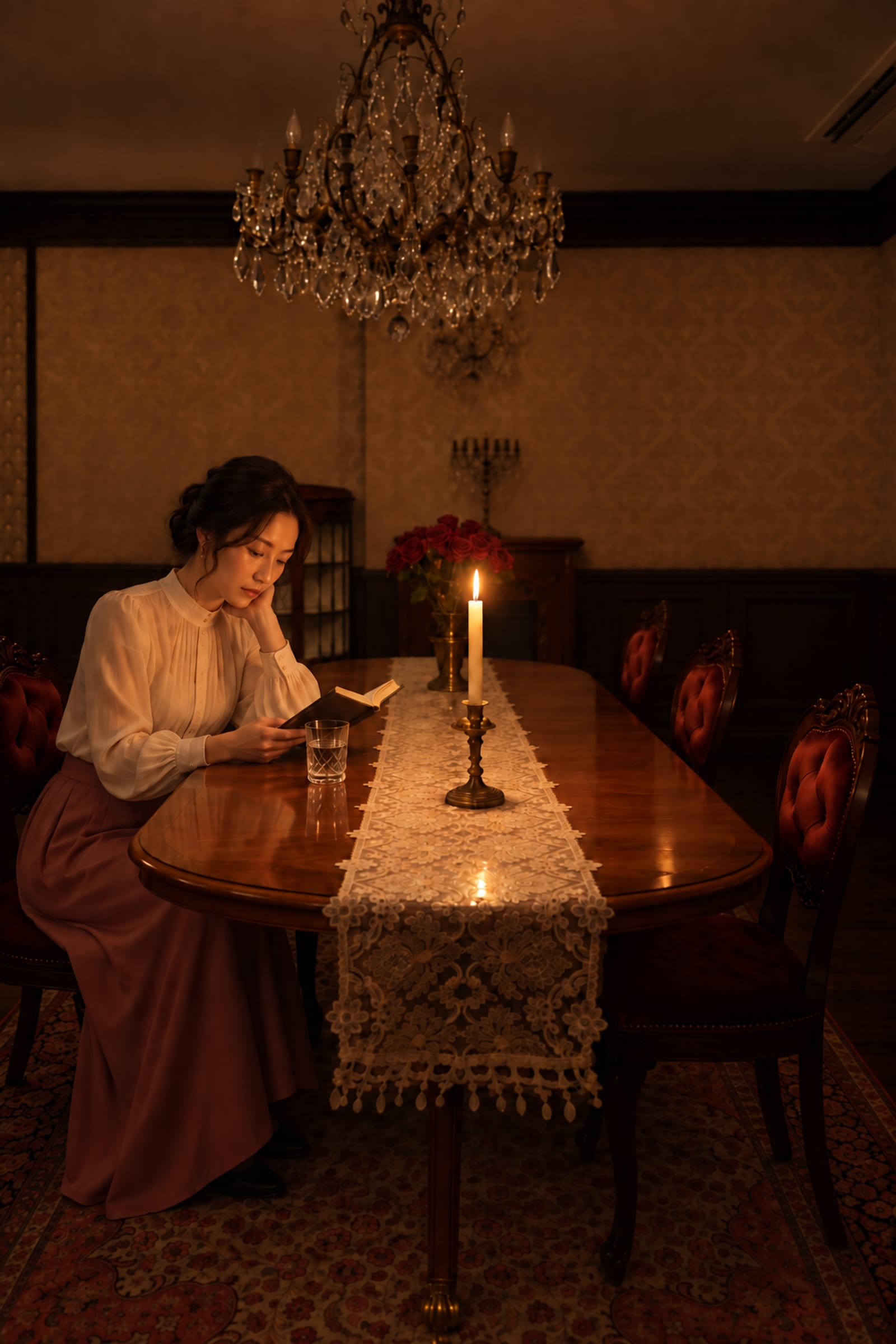
By night, the nine-light chandelier and the candelabra deepen the relief of the grain. Fully lit or with the lights lowered, the same top shows different layers of colour. For photographs, take the whole room first, then the details where the light runs at an angle, and the character of the timber is easier to capture.
Your butler protects the wood and makes its use visible in every movement
Protecting the table is not only a matter of keeping things away from it. Before moving a chair, a Queen's Butler butler looks at the floor and the pedestals; before setting anything on the top, checks its base, and arranges it so that neither moisture nor heat reaches the wood. The necessary movements are made in advance, so that you may simply be at ease.
White gloves are not a performance reserved for the silver. Your butler never rests a careless hand on the edge of the table, holds the chair back at a stable point, and checks the space around each object as it is placed. The spirit of the Japan Butler Association, which runs this Manor, shows in the hands that protect the yew. Care for objects is shown in movement before it is spoken in words.
If this is your first visit, you may wonder where to put your hands. Your butler is close by; when you wish to take a photograph, change seats or lay out what you have brought, simply ask. Small confirmations, one after another, are the surest way to hand this table on to the next hour.
QIs this table an antique?
It was made in England in the 1980s. The twin-pedestal form itself was perfected in 18th-century England.
QMay I actually sit at it?
Your butler will check the table and chairs and seat you. Notice, as the chair is drawn, how easy the pedestal form makes it. If you wish to change seats, please ask your butler rather than moving the chair yourself.
QHow many can gather at the table?
The Manor accommodates up to six guests. Your butler will arrange seats to suit your number and purpose, keeping sightlines and passage clear. For one guest, a seat close to the grain; for two, a placement that shows the table's length; we are glad to hear your wishes.
QWhere should I photograph it from to show its shape?
Take the full length from the entrance side, then the grain and pedestals from an angle. Your butler will clear the way and guide you to a good standing position.
QMay I bring food and drink to the table?
You are welcome to bring your own. Your butler will show you how to set it so the wood is protected; meals are not served by the butler. Please avoid placing wet or hot vessels directly on the top, and enjoy them where your butler has arranged.
QWill a female butler guide me?
We have both female and male butlers. If you have a preference, please let us know when booking. As butlers of Queen's Butler, all guide you through the table and its etiquette with the same care, whatever their gender.
Around the table: the nine lights, the chairs and the carpet
You may also wish to read

Take your seat at this table.
Be seated under your butler's guidance and spend your time looking at the yew's surface and the form of its pedestals. The silver and porcelain are introduced on a separate page as a collection you may hold in your hands.