How to Read Antique Furniture
Separate the date from the style, and the provenance of a piece comes into view.
About How to Read Antique Furniture
Reading antique furniture means not judging value by age alone, but reading in order the date of manufacture, the style, the place of origin, the material, the use and the way the piece is placed in the house. The words Georgian, Rococo and Victorian, once separated from the date of the piece itself, reveal both the inherited form and the period in which it was actually made.
IFirst, separate the date of manufacture from the style
When a label reads "England, 1980s" and the description says "a form perfected in the Georgian period", there is no contradiction. The first gives the period in which the piece was made; the second, the source of its form. The butler speaks first of the date, then of the style, then of material and use.
The Manor holds chairs of a form born in nineteenth-century England, a nineteenth-century French bed, a table and desk from 1980s England, and a chair made in present-day Japan, all together. Not confining the house to a single period is what gives the Manor its "layered time".
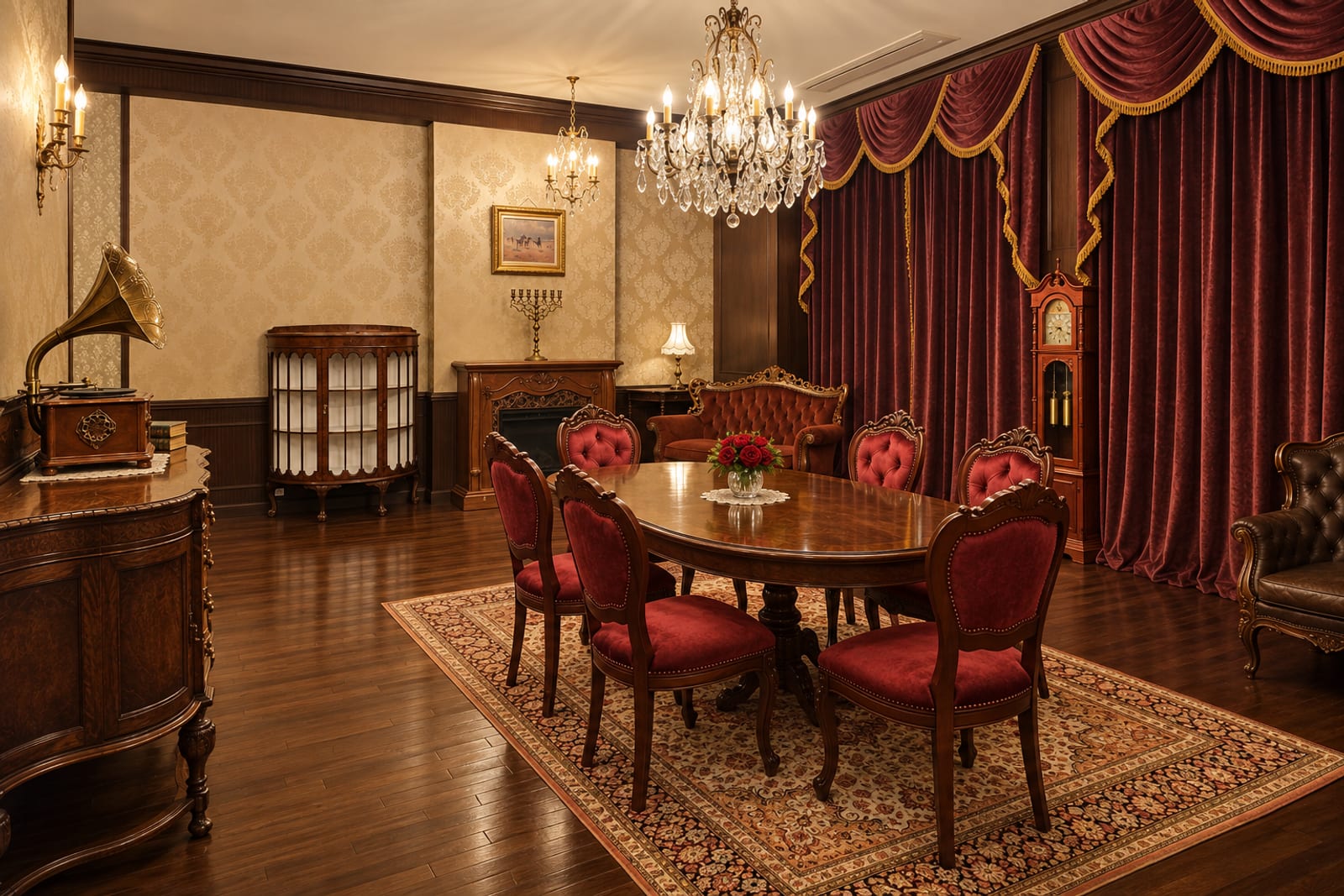
Do not shut a room into a single period
Red chairs, a yew table, crystal light.
IIA form for dining, perfected in the Georgian period
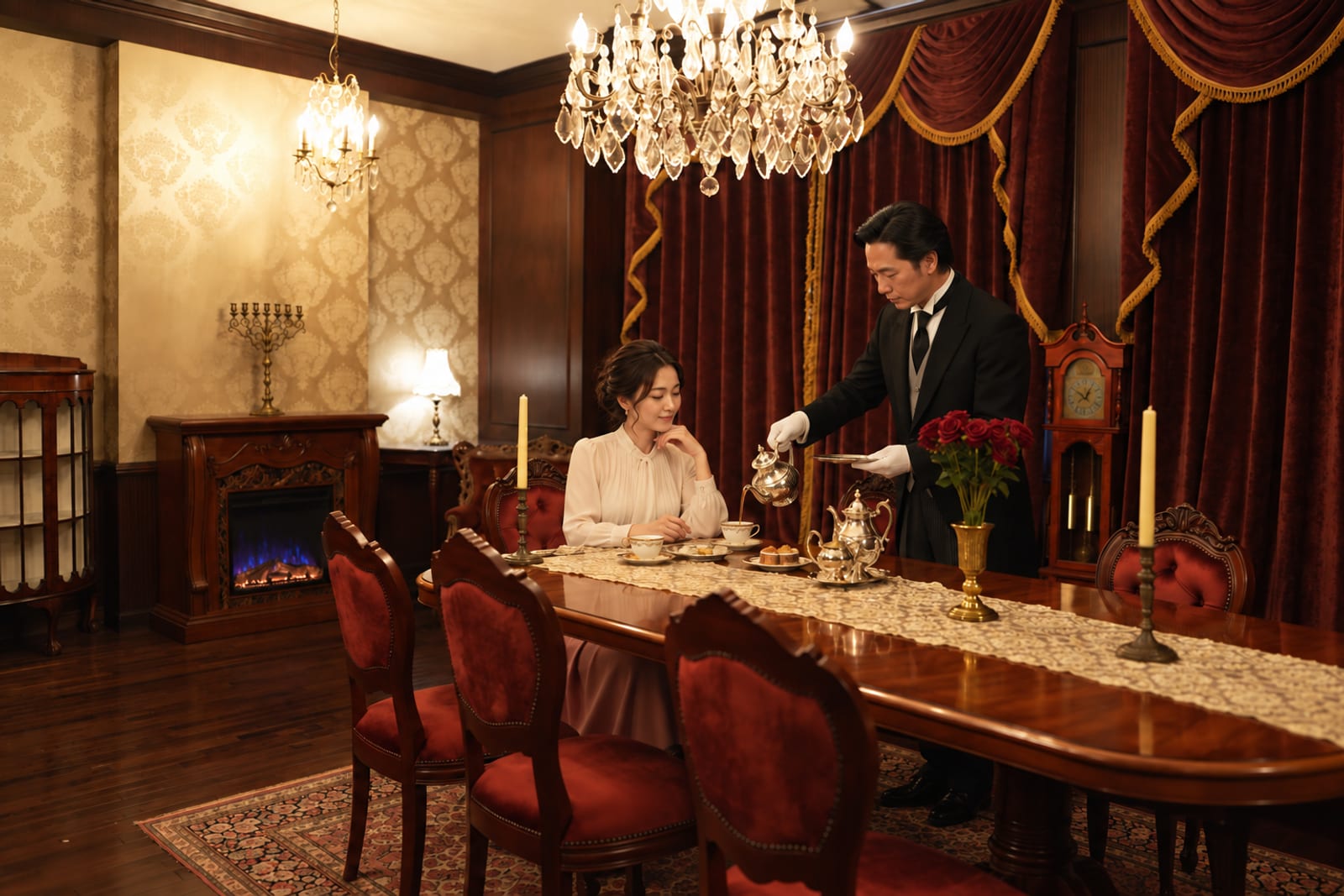
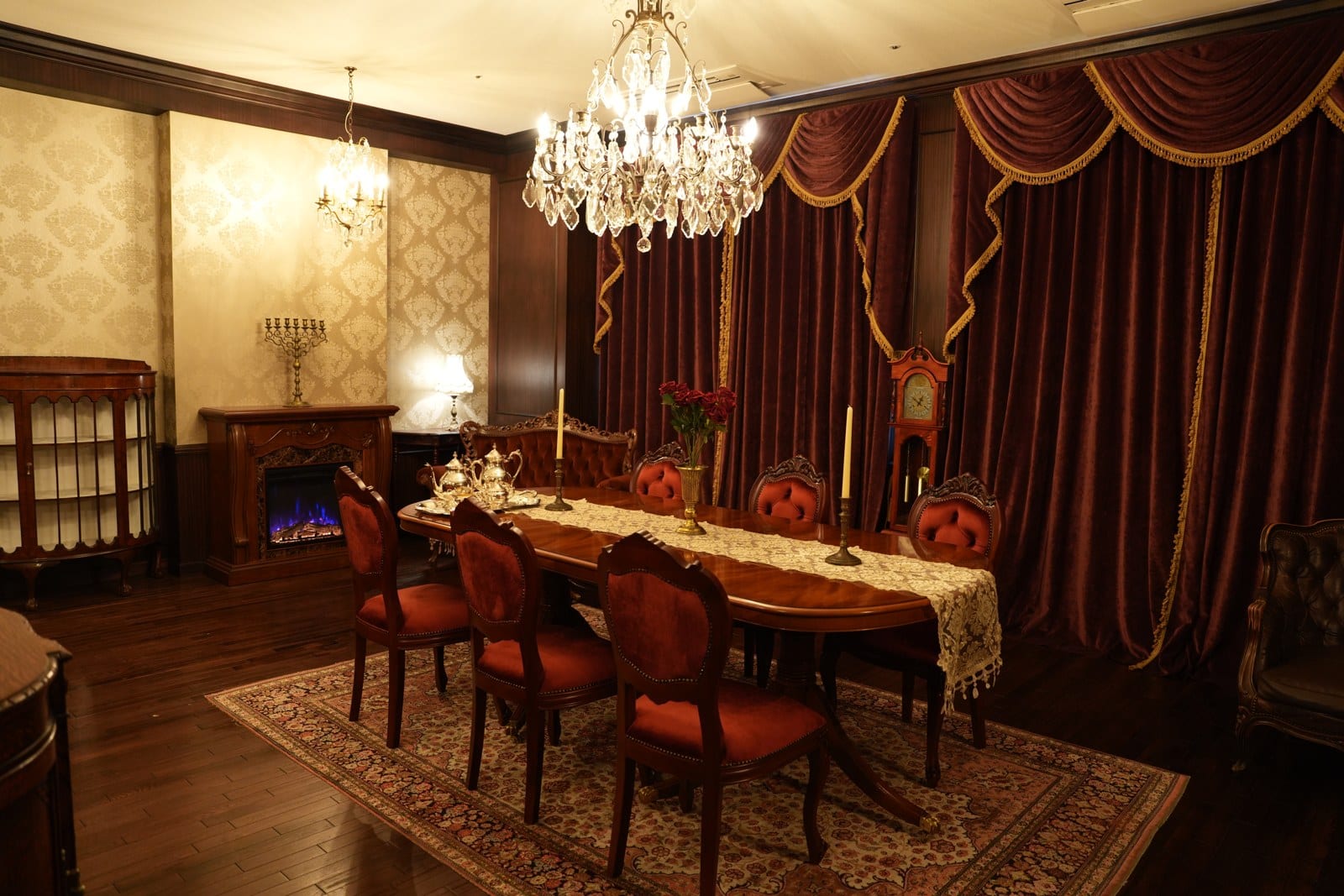
The Bradley table in the dining room is of yew, made in England in the 1980s. Its twin-pedestal form, with two columns supporting the top, is recorded in the Manor's notes as the classic English dining table perfected in the eighteenth century, in the Georgian period. With no legs at the corners, it leaves the feet unhindered at every seat.
Overall length 2,286 mm; height of top 787 mm. Yew has a complex, warm figure and is the wood once used for the English longbow. When the butler draws a chair, what catches the eye is the absence of legs and the smoothness of the path to the seat. Please regard the style as a mechanism that supports the act of service.
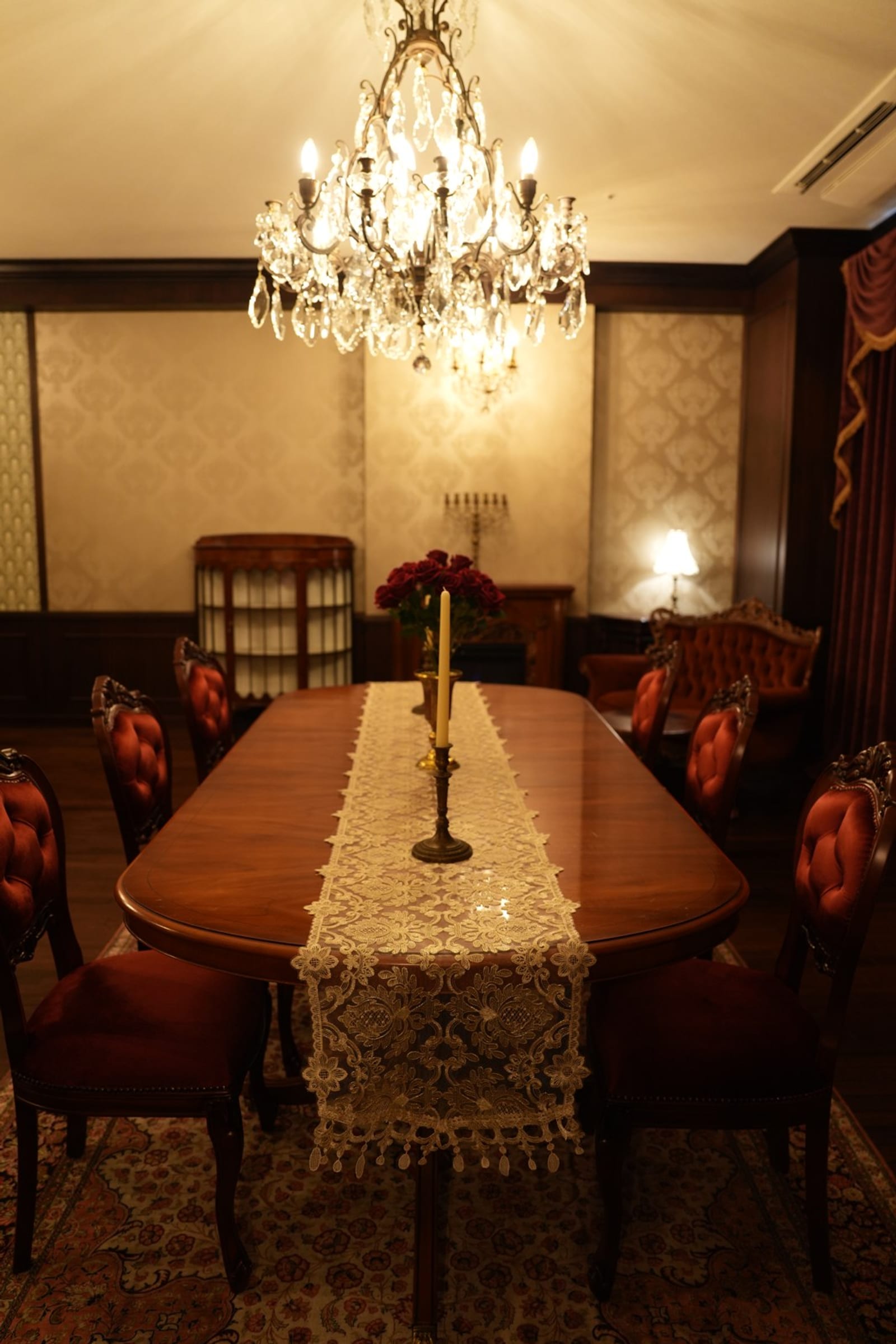
Two pedestals open the way to the seat
Made in the 1980s; a form perfected in the eighteenth century. An example of reading the two apart.
IIIIn the study, the logic of the age of the quill
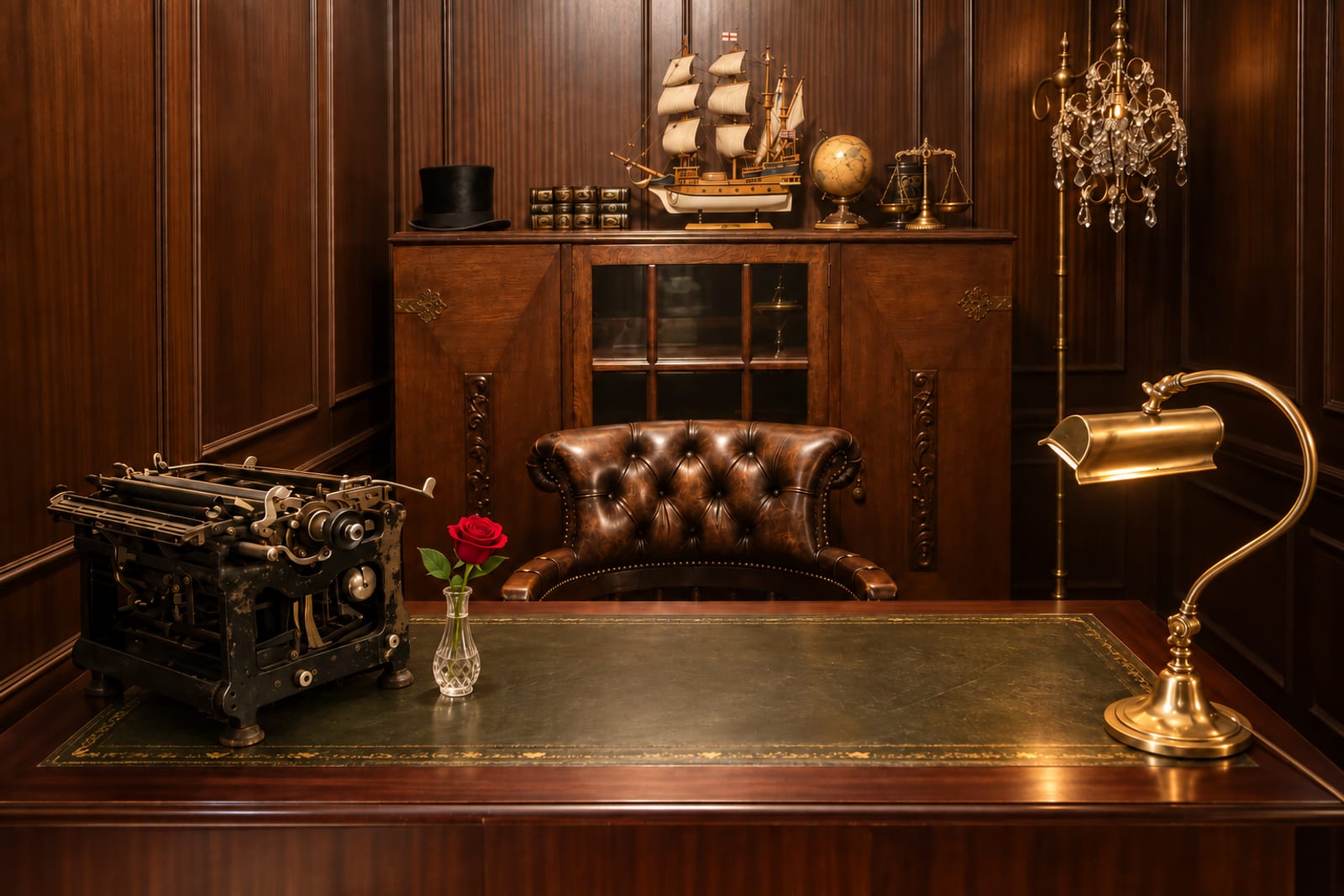
The twin-pedestal desk in the study is also from 1980s England, a mahogany body with a leather-inset top. It measures 122 cm wide, 61 cm deep and 76.5 cm high. The form in which two banks of drawers support the top was perfected in eighteenth-century England.
Before the desk stands a black leather captain's chair. The form, born in nineteenth-century England, unites a low back with curved arms; it was devised for sitting steadily amid the roll of a ship, and later became a fixture of the study.
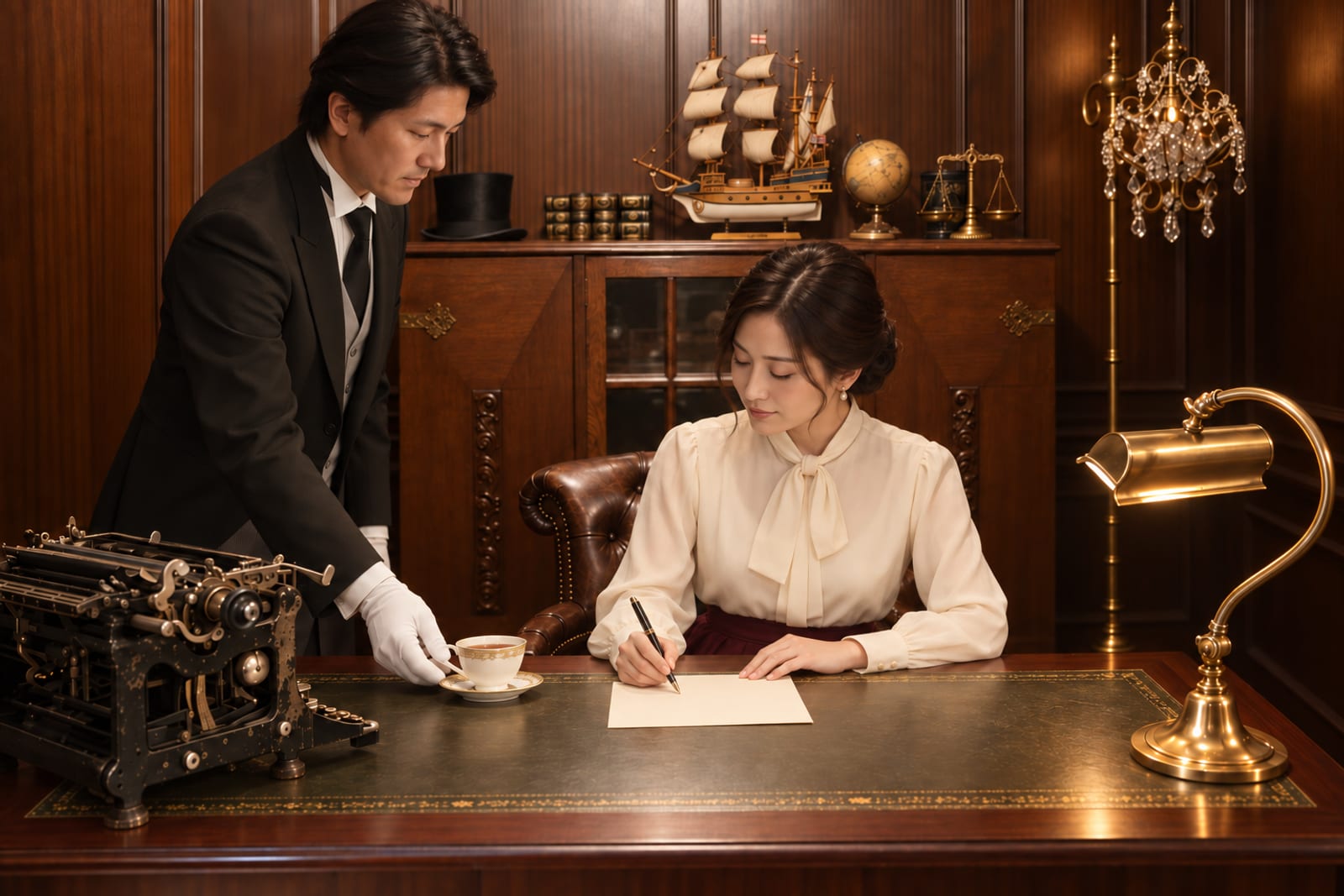
Before it was ornament, the leather supported the pen
With inkwell, quill and sealing wax, one can imagine the work the desk once did.
IVThe Rococo curve is seen in the bedroom and the fireplace room
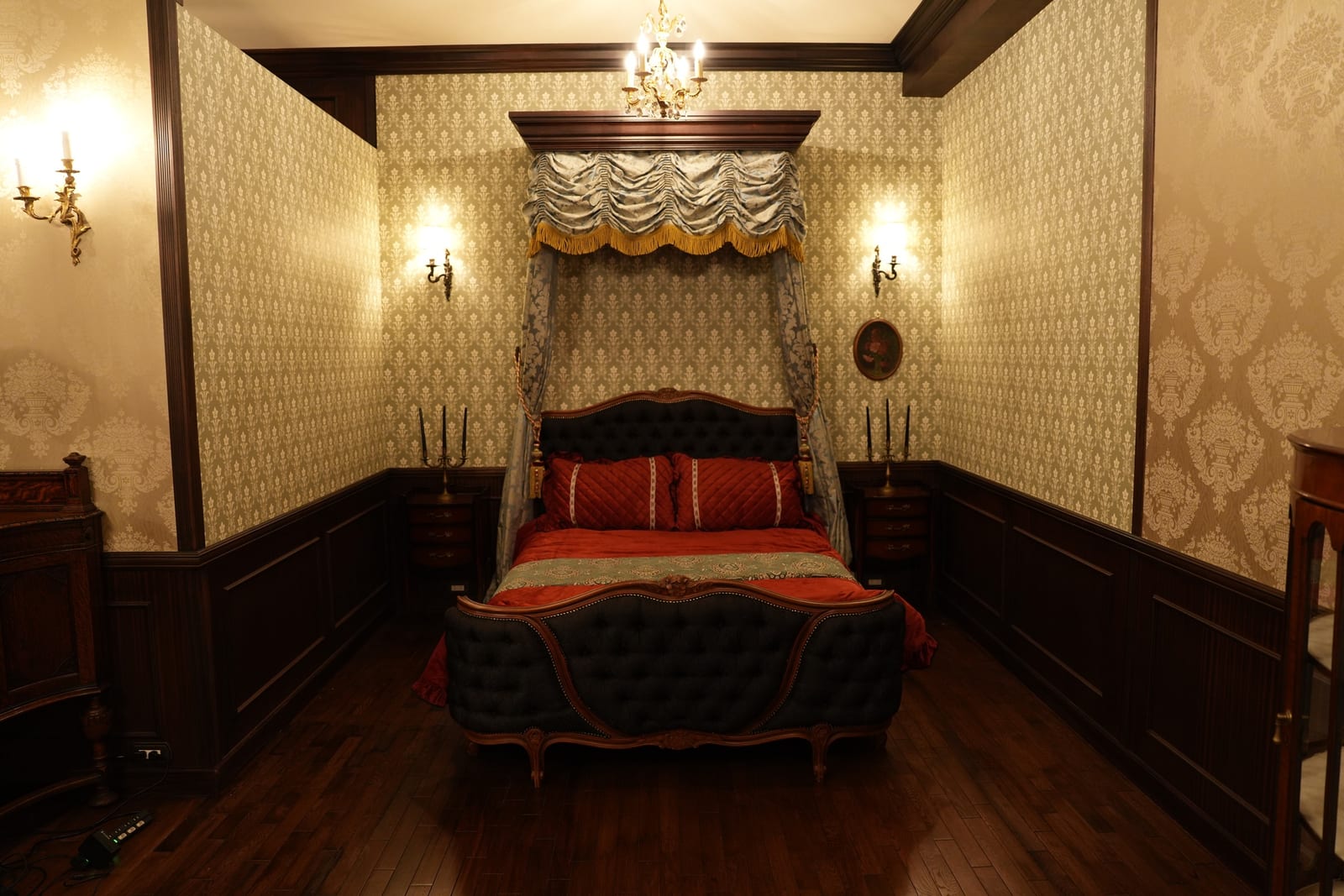
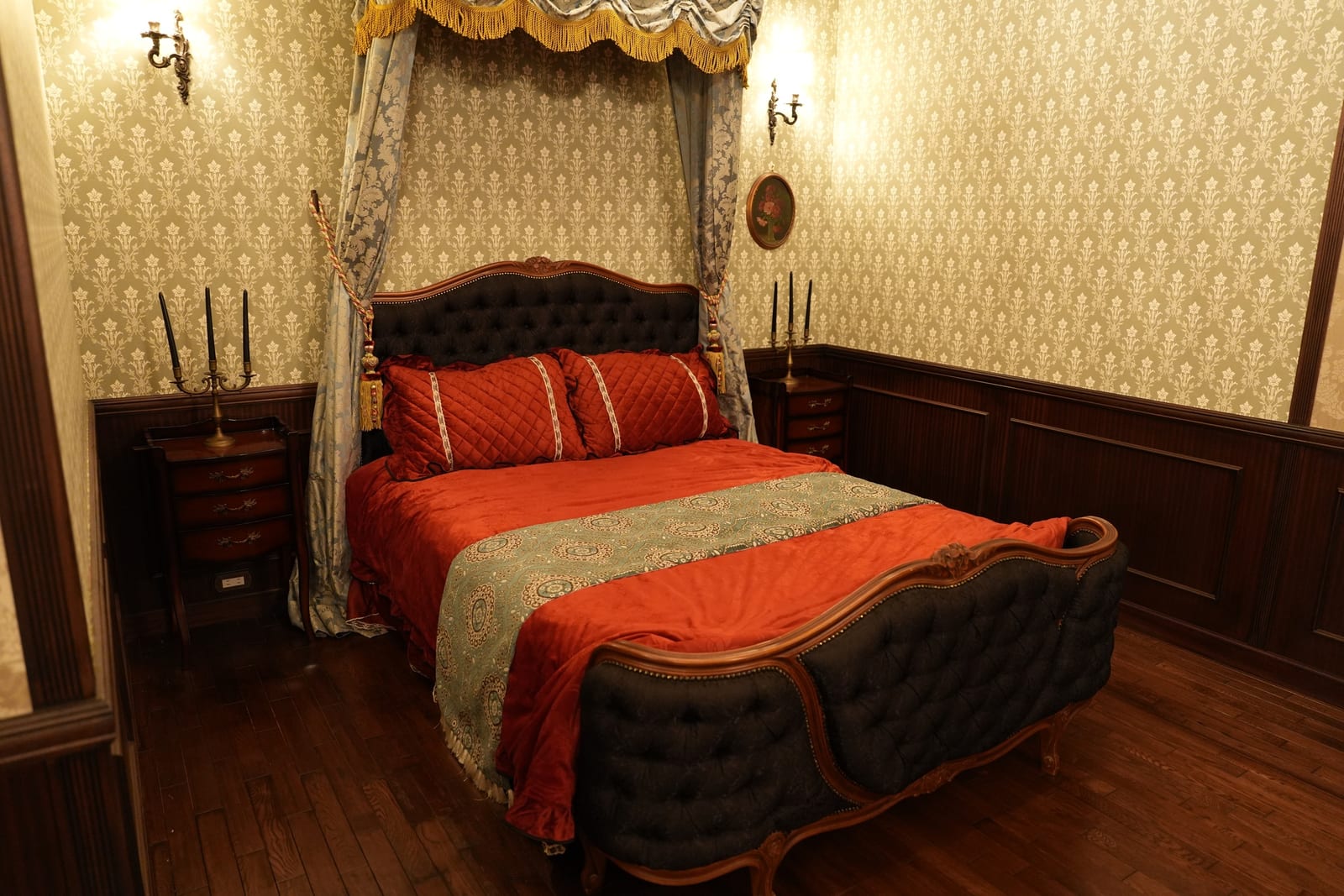
The corbeille bed in the bedroom is a nineteenth-century French piece. Corbeille means a basket of flowers; the frame curves high at both head and foot, enfolding the one who lies there like a basket. Black silk damask upholstery, capitonné that buttons the fabric into padded diamonds, and a fully carved frame.
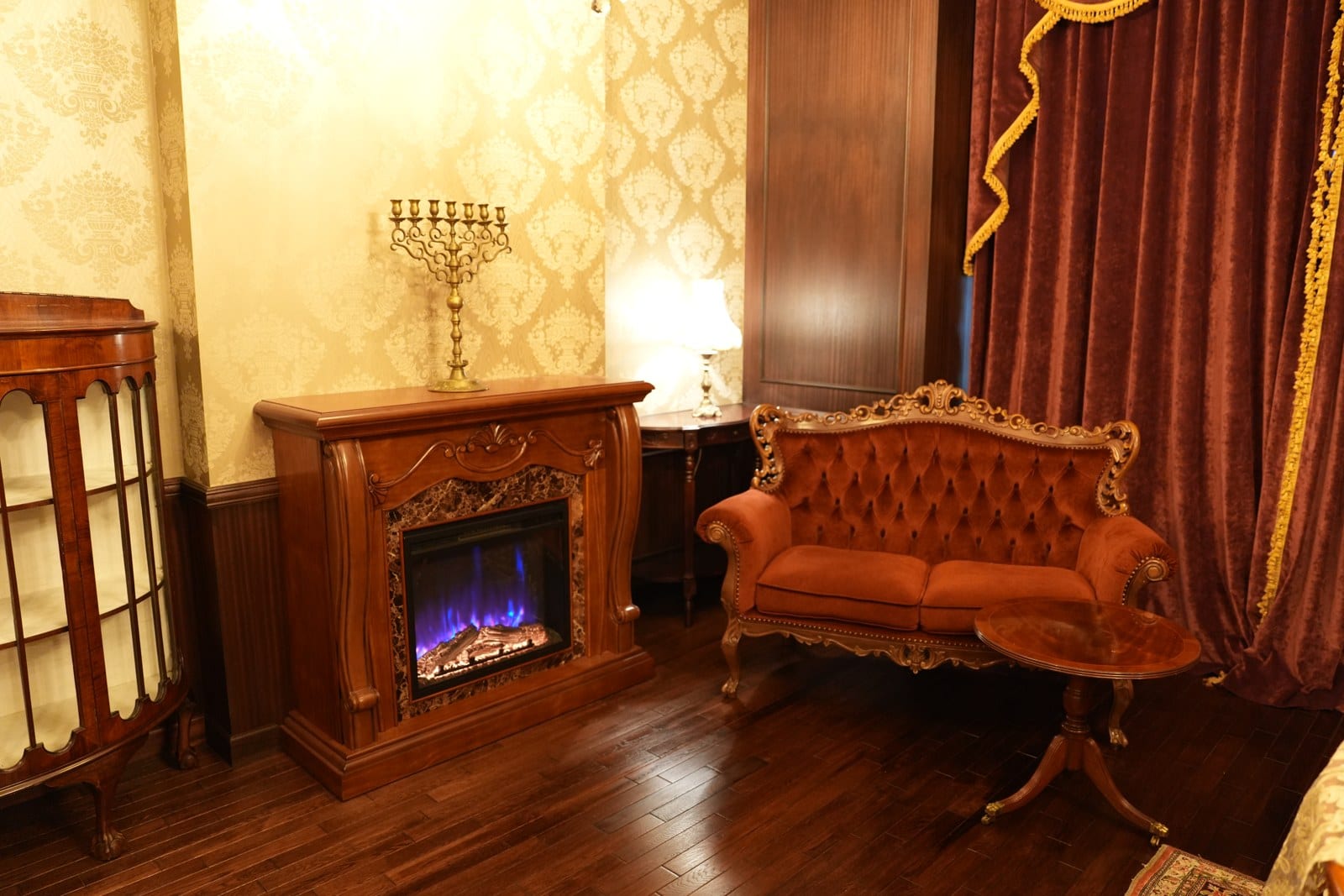
In the fireplace room stands a Rococo-style sofa upholstered in wine-red velvet. Here "Rococo-style" describes the visible features of the style: cabriole legs, curves, carving and upholstery. Dates of manufacture are given only for pieces so recorded in the Manor's notes.
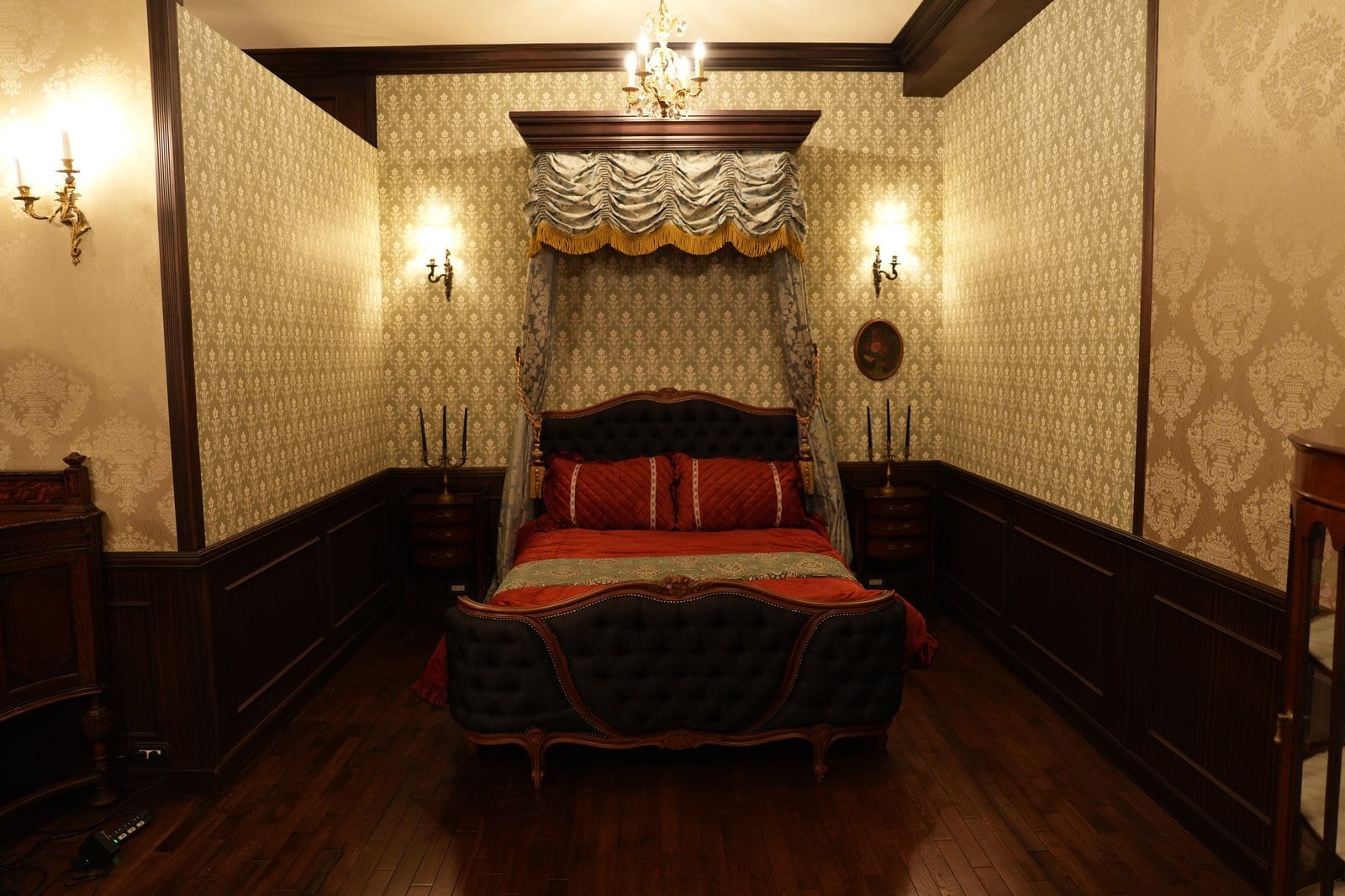
Tracing the outline of the basket
The impression of a style is read from concrete clues: the curve, the upholstery, the carving.
VThe Victorian salon is read as a setting, not a single piece
The fireplace room is furnished as a "Victorian salon": a walnut and marble-effect mantelpiece, gold damask walls, wine-red curtains, a mantel clock and a pair of candelabra, a gilt-framed mirror, oil paintings and velvet seating.
Within the Manor, the word Victorian is used for the character of a space and for the style of the F.B. Rogers silver tea service.
The term "Victorian salon", which we hold dear at the Manor, is a name that describes the furnishing of the room.
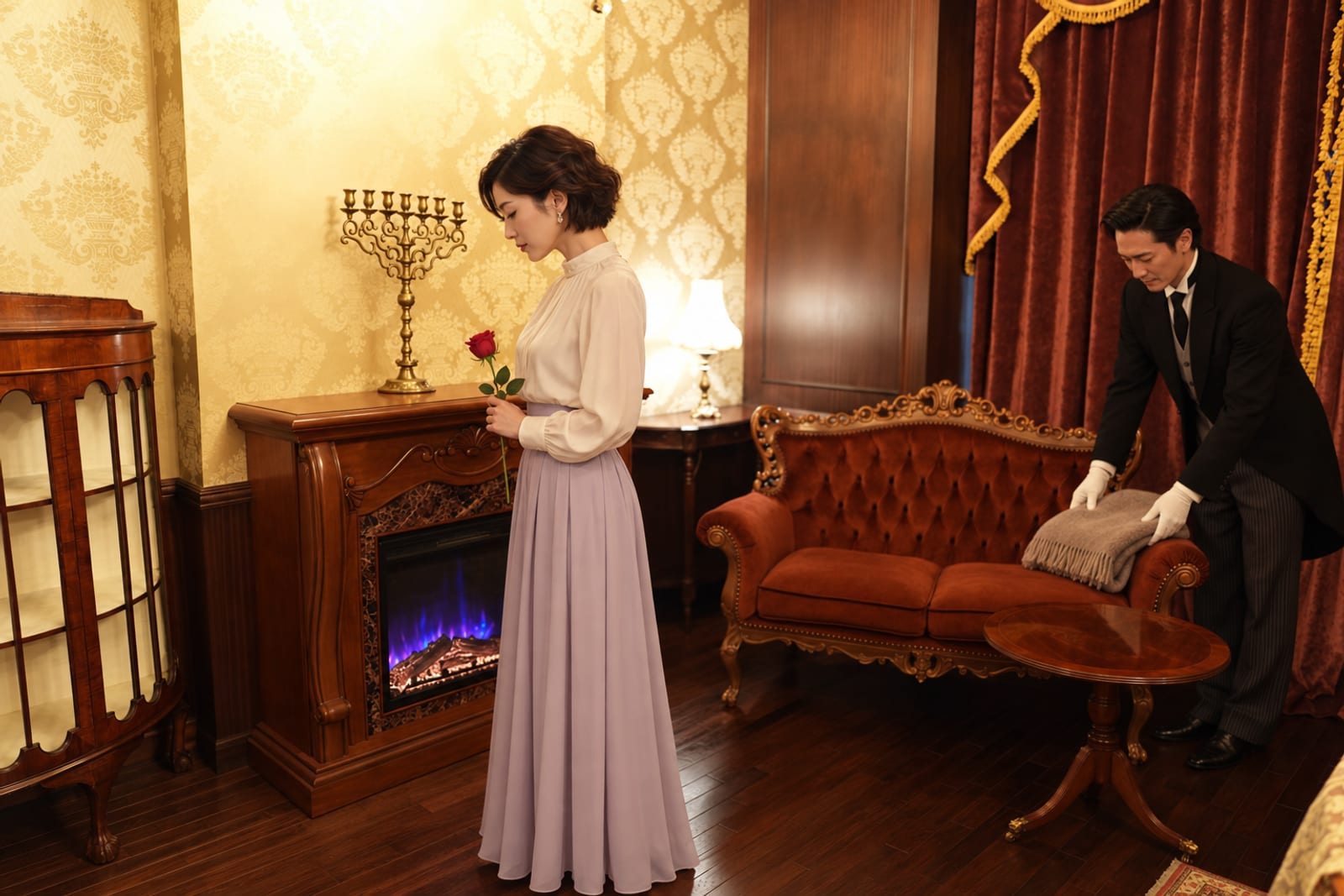
A gathering of furniture creates the period feel of a room
Widen the view to walls, fabric, light, mirror and paintings, and the Victorian emerges as a setting.
Three terms, compared against the pieces in the Manor
| Way of reading | Clues in the Manor | Distinction from date |
|---|---|---|
| Georgian form | The table and desk carried on two pedestals | The Manor's table and desk are 1980s English. The form was perfected in the eighteenth century |
| French Rococo | The curved corbeille bed, carving, capitonné, cabriole legs | The bed is nineteenth-century French. The Rococo-style sofa is read as a style from its curves and upholstery |
| Victorian salon | Fireplace, damask, deep red, mirror, candelabra, oil paintings | Describes the furnishing of the room, kept separate from the date of any single piece |
| English turned ornament | The barley twist of the bookcase | The bookcase is English antique. The ornament was in fashion in the late seventeenth century |
Style is the lineage of a form; date of manufacture is when the piece was made.
VITimber and upholstery are read by how they take the light
The warm figure of yew, the depth of mahogany, the dull sheen of black leather, the shadows in velvet, the weave of damask. Furniture changes its expression not only by outline but by how its materials receive the light. The butler shows each piece from a slightly different angle, under light from the window and the glow of the chandelier.
The barley-twist bookcase in the gallery is English antique, 183 cm wide. The spiral of its legs takes its name from the twist of an ear of barley, a turned ornament fashionable in Restoration England in the late seventeenth century. Here too, the date the bookcase was made and the period in which the ornament was in fashion must be read apart.
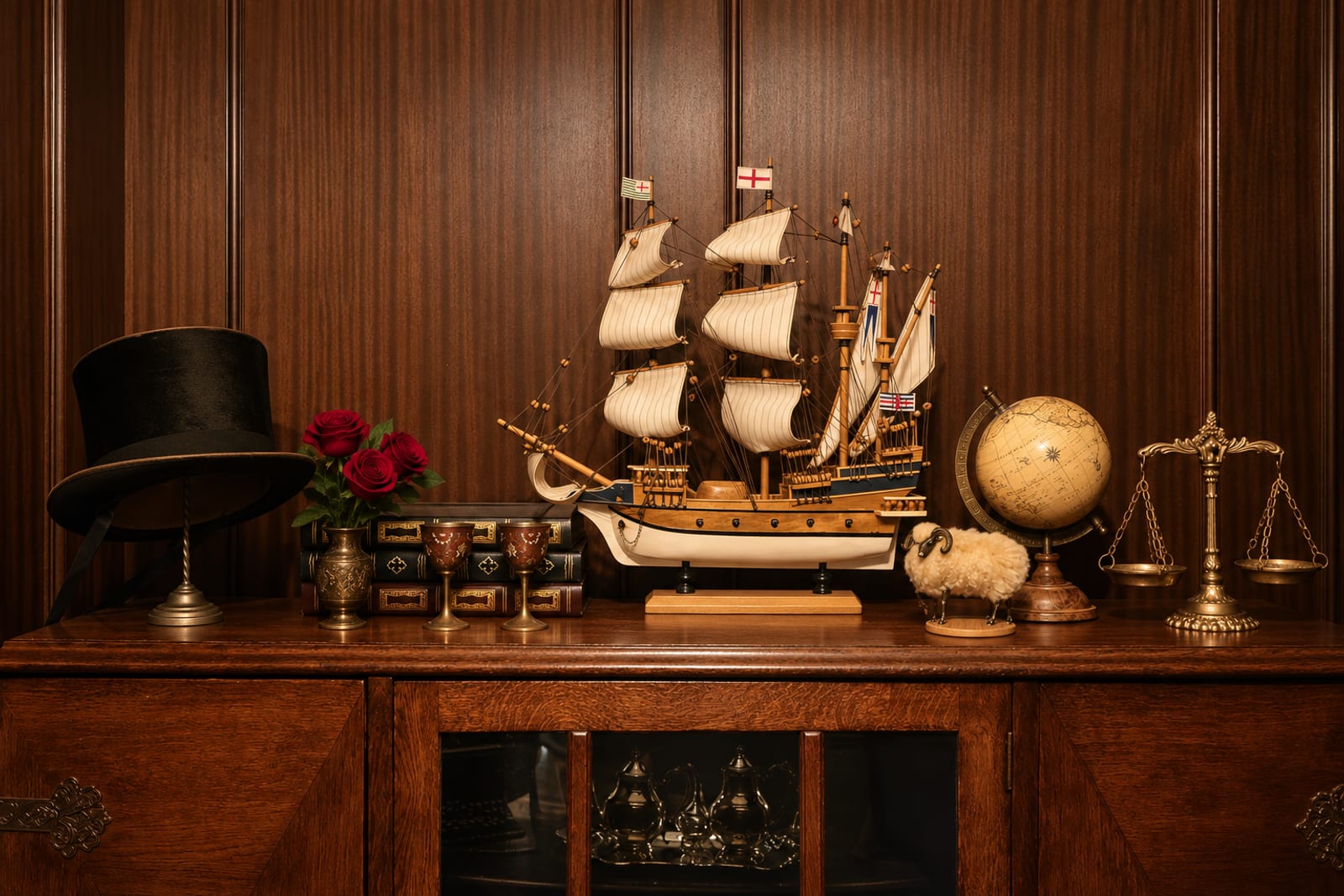
Learn the name of the ornament from its form
The barley twist is a spiral turning that resembles the twisted ear of barley.
VIIRead the placing in the house, and the piece is complete
Furniture is never complete on its own. Red chairs line the dining table, the captain's chair waits before the study desk, the sofa faces the mantelpiece. Where people enter, from which side the butler draws the chair, where the eye is drawn: the placing reveals the role of each piece in the house.
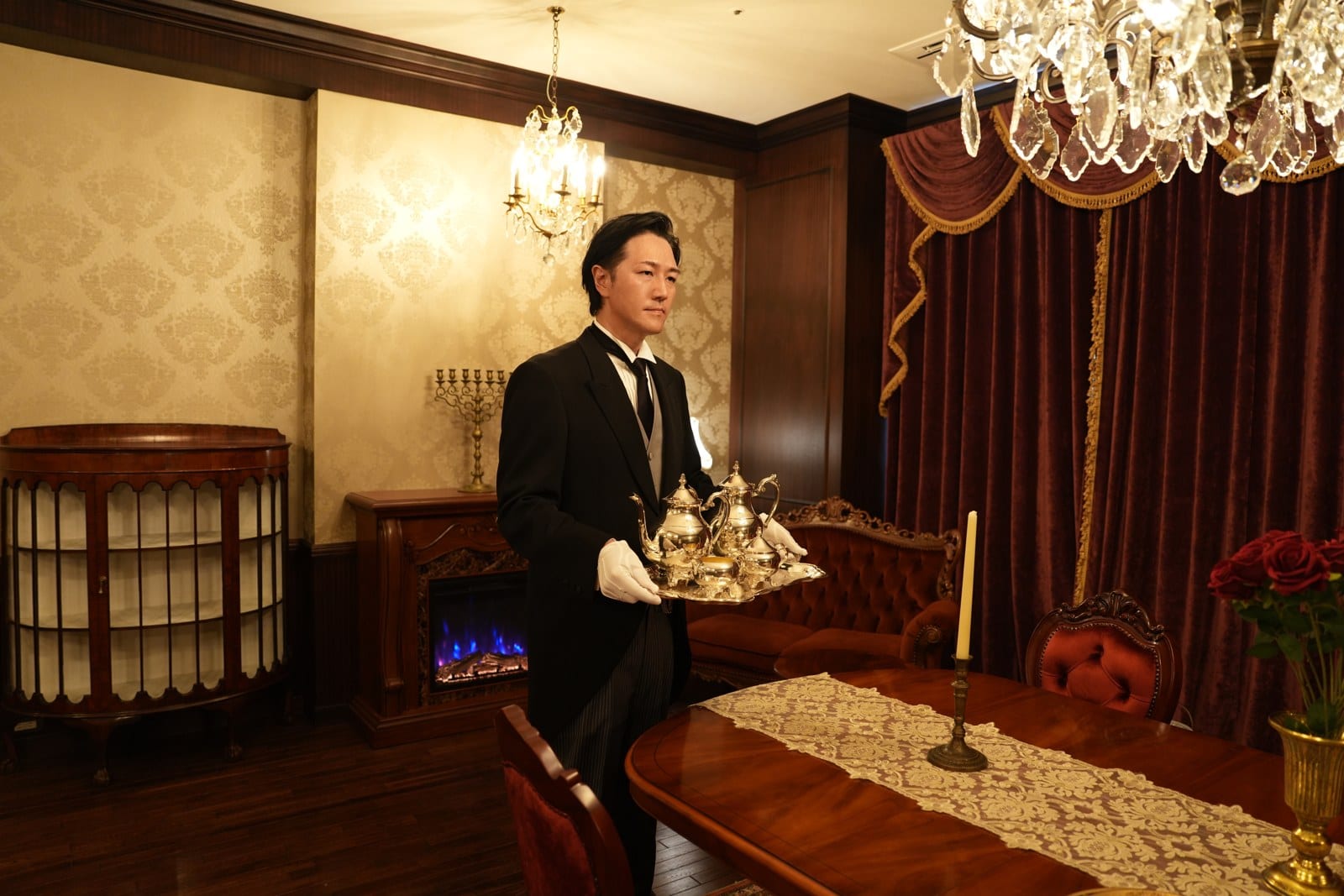
Male and female butlers alike handle the furniture with care, attentive to the character of the grain, the leather and the fabric. Where you may touch, which pieces the butler moves, what to check before sitting: these are quietly conveyed on the spot. Knowledge is not only for remembering names; it is for honouring the piece before you.
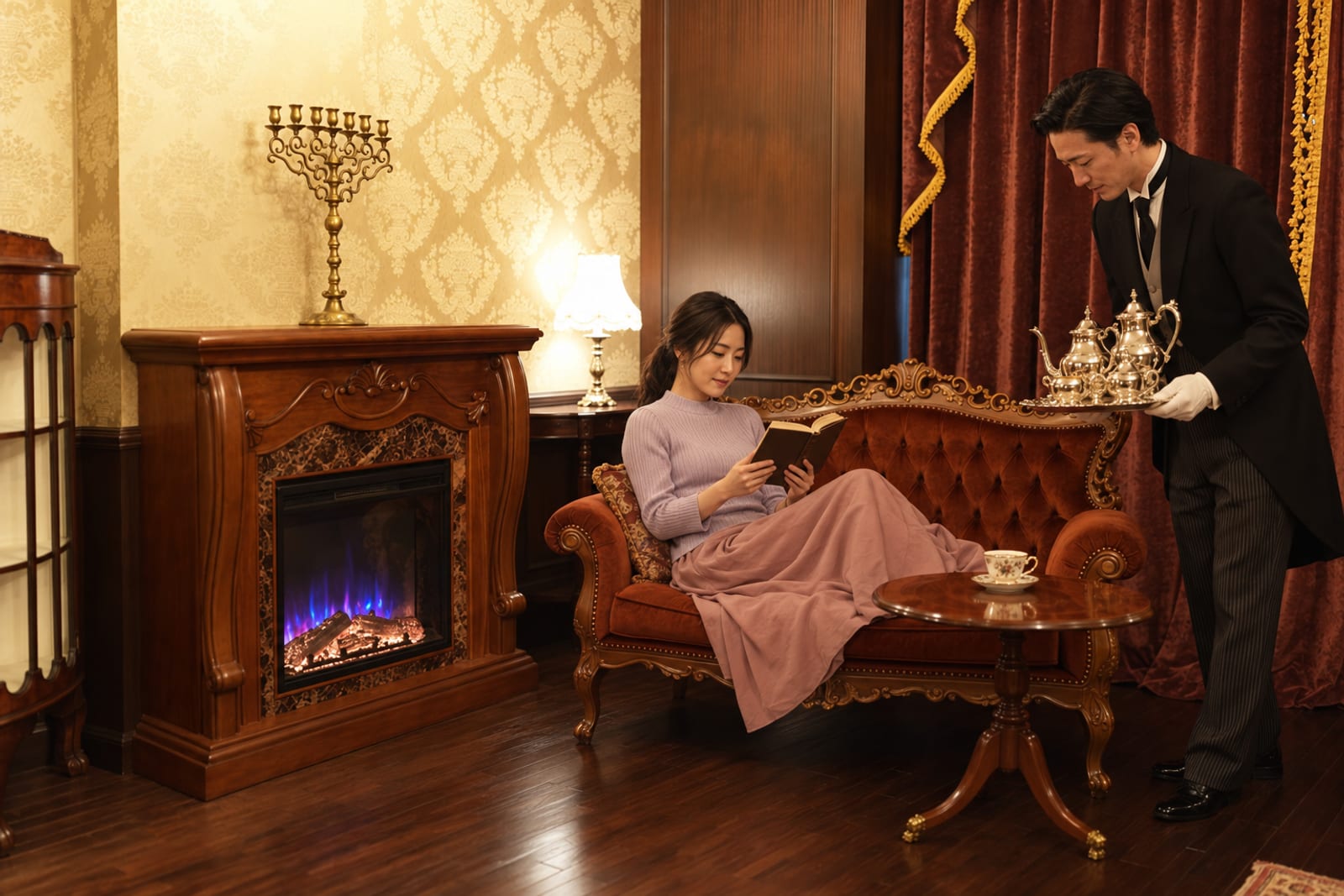
Furniture is completed by the movements of people
Drawing a chair, taking a seat, opening a book. The butler attends to the space between furniture and person.
VIIIComparing the chairs shows forms born of their use
Reading a chair means looking beyond the ornament of back and legs to ask who was meant to sit in it, and on what occasion. The black leather captain's chair in the study, its low back and curved arms in one piece, was born of the practical need to hold a posture steady amid the roll of a ship.
In the dining room stand Italian chairs of wine red and mahogany, whose design pays homage to the House of Savoy. The record of a seat height of 47 cm and a difference of 31.7 cm from the table describes not a height in isolation but the relationship with the table when seated.
The Karimoku Domani chair in the gallery is recorded as Louis XV style, 75 cm wide. The English word chesterfield, a French style name and Japanese making overlap in a single chair. By not reducing origin and style to a single word but reading each apart, several lineages come into view.
IXStorage furniture is chosen by what it shows and what it protects
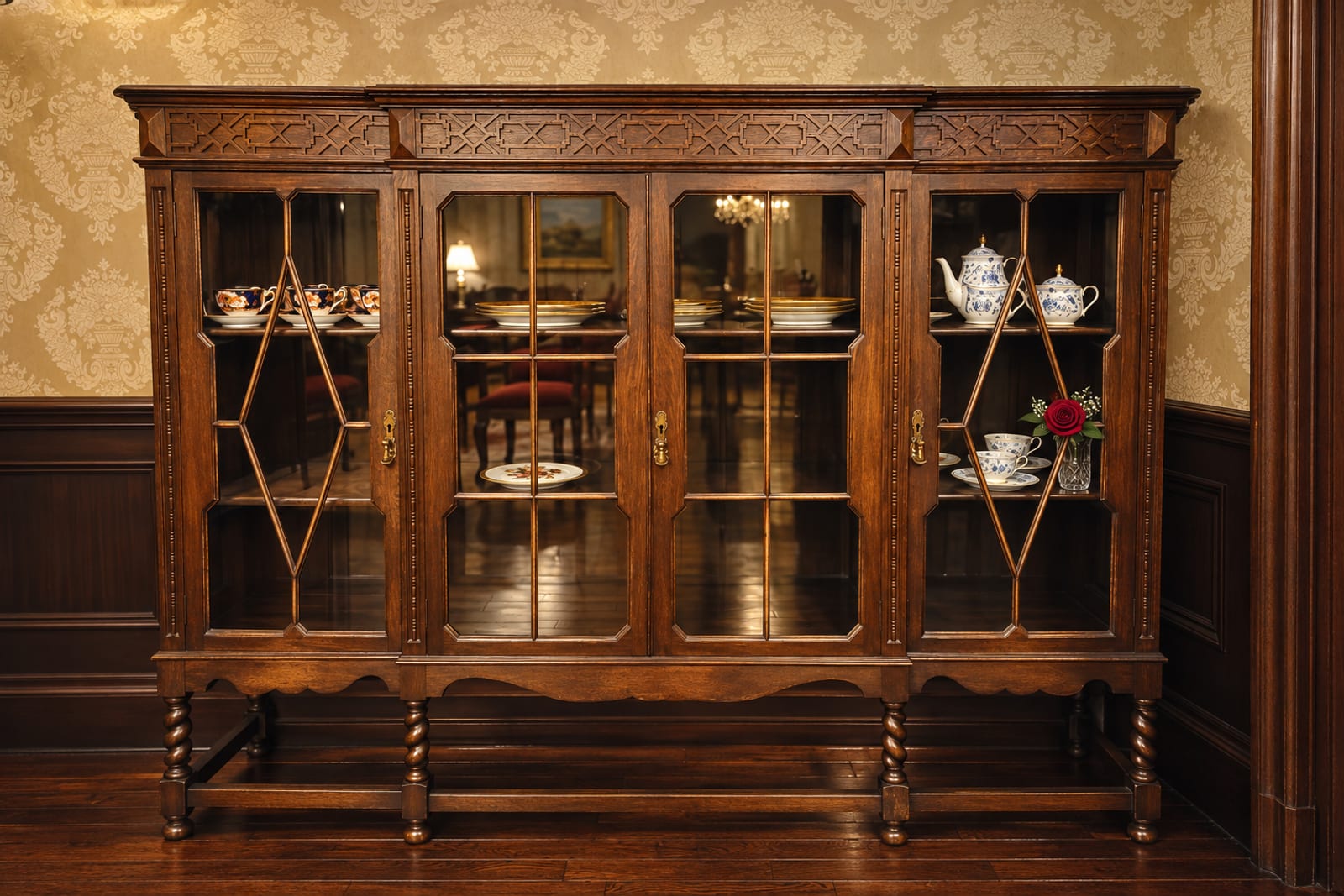
Storage furniture is not a box for hiding things but a furnishing that decides what is displayed and what is protected. The English antique display cabinet, 1,090 mm wide, 1,320 mm high and 455 mm deep, has curved glass that shows the silver and porcelain not only from the front but from an angle.
Its wooden rather than mirrored back does not throw the gleam of silver and the colour of porcelain back too strongly, but receives them against a warm ground. Before opening the doors, the butler checks the spacing inside and makes room for fingers around the piece to be taken out. The beauty of storage lies both in the closed form and in the act of taking out.
The barley-twist bookcase, 183 cm wide, holds leather-bound volumes and the globe. Comparing the curved-glass display with the open shelves shows the difference between a place that protects delicate vessels and one that layers the knowledge of the study into the view.
XLooking at furniture for the first time, what do you check before touching?
Looking for the first time is not about naming the correct style, but about observing in order the outline, the material, the joinery, the use and the relationship to the room. The butler first shows the whole from a little distance, then draws close to the grain, the leather, the fabric and the carving, and finally returns the view to the seat and the path from the door.
White gloves are not a licence to touch every piece. Where delicate items are handled, the butler supports them, and for furniture that is sat upon, the upholstery and legs are checked first. Rather than hurrying to dictate where the lady of the house may place her hand, we explain why a spot is avoided and where the material can be felt.
As butlers of Queen's Butler, men and women alike do not embellish a provenance, but separate what can be verified from the features before them. The restraint not to fill in an unknown date with a guess at its age is the basis for protecting a piece for many years and passing it to the lady of the house accurately.
Five things to check before a piece of furniture
Read the date on the label
Check whether the date of manufacture is clearly stated.
Find the source of the form
Look for the outlines that signal a style: pedestals, curves, arms, turned ornament.
Let the light fall on the material
Look from different angles at the shadows cast by grain, leather, fabric and carving.
Imagine the use
Consider why writing, sitting, storage or company gave rise to that form.
See the relationship to the room
Take in the entrance, the light, the neighbouring pieces and the flow of people, and tie the piece to its role in the house.
Learn the terms for the details of furniture by form and function
| Twin pedestal | A form in which two columns support the top, keeping the space beneath a table or desk clear |
|---|---|
| Captain's chair | A chair uniting a low back and curved arms for a stable seat |
| Corbeille | Meaning a basket of flowers; a bed form whose curves at head and foot enfold the sleeper |
| Capitonné | An upholstery technique that buttons fabric into diamonds to create regular padding |
| Barley twist | A spiral turned ornament recalling the twist of an ear of barley |
Standards for reading provenance
- Checking the date of manufacture and the origin of the style separately
- Tying dimensions to the movements of sitting, writing and passing
- Looking at the angle at which wood, leather and fabric take the light
- Letting the butler check the condition before showing where to touch
Readings to avoid
- Inferring the date of manufacture from the style name alone
- Treating age alone as the value of a piece
- Moving delicate furniture without the butler's guidance
Choose the furniture to look at according to your interest
For form and flow, the dining table
Seeing the two pedestals, the figure of the yew and the height in relation to the chairs together shows how a form perfected in the Georgian period supports the seating of today.
Read moreFor practical origins, the study desk and chair
Comparing the leather-inset top, the two banks of drawers and the curved arms shows concretely how form arose from the needs of writing and sitting.
Read more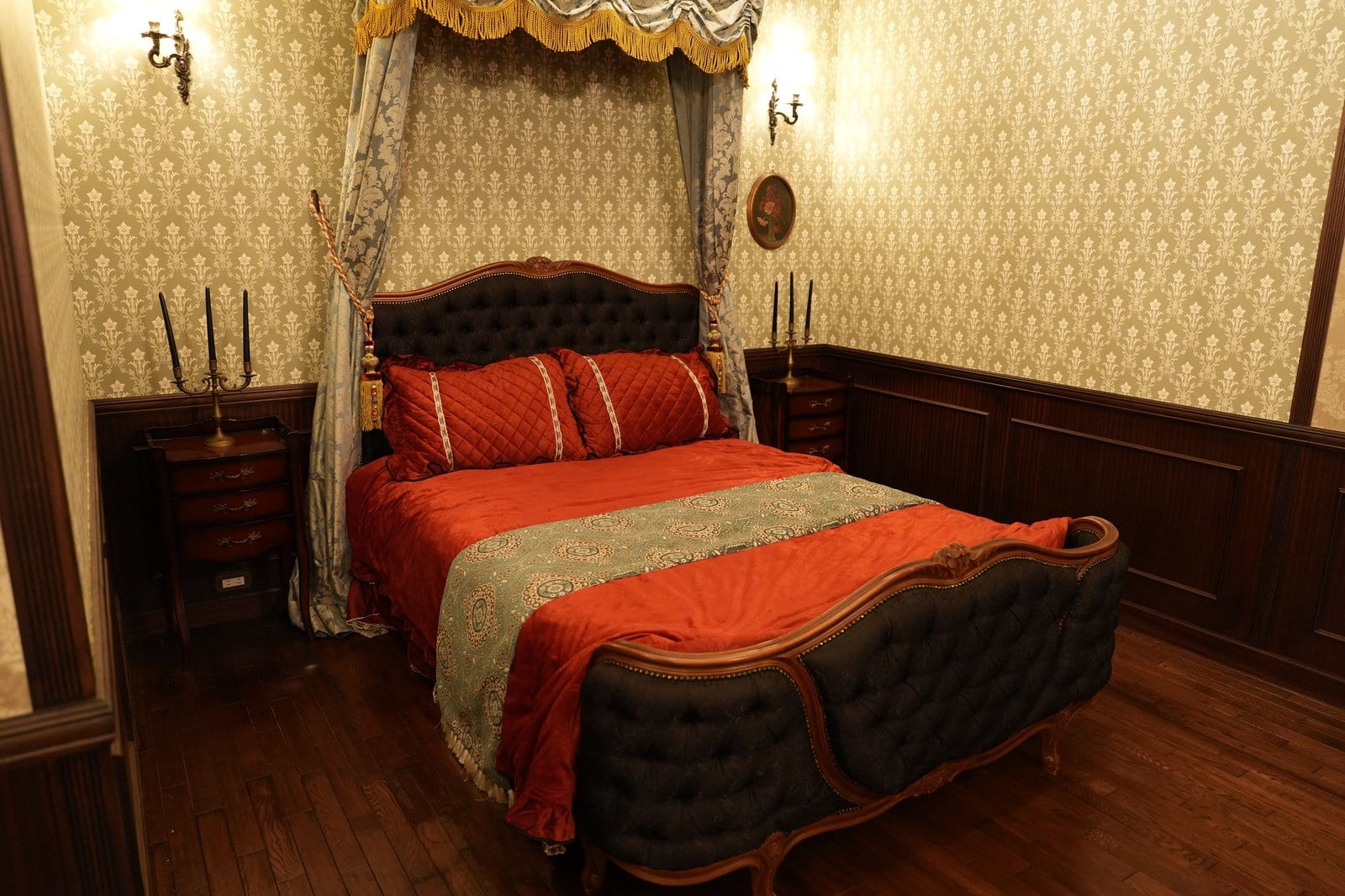
For curves and fabric, the corbeille bed
Seen up close, the basket-like outline, the black silk damask, the capitonné and the full carving show why a nineteenth-century French piece becomes the centre of the room.
Read moreQIf a form is Georgian, is the furniture made in the eighteenth century?
Not necessarily. The Manor's Bradley table and study desk were made in England in the 1980s, inheriting the twin-pedestal form perfected in the eighteenth century.
QDoes the description "Rococo-style" tell me the date of manufacture?
A style name alone cannot fix a date. At the Manor, we give the date of the corbeille bed, recorded as nineteenth-century French, and for the sofa, which has no recorded date, we describe its Rococo-style features.
QMay I touch the furniture?
You may use it under the butler's guidance. Pieces that need moving, and delicate parts, are handled by the butler.
QMay I ask a female butler to show me round?
Yes. Both male and female butlers are in residence. Please tell us your preference when booking.
QWhat do I check first when looking at furniture?
Look at the outline and the position from a little distance, then separate the date of manufacture, the style, the material and the use. Finally, tie it to the movements of sitting, writing or storing, and the reason for the form becomes clear.
QMay I look at the furniture with children?
Up to six guests may visit. Please tell us the ages and how you plan to spend the day when booking, and we will first point out the delicate parts and the pieces the butler handles.
You may also wish to read