
Christofle Marly
Silver cutlery bearing the name of Louis XIV's retreat.
About Christofle Marly
Christofle Marly is a cutlery pattern by Christofle, the Paris silversmith founded in 1830, named after the Château de Marly, Louis XIV's retreat from Versailles. Rocaille ornament of shells and scrolls covers the whole handle, making it one of the most opulent designs in the Christofle repertoire.
The name Marly comes from the retreat of Louis XIV
Marly is a Christofle silver pattern named after the Château de Marly, the retreat Louis XIV built to escape the bustle of Versailles. Rocaille ornament recalling shells and scrolls covers the entire handle, giving each piece a splendid outline.
Christofle was founded in Paris in 1830 and has supplied silver to the French court and to embassies around the world. It is from this heritage, and the name of the royal retreat carried in a single pattern, that our butler begins the tour of the collection.
Seen from a distance, the handles form a continuous flow of silver; up close, the relief of shells and scrolls emerges. Our butler turns each piece so that the light crosses the ornament at an angle, and invites you to compare it from the front and from the side. Once you know its story, you may hold the pieces themselves and feel their weight, the density of the pattern and the differences in length between each type.
The Manor's collection is a service for six in twelve pieces, kept in two wooden cases
| Pattern | Christofle, Marly |
|---|---|
| House | Paris, founded 1830. A silversmith to the French court and to embassies around the world. |
| Origin | Named after the Château de Marly, the retreat of Louis XIV. |
| Ornament | Rocaille ornament recalling shells and scrolls covers the entire handle. |
| Collection | A full service for six in twelve types, including discontinued pieces such as the ice cream spoon and the hors d'oeuvre fork. |
| Storage | A wooden presentation box and a four-drawer wooden storage chest. |
Placing silver beside porcelain reveals how each material takes the light
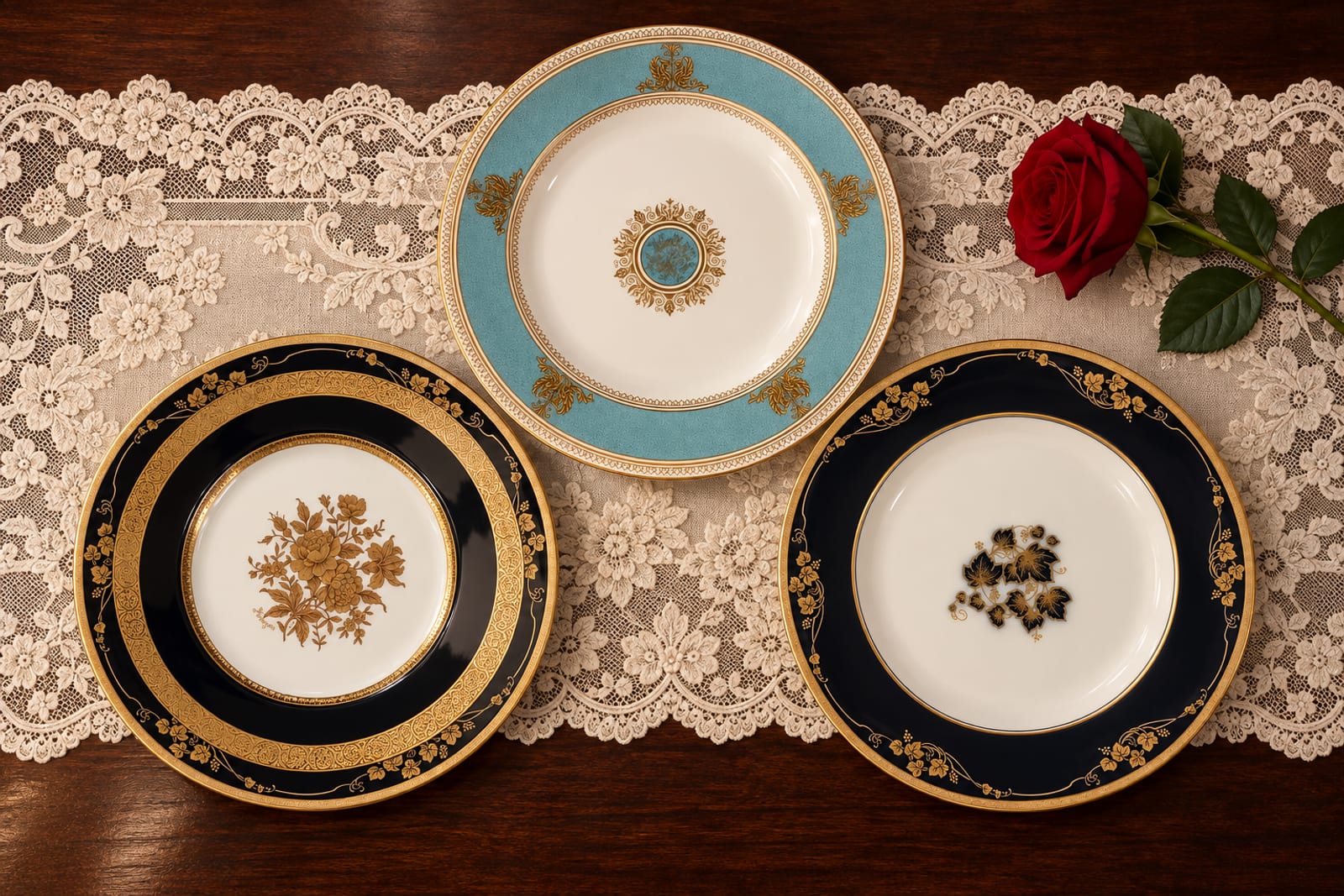
Floral pattern and gilt rim alongside
Set beside the white porcelain of Bernardaud Volubilis, the cool light of the silver and the warm line of the gilding bring out the best in each other.
Read more
Begin with the large charger
Placing the 30 cm and 34 cm chargers first makes it easier to judge the length of the twelve Marly pieces and the space left on the table.
Read more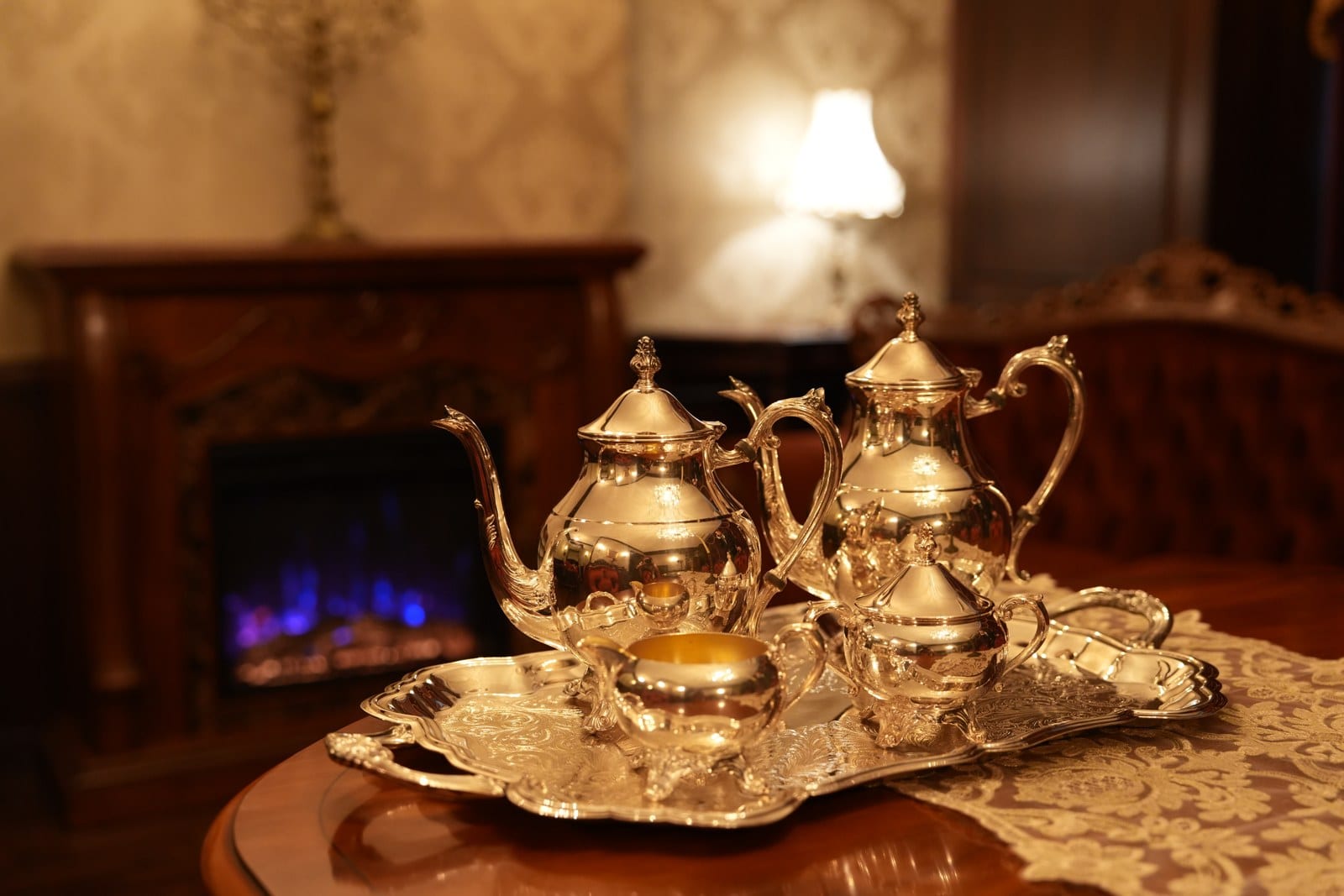
Compare silver that shines as a surface
The slender handles of Marly and the broad surfaces of a silver tea service catch the same light in quite different ways.
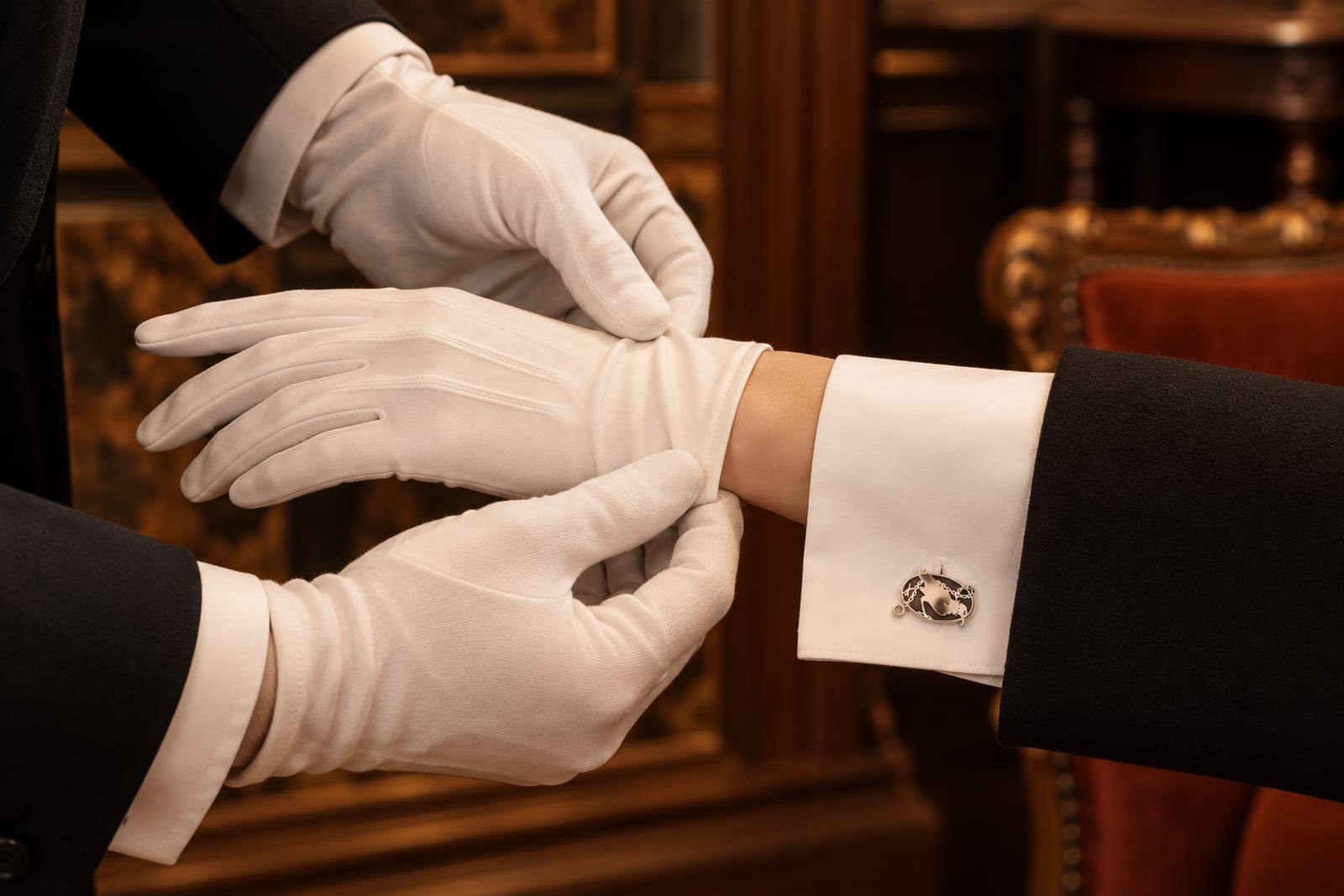
Read moreFive judgements of the white-gloved hand protect the ornament and the quiet
Avoid the blade and the tines
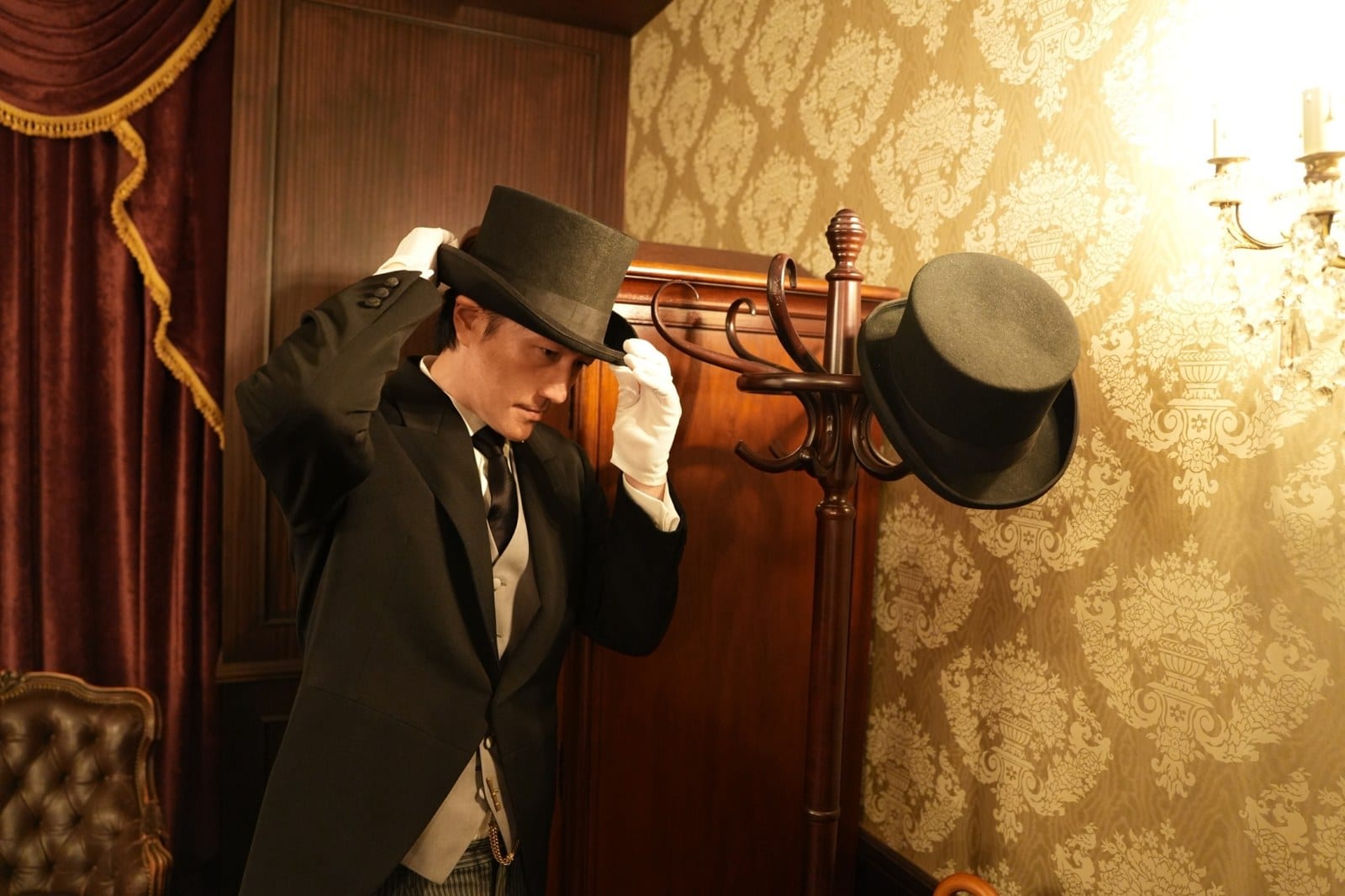
The knife blade and fork tines are never touched; each piece is held by the middle of the handle.
Show the balance point first
Our butler demonstrates, finding the point at which the piece will not tip, before passing it to you.
Keep the spacing
Pieces are carried so that they never touch one another, and set down without a sound.
Align the orientation
The face of the rocaille ornament is turned to be seen from the seat.
Return to its place
The positions of all twelve types are checked before they return to the wooden box and the four-drawer chest.
You will enjoy this if
- Those learning the names and uses of silver for the first time
- Those who wish to see rocaille ornament up close
- Those who wish to compare the shapes of all twelve types at once
- Those curious about how the discontinued pieces differ
- Those who wish to watch a butler's hands at work with silver
We kindly ask you to refrain from
- Opening the wooden box or storage without first speaking to the butler
- Touching the blades or the fork tines directly
- Carrying pieces of silver stacked upon one another
- Rubbing the surfaces hard
- Taking pieces outside the Manor
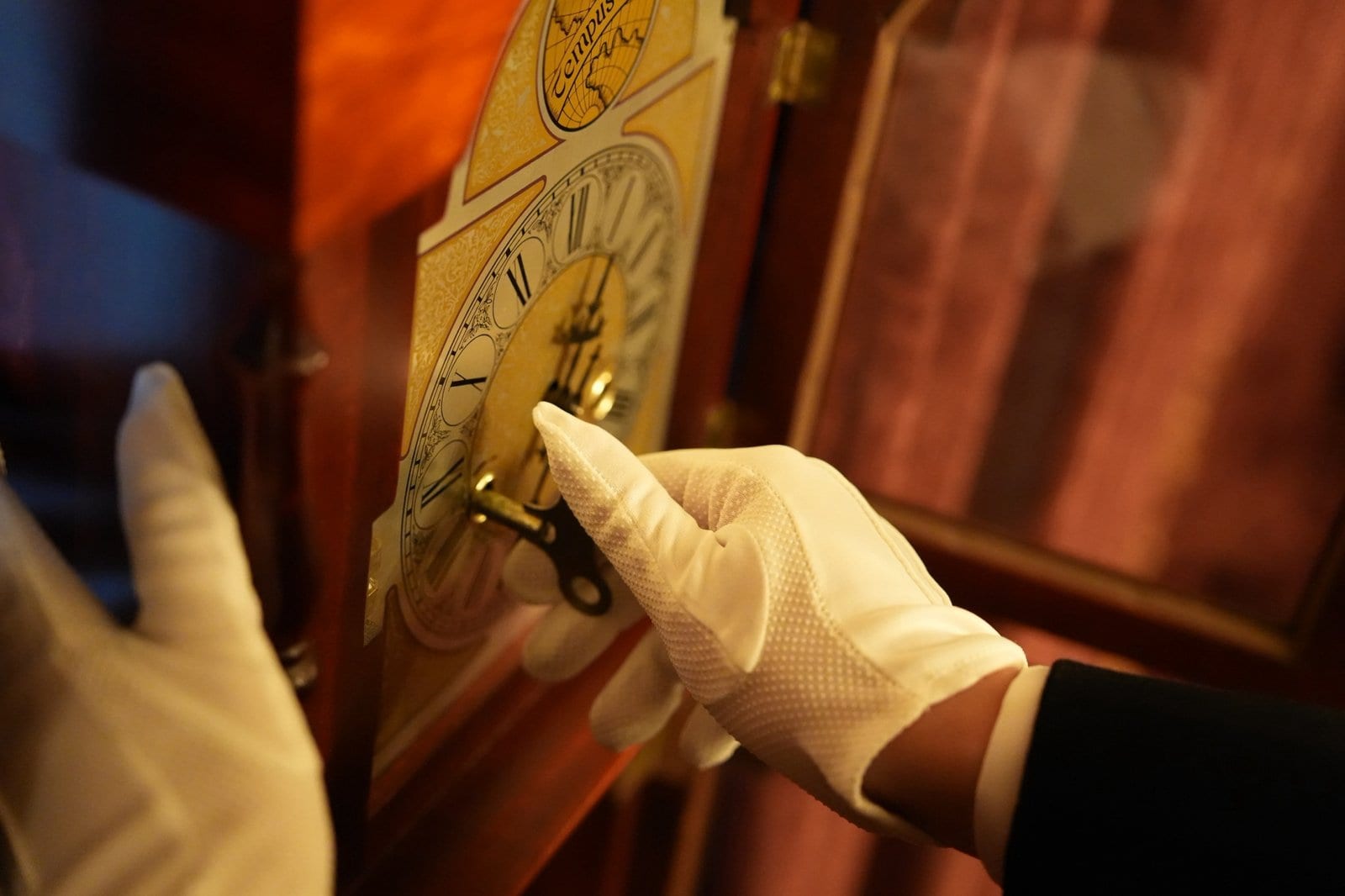
The wooden box and four-drawer chest also play their part in protecting the collection
| The role of storage | Storage is not a place to hide the silver away; it is the means by which all twelve types are kept in their proper places, ready to be taken out again with the right gesture. |
|---|---|
| Comparing in the box | Open the presentation box and several pieces can be compared at the same eye level. In the four-drawer chest, the pieces of each drawer can be checked from the top down, showing how a collection of many types is kept in order. |
| Taking out and putting away | Our butler checks the type and position before each piece is taken out and after it is returned. Showing the splendour of the pattern and putting every piece back without miscounting are one continuous task. |
| On rainy days | The tour takes place indoors. Wet coats and bags are taken at the entrance, and you are brought to the silver once your hands are ready. |
QWill I notice the differences without knowing much about silver?
Yes. Our butler lays out the twelve types from the most similar shapes onwards and explains the differences in length and tip. Simply comparing a table piece with a dessert piece is enough to see the difference in outline.
QWhich are the discontinued pieces?
The Manor's collection includes discontinued pieces such as the ice cream spoon and the hors d'oeuvre fork. On the day, our butler points them out and places them beside the other types.
QMay I actually touch the silver?
You may hold the pieces under our butler's guidance. We explain where to hold each one first and support it close at hand, so even a first visit can be taken at ease.
QDo I need white gloves?
There is no need to bring your own for the tour. Where the Footman experience involves handling silver, you follow the guidance given on the day.
QCan I see all twelve pieces on my own?
We are pleased to show you alone. Beginning with the types that interest you, you may view the wooden box, the ornament and the discontinued pieces in turn.
QHow many people can view together?
Up to six guests. Our butler arranges the best position to see and the order in which to hold, presenting each piece safely one at a time.
You may also wish to read
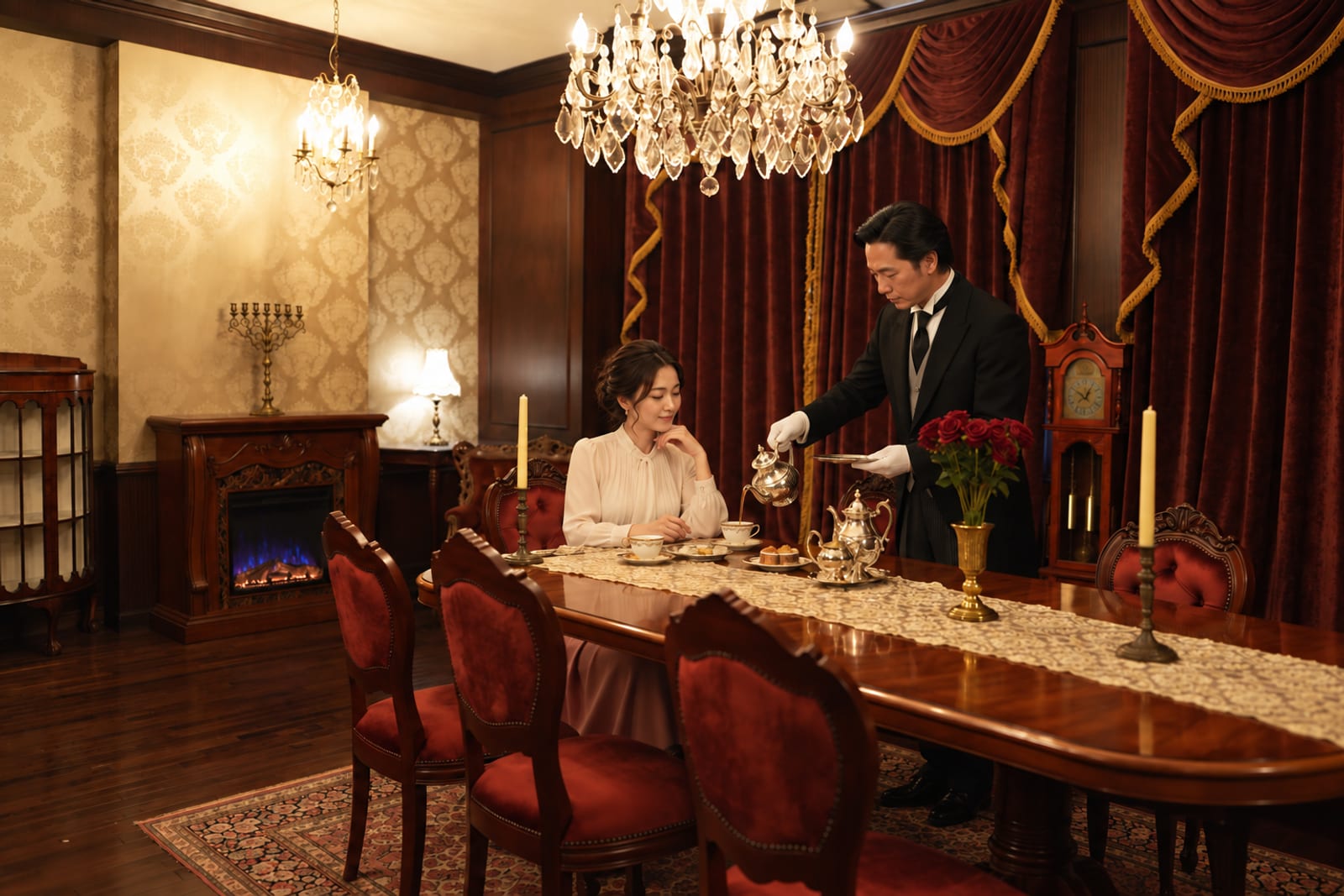


Come and touch the silver.
Under our butler's guidance, the silver may be held in your own hands.