
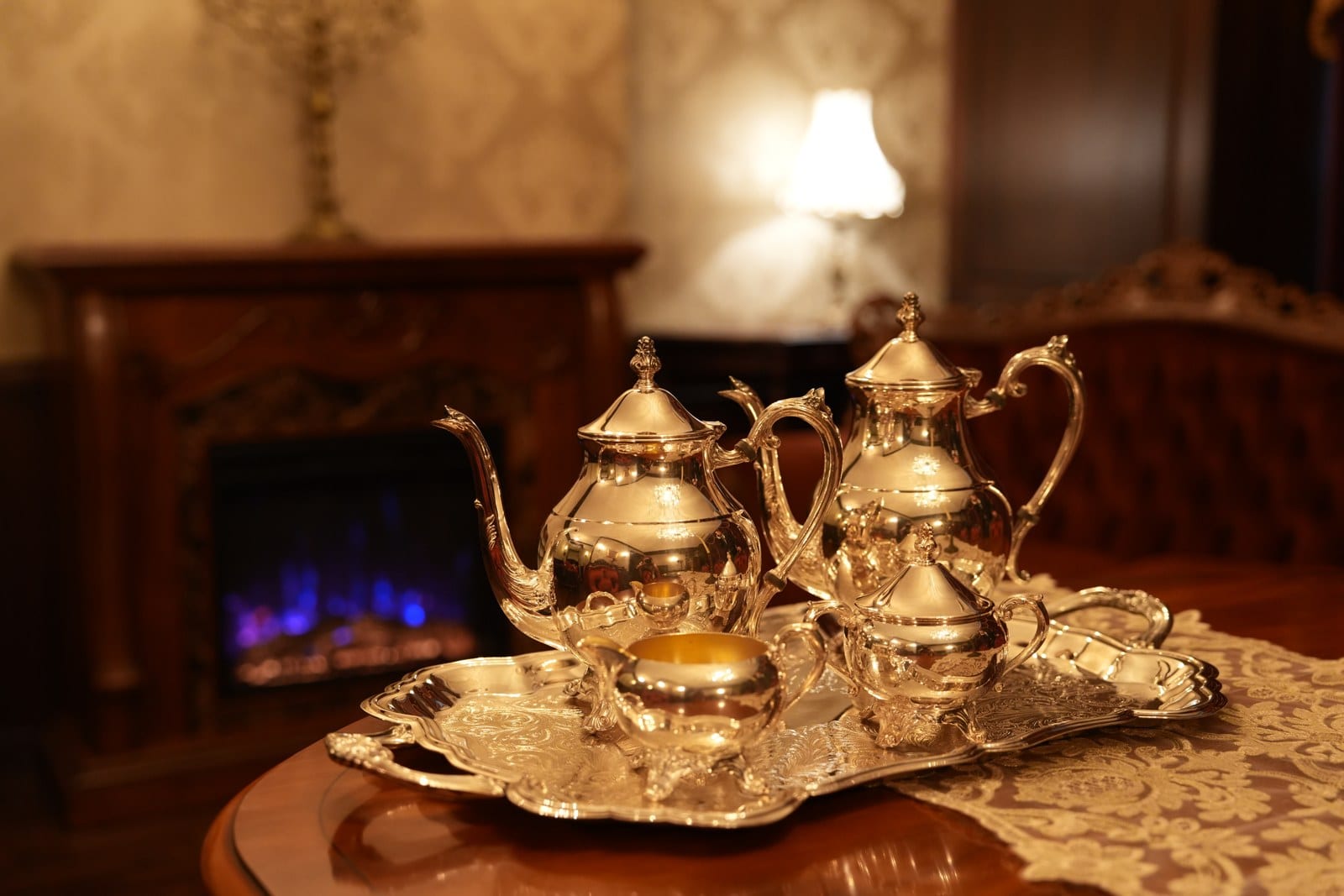
Silver Tea Service and Glassware
Form defines use, in the French manner.
About Silver Tea Service and Glassware
The silver tea service and glassware are the Manor's instruments for a butler to pour tea and carry glasses. F.B. Rogers' five-piece Victorian-style set, Cristal D'Arques water glasses, and Chef & Sommelier wine and champagne glasses.
A silver surface and a clear vessel receive light differently
The silver tea service and glassware are a collection to compare by form and light: F.B. Rogers' five-piece Victorian-style silver-plate set, and glasses by Cristal D'Arques and Chef & Sommelier.
The silver pots and tray catch the Manor's lamplight across their broad surfaces; the glasses show light through rim, cut and curve. A butler never moves the two materials at once, presenting first the silver as a whole, then the outlines of the glasses that differ by use.
F.B. Rogers comprises five pieces, including pot, sugar bowl and creamer, with a tray; Cristal D'Arques is a water glass with diamond cut and gilt rim; Chef & Sommelier differs in form for red, white and champagne. Rather than remembering the names, watch how the same light changes with material and form.
F.B. Rogers: five pieces and a tray, seen as one
| Maker | F.B. Rogers |
|---|---|
| Style | Victorian |
| Material | Silver plate |
| Composition | Five-piece set: pot, sugar bowl, creamer and others. |
| Accompaniment | With tray. |
| Order of viewing | The whole, the outline of the pot, the smaller vessels, then the surface of the tray. |
Set porcelain beside silver, and the difference in material stands out
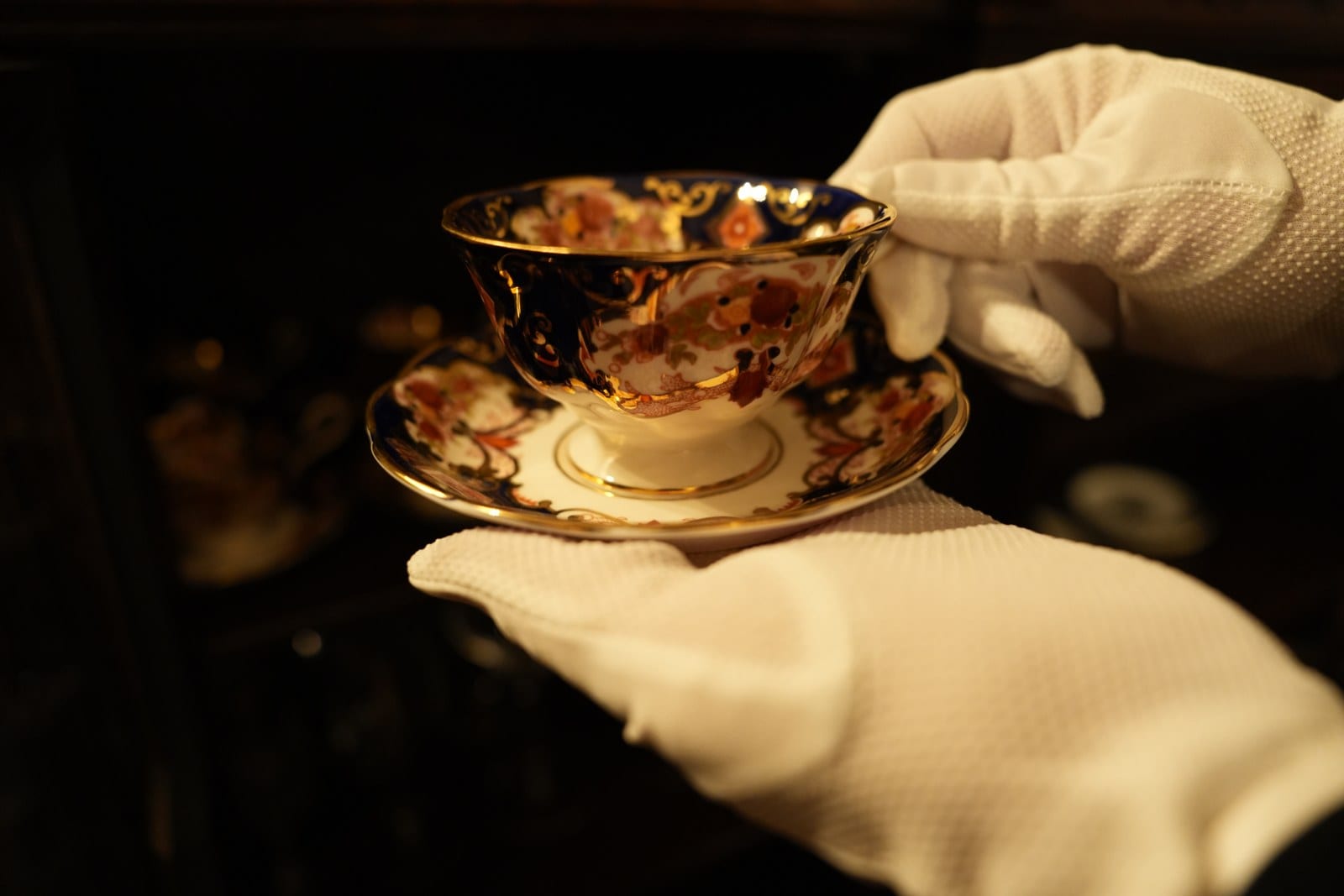
Paired with British porcelain cups
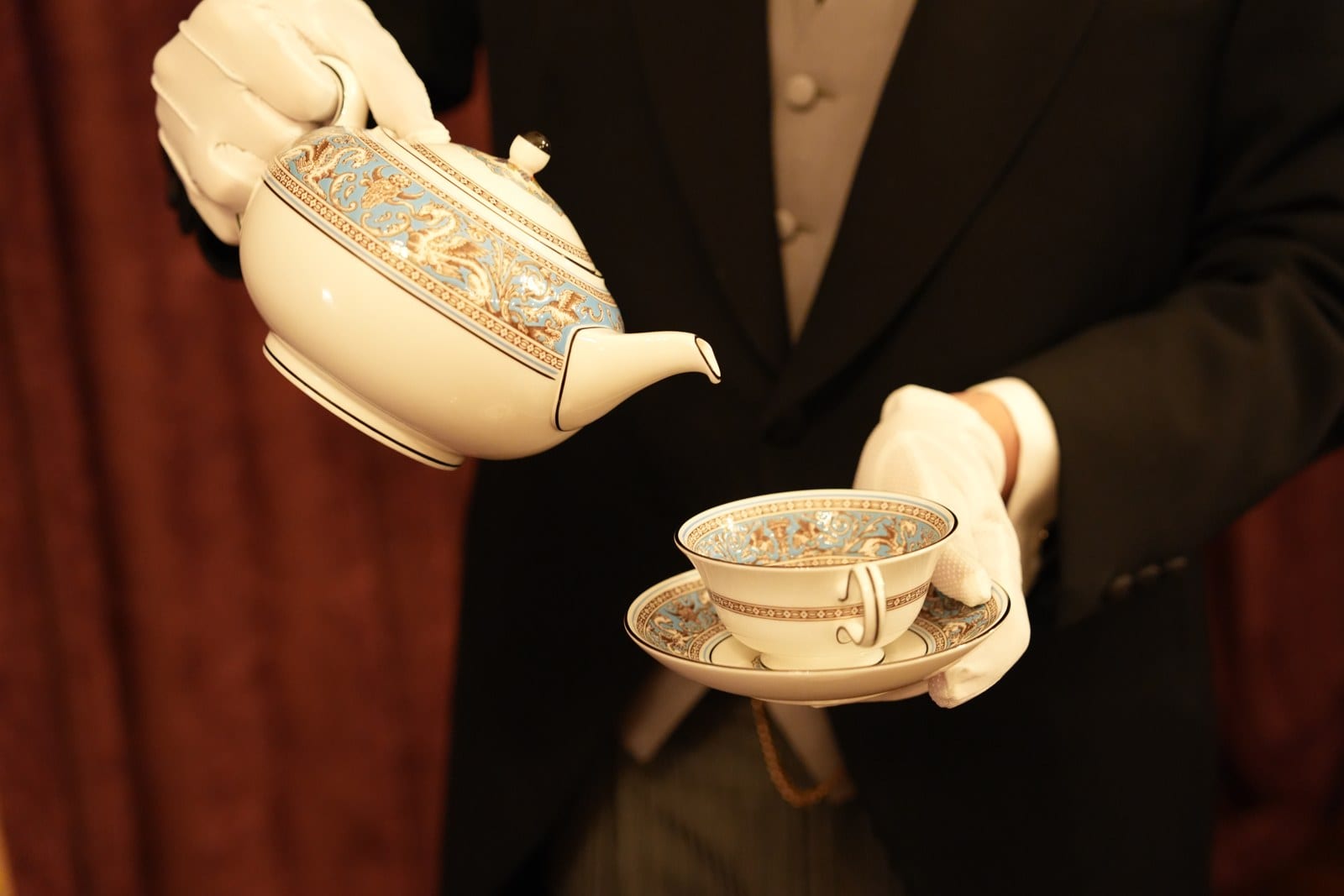
Place the three British porcelains nearby and compare the light on cups of colour and pattern with that on the silver pot.
Read more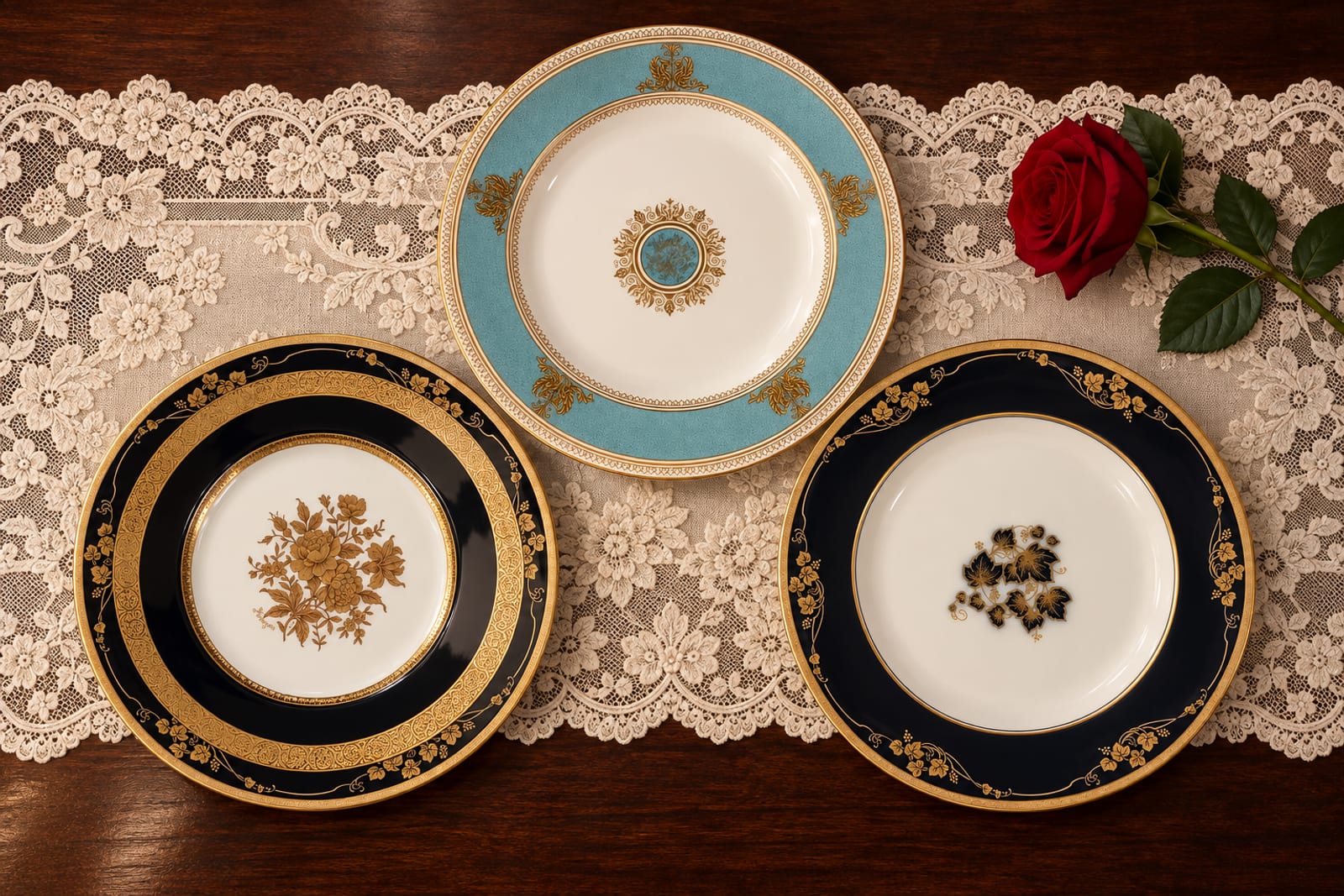
Paired with gilt-rimmed porcelain
Set the gilt rim of Bernardaud's Volubilis apart from the gilt rim of the water glass, and follow the fine line of light on each material.
Read more
Slender silver against broad silver
The handles of Christofle's Marly and the broad surfaces of pot and tray: the same silver, yet the light runs differently.
Read moreThe five-piece set, in five steps from the whole to a single piece
View the whole from the front
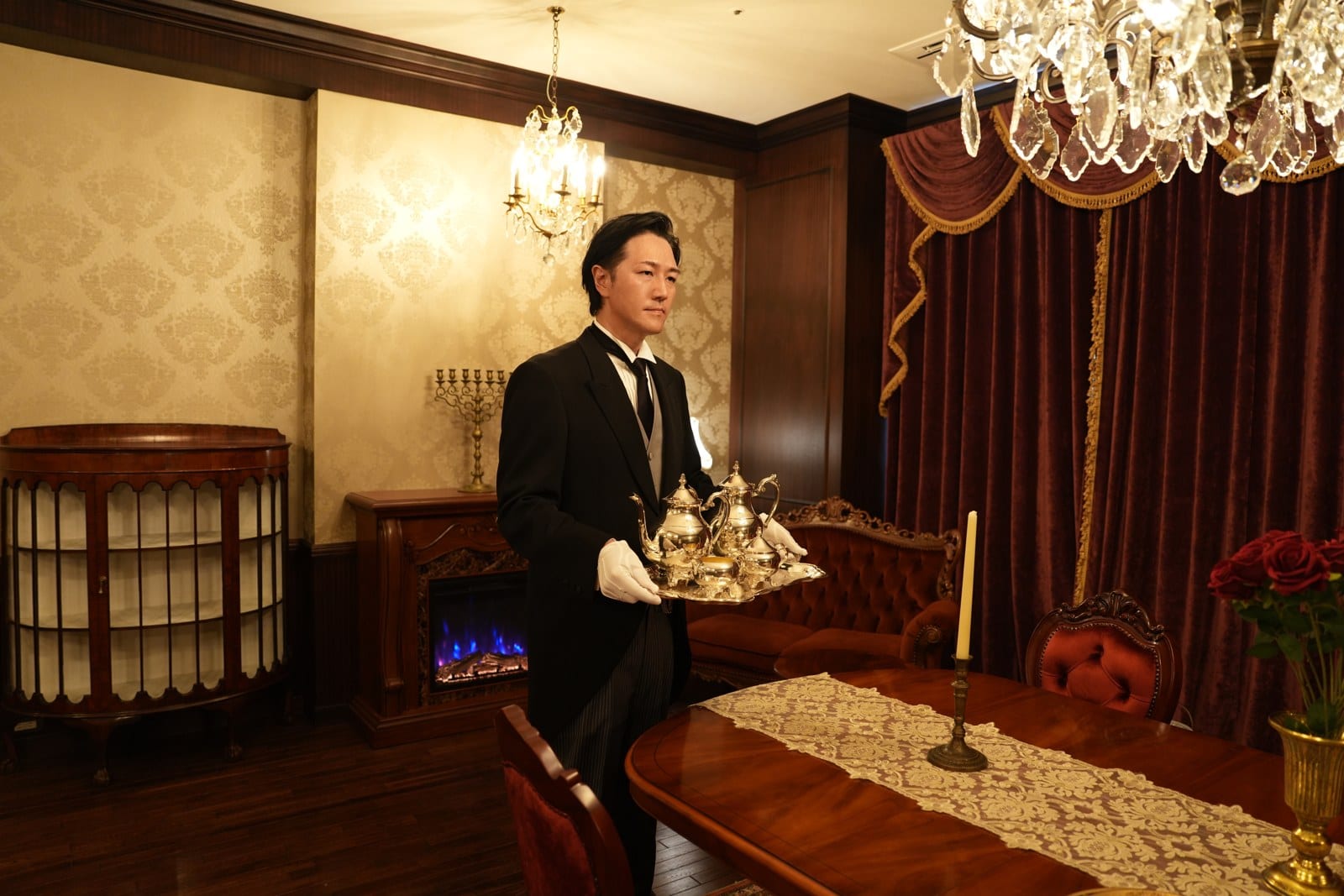
To view a Victorian tea service is to keep the five pieces together, drawing the eye from the whole, tray included, to the pot, the sugar bowl and the creamer.
View the surface of the tray
The tray reflects the surrounding lamplight and the outlines of the silver. Lift one piece and light enters a surface that was hidden, revealing an expression different from when it rested.
View the differences in form
Walk around the pot: body, lid, spout and handle. Compare the sugar bowl and the creamer by size and by the shape of the mouth.
Learn the stable point of support
If you wish to hold a piece, a butler first shows you where to support it.
Choose a way of viewing to suit your party
Alone, the outline of a single piece in quiet; as a pair, the contrast of pot and small vessels; with up to six guests, each in turn from a different angle.
Who will enjoy this
- Those seeing a silver tea service for the first time
- Those who wish to view the five Victorian pieces as a whole
- Those who wish to see diamond cut and gilt rims up close
- Those who wish to compare the forms for red, white and champagne
- Those who wish to watch a butler carry the tray
What we ask you to refrain from
- Opening the display cabinet without first speaking to a butler
- Lifting the pot by its handle alone
- Carrying glasses so that they touch
- Rubbing the silver surfaces or gilt rims hard
- Taking pieces outside the Manor
Lighting, photography and dress: four points to put you at ease
| Lighting and glass | How a piece appears does not change its worth; it changes which details reach the eye. By adjusting the lighting and the angle of each piece, we show you in turn the clear outline, the cut, the silver surface and the gilt rim. |
|---|---|
| Viewing whatever the weather | You may view the silver and glass against the wooden-backed cabinet or the tabletop. A butler chooses the place and orientation within the Manor where they are best seen. |
| Photographic distance | Tell us the view you wish to keep: the five pieces and tray together, a close view of the diamond cut, or the three glasses side by side. A butler arranges each piece safely, one at a time. |
| Dress and belongings | There is no particular dress code. Should a cuff or piece of jewellery seem likely to touch, we will suggest where to stand; wet coats and large bags are taken at the entrance. |
QHow many pieces are there by F.B. Rogers?
The Manor holds a five-piece set, including pot, sugar bowl and creamer, together with a tray. A butler guides you from the whole to each piece in turn.
QHow many kinds of glass are there?
Water glasses by Cristal D'Arques, and red, white and champagne glasses by Chef & Sommelier.
QMay I hold the pieces?
Yes, under a butler's guidance. We first tell you where to support each piece according to its form, and remain close at hand.
QWill you guide me if I come alone?
Certainly. From quietly admiring a single piece of silver to setting the four glasses in a row, we follow your interest.
QHow many guests may compare the silver and glass together?
Up to six. So that the five-piece set and four glasses may be viewed safely, a butler arranges where each guest stands and the order in which pieces are held.
QMay a female butler show me how the tray is handled?
Queen's Butler has both male and female butlers. Please let us know at booking whether you wish to focus on the silver or the glass, along with any preference for who attends you.
You may also wish to read
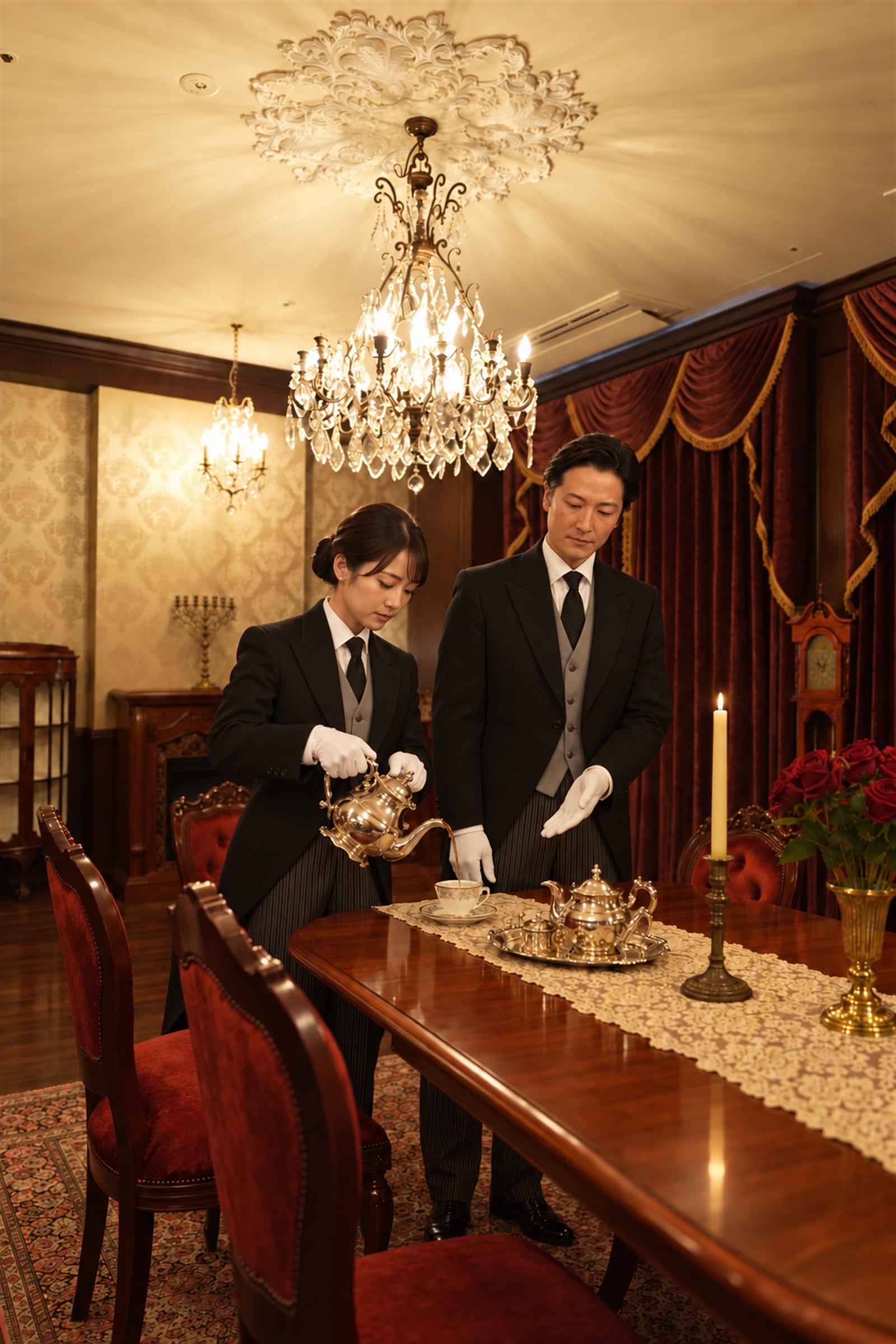

Tea from a silver pot.
Tell us what you have in mind, and a butler will guide you.