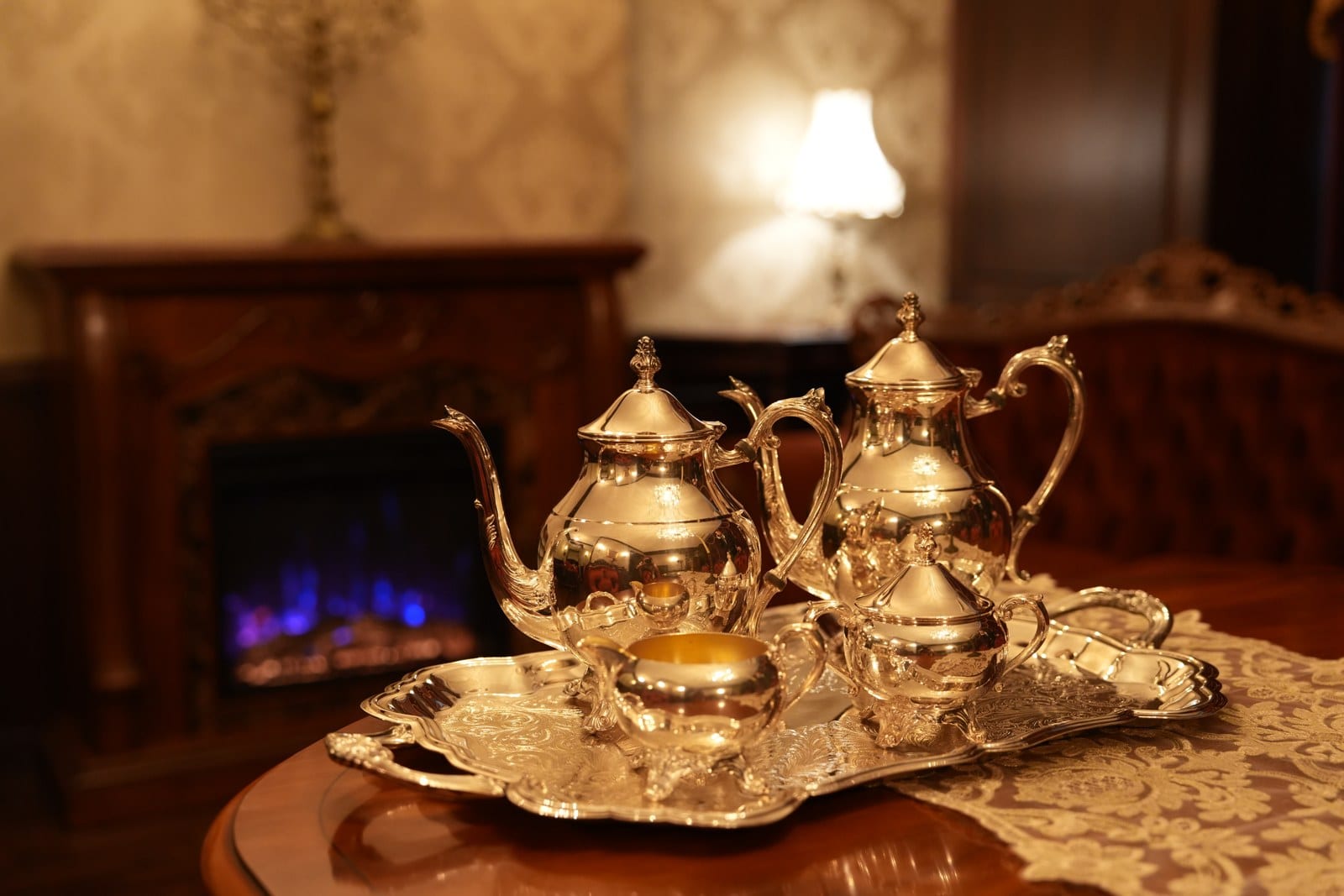
Serving
A tray, and glasses.
About Serving
A butler's serving is the art of carrying a tray and glasses safely, reading the movements of the lady of the house and the state of the table, and setting each glass down quietly where it may easily be taken up. It is not only the carrying: preparation, the route, the moment to speak and the position in which to wait afterwards form one continuous sequence.
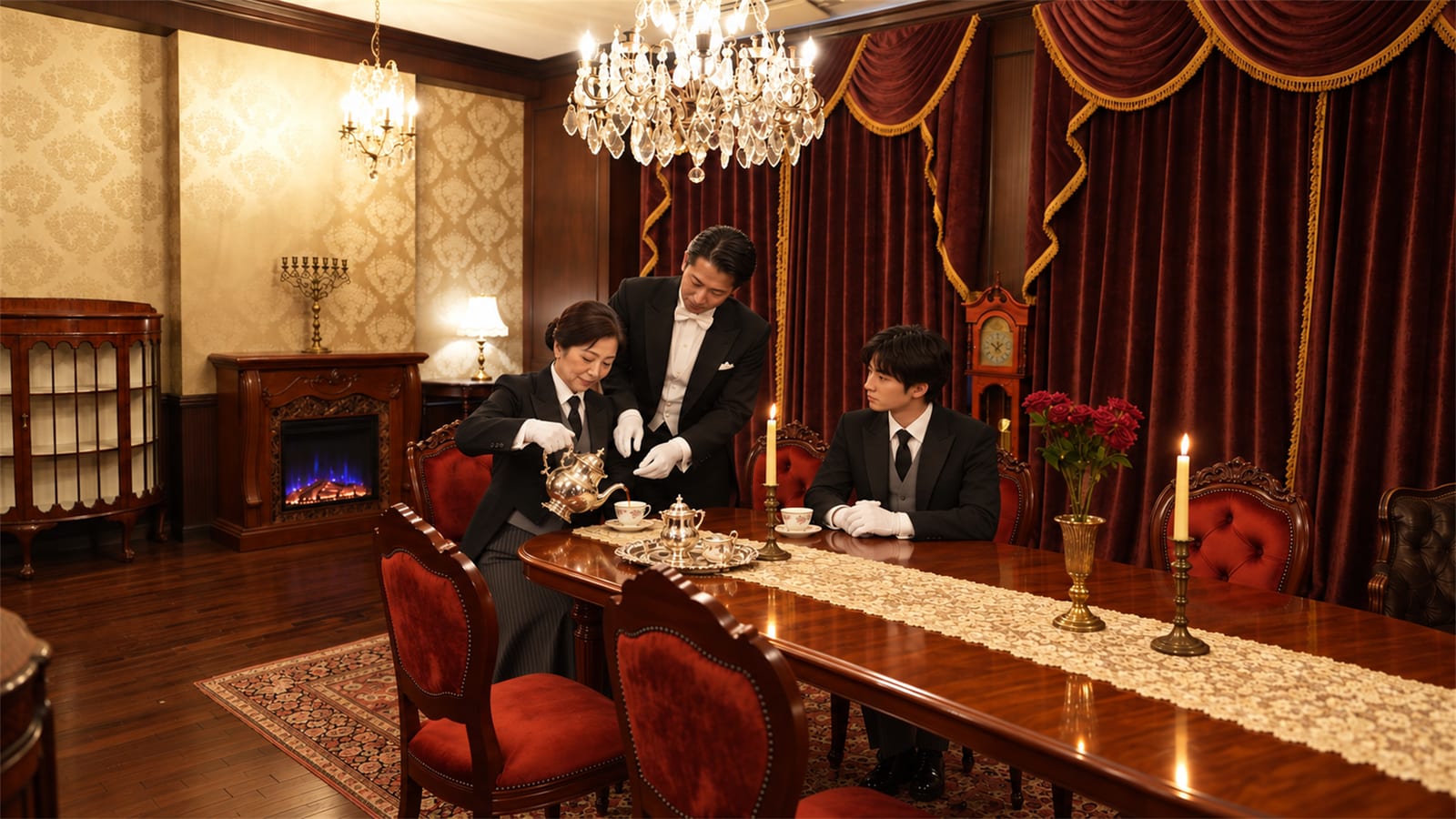
The checks of serving begin before you pick up the tray
| Before loading | Check with the butler the condition of tray and glasses, how they overlap, and where they will be placed |
|---|---|
| Support | Rather than gathering the weight on the fingertips, find the position at which you yourself hold it steady |
| Eyes | Do not keep looking only at the glasses; look in turn at the route, the lady of the house and the table |
| Walking | Avoid sudden changes of direction; decide where you will stop before moving |
| Setting down | Find a spot that does not touch the silver or porcelain on the table, and set down quietly |
| Withdrawing | After setting down, compose your hands and return to a position that does not obstruct the lady's movements |
Before looking at the glass, the butler is looking at where to go
Carrying glasses on a tray is not simply a matter of keeping the surface of the water still; it is bringing them to the table without strain while watching the route, the surrounding furniture and where the lady of the house is. Before lifting, the butler decides where the tray will be set down, and settles the direction of the body and the first step so as not to hesitate on the way.
In the gallery, rather than watching only your feet, take in where you will turn and where you will stop. Checking separately the first step, the turn and the approach to the table shows you where the tray is most likely to tip. The butler demonstrates first, and you proceed while discussing the height and the hold at which you yourself are steady.
Once in the dining room, do not set the glass down at once; look at the silver, the porcelain, the three-tier stand and the position of the chairs. Choose a moment that does not interrupt the lady's conversation or her hands, and after setting down, check that the glass is settled before withdrawing. The stillness before carrying and after setting down is part of serving.
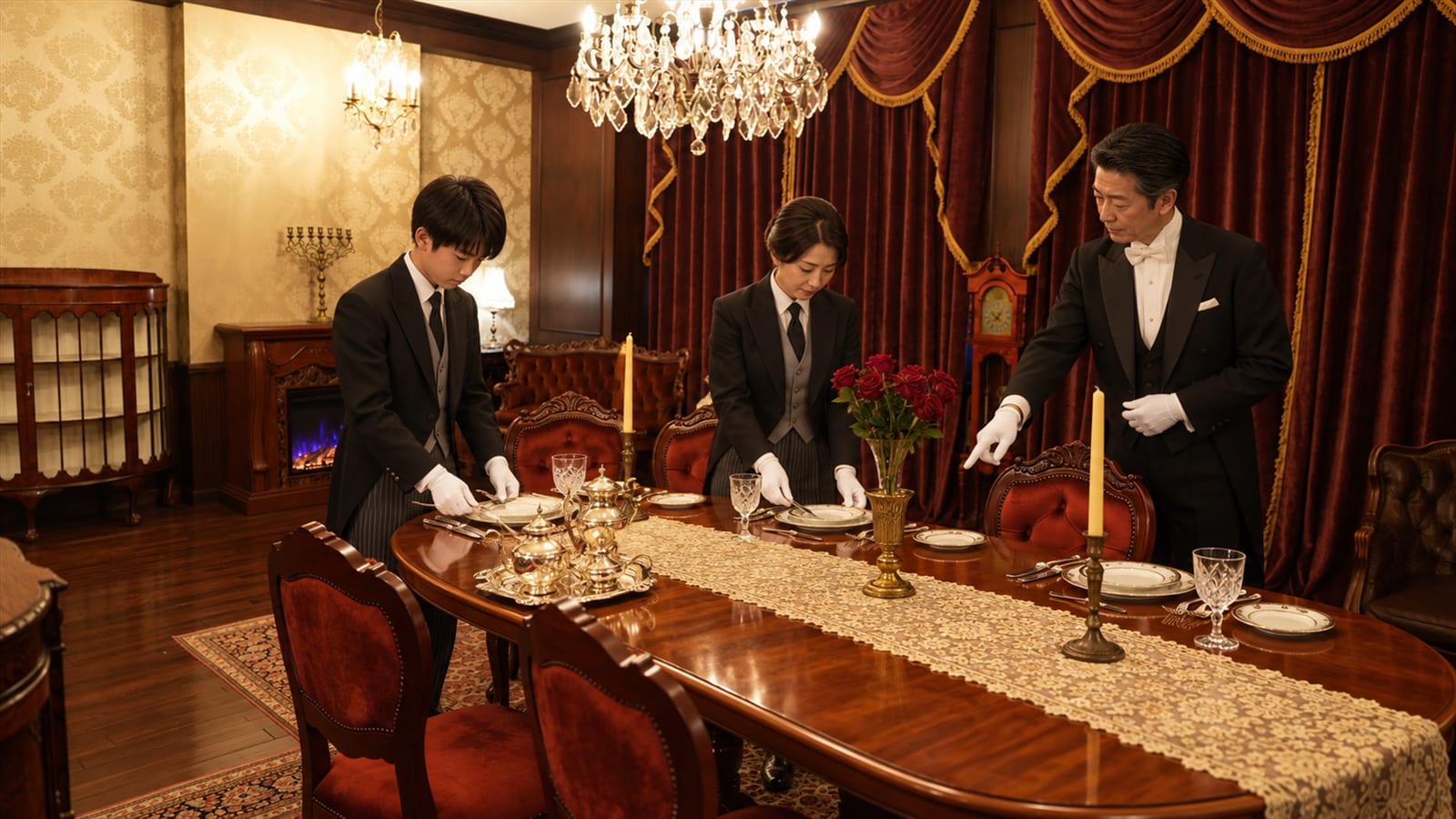

From before the glasses go on to withdrawing, in five steps
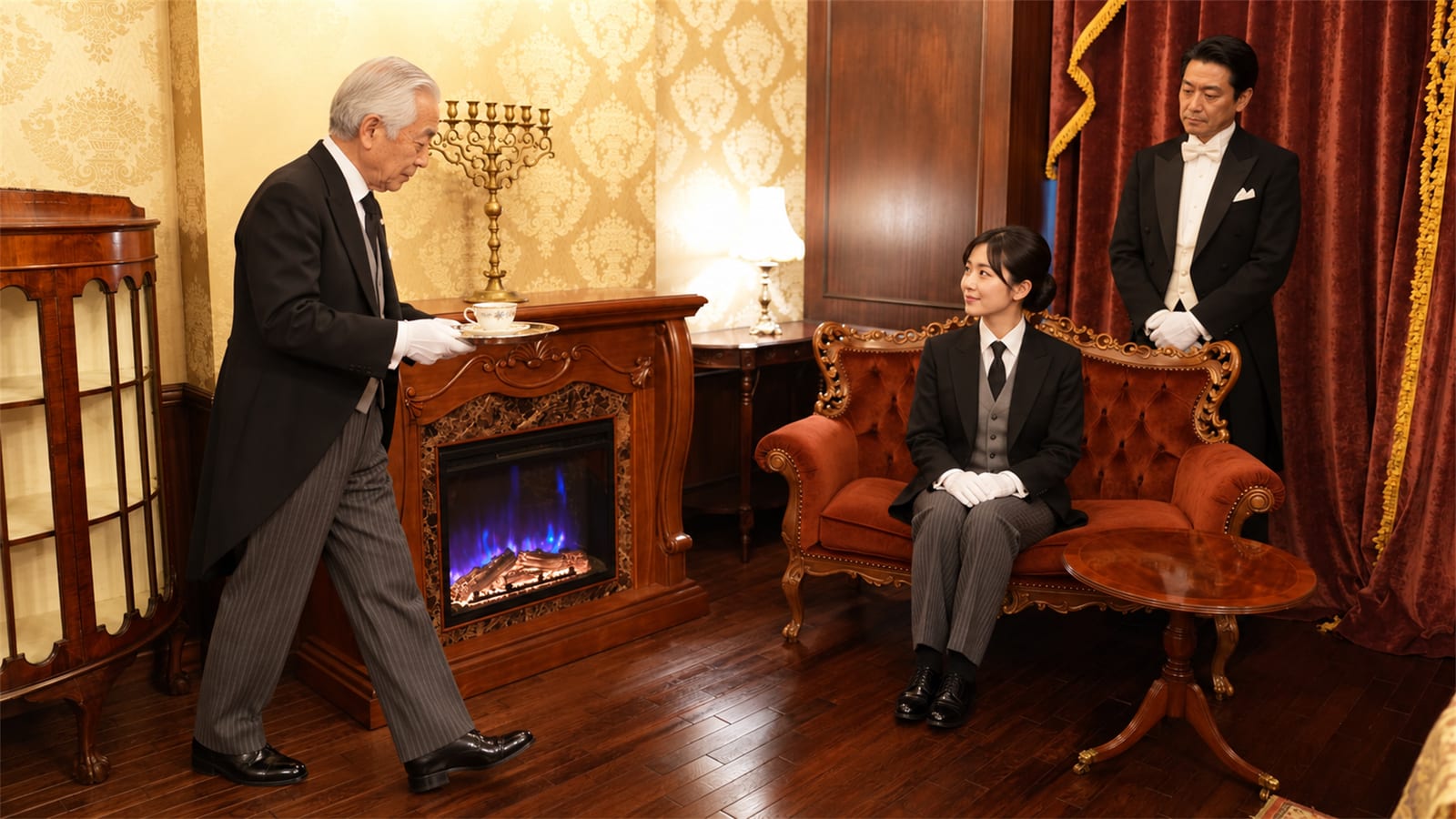
Look at the tools and the table
Look at the tray, the glasses and the silver and porcelain on the table, and confirm where things go and how many to carry.
Clear the route
Note the door, the gallery and the position of the chairs, and choose a path that needs no sudden change of direction.
Load the tray
With the butler, find an arrangement in which the glasses are not too close together and you can support the tray steadily.
Lift, and hold still
Do not walk at once; feel the weight and the tilt, move your eyes to where you are going, then take the first step.
Walk, turn, stop
Separate the movements and, so that neither torso nor tray moves suddenly, follow the butler's pace.
Serving is seen from three viewpoints: the one carrying, the one receiving and the table as a whole
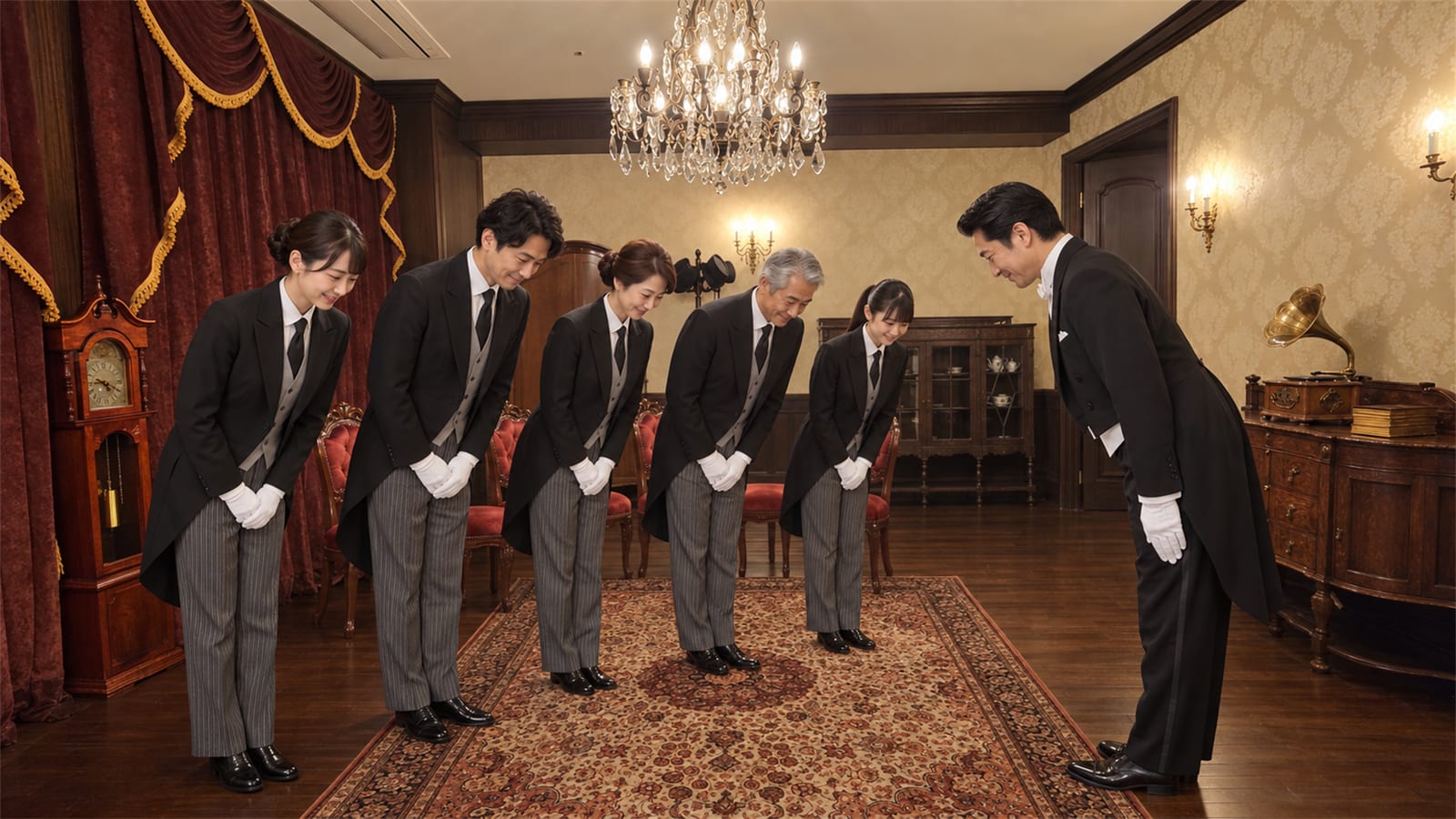
The one carrying looks ahead to the next step
Keep looking only at the tray and you will be caught out at a turn or as you near a chair. The butler reads the route in advance, stops once if need be, and squares the body before moving on.
Read more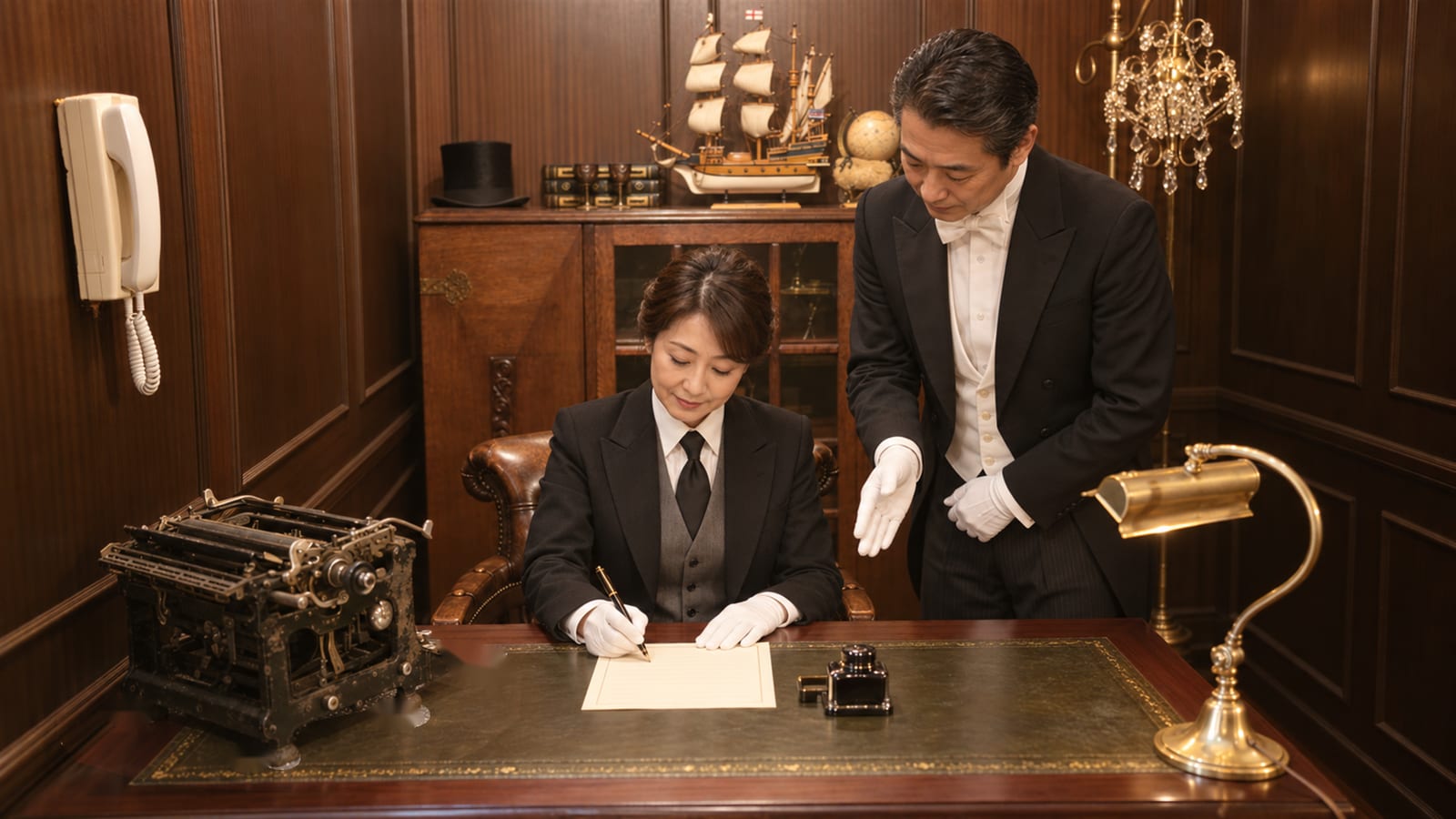
The one receiving looks for room to reach
However beautiful the glass looks, if it is too close to the silver or a cup it is hard to reach. From the lady's seat, look at the table and see where a glass may be taken up naturally.
Read more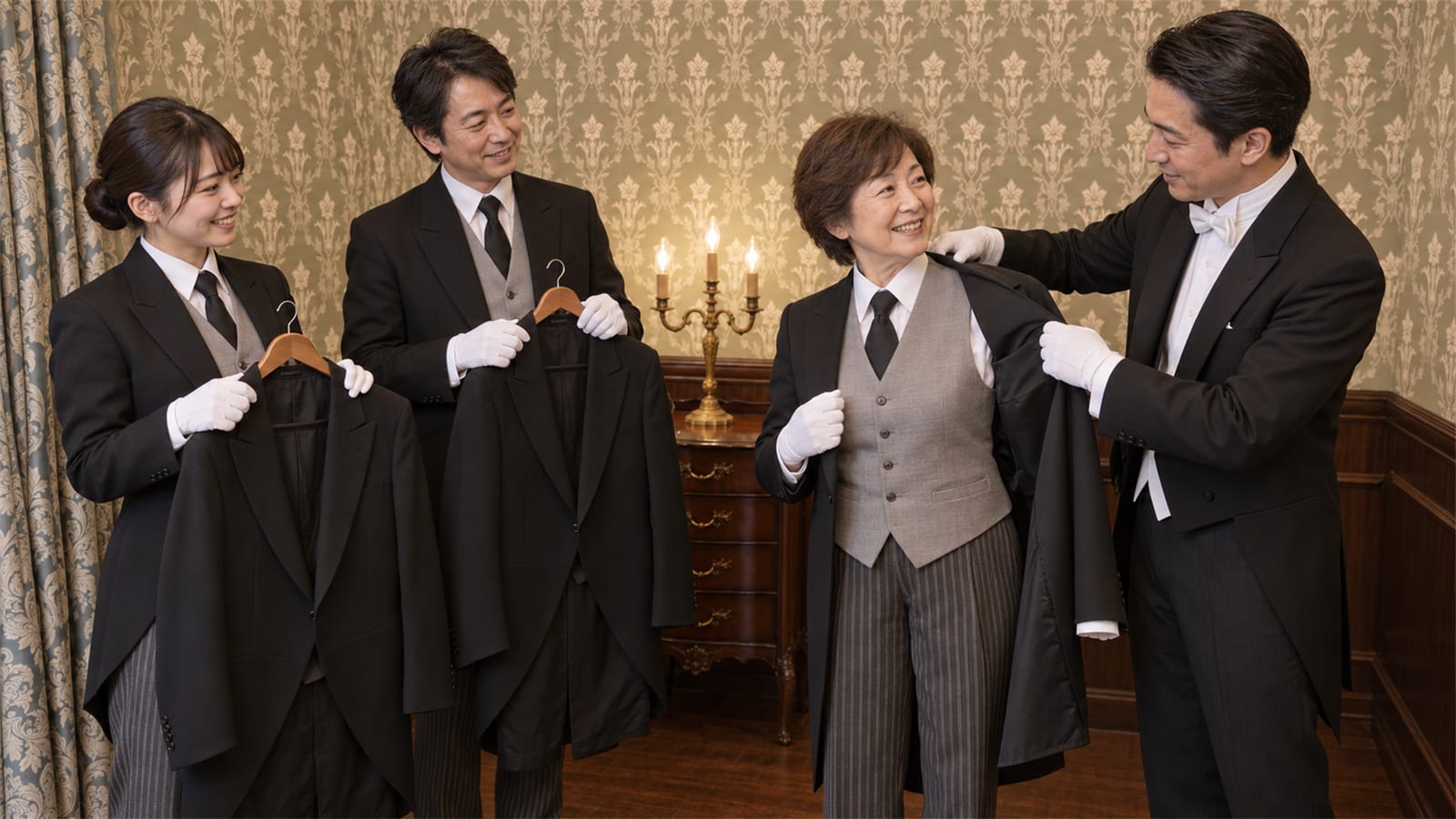
The table as a whole shows how the pieces relate
The dining room holds silver, porcelain and the tea service. The butler chooses a position that keeps not one glass alone but the whole view of the table and the lady's freedom of movement.
Read moreWhat the experience involves
- Look at the condition of the tray and glasses and discuss how to load them
- Confirm the route and where to set down before lifting
- Try the first step, the turn and the stop as separate movements
- Set down quietly on the dining table and review from the receiving side
- Carry the posture and hands of serving into the commemorative photograph
What the Manor does not do
- Serving meals
- Carrying hot or fragile items without the butler's confirmation
- Continuing with a hold that strains the body
- Using the Manor unattended
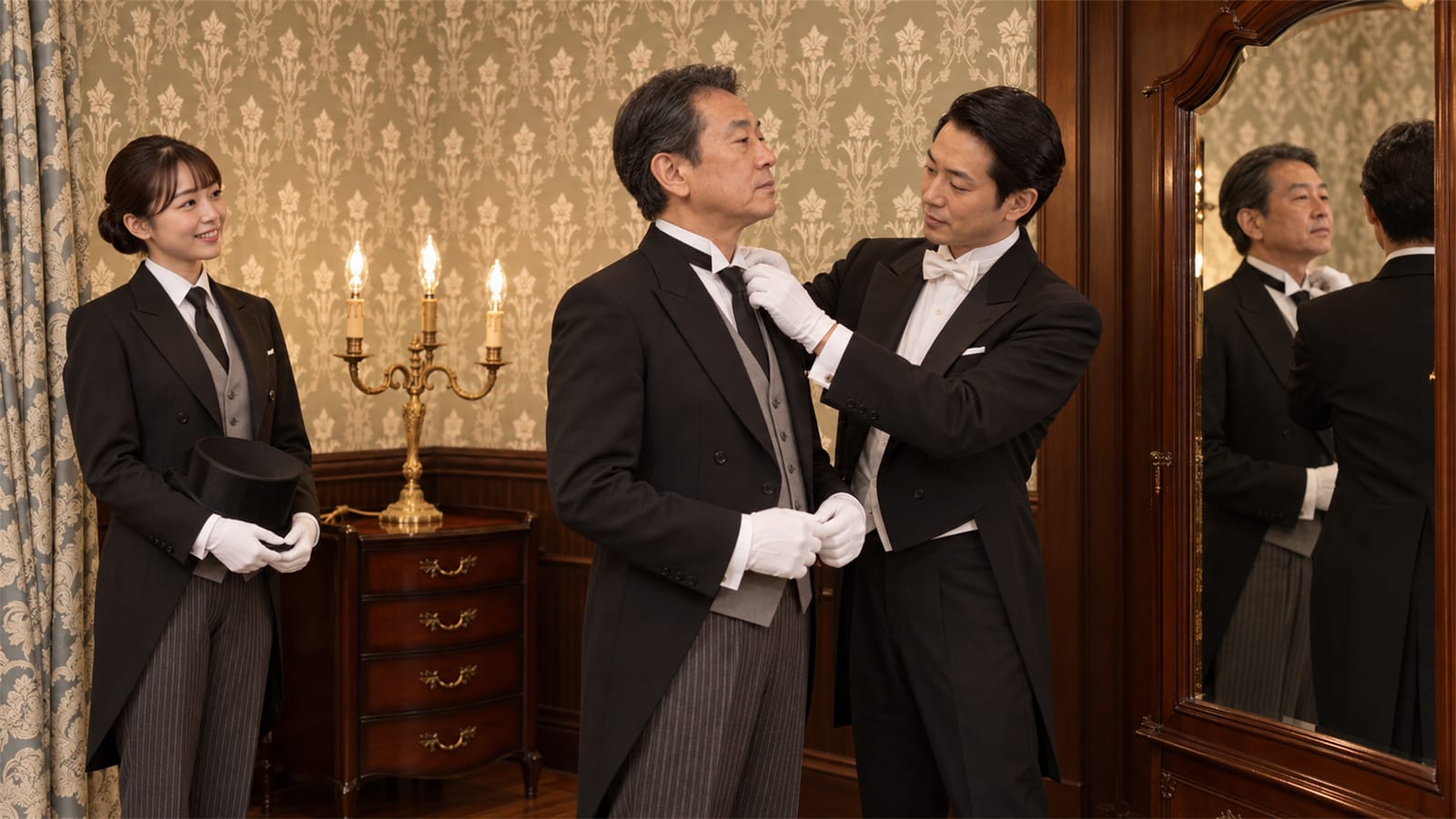
Serving that looks steady rests on checks of body and tools
| Feet | Do not lean too far to one side; stand where you can move to the next step |
|---|---|
| Shoulders | Do not lock the shoulders with the effort of lifting; find a posture in which you can keep breathing |
| Supporting hand | Do not gather the weight on the fingertips; discuss with the butler the position that is steady |
| Steadying hand | Support the tray when needed, and return it so as not to hinder the motion of setting down |
| Eyes | Look in turn at the glasses, the route and the lady; do not fix on one point |
| Where to stop | Do not come too close to the table; choose a spot from which the hand setting down the glass reaches without strain |
The butler watches not only for spills but for the lady's time
Judgement in serving means thinking at once of carrying the tools safely and of not interrupting the lady's conversation or movements. Even when you could approach the table, if the talk is continuing or something else is in her hands, do not hurry to set down; wait a moment. Moving only once you have received a signal or a glance makes the same action look composed.
When serving several guests, do not concentrate on the order alone; watch who is in conversation, whose hands are free and where there is room to set the tray down. For bookings of up to six, please discuss costumes, tools and the running order in advance. If you come alone, your butler takes the receiving role, and you check together where to set down and how to speak.
The Japan Butler Association, the general incorporated association that runs Queen's Butler, has both male and female butlers, each of whom demonstrates serving with their own hands. Your butler takes the tray, sets off, stops, sets down and withdraws in a single sequence, then observes your posture and pace.
See the flow of the whole experience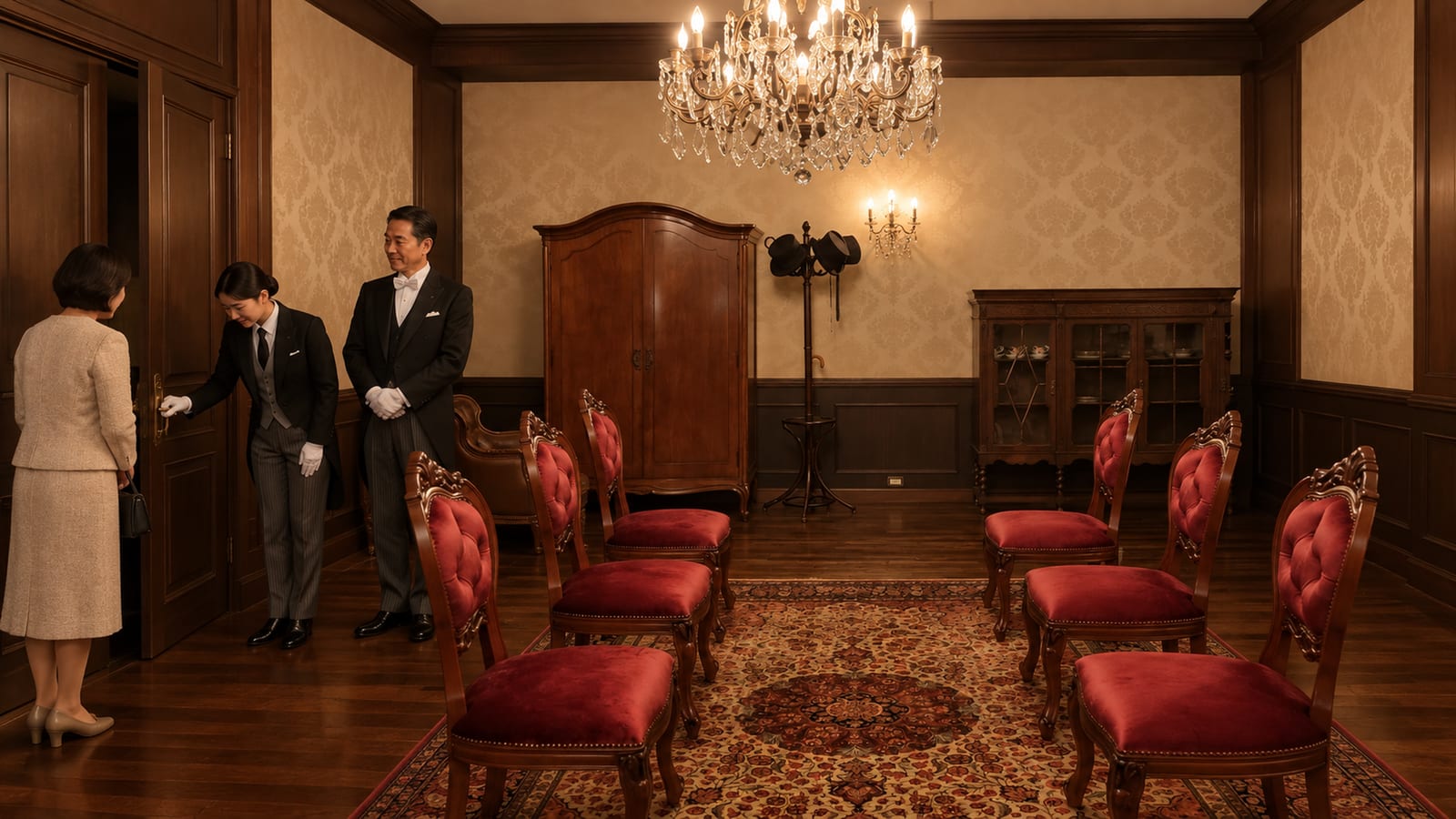
QMay I take part if I have never carried a tray?
Yes, first-time guests are welcome. The butler shows you the checks before loading and how to hold the tray, and you begin from lifting and holding still. There is no need to hurry into walking.
QI am worried about spilling or knocking the glasses.
If you are anxious, please say so before you begin. The butler checks the tools and the route and discusses with you how far to go on the day. We proceed one step at a time, once each is steady.
QDo we also serve meals?
The Manor does not serve meals. In this programme you use a tray and glasses to experience preparation before carrying, walking, setting down at the table and withdrawing. Please discuss in advance if you wish to bring food or drink.
QMay women experience serving too?
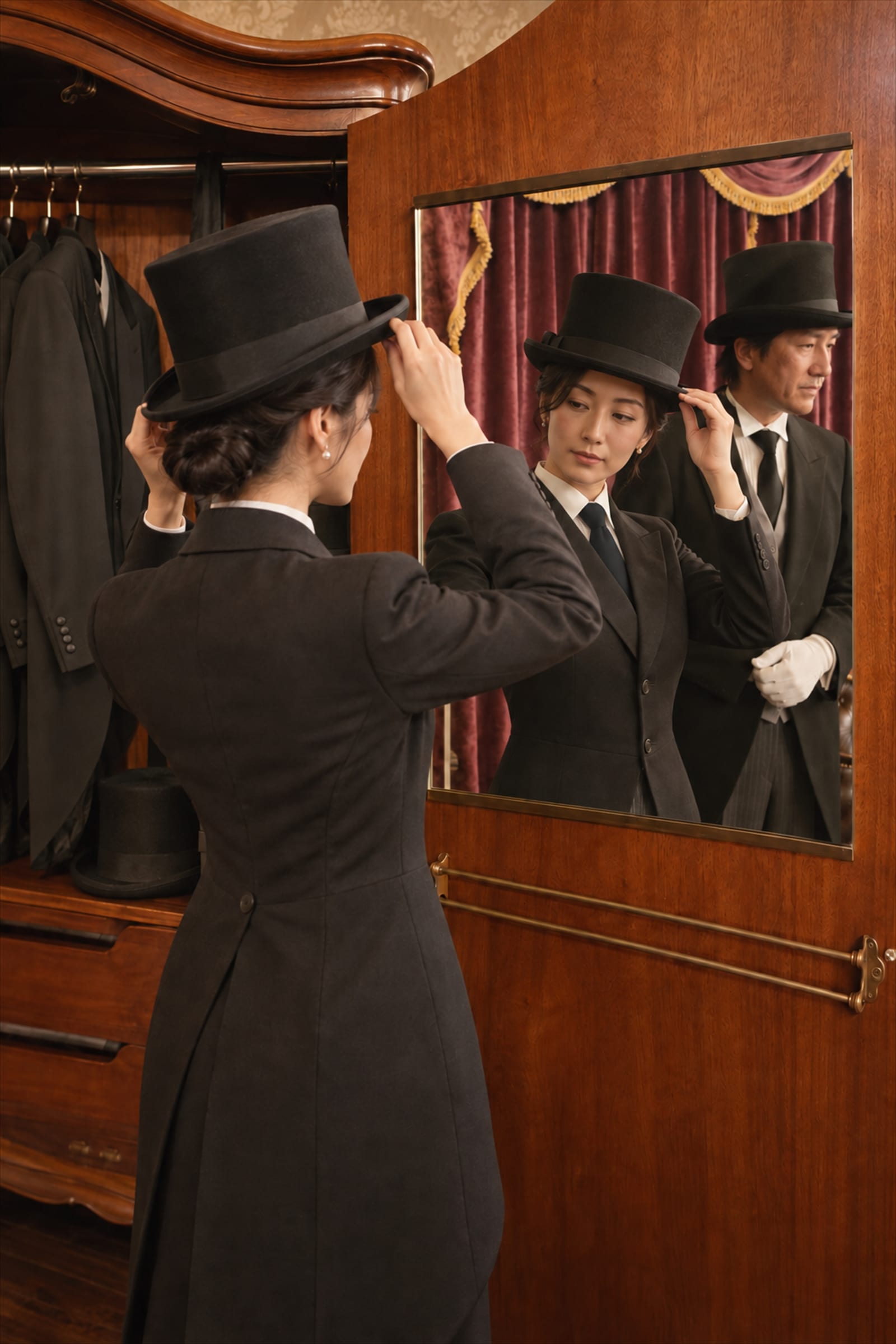
Yes, women are welcome. For the morning coat ensemble, we ask your height, build and shoe size and discuss in advance. Our butlers include both men and women.
QMay I use the tray and glasses on my own?
Yes, your butler accompanies you, demonstrating and taking the receiving role, so that you can compare the viewpoints of carrying and receiving. For several guests, please discuss costumes and the running order in advance.
QMay I have photographs of myself serving?
The experience includes a commemorative photograph. Tell us what you would like: standing with the tray, moving through the gallery, setting down at the dining table. We check the condition of the tools and take the photograph.
In the last few steps to the table, look most widely around you
Approaching the dining table is not walking straight at the intended seat but taking in, all at once, the chairs, the lady's hands, the silver and porcelain and the movements of others. The butler chooses a spot from which the hand reaches the place for the glass without strain, and where one can stop without tilting the tray.
Too close, and the morning coat or the tray is liable to touch the table; too far, and only the arm reaches out. In the experience, you first find where to stand without the tray, then with it empty, and finally with the glasses on. Rather than fixing attention on the hand that sets down, keep the supporting hand and the axis of the body, and settle the glass on the table with the least sound.
Clearing a glass is not reaching out the moment it is empty, but observing whether the lady is still in conversation or another movement. Choose the moment at which it may be cleared, secure a route that does not collide with other pieces, and decide in advance where it will go on the tray once lifted.
See the commemorative photograph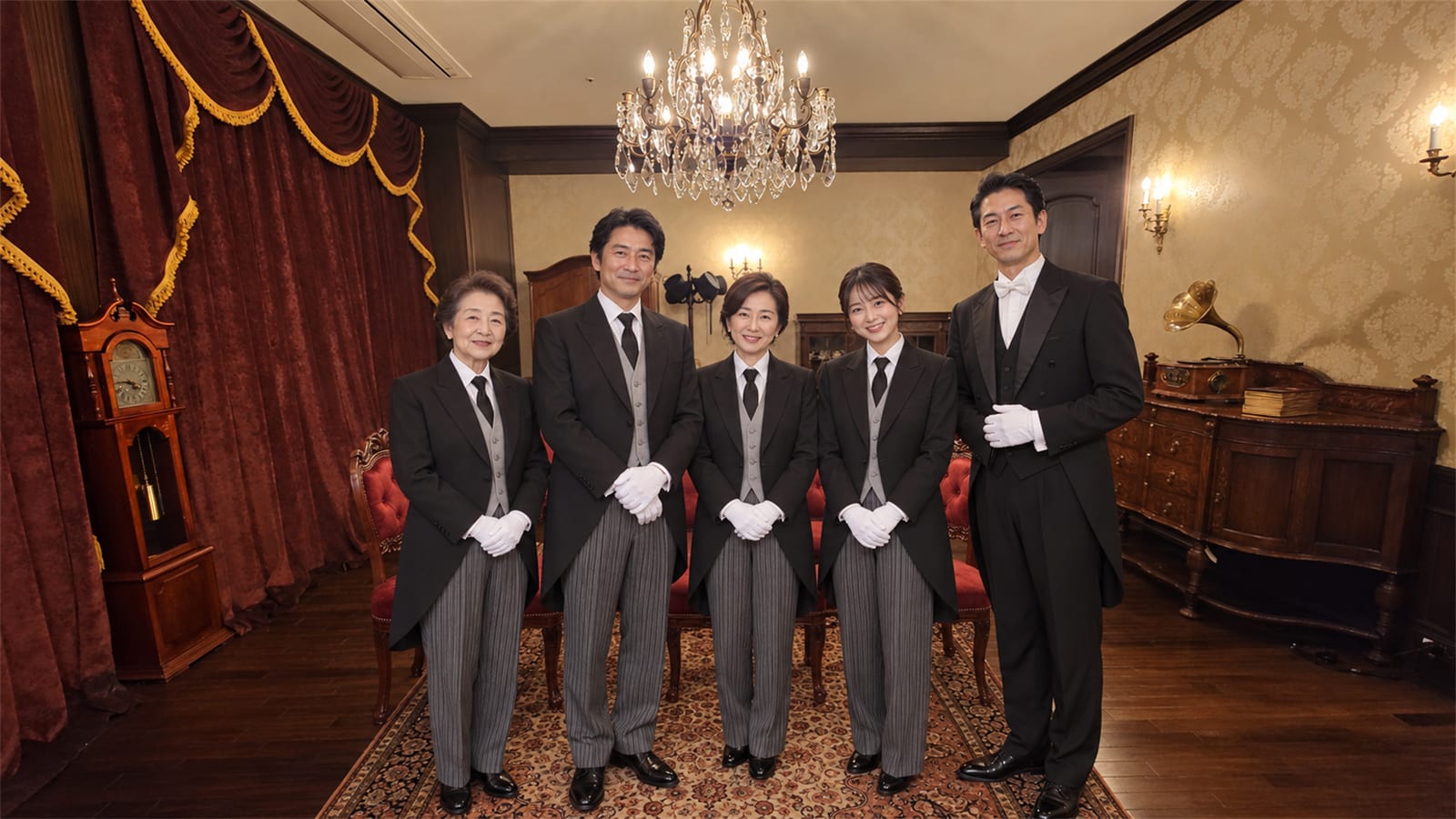
About the attire
- Sizes and styles are limited. Before booking, please tell us your height and usual clothing size
- Please ask about sizes other than those listed
You may also wish to read

The tray, at chest height.
Tell us your height, build and shoe size, and your preferred date and time.