Serving Tea
Warm, measure, pour, present.
About Serving Tea
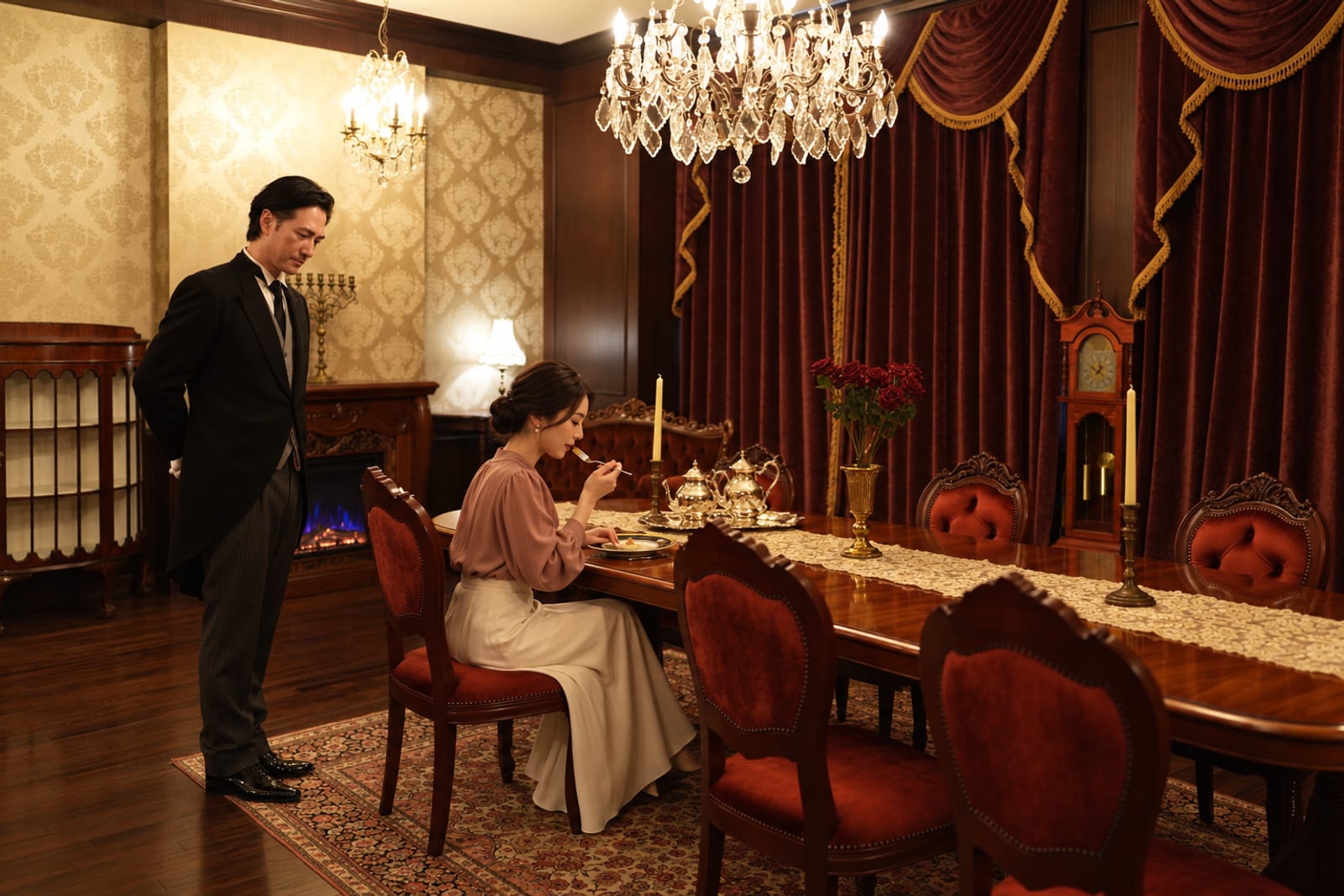
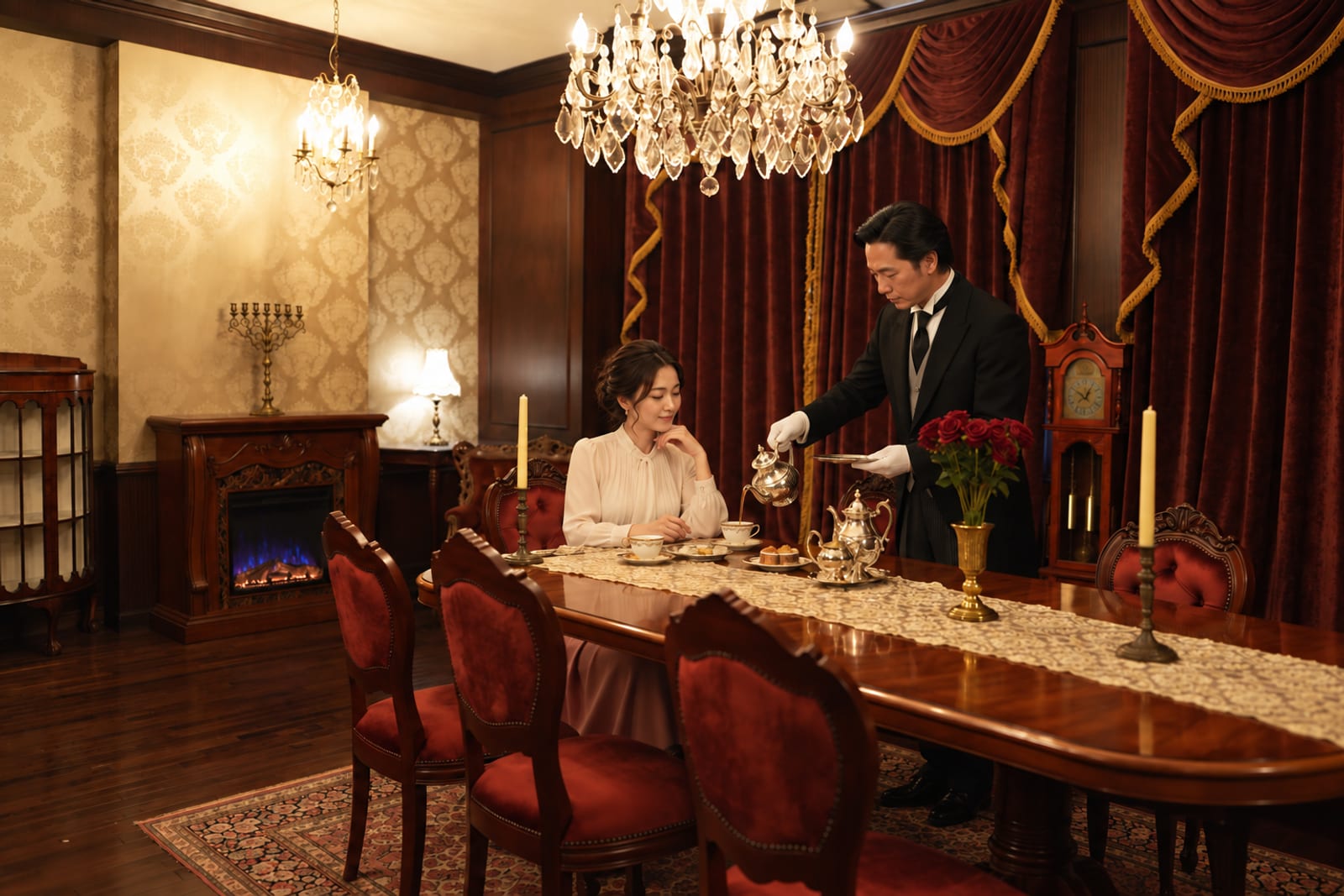
Serving tea is the sequence of movements from the butler tilting the silver teapot, to preparing a single cup, to presenting it where it is easiest to receive. The order — warming, measuring, pouring the water, steeping, pouring into the cup, presenting — includes the care taken in carrying a three-tier stand.
Tea proceeds in order, from preparation to presentation
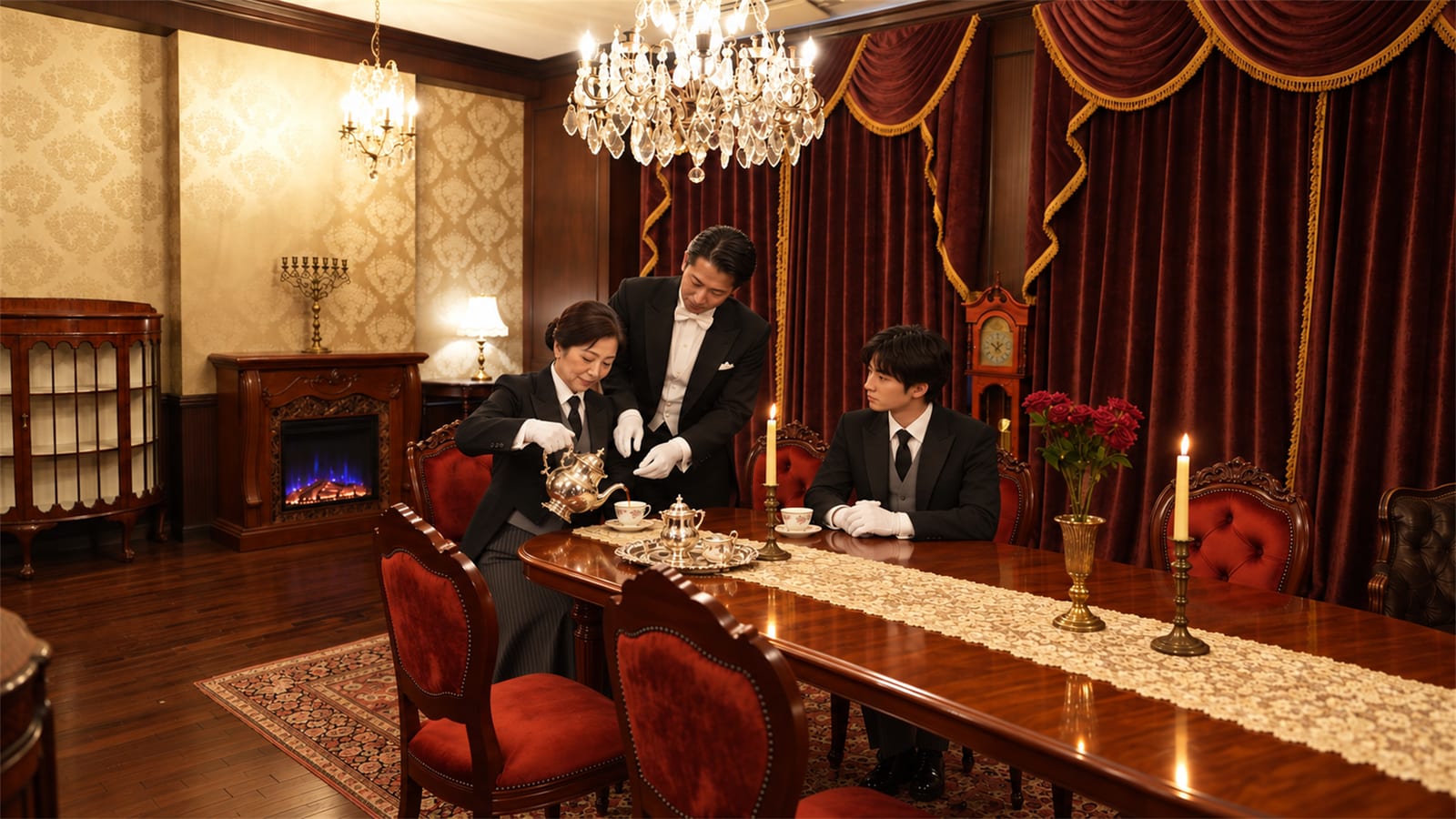
Arrange the tools and the table
Check the positions of pot, cup, strainer and leaves, and arrange them so that no movement crosses another.
Warm the pot and cup
Understand why the pieces are warmed, and watch the butler's example of handling hot water and where to set things down.
Measure the leaves
Hear how the quantity is judged for the tea and the number of guests, and handle caddy and spoon without haste.
Pour the water and steep
Steady the pot, pour with care for the lid and the handle, and use the wait to prepare for the next service.
Pour through the strainer
Watch the position of cup and pot, and pour one cup at a time with care for drips and sound.
Before carrying the three-tier stand, look at the route and the table
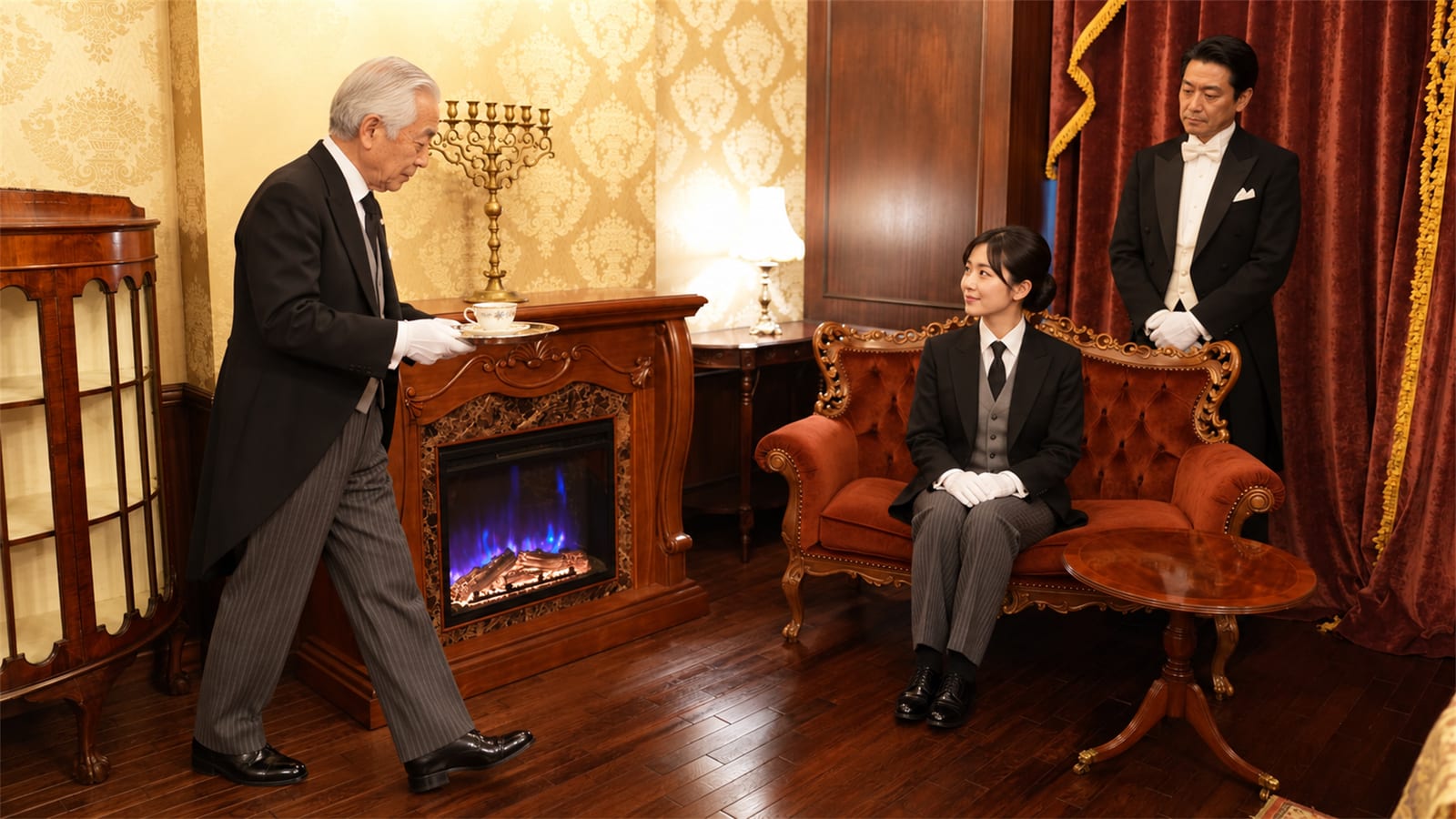
Handling a three-tier stand is less a matter of strength than of settling the route and the destination first. The butler looks at the cups, the silver and the guest's hands on the table, and chooses a spot where, once the stand is set down, neither conversation nor movement is hindered. In the experience, you confirm the order: look at the space, then lift.
While carrying, be aware of the spread of each tier and the centre of gravity, and keep the stand steady close to the body. Do not stare only at your feet; move quietly while judging the gap from doors and chairs. Rather than changing direction hastily at the last moment, it is important to settle the body's orientation before approaching the table.
Once the stand is on the table, do not step away at once; check that the stand and the cups are within easy reach. If you add a word of guidance to the guest, do not interrupt the conversation, but say what is necessary briefly. When the hands at the teapot and the placing of the three-tier stand come together, the scene in the dining room becomes one.
The tea service shows in the hands, in the waiting, and in the moment of presenting
The hands tell the order of the tools
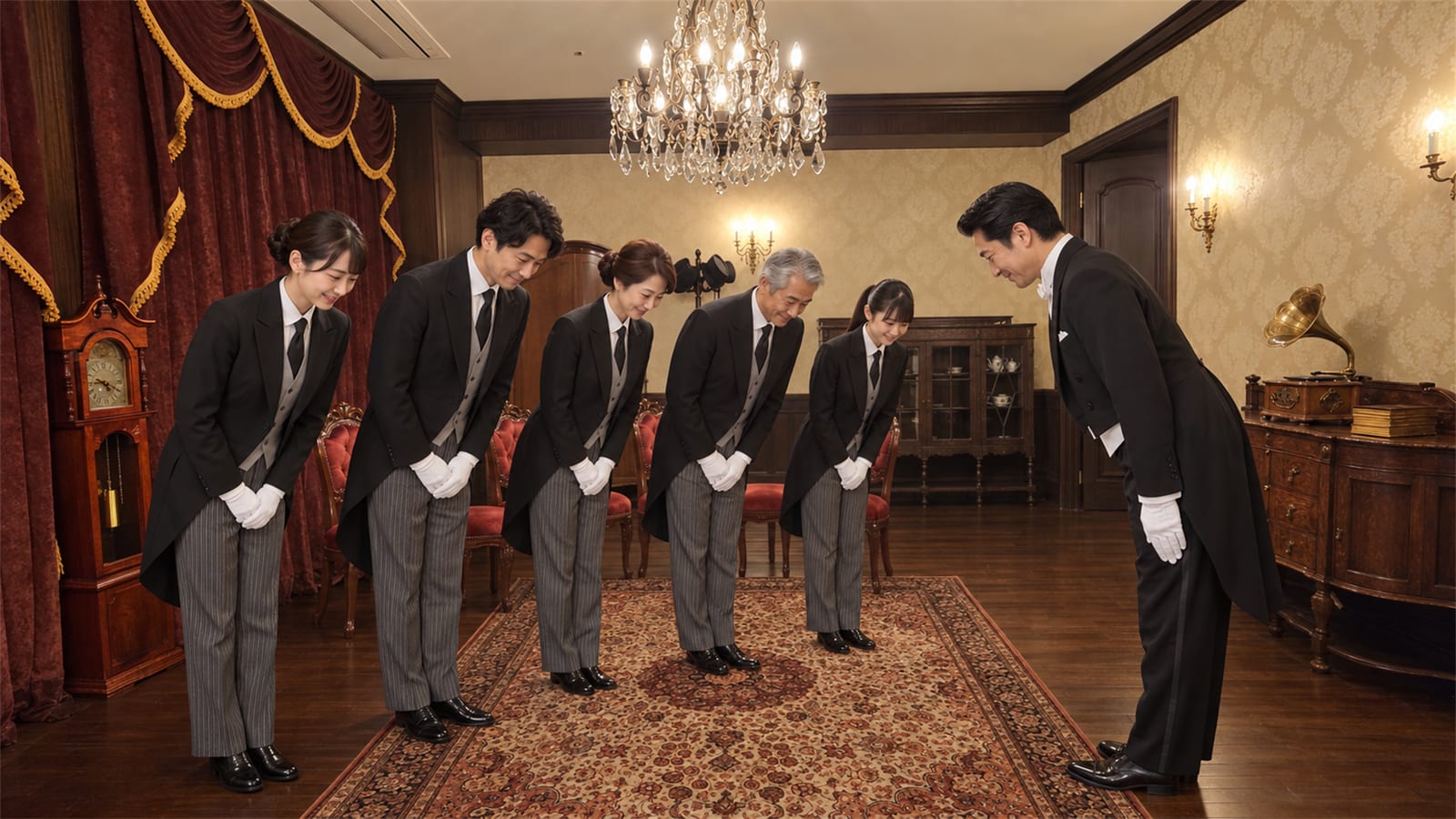
Searching for tools while moving sends the hands back and forth over pot and cup. The butler checks the arrangement first, so that each thing needed next is within a single reach.
Read more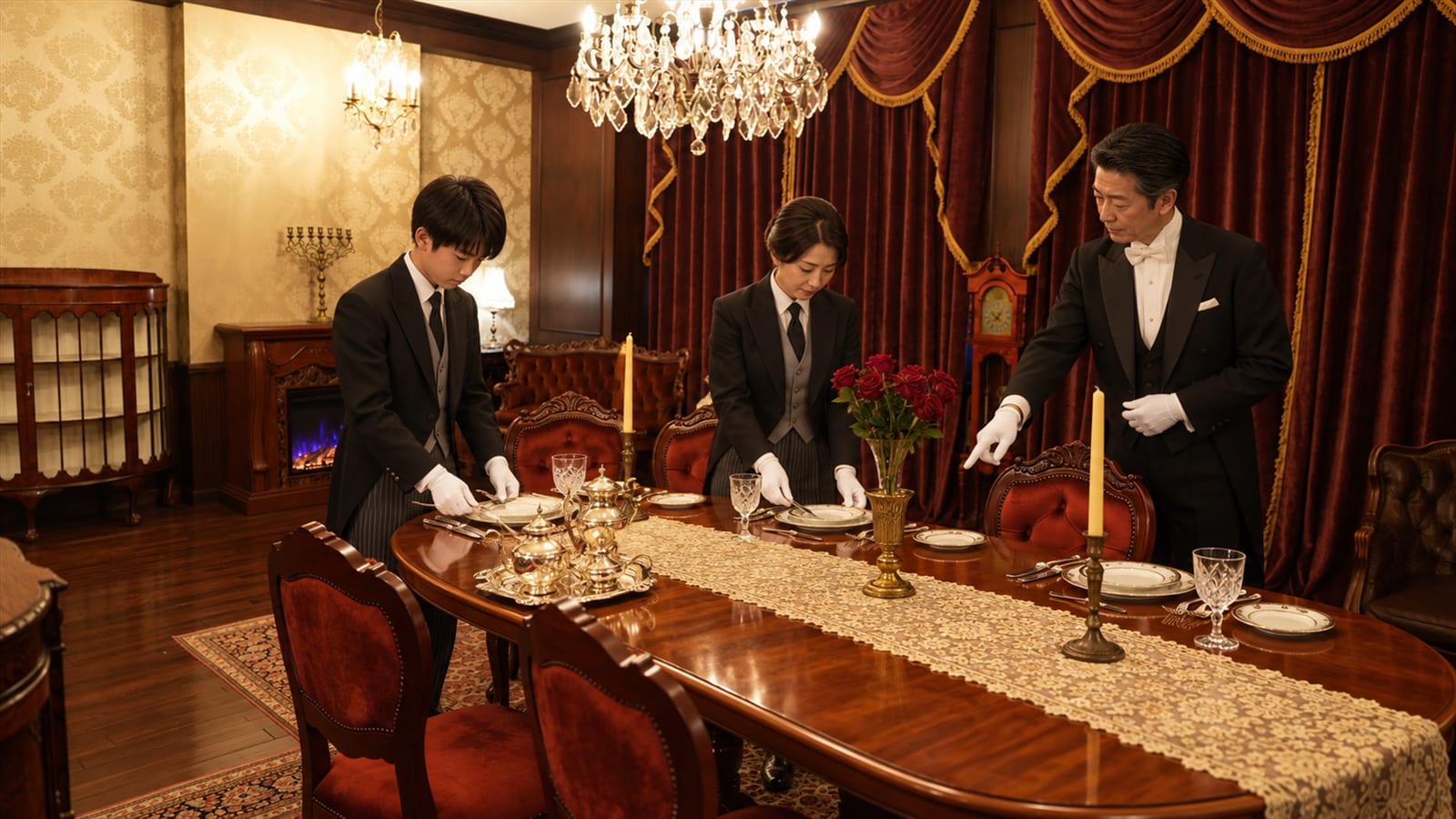
While the tea steeps, the butler is already looking ahead
The wait is not idle time. The butler checks the direction of the cup, the space on the table and a position that does not intrude on the guest's conversation, and moves quietly on to the pouring.
Read more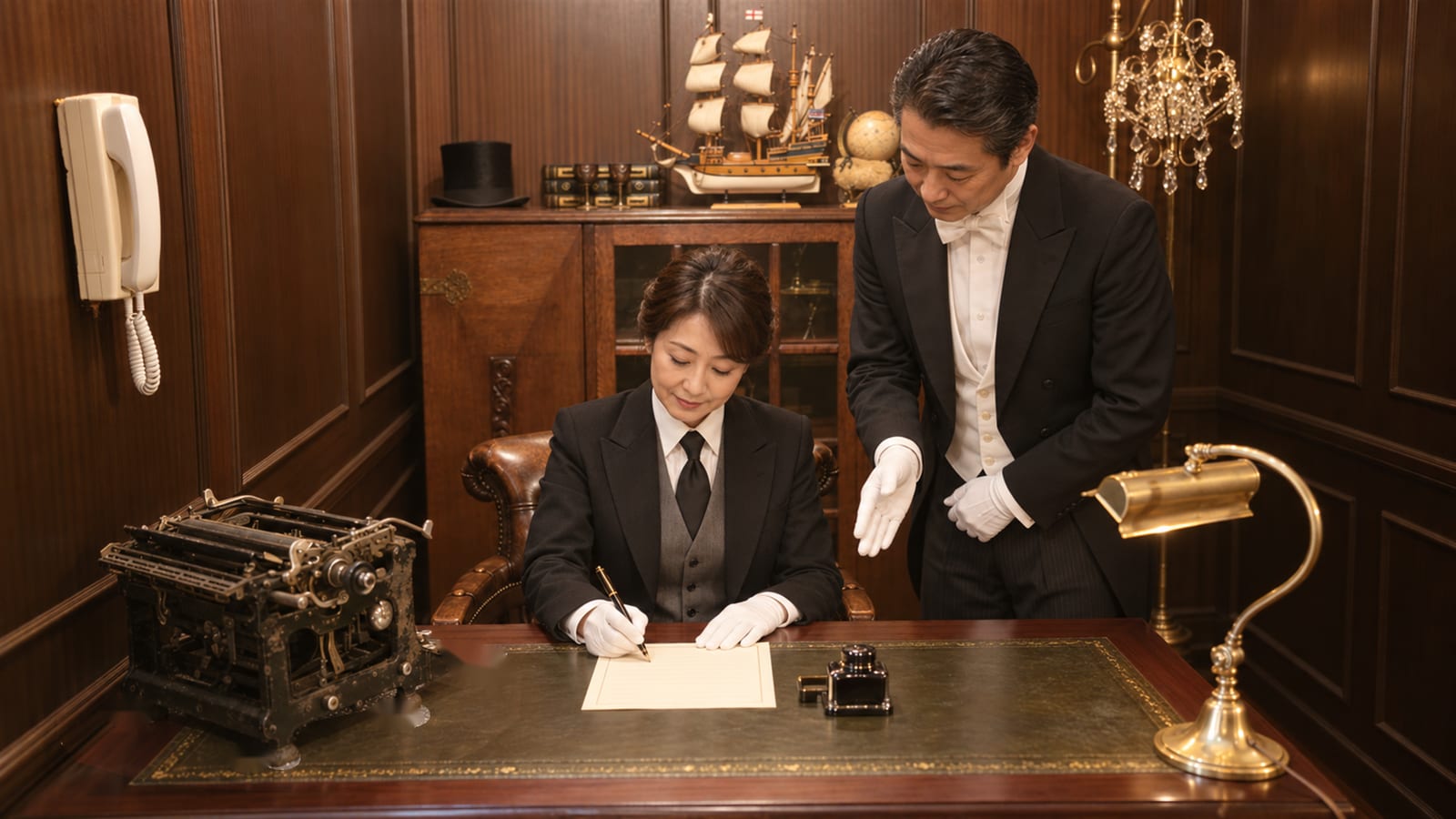
After presenting, step back one pace
Setting down the cup is not the end: the butler checks that the guest can reach it without strain and that nothing on the table will collide.
Read moreWhat you practise in the experience
- Confirm the order in which teapot, cup and strainer are used
- Watch the pot and cup being prepared, the leaves measured and the water poured
- Confirm where to stand while the tea steeps, and what to prepare next
- Discuss the route, the grip and the destination for the three-tier stand
- Try the whole sequence yourself, watching the butler's hands
What the Manor does not do
- Serving meals
- Handling a piece without first checking its condition and place
- Handling hot pieces without the butler's confirmation
- Using the Manor without a butler present
Seven points the butler watches before and after pouring
| The table | Do cup, silver and three-tier stand leave each other room to move? |
|---|---|
| The grip | Is the pot supported steadily, without strain on the lid or spout? |
| The gaze | Can you see the guest's movements without fixing only on your hands? |
| Sound | Are pieces set down, and silver touched, without unnecessary noise? |
| Drips | After pouring, have you checked the spout and the table before moving to the next cup? |
| Stepping back | After presenting, can you return to a position that does not hinder the guest's hands? |
Each tool has its own points to watch and its own moment to move
| Tool | What to look at before handling | The point of the gesture |
|---|---|---|
| Teapot | Handle, lid, spout, where it will rest | Decide the role of each hand, and return it quietly after tilting |
| Cup and saucer | Orientation, space on the table, the guest's hands | Do not slide them separately; set them down together and steady |
| Strainer | Its dish and its resting place | Fix its position first so that it does not cross the pouring |
| Three-tier stand | The route, the table, the gap from the chairs | Decide where it will go before lifting |
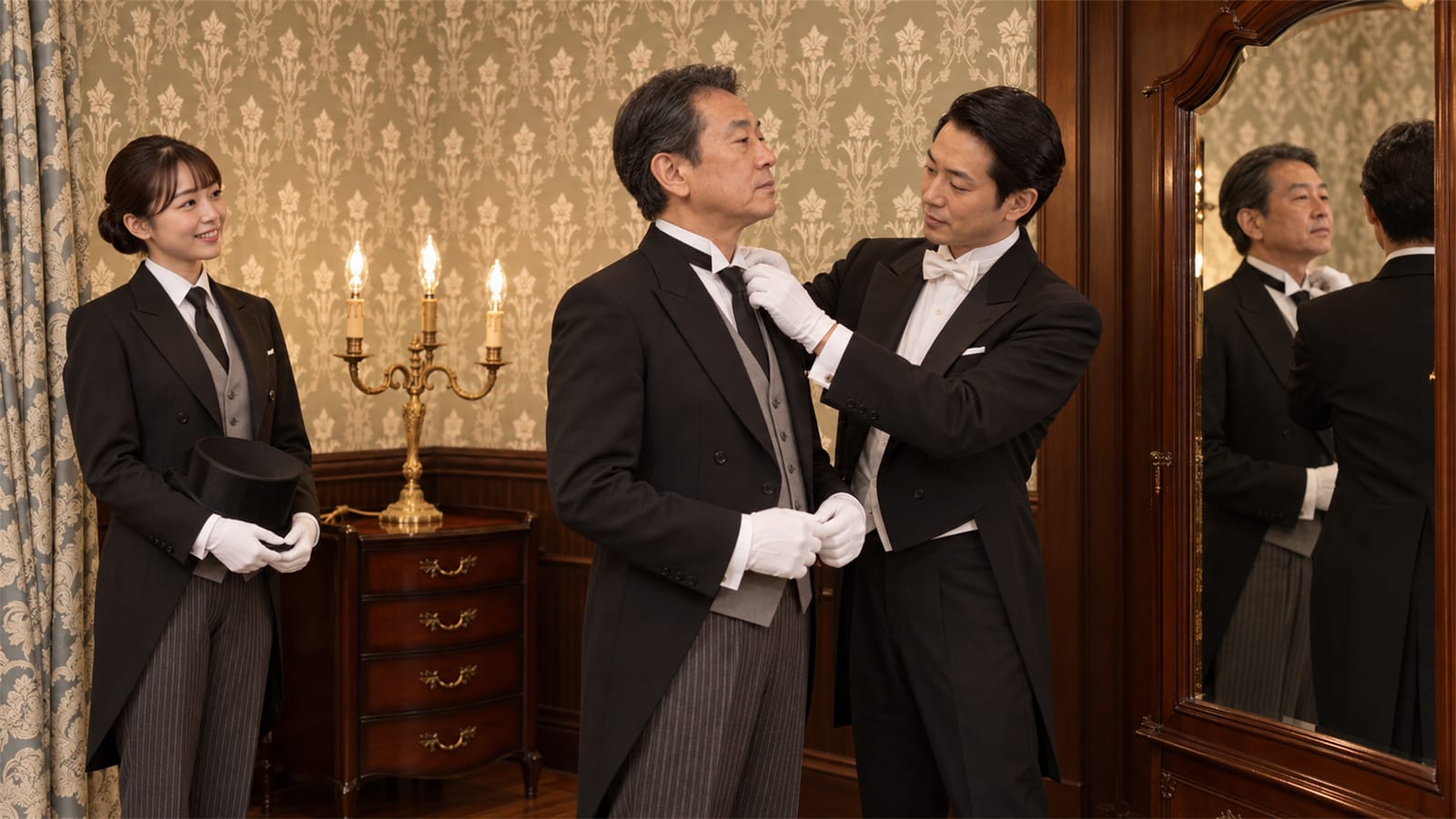
| White gloves | Cleanliness, the fit at the fingertips | Settle them before touching silver, and mind that they do not catch |
The butler checks the condition of the Manor's pieces and explains on the day which will be used and in what order.
Genuine silver and English porcelain slow the hands
The Manor's silver tea service is Victorian-style silver plate by F.B. Rogers. Pot, sugar bowl, creamer and the rest come with their tray, and catch the light of the dining room as the hands move. It is a collection not merely to be admired, but one whose handling by the butler you may watch at close quarters.
For cups, the Manor holds English porcelain such as Royal Albert Heirloom and Wedgwood Florentine Turquoise. Looking at the form and design of each piece naturally draws attention to the direction of the handle, the fit with the saucer and how it reads on the table. The butler checks the condition of the pieces to be used on the day and shows them to you.
Handling silver and porcelain is not a display of their value, but care taken for the person who will receive them next. At Queen's Butler, run by the Japan Butler Association, male and female butlers are in residence and show, with their own hands, the provenance of each piece and how it is handled in practice.
Read the tea service step by step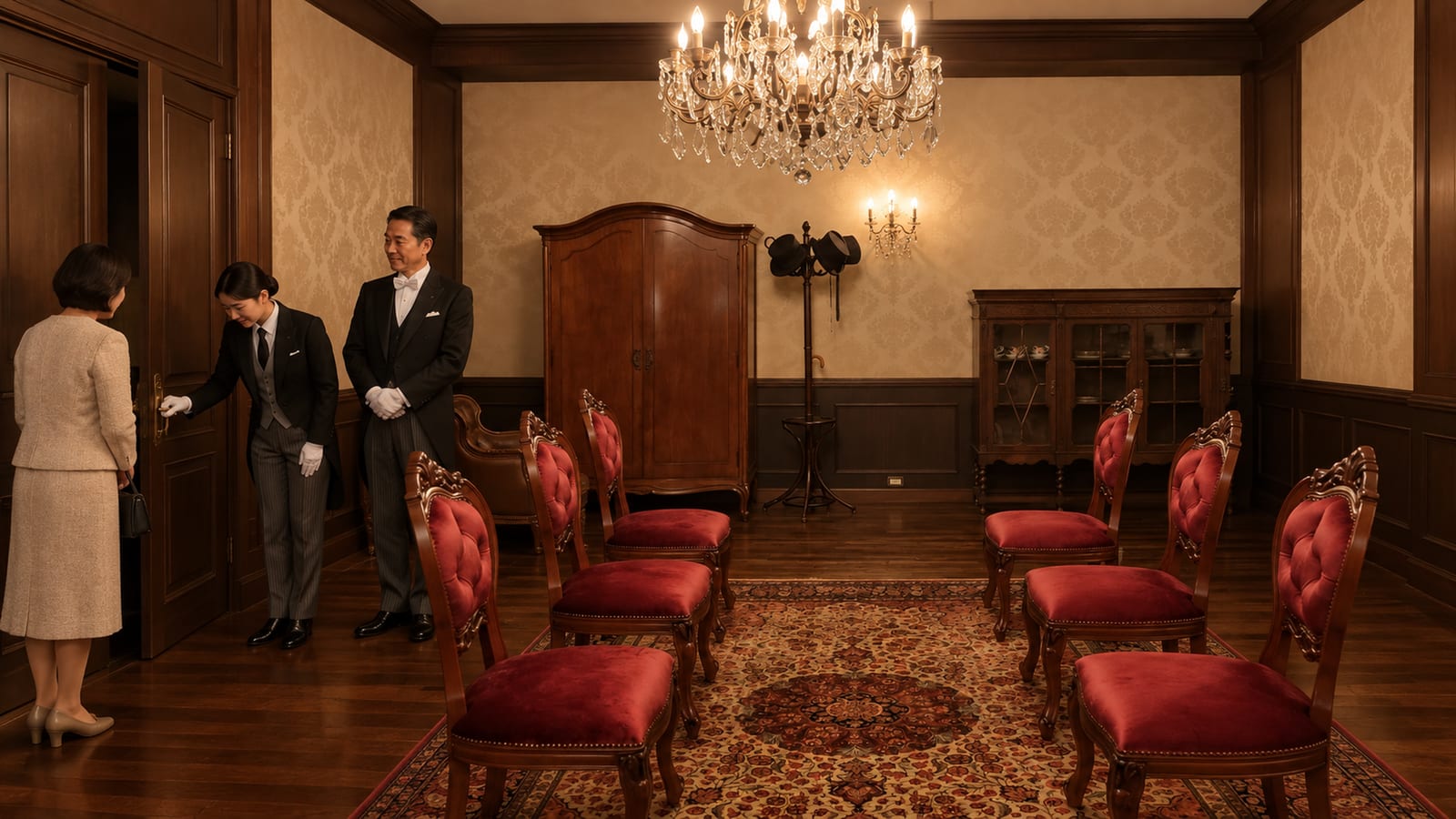
QCan I take part with no knowledge of tea?
Yes, no prior knowledge is needed. The butler names each tool and shows the order one step at a time. Rather than memorising everything, we value the sense of attending to your hands and to the guest at the same time.
QI am nervous about handling hot water.
If you have any concern, please tell us before we begin. The butler checks the condition of the pieces and the movements, and agrees with you how much to attempt on the day. You may begin simply by watching the demonstration.
QDo I carry the three-tier stand on my own?
The butler first shows the route, the grip and the destination. How to proceed from there is decided on the day, according to the condition of the piece and how you are feeling. There is no need to lift it if you would rather not.
QCan women take part in a morning coat?
Yes, women are welcome to apply. We discuss attire in advance, asking your height, build and shoe size. Both male and female butlers are in residence.
QCan I experience the tea service on my own?
Yes. Your butler accompanies you, both demonstrating and taking the role of the guest who receives. For groups, attire and the programme require preparation, so please tell us the number when booking.
QCan I have a photograph of myself pouring tea?
The experience includes a commemorative photograph. Tell your butler what you would like: holding the pot, standing beside the three-tier stand, and so on. We proceed once safety has been confirmed.
The hour of tea begins before the cup is chosen
Choosing a cup is not a matter of taking a piece for its design alone, but of seeing how it will sit with the silver, the pot and the three-tier stand on the table, and preparing a setting worthy of the person who will receive it. The Manor's display cabinet holds silver and porcelain, and the butler settles the hands before opening its doors.
Do not touch the rim or handle carelessly; carry cup and saucer together and steady, and look first at where the piece will go on the dining table. In the experience, you consider the differences between the pieces before the cabinet, put into words why that one cup is chosen, and then proceed to the steps of making the tea.
Knowing the history of a piece is not for the sake of remembering names, but for handling it with respect for the person who receives it next. After choosing, check the space left and the neighbouring pieces, and close the doors without disturbing the order of the cabinet as a whole.
On to handling silver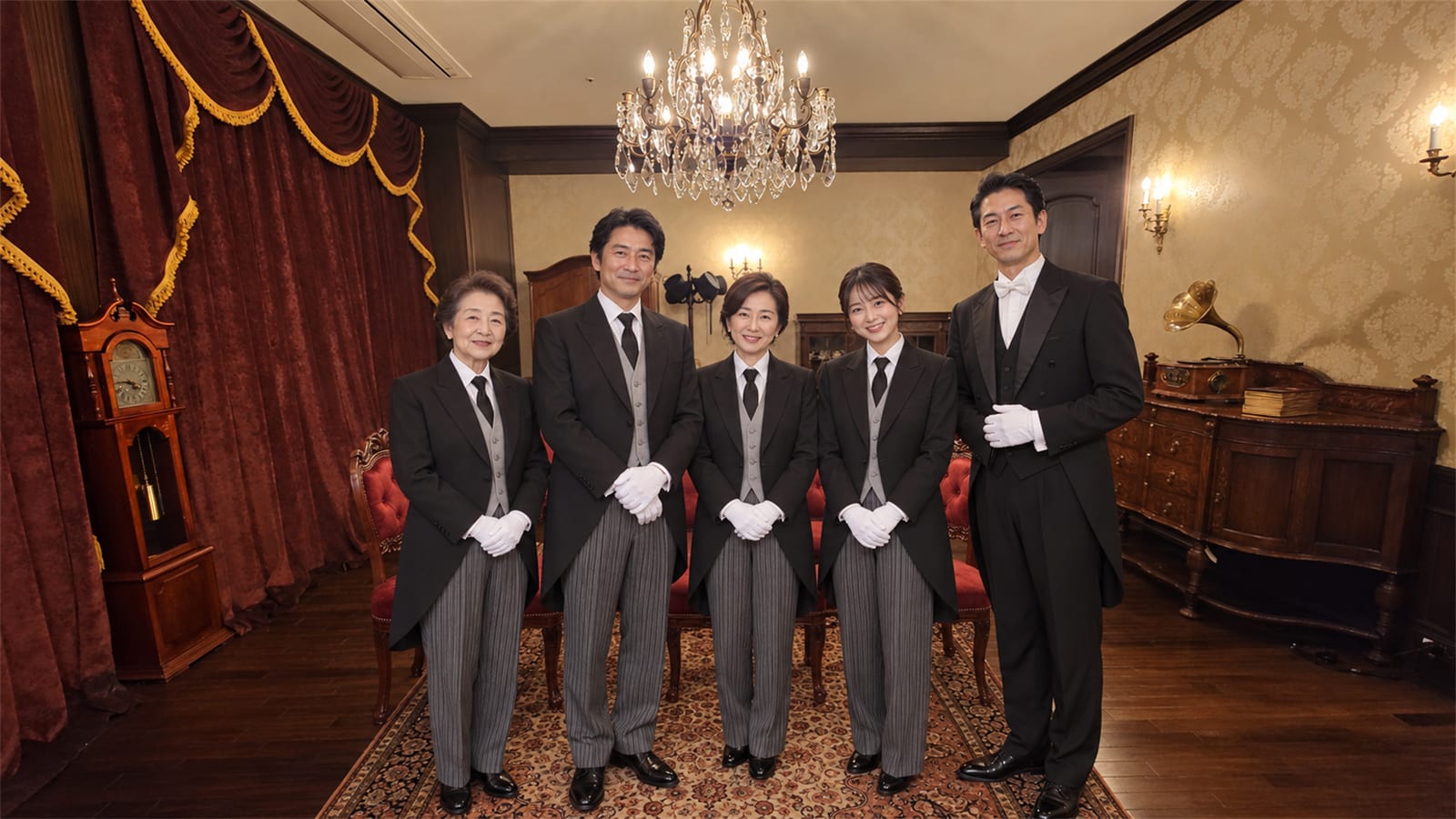
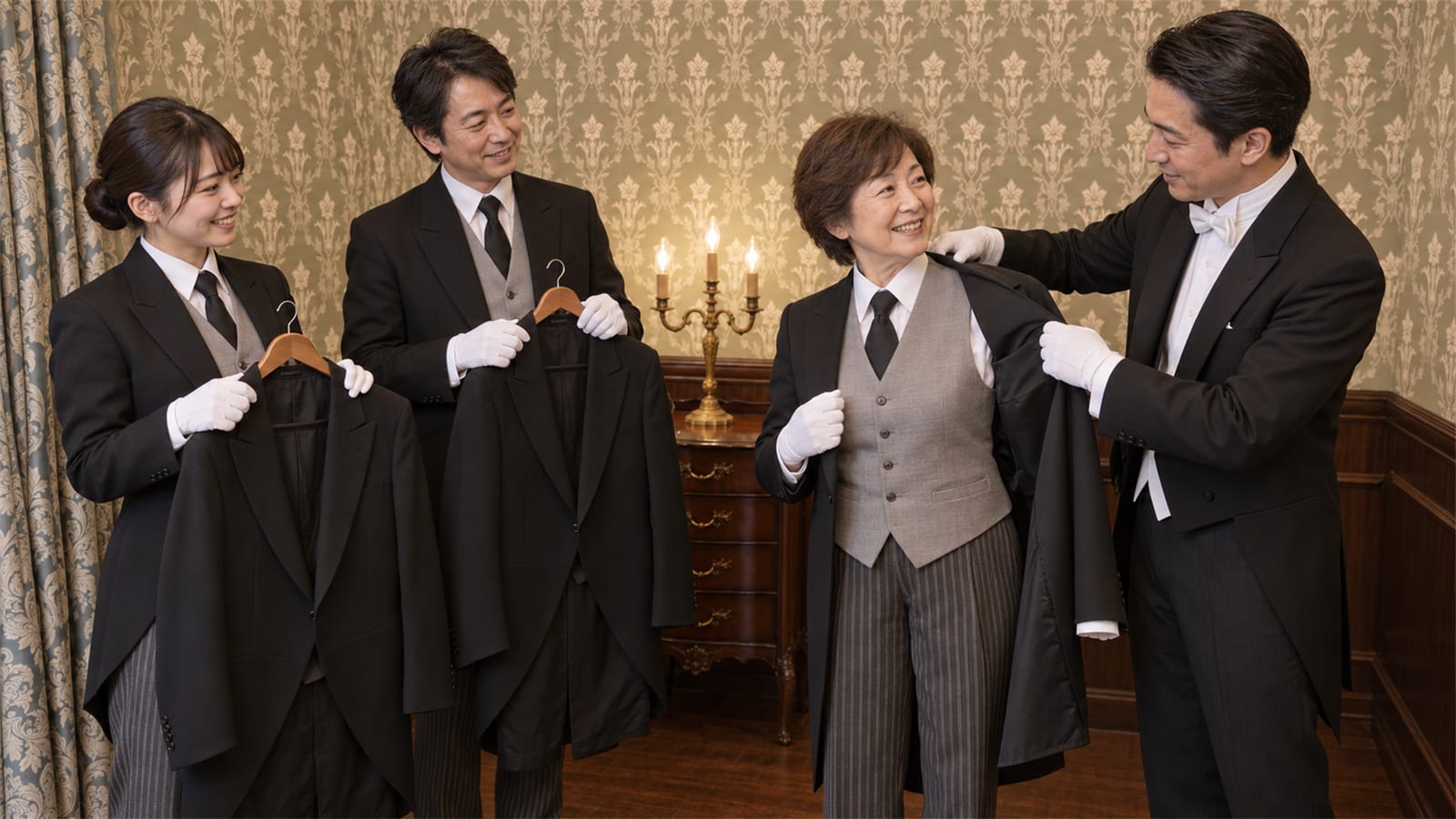
About the attire
- Sizes and styles are limited. Before booking, please tell us your height and usual clothing size
- Please ask about sizes other than those listed
You may also wish to read
Price of the Apprentice Butler Experience
The price for three hours, one guest, and what it includes.
Read more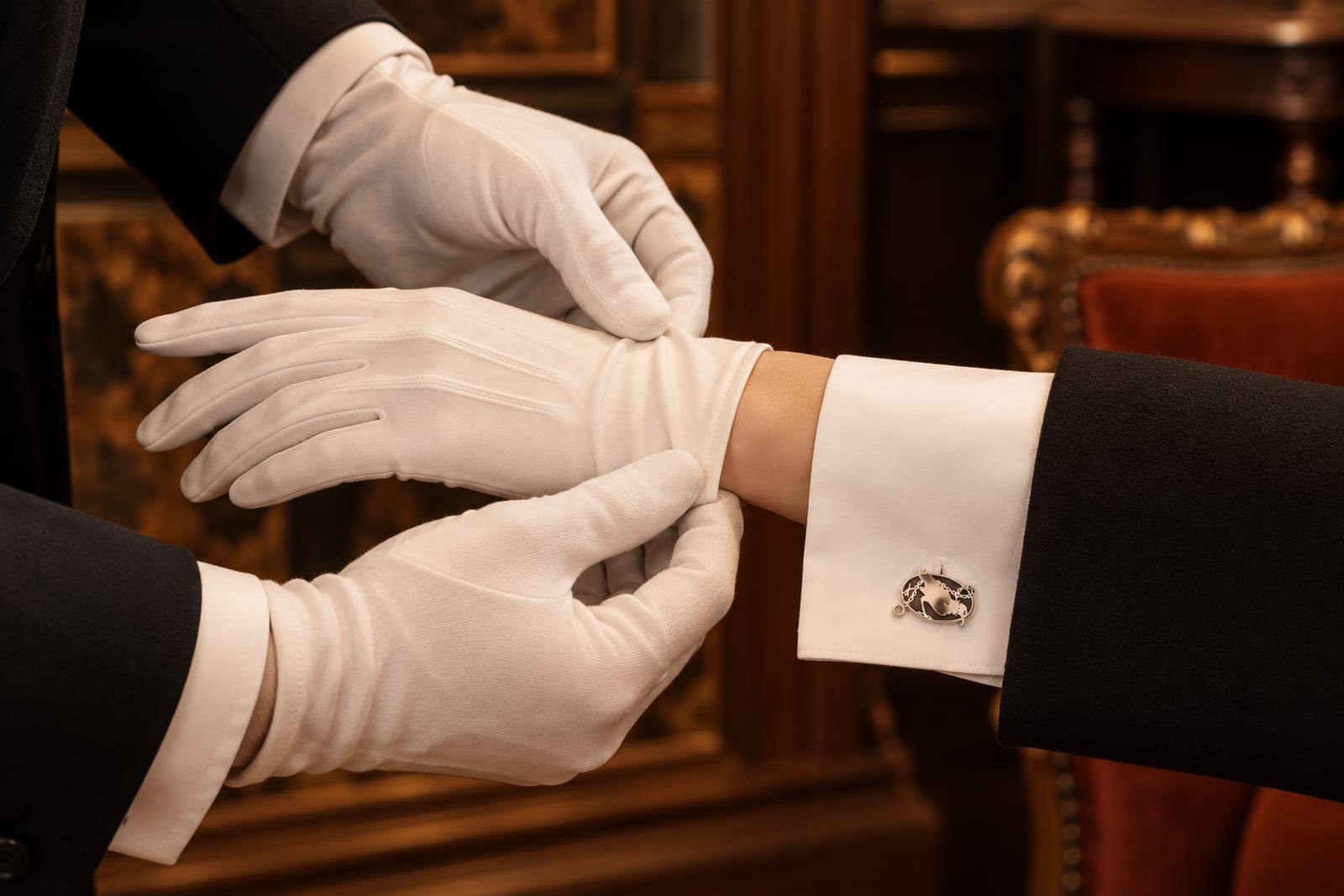
The Manor's Silver and Porcelain
The provenance of the silver and English porcelain you handle in the tea service.
Read more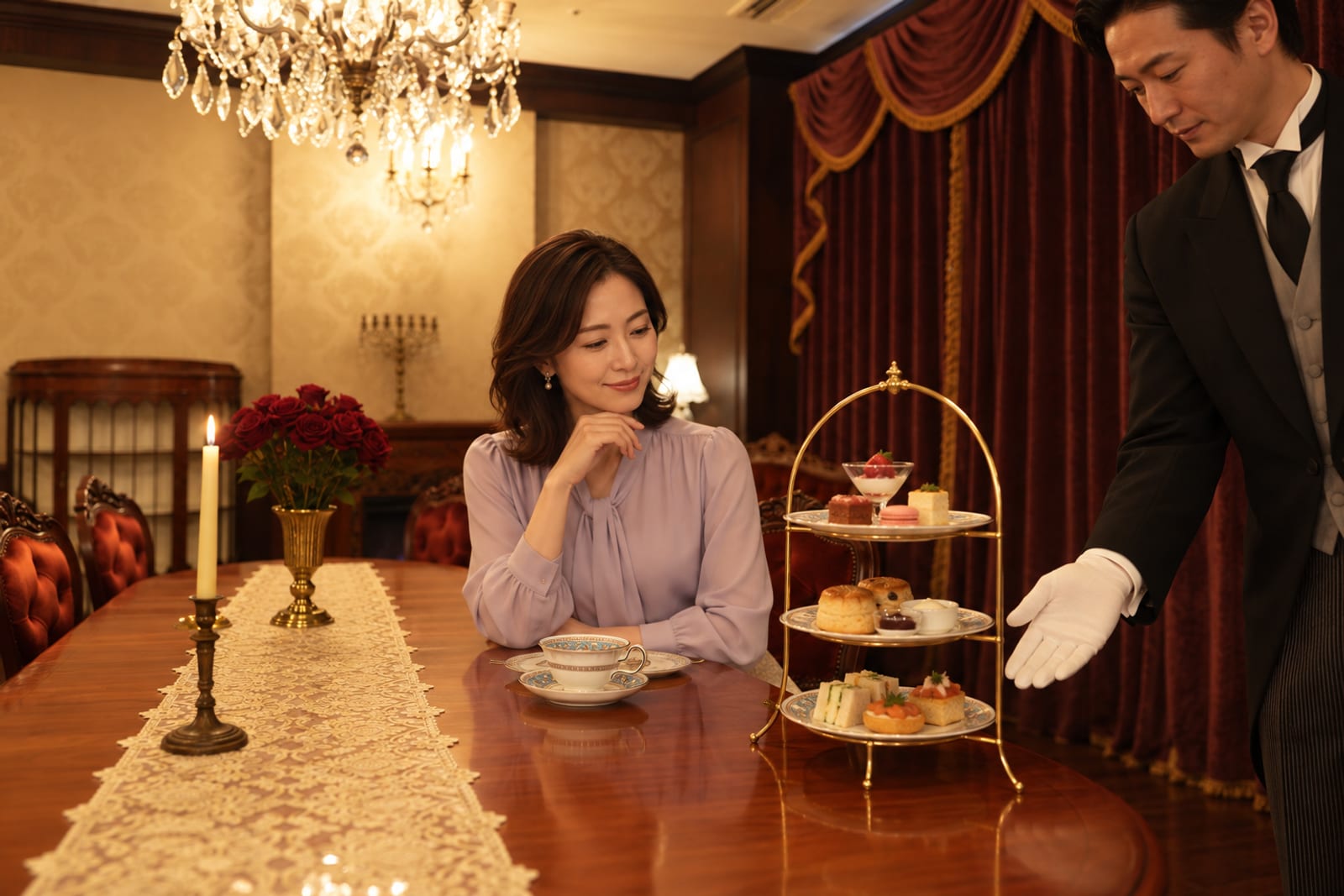
Afternoon Tea (The Salon)
Tea from the side of the one who is served.
Read more

The silver pot, in your hands.
Tell us your height, build and shoe size, and your preferred date and time.