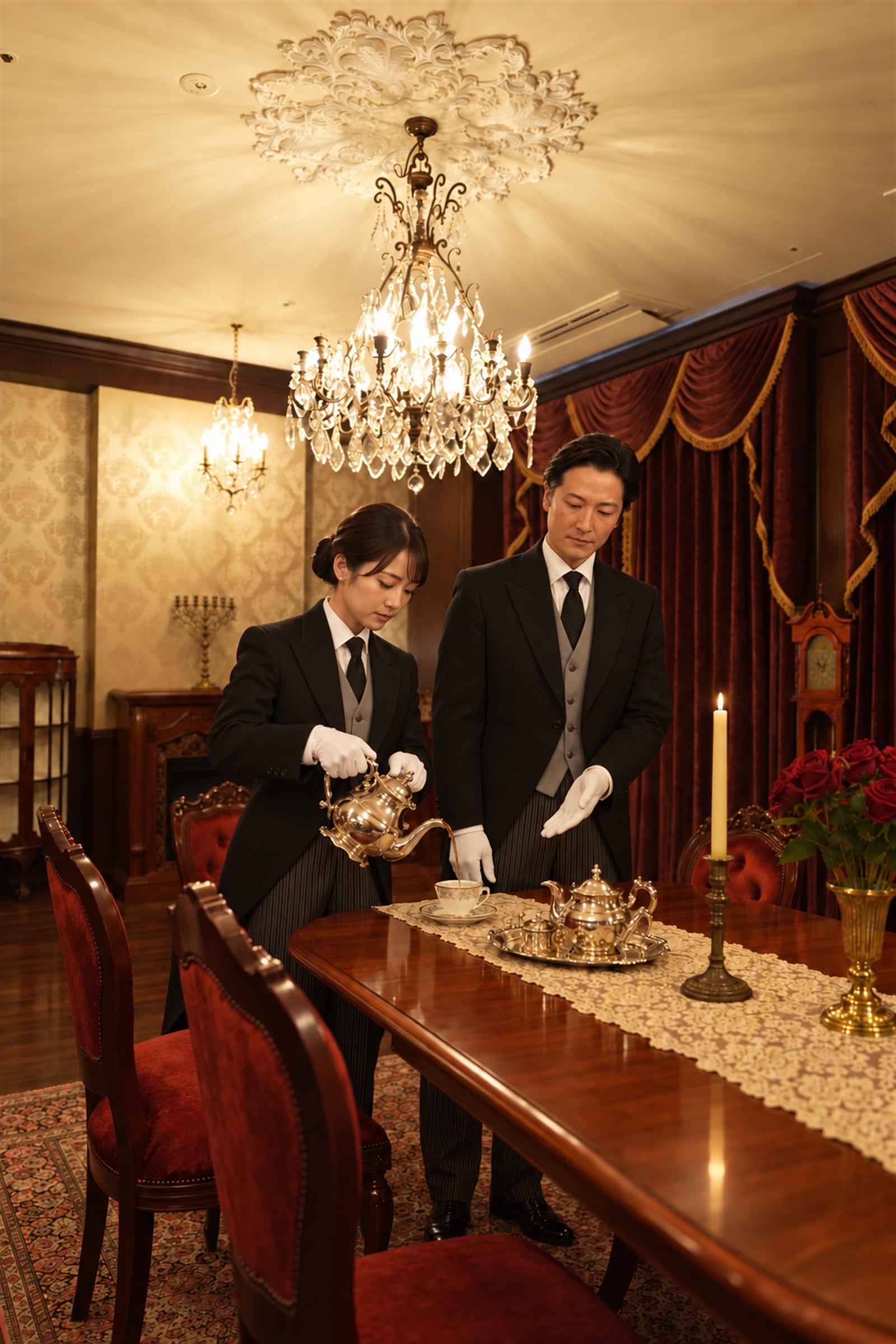
The Order of Brewing Tea
Warm, measure, pour, present
About The Order of Brewing Tea
The order of brewing tea is a single sequence: warming the tools, measuring the leaves, pouring the water and waiting, pouring quietly into the cup, and presenting it. A butler's tea is not only a matter of taste; it means keeping the sound down, never interrupting the conversation, and delivering the cup safely to the hand.
IThe manner of tea begins with confirming the tools and where the guest is
Preparing tea does not mean pouring the water at once, but first arranging the tools and the guest's position. Confirm where the teapot, cup, saucer and strainer are placed, and set them in an order that can be handled without crossing the hands. Leave space, too, between the three-tier stand and the silver on the table.
The butler watches whether the lady of the house is in conversation, and whether there is room at hand to set something down. Rather than keeping the eyes fixed on the tools, we look in turn at the guest and at the table. Deciding in advance where the cup will be presented means you will not hesitate, cup in hand, after pouring.
The fingertips of the white gloves, the handle of the pot and the seating of the lid are all part of the preparation. If anything is awkward, it is adjusted before the water goes in. During the experience the butler shows the arrangement, and together we find a safe line of movement suited to your dominant hand and where you stand.
IIWarming the pot and cup readies the vessels to receive the tea
Warming the tools means running hot water through the teapot and cup first, readying the vessels before the tea is poured. As hot water is involved, safety comes before speed. Before pouring, place a hand on the handle and decide where the other hand will rest.
When transferring the water after warming, keep the vessels from touching and the sound from carrying across the table. Watch the tip of the spout and the receiving vessel, and never tilt suddenly from the wrist alone. Mind the direction of the steam, keeping the white gloves where they will not get wet.
Warmed vessels are returned to a position convenient for the next movement. The moment of setting down is part of the manner. Keep the sound of saucer meeting cup, and of the pot's base meeting the table, small, and move on without disturbing the flow of conversation.
IIIWhen measuring the leaves, follow the same procedure rather than guessing
Measuring the leaves means transferring the required amount to the pot with a set tool and procedure, rather than relying on the feeling of the moment. As the butler advises the quantity according to the tea and what is prepared that day, there is no need to memorise figures.
On opening the caddy, note the aroma and handle the spoon without plunging it in too deeply. When transferring to the pot, avoid striking the rim, and never brush away spilled leaves with the fingertips. Keep the white gloves clean, tidying the hands before continuing if need be.
Return the measuring tools to their place and close the lid. The smaller the action, the more important it is not to omit it, and to give it an ending. If what has been used does not spread across the table, the line of movement for pouring the water is preserved.
IVWhen pouring the water, steady the handle and lid of the pot
Pouring the water means steadying the teapot and letting the water reach the leaves while watching the spout and the direction of the steam. Do not grip the handle too tightly; rest a hand on the lid as needed. Keep the white gloves from passing beneath the spout.
Do not make a show of lifting the pot high; choose a position from which the water will not splash. Begin slowly, adjust the tilt once the flow is steady, and do not right the pot abruptly when stopping. Never shake out the last drop, and take care not to point the spout towards the guest.
Once the water is in, check the seating of the lid and set the pot down quietly. From here it is time to wait for the leaves to open. Rather than fidgeting with the next tool, check that the table is in order and return the hands to the front, as a butler does.
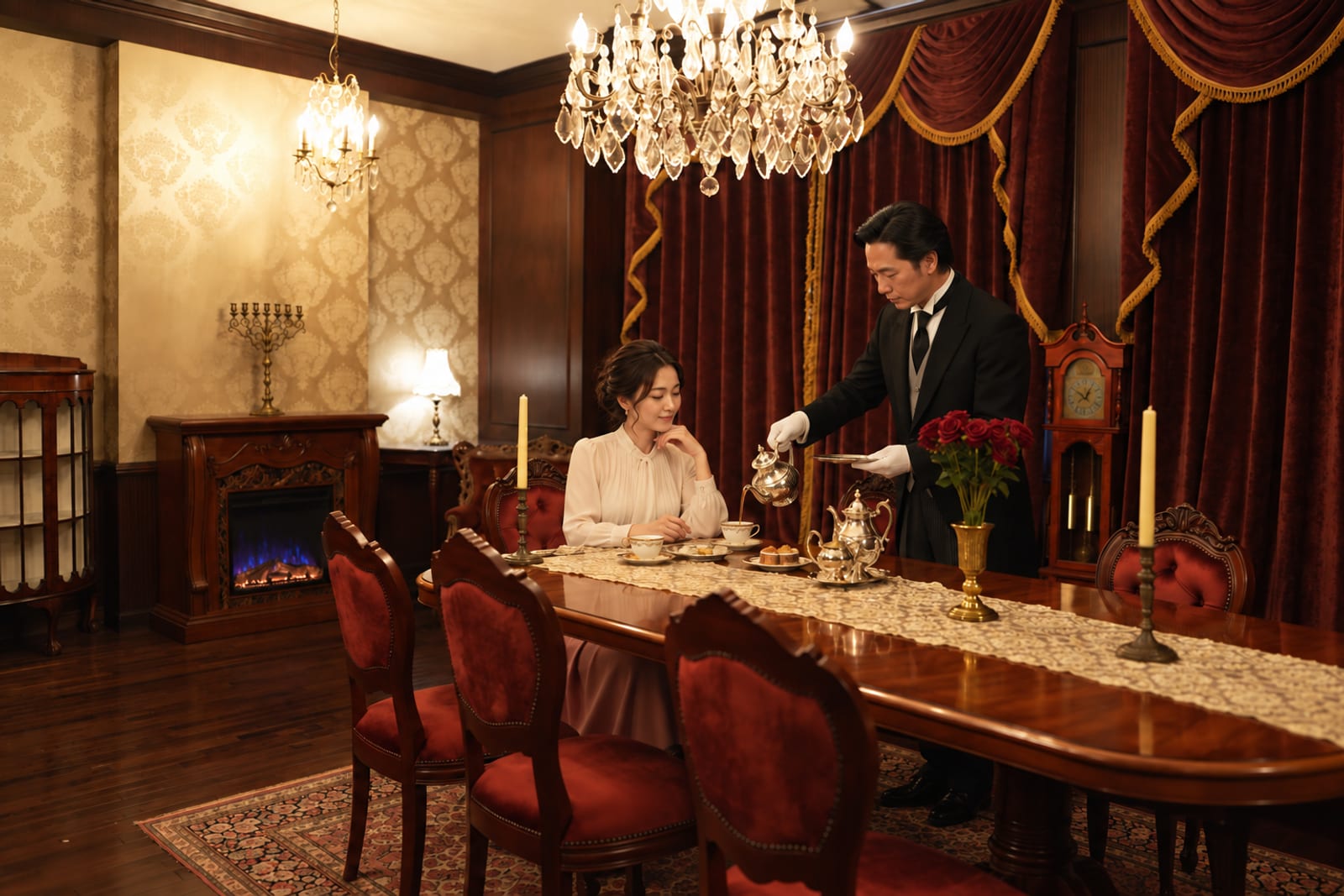
A silver pot is handled with a role for each hand
Steady the handle and the lid, and attend to the spout and the path of the steam.
VThe waiting, too, is a manner that protects the lady's conversation
Waiting for the tea to steep is time in which the butler stills the hands and turns attention to the state of the tea and the guest. As the right way of waiting changes with the leaves and the tea prepared, no fixed figure is applied across the board; we follow the procedure of the day.
While waiting, we do not move the tools repeatedly or cut into the guest's conversation. The hands rest together in front, and we respond quietly only when needed. Even in what looks like a time of doing nothing, we are watching the table, the steam, and the guest's hands.
When the moment to pour arrives, we do not reach out suddenly. Before taking a step, we confirm where to stand and decide the order in which to take up the pot and strainer. Moving smoothly from waiting to pouring is the care that keeps the tea time unbroken.
VIWhen pouring into the cup, keep the strainer and spout quiet
Pouring into the cup means steadying the strainer and transferring the tea without letting the spout touch the vessel. Rather than concentrating only on filling the cup, the butler judges an amount easy for the guest to lift, and leaves room for a second cup.
Before pouring, set the saucer and cup in place and note which way the handle faces. Choose a stance in which the hand tilting the pot and the hand supporting the strainer do not cross. Keep the gloves from the steam and let no drips fall on the table.
After pouring, return the pot quietly and wait for the drips from the strainer to settle. Do not stack vessels noisily, and return the tools used to where they do not obstruct the guest's view. Take care that a careless movement just after pouring does not spoil the impression of the tea.
VIIWhen presenting, choose a direction and place from which the guest can take the cup naturally
Presenting tea is not merely setting down a cup, but delivering it to a position the lady of the house can reach without greatly changing her posture. Steady the cup on its saucer, and turn the handle to where it is easily taken.
If there is a book or other item at the guest's hand, do not decide the place on your own. Say a brief word, and set the cup down quietly in the space made for it. Approach at a pause in the conversation, and keep down the sound of setting it on the table.
Having presented it, step back and return the hands to the front. Do not hurry to ask about the taste; watch for anything that may be needed. The saying "the hand that pours the tea never interrupts the conversation" expresses the attitude in which service does not take the leading role, but supports the guest's time.
The hand that pours the tea never interrupts the conversation.
VIIIAt a table with a three-tier stand and silver, choose a line that never crosses the hands
The line of movement across the table is the path along which tea can be served without crossing the arms, having noted the positions of the tea, the three-tier stand, the silver and the porcelain. Do not reach awkwardly past a tall object; change where you stand if need be. Keep short, too, the time spent crossing the guest's field of view.
When setting a cup near the three-tier stand, leave a gap between the plates and silver into which a hand can pass. It matters that reaching for the tea and reaching for the items on the table do not collide. The butler also watches the guest's dominant hand and seating position, and adjusts accordingly.
We do not serve meals, but you are welcome to bring your own food and drink. Please consult us when booking about the vessels required and how they are handled in the Manor. The manner of tea is the same: the basis is a judgement that keeps the table pleasant without harming the guest's belongings or the Manor's furnishings.
IXThrough the second cup and the clearing away, the quiet flow continues
Readiness for a second cup means continuing to watch the pot and the table after the first has been presented. Rather than judging by whether the cup is empty, we speak at the moment the lady's hand leaves the cup, or at a break in the conversation.
When clearing used vessels, do not stack them noisily before the guest. Steady the cup on its saucer, and carry it by a route that touches no other silver. If tea has marked the white gloves, do not touch another vessel as you are; tidy the hands first.
Keeping the same pace and quiet from preparation to clearing away makes a single cup of tea one continuous act of hospitality. It is the butler's role not to make only the middle look beautiful, but to restore the place used and return the Manor to the next hour.
XIn the experience, you take away not a memorised order but the judgement of watching the guest
Tea in the Apprentice Butler Experience is not a time for hurriedly memorising set movements, but for acquiring the order of watching both the tools and the guest. The butler shows it once, you follow the same flow, and together we note where the sound and the eyes change.
If you come alone, you may concentrate on the hands; with two or more, you proceed while watching the movements of the person you serve. Female butlers are also on our staff, and any preference regarding your butler or concern about handling may be raised when booking. The Manor accommodates up to six, and we guide you in a safe order suited to your number.
As an experience operated by the Japan Butler Association, a general incorporated association, we value not only the taste of the tea but the attitude that protects the guest's conversation, respects the vessels, and delivers the needed cup quietly. Even if it is your first time, please proceed together with the butler, from the preparation before warming to the clearing away.
XIWhatever the season or weather, safety and quiet are confirmed first
The manner of tea across the seasons does not mean changing the set form, but maintaining safety by attending to the steam, the air of the room and the feel of the hands. On a warm day we ask whether the attire and white gloves are comfortable; if the hands feel liable to slip, the grip is adjusted before the pot is handled.
On a rainy day, we let your feet and attire settle after arrival, and do not hurry to the table. We look again at the positions of silver and porcelain in the Manor's light, and begin with the butler's demonstration. In every season the heart of it is unchanged: protecting the guest's conversation, and treating the tools with care.
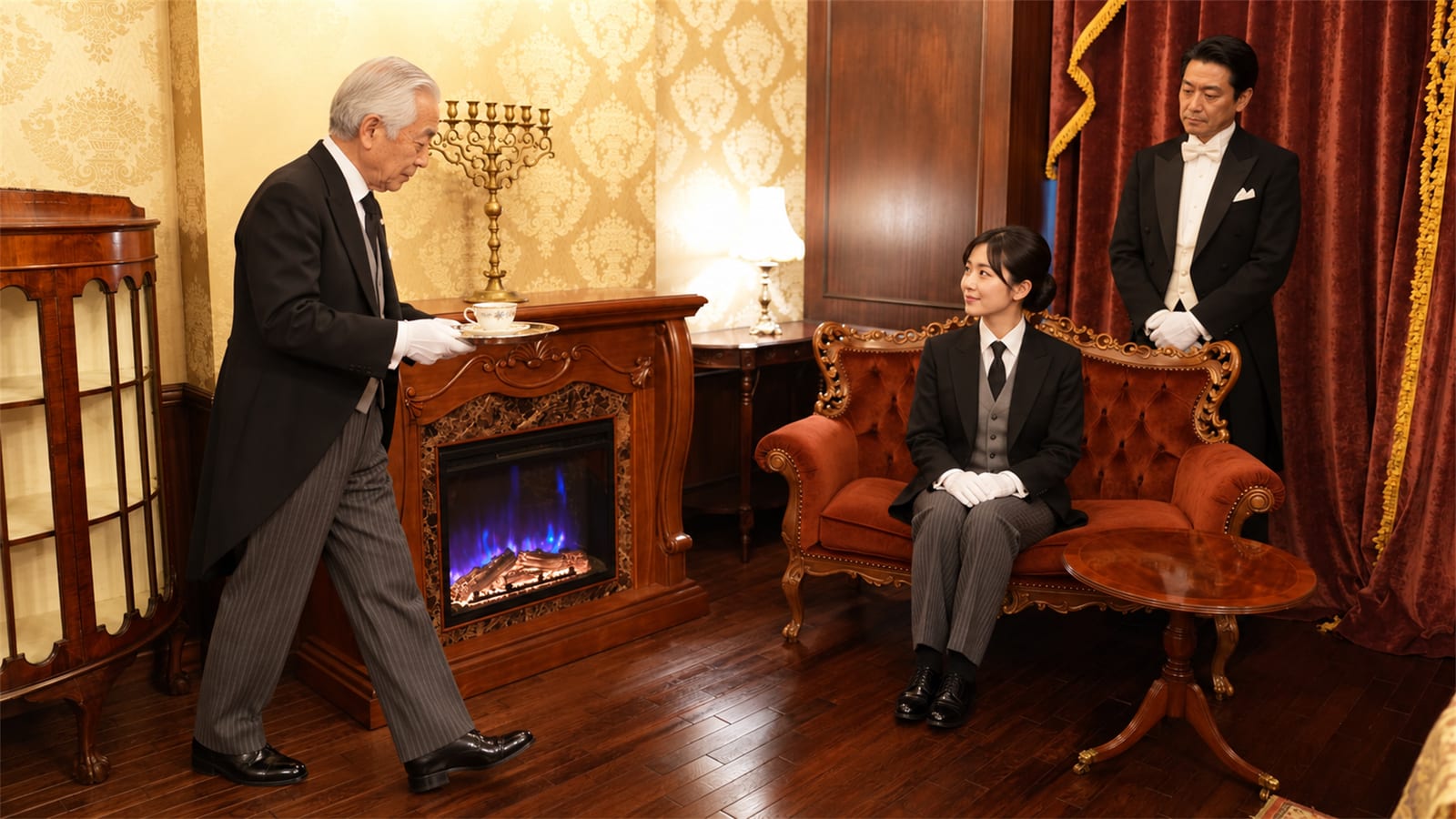
Tea reaches the guest's hand in five steps
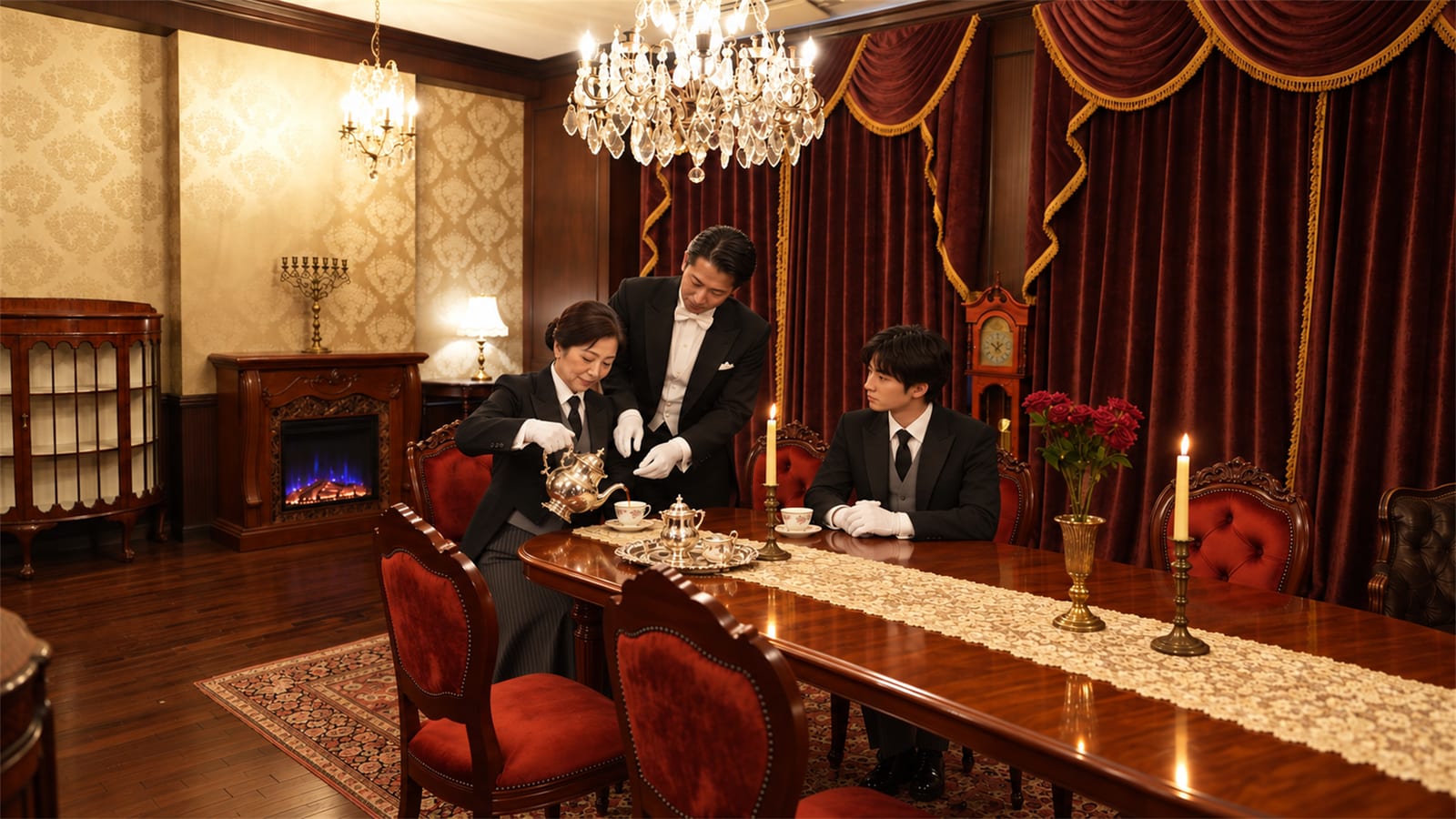
Arrange the tools and positions
First confirm the pot, the cup, the strainer and where the guest's hands are.
Warm the vessels
Handle the hot water safely and ready the pot and cup to receive the tea.
Measure the leaves
Transfer the quantity the butler advises for the day's tea, by the same procedure each time.
Pour the water
Steady the handle and lid, and attend to the steam and the tip of the spout.
Wait quietly
Return the hands to the front and await the moment without disturbing the guest's conversation.
How preparing, pouring and presenting differ
| Moment | Chiefly watch | Movements to avoid |
|---|---|---|
| Preparation | Position of the tools, the steam, the white gloves | Crossing the hands; touching vessels with wet gloves |
| Pouring into the pot | Handle, lid, spout | Tilting suddenly; pointing the spout at the guest |
| Pouring into the cup | Strainer, direction of the handle | Letting vessels touch; dripping on the table |
| Presenting | The guest's hands, a break in conversation | Moving belongings without asking; setting down noisily |
| Clearing away | The route for vessels and silver | Stacking before the guest; carrying with eyes only on the hands |
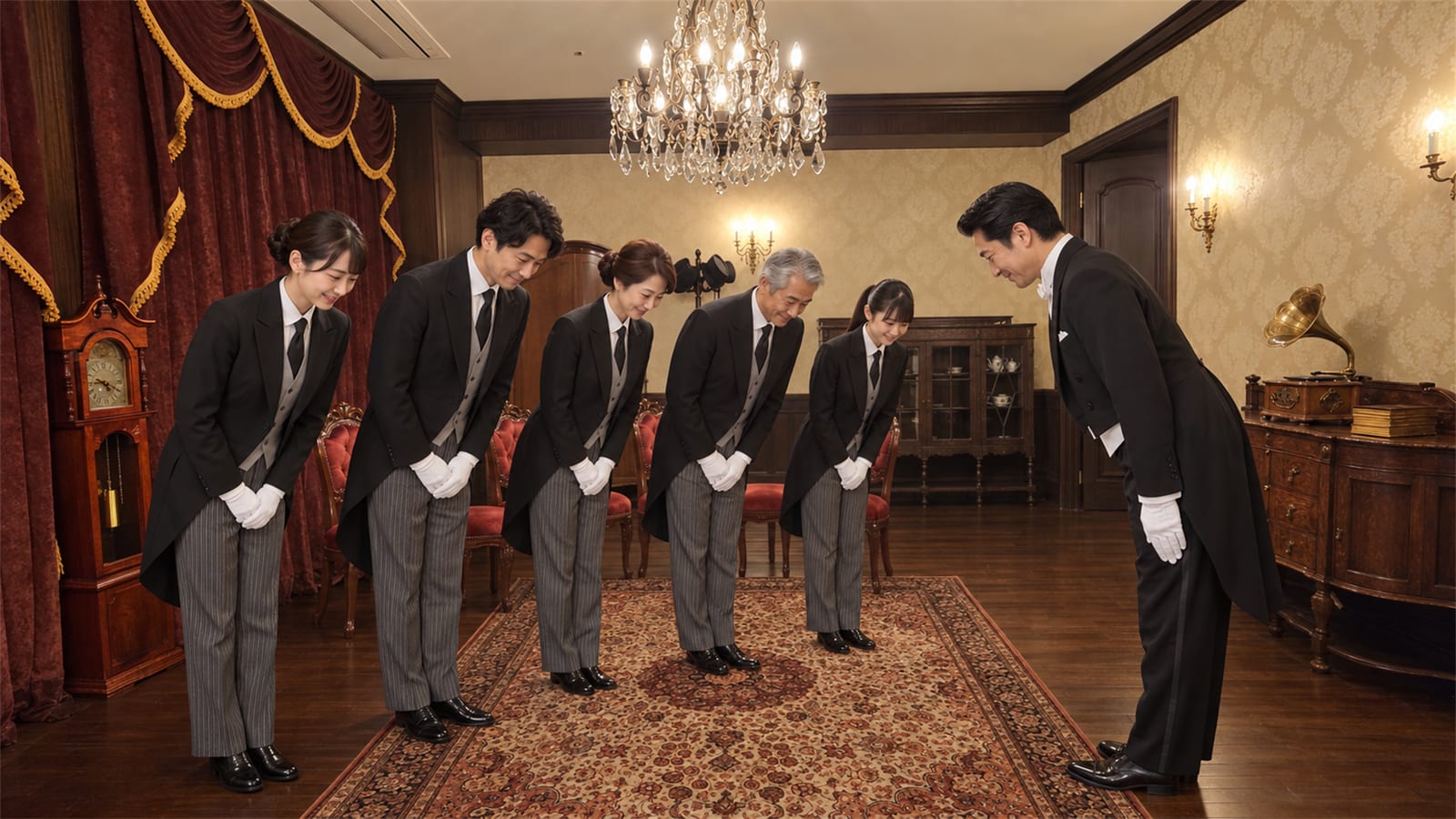
The tools of tea and the butler's role with each
| Silver teapot | Steady the handle and lid, and handle it with an eye on the tip of the spout. |
|---|---|
| Cup and saucer | Turn the handle to where it is easily taken, and present with the sound kept down. |
| Strainer | Steady it over the cup, and mind the drips once pouring is done. |
| White gloves | Leave no fingerprints on silver or porcelain; tidy them if they become wet or soiled. |
| Three-tier stand | Leave room so that vessels and hands do not collide, creating the line of movement across the table. |
The manner is checked from three points of view
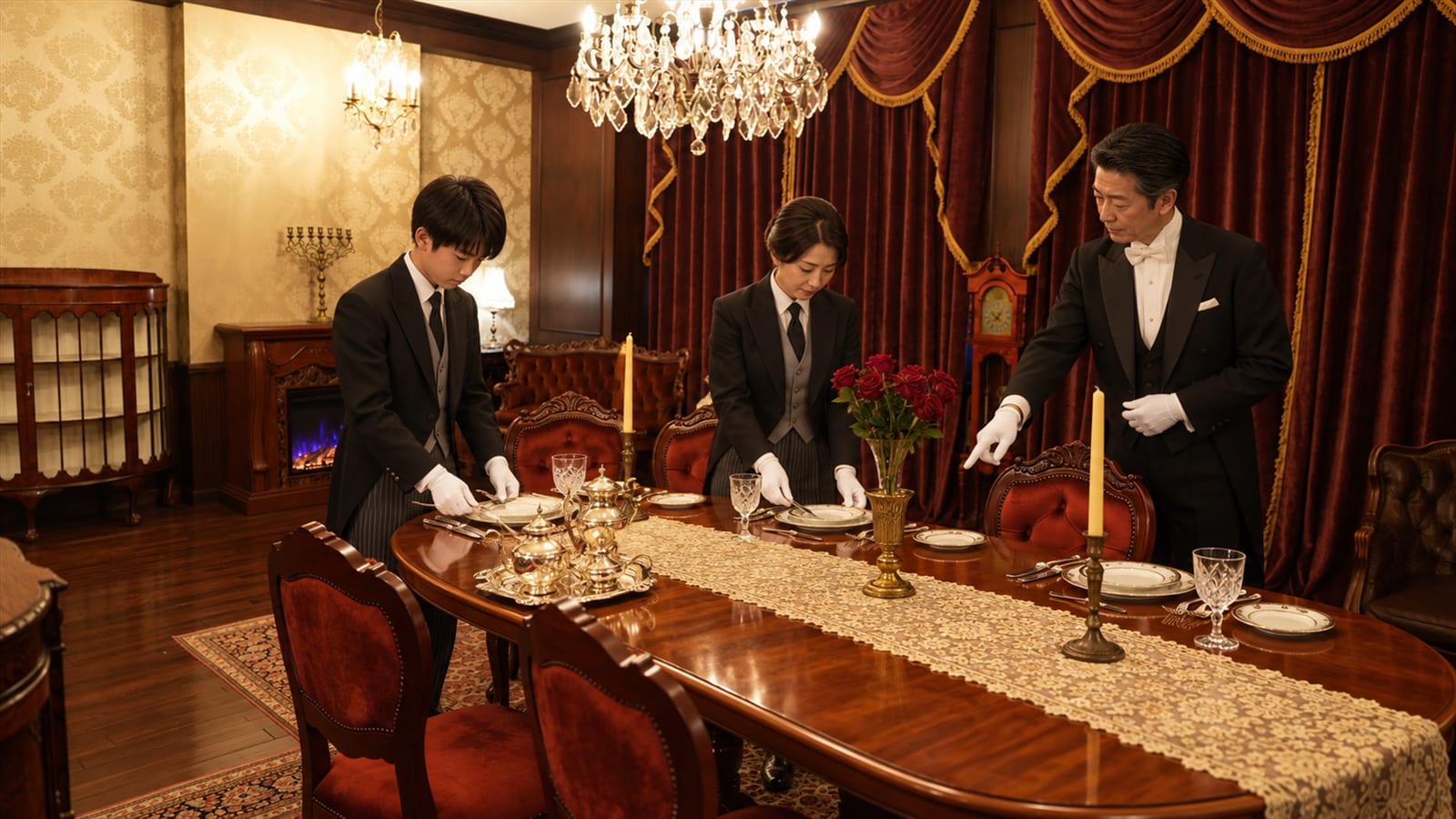
Keeping the sound down
From setting down a vessel, to transferring water, to clearing away, we keep in mind a sound that will not disturb conversation.
Read more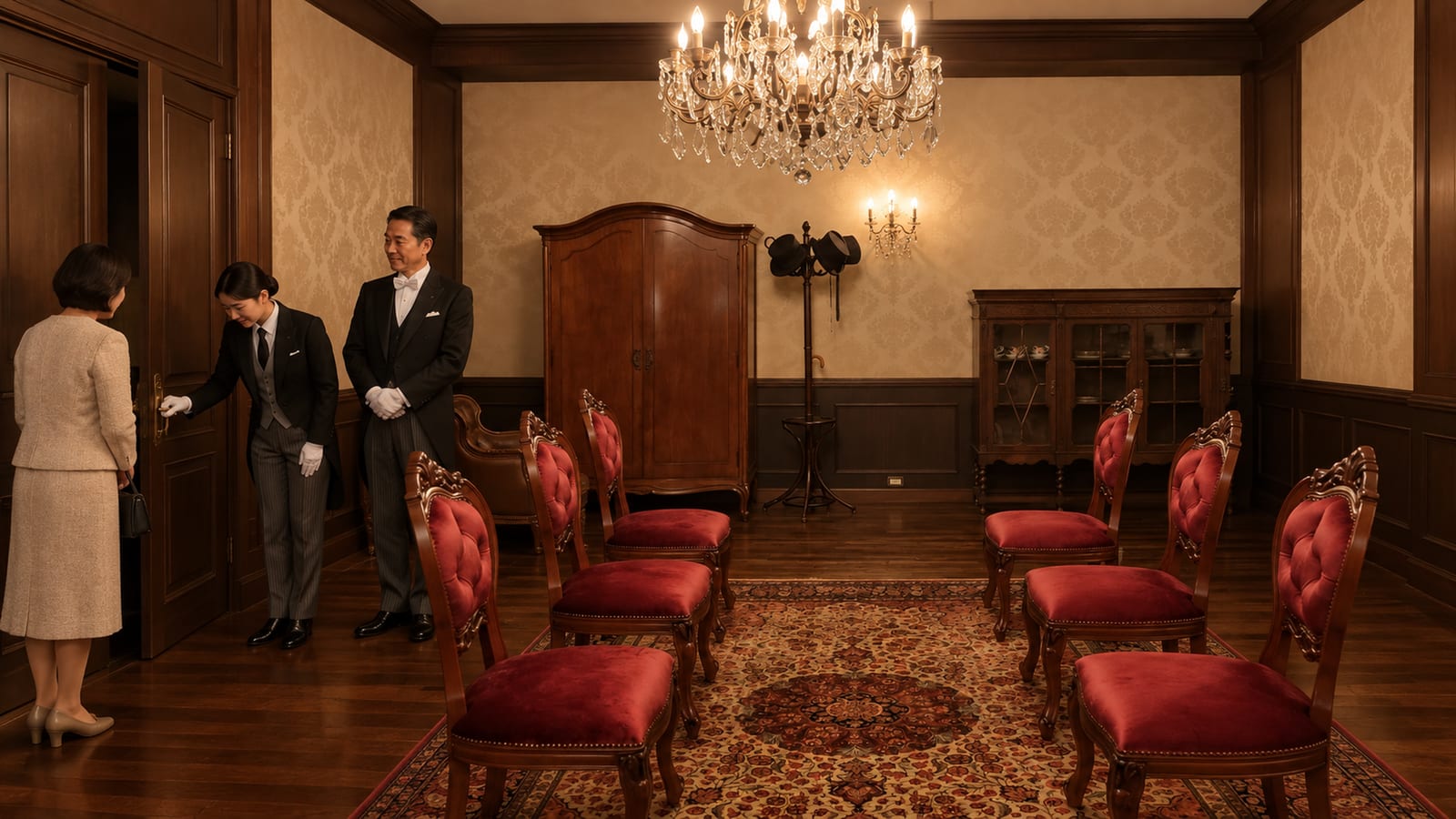
Watching the guest and the table
Rather than fixing the eyes on the tools, we look to the guest's hands, the conversation, and the space on the table.
Read more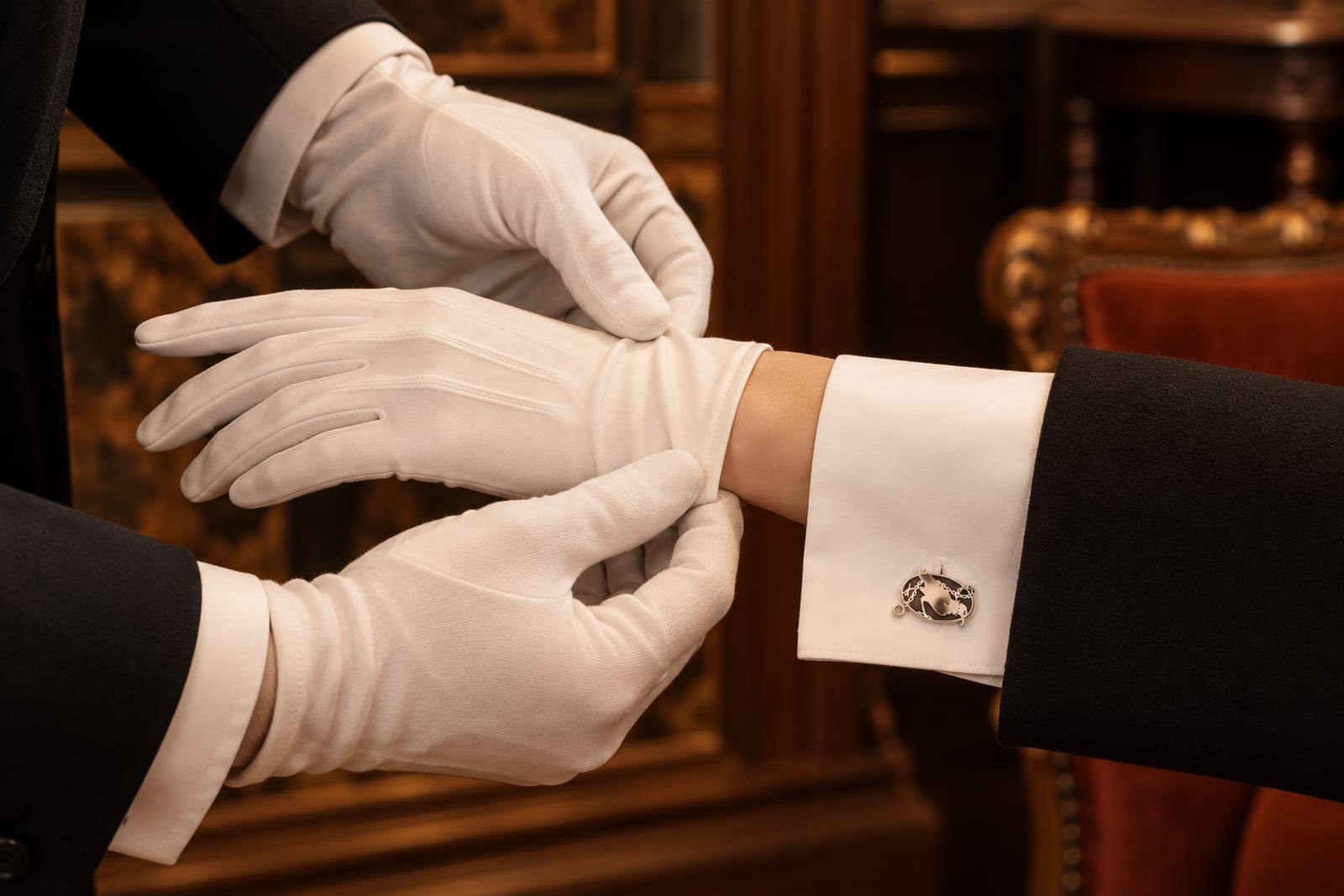
Keeping the white gloves clean
Keep the fingers from beneath the steam and drips, and handle silver and porcelain with clean hands.
Read moreThe manner of tea included in the experience fee
- The butler's demonstration of the manner of tea, and accompaniment throughout
- Practice with the silver teapot, cup and strainer
- Commemorative photographs of the manner against the Manor's furnishings
What we do not provide
- The Manor does not serve meals. You are welcome to bring your own food and drink
- The Manor is never let unattended
QCan I take part with no experience of brewing tea?
Yes. The butler guides you one step at a time, beginning with the arrangement of the tools. You first watch a demonstration, then proceed in the order of warming, measuring, pouring and presenting.
QDo I need to memorise the quantity of leaves or the waiting time?
There is no need to memorise figures. The butler tells you the procedure for the day according to the tea prepared, and you check it with the same tools.
QIs the silver teapot heavy?
Before lifting it, you decide where the hands rest on the handle and lid, and handle it in a posture without strain. If you have any concern about the weight or your wrist, please tell the butler there and then.
QDo I pour tea with the white gloves on?
Yes. In the experience you handle silver and porcelain in white-gloved hands. You learn the positions that keep them from steam and drips, and if they become soiled you tidy them rather than continuing as you are.
QIs the three-tier stand used too?
In the tea scene, we also check the relationship to the three-tier stand. We leave room so that vessels and hands do not collide, and think about a table from which the guest can reach naturally.
QCan women take part in the Apprentice Butler Experience?
Yes; applications are welcome regardless of gender. Both male and female butlers are on our staff, and any wishes regarding attire or how the day proceeds are taken in advance.
About the attire
- Sizes and styles are limited. Before booking, please tell us your height and usual clothing size
- Please ask about sizes other than those listed
You may also wish to read
What the Apprentice Butler Experience includes
The seven elements of manner, including tea, seen in the flow of the whole experience.
Read more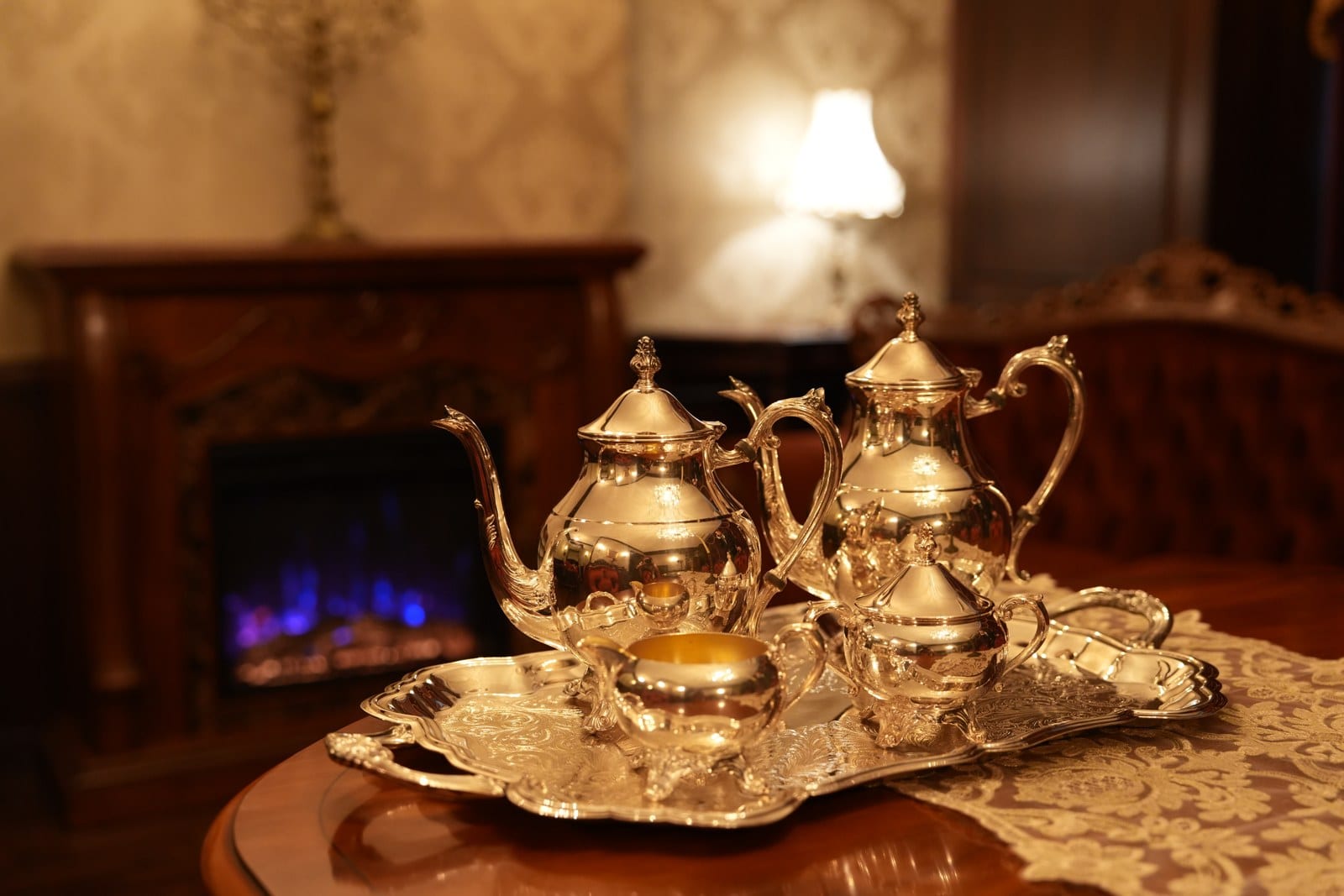
The silver tea service and glassware
The background to the silver and porcelain used in the Manor.
Read more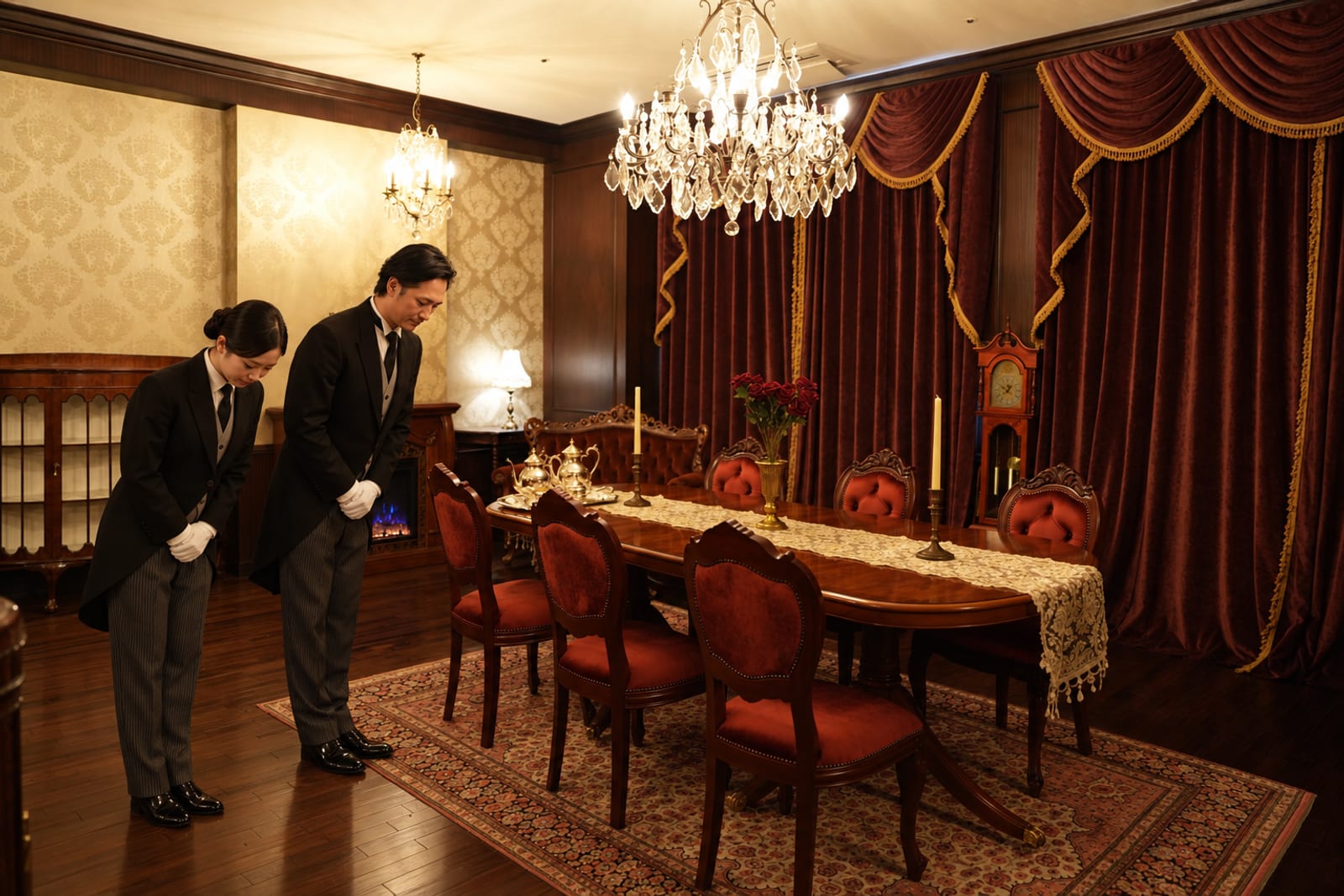
A butler's stance and bow
The stance, the walk and the bow before carrying tea, explained in detail.
Read more

The silver pot, in your hands.
Please let us know your height, build and shoe size, and your preferred date and time.