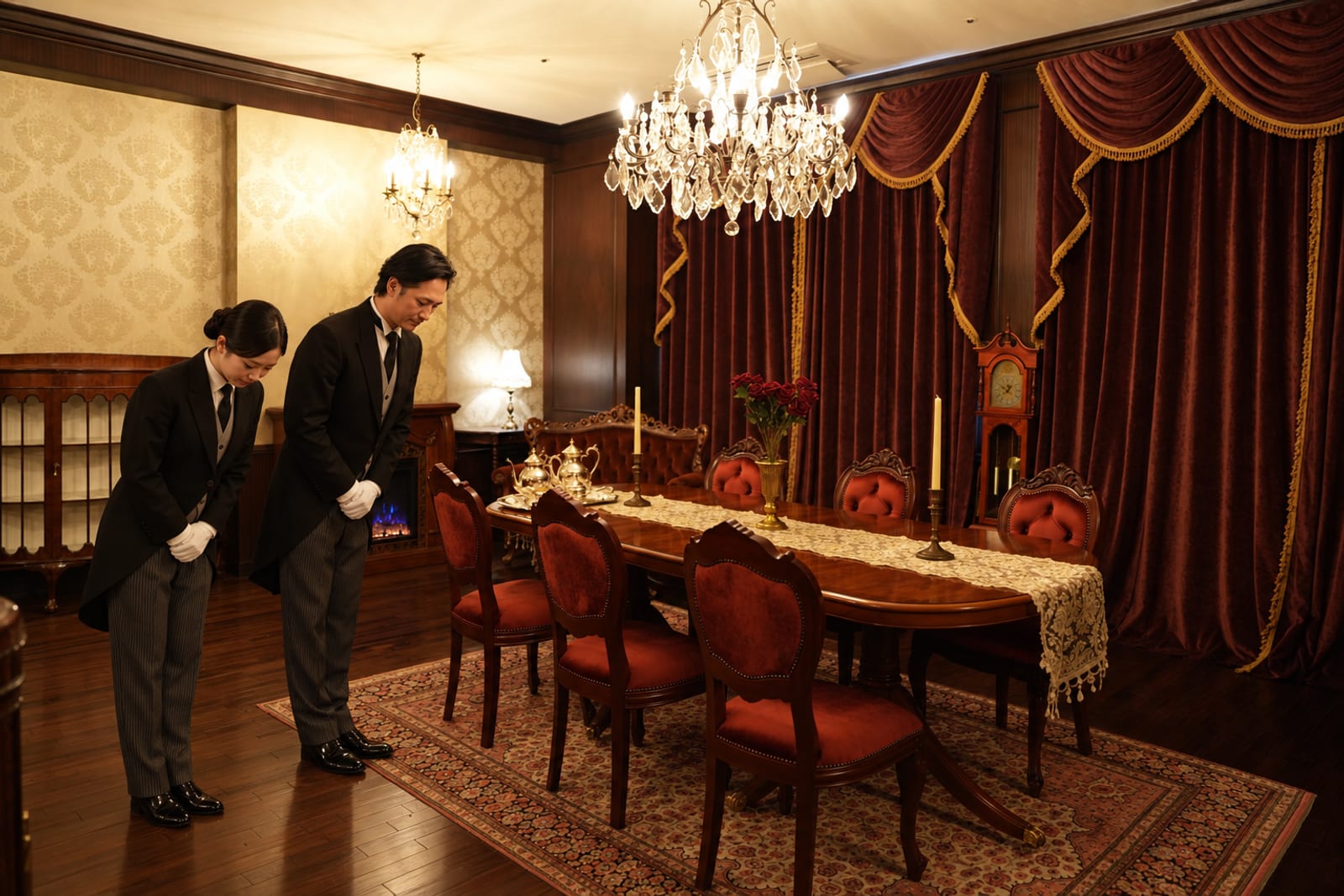
The Bow
Angle, and pause.
About The Bow
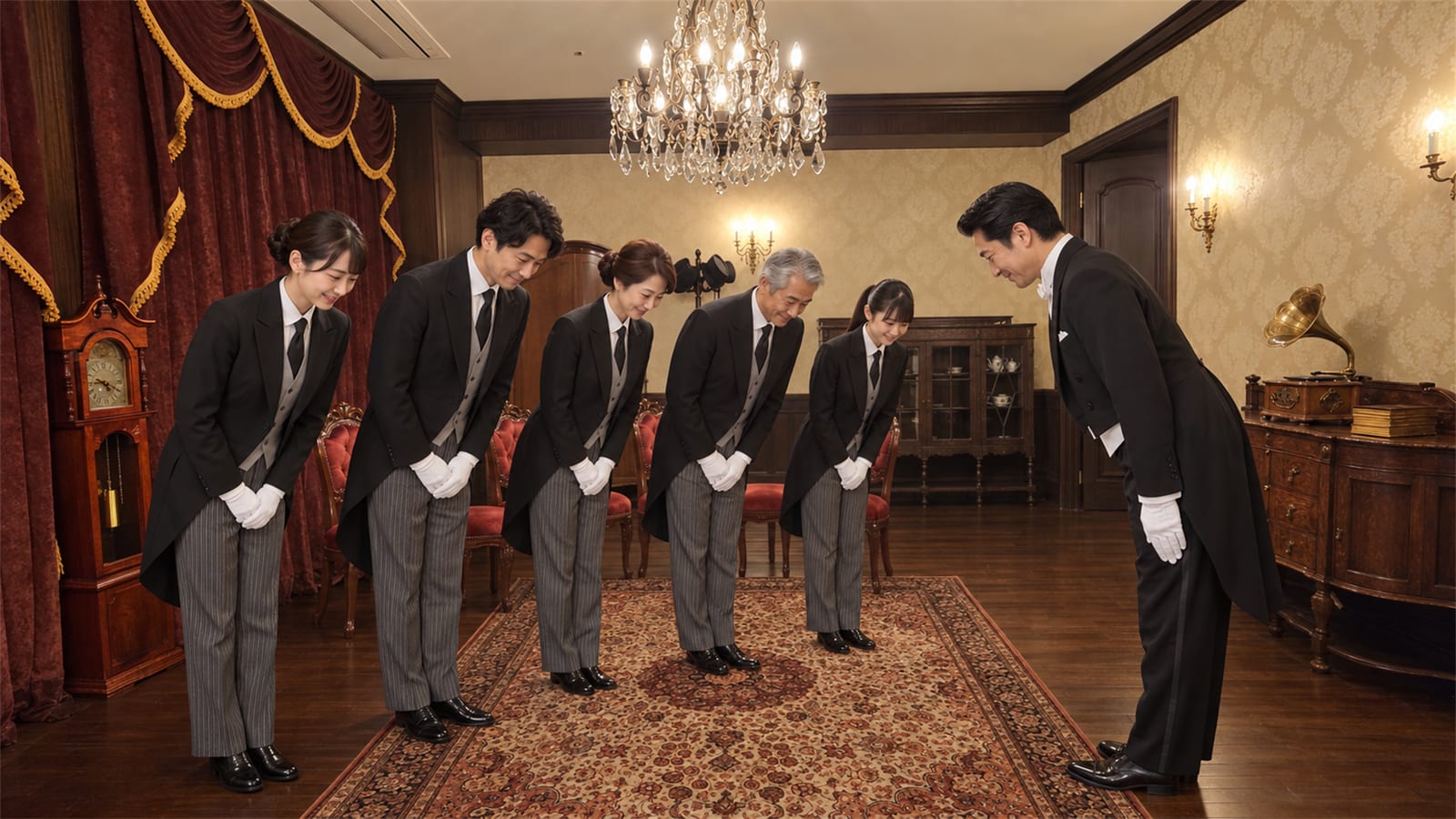
The butler's bow expresses respect for one's lady through the depth of the bow, posture, gaze and the timing of the movement. Its expression changes with the occasion, whether welcome, thanks or farewell. In the Apprentice Butler Experience, your butler demonstrates beside you, and together you practise a movement that puts no strain on the body and a quiet return.
The depth and pause of the bow are chosen to suit the occasion
| Occasion | Expression of the bow | What your butler checks |
|---|---|---|
| Welcome | A gentle bow that does not halt the other person's step | Gaze, hands, the path from the door |
| Guiding | A brief bow that conveys the direction ahead | The angle of the body, the next step |
| Thanks | A composed bow that carries gratitude | The line of the back, the pause before returning |
| Farewell | A careful bow with the heart turned to the other until the last | The direction the other person takes, the moment to raise the head |
| Apology | A measured bow accompanied by words and responsibility | Depth, expression and voice suited to the situation |
Rather than deciding the bow by numbers alone, your butler demonstrates according to the distance from the other person, the conversation and the movement around you.
Standing beside your butler, you begin to see where a bow begins and ends
Standing beside your butler in the dining room, you first watch the demonstration. Settle the feet, compose the hands, turn the gaze to the other person, and then enter the bow. Even after raising the head, do not move at once; take in the other person's response before moving on to the next gesture. The bow is a single movement that includes not only the bow itself but what comes before and after.
Seen side by side, you notice what is hard to see in yourself: tension in the shoulders, the speed at which the hands return, the gaze in the moment after the head is raised.
The angle is not merely a matter of matching a figure; it is a guide for aligning the line of the back with the turning of the heart towards the other person. Your butler demonstrates the same movement beside you and confirms the range that puts no strain on your shoulders or lower back. Since the figure seen from the side also becomes part of your commemorative photographs, the hem of the coat and the hands are carefully arranged too.
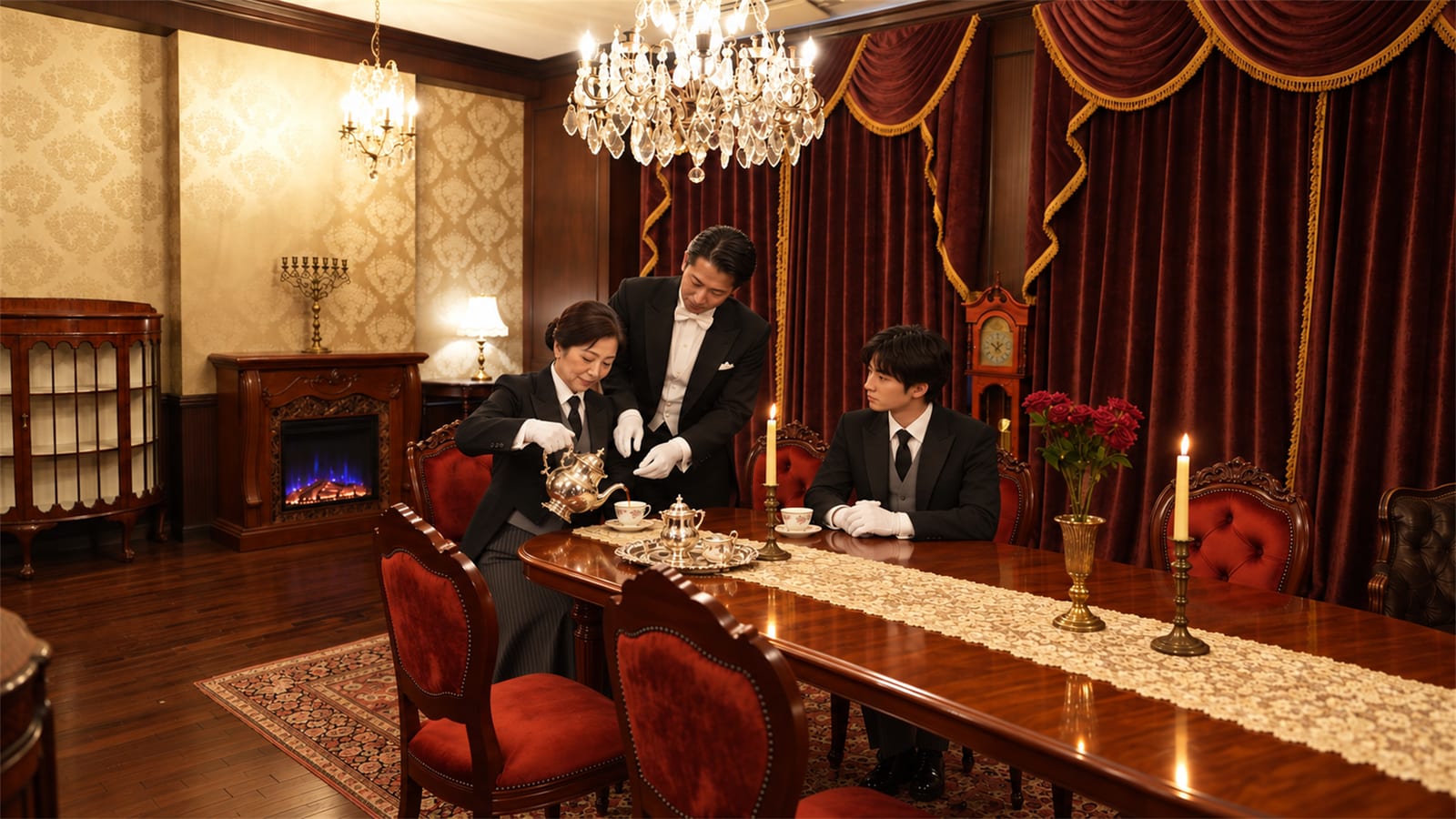
The bow is practised in five movements
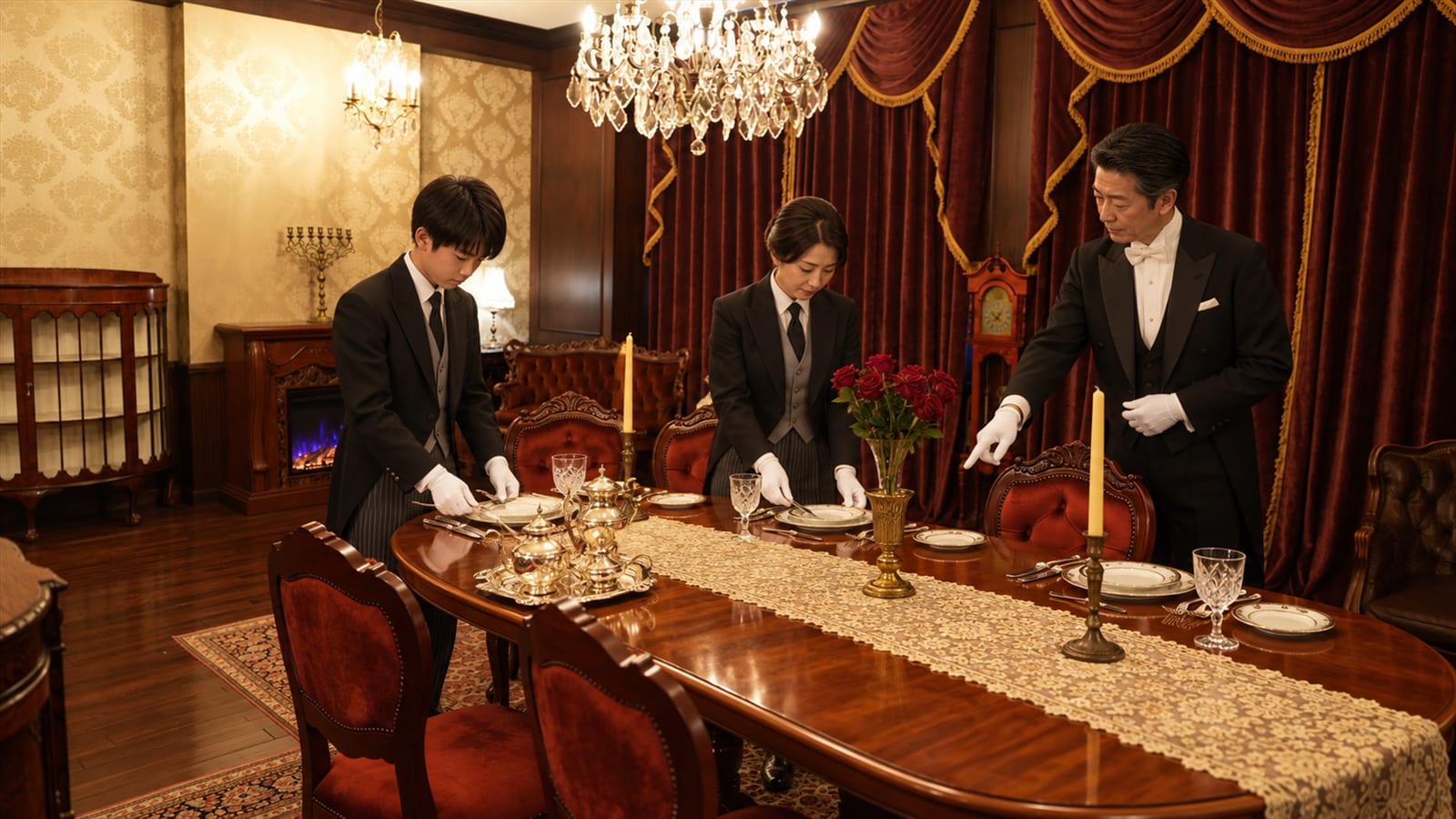
Read the person and the occasion
Confirm whether it is a welcome, thanks or farewell, and choose the words and the depth of the bow.
Settle the feet and hands
Before moving, settle your balance and check that the hands are not disturbing the line of the attire.
Convey respect with the gaze
Without staring, turn a gentle gaze that conveys your intention to bow.
Incline while keeping the line of the back
Do not lower the head first; enter the bow within the range in which the whole body moves naturally together.
Hold a pause suited to the occasion
Do not hurry back; leave room for your words or thanks to be received.
The same bow carries a different meaning on each occasion
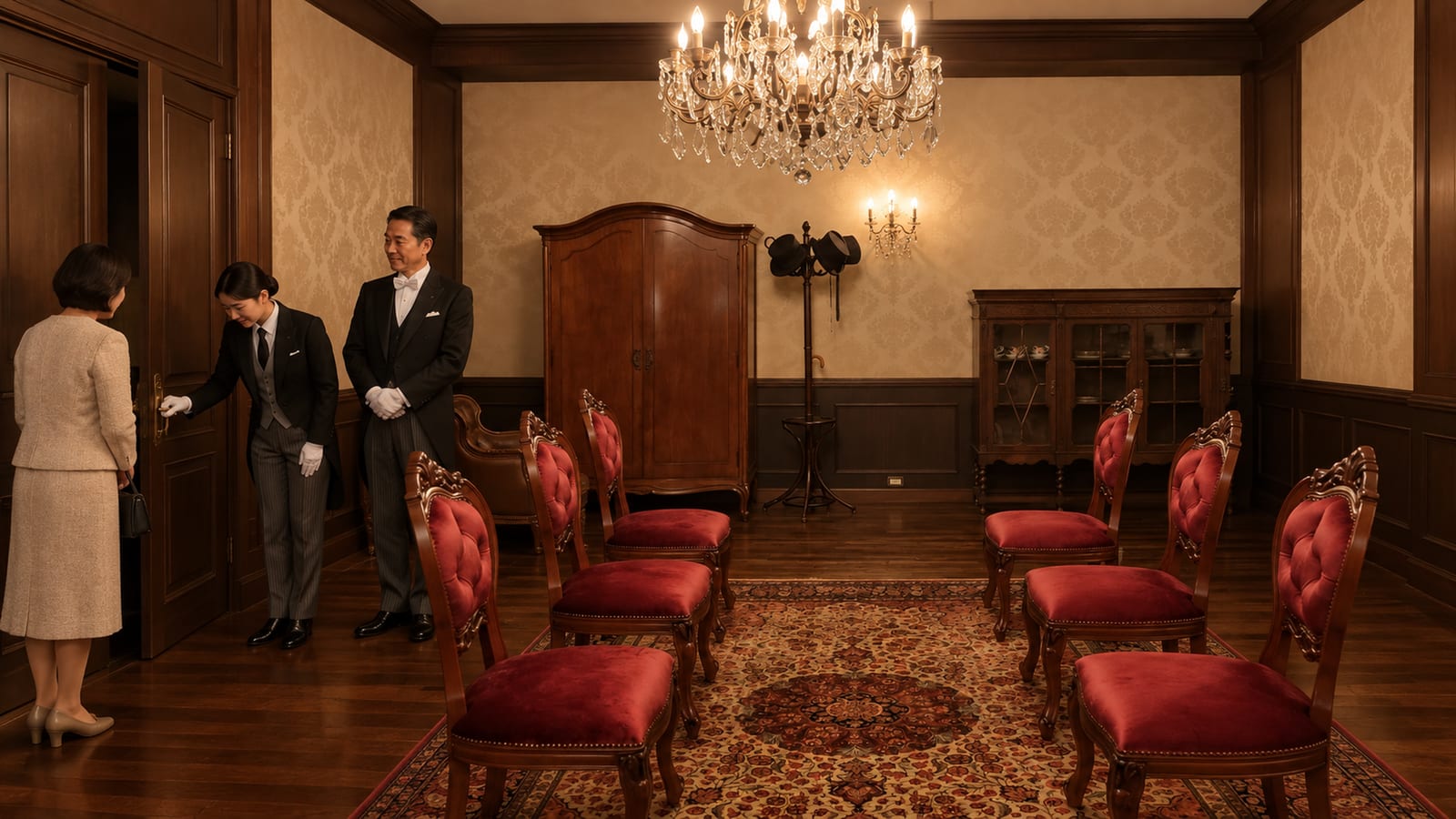
A welcome delivers reassurance first
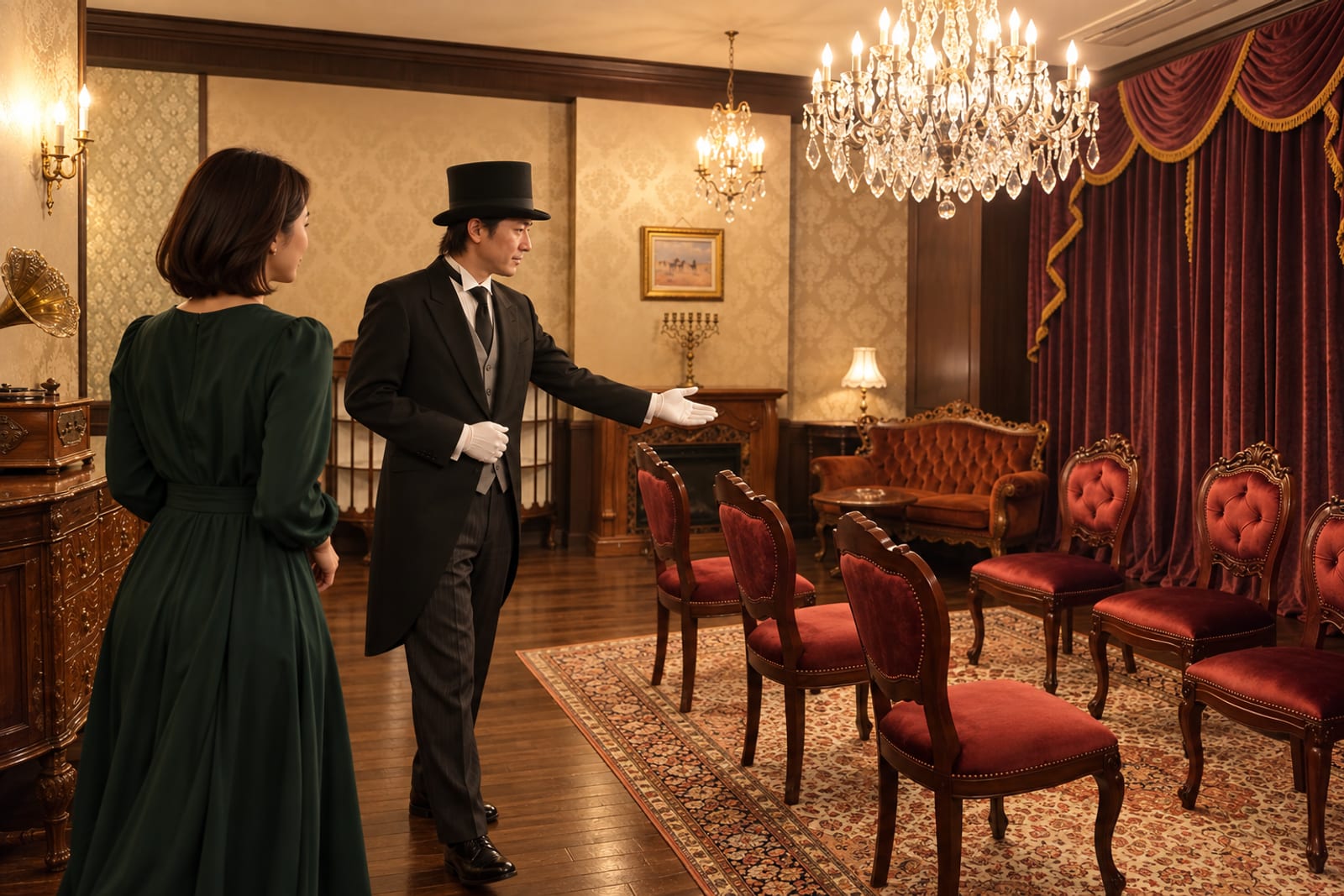
In the moment after the door opens, the lady you serve takes in the Manor. The butler does not block the way, matches the words of welcome to the bow, and shows clearly the direction to proceed.
Read more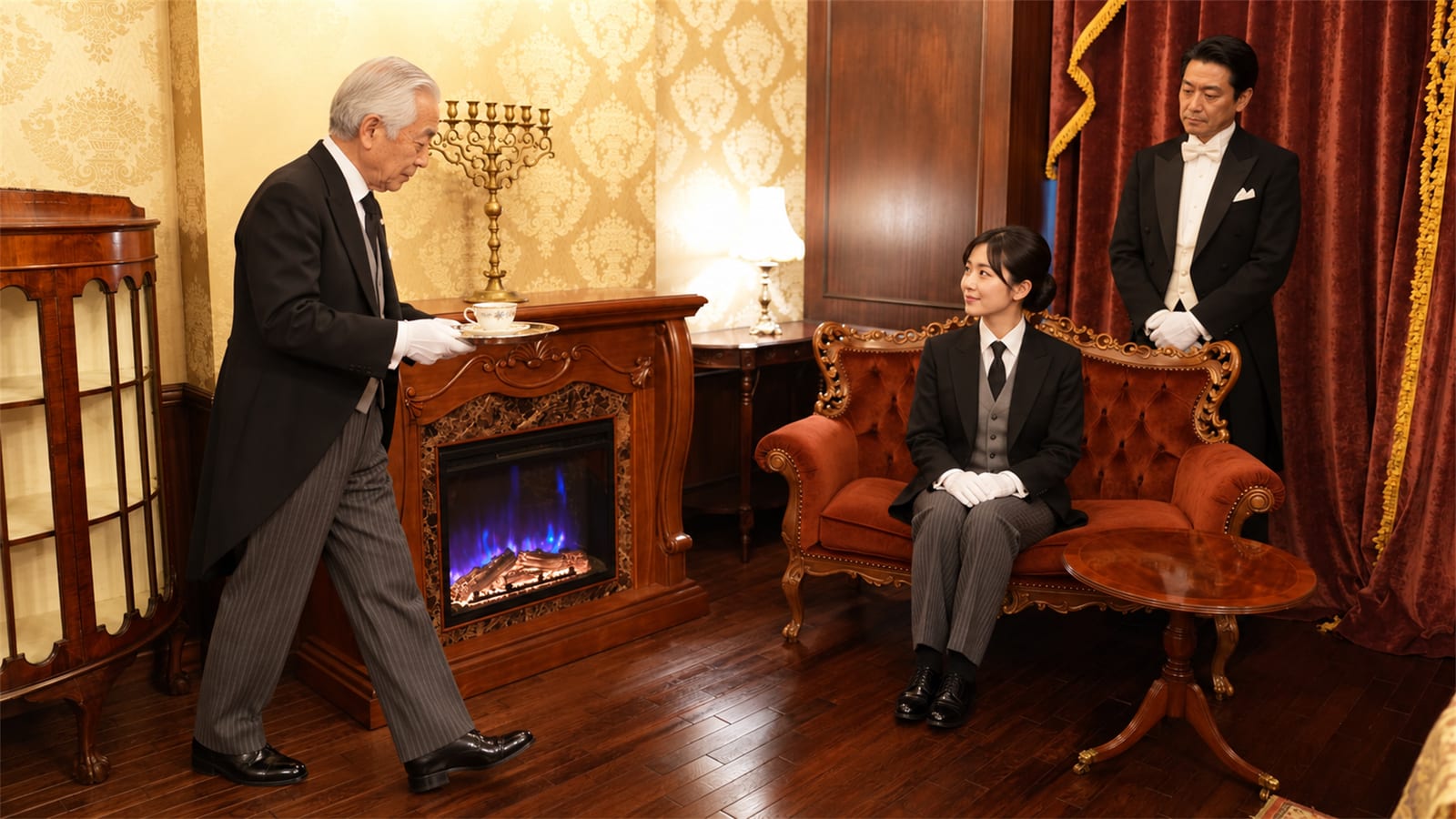
Thanks are concluded after the words are placed
In a bow of gratitude, words and movement are not hurried together. Deliver the words, see that they have been received, and then move into the bow; composure follows.
Read more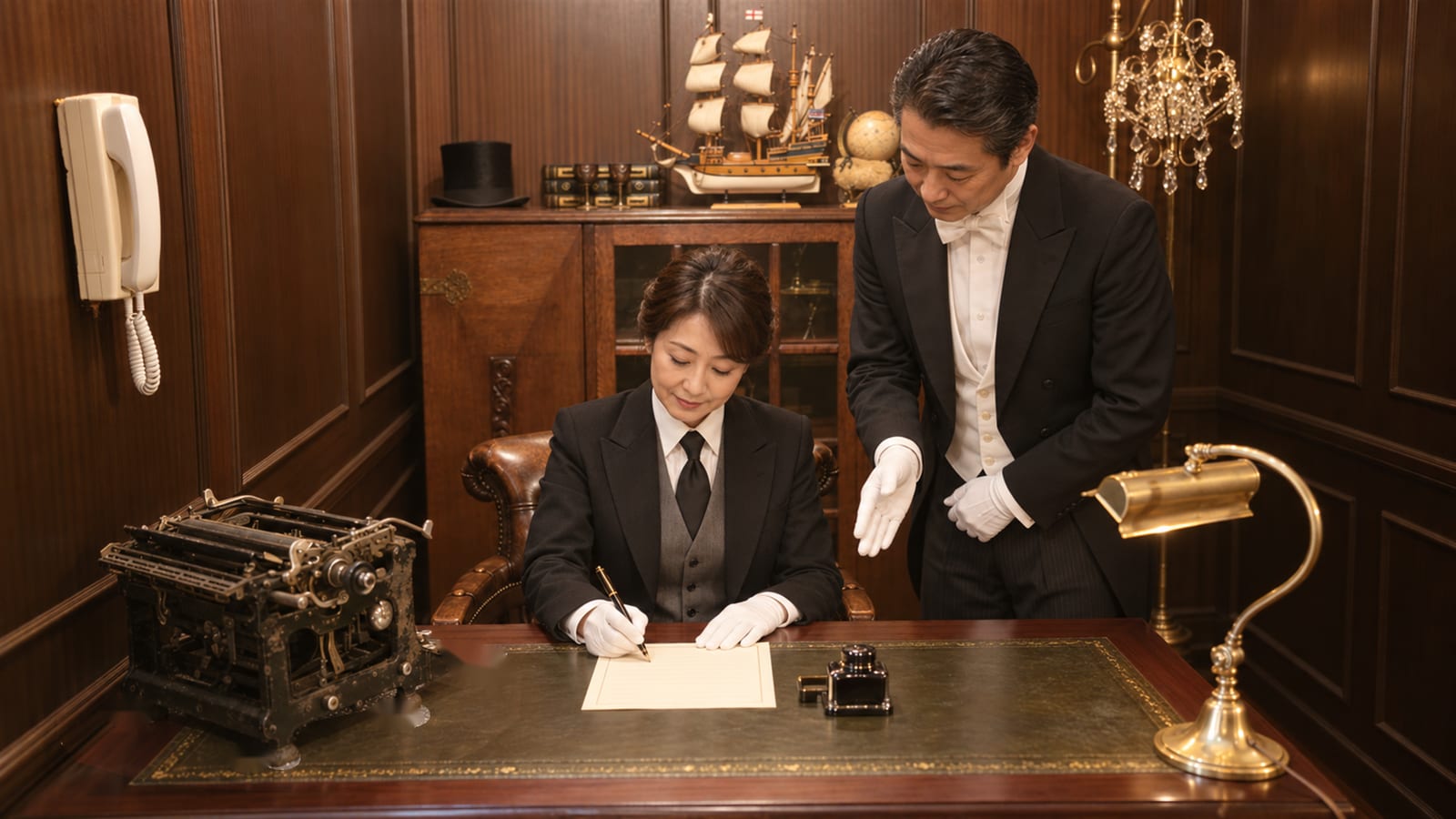
A farewell watches over the other person's way ahead
Do not turn away the moment the bow ends; keep your heart turned in the direction the lady you serve goes. Watching the door and her footing, ensure the last impression is not hurried.
Read moreWhat the experience covers
- Watching the butler's demonstration from the front and the side
- Practising the differences between welcome, thanks and farewell through movement
- Composing the hands, gaze, back and speed of return one by one
- Carrying the bow beside your butler into a commemorative photograph
- Discussing the range of bow you can perform without strain
What we never force
- Treating numbers alone as the only correct answer
- Inclining deeply while enduring pain or unease
- The provision of meals
- Use of the Manor unattended
Before and after the bow, these six points bring composure
| Before beginning | Check the feet, the breath and the position of the other person |
|---|---|
| Hands | Keep the fingers still, gently composed in front of the attire |
| Back | Do not lower the head alone; keep the line within a range that causes no strain |
| Gaze | Let it move naturally with the motion, without remaining fixed on the floor |
| Pause | Leave room to suit the words and the occasion; do not hurry back |
| Ending | Return to posture, read the other person, and move on to the next gesture |
QDo I need to learn the angles of the bow before taking part?
There is no need to learn anything in advance. Your butler demonstrates the differences for each occasion and practises with you a bow that puts no strain on the body. We value the order in which the heart turns to the other person more than memorising figures.
QCan I take part if I cannot incline deeply?
Please tell us of any concerns about movement when booking. On the day, we discuss with your butler what is possible and how to proceed. There is no need to endure pain to match a depth.
QCan women practise the bow in butler's attire?
Yes, women are welcome to apply. We ask your height, build and shoe size, and discuss the attire in advance. Both men and women serve as our butlers.
QCan I practise if I come on my own?
Yes, the butler in charge serves both as demonstrator and as your counterpart. You can practise both side by side and face to face. For applications of two or more, please consult us in advance about attire and the day's flow.
QCan I keep a photograph of bowing side by side?
The experience includes commemorative photographs. Tell us what you would like, whether a scene beside your butler or one that recalls a welcome. We photograph in step with the day's flow.
QCan I take part on a rainy day?
The experience takes place inside the Manor. Please mind your footing on arrival, and tell your butler if you have wet shoes or clothes. Attire and posture are arranged once you are inside.
Before the depth of the bow comes the heart that sees the other person
The bow of welcome receives the tension of a lady entering the Manor and signals that the hours ahead may be entrusted with confidence. The butler notes how the door opens, the luggage, the footing, even the position of those following behind, and bows only after clearing the way.
When you exchange the roles of lady and butler, you notice not only whether the bow looks graceful but what the person being received feels. So that words do not run ahead and the path is not blocked mid-bow, voice, gaze and the angle of the body are composed as one continuous movement.
Before the bow, the butler also checks the moment to release the door, whether a hand is needed for the luggage, and whether anyone behind has stopped. To lose awareness of the surroundings in order to show a bow is to stray from the consideration that lies at its heart. In the experience, you see the same scene from both sides, receiving and received, and put into words the position and pause that bring reassurance.
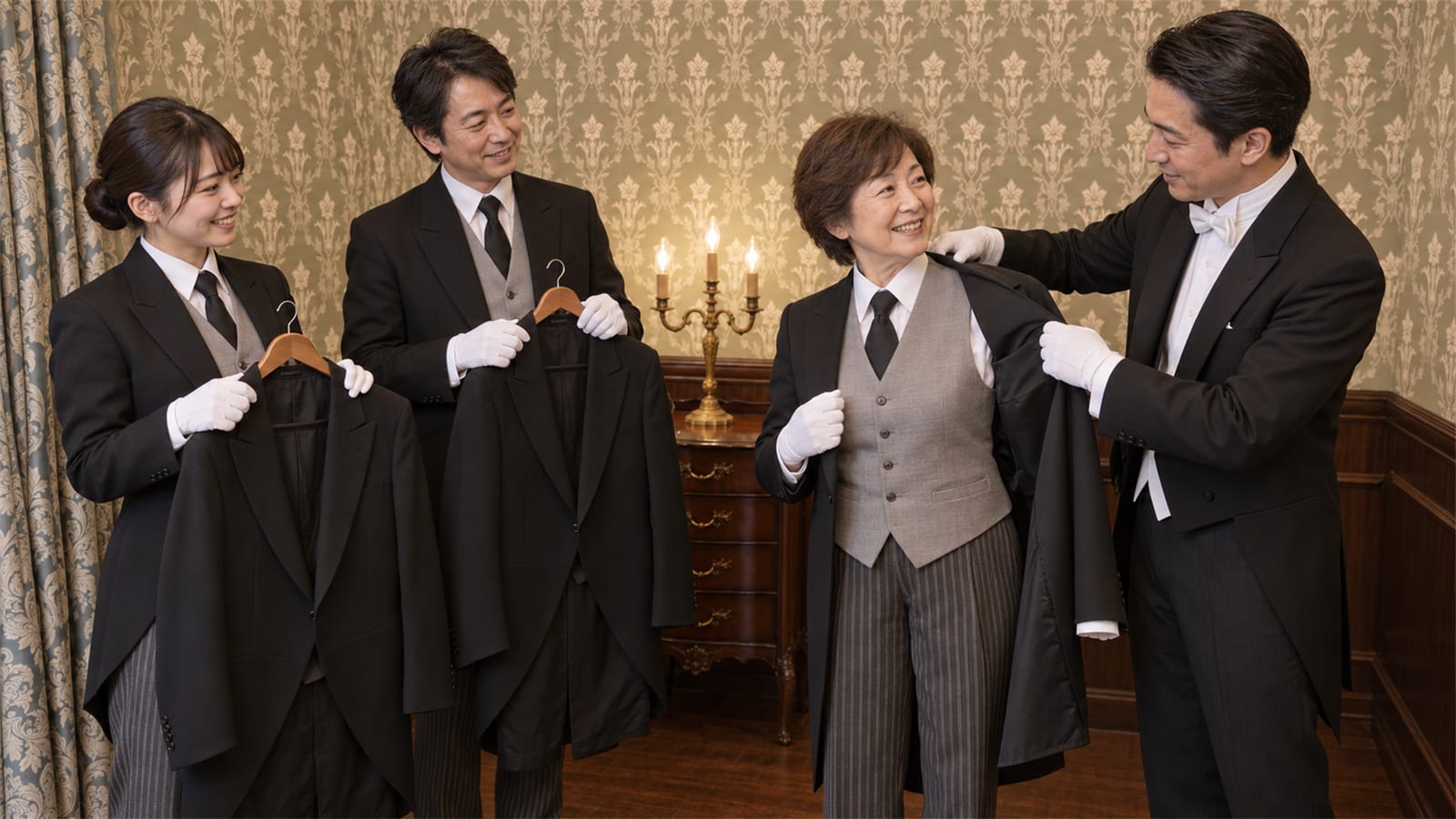
See the morning coat attire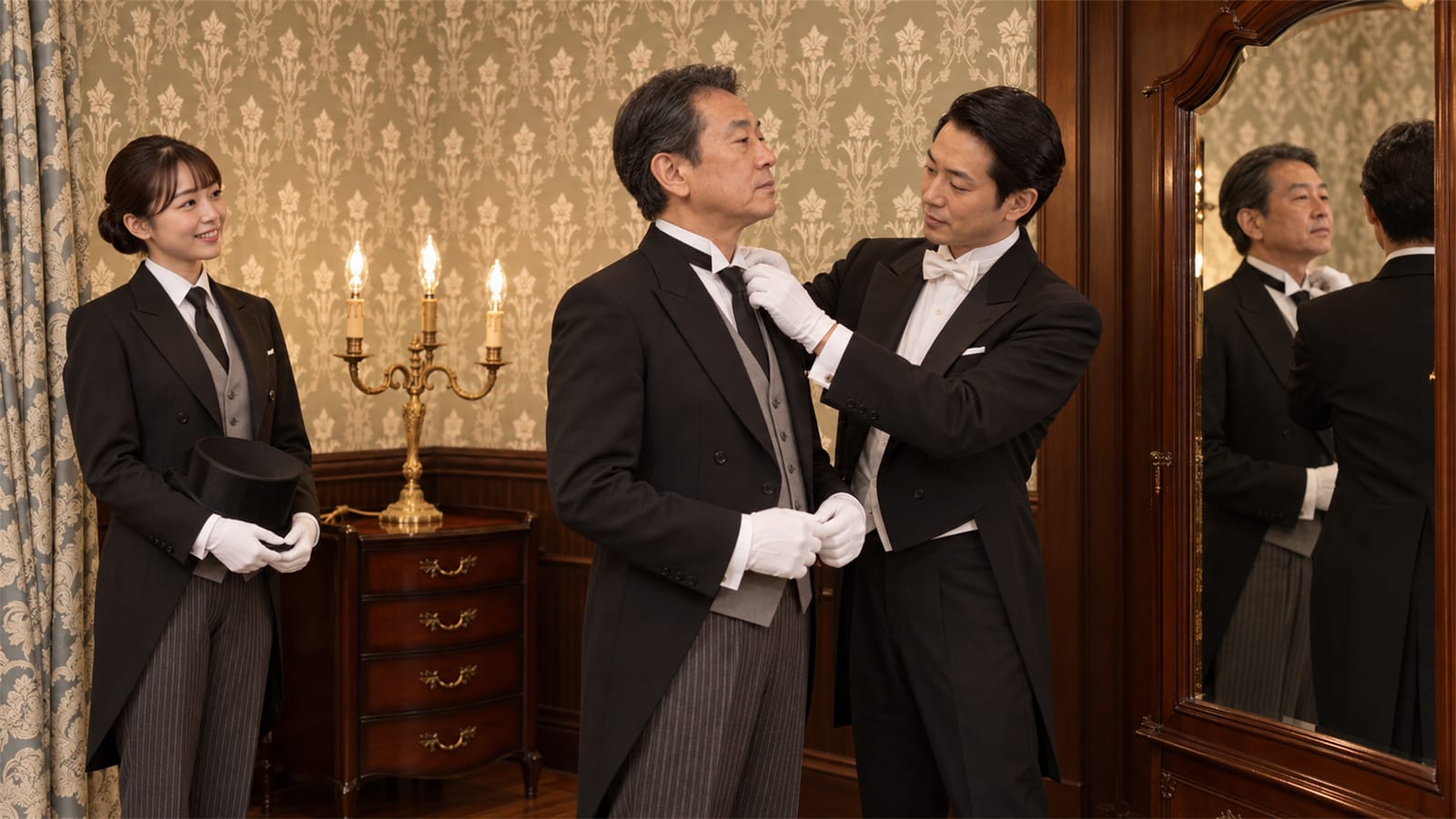
About the attire
- Sizes and styles are limited. Before booking, please tell us your height and usual clothing size
- Please ask about sizes other than those listed
You may also wish to read

Side by side, a bow.
Please let us know your height, build and shoe size, and your preferred date and time.