
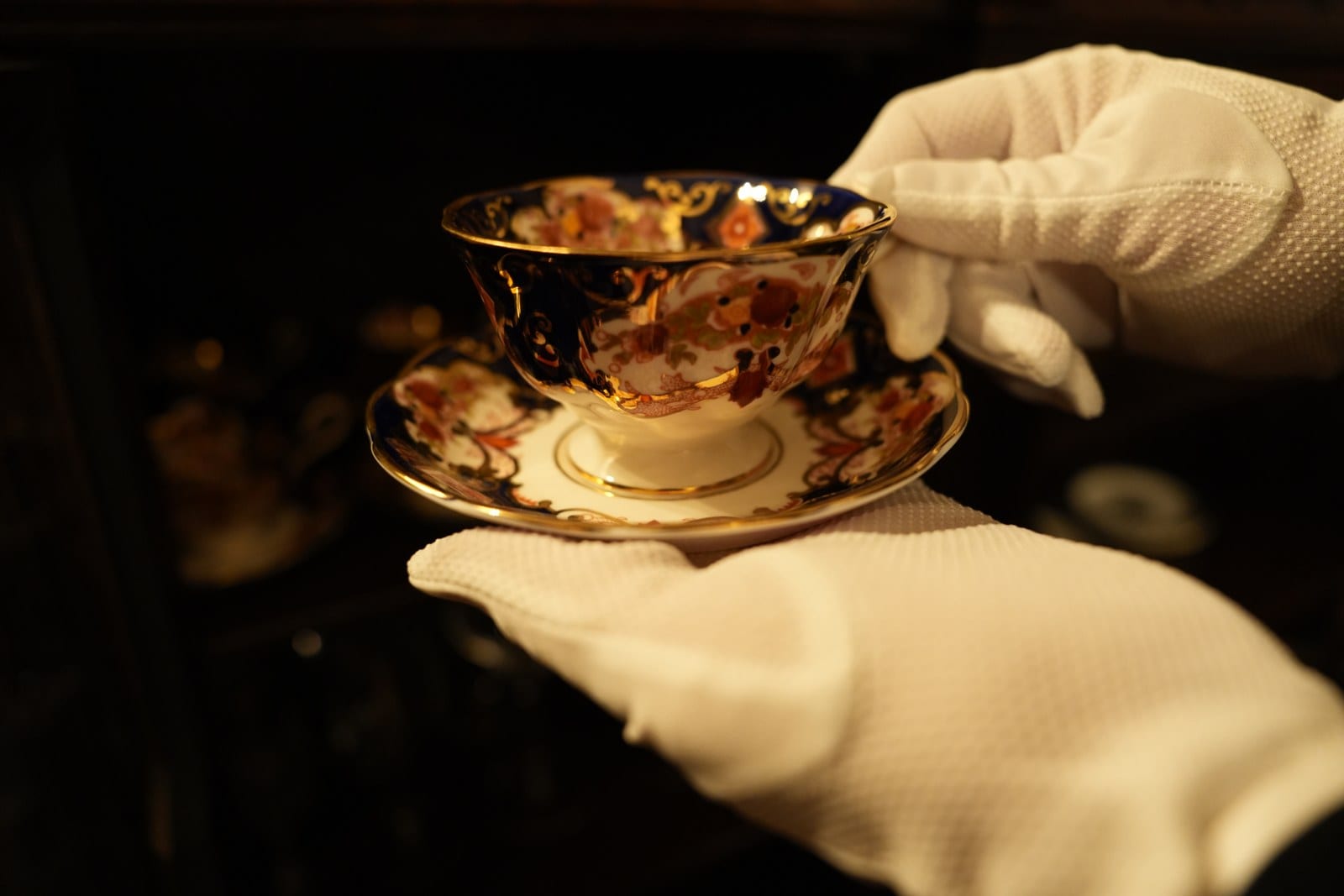
A Lineage of British Porcelain
A moment to choose, for yourself, the cup for afternoon tea.
About A Lineage of British Porcelain
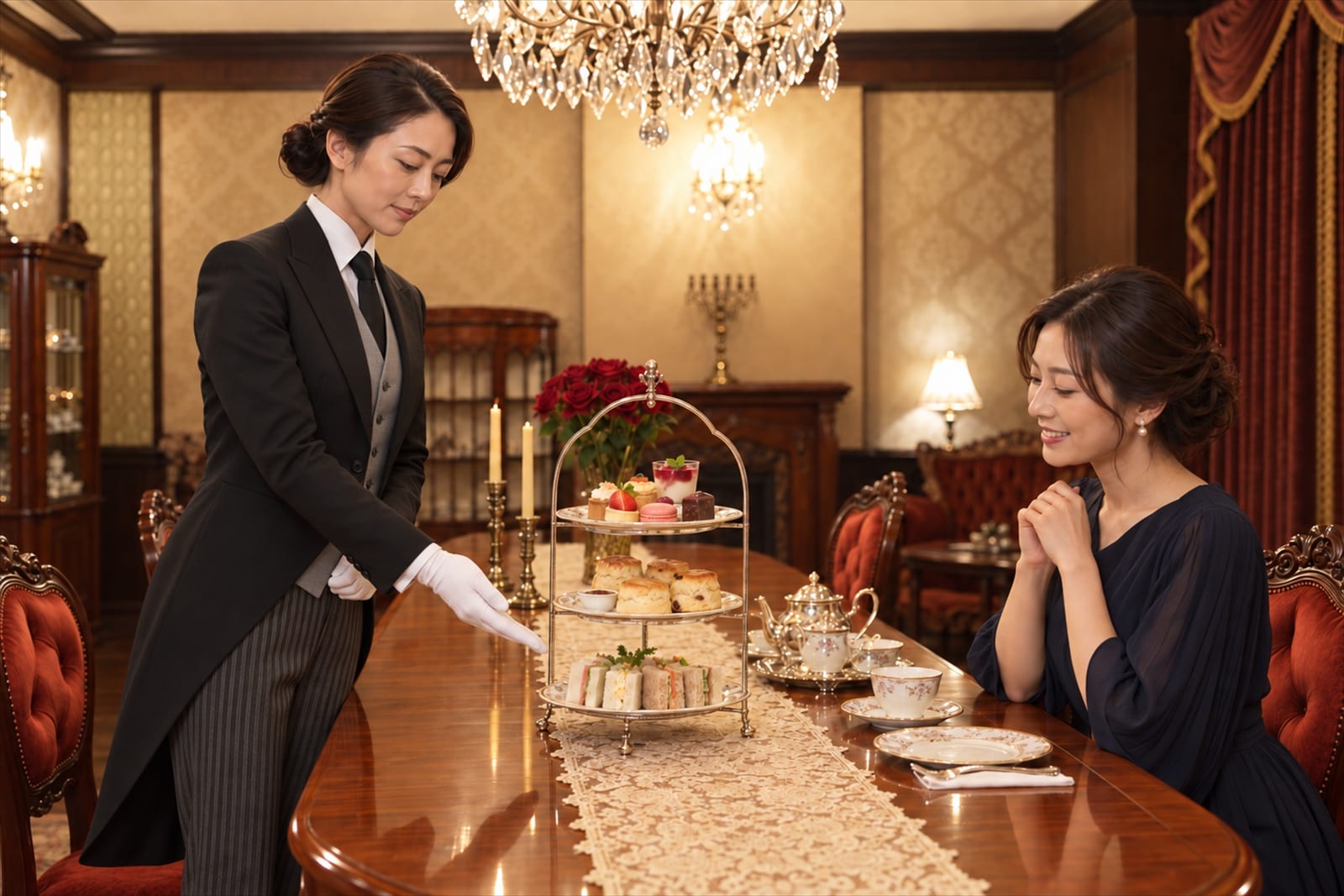
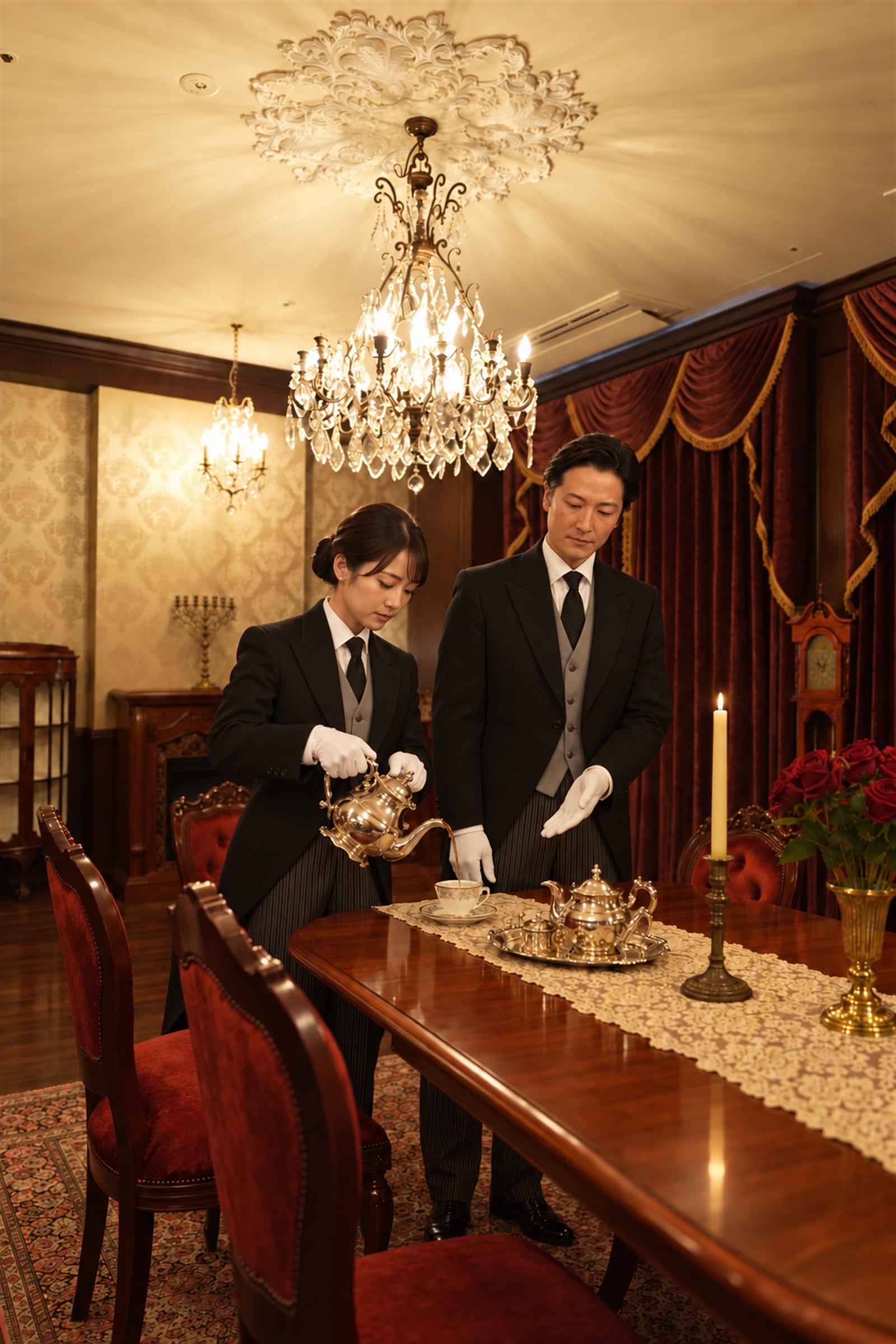
A lineage of British porcelain means the three British makers on the Manor's display shelves: Royal Albert, Royal Doulton and WEDGWOOD. The cup for afternoon tea may be chosen from among them by the lady of the house. This is not a collection for decoration, but one to be taken in hand while watching how a butler handles it.
The three names reveal their differences when shape and pattern are considered separately
A lineage of British porcelain means seeing three names side by side through the Manor's collection: Royal Albert Heirloom, Royal Doulton Carlyle and WEDGWOOD Florentine Turquoise. The butler begins by matching each name to the pieces held at the Manor, one by one.
Heirloom is six cups and saucers; Carlyle is a bread plate, a dessert plate and a demitasse cup and saucer; Florentine Turquoise is a teapot, a sugar bowl, a creamer and a cup and saucer.
Though all are British porcelain, the shapes at the Manor are not the same. You may change the route to suit your interest: cups, plates and saucers, or a full set including the pot. There is no need to remember every name. The butler describes each piece in turn, by colour, pattern, handle, rim and shape, so please simply choose the one that draws you.
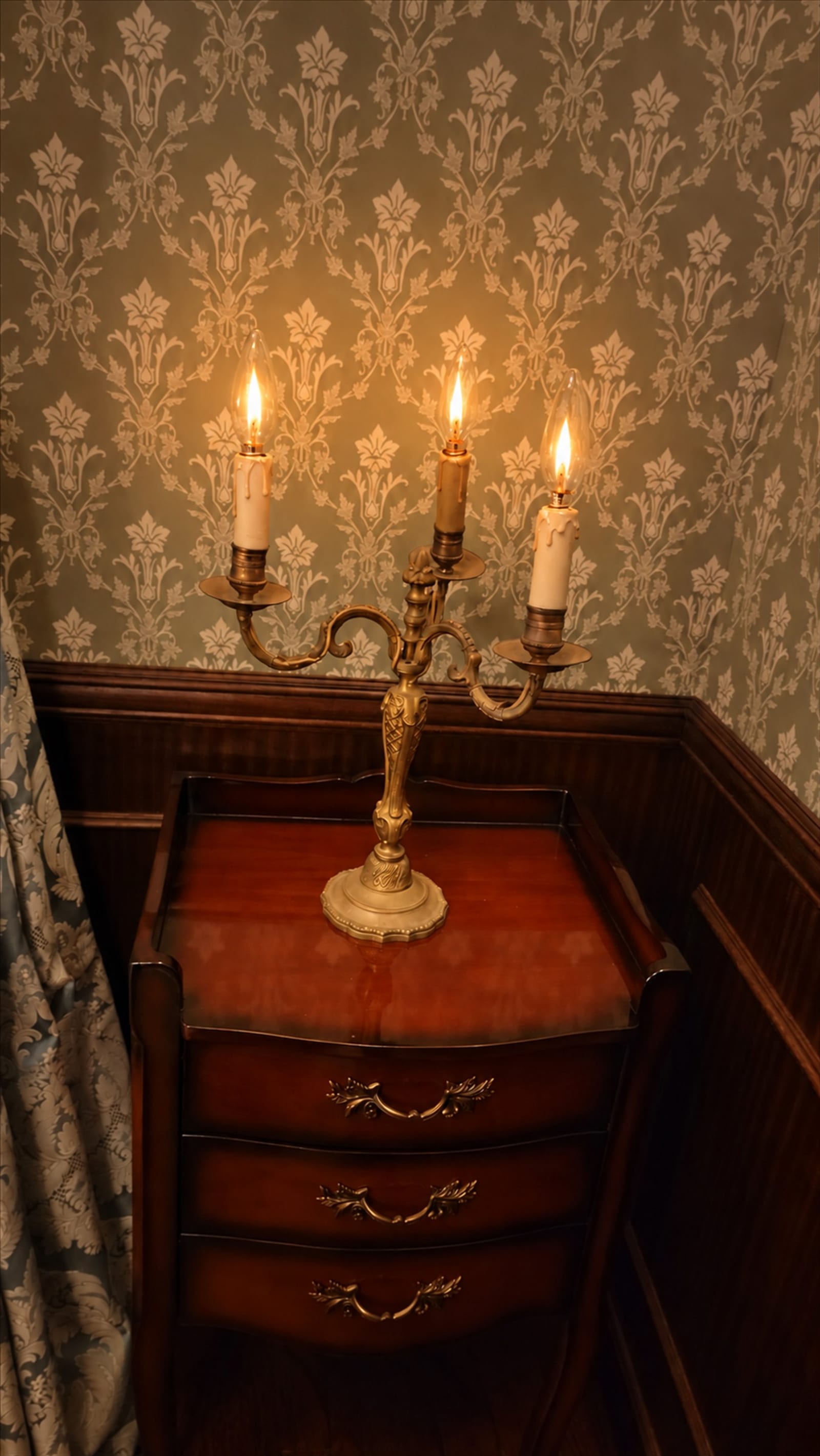
The three names and the pieces held at the Manor, at a glance
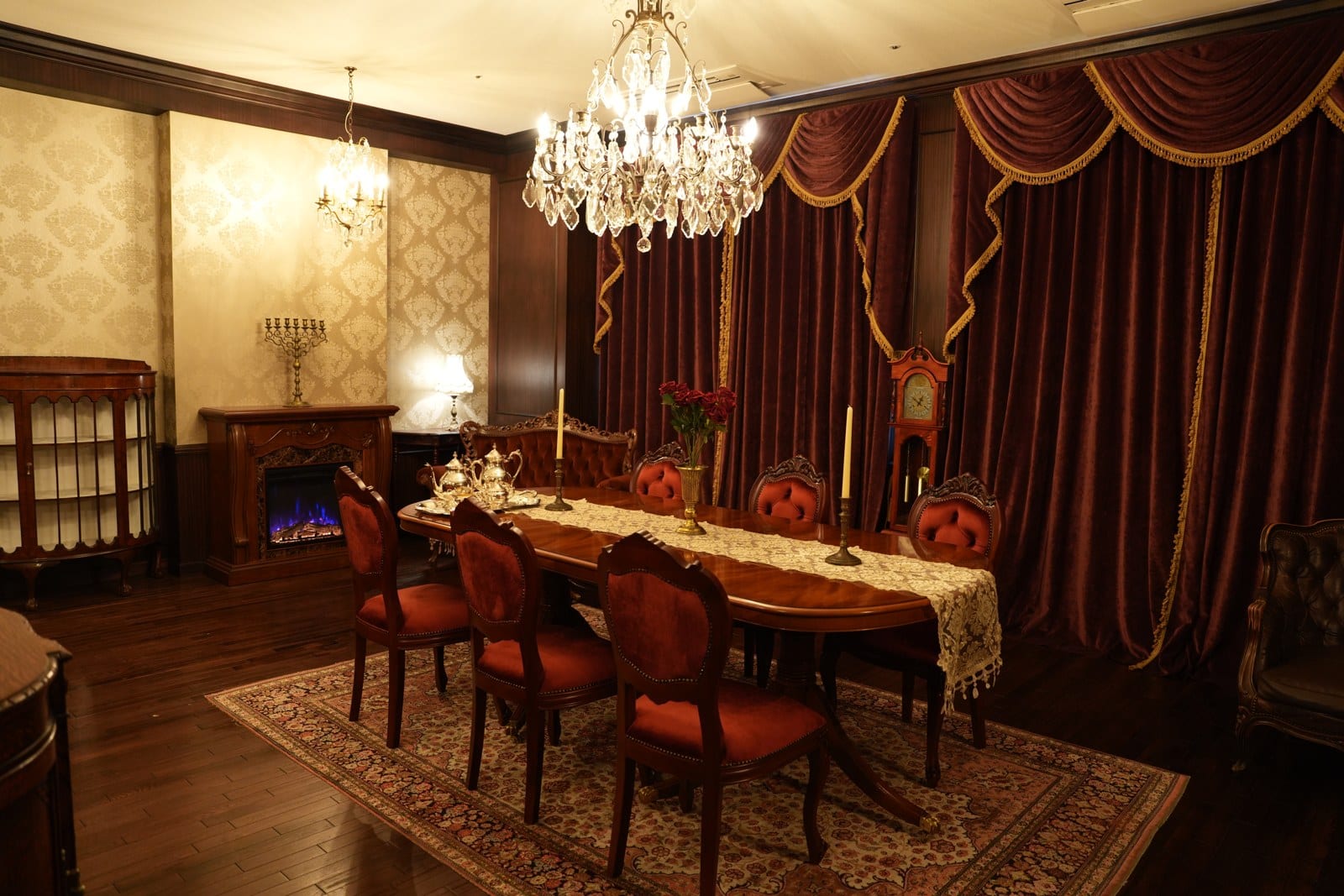
| Maker | Pattern | The Manor's collection | What to look for |
|---|---|---|---|
| Royal Albert | Heirloom | Six cups and saucers | The unity of the six, and its rarity as a piece made in England |
| Royal Doulton | Carlyle | Bread plate, dessert plate, demitasse cup and saucer | Two kinds of plate and the shape of the small cup |
| WEDGWOOD | Florentine Turquoise | Teapot, sugar bowl, creamer, cup and saucer | The turquoise, the griffin motif and how the set comes together |
The cup for afternoon tea may be chosen from these three names.
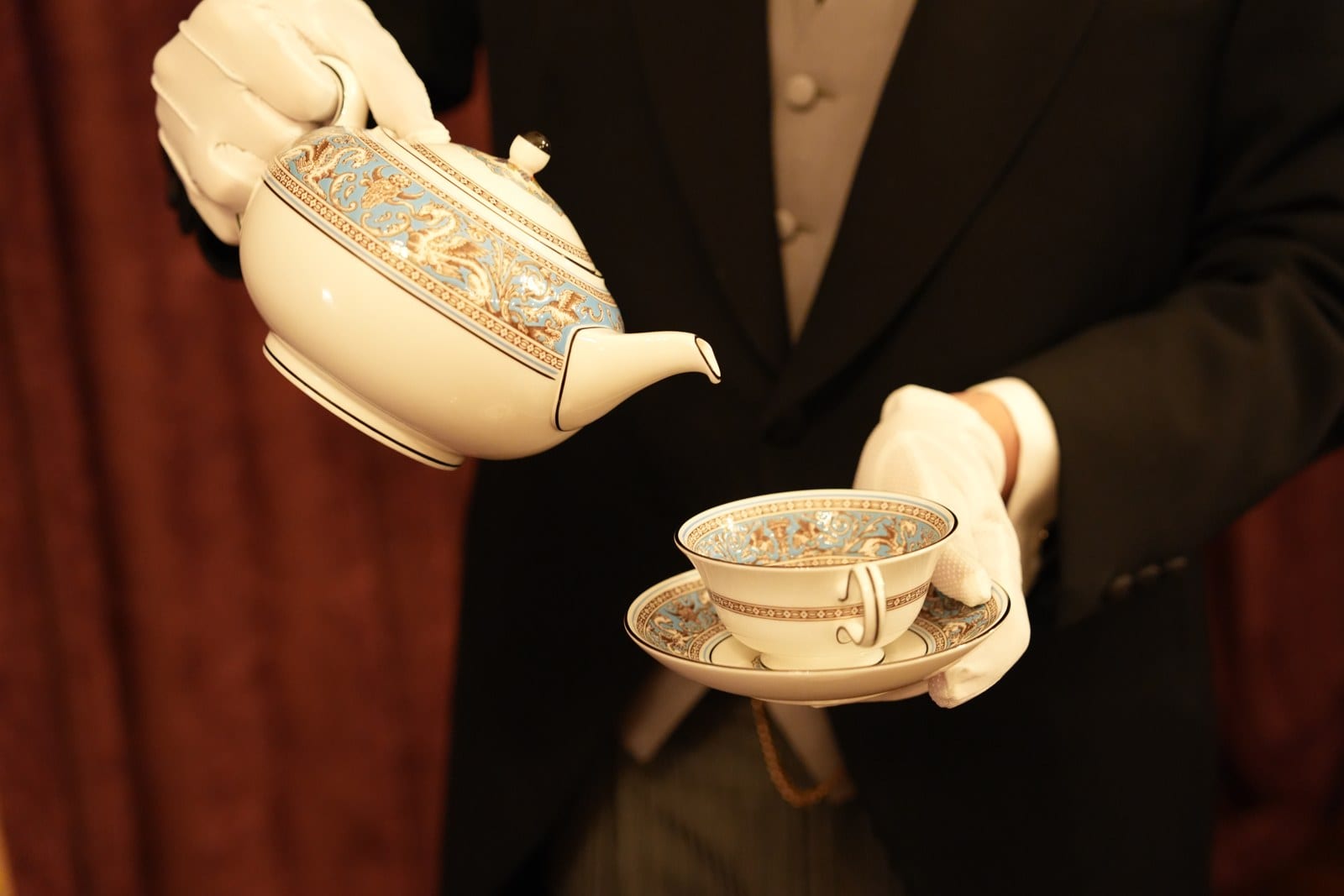
Cups, plates and pots each ask to be looked at in a different place
| Cup | Look in turn at the pattern on the front, the rim, the set of the handle and the white of the interior. |
|---|---|
| Saucer | With the cup removed, follow the pattern from the centre to the outer edge. |
| Plate | Check the spread of the surface and the run of the rim, from the front and at an angle. |
| Teapot | Walk around it, following how the body, lid, spout and handle connect. |
| Sugar bowl and creamer | Set the two side by side and compare the lips, the handles and the overall height. |
British porcelain seen alongside French porcelain, silver and glass
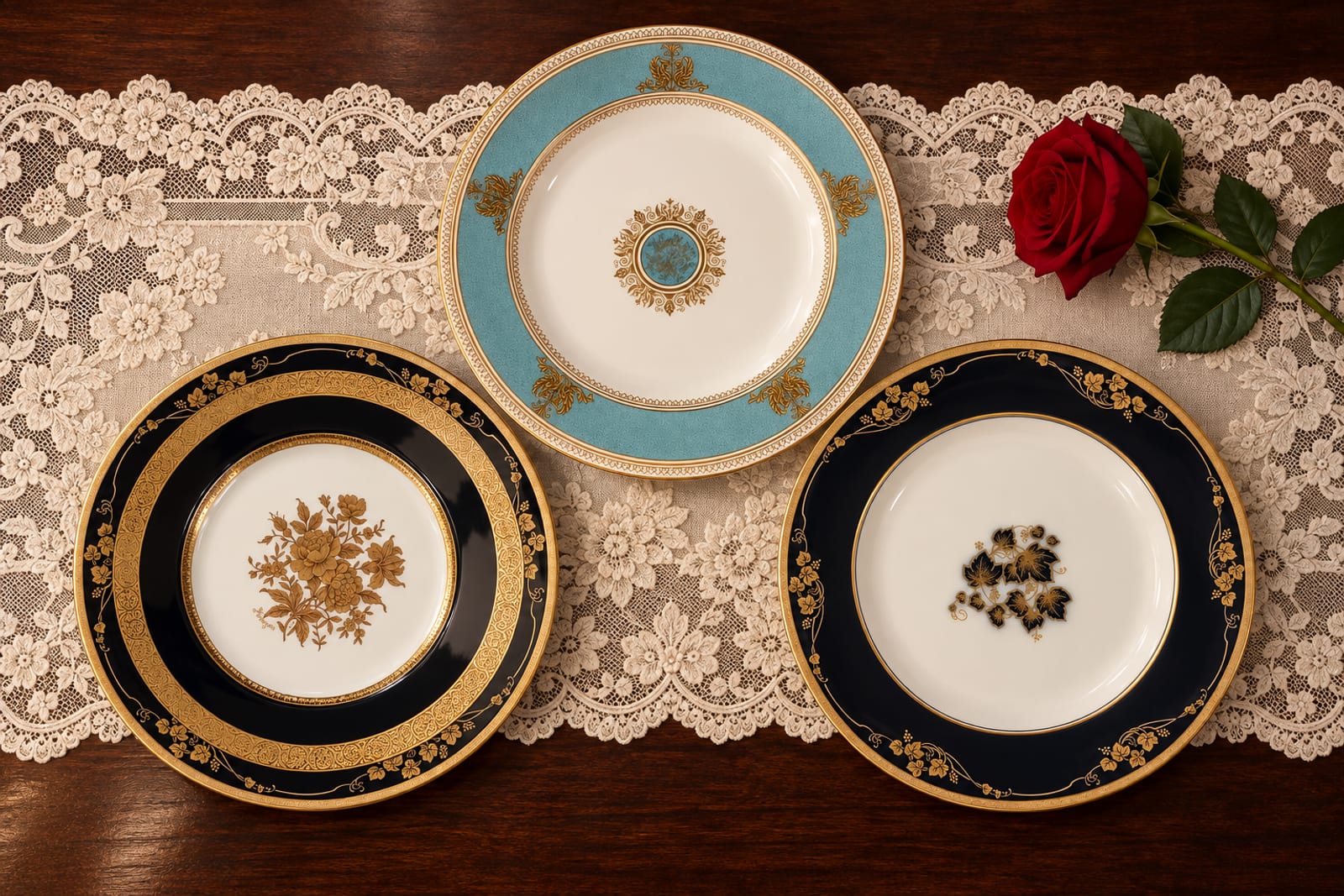
Compared with the four sizes of French porcelain
With the floral motif and gilded rim of Bernardaud Volubilis placed alongside, the differences in shape and pattern of the British porcelain come into view.
Read more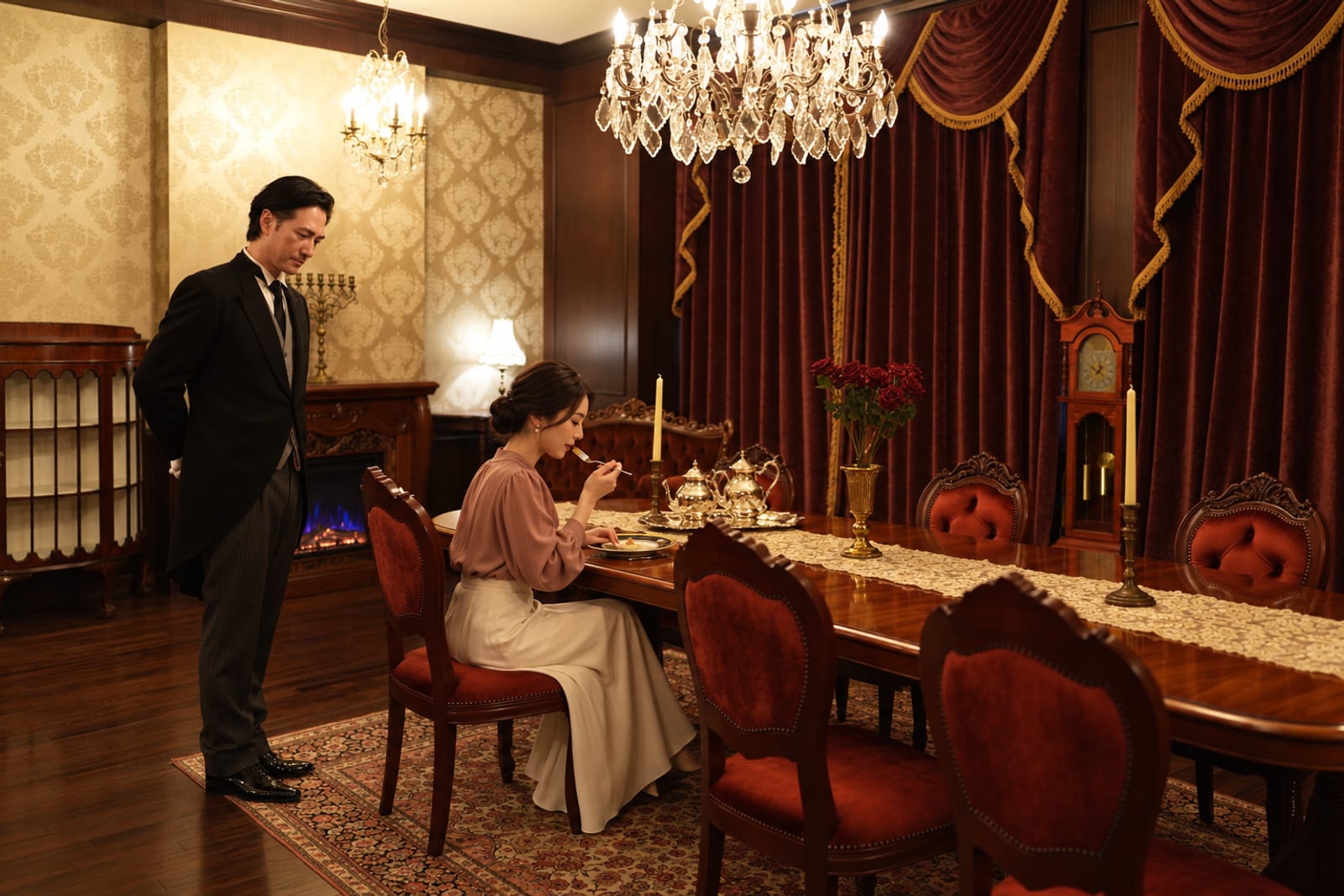
Compared with silver rocaille ornament
Set beside the silver handles of Christofle Marly, the colour and outline of the porcelain appear all the more clearly.
Read more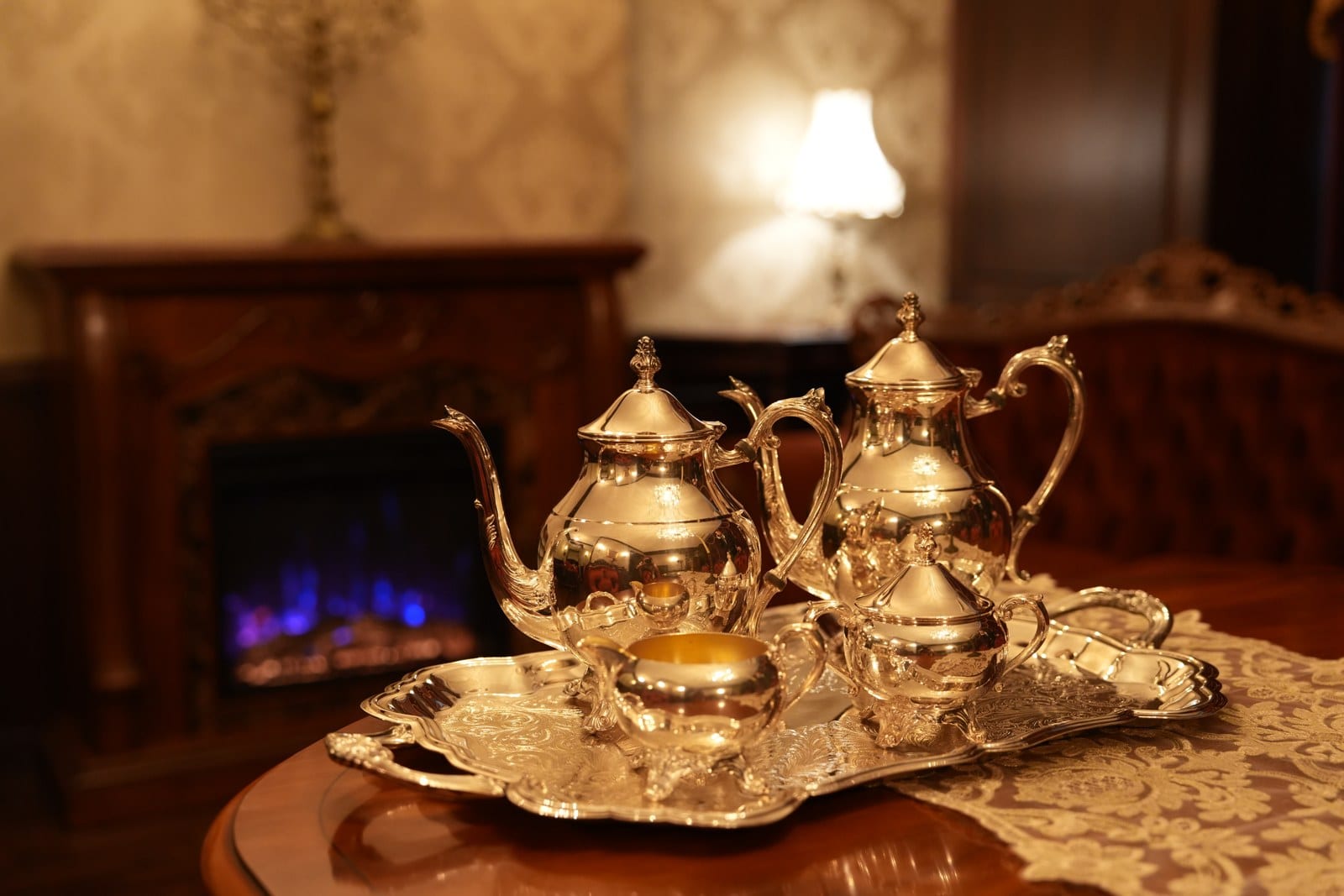
Compared with the shapes of clear glass
Against British porcelain with its colour and pattern, glasses whose outlines change with their use are set alongside to show how light differs with the material.
Read moreFrom one name to the next, in five steps
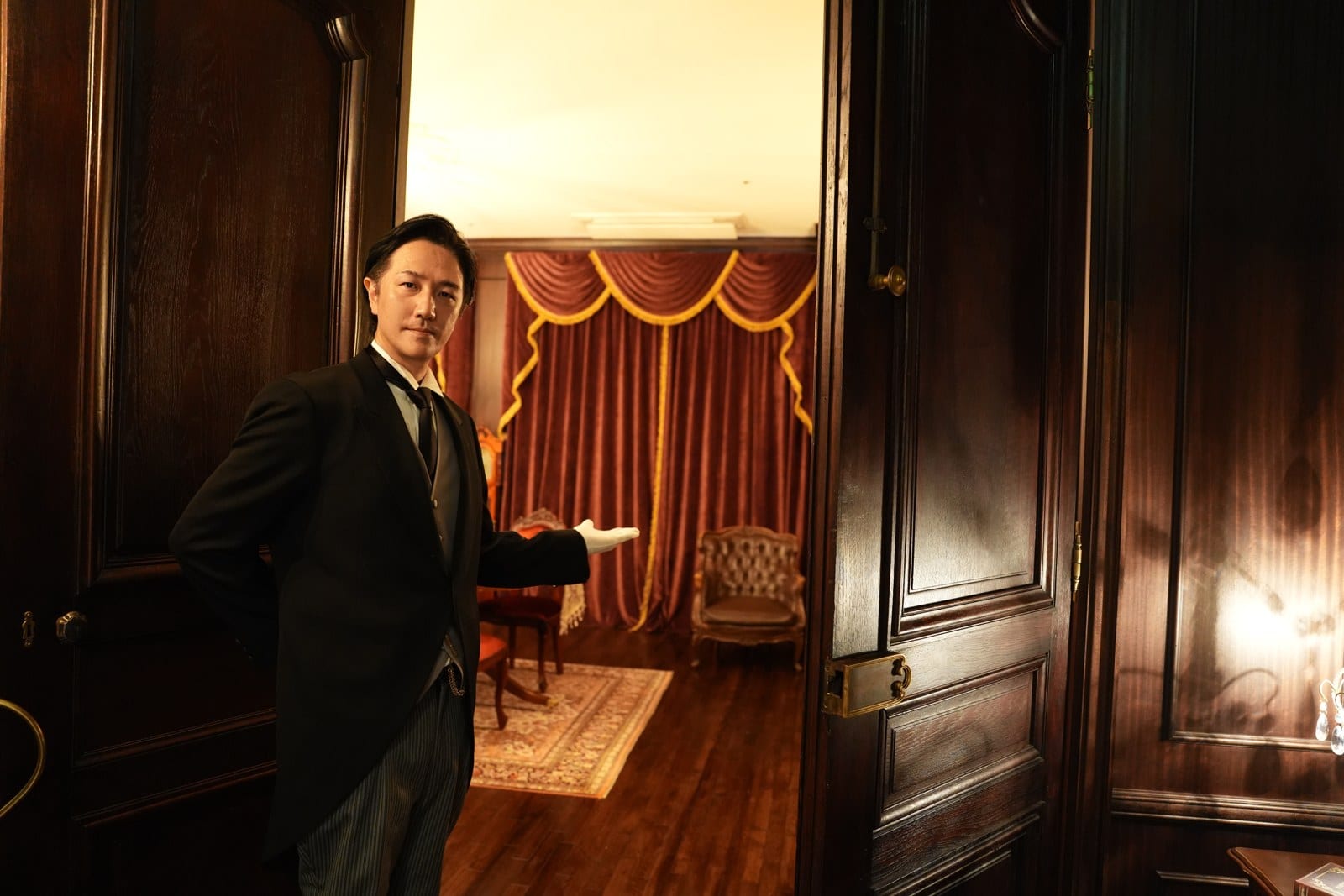
Hear the three names
The butler briefly introduces each maker, the pattern name and the pieces held at the Manor.
Choose a first piece
Begin with whichever shape interests you: cup, plate or pot.
Look at the front
The butler turns the piece to the angle where the pattern reads most clearly, and you take in the whole.
Look at the rim and the handle
For a cup, the rim and handle; for a plate, the outer edge; for a pot, the join with the spout.
Set a second name alongside
A piece of similar shape or size is placed beside it, with a gap so the two do not touch.
Who will enjoy this
- Those seeing British porcelain for the first time
- Those who wish to see the unity of six cups and saucers
- Those who wish to compare the shapes of a plate and a demitasse cup
- Those drawn to the griffin motif and turquoise
- Those who wish to contemplate a single piece quietly, alone
What we ask you to refrain from
- Opening the display shelves without first asking a butler
- Putting force on lids or handles
- Lifting porcelain while pieces are stacked
- Rubbing hard at a pattern or rim
- Taking pieces out of the Manor
QDo I need to remember all three names?
No. The butler briefly introduces the makers and pieces at the start, so please begin with whichever piece draws you by its colour or shape.
QHow many Royal Albert Heirloom pieces are there?
The Manor holds six cups and saucers. As a rare piece made in England, we show you the detail of a single cup and the unity of the six.
QWhat WEDGWOOD pieces are there?
Florentine Turquoise: a teapot, sugar bowl, creamer and cup and saucer. You can see how the griffin motif and turquoise continue from one piece to the next.
QMay I actually hold the porcelain?
Yes, under a butler's guidance. We show you where to support each shape and stay close at hand.
QWill you guide me if I come alone?
Certainly. From quietly contemplating a single cup to comparing all three names, we follow your interest.
QHow many may view the collection together?
Up to six guests. The butler arranges where to stand and the order in which pieces are taken in hand.
You may also wish to read


Come and choose today's cup.
Under a butler's guidance, the porcelain may be taken in hand.