
The Chandelier
Count the lights, follow the arms, read the story of the room.
About The Chandelier
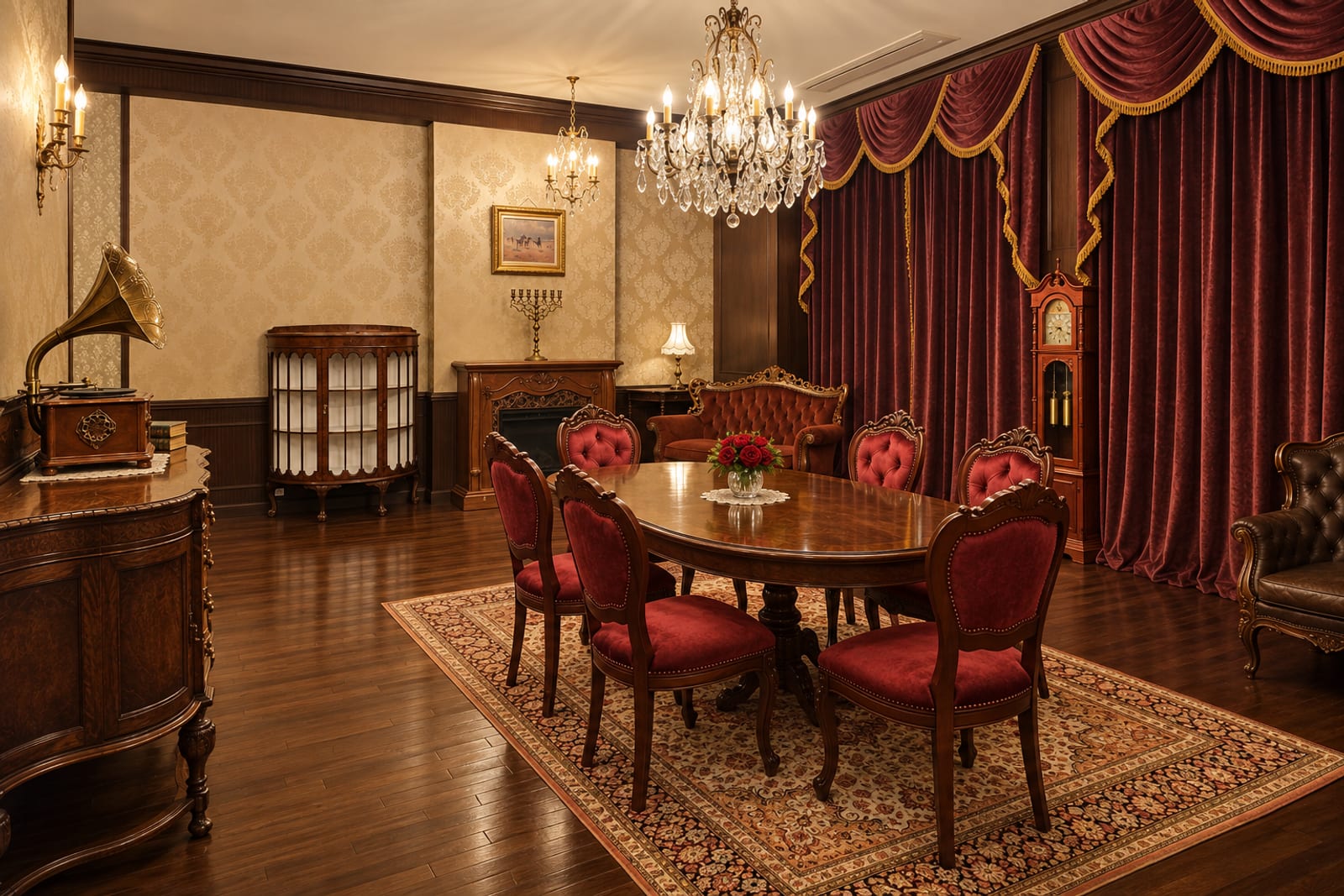
A chandelier is a light fitting that carries several lights on branching arms and illuminates a whole room from the ceiling. At the Manor, a nine-light Maria Theresa style hangs at the centre of the Dining Room, while the Study, the Fireplace Room and the Bedroom each have fittings of a different date, material and number of lights, keeping the story of each room distinct.
IFirst, the number of lights and where it hangs
Before a chandelier, before the splendour of its ornament catches your eye, count the lights and look at what lies directly beneath. In the Dining Room, nine lights fall on the centre of the yew table; in the Study, three on the leather-topped desk; in the Fireplace Room, six watch over the sofa and the mantelpiece.
Even within one Manor, the chandeliers do not share a single role. A light that gathers people to a table, a light that narrows the field of thought, a light that folds comfort around a flame, a light that reveals the shadows in fabric and carving. Before switching on, the butler considers how the room is to be used and sets the brightness that is needed.
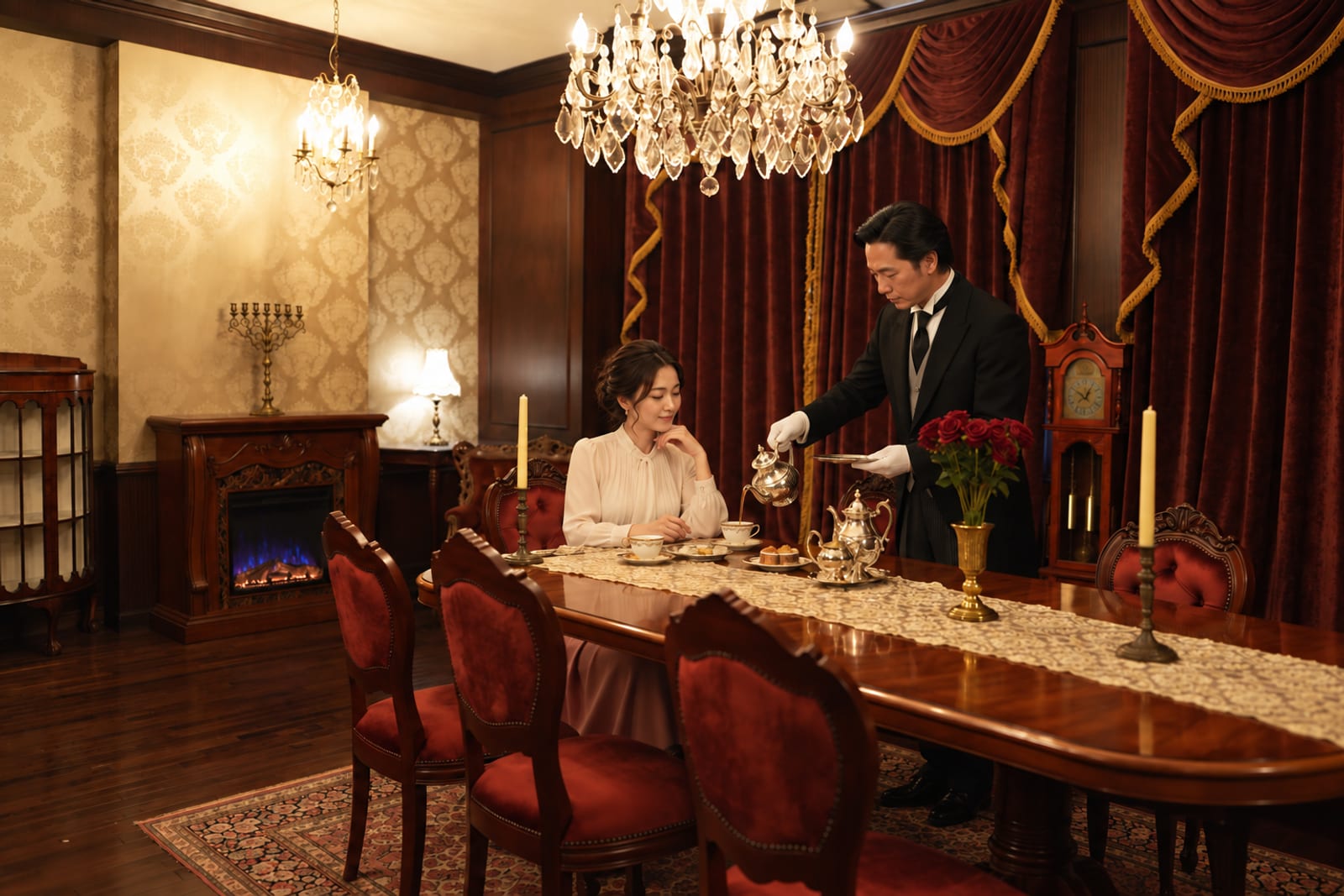
The furniture beneath tells you the light's role
When the centre of the table and the centre of the light coincide, every eye in the Dining Room is drawn to one point.
IIThe Maria Theresa style is read in the plates that sheath the arms
The Dining Room chandelier has nine lights. Its form, with glass arms sheathed in crystal plates, is the great clue to the Maria Theresa style. The name honours the Habsburg empress Maria Theresa; the style originated in 18th-century Vienna and belongs to the tradition of Bohemian crystal.
The 18th century spoken of here is the origin of the style. The butler describes the features of form seen in this Manor's piece, and the origins of the style, together with the records the Manor holds.
The words we hold dear at the Manor, "glass arms sheathed in crystal plates", are the clue by which the Maria Theresa style is known. The origin of the style and the date of this particular piece are two different pieces of information.
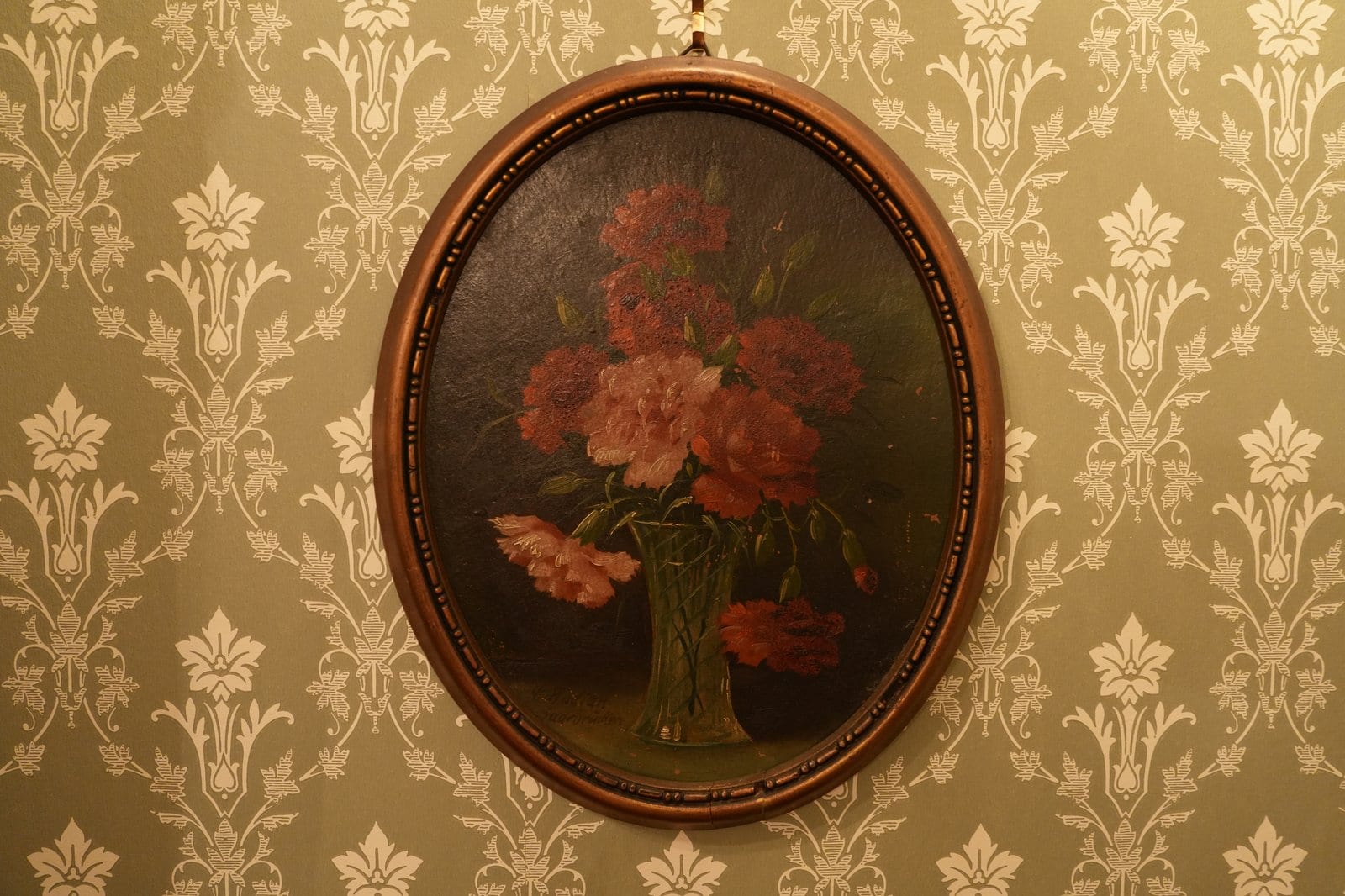
Keep the style's origin and the piece's date apart
Be sure about the features you can see, and reserved about a date and provenance that are not recorded. That is the stance from which furnishings are described correctly.
IIICrystal breaks the light into points
The role of crystal is not to hide the source of light but to break one light into countless small reflections. Plates, drops and cut edges return the light at every angle, passing small sparks to the silver on the table, the gilding of the porcelain and the silver bell. As someone walks past, the reflections shift, and even a quiet room takes on movement.
The butler does not necessarily use every light at the same strength. Layering candelabra, single candlesticks, the electric flame of the fireplace and the wall brackets, he places different light at eye level. Rather than brightening the ceiling alone, he arranges it so that faces, hands and the outlines of the furnishings are gently seen.
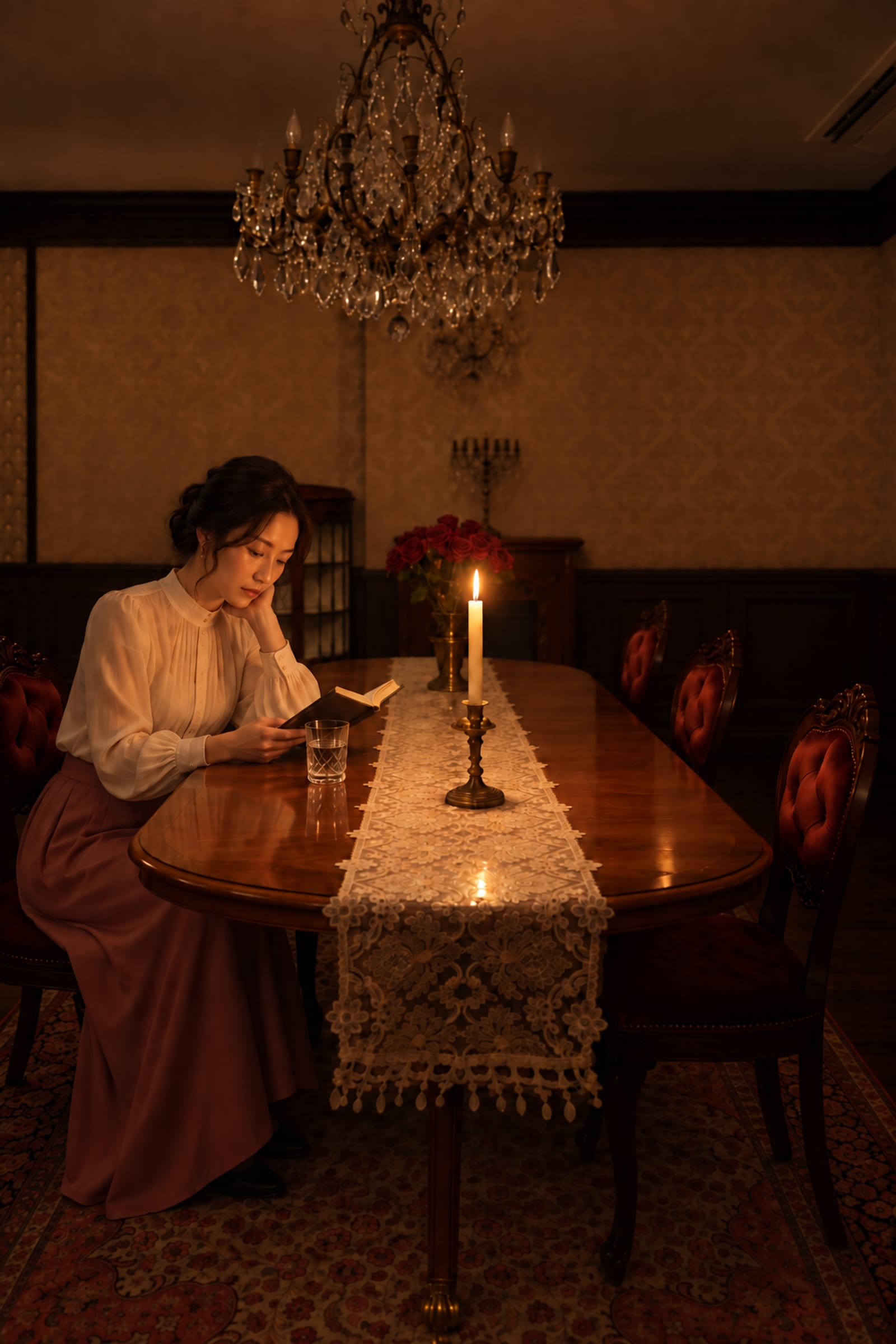
Layer the light from the ceiling with the light on the table
When the flicker of a low flame is added to reflections from above, the depth of the furnishings comes into view.
IVSee the acanthus ceiling ornament as part of one composition
In the Dining Room, an acanthus plaster medallion surrounds the base of the chandelier. It is a circular ornament in plaster whose role is to join ceiling and hanging light to the eye. The acanthus is a motif of long lineage in European decoration, used since the Corinthian capitals of ancient Greece.
When you look up, do not isolate the fitting; take in the medallion, the ceiling height, the double doors and the axis with the table together. The Manor's ceilings are 3 m high. Hung too low, a chandelier blocks the view; too high, and its connection with the table weakens. Only when placed on the centre line of the whole room does the light become part of the architecture.
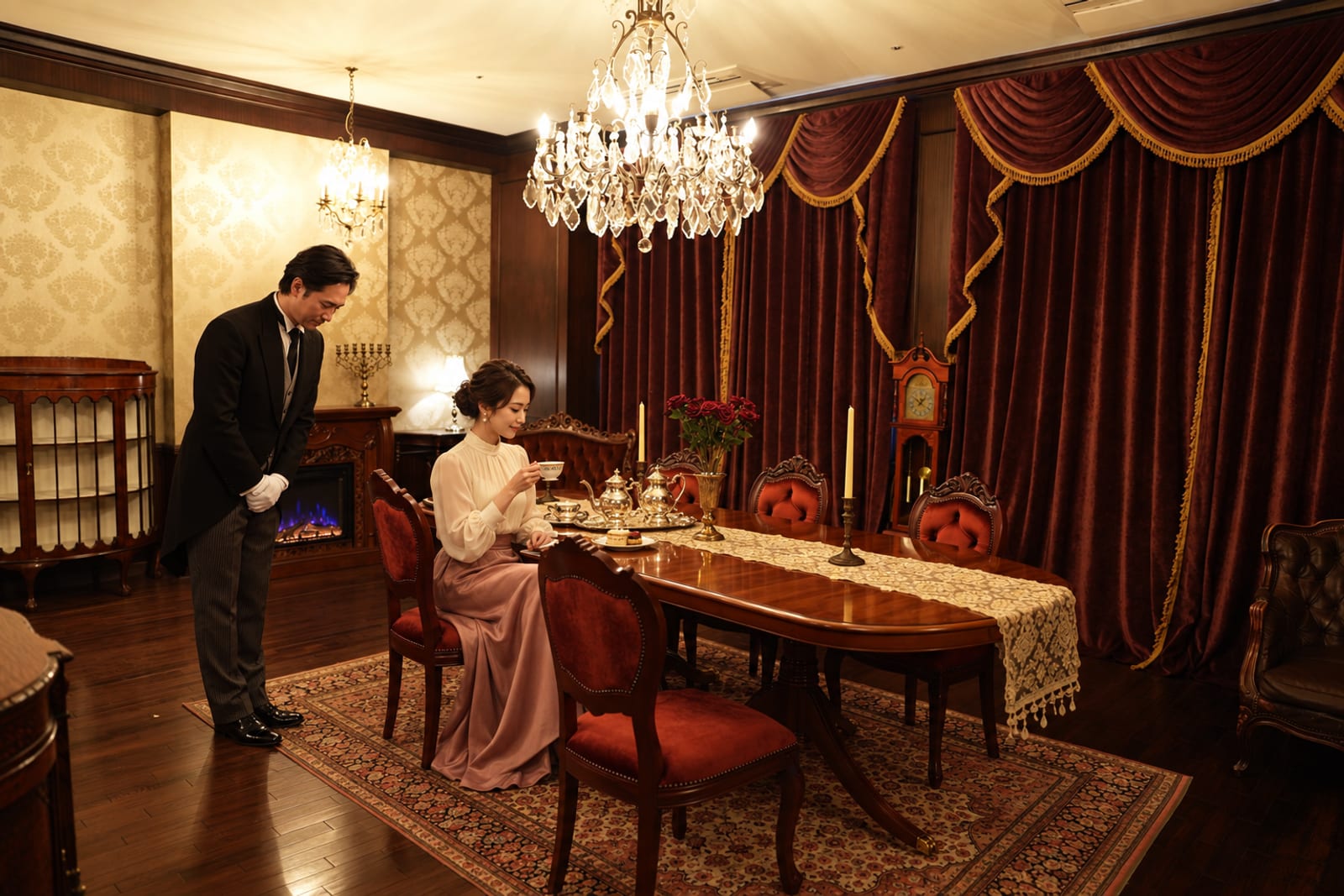
One axis, from the hanging point to the table
The medallion is the ceiling's picture frame for the chandelier.
VThe JOGLAR in the Study is recorded down to its date
On the ceiling of the Study hangs a JOGLAR A0920, a three-light crystal chandelier, recorded as French and of the 1920s. This is a piece whose country and date of manufacture, not merely the origin of its style, are in the Manor's records. It differs from the nine lights of the Dining Room both in number and in the detail of what is recorded.
The Study also holds a bronze standing chandelier 1,640 mm tall: a rare form that stands on the floor rather than hanging from the ceiling. Light falling on the leather-topped desk from above, and light from near the height of a standing figure. The two tiers of light pick out the outlines of the bookcases, the globe and the quill.
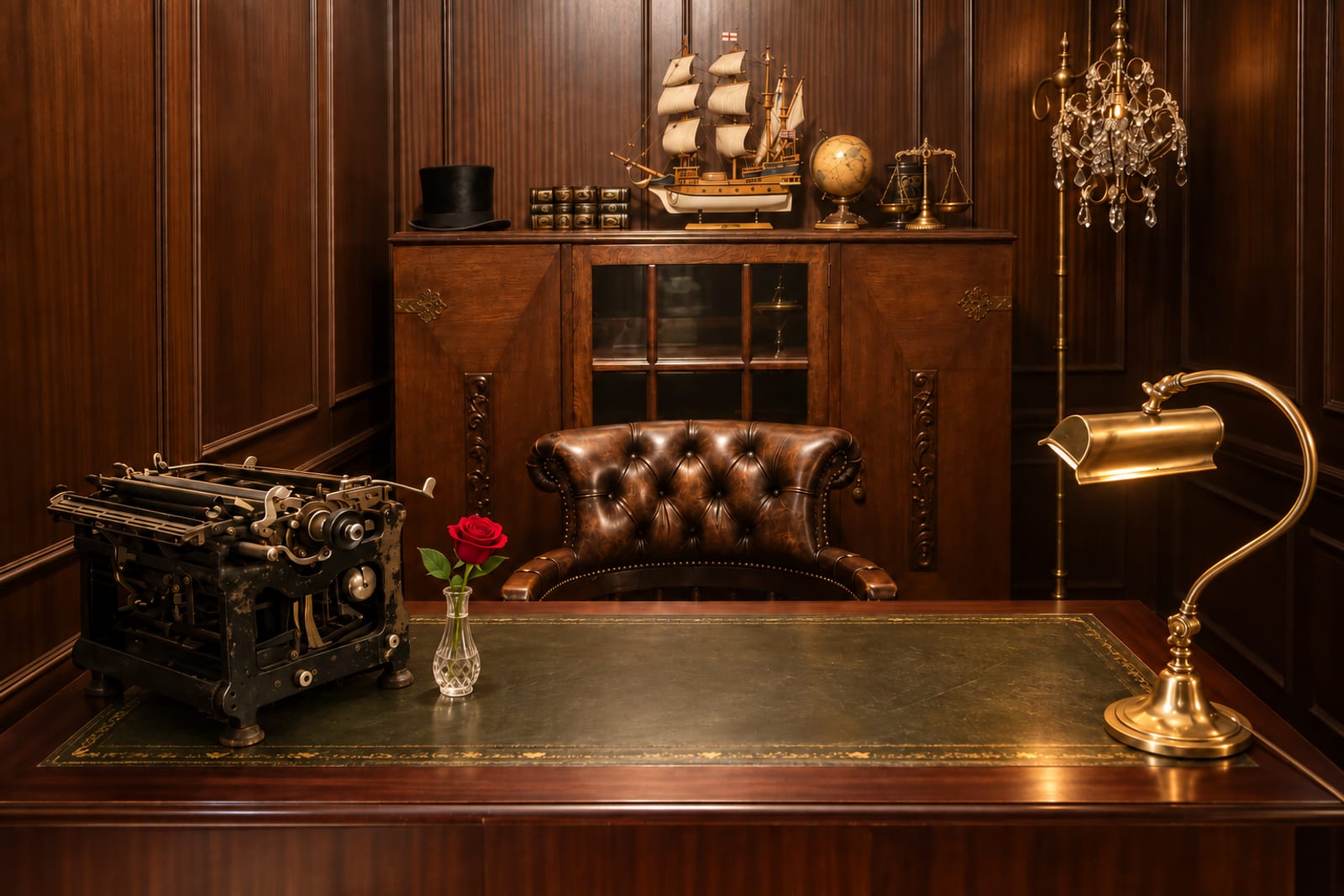
Layer the three lights with the light from the floor
Where a piece's date is recorded, that information is given separately from the description of its style.
Comparing the Manor's chandeliers
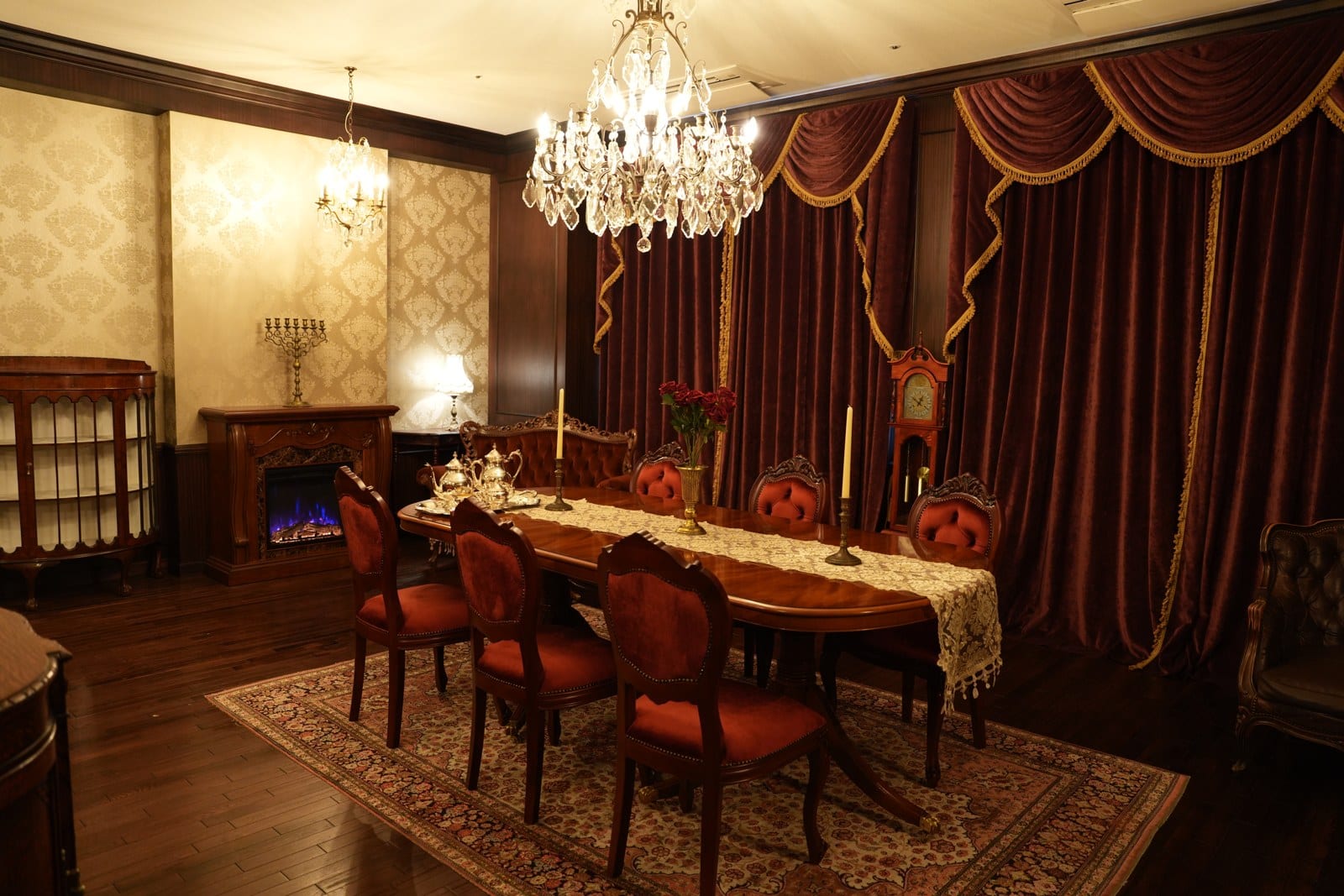
| Room | Light | What is recorded |
|---|---|---|
| Dining Room | Maria Theresa style, nine lights | A form originating in 18th-century Vienna. Date and provenance of the piece itself not recorded |
| Study | JOGLAR A0920, three lights | France, 1920s, crystal |
| Study floor | Bronze standing chandelier | 1,640 mm tall. Floor-standing form |
| Fireplace Room | JOGLAR A0822, six lights | France, 1920s |
| Bedroom | Majorelle, four lights | Bronze. Date not recorded |
| Bedroom wall | Crystal-drop bracket, four lights | Placed with a pair of CHATELLE Rococo-style brackets |
VIIn the Fireplace Room, six lights face the flame
The Fireplace Room has a JOGLAR A0822 six-light chandelier, French, 1920s. Beneath it, a wine-red velvet sofa; before it, a mantelpiece housing an electric flame. The still light of the ceiling and the flickering light near the floor face one another.
When a film is to be watched, the butler lowers the chandelier and leaves the fire. Even when the 120-inch motorised screen, which disappears when not in use, rises into place, the relationship between fireplace and six lights keeps the character of the room. Turning a light off is itself a way of knowing a chandelier's role.
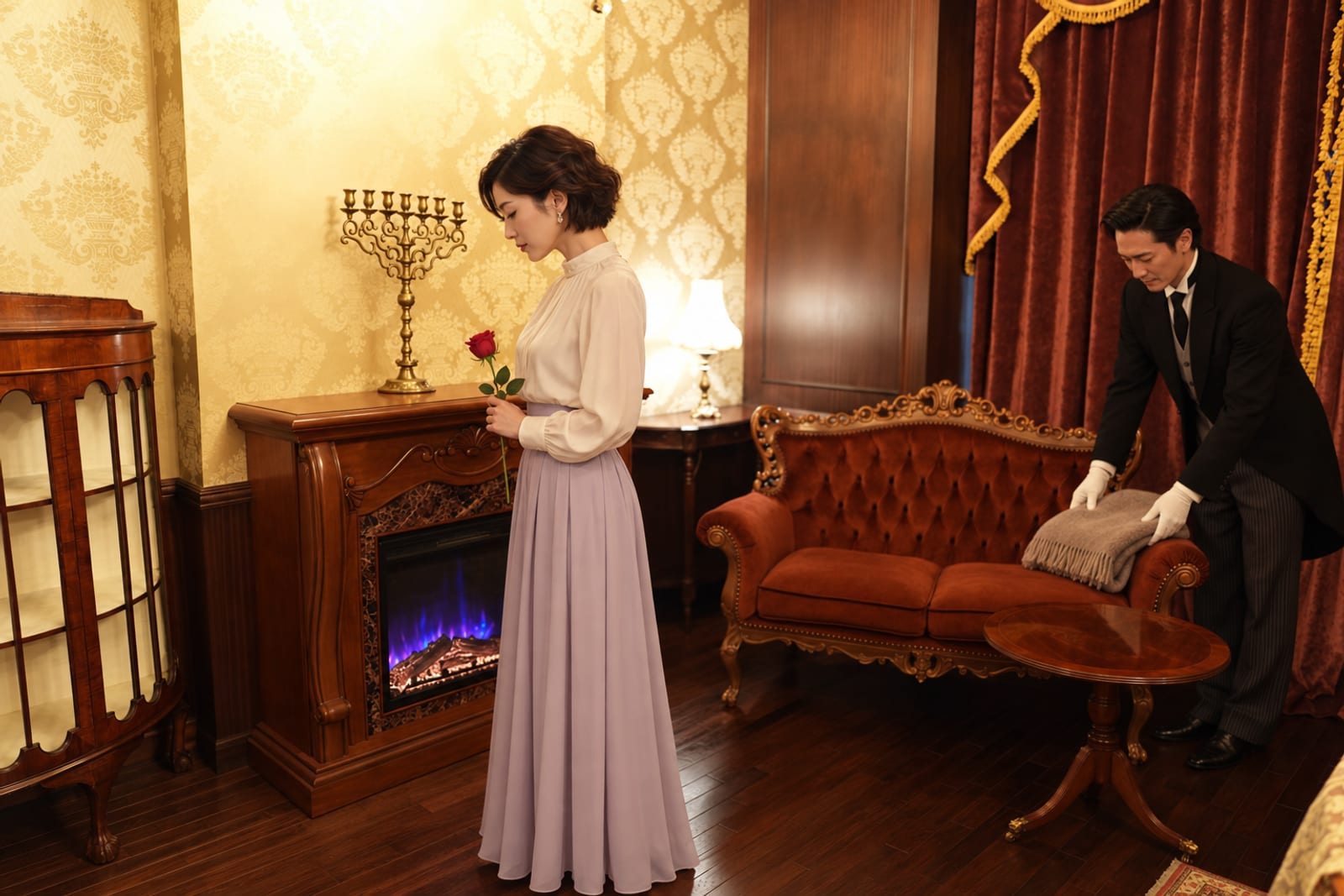
Choose the light that remains after the rest is turned off
The butler does not darken the room; he decides which light to leave.
VIIIn the Bedroom, bronze and four lights on the wall illuminate the fabric
On the Bedroom ceiling hangs a Majorelle four-light bronze chandelier. On the wall behind the headboard are a pair of Rococo-style wall brackets and a four-light crystal-drop bracket.
The carving of the bed is not lit too strongly; just enough for the gold embroidery and the swell of the capitonné to be seen. Male and female butlers alike set the light to the lady's eye and to how she means to spend her time. A chandelier reveals its role in each room not through the beauty of the single piece alone, but seen together with the wall lights, the fabric and the furniture.
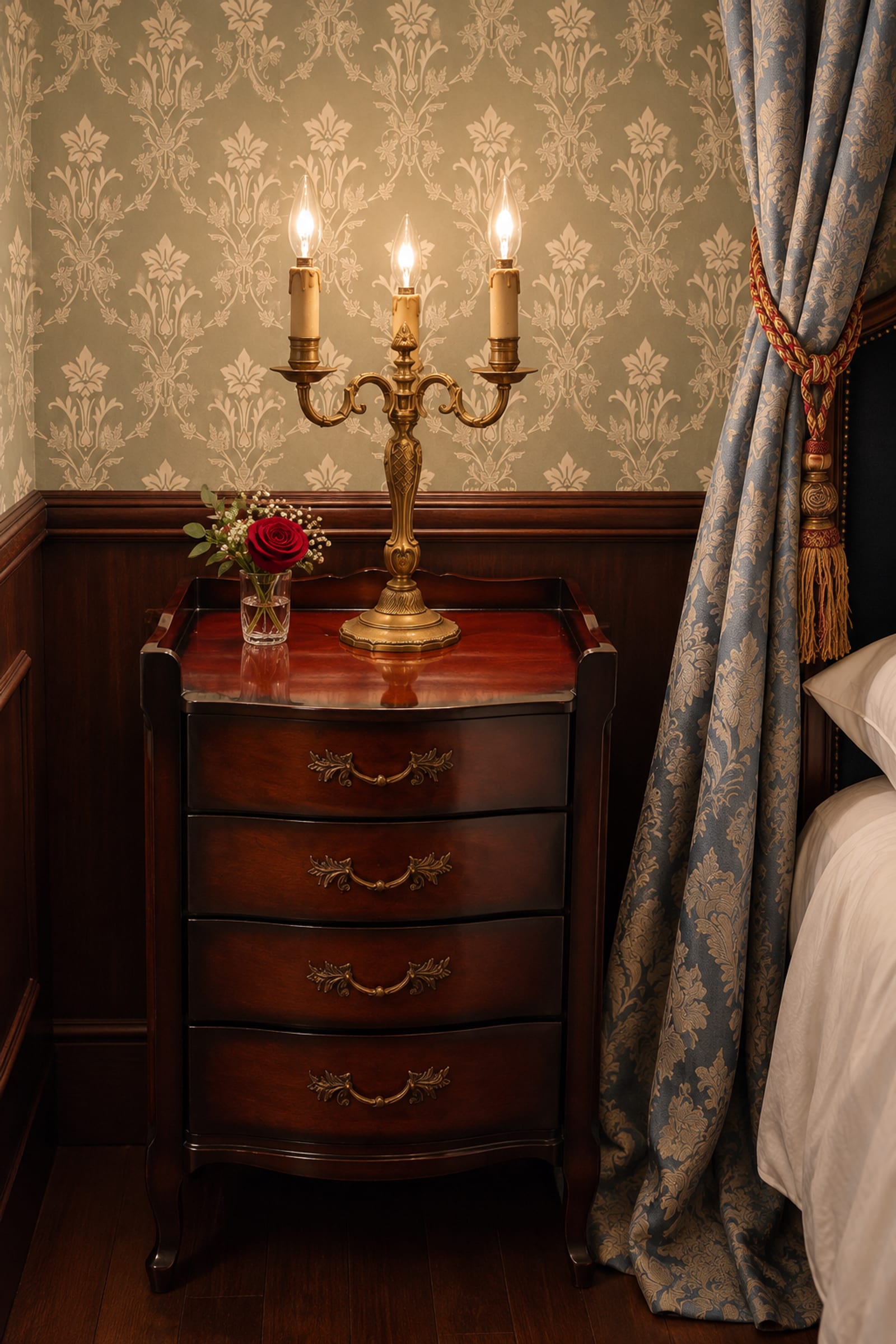
Ceiling and wall divide the shadows in the fabric
The weight of bronze and the fine reflections of crystal enfold the carving and fabric of the bedroom.
VIIIIn relation to what should a chandelier's height be judged?
The height of a chandelier is not decided by the distance from floor to fitting alone, but by its relation to the table beneath, the eye line of those seated, and how it appears on entering through the door. In the Dining Room, within a ceiling height of 3 m, the nine lights sit on the centre line of the table and read as a single composition from directly in front of the double doors.
Before showing the lady to the table, the butler checks the path that passes beneath the light and the view from each seat. It matters that the fitting does not block the eye and does not stack too directly above the candelabra and silver bell on the table. Though it is something to look up at, it is judged from where people sit.
In the Study, the three lights on the ceiling and the 1,640 mm floor-standing light stand at different heights. Rather than finishing with the ceiling, follow how the light falls on the leather of the desk, the arms of the chair and the books on the shelves, and you will see how the lighting supports the work of the room.
IXHow does the crystal's expression change between day and night?
The crystal's expression changes not because the fitting itself changes, but because the fineness of its reflections shifts with the light from the windows, the lights switched on and the lights left burning around it. By day, the clear outlines and the layering of the plates are easy to see; switched on, one light breaks into small points.
In the Fireplace Room, when the six lights are lowered and the electric flame left, the flicker at the lower level, rather than the brilliance of the ceiling, becomes the centre. Even when a film is shown, the butler does not simply darken the room; he chooses the light to leave while checking reflections in the mirrors, where people walk and how their hands can be seen.
On rainy days the daylight softens, and the outlines of bronze and glass are less hidden by strong reflections. Rather than treating that day's brightness as a flaw, look in turn at the form when unlit, the reflections when lit and the layering with other lights, and the same piece can be enjoyed in different expressions.
XWhy do we keep the name of a style and the date of manufacture apart?
The name of a style tells the lineage that a form and its ornament inherit; the date of manufacture tells when that particular piece was actually made. The Maria Theresa style of the Dining Room is a form originating in 18th-century Vienna, but for the Manor's piece no date or provenance is recorded.
By contrast, the JOGLAR A0920 in the Study is recorded as France, 1920s, three lights, crystal, and the JOGLAR A0822 in the Fireplace Room as France, 1920s, six lights.
The male and female butlers of the Japan Butler Association make clear what is known, and do not supply a date from appearances. On that basis, they describe richly the features that can be confirmed before your eyes: the plates sheathing the glass arms, the number of lights, the hanging point and the furniture around.
Four steps for looking at a chandelier
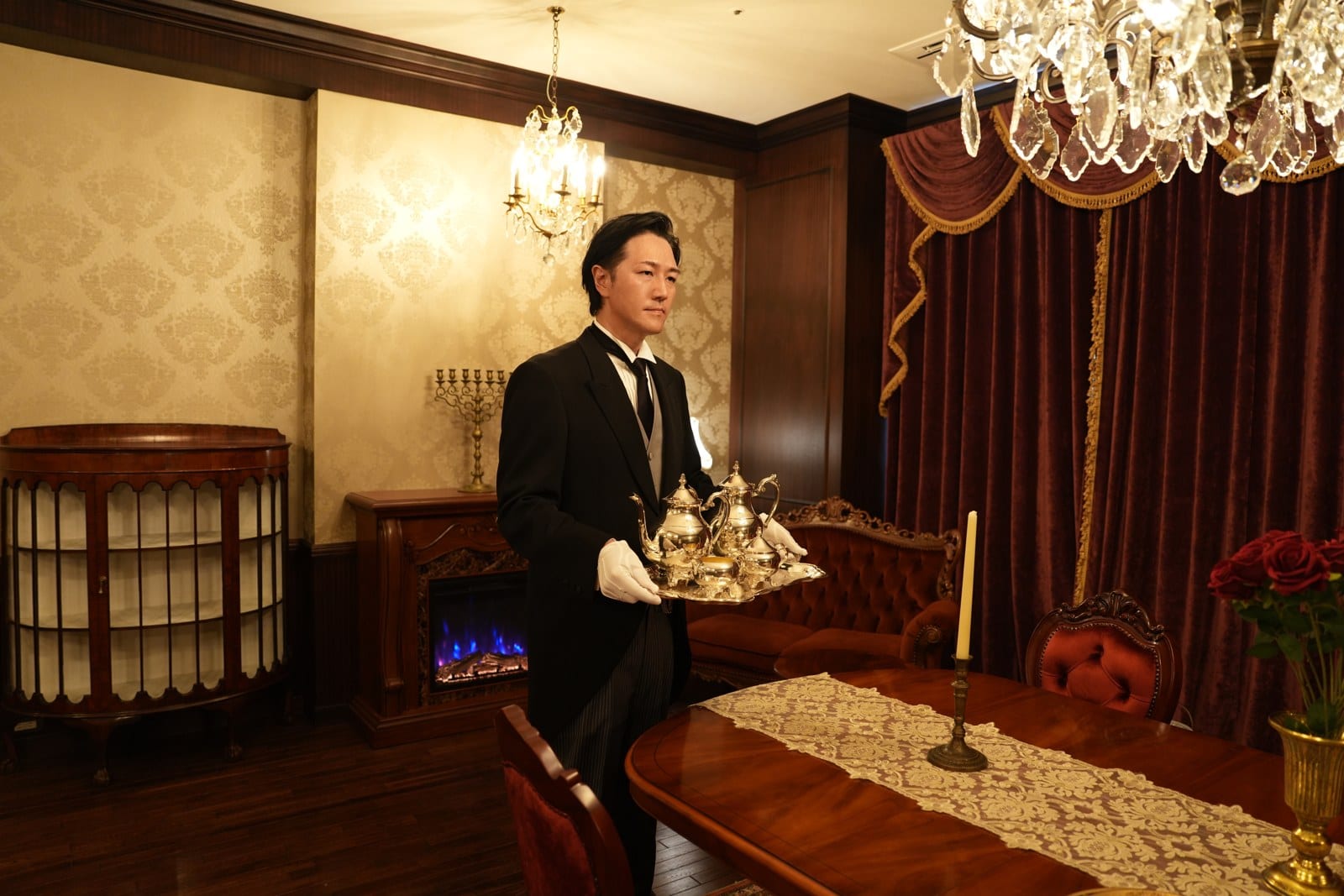
Count the lights
Consider the size of the room and how the light spreads over the furniture beneath.
Follow the arms
Identify the materials that form the branches: glass, crystal plates, bronze.
Look at the hanging point
See how the fitting is joined to the medallion or ceiling ornament.
See its relation to the other lights
Layer it with candelabra, wall lights and the fire, and read the light of the whole room.
The words for light, confirmed from the parts you can see
| Number of lights | The number of light sources at the tips of the branches. A clue for comparing how light spreads in a room |
|---|---|
| Arm | The part that extends like a branch from the centre and carries a light |
| Crystal plate | Ornament that sheathes a glass arm and divides the light into fine reflections |
| Medallion | A circular ornament around the hanging point that makes ceiling and light one composition |
| Bracket | A light fixed to the wall, illuminating from a height different from the ceiling |
Standards for looking at light
- Looking in turn at the outline when unlit and the reflections when lit
- Looking at the number of lights, the material, the hanging point and the furniture beneath together
- Keeping the origin of the style and the date of the actual piece apart
- The butler choosing the light to leave according to how the lady means to spend her time
Ways of looking to avoid
- Treating the origin of the style as the date of the Manor's piece
- Switching on every light at once with darkness as the only measure
Choose a room by the character of light you wish to see
The Dining Room, for style and centre line
Follow the nine-light Maria Theresa style, the acanthus medallion and the yew table downward, and see the axis that makes the front of the room.
Read more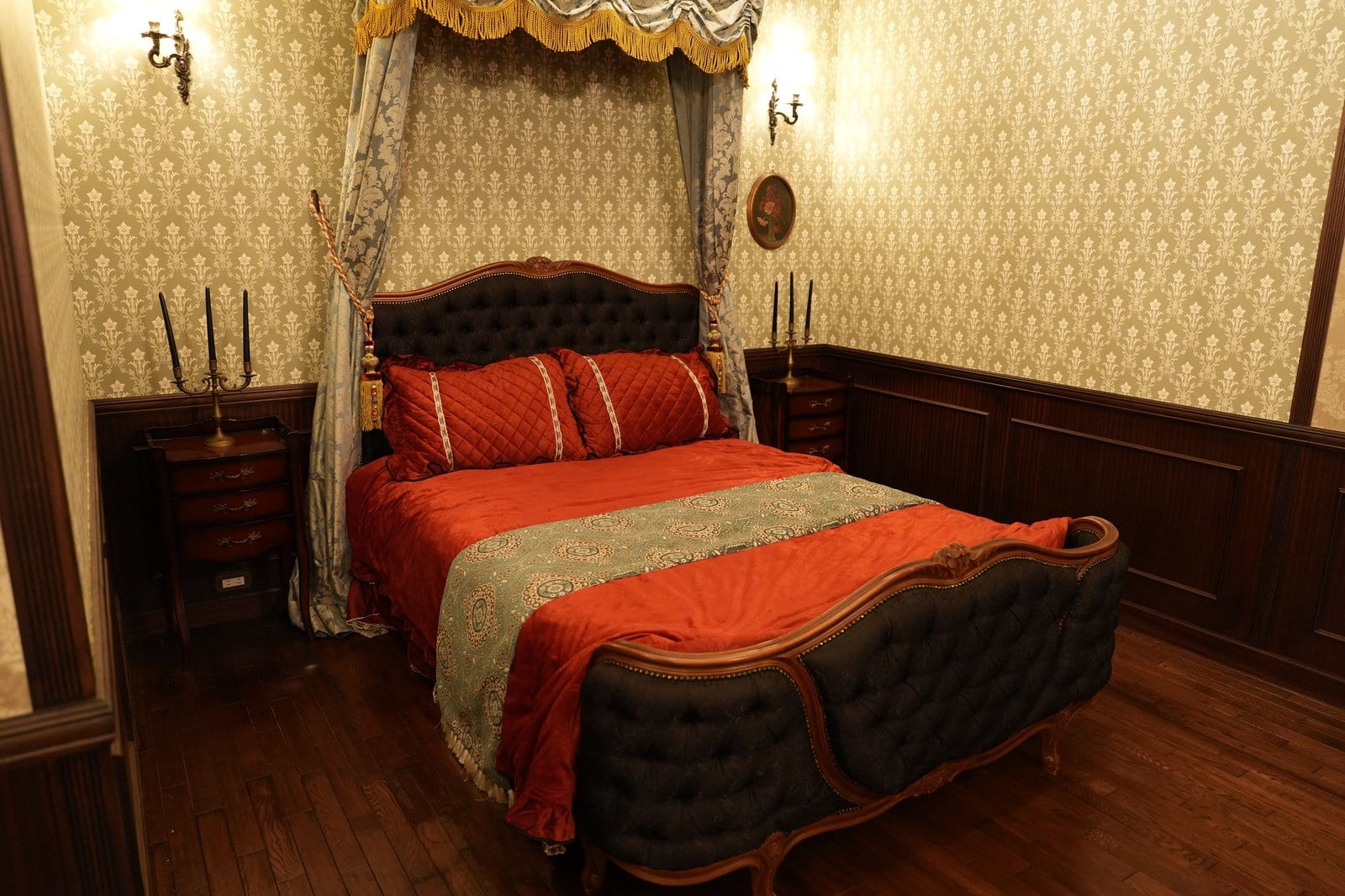
The Study, for two tiers of height
Compare the three lights on the ceiling with the floor-standing bronze light, and see how light reaches the desk, chair and bookcases from different heights.
Read more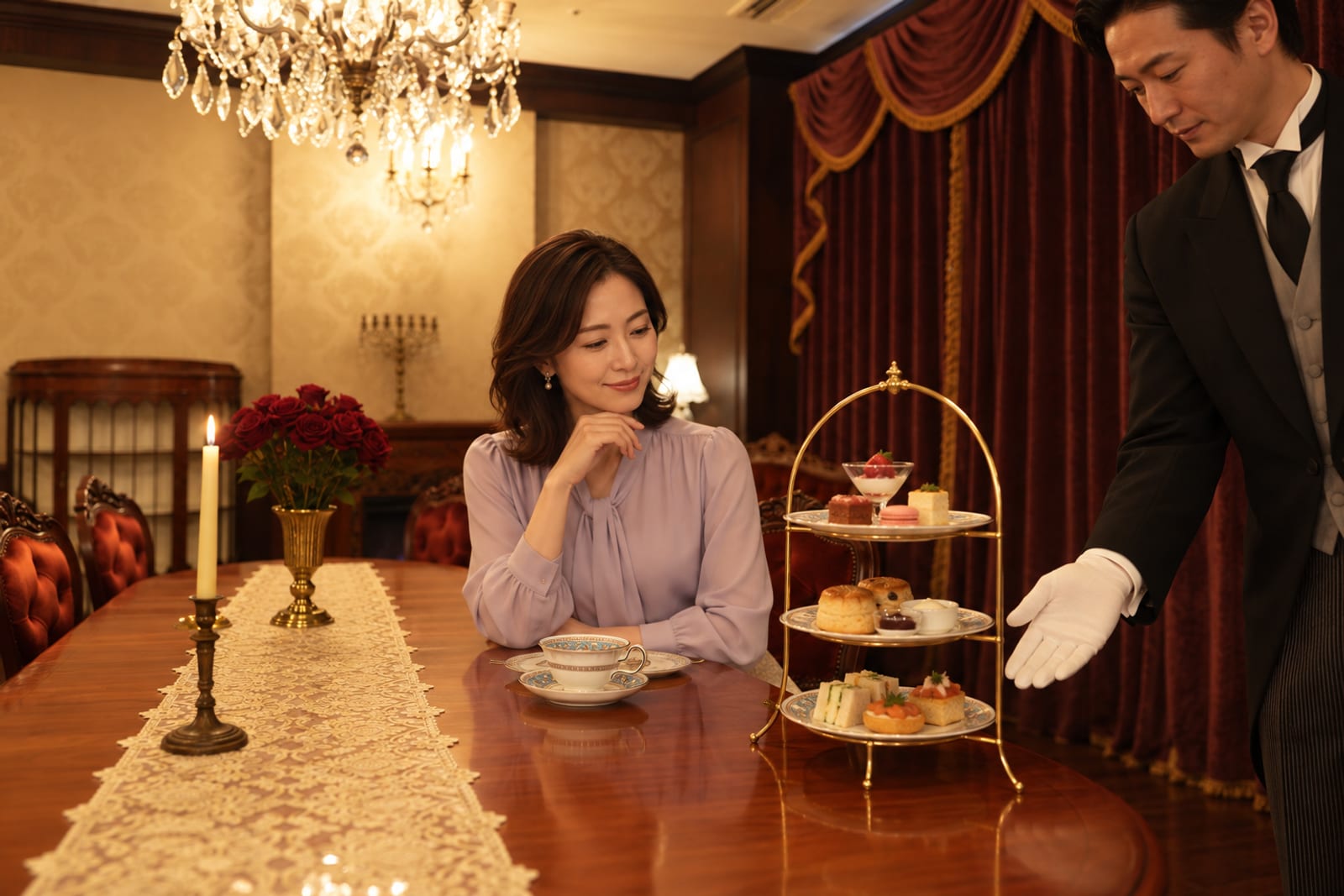
The Fireplace Room, for the contrast with the flame
Layer the French 1920s six lights with the low electric flame, and see which light is lit and which is left, as the butler judges.
Read moreQWas the Maria Theresa-style chandelier made in the 18th century?
The description of an 18th-century Viennese origin refers to the style, with its glass arms sheathed in crystal plates. In the Manor's piece, you can see the nine lights and the layering of the plates.
QHow many kinds of chandelier does the Manor have?
The nine lights of the Dining Room, the three lights and floor-standing light of the Study, the six lights of the Fireplace Room and the four lights of the Bedroom, as well as wall brackets. The number of lights and the materials differ from room to room.
QCan I spend time with the lights lowered?
Yes. The butler combines the chandelier, wall lights and the electric flame of the fireplace, setting the brightness to how you wish to spend your time.
QCan I ask a female butler to guide me?
Yes. Both male and female butlers are in residence. They will describe the origins of the lights and the differences between rooms.
QIs there anything to see when the lights are not lit?
Yes. The curves of the arms, the layering of the crystal plates and the medallion at the hanging point are easier to trace when unlit. The butler shows you the differences before and after lighting, in turn.
QFrom where is it easiest to see in a photograph?
First take in the whole from a position where the furniture beneath and the hanging point are both in frame. Then move a little closer and shift your eye to the detail of arms, plates and crystal drops, and you keep the relation to the room.
You may also wish to read
The Maria Theresa Nine-Light Chandelier
The Manor's piece described in detail, from the origins of the style to its form.
Read more
The Fireplace and Mantelpiece
An electric flame that faces the light from the ceiling.
Read more
How to Look at Antique Furniture
Reading the materials and styles that the light reveals.
Read more

Look up at the layers of light in the Manor.
A butler will describe each fitting in turn: its number of lights, material, style and role in the room.