
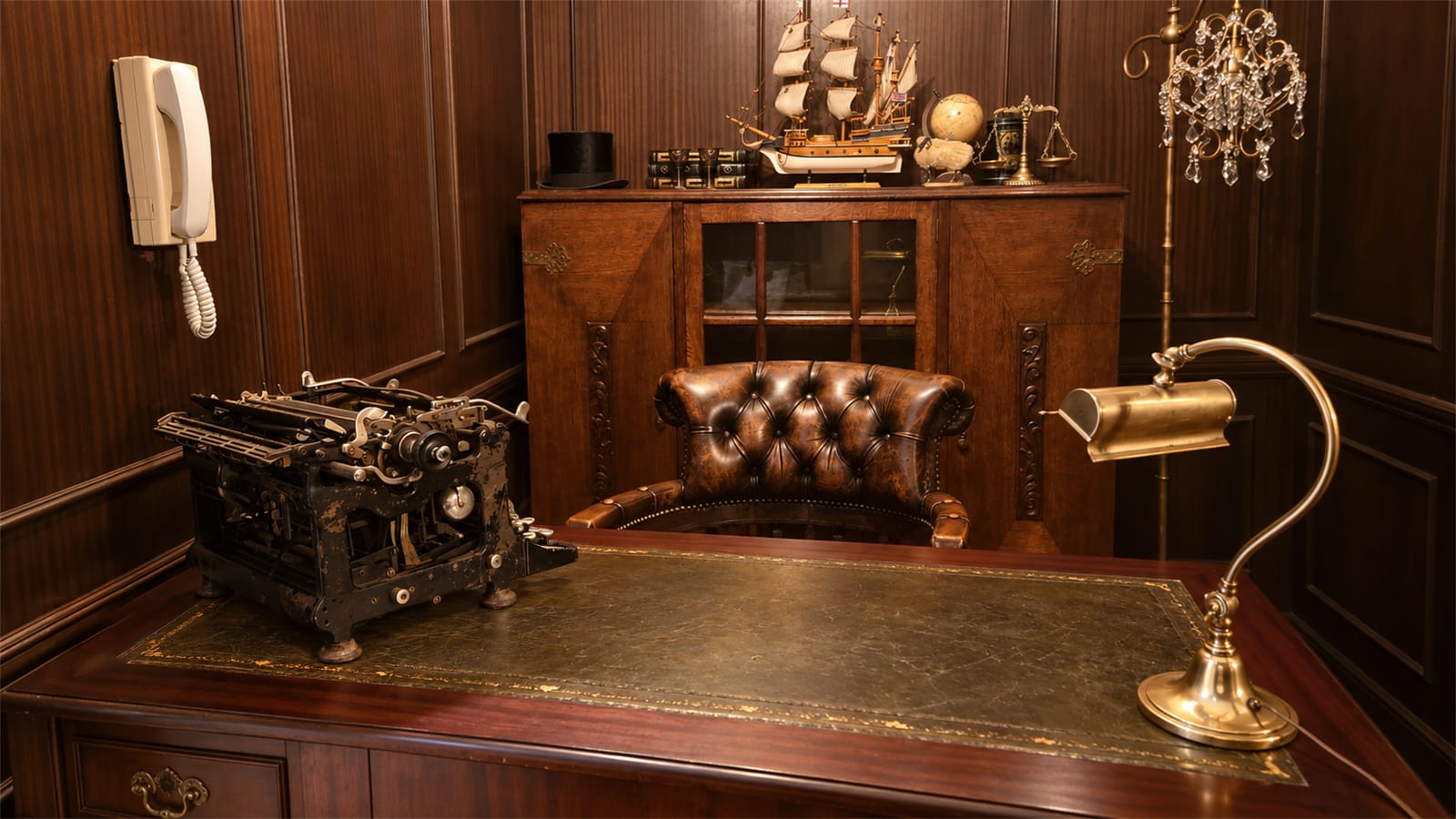
Twin Pedestal Desk
A leather top born of practicality, which became a mark of distinction.
About Twin Pedestal Desk
A twin pedestal desk is the classic form of English study desk, perfected in the eighteenth century, in which two banks of drawers (the pedestals) support the writing surface. The Manor's example is English, from the 1980s, in mahogany with a leather top, measuring W122 × D61 × H76.5 cm. The black full-grain leather chair paired with it follows the captain's chair form that originated in nineteenth-century England.

The period, materials and dimensions of the original, and the chair that accompanies it
| Name | Twin pedestal desk (leather top) |
|---|---|
| Period and origin | England, 1980s |
| Materials | Mahogany, leather-inset top |
| Dimensions | W122 × D61 × H76.5 cm |
| Form | Two banks of drawers supporting the top |
| Companion chair | Captain's chair form of nineteenth-century English origin, in black full-grain leather |
A twin pedestal desk is an English study desk whose two banks of drawers carry the top
A twin pedestal desk is a form of study desk in which the left and right drawer columns act as two plinths supporting the writing surface. It is the classic form perfected in eighteenth-century England; the Manor's original is English, from the 1980s, in mahogany with a leather top, measuring W122 × D61 × H76.5 cm.
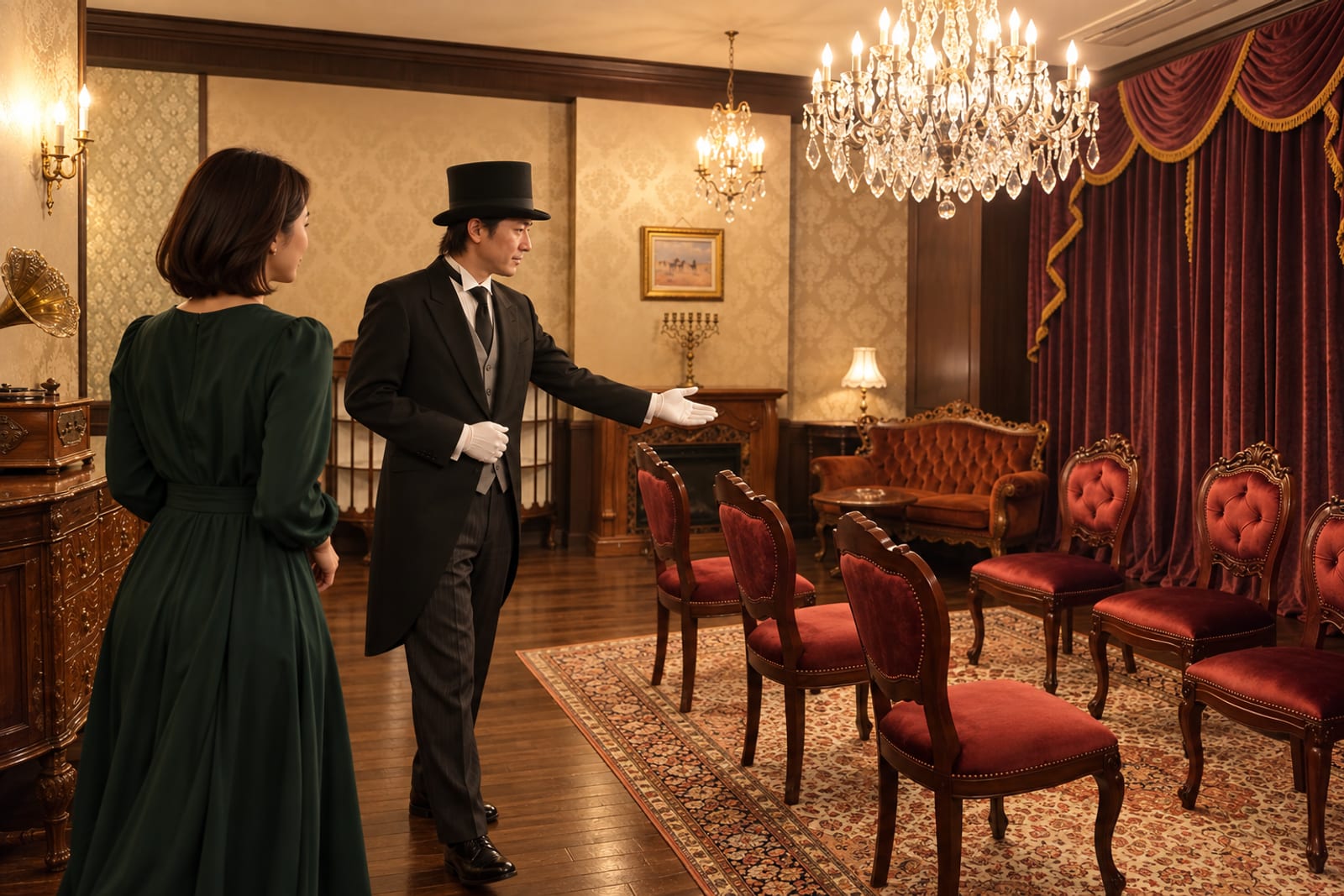
Standing before it, you see how the two pedestals give the desk its weight and leave a clear space for the chair in the centre. From the side you can read the 61 cm depth and the thickness of the top; from a few steps back, the composure of the full 122 cm width. Before reaching for anything on the desk, your butler clears the way and sets the chair, then presents the whole, the leather, and the drawer pedestals in turn.
The Bradley table in the Dining Room also stands on two pedestal legs, but here, as a study desk, the two pedestals hold drawers. The same words, twin pedestal, mean a column base that frees the legroom at a dining table, and two drawer banks that carry the top and the storage at a study desk. At Queen's Butler you can compare the two originals within the Manor.
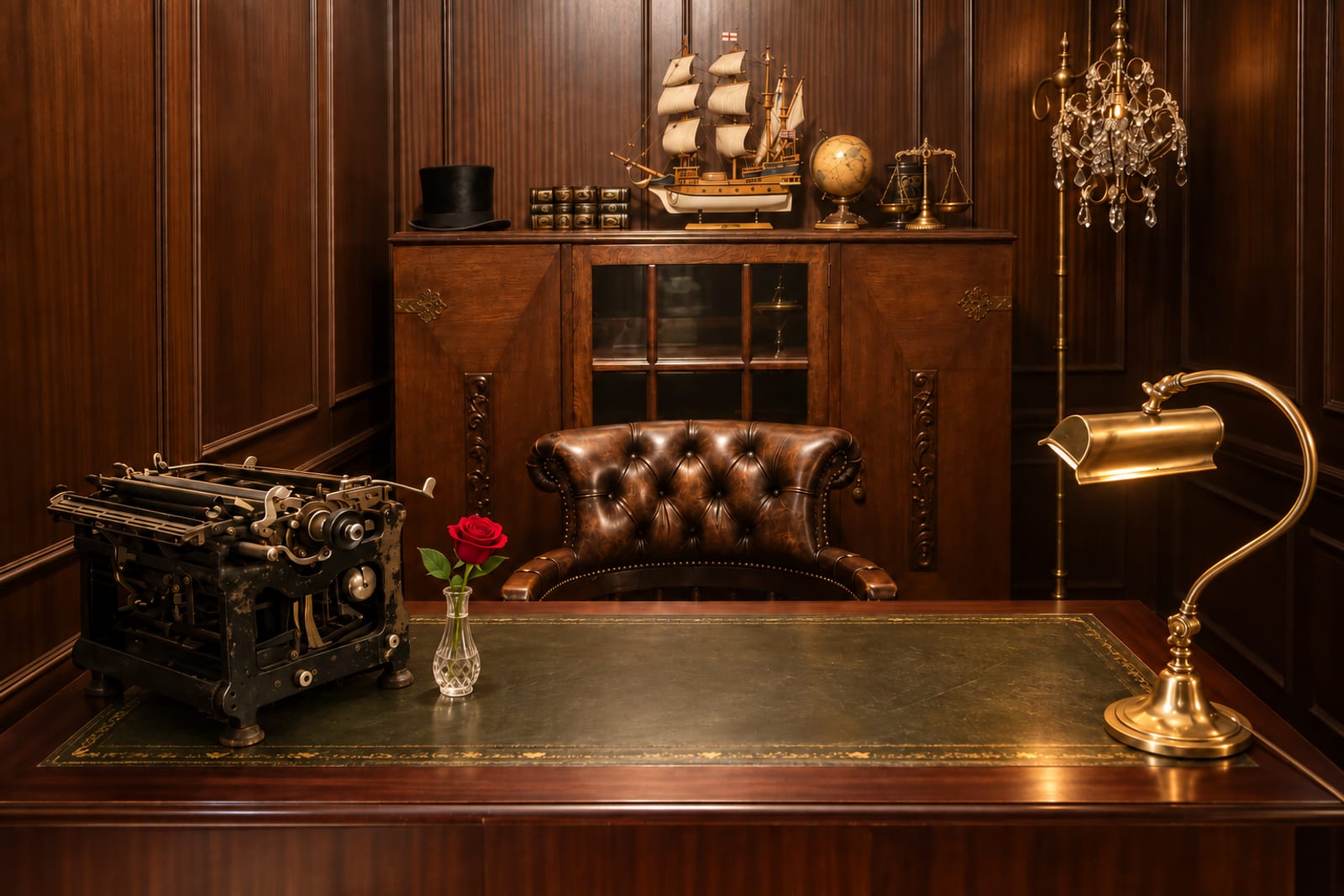
The leather top is a practical device that once let the quill glide
A leather-inset top arose from practical need: a quill catches on bare hardwood, so the writing surface was covered in leather. In the age of quill and inkwell it softened the resistance of the pen, and that practicality became, in time, the dignified face of the English study.
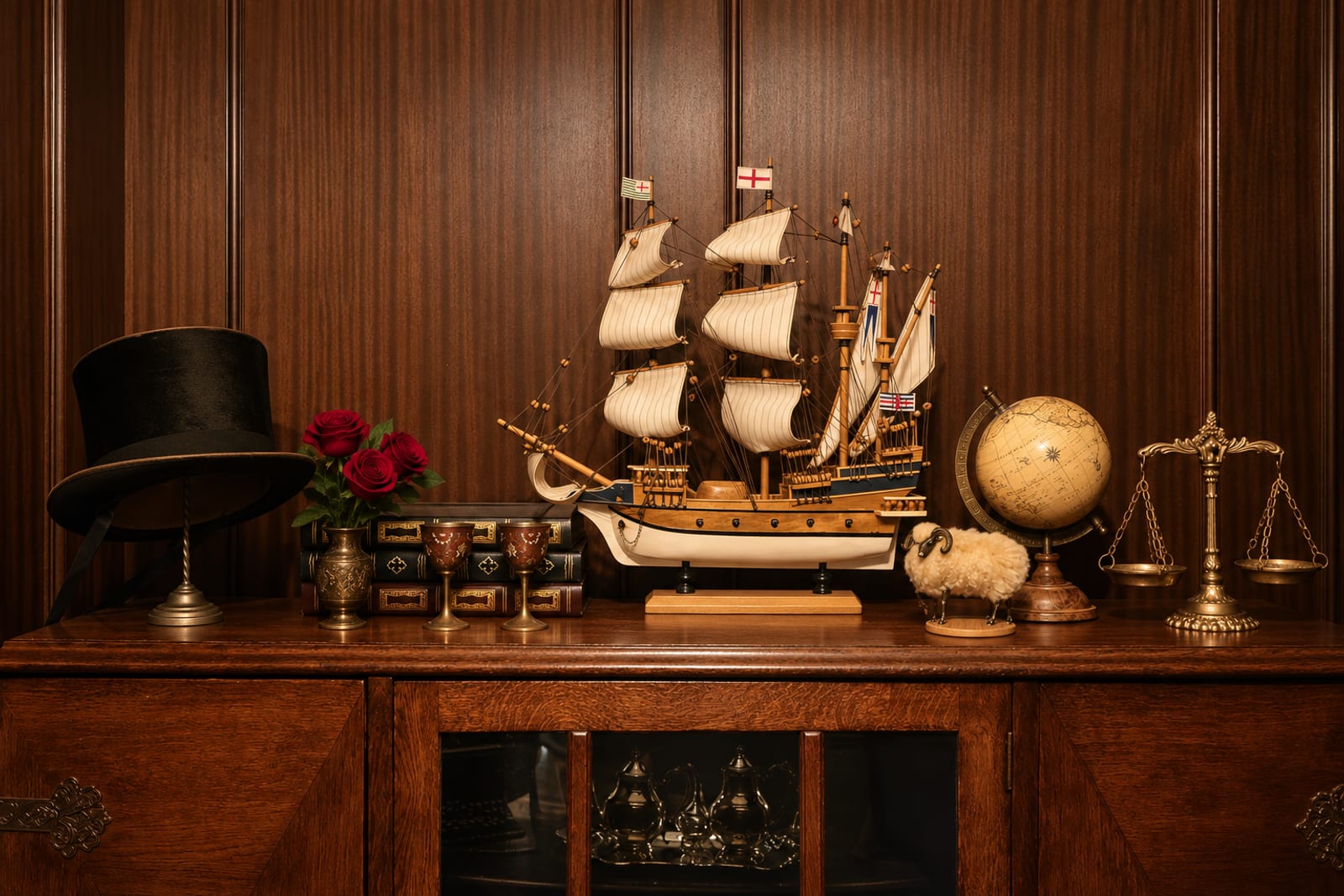
On the desk we keep an inkwell and quill, sealing wax and a seal, a brass-handled magnifying glass, a brass-framed hourglass, an antique globe, a pocket watch on its stand, an Oliver typewriter and leather-bound volumes. Your butler does not move the pieces all at once, but leads the eye by role: the letter, the seal, the hour, the instruments of reading.
For photographs, a raking light that keeps the grain of the leather says more of a desk than strong light thrown straight at it. Should you wish to write a letter, your butler prepares the working area and makes sure that ink and the pens you have brought do not touch the surroundings. With due respect for an old form, the desk may serve as the place to write a single letter today.
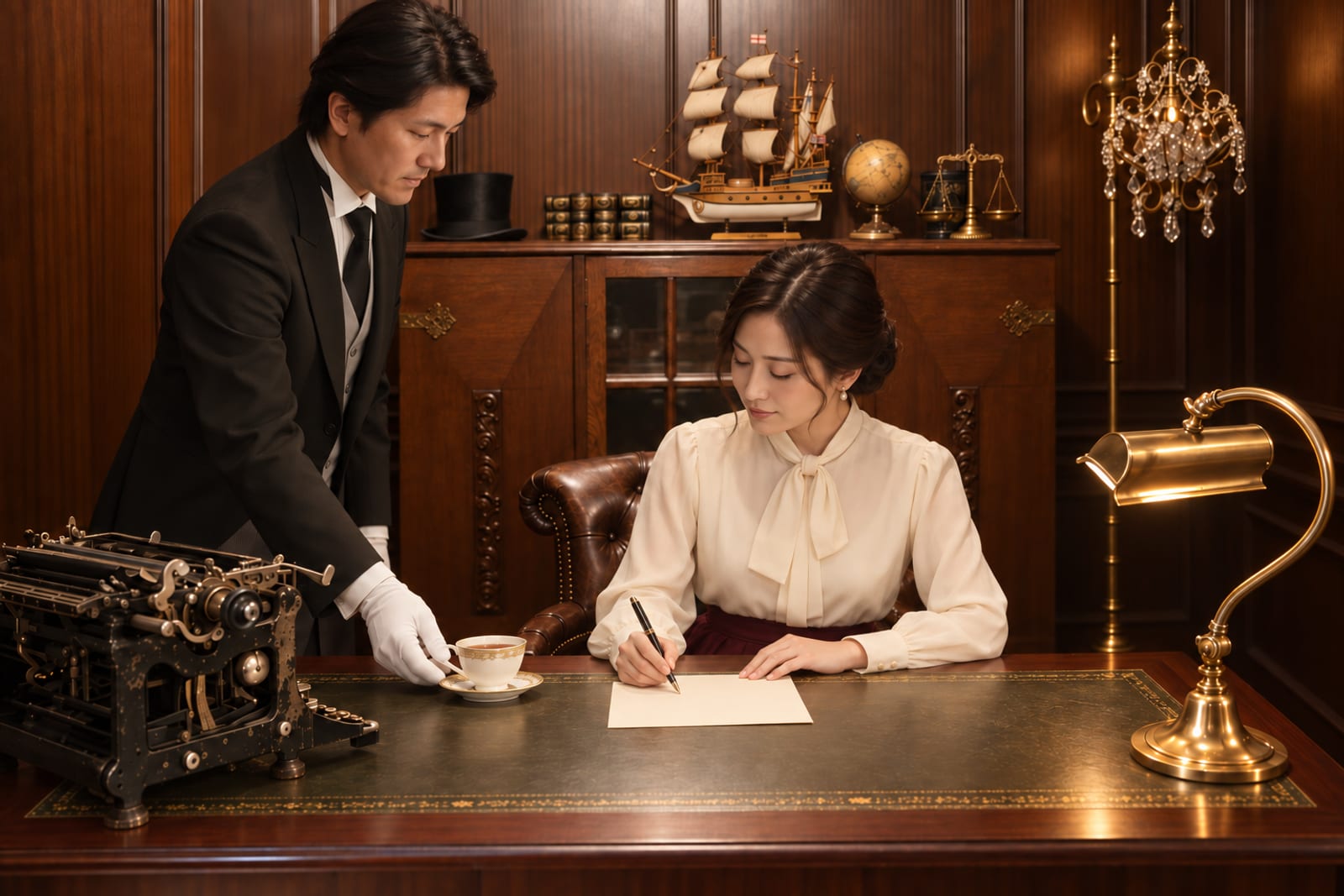
The captain's chair is a low-backed working chair made for a ship's master
A captain's chair combines a low back with curved arms in a single sweep, devised so that a captain could sit steady through the roll of the ship. Originating in nineteenth-century England and later a fixture of offices and studies, the form can be seen at the Manor in a black full-grain leather chair.
Your butler checks the condition of the black leather and its distance from the desk, then draws the chair straight back. The low back and curved arms show their single outline best from an angle rather than face on. When you take your seat, please do not drop your weight onto the arms; move to the centre on your butler's cue.
For reading, the desktop is cleared; for a letter, only what is needed is placed at the centre of the leather; for a portrait, the chair is angled so that the black of the leather and the colour of the mahogany stay distinct. Our butlers, women and men alike, vary the distance they draw the chair to suit your movement and your dress.
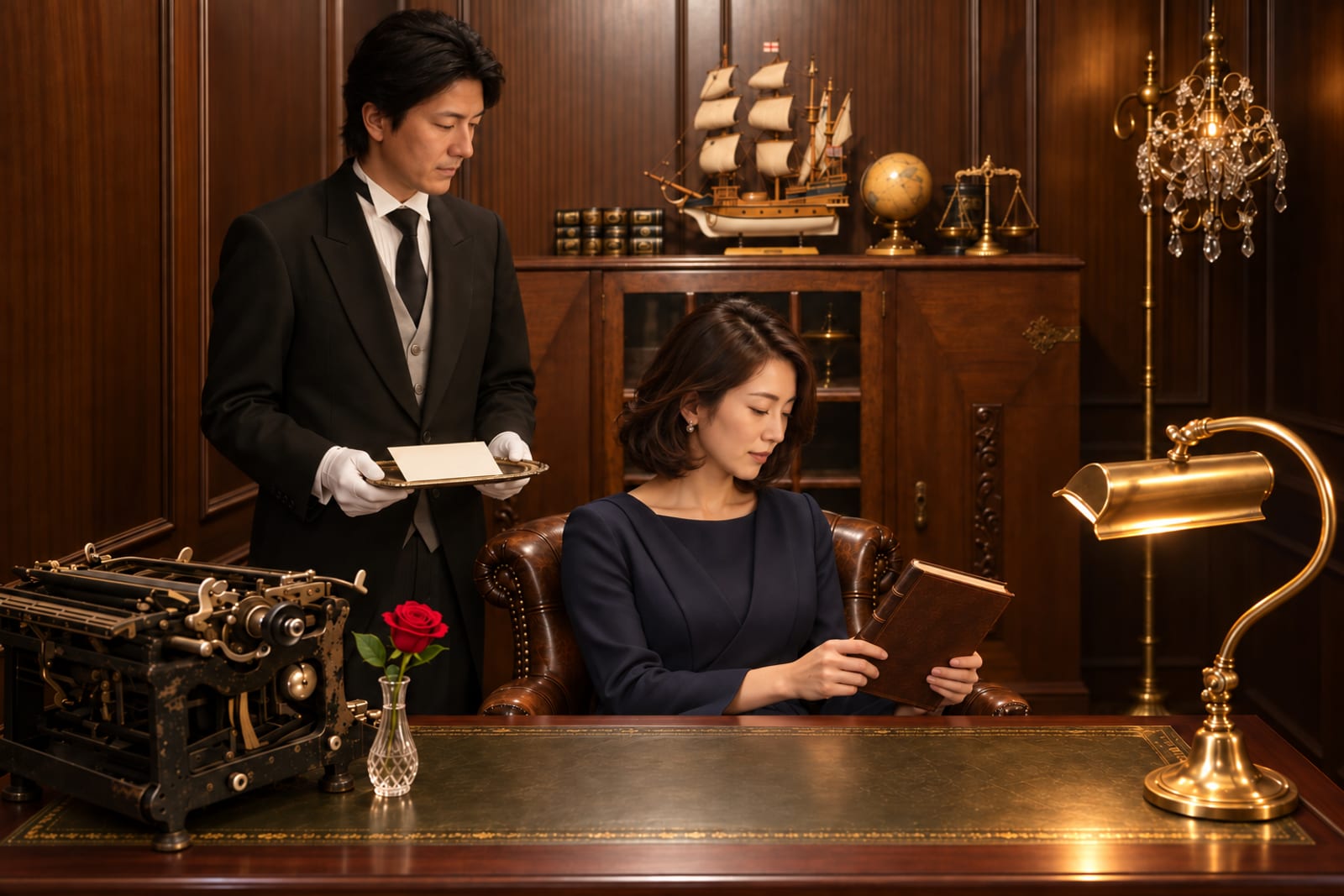
Five points of observation lead from the form to the story at your fingertips
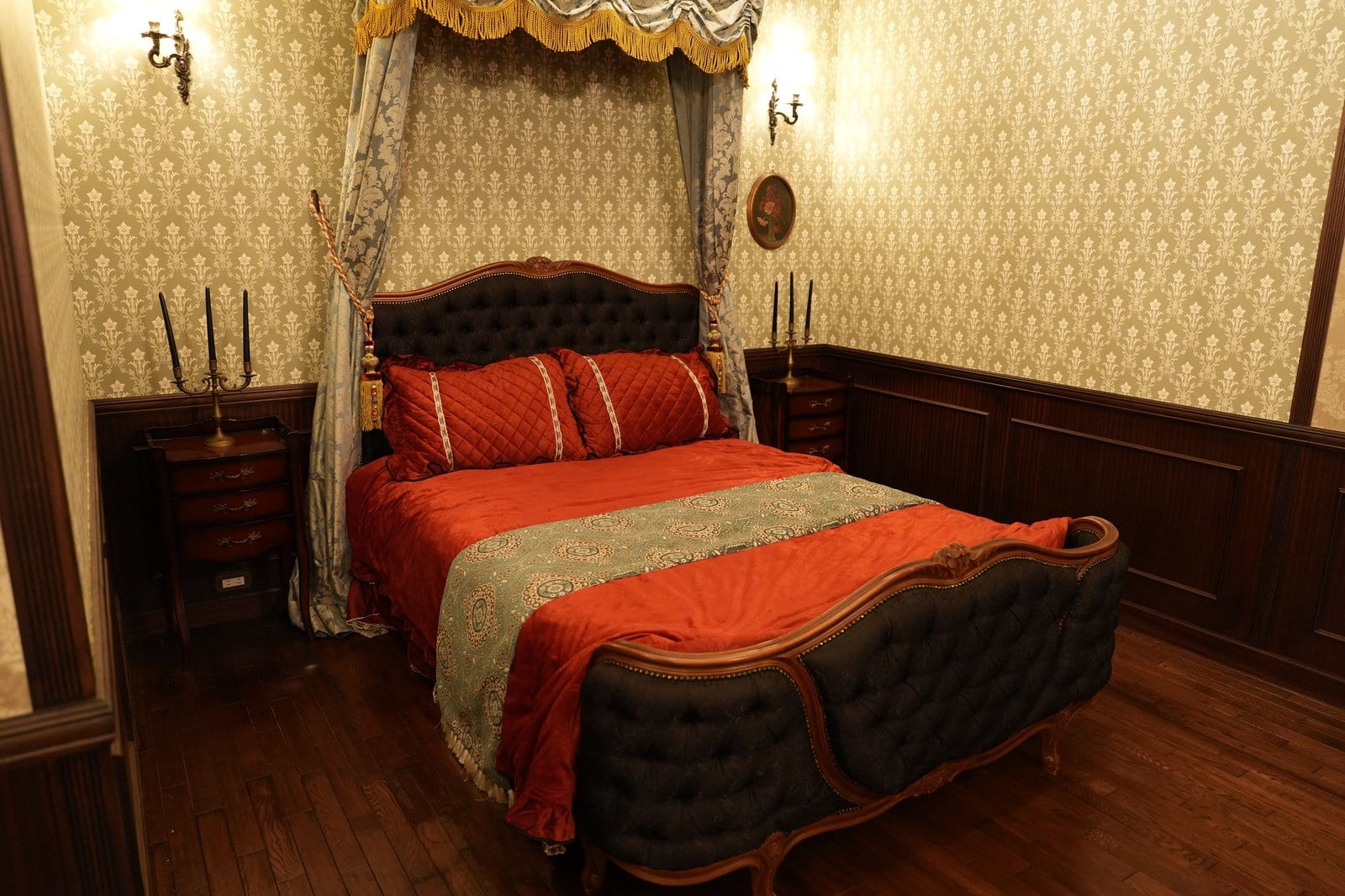
The two drawer pedestals
Seen from the front, the two pedestals reveal the form of a study desk whose top rests on its drawers.
Read more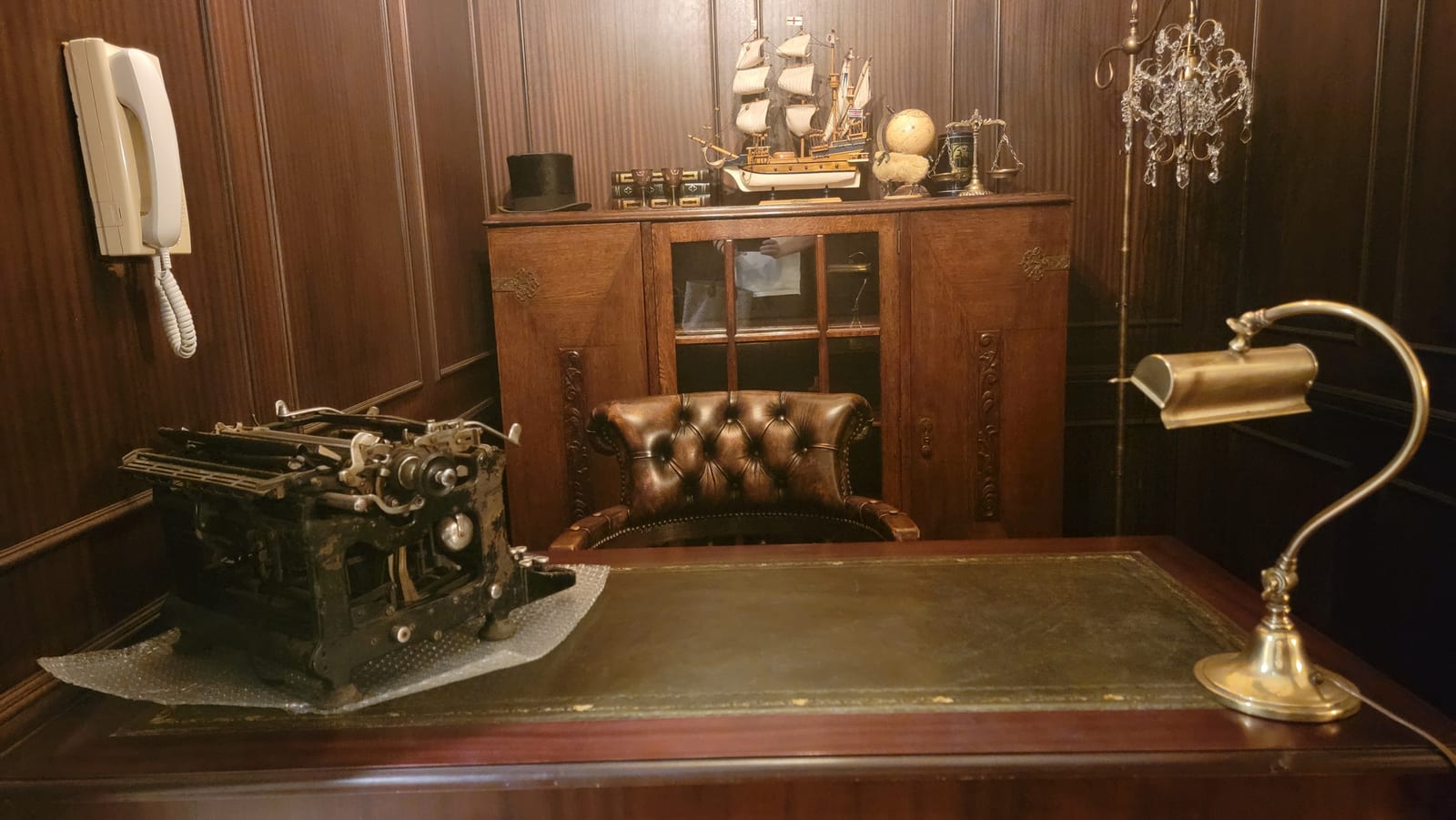
The leather top
Under a raking light, the surface shows the role of a material chosen to receive the quill.
Read more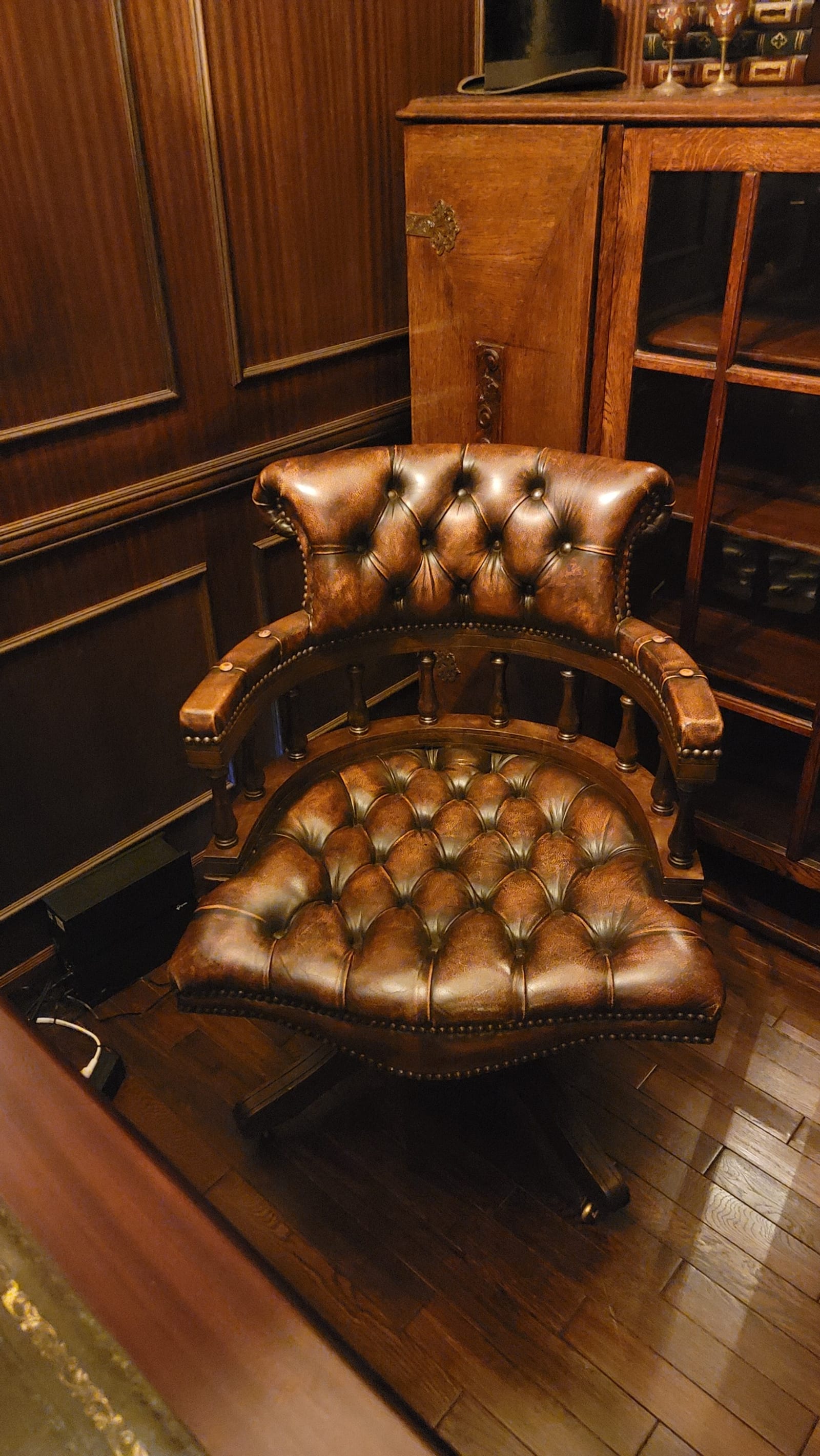
The black leather chair
From an angle, the low back and curved arms read as a single unbroken outline.
Read more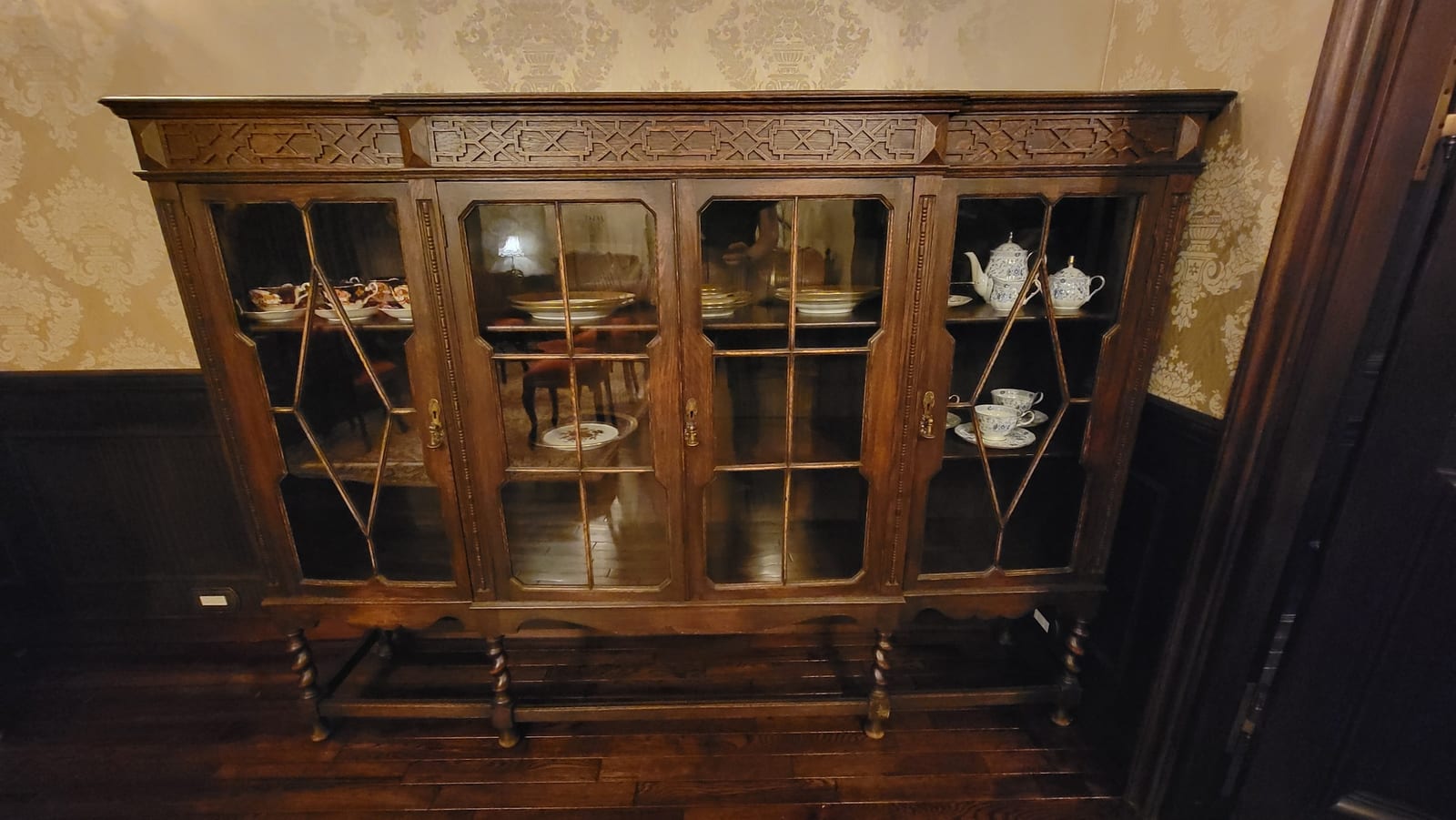
The instruments of writing
Quill, inkwell and sealing wax, taken in order of their roles, let you imagine a single letter.
Read more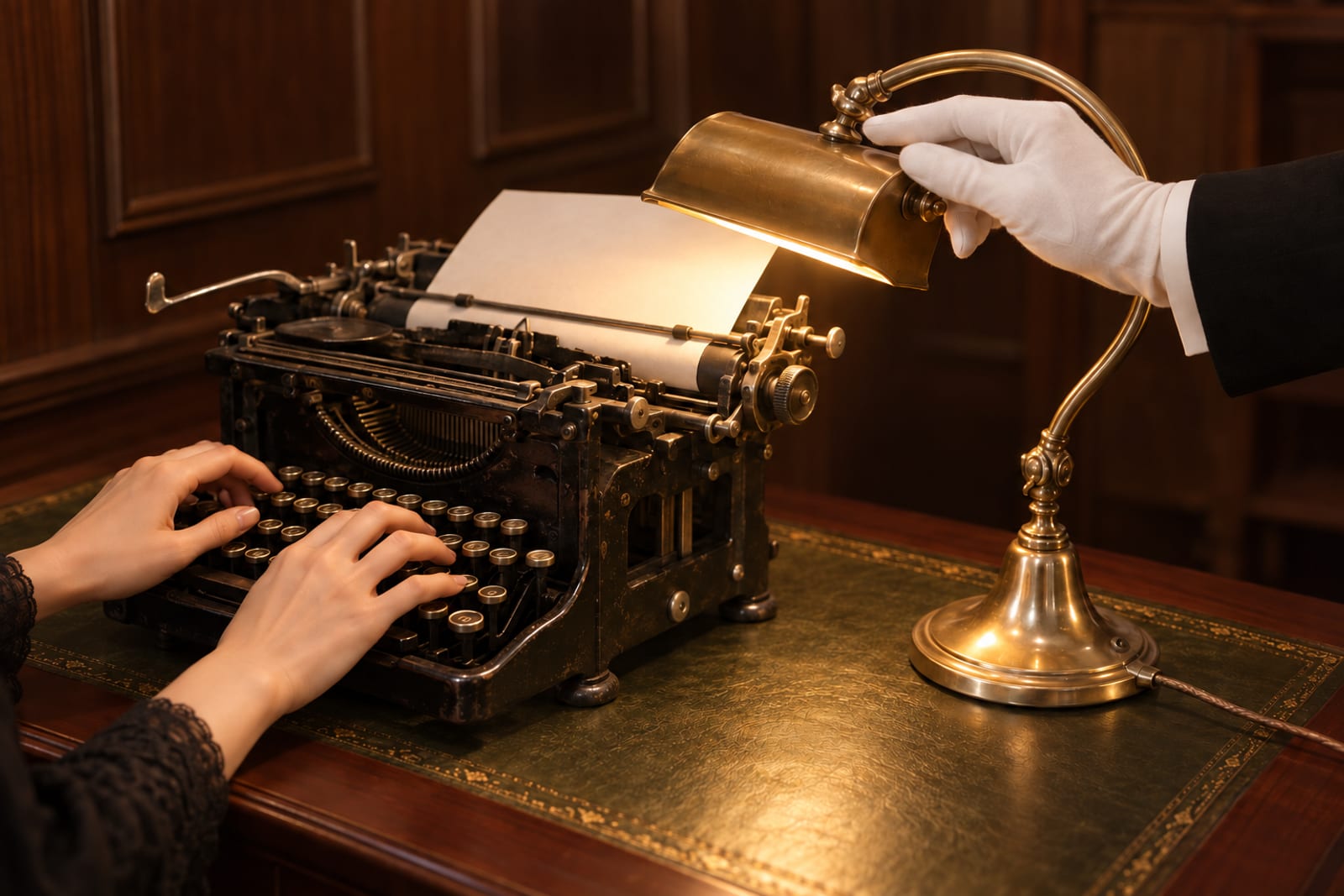
The instruments of time and discovery
The eye widens to the hourglass, the pocket watch, the magnifying glass, the globe and the typewriter.
Read moreYour butler prepares the time for a letter in five steps
Asking your purpose
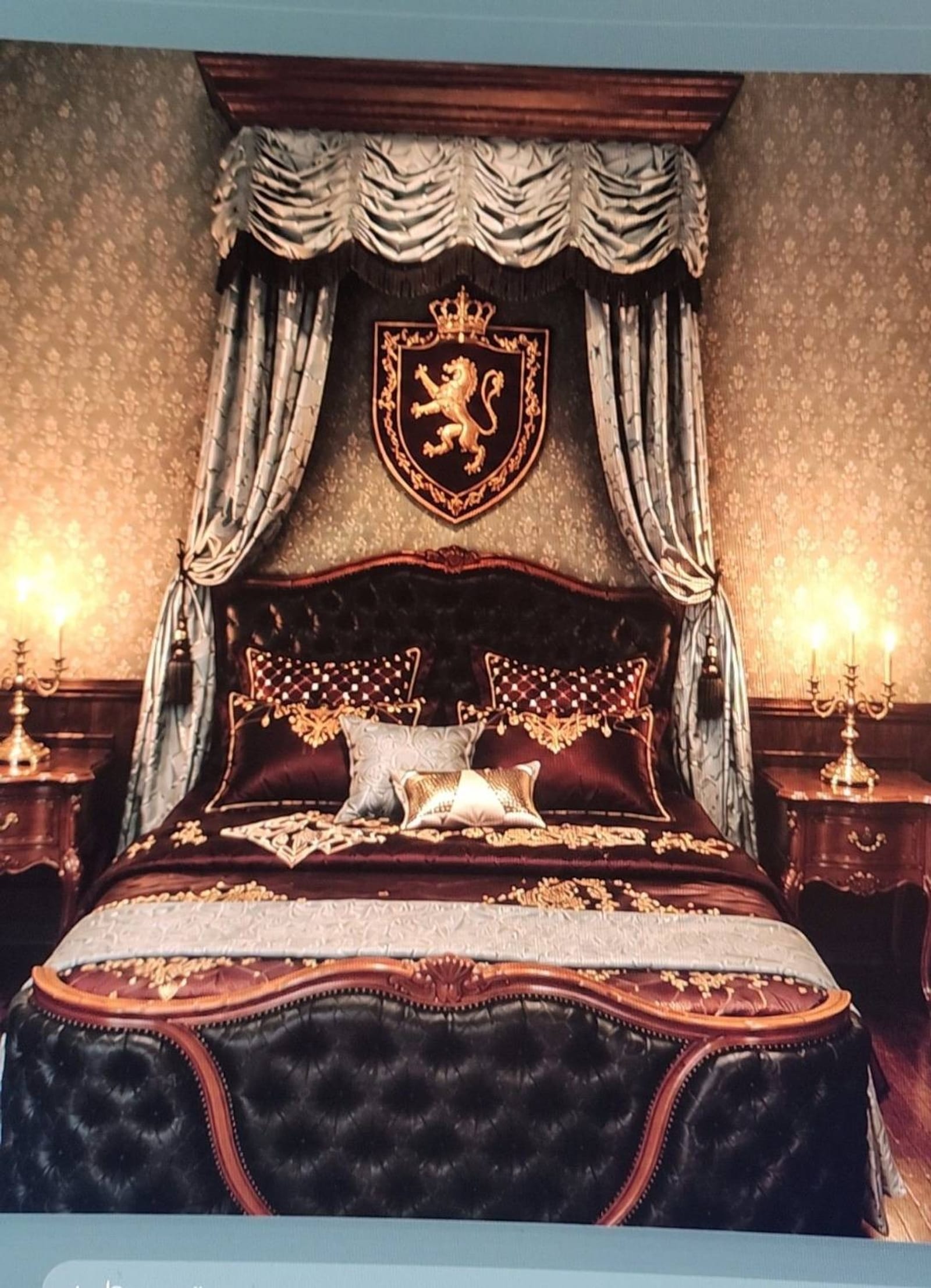
A letter, reading, a photograph, a conversation: we ask how you wish to spend your time at the desk.
Setting the desk
Only the pieces you need remain, leaving open space on the leather top.
Drawing the chair
We check the black leather and the arms, then draw the chair straight back in time with your movement.
Adjusting the light
Ceiling and floor lamps are set so that your hands and the grain of the leather can be seen.
Stepping back
Your butler waits within reach of your call, without disturbing the quiet.
What you may do in the study
- Letters or reading after your butler has checked the leather and the pieces you need and set the desk
- Commemorative photographs with the black leather chair drawn straight and set at the right distance from the desk
- Conversations or small meetings of up to six, arranged between the front of the desk, the guest corner and the passage
- Recordings with the desk, chair, quill and typewriter placed according to their roles
- Using your own pens and papers away from the old pieces, in a position that protects the leather
What we ask you to refrain from
- Opening the drawers on either side by yourself and moving what is kept inside
- Placing ink, hot vessels or wet objects directly on the leather top
- Moving the quill, sealing wax, magnifying glass, watch or typewriter without permission
- Dragging the black leather chair across the floor
- Using the study and its old furnishings while the Manor is left unattended
Shared terms make the difference between desk and chair easy to explain
| Twin pedestal | A form in which two plinths support the top. On a study desk, the left and right drawer columns serve as the plinths |
|---|---|
| Leather top | A writing surface inset with leather. It arose from the practical need to let the quill glide smoothly |
| Mahogany | The timber of the Manor's English study desk from the 1980s |
| Captain's chair | A ship master's chair form of nineteenth-century English origin, with a low back and curved arms in a single sweep. The Manor's original is in black full-grain leather |
| Conduct in the study | The butler's movements: setting the desk, drawing the chair straight, never disturbing your writing, and withdrawing to a distance within reach of your call |
QMay I actually use the desk?
Your butler checks the leather top and the desktop and sets them for your purpose, whether a letter, reading or a meeting. Please do not move the drawers or the small pieces yourself; simply ask your butler.
QIs it an eighteenth-century desk?
The Manor's original is English, from the 1980s. It is the twin pedestal form itself that was perfected in England in the eighteenth century.
QIs the leather top merely decorative?
It is a device born of practical need, to stop the quill catching on hard wood. At the Manor we show the leather under a raking light before moving on to the act of writing a letter.
QMay I sit in the captain's chair?
Your butler checks the black leather and its distance from the desk before inviting you to sit. Please do not drop your weight onto the arms; take your seat on the cue of the butler drawing the chair.
QHow many people can use the study?
The Manor accommodates up to six. Your butler divides the front of the desk, the guest corner and the passage according to your purpose and arranges comfortable positions. For conversations and photographs, not everyone gathers around the desk; the speakers, those waiting and the equipment are given separate places.
QMay a female butler show me the desk?
Both female and male butlers serve at the Manor. If you have a preference, please let us know when you book.
From the desk, the eye moves slowly to the black leather chair, the two tiers of light, the armour at the entrance and the guest corner opposite
You may also wish to read

A letter, at this desk.
Tell us what you have in mind, and your butler will attend to it.