
The Tuxedo
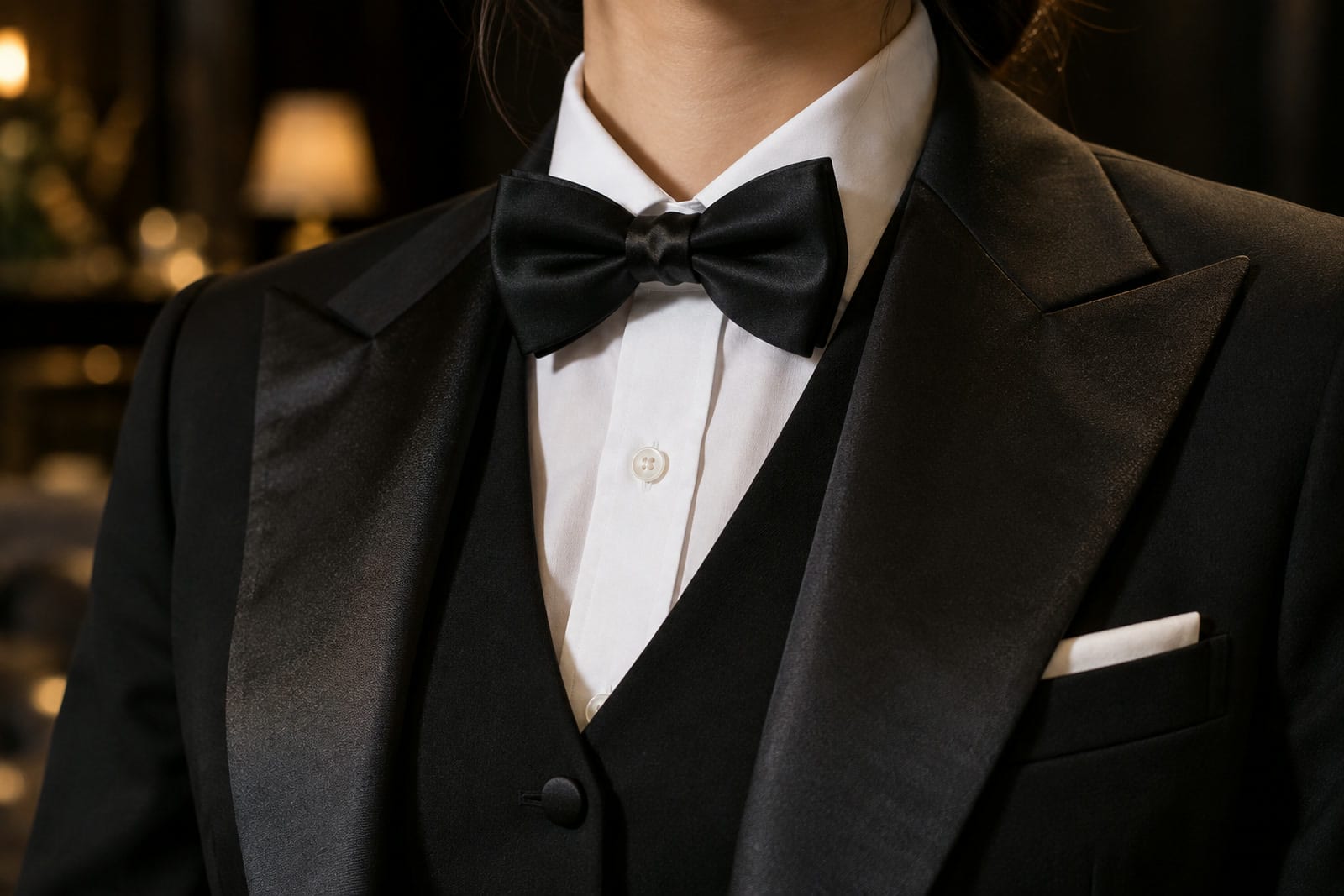
Evening dress, tied with a black bow tie.
About The Tuxedo
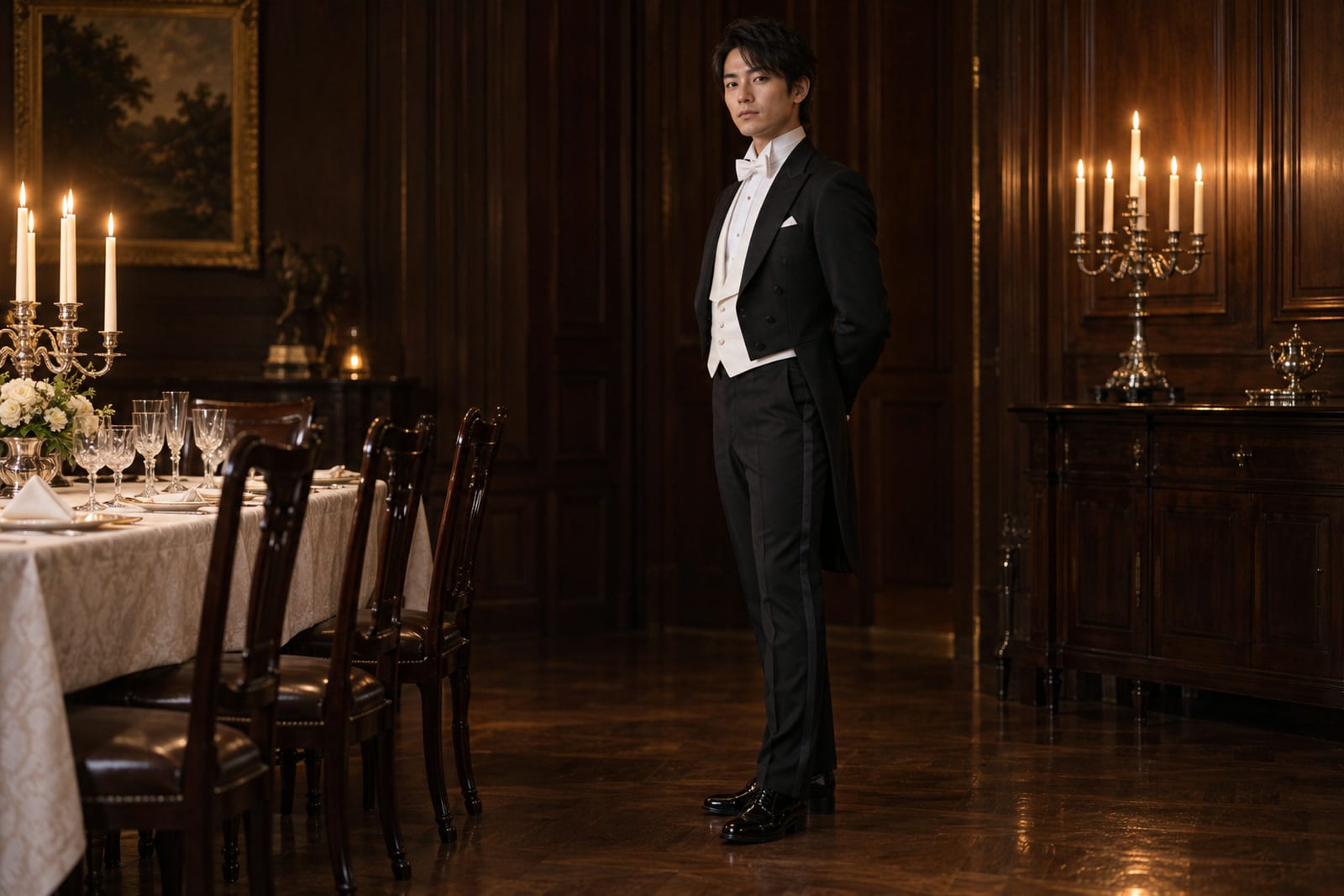
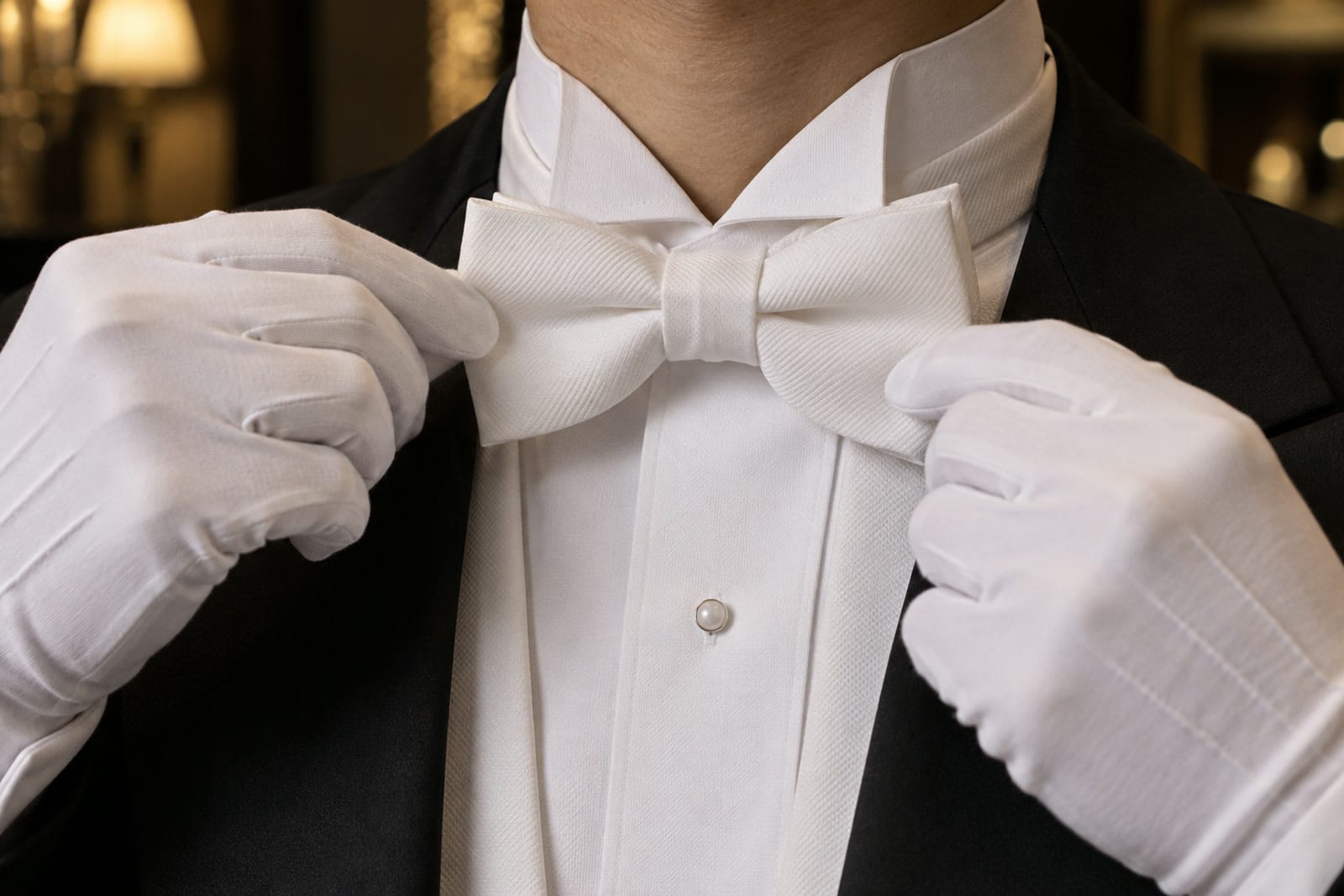
The tuxedo is the dress a butler pairs with a black bow tie for evening service. A black bow tie means a tuxedo; a white one, a tailcoat — this contrast is the key to telling the two forms of evening dress apart. The butler dresses according to the hour and the occasion.
A black bow tie marks evening dress
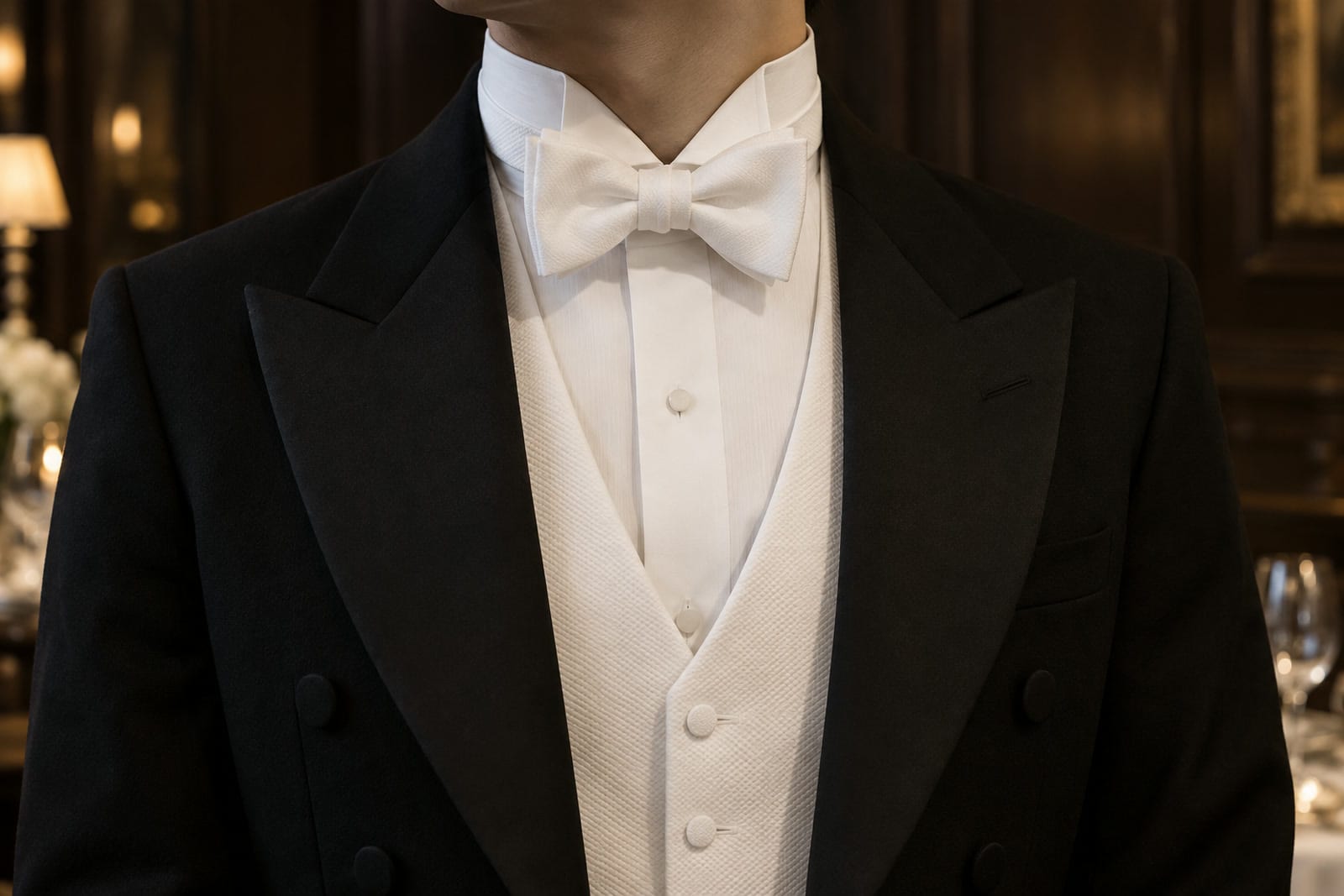
Evening dress is the form in which a butler reflects the hour and the duty in dress, in order to serve the master of the house after dark. As the lights soften, the mark by which to know a tuxedo is the black bow tie. Set beside the white tie of the tailcoat, the two forms of dress used on the same evening are told apart by colour.
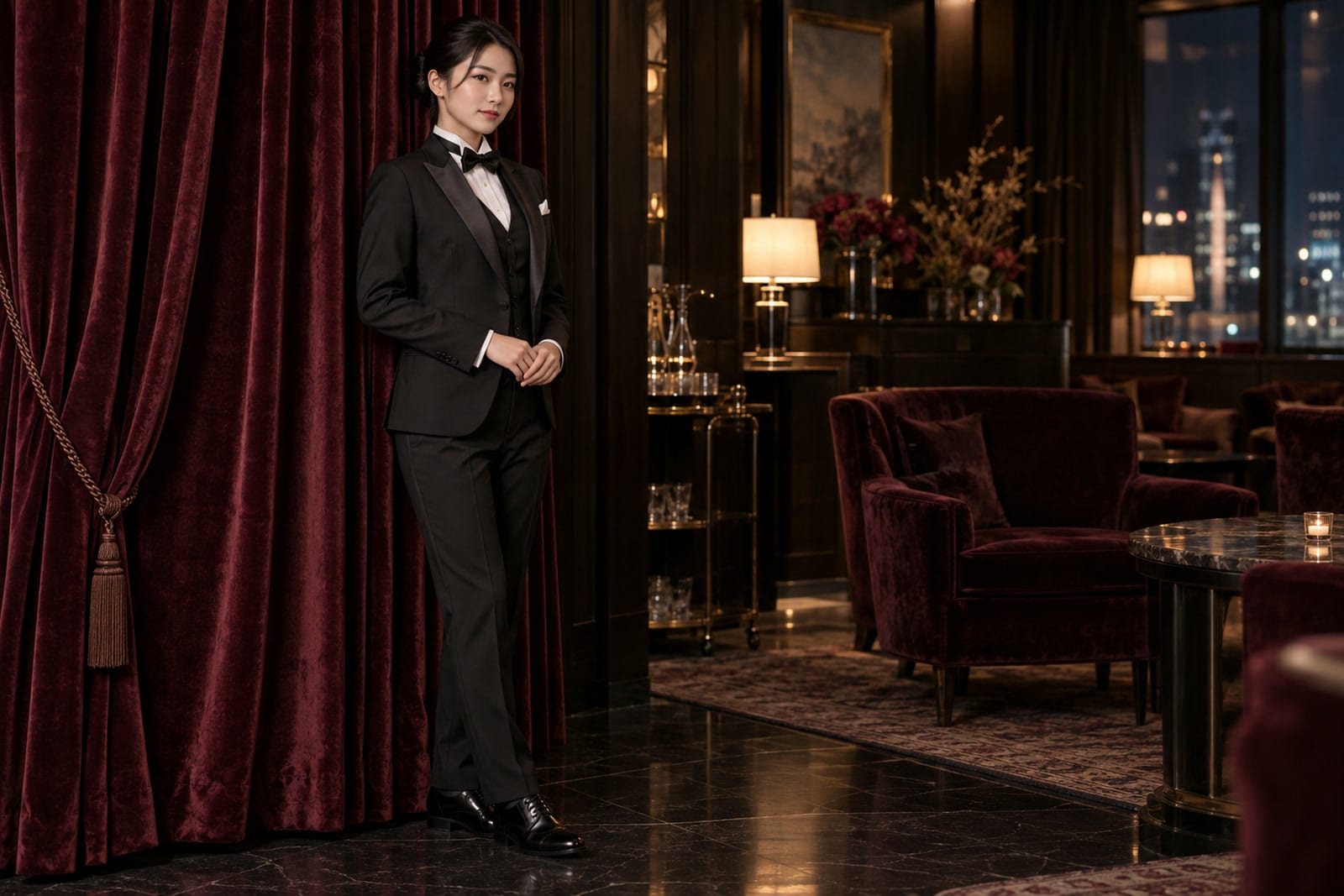
Before receiving the guest, the butler checks in the mirror that the black tie sits at the centre of the collar and that its outline is even on both sides. Women and men alike dress in the tuxedo by the standard of the evening's duty, not of gender, and carry that through to their stance.
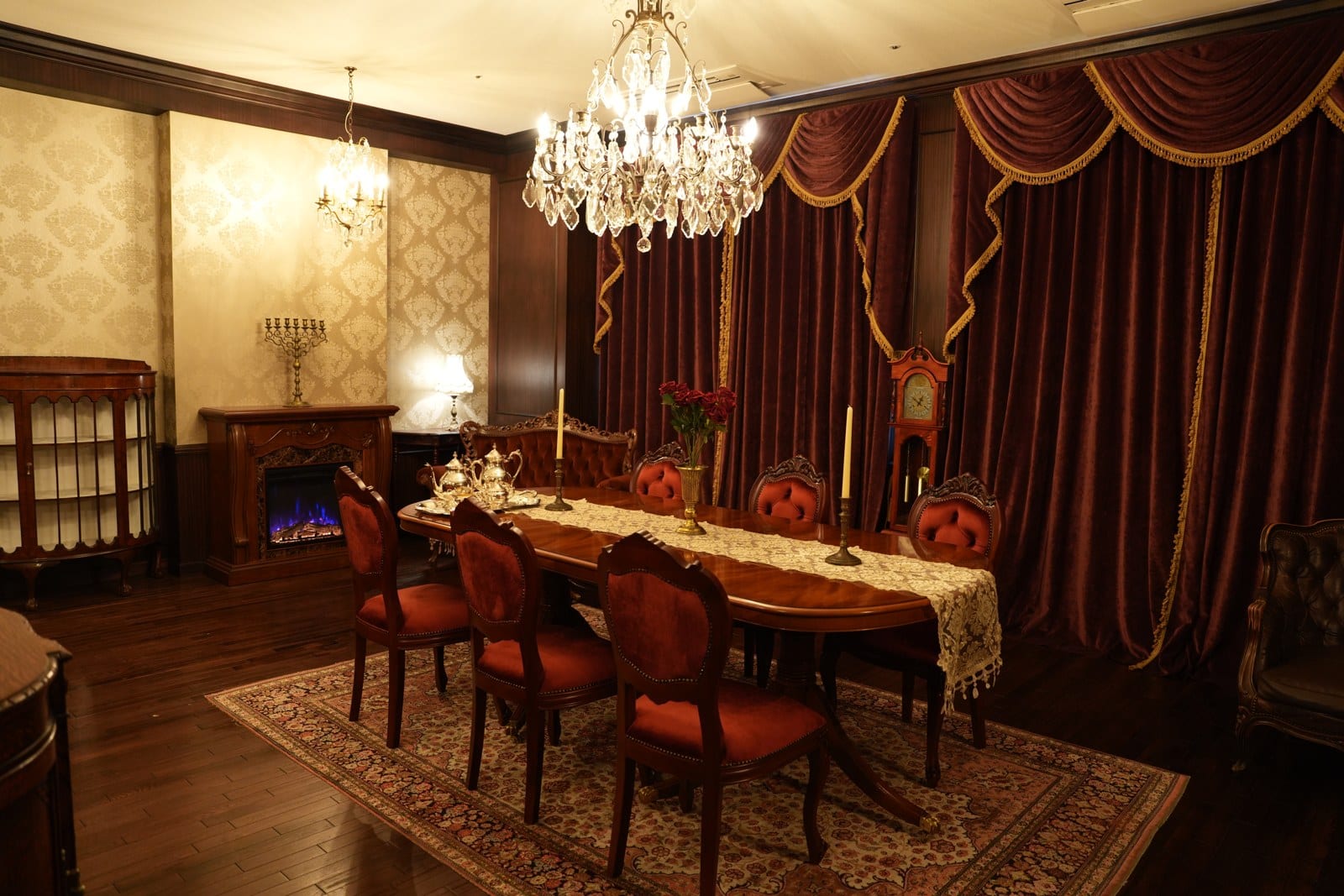
The light of candelabra and chandelier does not throw the black tie into sharp relief but softly shows its border with the white shirt. Having tied it in good light, the butler checks the collar again under the actual evening light, and looks to the harmony of the whole so that, standing at the guest's side, the dress alone does not come forward.
How to recognise a tuxedo
| Name of the dress | The tuxedo: the dress a butler prepares in order to serve the master of the house after dark. |
|---|---|
| Occasion | The evening. The butler dresses with regard not only to the hour but to the place of duty: the door, the table, the hall. |
| Bow tie | Black. The knot, the spread on either side and the border with the white shirt are checked in turn. |
| Its evening counterpart | The tailcoat, which takes a white tie. Two forms of evening dress, told apart by black or white at the collar. |
| Formal dress by day | Described under the morning coat. Separating the hour first puts the three in order. |
| The butlers of this Manor | Women and men alike serve as butlers, and settle dress and stance by the standard of the evening's duty. |
The butler centres the black knot
The black bow tie is the mark that draws the collar of the tuxedo together and shows the dress to be for the evening. The butler checks in turn the distance between knot and collar, the spread on either side and the border with the white shirt. Because the butler waits close enough to meet the guest's eye, even a small disorder about the face is put right at the stage of dressing.
For men and women alike, the dress is chosen from the evening's duty. Once the black tie is tied, the shoulders are set naturally and the cuffs and the front of the jacket are looked over. The collar is not finished in isolation but joined into a single figure fit to stand before the guest.
Besides facing the mirror squarely, the butler checks the profile when turned towards the door and the neck when bowing. With movement, the overlap of jacket and shirt shifts slightly. The butler judges whether it needs retying and settles the position of the black tie before going on duty.
Tailcoat, tuxedo and morning coat
| Dress | Hour | Mark at the collar |
|---|---|---|
| Tailcoat | Evening. The whole figure is read from the white tie | A white bow tie set at the centre of the collar |
| Tuxedo | Evening. The black tie is bound to the evening occasion | The border between the black bow tie and the white shirt is checked |
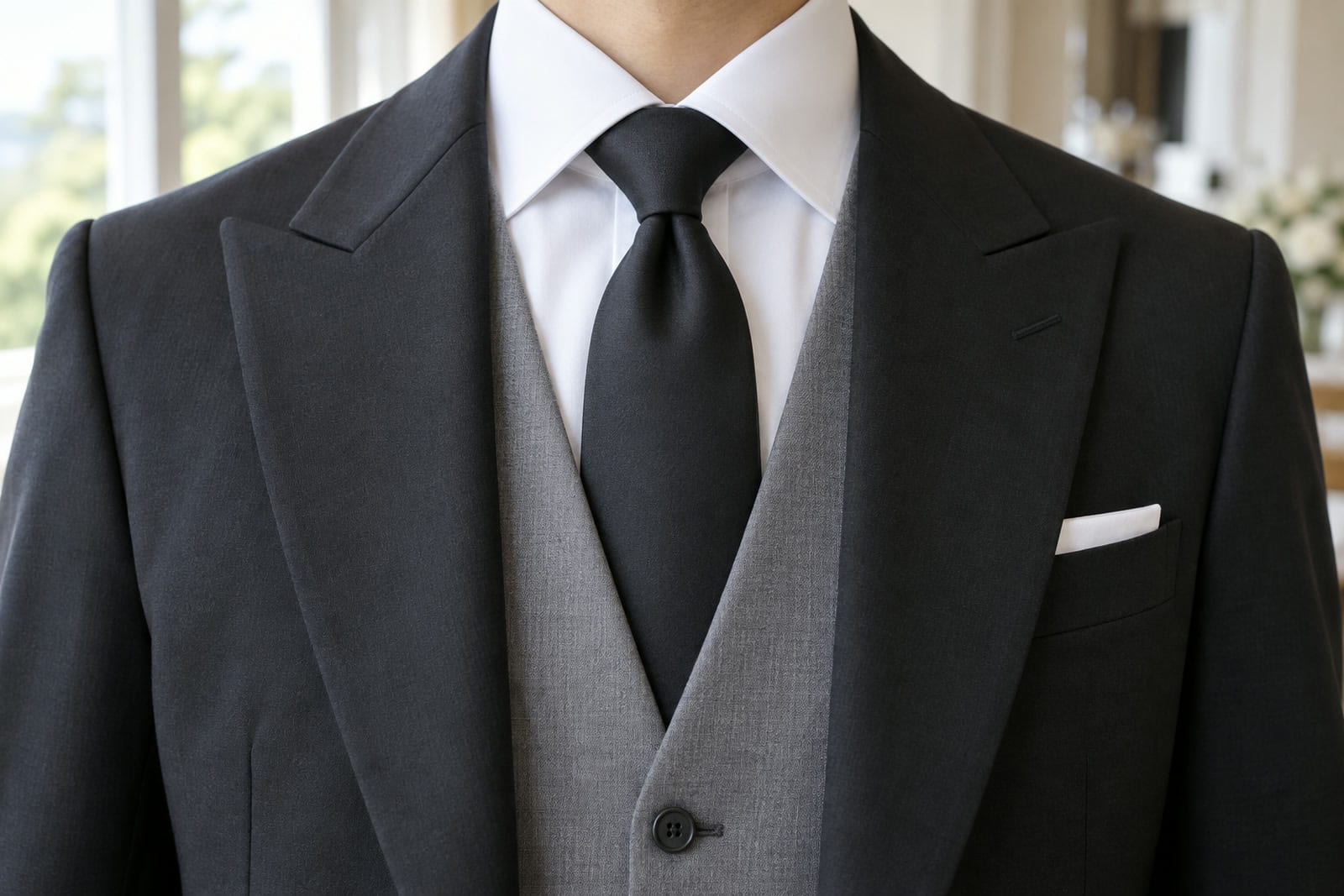
| Morning coat | Daytime. Separated by the hour before the two evening forms | A tie paired with a white dress shirt, the outfit completed as a whole |
| Order of reading | Hour, collar, jacket, then stance | Do not stop at a single colour; look to the harmony of the whole figure |
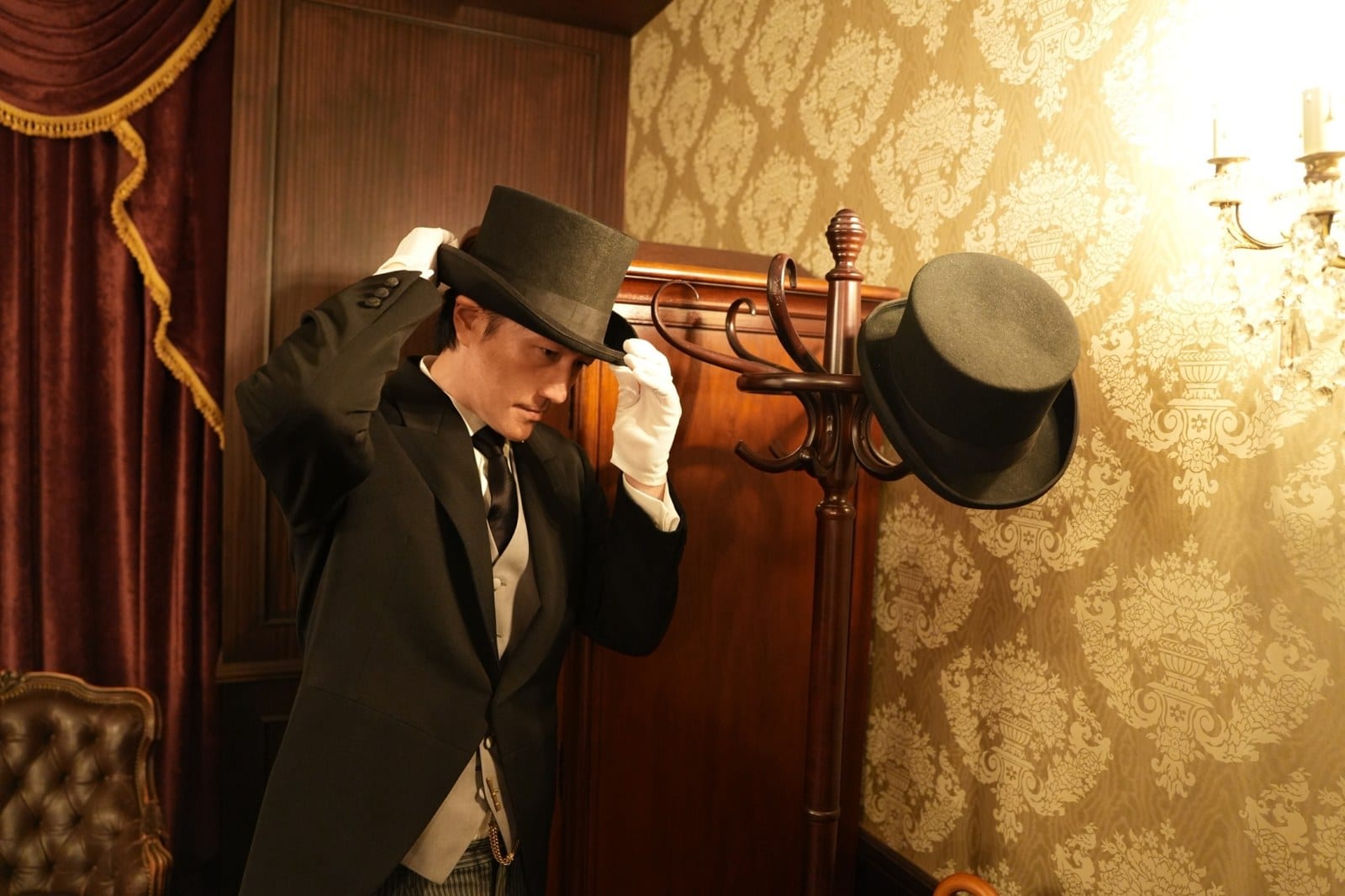
The butler takes in the hour and the occasion and dresses from the harmony of the whole. The tuxedo is worn in the evening, with a black bow tie.
Evening, black tie, tuxedo — in that order
The first question in reading attire is whether it is day or evening. The tuxedo is for the evening; the morning coat for the daytime. Put the hour first, and similar black garments are ordered by occasion rather than memorised by name alone.
Once narrowed to the two evening forms, look at the colour at the collar. Against the black of the tuxedo, the tailcoat chooses white. Do not stop on finding black; move the gaze on to the shirt, the jacket and the cuffs, and the role the tuxedo plays within the whole figure comes into view.
The butler does not leave the black tie in isolation but joins it to the contrast with the white shirt, the outline of the jacket and the set of the shoulders. Rather than memorising rules, picturing a butler receiving the master of the house in the Manor at night makes the relation of colour and duty easier to follow. In the photographs, note also where the butler stands and looks: beside the door, behind the table, within reach of a call.
Before evening duty, dressing is completed in five steps
Take in the hour
The butler chooses the tuxedo as the dress suited to the evening, and confirms where the master of the house is to be served: the door, the table or the hall.
Match shirt and jacket
The butler looks at how collar, shoulders, chest and cuffs overlap, and settles the outline of black and white, checking that nothing is out of place even with the arms hanging naturally.
Tie the black tie
The butler settles the knot at the centre and finds the position in which the spread on either side looks calm, checking the border with the white shirt at the same time.
Turn and look again
The butler checks not only the front but the figure in profile and the neck when bowing. If anything has shifted with movement, it is put right before evening duty begins.
Check in the evening light
Under candelabra and chandelier, the butler sees that the collar alone does not stand out too strongly, and chooses the state in which the black tie sits calmly within the whole.
Go on to the forms of dress on either side of the black tie
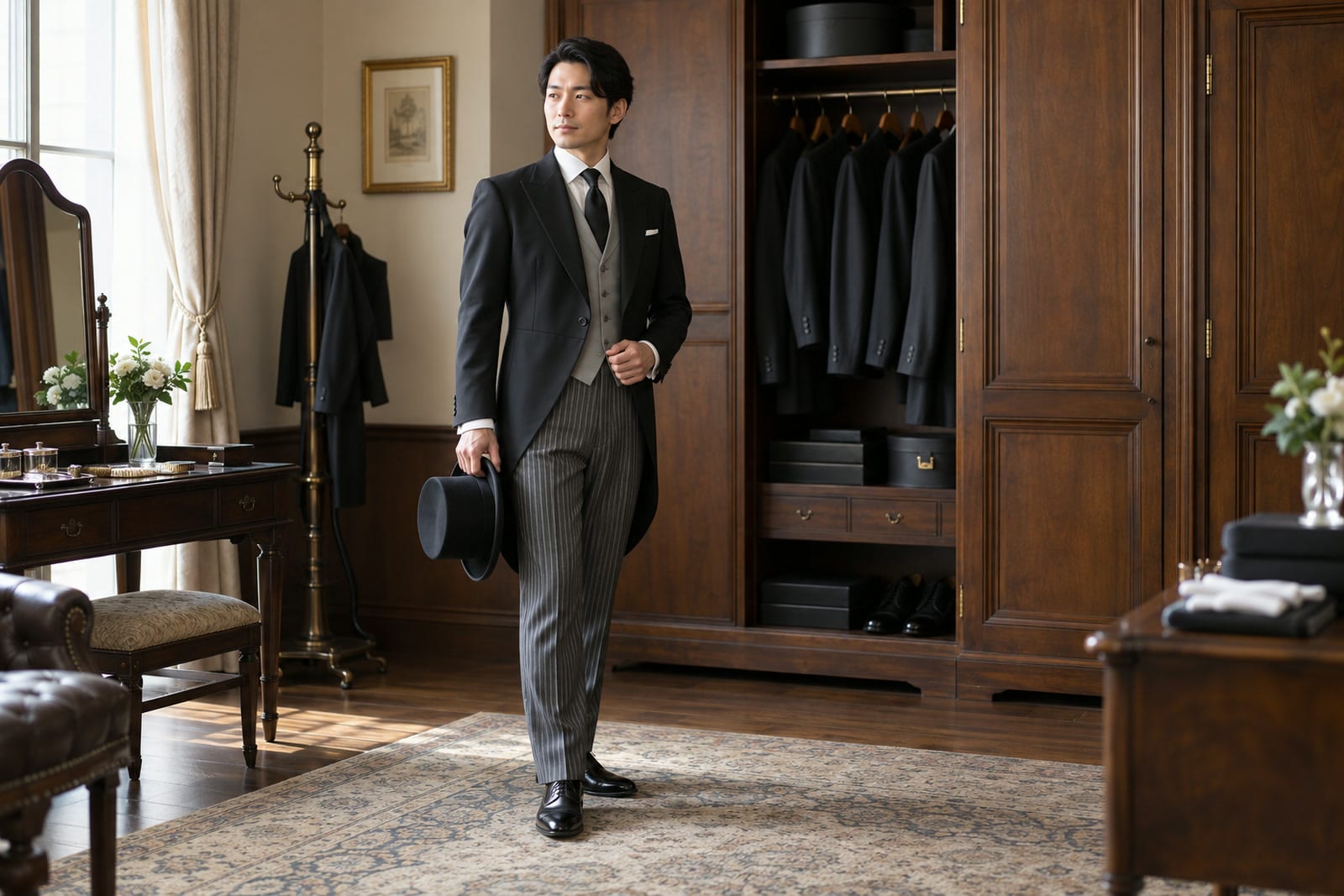
The morning coat by day
Separate day from evening by the hour first, and the place of the tuxedo becomes clear. We introduce the daytime outfit and stance.
Read more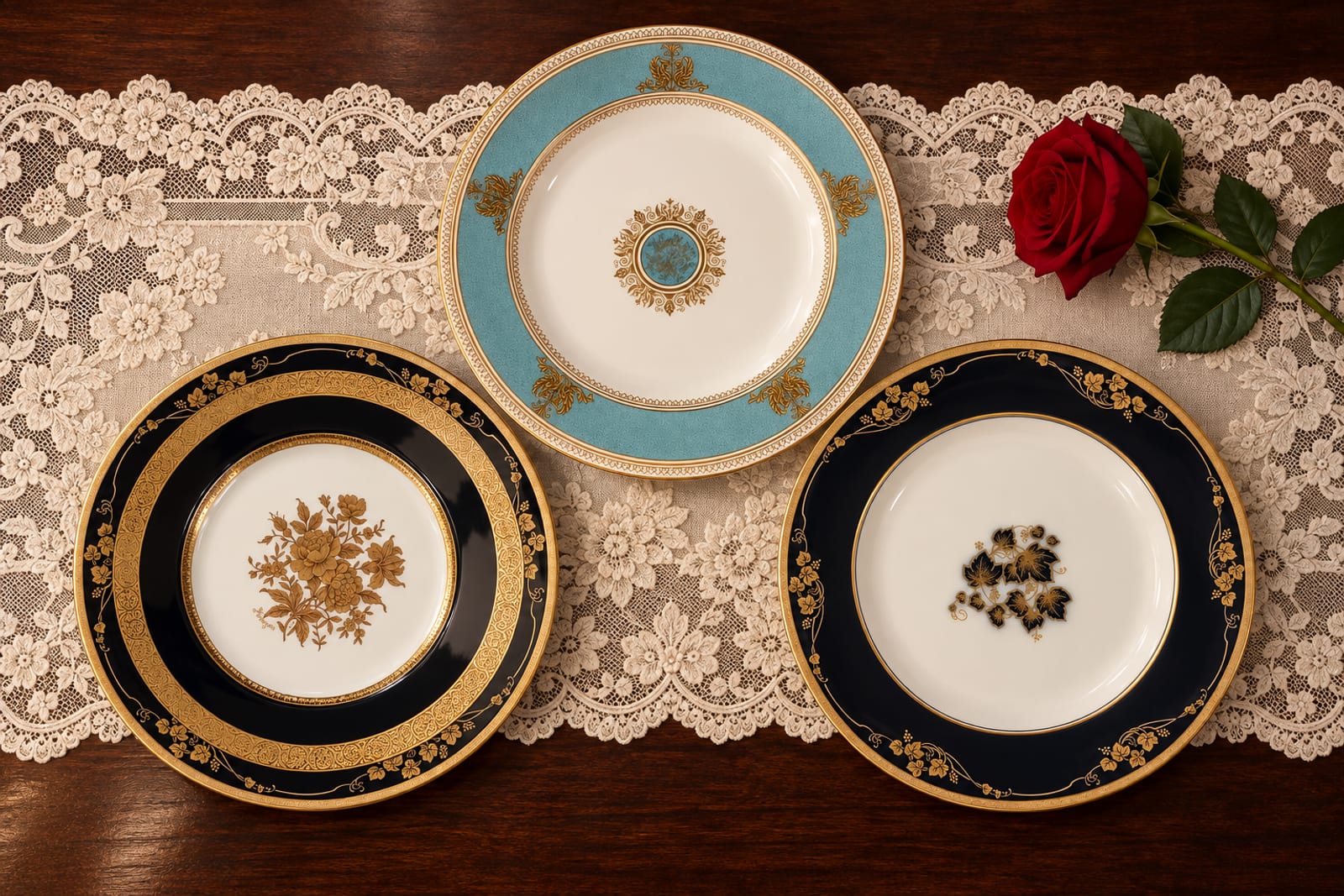
Waistcoat and shirt
See how, inside the black jacket and tie, the white dress shirt and waistcoat support the outline of the whole figure.
Read moreA black tie quietly binds the evening scene
As the lights of the Manor soften, the butler reflects the evening in dress. The key to the tuxedo is the black bow tie. Paired with the white tie of the tailcoat, the difference by colour becomes plain. Do not stop at the single colour black; let the gaze widen to the distance between knot and collar, the border with the white shirt, the front of the jacket and the naturally set shoulders.
The morning coat by day; the tailcoat or tuxedo by night. Separate the hour first, then divide the evening tie into white and black, and the relation of the three can be followed in order. At Queen's Butler, women and men alike receive the master of the house as a butler, and settle dress and bearing to suit the occasion of their duty.
On an evening spent quietly alone, the butler waits where the view is not blocked and a call can be answered. On an evening when several gather at the table, the butler chooses the moment to move while watching every guest's hands. The tuxedo is the same; where the butler stands changes with the guest's time.
What to check when looking at a tuxedo
- Confirm that it is dress suited to the evening, and look also to where the butler stands and the duty
- Set the black bow tie at the centre of the collar, and check the knot and the spread on either side against the white shirt
- See not the tie alone but shirt, jacket, cuffs and stance as a single figure, and check the figure turned as well
- Women and men alike choose dress from the evening's duty, and vary the distance at which they wait according to how the guest spends the evening
- When the butler moves — beside the door, behind the table, to the place of bowing — keep checking that the black knot, the white shirt and the outline of the jacket still look composed
What to avoid in telling them apart
- Deciding the name of the dress on finding the colour black, without checking the hour or the outline of the whole figure
- Treating it as the same as the tailcoat with its white bow tie, and overlooking the difference at the collar
- Confusing the hour with the morning coat worn by day, and learning it apart from its occasion
QWhat colour is the bow tie with a tuxedo?
Black. The difference from the white chosen for the tailcoat is told first by the colour at the collar.
QIs the tuxedo daytime dress?
It is dress suited to the evening. Formal dress for the daytime is described under the morning coat.
QDo women butlers wear the tuxedo too?
Both men and women serve as butlers. Women butlers likewise dress by the same standard to suit the evening occasion.
QWhat is worn in The Footman experience?
The outfit the Manor provides for The Footman is the morning coat, worn by day. As sizes and styles are limited, we ask your clothing size in advance.
QHow does it differ from the tailcoat?
Both are worn in the evening, but the colour of the bow tie differs. Remember black for the tuxedo and white for the tailcoat, and they are easily told apart.
QWhere do I begin when looking at the dress?
First confirm that it is an evening occasion; then look in turn at the black tie, the white shirt, the jacket and the cuffs. Widening the gaze from the collar to the whole figure reveals the intent of the dressing.
You may also wish to read

Read evening dress from the black tie.
Compare it with the white tie of the tailcoat, and see how a butler's dress tells the hour.