
The English Manor House
Rooms in sequence, and a butler binding the hours of the day.
About The English Manor House
The English manor house, born of the culture of the great houses of the English countryside, is a home in which the master's private life, the reception of guests and the duties of the household are bound together across many rooms. The butler kept an eye on the role and the hour of each room, so that the day of the house moved smoothly.
IDo not see the English manor house as a building alone
If, in coming to know the English manor house, you look only at the stone façade and the wide grounds, you see but half of it. Within are places to receive guests, places for the master to work, places to rest quietly and places to keep the household's goods, each with its role in the course of the day.
The rooms do not stand alone. A message received at the door reaches the Study; the silver is set in time for the hour of dinner; a light remains before the fire. As people, things and hours pass from room to room, the manor house moves as a single life.
IIThe Dining Room shows the face of the house
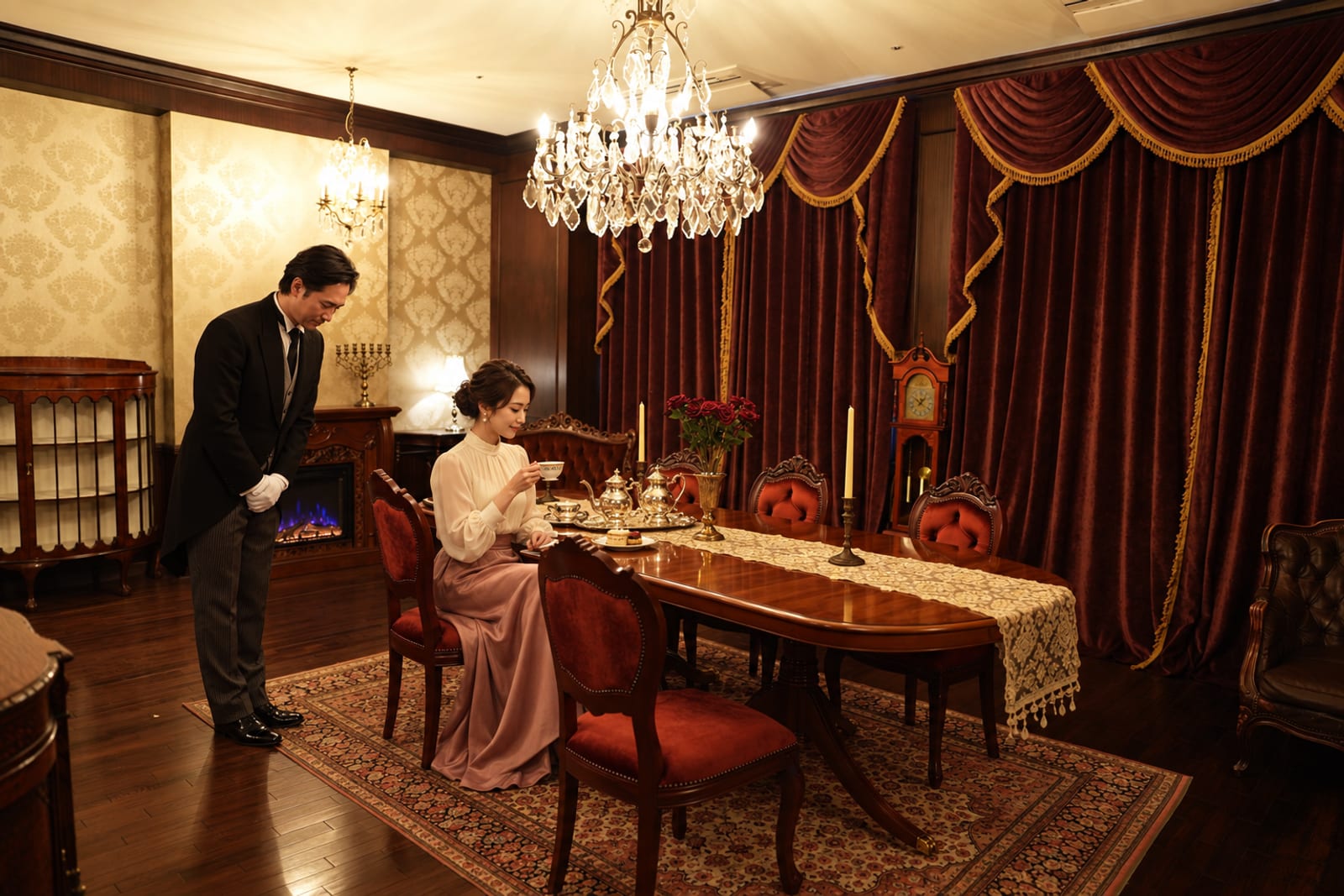
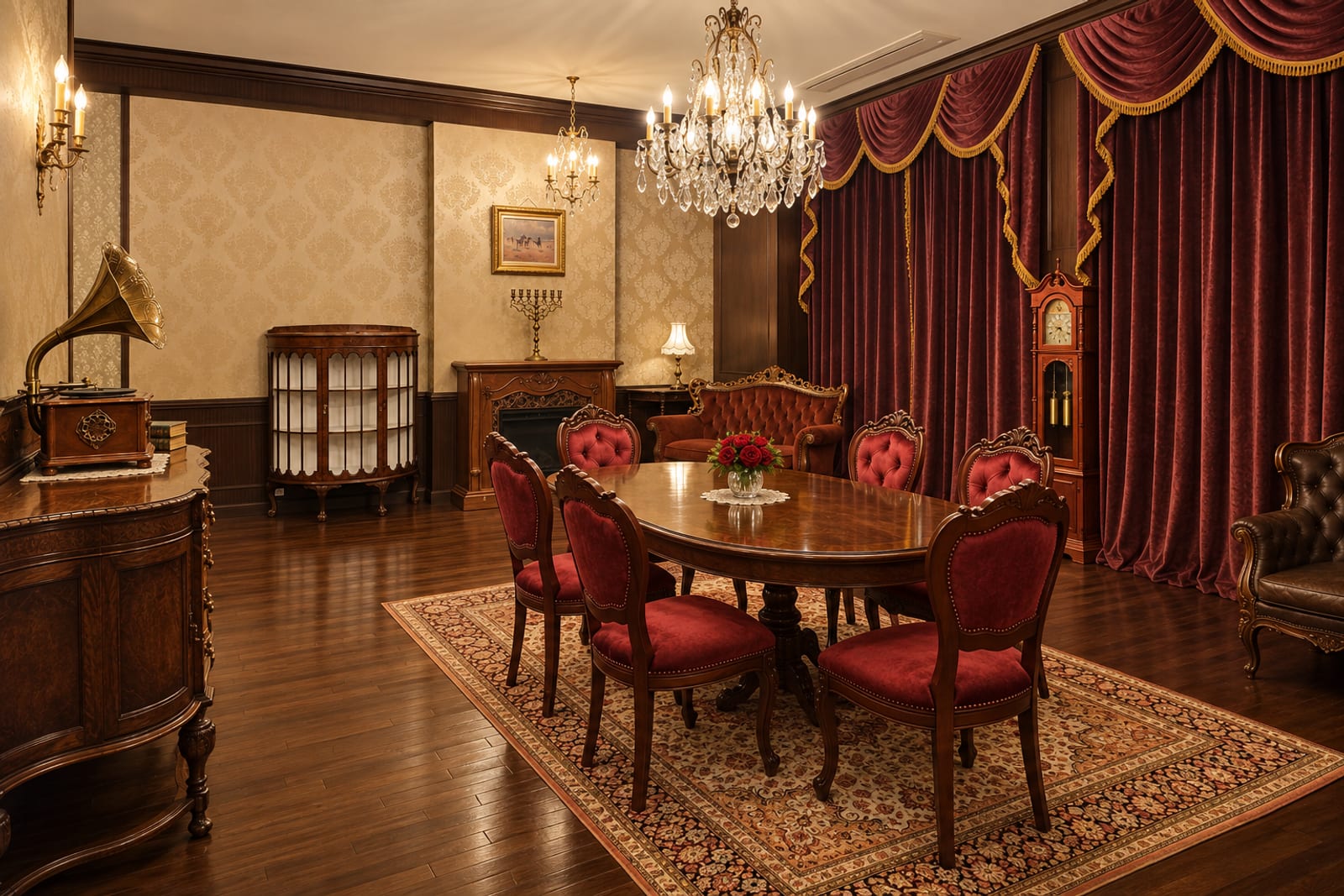
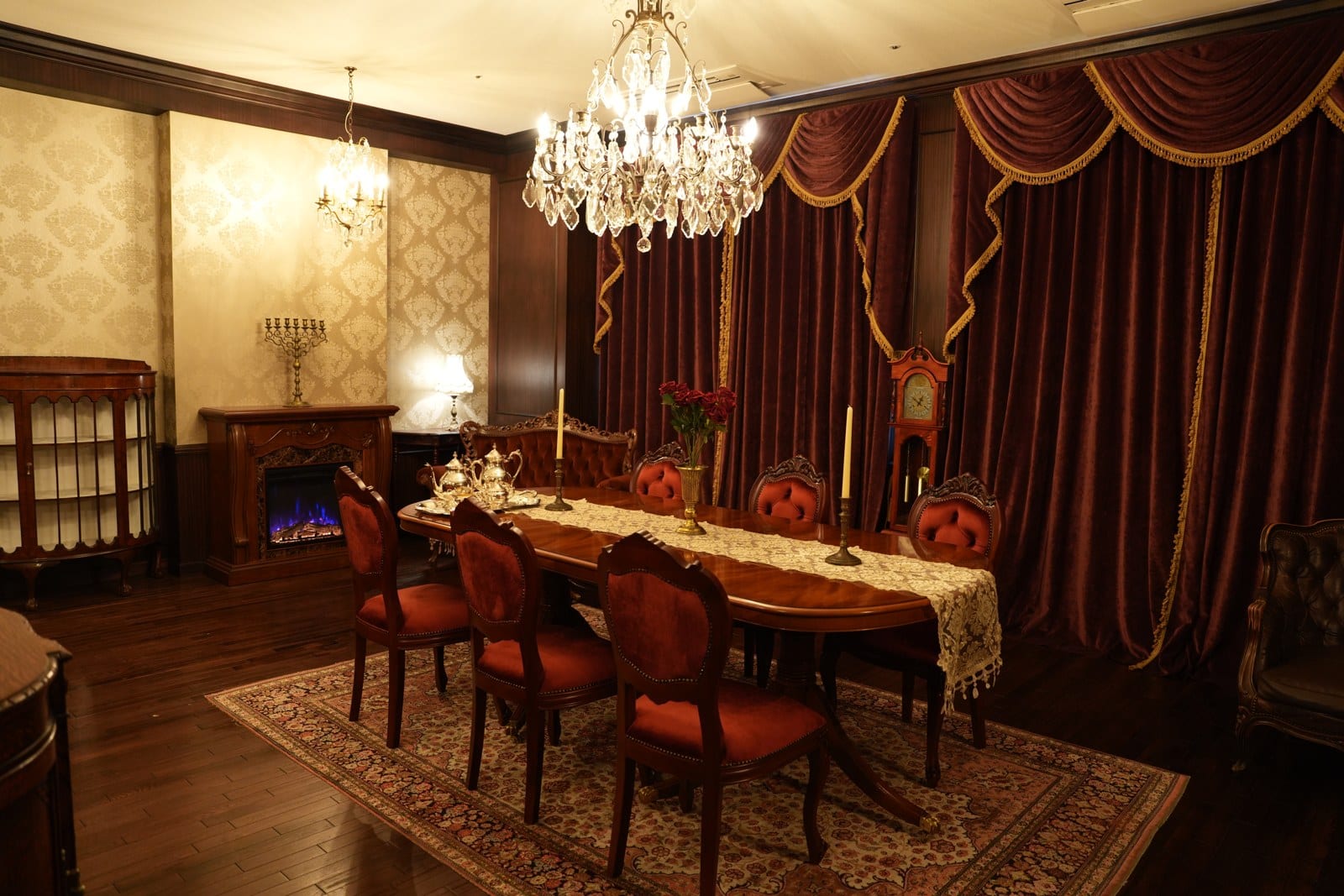
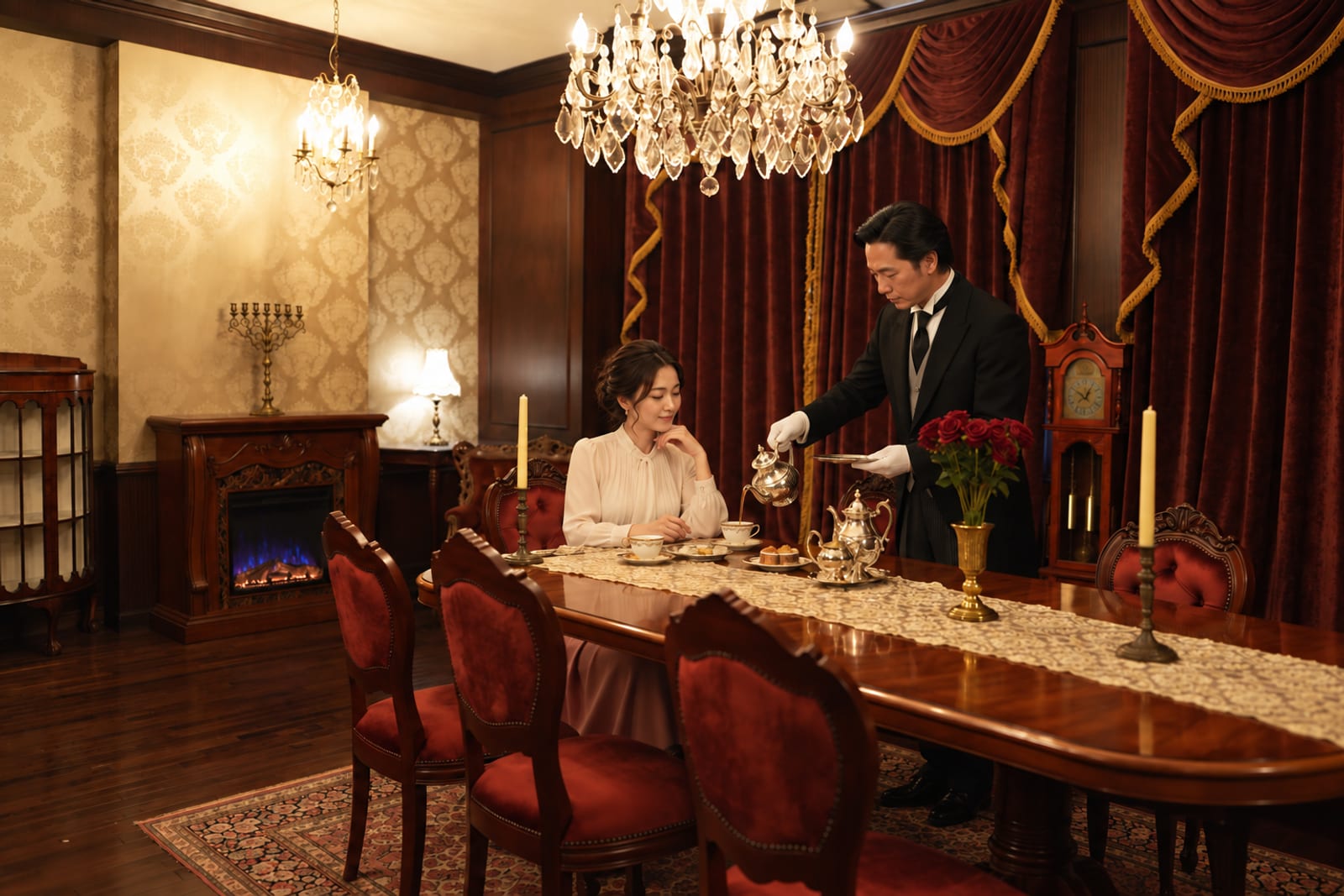
The long table, the chairs facing one another, the chandelier overhead. The Dining Room is where master and guests share the same hour, and where the house's setting is best seen. The path to one's seat, the pieces on the table, the strength of the light: should any one of these be out of place, the composure is lost.
The butler anticipates each person's movements, choosing the moment to open the door and the moment to show them to a chair. The more splendid the room, the more restrained the butler's movements must be. So that master and guests appear at the centre of the scene, the butler withdraws into the background while keeping the whole in view.
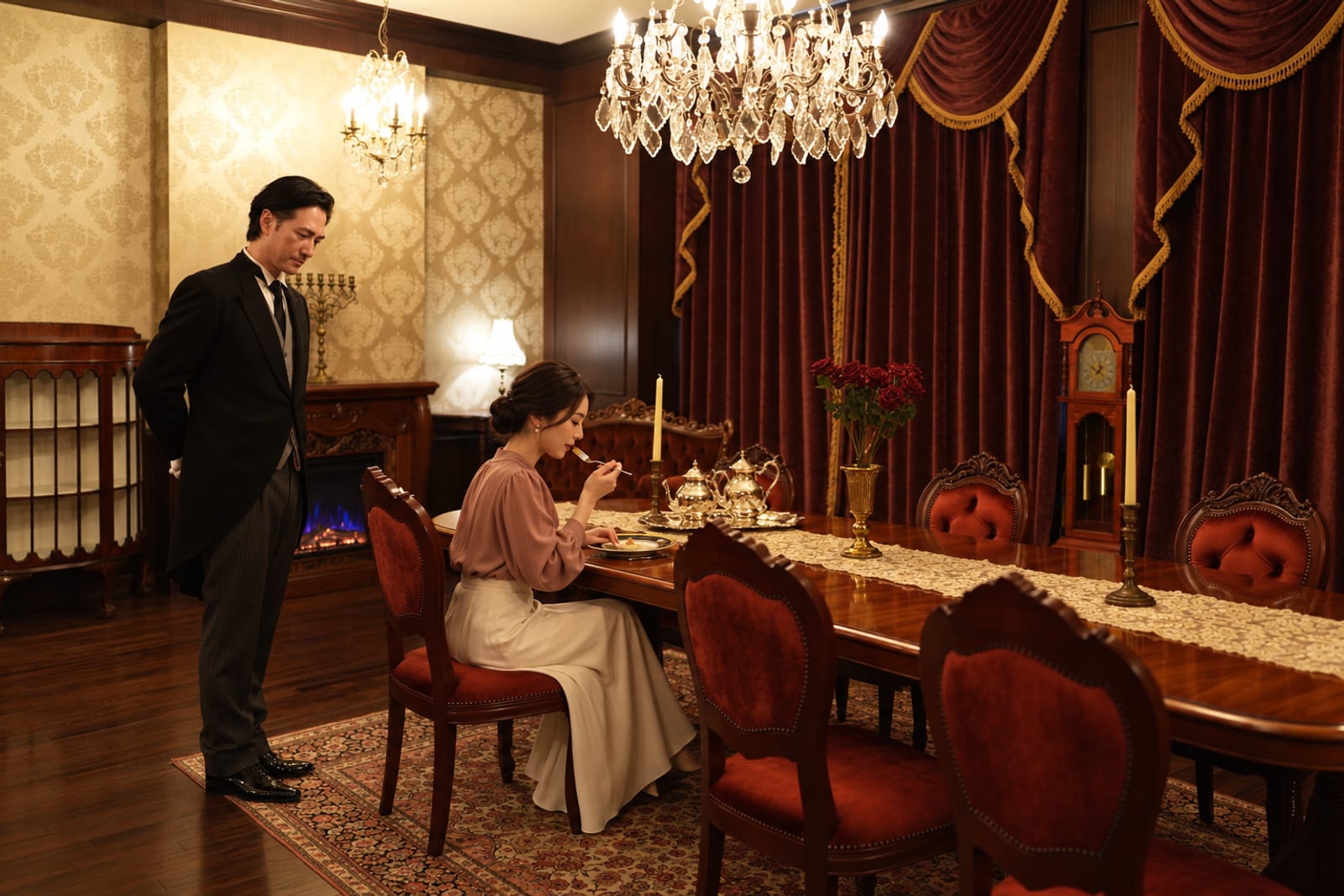
The centre of the room is not the table, but the people.
While arranging the splendour of the furnishings, the butler keeps the time of the lady of the house and her guests at the centre.
IIIThe Study holds a quiet that guards the master's thoughts
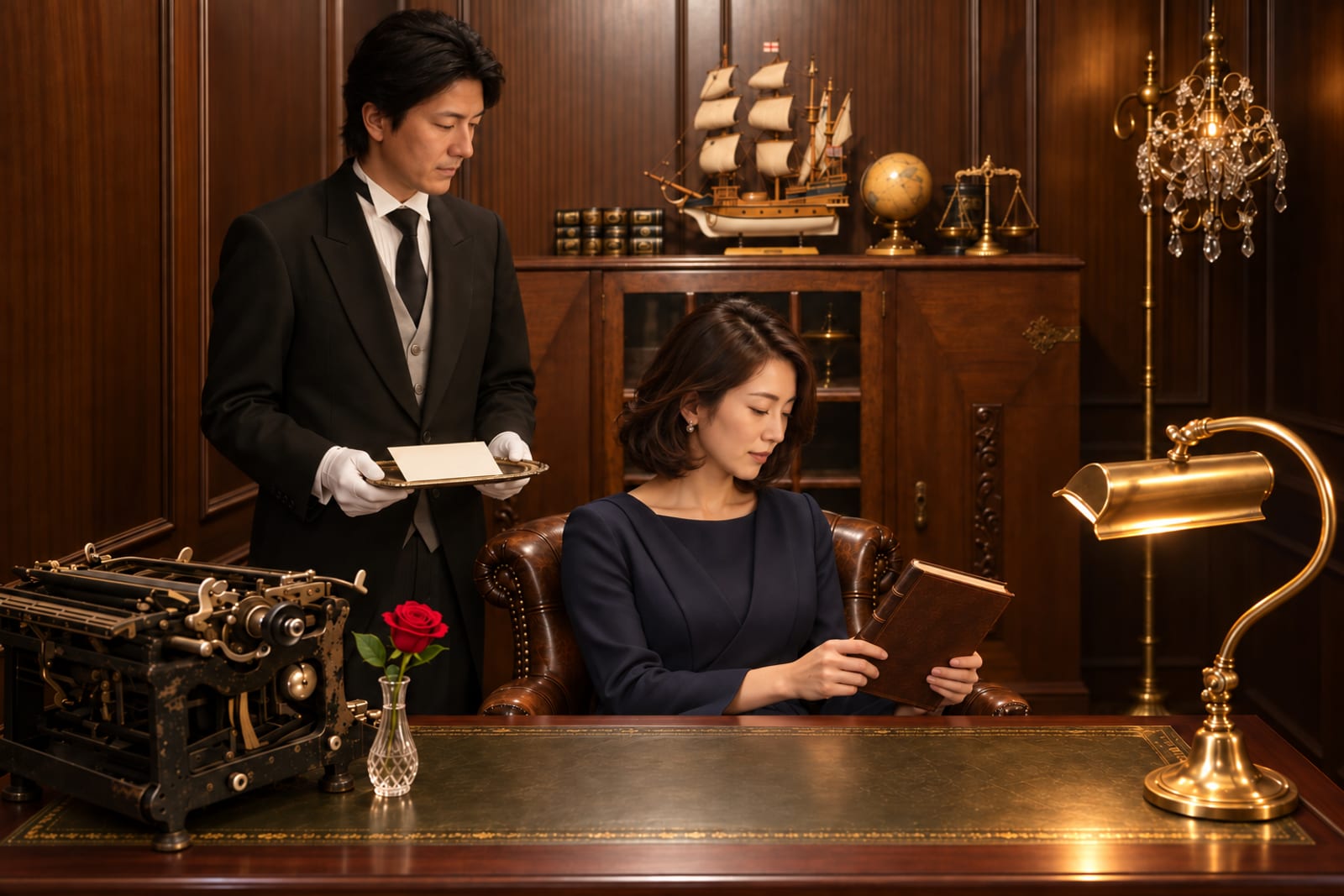
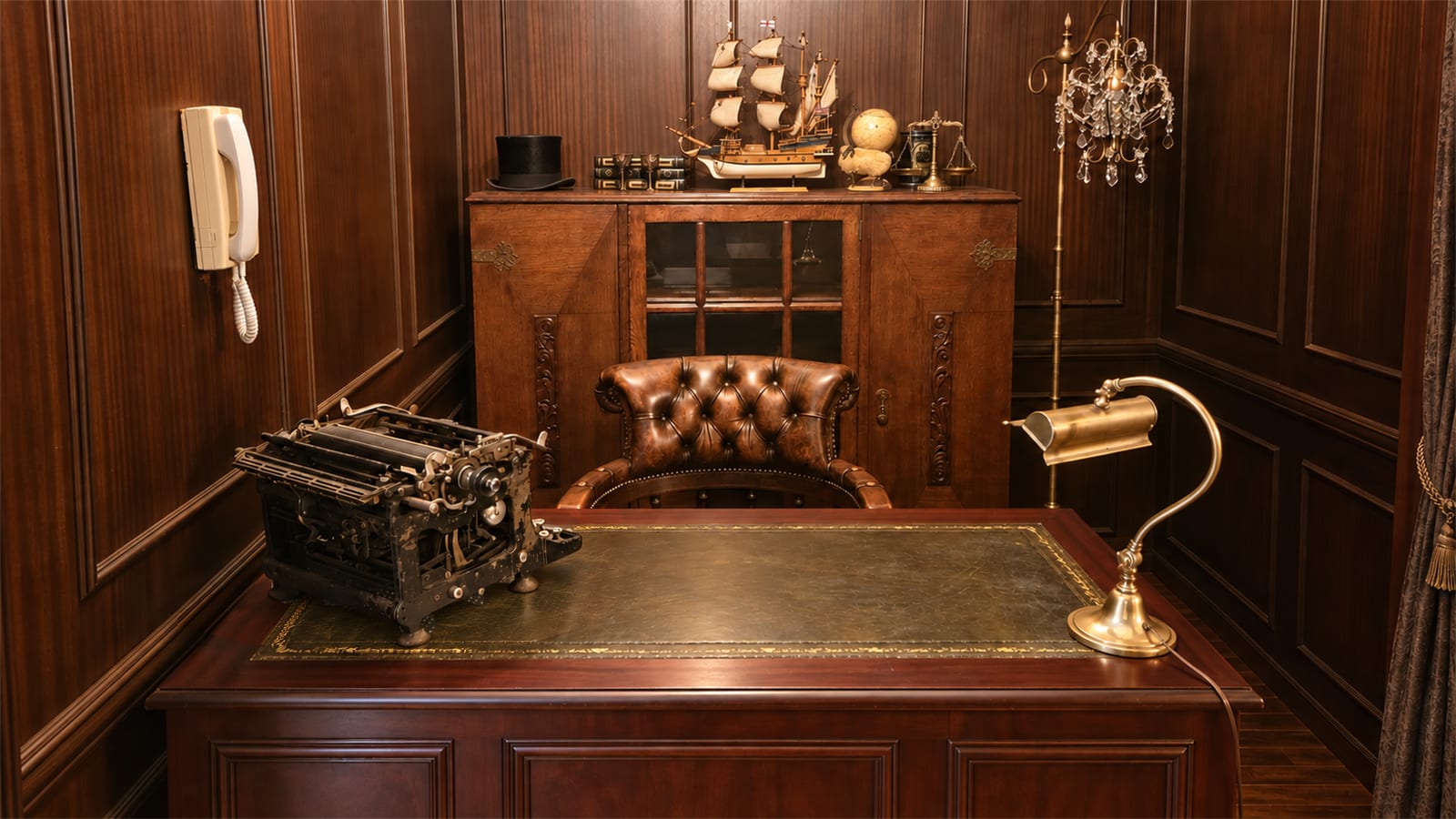
The Study is, of all the rooms in the house, the one closest to the master's inner life. Letters are read, thoughts are gathered, and only those who are needed are received. The butler must judge not only what to carry in, but what to keep out.
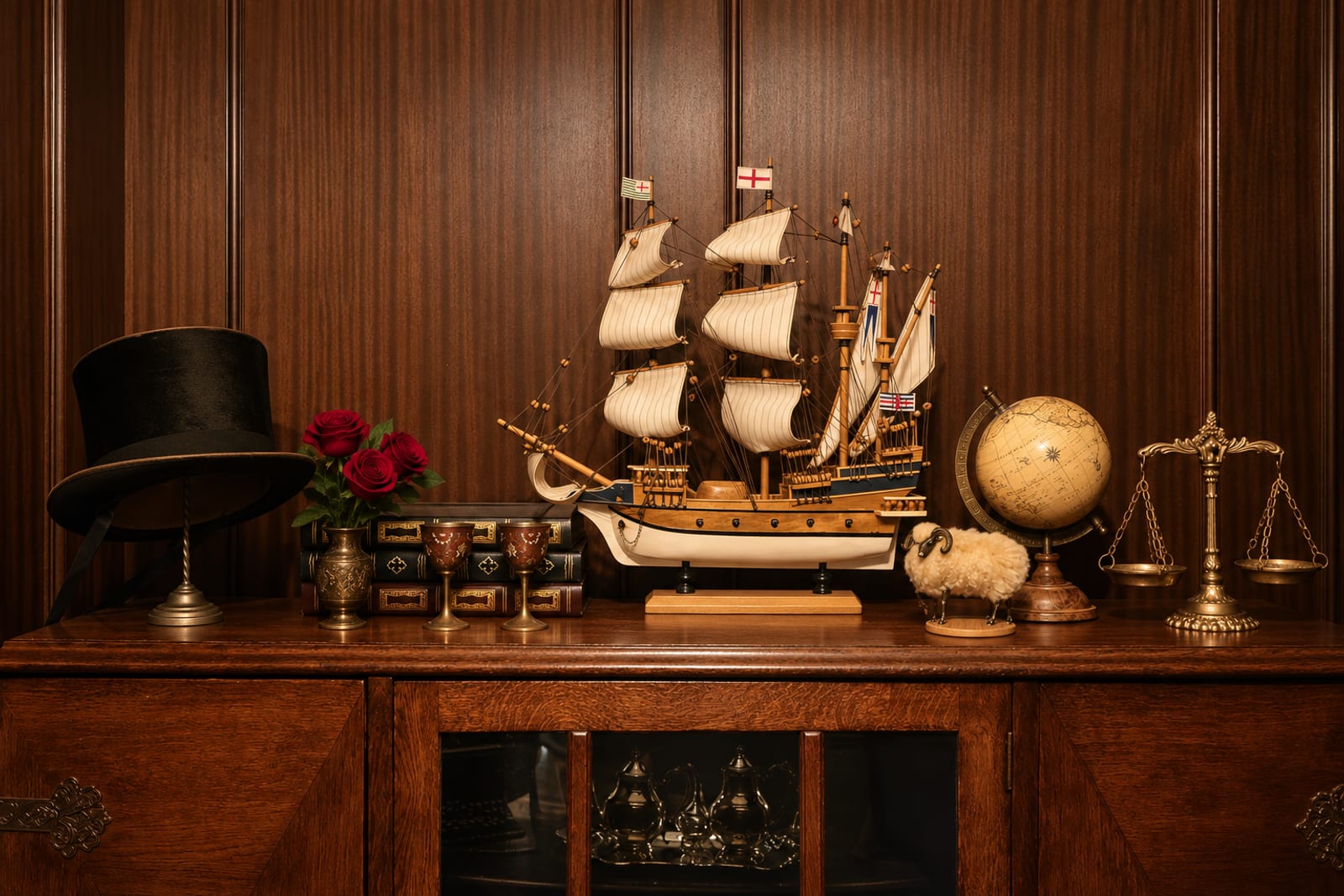
The leather-topped desk, the captain's chair, the inkwell, the clock. The tools are set within the master's reach, but no trace of the hand that set them remains. Keeping the quiet is one of the duties performed without a sound.
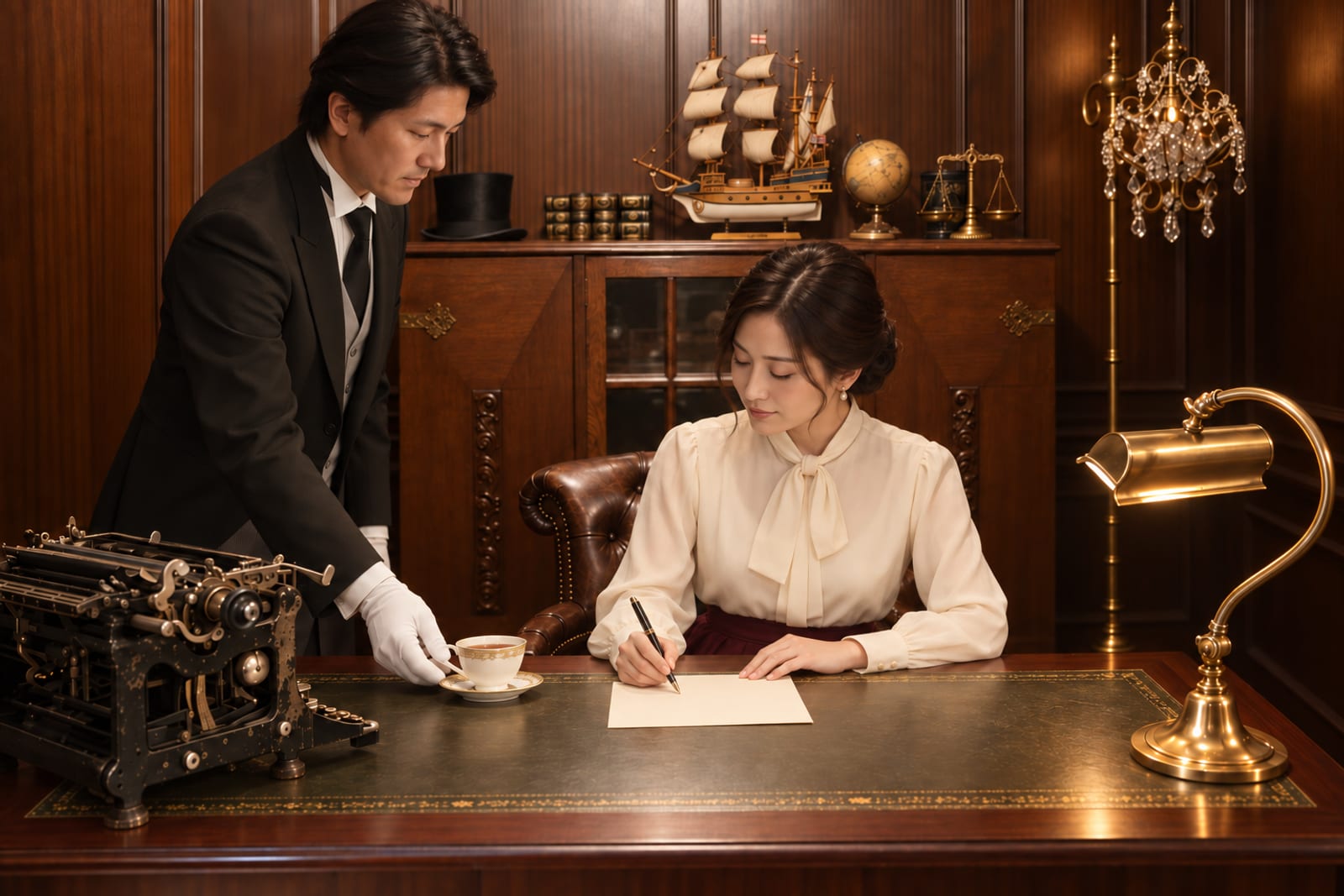
Only what is needed, within reach.
Without breaking the master's concentration, the butler prepares in advance whatever will be needed next.
IVThe Lounge slows the hours
In the Lounge, a distance arises unlike that of the Dining Room. One sinks into the sofa, the lights are lowered, and neither conversation nor reading is hurried. A house needed not only rooms that kept the hours precisely, but rooms in which to pass the time without minding them.
The butler withdraws to a distance that does not disturb the ease of the room, yet never so far as to be out of reach when called. Unobtrusive, yet present, and in attendance where needed: in this choice of distance lies the skill of service in a great house.
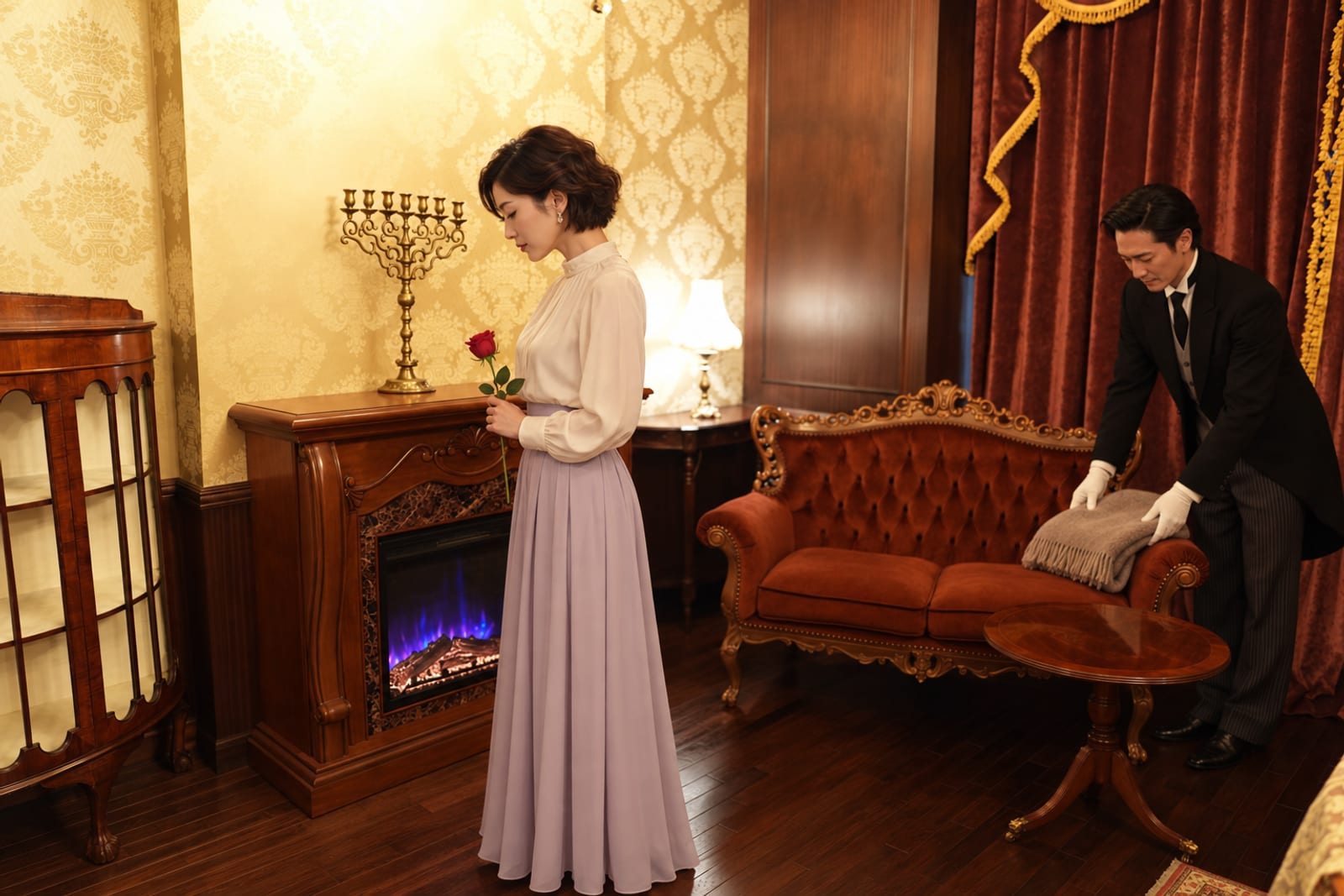
Neither too near, nor too far.
Guarding the quiet hours before the fire, the butler waits where a call can reach.
VThe gallery and its doors change the scene
Though not a destination, the gallery is indispensable to the story of the house. It is the interval in which one leaves the air of one room and turns one's mind to the next. The chime of the clock, footsteps along the floor, a hand touching the door: these announce the change of scene.
The butler goes ahead and opens the door. That step is at once a guide and a sign that the next room has been checked and made ready. By governing even the moment at which what lies beyond the door is revealed, the day of the house becomes a sequence of scenes.
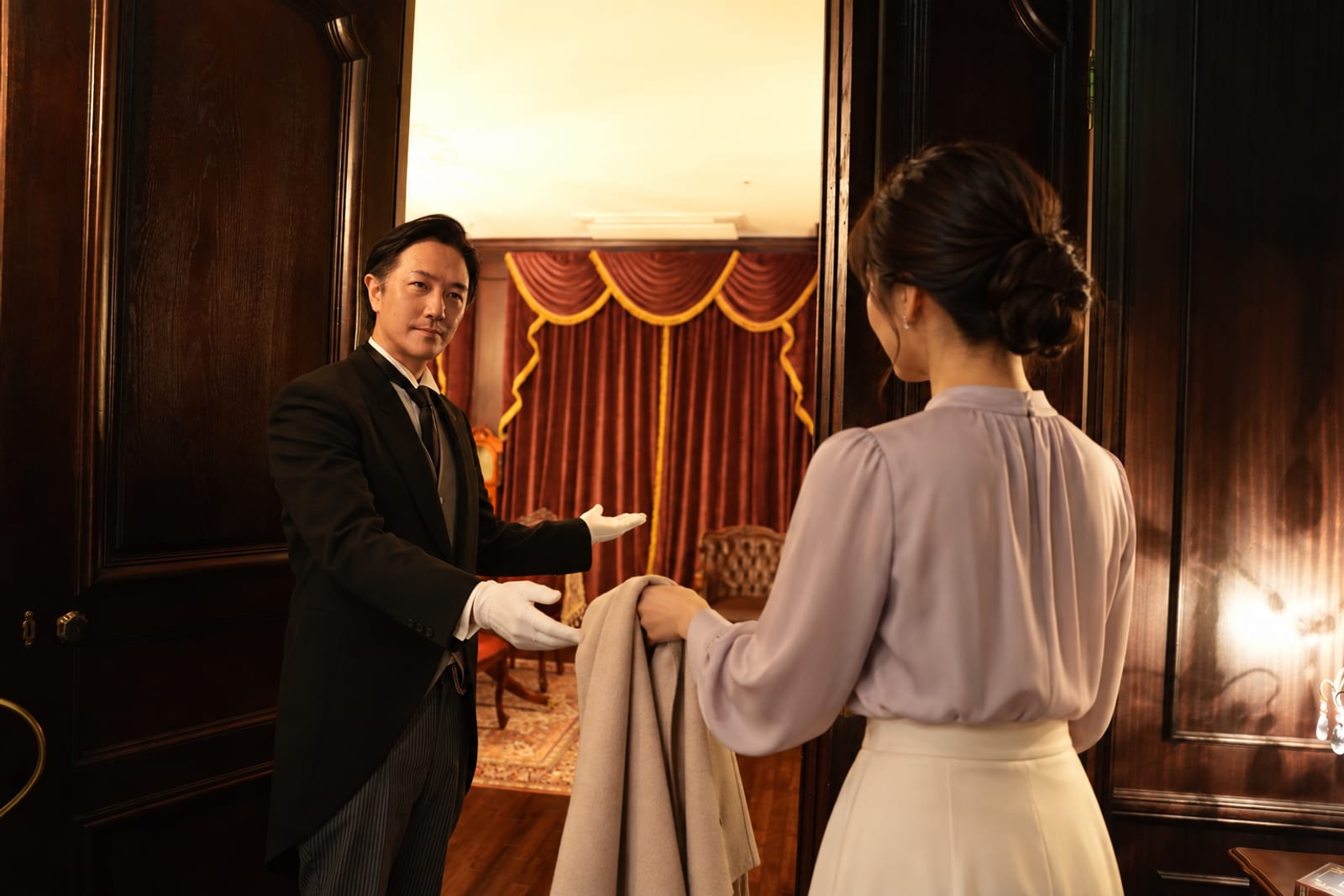
When the door opens, the face of the house begins.
Having prepared the next scene, the butler leads the lady of the house through the door.
The role of each room, and the butler's view
| Place | Character of the time spent | What the butler sets |
|---|---|---|
| Dining Room | The face of the house, where master and guests meet | Doors, seats, the table, light, the hour of moving on |
| Study | A quiet place for thought and letters | The desk, the chair, the light, a distance that keeps out sound |
| Lounge | Where the hours slow for conversation and reading | The presence of the fire, the sofa, where to wait |
| Gallery and doors | The interval that carries the mind from scene to scene | Checking the next room, opening and closing, leading the way |
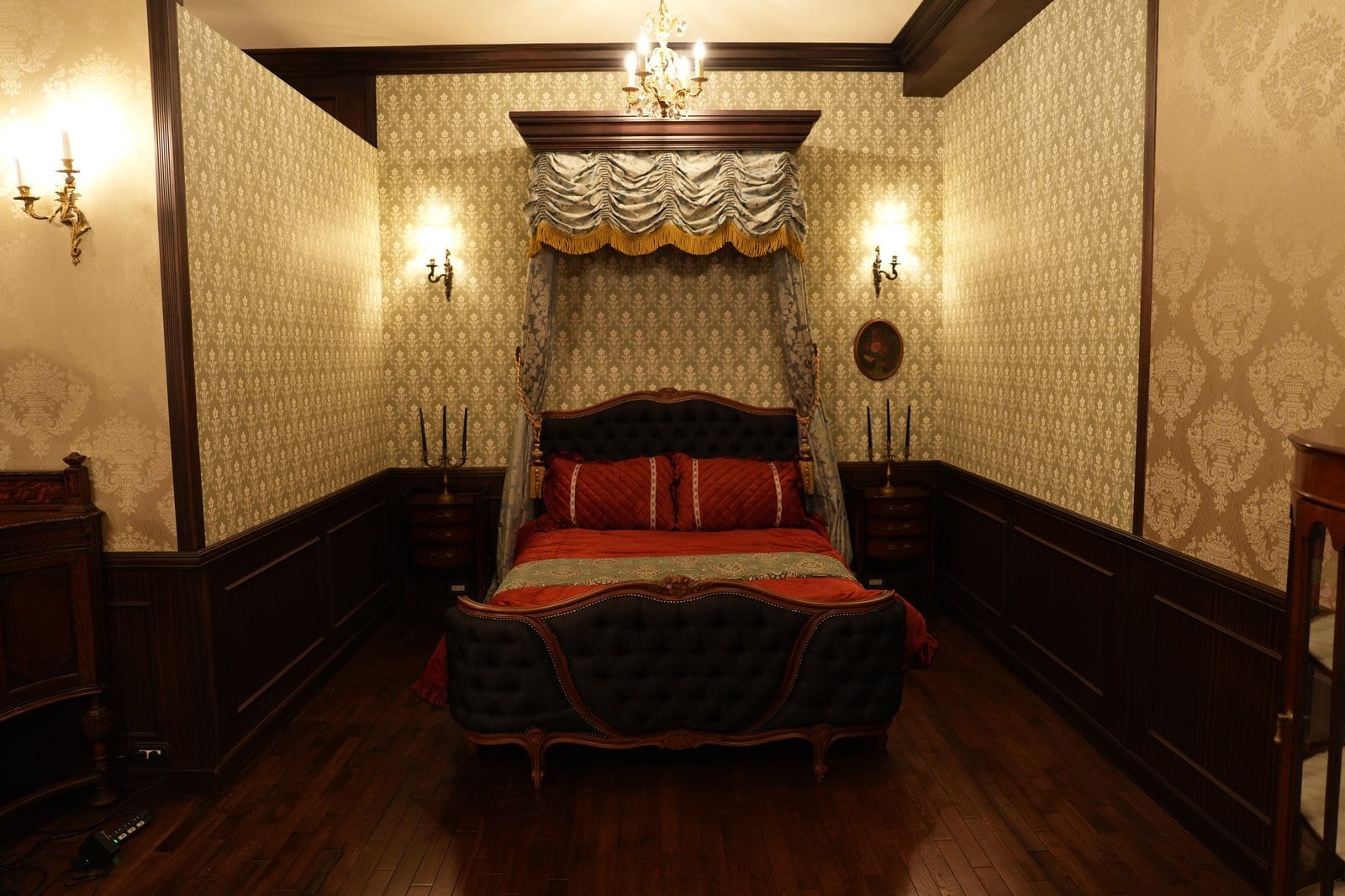
| Bedroom | A private place wrapped in French rococo design | The bed, the light, the linen, the quiet |
VICreating layered time in a room of an old castle
The concept of Queen's Butler is 'English manor house meets French rococo — a room in an old castle'.
It is not a matter of matching every piece to a single era and origin. The words we hold dear at the Manor express the idea thus: in a house that has endured, the pieces chosen by successive masters are seen layered upon one another. That depth of time is distilled into 80.11 square metres and eleven zones.
'Not matching too neatly' is the design philosophy. Layering genuine antiques of different eras and origins, it recreates the 'layered time' of an aristocratic house.
VIIWith a butler present, a space becomes a house
Furniture alone does not begin the day of a house. It is when someone opens the double doors, sets the light in the Study, hears the hall clock strike and leads you to the fire that the relationships between the rooms come alive. Queen's Butler never lets the Manor out unattended; a butler is always present.
Our male and female butlers do not merely recount the provenance of each room; they ask where and how you would like to spend your time. What we inherit from the culture of the manor house is not its scale, but the disposition to bind space and time together for the sake of the lady of the house.
VIIIWalking the Manor for the first time, which room makes the clearest start?
If you are meeting the idea of the English manor house for the first time, seeing the double doors, the Dining Room, the Study, the Lounge and the gallery in that order makes each role easiest to grasp. Moving your gaze from the entrance to the public room, the room of thought and the room of ease, you can feel in one sequence why distance and light change from room to room.
The double doors are a pair of great French oak doors some 2,480 mm high. Beyond them, the Dining Room holds a yew table 2,286 mm long; the Study, a leather-topped desk; the Lounge, an electric fire and red velvet seats.
Seeing the Manor is not a matter of counting its named pieces in order. It means knowing the role of each room, including the butler's bow before the door, the checking of the next light and the matching of pace to yours. Rather than hurrying through everything, lingering in one room that catches your eye suits the house just as well.
IXHow does distance in the Manor change with the size of the party?
Distance in the Manor means that, with the same furniture, the lines of sight and where the butler stands change for one guest, two, or up to six. For one, the focus falls on the quiet of the Study or reading before the fire; for two, on seats facing one another and two place settings; for several, on keeping the path from the doors to the table wide.
However the party grows, the Manor is never let out unattended. The butler does not settle everyone's wishes at once, nor attend only to the one who speaks for the group, but notices each person's pace and the pieces that catch their eye. Whether taking photographs, asking about a piece's history or sitting quietly, all may share one room in an arrangement that does not intrude on one another's time.
On rainy days, the lights in the gallery and the Study are set earlier to match the light outside. The seasons show themselves not in the addition of unconfirmed events, but in the combination of light through the windows, curtains, chandeliers and the electric fire. The butler reads the Manor as it is that day and proposes the calmest route.
XHow does the learning of the manor house connect to the present hour?
The learning of the manor house is not a re-enactment of past lives; it is reading the relationship between rooms and people and binding it anew into an hour fitting for the lady of the house of today. The Manor is operated by the Japan Butler Association, a general incorporated association.
The leather top of the Study desk, for instance, derives from the practical needs of the quill's age, and the twin pedestal desk is built so that one may slip easily into one's seat. Hearing the provenance and then seeing the actual movement, the language of furniture history turns into the butler's gestures.
As you leave, the butler checks the belongings entrusted to us and sees you off beyond the double doors. Rooms that were unknown on arrival are, by the time you go, bound together as the scenes of a day. That change is the meaning of tasting the idea of the English manor house here.
Five scenes in walking the Manor
Welcome at the double doors
The butler opens the doors, takes your coat and leads you into the Manor's hours.
Touching the quiet of the Study
The leather chair and desk are set, and a wordless time is kept.
Into the Dining Room
Beneath the long table and the chandelier, the butler shapes the flow of the scene.
Slowing the hours before the fire
The lights are lowered, and we wait nearby until called.
Farewell at the double doors
We check the belongings entrusted to us, bind together the scenes of your day, and see you off.
Comparing the rooms reveals the day of the house
| Doors and gallery | Where arrival and passage are given their interval, and the butler checks the next scene |
|---|---|
| Dining Room | Where several people's glances and seats are joined beneath the long table and nine lights |
| Study | Where the leather-topped desk and chair are set, guarding time for thought and quiet |
| Lounge | Where the electric fire and low seats gather, slowing the pace of conversation and reading |
| Bedroom | Where the 19th-century French corbeille bed, its fabrics and the wall lights can be seen up close |
What the butler sets in the Manor
- A butler is always present, handling doors, lights, chairs and furnishings
- From one guest to six, we arrange the paths to suit your party
- Male and female butlers describe the pieces by era and style
- You are welcome to bring your own food and drink
What we do not offer at the Manor
- Handing over the Manor unattended
- Moving fragile furnishings without the butler's guidance
The culture of the house can be read in four gestures
Check the next room before opening the door
The butler goes to the door ahead of the lady of the house and, before touching the handle, looks at the light and the path within.
Read more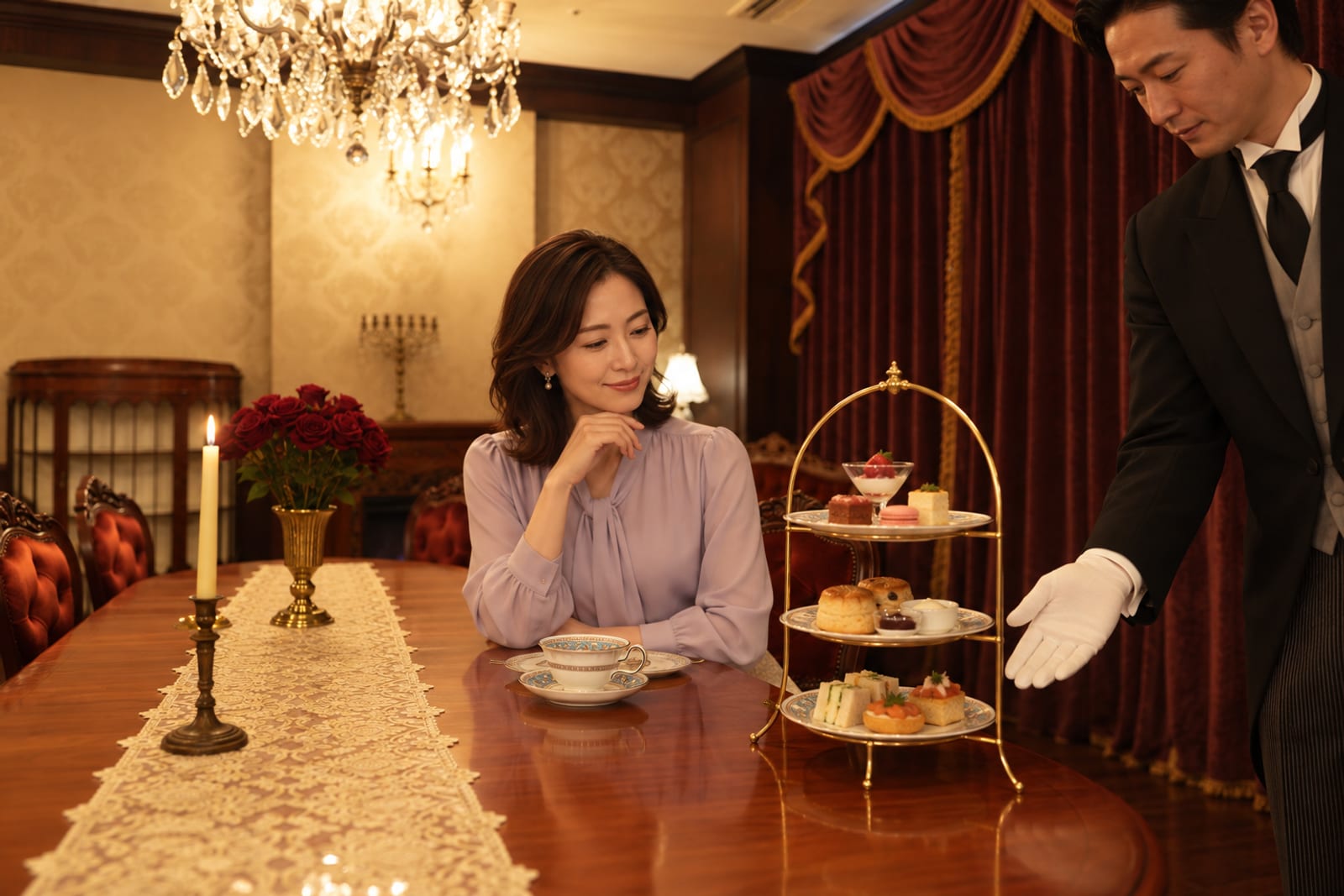
Where the chair is drawn reveals the structure of the table
The twin pedestal form, with no legs at the four corners, keeps the space for one's feet open when taking a seat.
Read moreChange the light, and the room's role appears
In the Dining Room nine lights centre the table; in the Study three lights and a floor light enfold the desk; in the Lounge six lights and a low flame face one another.
Read more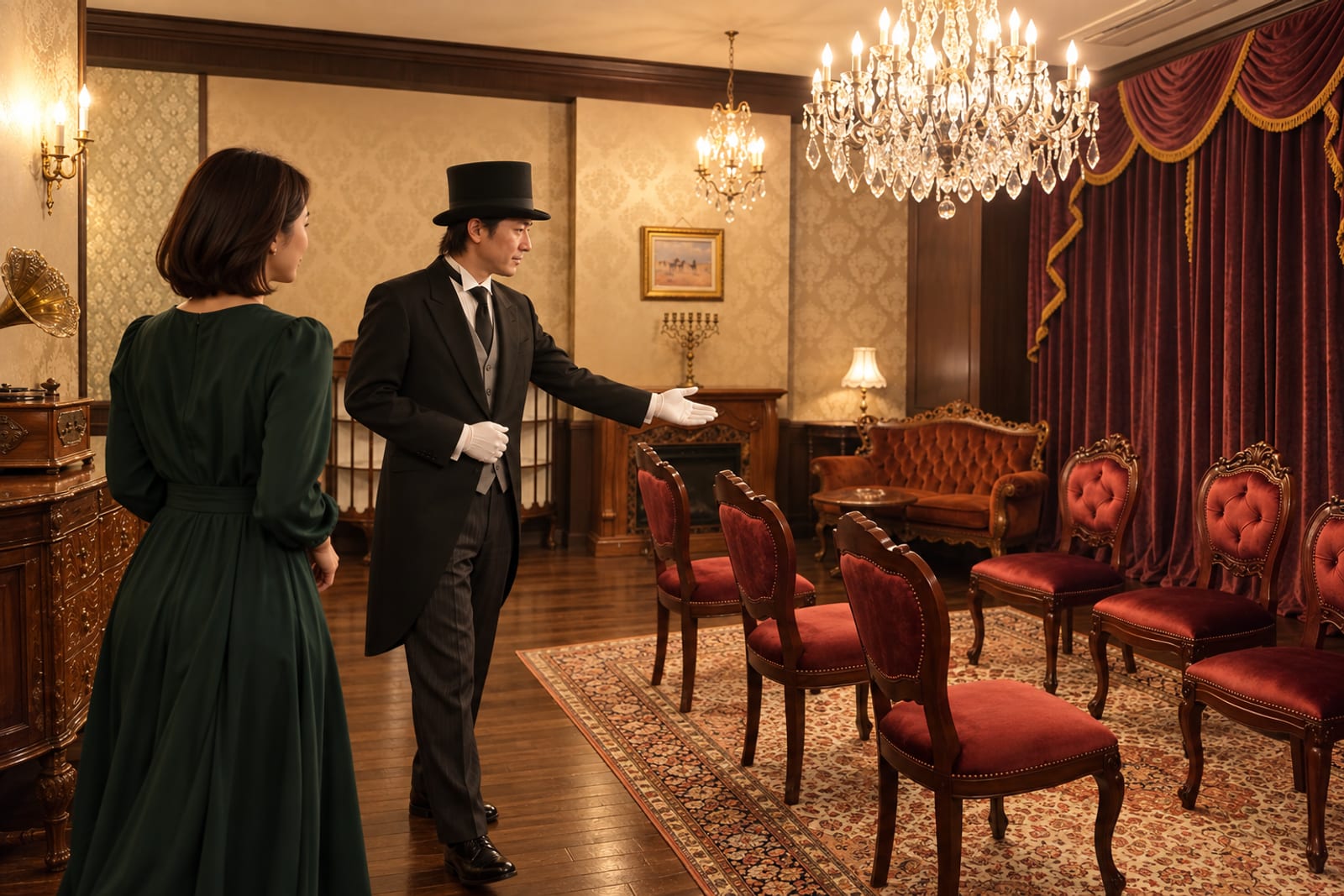
The clock's chime carries time from room to room
The hall clock in the gallery is a pendulum clock 155 cm high, and its chime can be silenced. The butler does not impose the sound as an effect, but follows how the lady of the house wishes to spend her time.
Read moreQAre a manor house and a country house the same thing?
They are sometimes spoken of in overlapping contexts, but their origins and scale are not uniform. This article treats the manor house as an entry point to understanding the great houses of the English countryside and the lives lived within them.
QDoes Queen's Butler reproduce an English house exactly?
No. It is our own concept, 'a room in an old castle', layering the gravity of the English manor house with French rococo.
QCan the Manor be used unattended?
No. A butler is always present in the Manor, handling the doors and furnishings and setting the lady's hours.
QDo female butlers also show guests round the Manor?
Yes. Both male and female butlers are in residence and explain the origins of the spaces and the handling of the furnishings. Please tell us any preference when you book.
QCan a first-time guest enjoy the history of the rooms?
Yes. The butler distinguishes era, style, material and use, and explains each piece in turn, starting with what is before you. There is no need to learn every name; you may ask about whichever door or piece of furniture catches your eye.
QDoes the experience differ between one guest and several?
For one guest we centre the visit on the quiet Study or the fireside; for several we arrange the room so that no one's view or movement is obstructed. Up to six guests; the butler proposes a route while listening to each person's wishes.