
The Origins of the Butler
In the keeping of the bottles, the first shape of trust.
About The Origins of the Butler
The origins of the butler lie in the French word bouteillier, thought to be the root of the English word butler, which described the one entrusted with the bottles and the cellar. The responsibility to guard things of value and present them correctly when needed became the first shape of the duties that would later bring order to the people, objects and hours of a household.
IIt begins with the word bouteillier
The word butler is thought to trace back to the French bouteillier. At the heart of the word is the bottle, and the role was to be entrusted with the bottles of wine and the cellar in which they were stored.
Yet to see it as merely carrying bottles is to miss the essence. To be entrusted with what the household held valuable, to know its condition and number, and to guard it until called for: this demanded a trust that kept order even where the master was not looking.
An etymology is not an answer that fixes today's duties in a single word, but a starting point from which later roles can be read. Begin with the concrete object, the bottle, and the movements come into view: to store, to select, to present, to return.
IIThe weight of keeping the bottles
What lies in the cellar, and which bottle is to be used when. The more precious the goods, the more care their storage and issue demand. In the butler's first form lay, at once, the standing to touch the master's possessions freely and the restraint never to treat that freedom as one's own.
To hold the keys is no ornament of authority. It is to answer for what lies behind a closed door, to open it without hesitation when needed, and to restore the order once the need has passed. It is this repetition that gives trust a visible form.
Not accuracy alone but timing is part of the responsibility. However carefully a thing is stored, if it cannot be presented when the master asks for it, the day of the house comes to a halt. The butler considers not only the condition of the goods but when, where and by whom they will be needed.
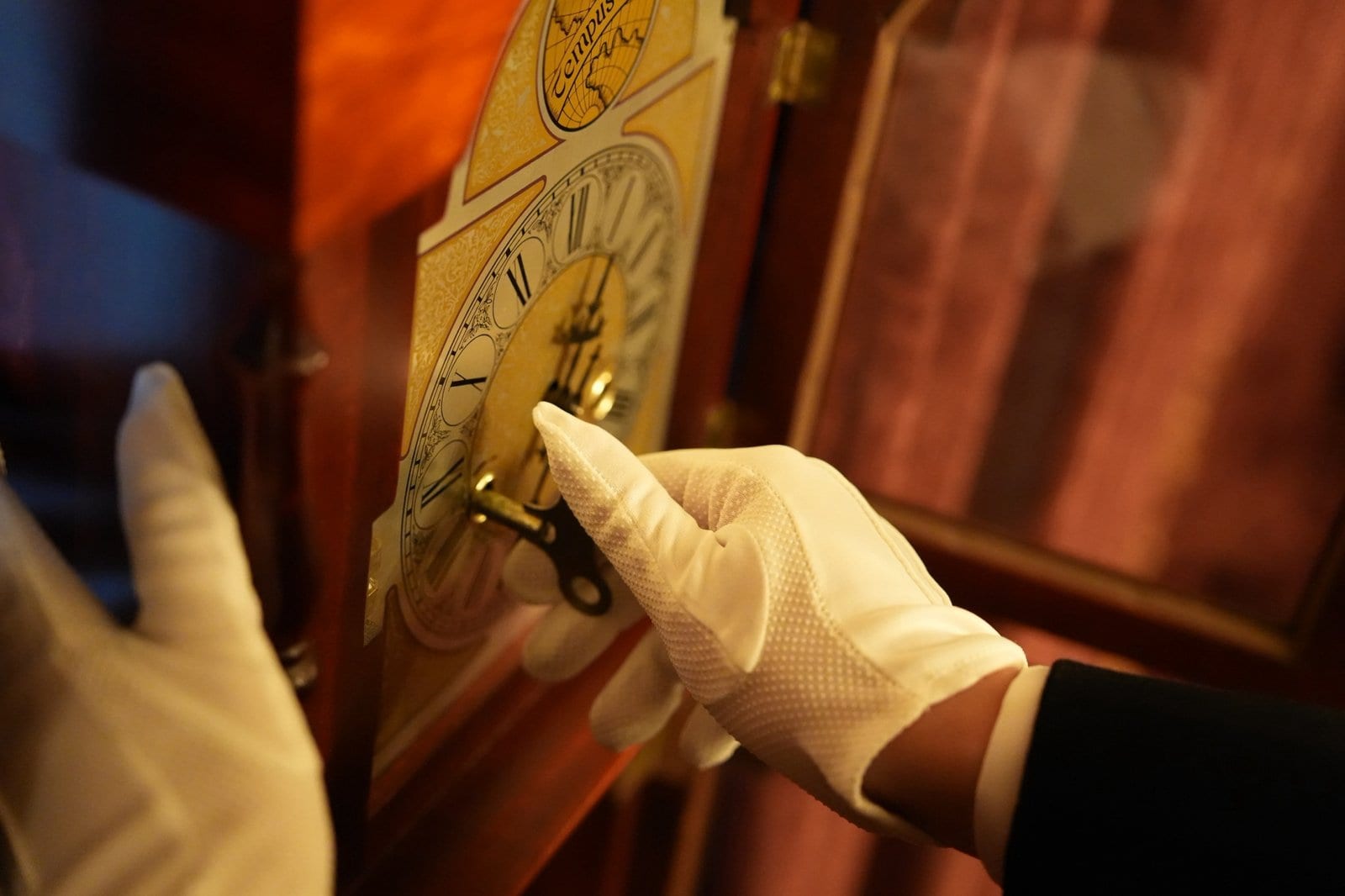
The key is the sign of a trust conferred.
Before it is a tool for opening, it is proof of having been entrusted with what to guard and when to open.
IIIFrom the care of objects to the order of the house
Life in a great house has more than bottles to set in order: silver, porcelain, clothing, letters, clocks, the rooms in which guests are received. As the role widened, the butler came to look beyond each single object and to connect the hour and place at which each would be used.
In a large household where those who cleaned, those who carried and those who kept the door were separate people, the order of their work had to be arranged so that no task collided with another and the master's time was not disturbed. The office of butler, one may understand, grew from the accuracy of keeping objects into a responsibility that surveyed the movement of people.
Take the dining table. Polished silver alone does not make the scene. The right pieces must be chosen for each place, laid by the appointed hour, and the paths of guests and servers kept from crossing. The power to handle one object correctly, and the power to bind several duties to the same hour.
IVVisible bearing, invisible preparation
The moment at which a butler presents a thing is brief, but checking comes before it. Where is it kept, is it free of tarnish or damage, at what angle should it be offered to the hand that receives it. So as never to hurry before the master, the butler completes the preparation in the hours when he is not seen.
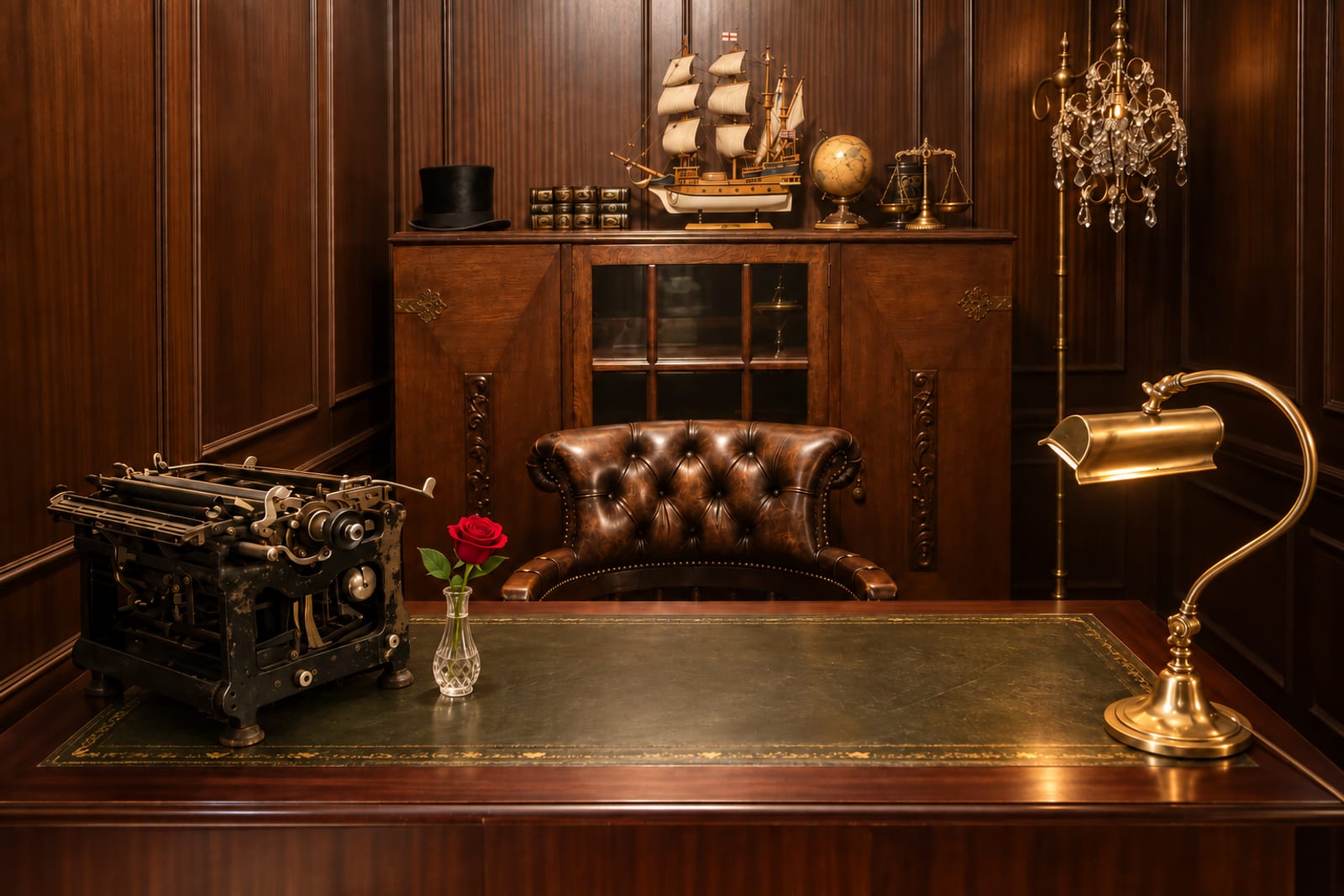
This relationship runs through the whole of a butler's duties. Rather than isolating the elegant bow, look at the objects and the time arranged so that the bow appears natural, and a single line becomes visible from the etymology to the present day. The door of welcome, the desk in the Study and the silver of the Dining Room differ in both use and form.
VThe stance of keeping, still present in today's Manor
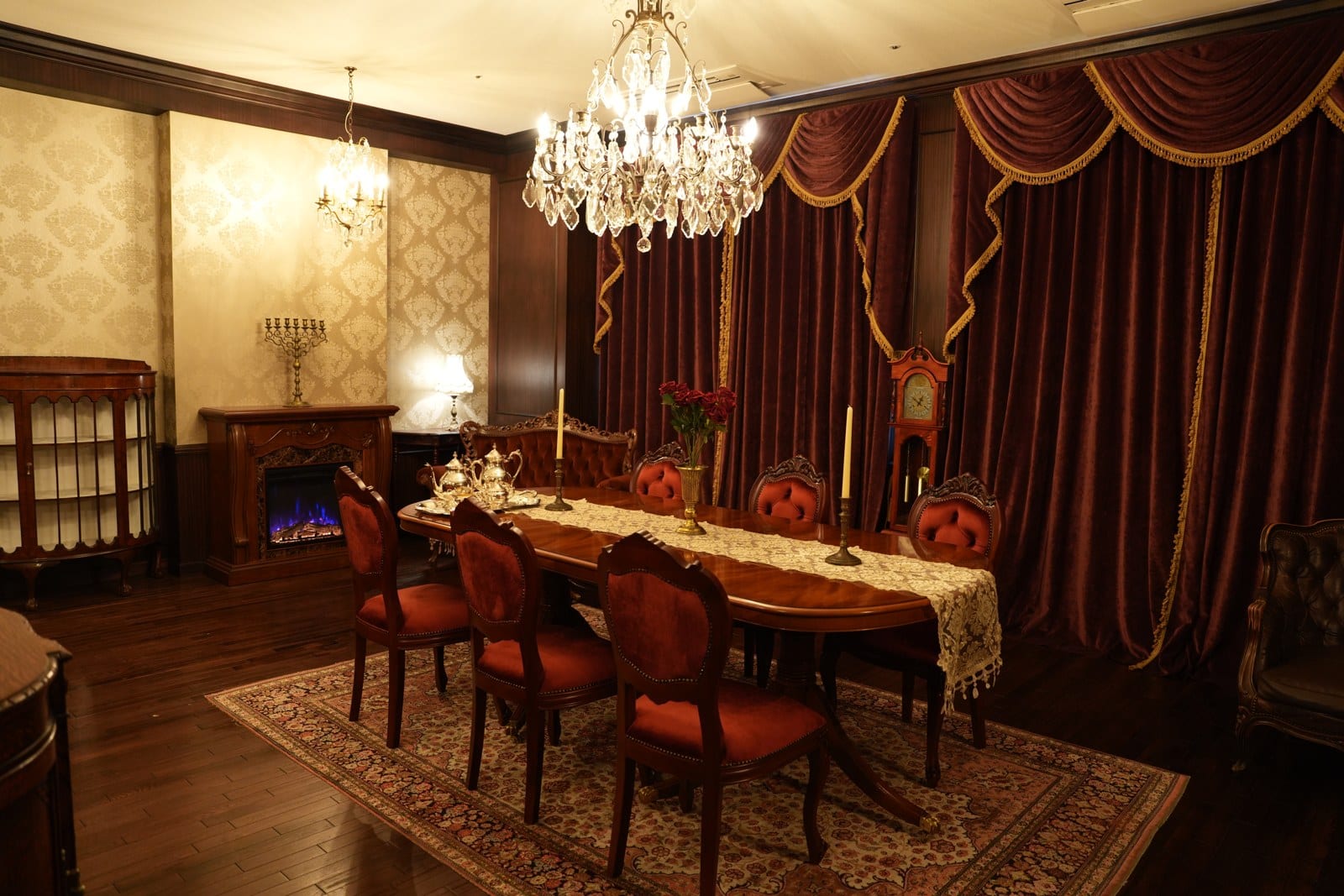
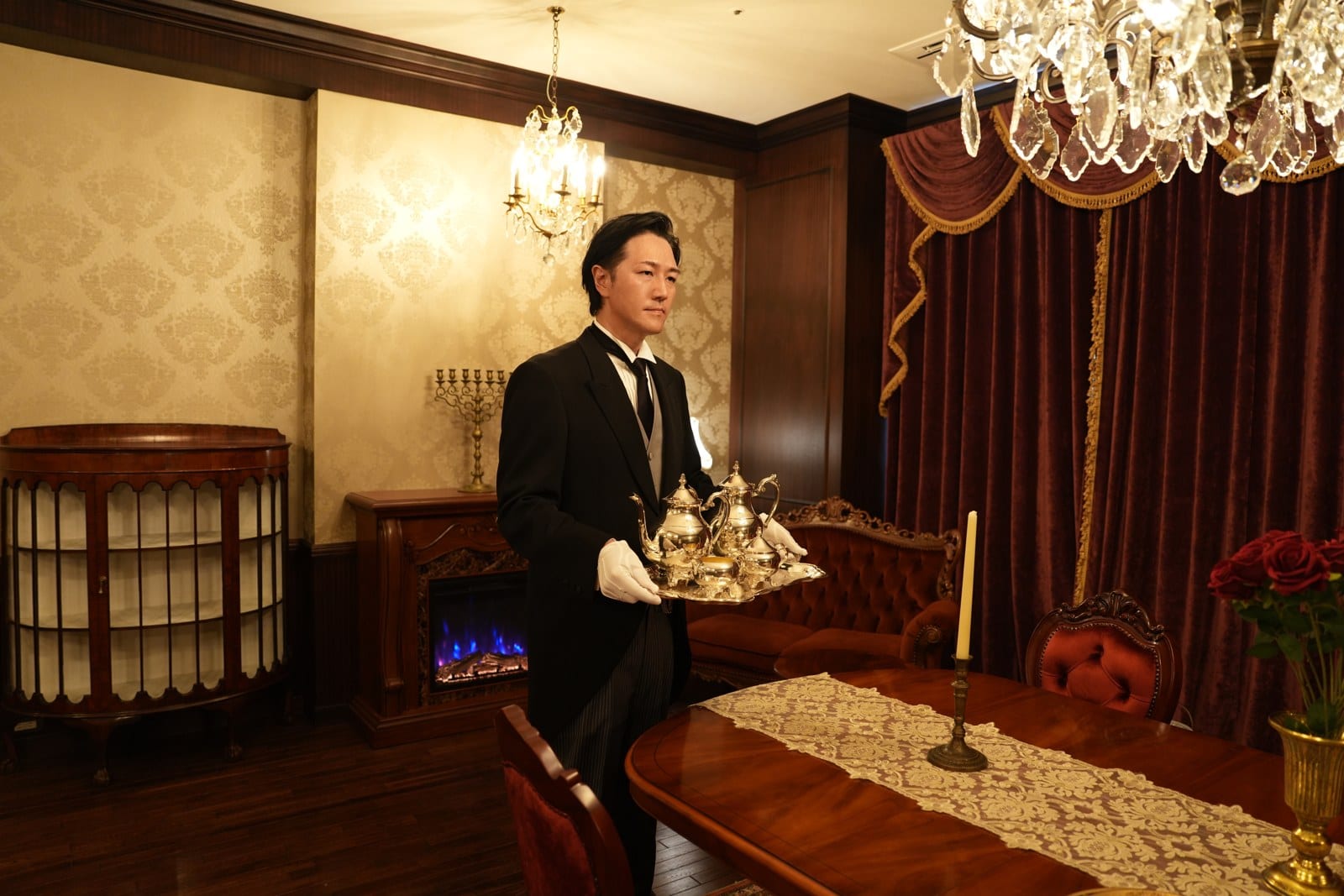
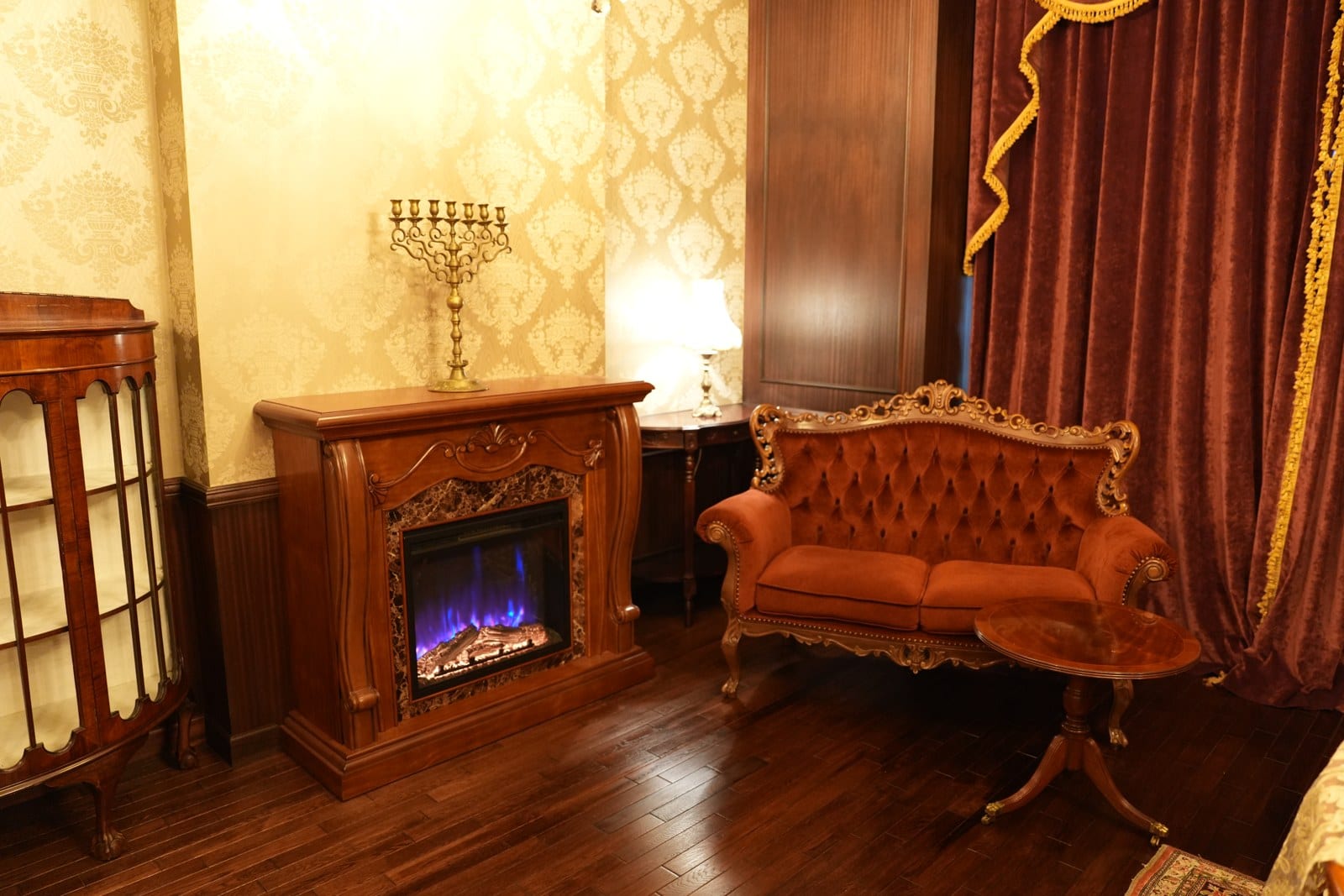
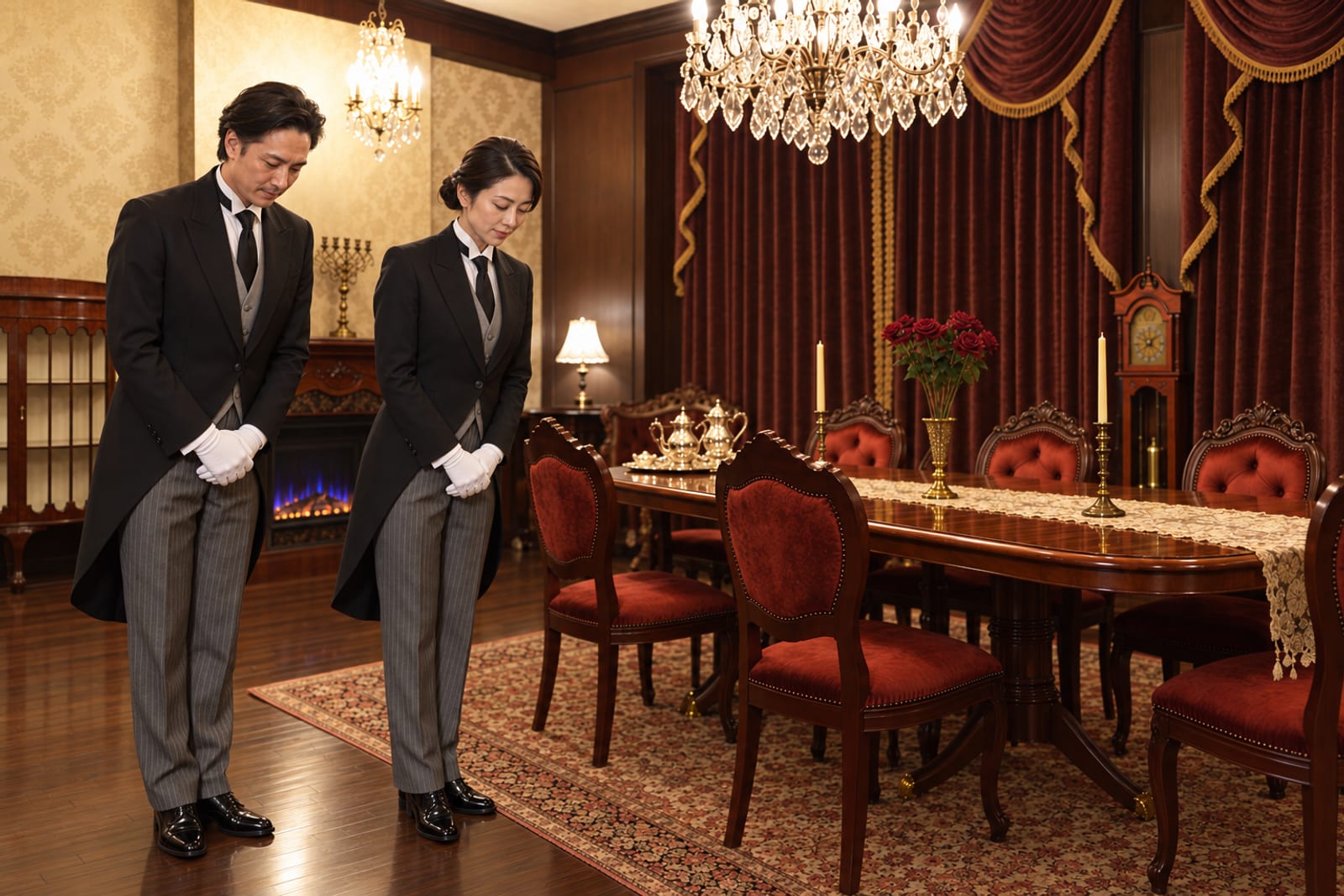
At the Manor of Queen's Butler, the butler takes your coat, handles the silver and porcelain, and opens and closes the double doors. The Manor is never let out unattended; male and female butlers alike remain in the house, guarding its objects and its hours.
The words we hold dear at the Manor express the butler's stance in keeping the door in a single sentence. The office is not that of the etymology's age, yet the core of guarding what one has been entrusted with lives on in the words of the present.
We do not hand over the keys. In this Manor, keeping the door is the butler's work too.
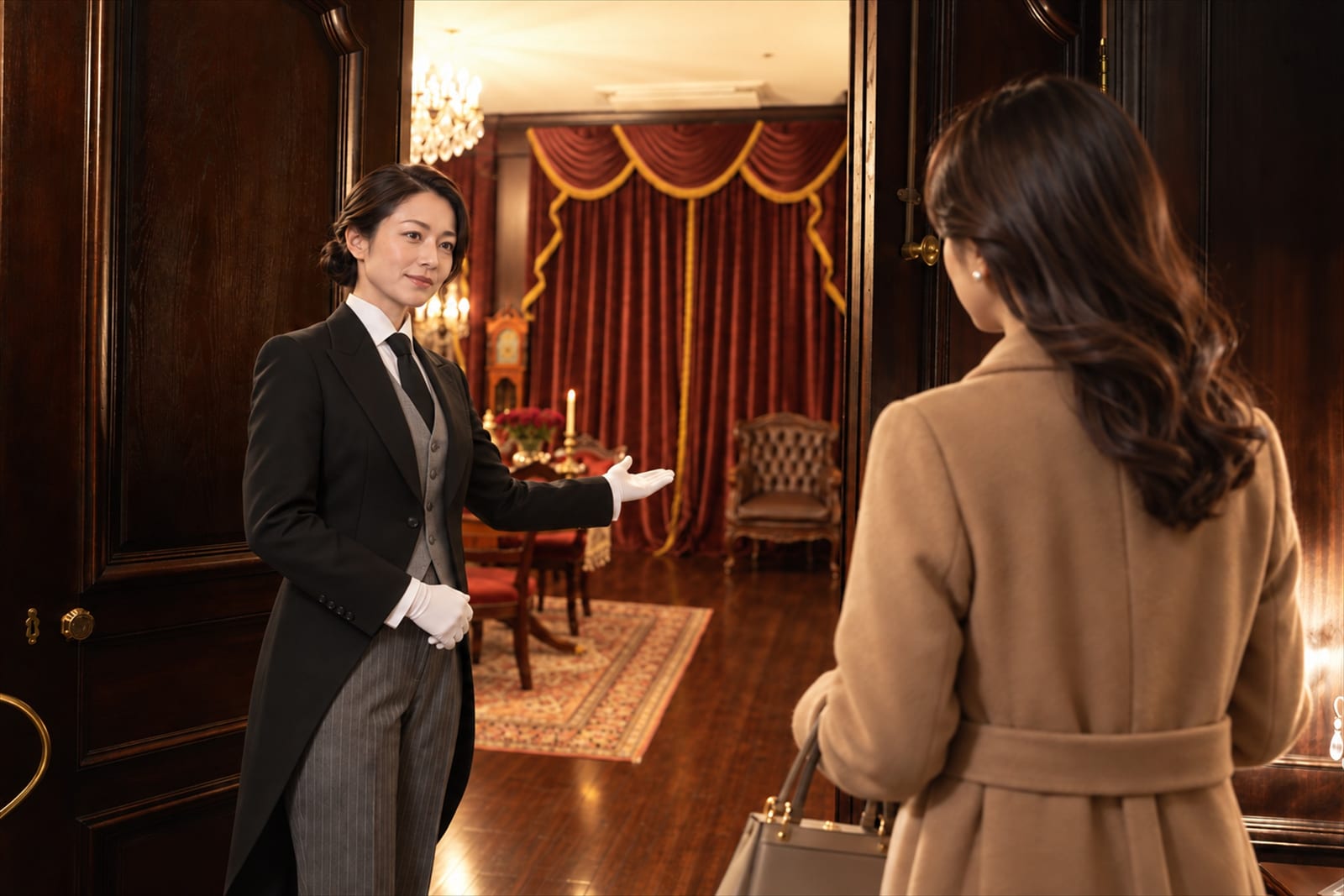
In opening, and in closing.
So that the lady of the house may give herself wholly to her time in the Manor, the door is the butler's to keep.
The role in the etymology and today's Manor
| Aspect | The role seen in the etymology | Its form at the Manor of Queen's Butler |
|---|---|---|
| Keeping | Guarding the bottles and the cellar | The butler handles your coat, the silver, the porcelain and the doors of the Manor |
| Knowing | Knowing the condition and number of the goods | Confirming the origins and handling of the furnishings, and preparing each scene |
| Choosing | Judging which goods are needed | Choosing the rooms and pieces that follow the lady's wishes |
| Presenting | Handing over the goods at the fitting moment | Offering, without haste, at an angle and distance easy to take in hand |
VIThree duties that can be read from the etymology
The first is keeping: to know the condition and place of each object, and to let nothing come to harm. The second is choosing: to judge, among many objects, which suits the occasion. The third is handing over: to present, quietly and correctly, at the moment the master needs it.
These three appear when the Study is set in order, when porcelain is passed into a guest's hands, and when the door is opened for an arrival. In understanding a butler's work, the etymology is not merely knowledge of an old word but a clue to reading the bearing itself.
VIIUntangling common misunderstandings
From the etymology bouteillier one cannot conclude that the butler was only ever concerned with wine. The etymology marks the starting point of the office, but the actual role has changed with the scale of the house, the age and the life of the master.
Likewise, to see the keeping of the keys purely as great power is one-sided. A butler's authority lies within the range entrusted by the master, and its purpose is to give form to the master's will. The master stands at the centre of the story; the butler, having taken up the responsibility, supports them.
VIIIThe care of the wine is a responsibility for the whereabouts and condition of what is drunk
The care of the wine is not the single act of carrying a bottle but a continuing responsibility to know what is where, in what condition, and when it will be used. If the one entrusted relies on memory or instinct alone, the thing cannot be found when needed and the master's day comes to a stop.
English Heritage, in its account of the butler in the medieval castle, states plainly the responsibility for managing the provision of drink. It is a clue that confirms, beyond imagining the office from the etymology alone, that a role for keeping the drink was in fact established in historic households.
The one who keeps must also look not only before use but at what remains after, and prepare for the next occasion. Because of this cycle, keeping, choosing and handing over are not separate functions but connected as one responsibility.
butler (in charge of drink)
IXIn the hands that handle silver, too, the responsibility from the etymology can be seen
Responsibility for silver is not only a matter of showing a polished surface; it is to know the kinds, numbers, condition and whereabouts of the pieces, and to choose those that suit the occasion. English Heritage's account of the butler's duties also lists the care and safekeeping of the silver, the arrangement of the table, receiving guests and locking up.
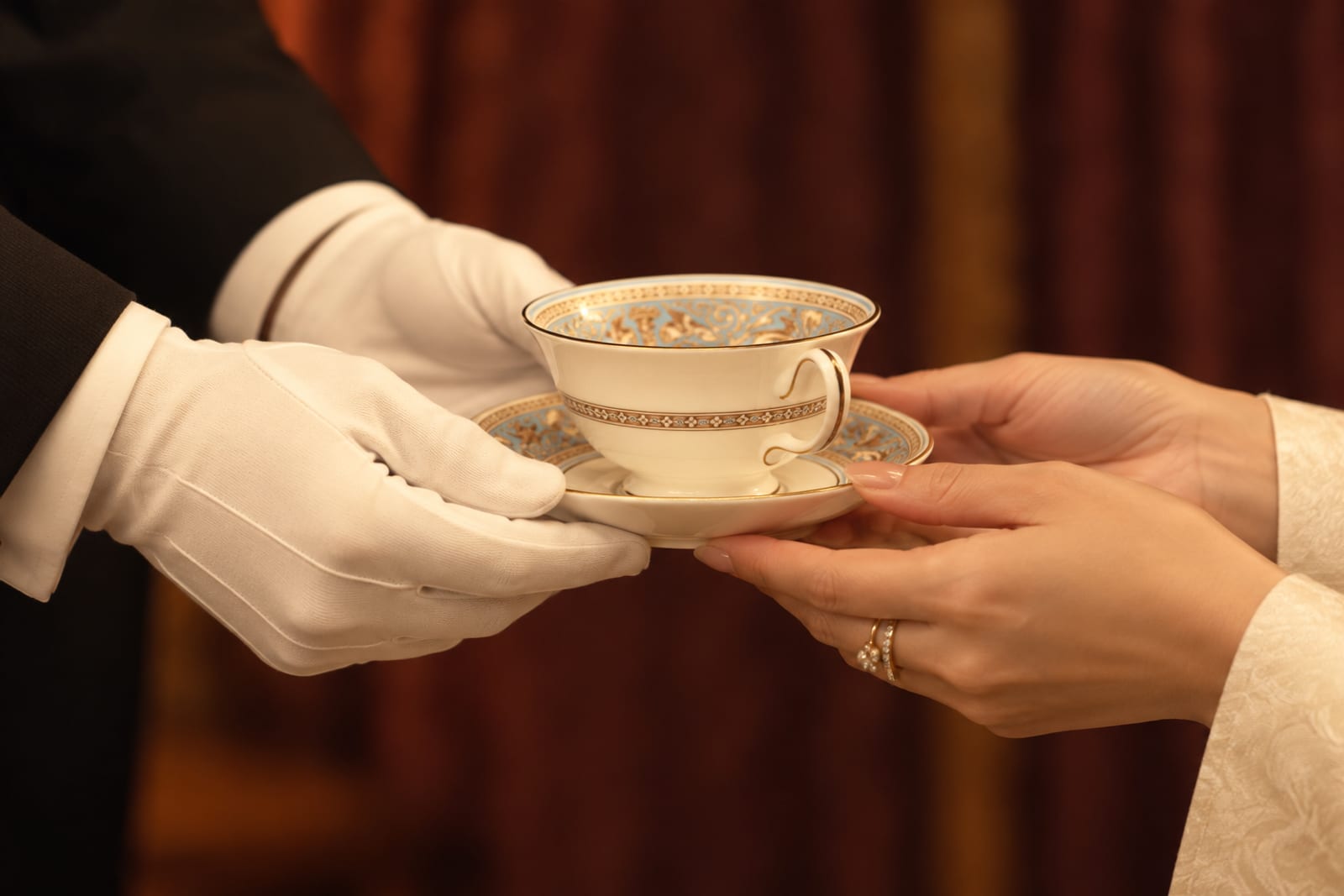
At the Manor of Queen's Butler there is silver you may actually take in hand, Christofle Marly among it. The butler offers a piece watching its angle and the lady's hands, receives it once it has been used, and sets it in order for the next time.
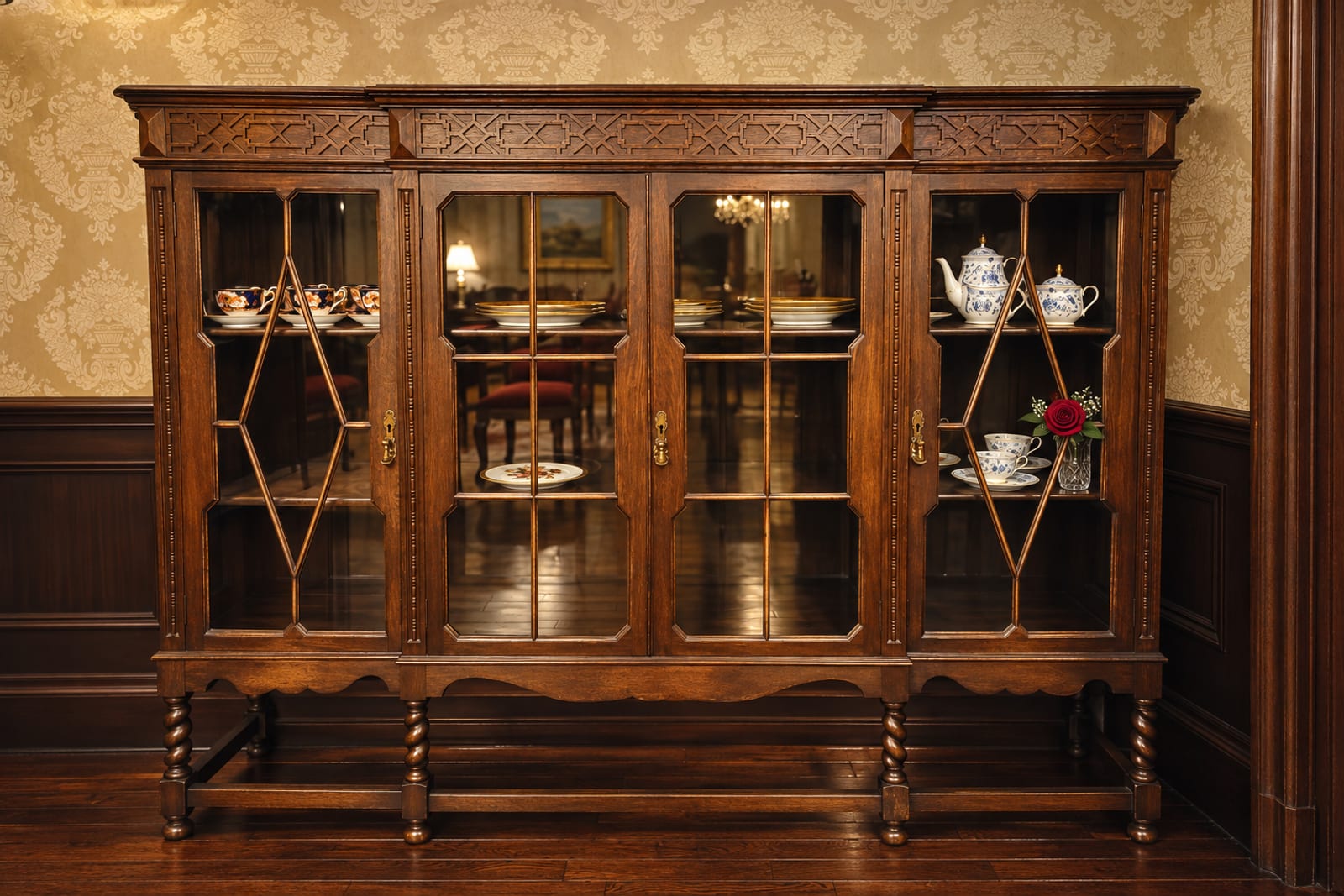
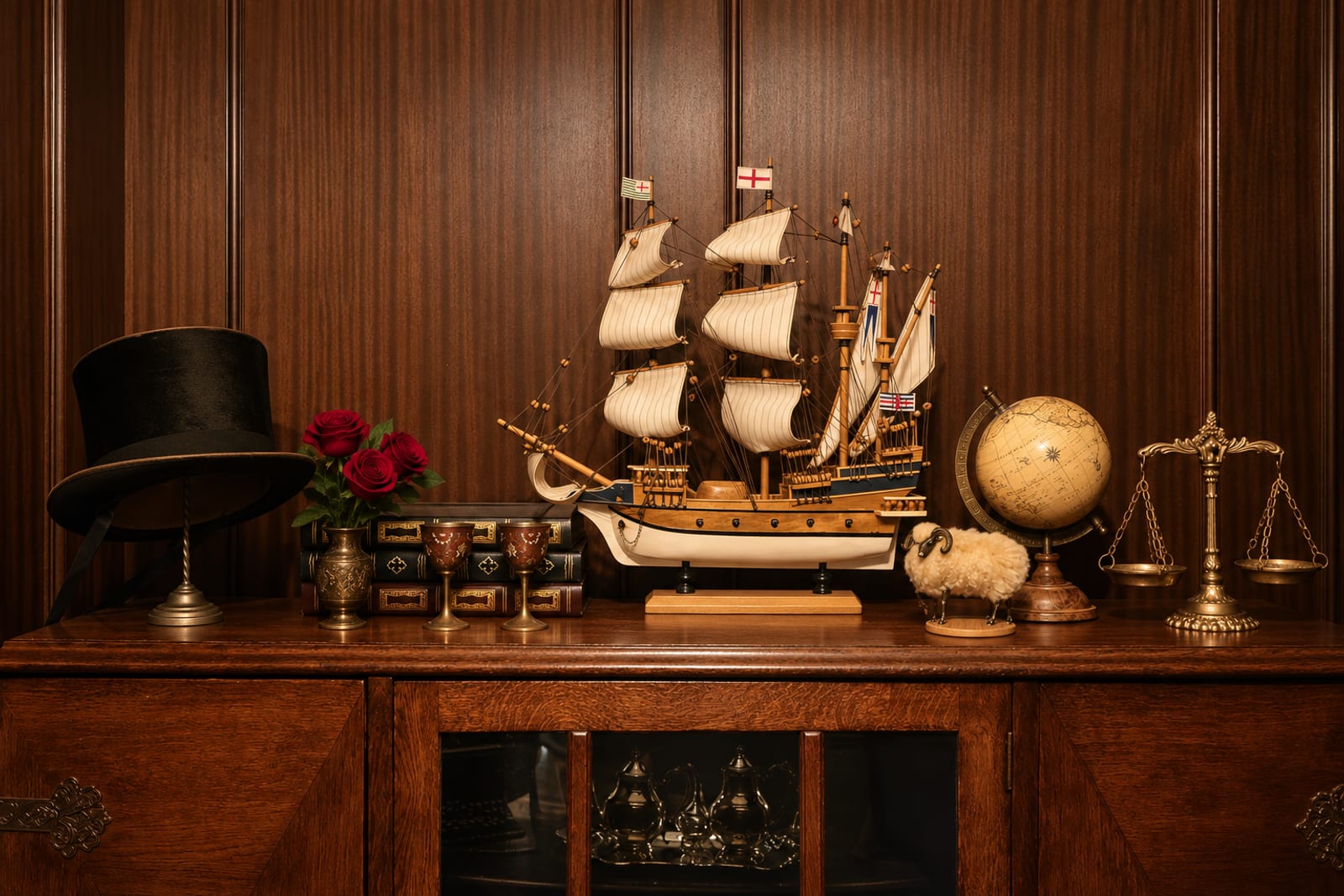
When you look at the silver and porcelain lined up in the cabinet, imagine not only the ornament but the whole sequence of taking out, carrying, laying and returning. It is the checking behind a brief act of service that gives you the eye to read a butler's work.
The pieces on the shelves await the next scene.
Because a butler knows their whereabouts and condition, the piece that is needed can be presented without hesitation.
XAfter the etymology, read a butler's day through his bearing
To read through bearing is not simply to admire the bow or the white gloves, but to consider what each movement protects. The hand that opens the double doors divides the Manor from the world outside; the hand that takes your coat supports the lady's preparation; the hand that presents the silver joins the piece to the hour.
From arrival to farewell, the butler repeats the work of keeping, checking, arranging, presenting and returning. The bottles that appear in the etymology and the doors and porcelain of today's Manor are not the same objects. Even so, place at the centre the responsibility to guard the range entrusted by the master, and history and the present connect without strain.
Read next about the Victorian butler, and the office that binds people, objects and hours together becomes clearer still. Taking the etymology as a starting point, do not fix the image of later butlers to a single word, but note the differences that came with the scale of the house and the age.
Five steps for watching a butler's hands
Know the whereabouts
Confirm what is kept where, and in what condition.
Read the occasion
From the lady's wishes and the hour, judge which pieces will be needed.
Set in order
The butler first confirms the condition and position of the piece and its harmony with the scene.
Present
Offer, without haste, at an angle and distance easy to take in hand.
Return
Receive the piece once used and restore it to its place for the next time.
As what is kept changes, so what must be checked widens.
| Object or place | The responsibility of keeping | What reaches the master |
|---|---|---|
| Bottles and cellar | Know the whereabouts, condition and time of use | The right bottle can be chosen and presented when needed |
| Silver and porcelain | Confirm kind, number, condition and harmony with the scene | A table laid with pieces that befit it |
| Coats and belongings | Receive with care and keep without confusion | Time in the Manor unencumbered, and everything returned on leaving |
| Doors and keys | Guard the boundary of the house and the timing of opening and closing | Arrival and farewell flow quietly into one |
Though the objects differ, the responsibility to know the range entrusted and to bring it to the moment of need is the same. Look not only at the butler's hands but at where the pieces are kept, and at the checking that follows their use.
Three perspectives to read after the etymology
Binding the duties of a day
From a modern butler's day, see how separate preparations are drawn into a single span of time.
Read more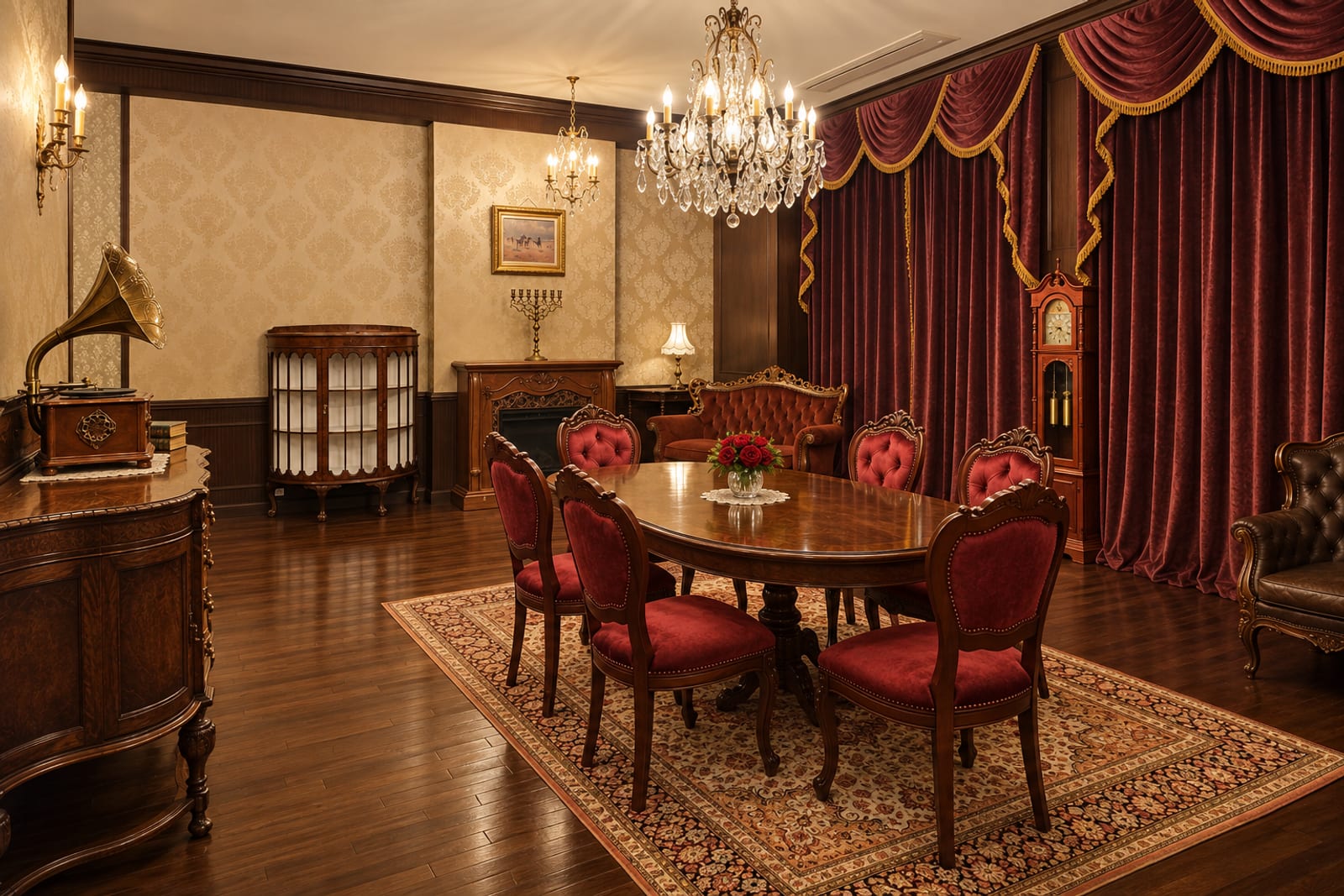
Binding the rooms
See the rooms of an English manor house through the master's day and the movements of the servants.
Read more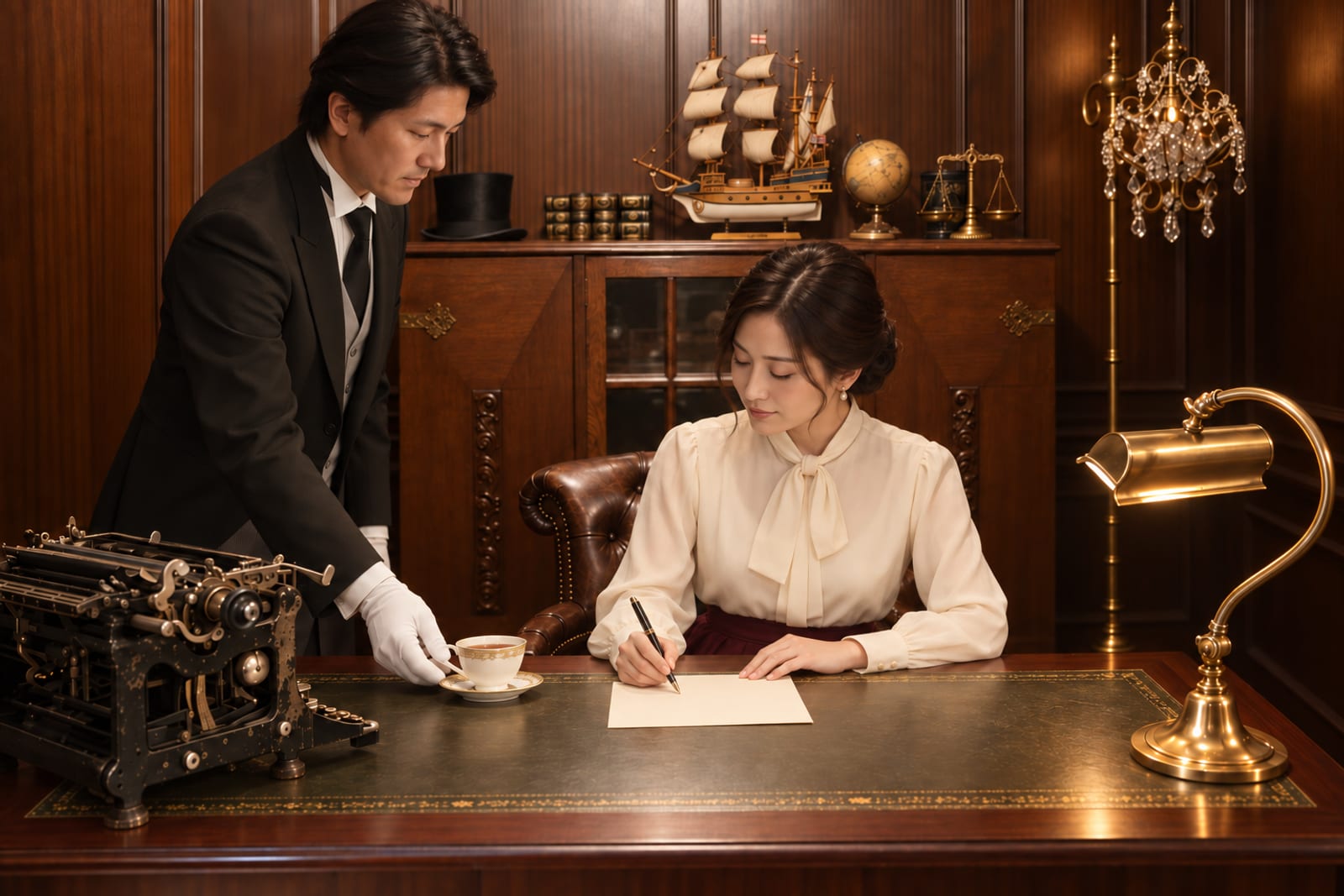
Seeing the one who is served
Move on to the stance in which the queen takes centre stage and the butler supports her will and her time.
Read moreWhat the etymology can confirm
- That there was a role for keeping the bottles and the provision of drink
- The responsibility to guard the whereabouts and condition of valuable goods
- The cycle of choosing, presenting and returning goods when needed
- That the responsibility of keeping is a clue to reading today's bearing
What the etymology alone cannot decide
- Explaining every later duty from the etymology alone
- Fixing to a single form the division of duties that varied by age and by the scale of the house
- Treating the keeping of the keys as a power detached from the master
QWhat is the etymology of the word butler?
It is thought to trace back to the French bouteillier, tied to the role of keeping the bottles and the cellar. The etymology does not fix later duties in a single word; it is a starting point for reading the responsibility of keeping.
QIs the role in the etymology the same as a modern butler's work?
It is not. The duties widened with the age and the house, but the etymology is a clue to understanding the responsibility of being entrusted with things of value and handling them correctly.
QWhat is kept at Queen's Butler?
We take your coat on arrival, and the butler handles the Manor's silver, porcelain, furnishings and doors. He confirms the condition of each piece and the scene, and prepares it for the moment the lady needs it.
QCan I meet a female butler at the Manor?
Yes. Queen's Butler has both male and female butlers in residence. Please tell us your preference when you enquire.
QKnowing the etymology, what will I see at the Manor?
In the hands of the butler handling silver, porcelain, coats and doors, the responsibilities of keeping, choosing and presenting come into view. Look not only at the beauty of the bow but at the checking that comes before and after it.
QDoes the etymology alone explain the whole history of the butler?
The etymology is a clue to the starting point, but it cannot explain every later duty in one word. Go on to the articles on the Victorian butler and the English manor house to see how the office widened with the age and the house.
You may also wish to read


History lives on in a butler's hands.
Please send us your questions about the Manor, its furnishings and the bearing of our butlers.