
The Gallery and Walls
The chime of the hour is itself part of the setting.
About The Gallery and Walls
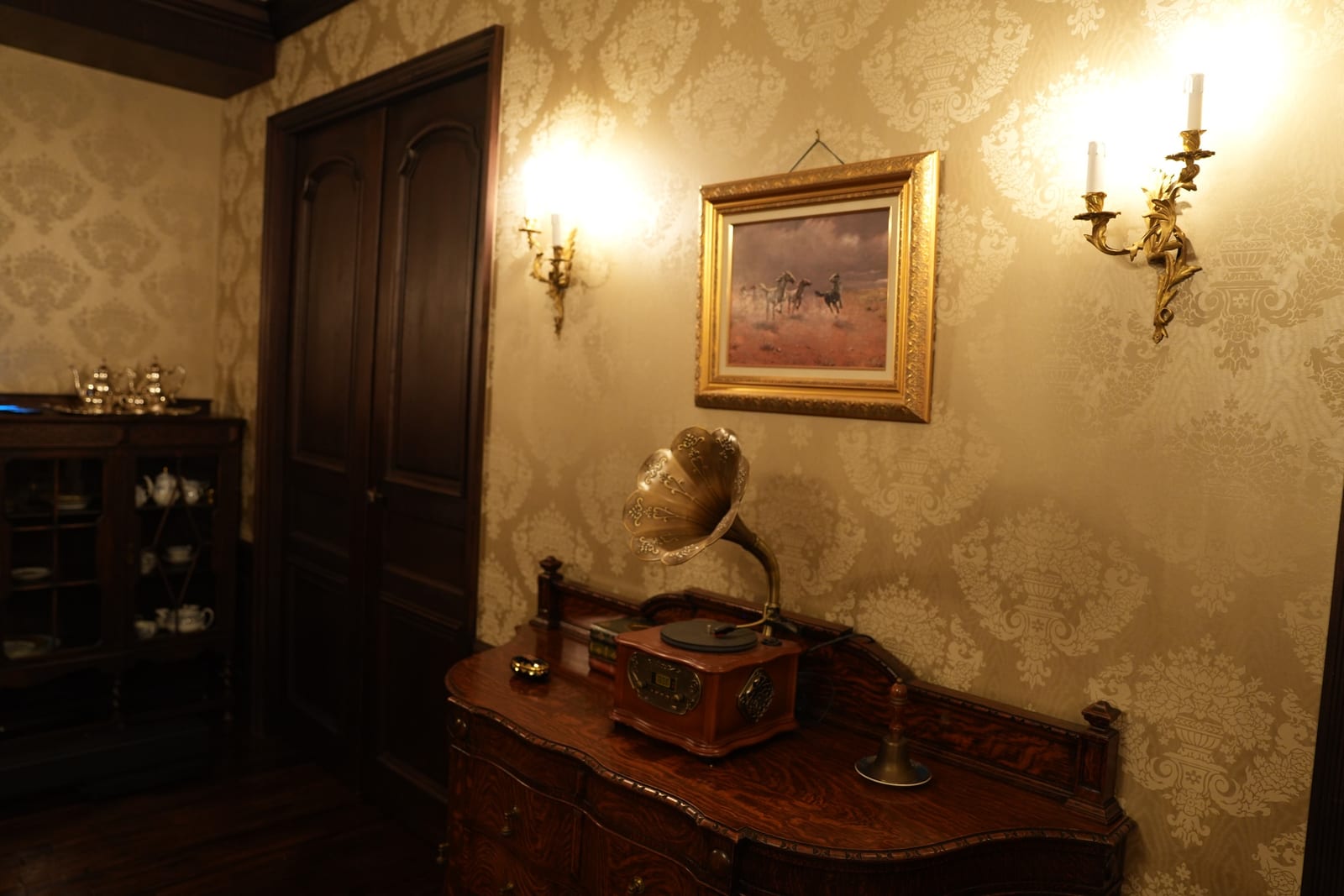
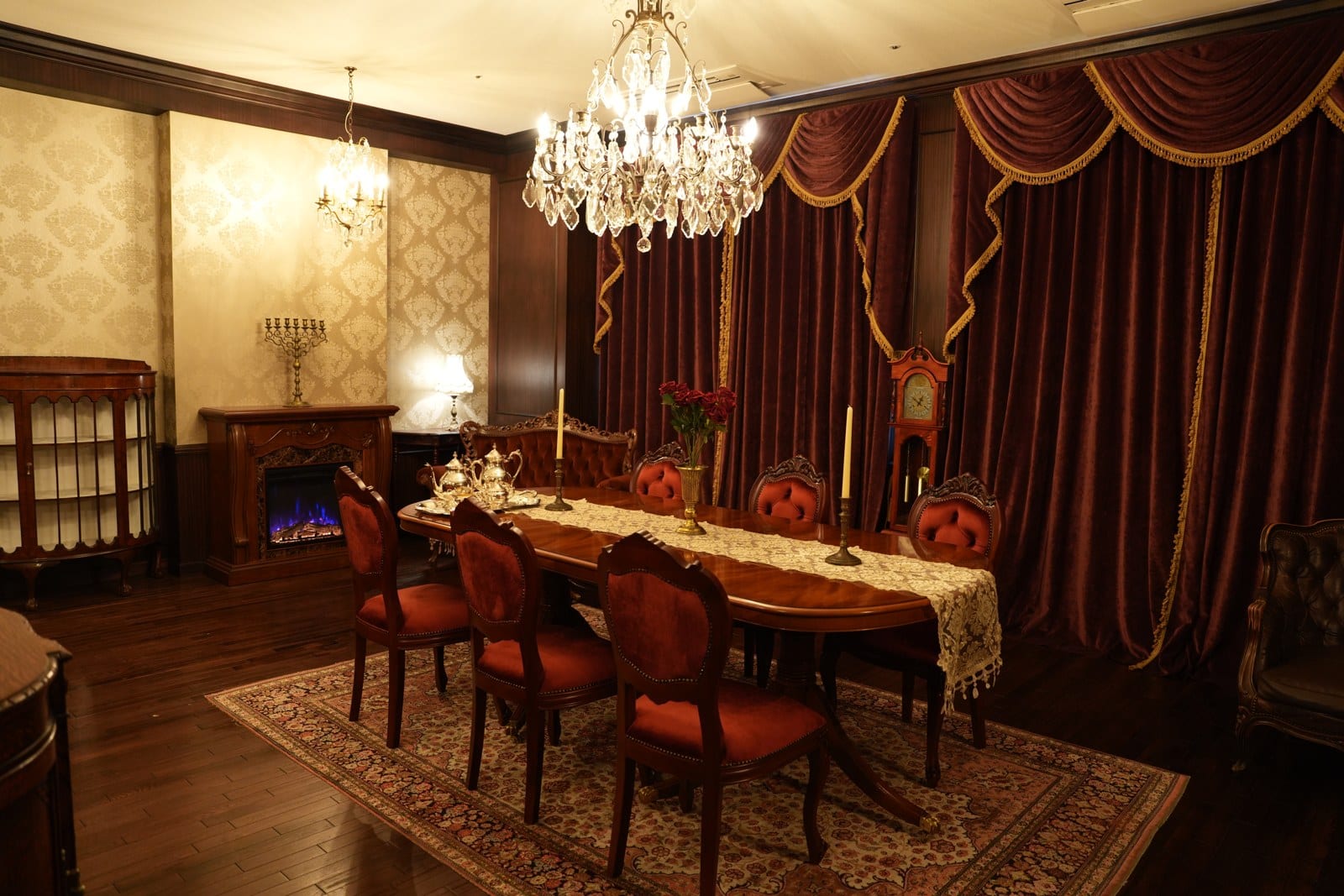
The gallery and walls are the corridor leading from the Manor's entrance to each zone, together with its three walls: the left wall, the dividing wall and the right wall. The double doors stand at the threshold between the gallery and the dining room, while the hall clock, the display cabinet and the wall sconces create a view with real depth. It is both the way through the house and a space in which to trace the provenance of its furnishings.
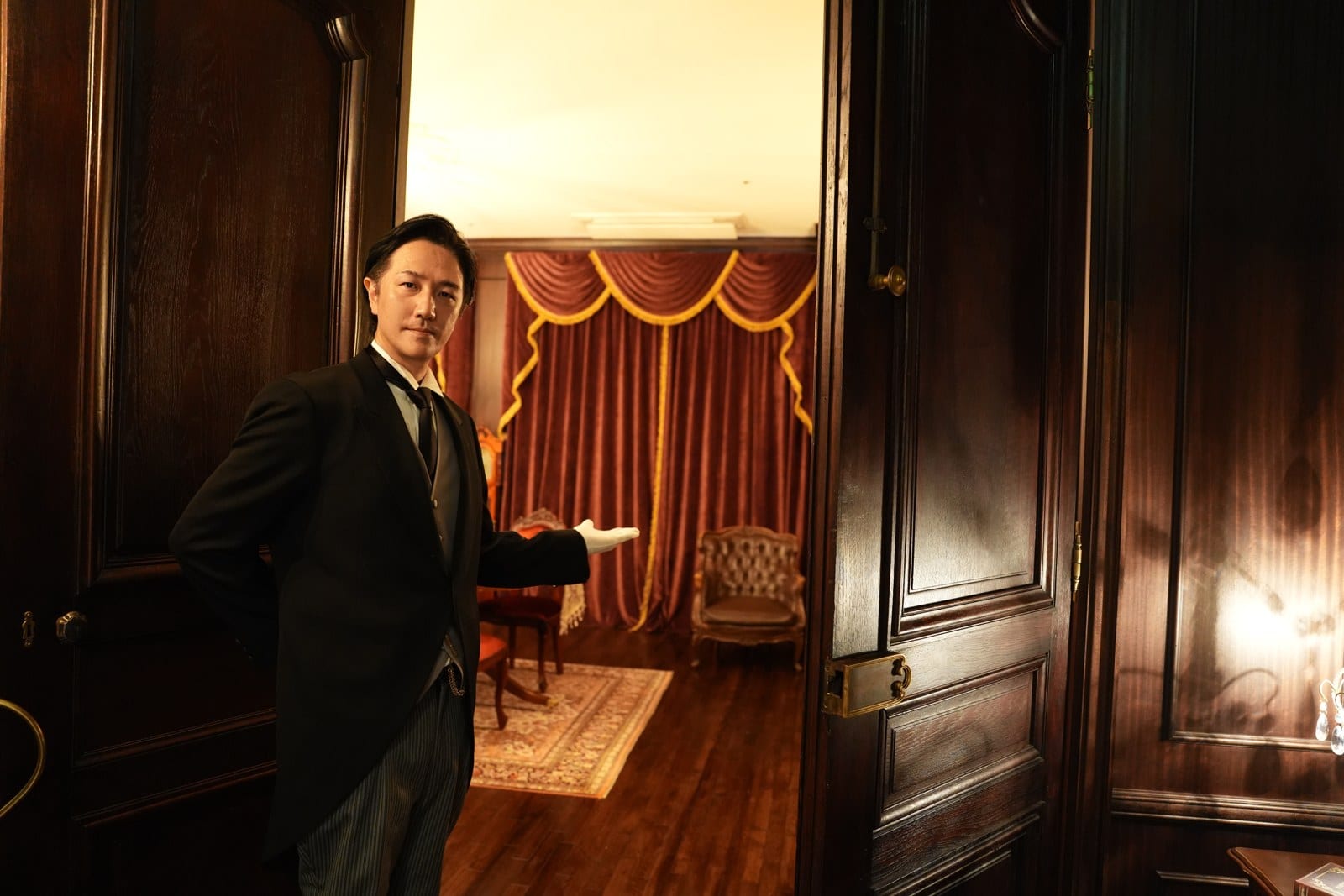
As the double doors open, the dining room comes into view
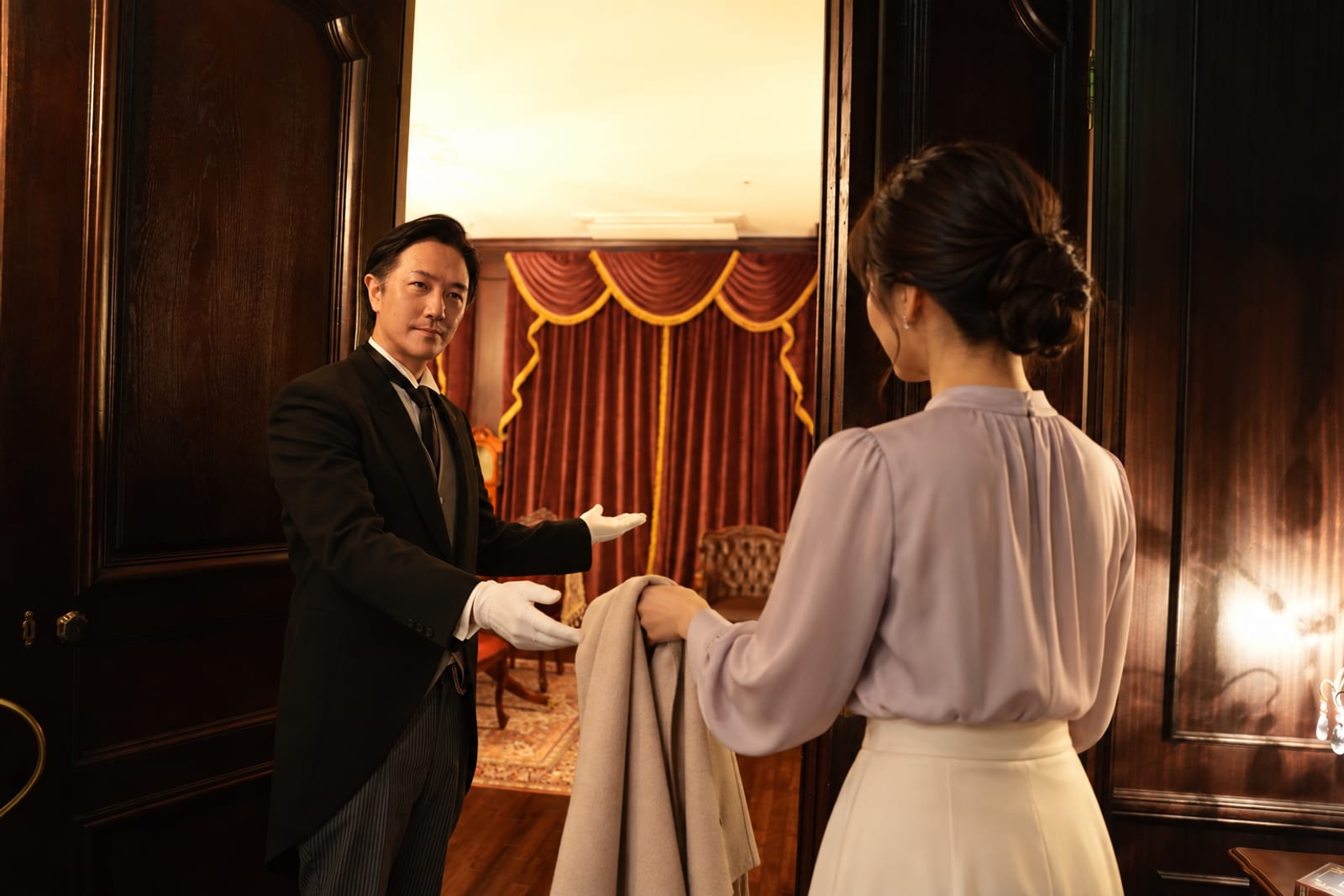
The threshold of the double doors marks the moment one steps from the gallery into the dining room. Your butler places a hand on the great French oak doors, checks your pace, and opens them quietly. As the closed wooden panels part to left and right, the dining room appears beyond, with its table, chairs and light.
Standing some 2,480mm tall, the doors do more than divide one space from another. Closed, they hold the view of the gallery; in the moment they open, they turn gallery and dining room into a single scene. Your butler does not pass through first, but holds the doors and indicates the way ahead.
For one guest, the view opening from the centre is yours to take in head-on; for two or more, your butler keeps a spacing so that no one's belongings brush the doors. For parties of up to six, guests pass in turn and your butler sees that the last has come safely through. It is a gesture that changes the scene within the house, quite distinct from the welcome at the entrance.
Three walls point the way with light and furnishings
| Wall | What stands there | Its role as you walk |
|---|---|---|
| Left wall | Wall sconces, oil paintings | A run of lights gives the gallery its depth and gently indicates the way forward |
| Dividing wall | Display cabinet | Forms the boundary between dining room and study, showing silver and porcelain through curved glass |
| Right wall | Hall clock, gramophone | Pendulum, chime and gramophone convey the house's sense of time in a way the eye alone cannot |
| Around the double doors | Great French oak double doors | Divide the gallery from the dining room and change the view of the house as they open |
The chime of the hall clock tells the time of the house
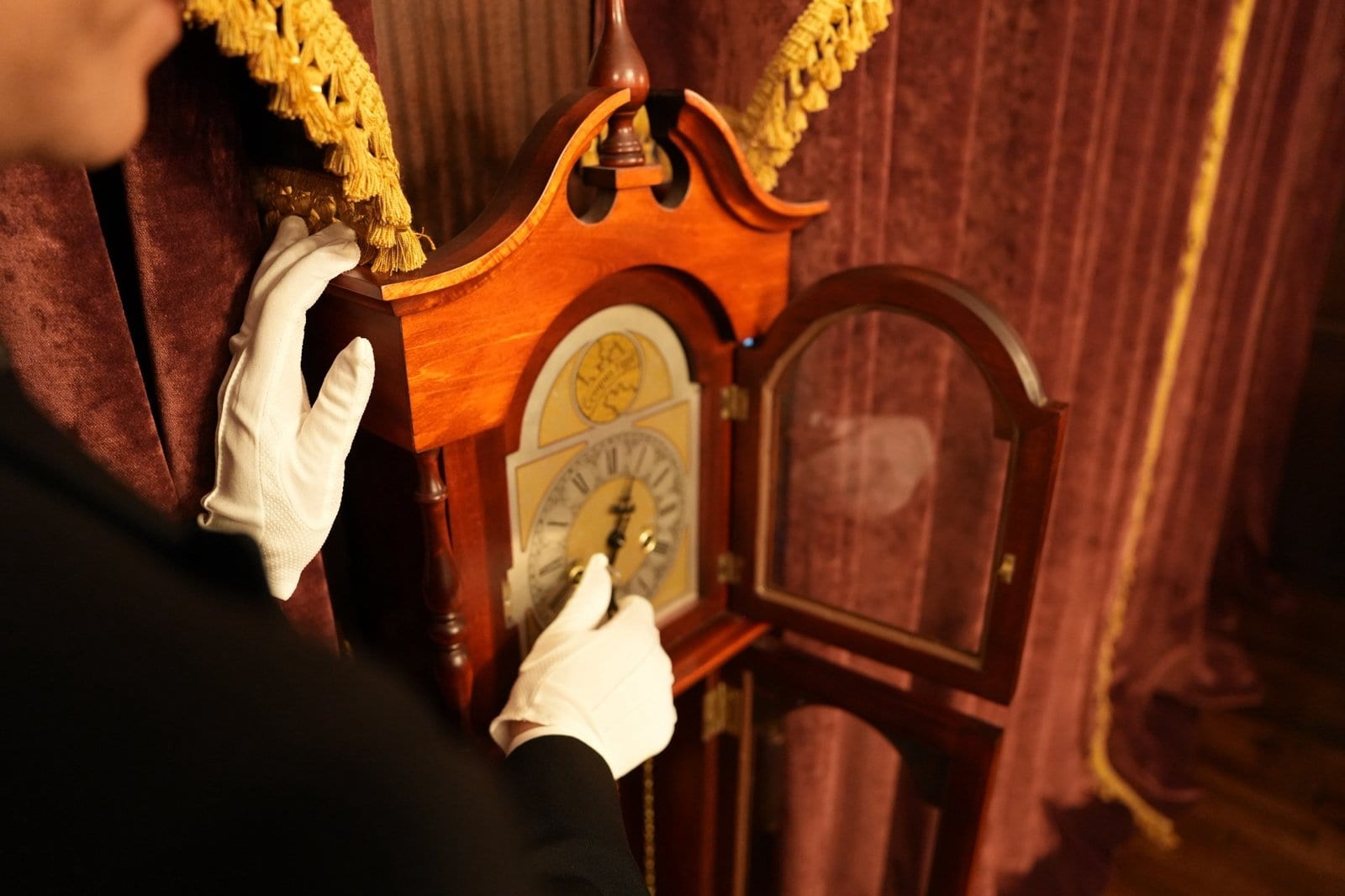
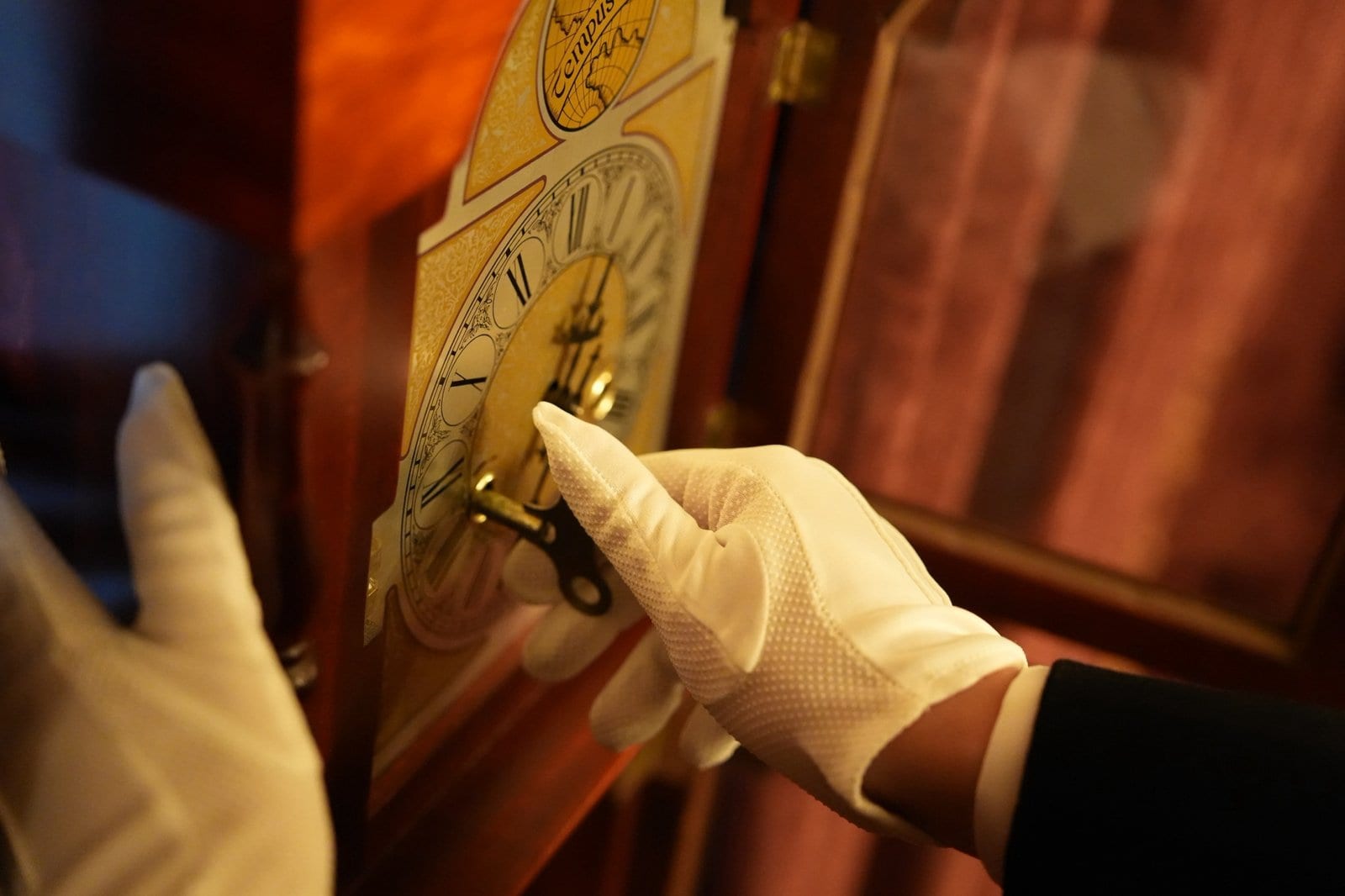
A hall clock is a tall, floor-standing clock placed in a corridor to mark the hours. Ours is a pendulum clock standing 155cm high. Beyond its hands, the swing of the pendulum and the ring of the chime are part of the furnishing that gives the gallery its atmosphere.
When the chime arrives between the turning of pages, you know the hour has moved without looking. Your butler keeps the sound from intruding, watching over the house so that it does not overlap with conversation or tea. Should you wish to see the clock's key or its dial, your butler will show you, handling it in white gloves.
For recordings or meetings where sound is unwelcome, the chime can be silenced. In photography, a figure walking past the pendulum from behind, or a butler's hand resting on the clock, captures the height and depth of the gallery.
The story of the hall clock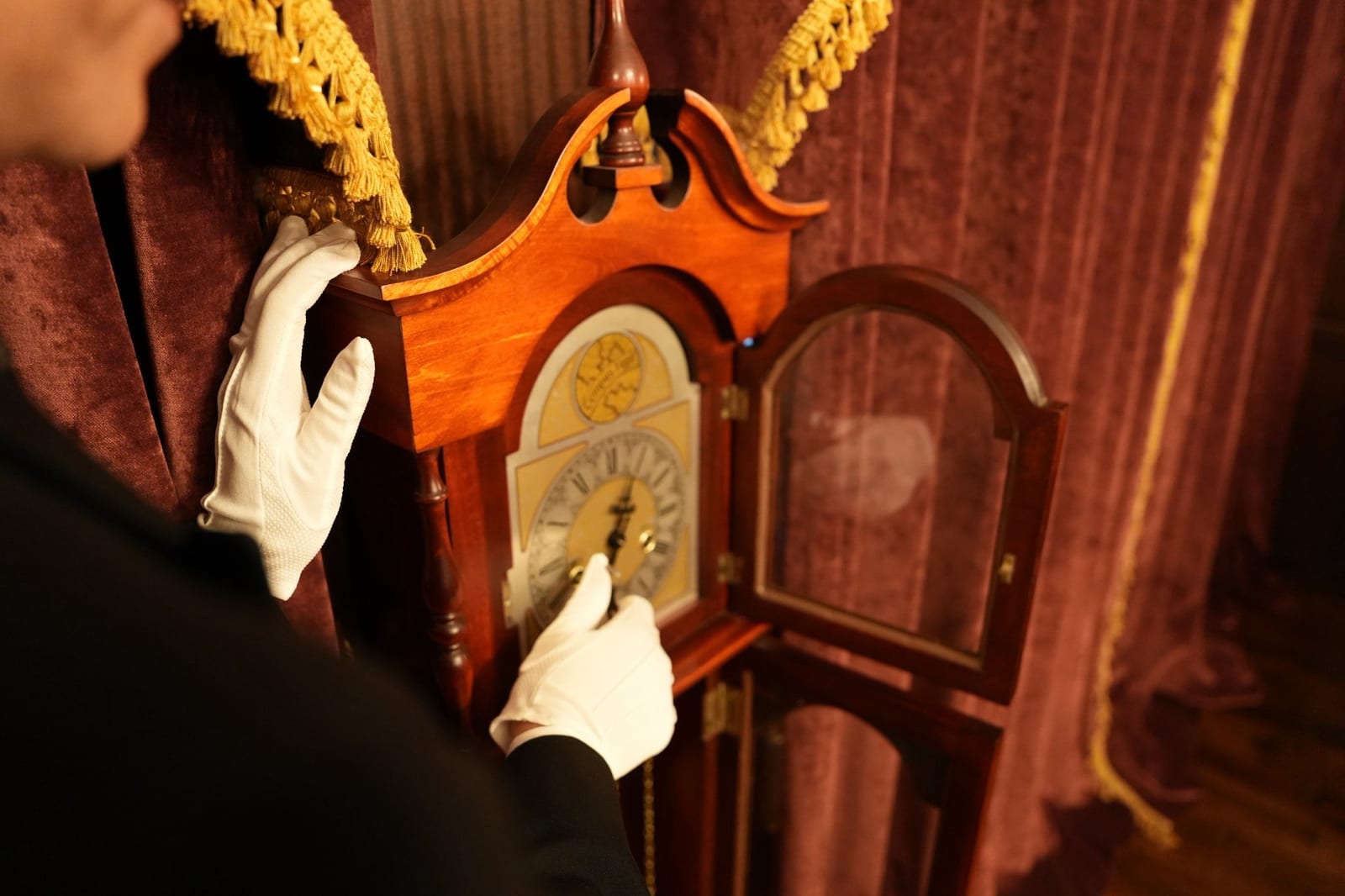
A wooden back lends warmth to the silver and porcelain
The display cabinet is an English antique standing at the boundary between the dining room and the study, holding silver and porcelain. It measures W1090 × H1320 × D455mm, with curved glass. Its outline can be seen from an angle as well as head-on, so the pieces change expression as you walk past.
The back panel is wood rather than mirror. It does not throw the light back harshly, but receives the gleam of silver and the colour of porcelain calmly. When your butler opens the doors, it is in white gloves, confirming which piece is to be touched and where it is to be returned.
The pieces here are not merely to be admired from a distance. The way your butler handles the silver and the time taken to choose a piece of porcelain can be watched as one continuous scene from before the curved glass. We do not serve meals, though you are welcome to bring your own food and drink.
See the silver and porcelain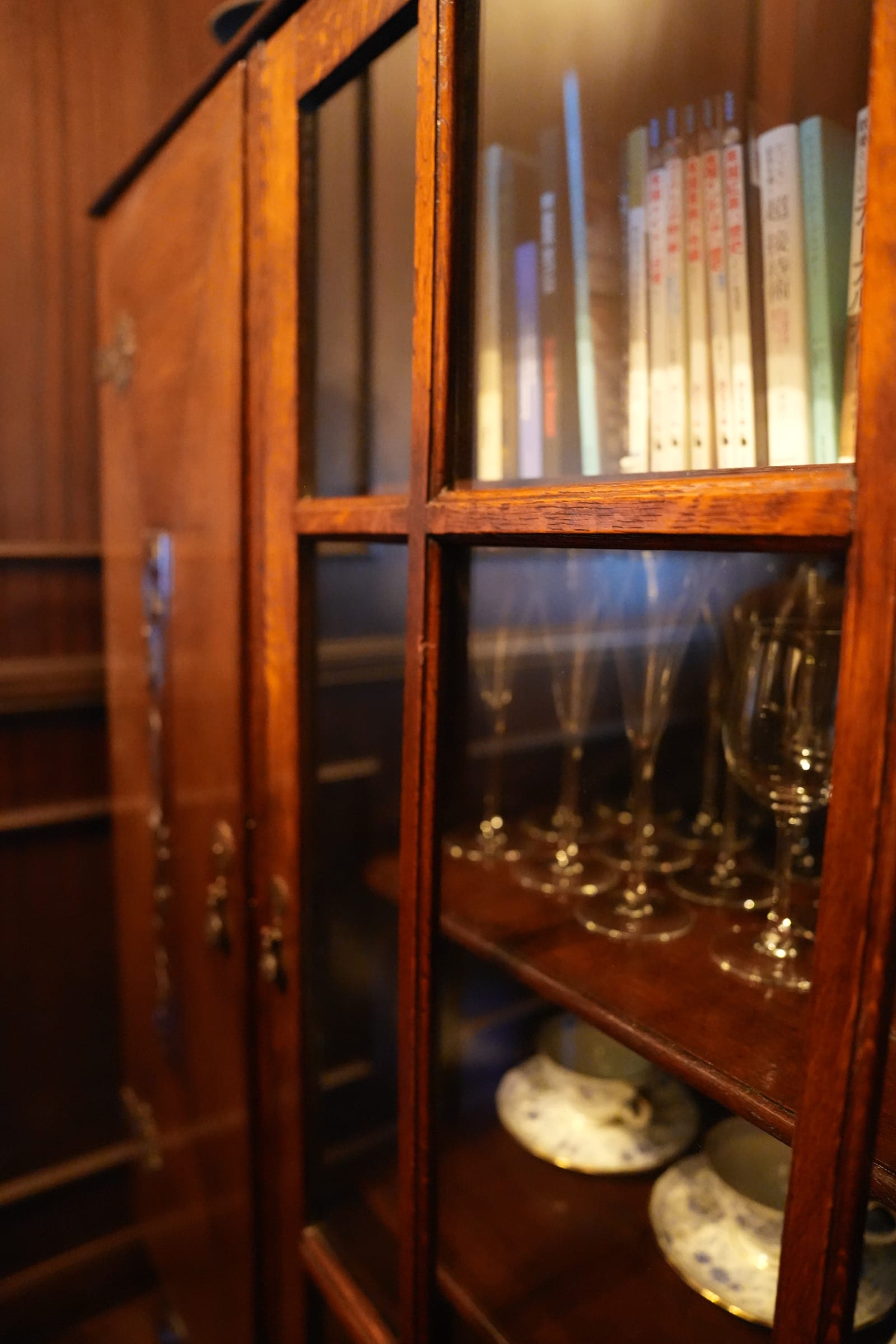
Every furnishing in the gallery has a role, down to its dimensions and sound
| Double doors | Great French oak double doors, some 2,480mm tall, marking the threshold where the formal house begins |
|---|---|
| Hall clock | Pendulum clock, 155cm high. Its chime is part of the setting and can be silenced when required |
| Cabinet | English antique. W1090 × H1320 × D455mm, curved glass, wooden back panel |
| Wall sconces | Sconces line the walls, including a pair with a botanical motif that lights the gallery |
| Gramophone | Carries music from the right wall into the dining hour; the butler lowering the needle is itself a scene |
| Oil paintings | Lit by the sconces, they vary the direction of travel and the height of the eye |
From welcome to farewell, the same gallery worn in different ways
We welcome you at the entrance
At your appointed time, your butler bows at the entrance and confirms your name and the purpose of your visit.
We take your coat and belongings
Before you begin to walk, we help you settle your attire and take your belongings at a spot clear of the furnishings.
We introduce the three walls
In order — left wall, dividing wall, right wall — we explain the roles of the lights, the pieces, the clock and its sounds.
Through the double doors into the dining room
Your butler opens the great doors that stand between gallery and dining room and leads you into the formal house.
We attend to the chime and other sounds
According to the conversation, photography or meeting in hand, we adjust the hall clock's chime and the use of the gramophone.
What your butler observes in the gallery
- Your butler explains the provenance of each furnishing on the spot
- The hall clock's chime can be silenced for recordings and meetings
- We match our pace to yours, from one guest to a party of six
- Both male and female butlers are in residence
- During photography we arrange positions with an eye to passage and the safety of the furnishings
What we ask of you
- The Manor is never let unattended; a butler is always at your side
- Please ask your butler before touching the silver or porcelain
- We cannot allow belongings to be placed where they block the passage
In the gallery, light, sound and the act of walking can be kept as scenes
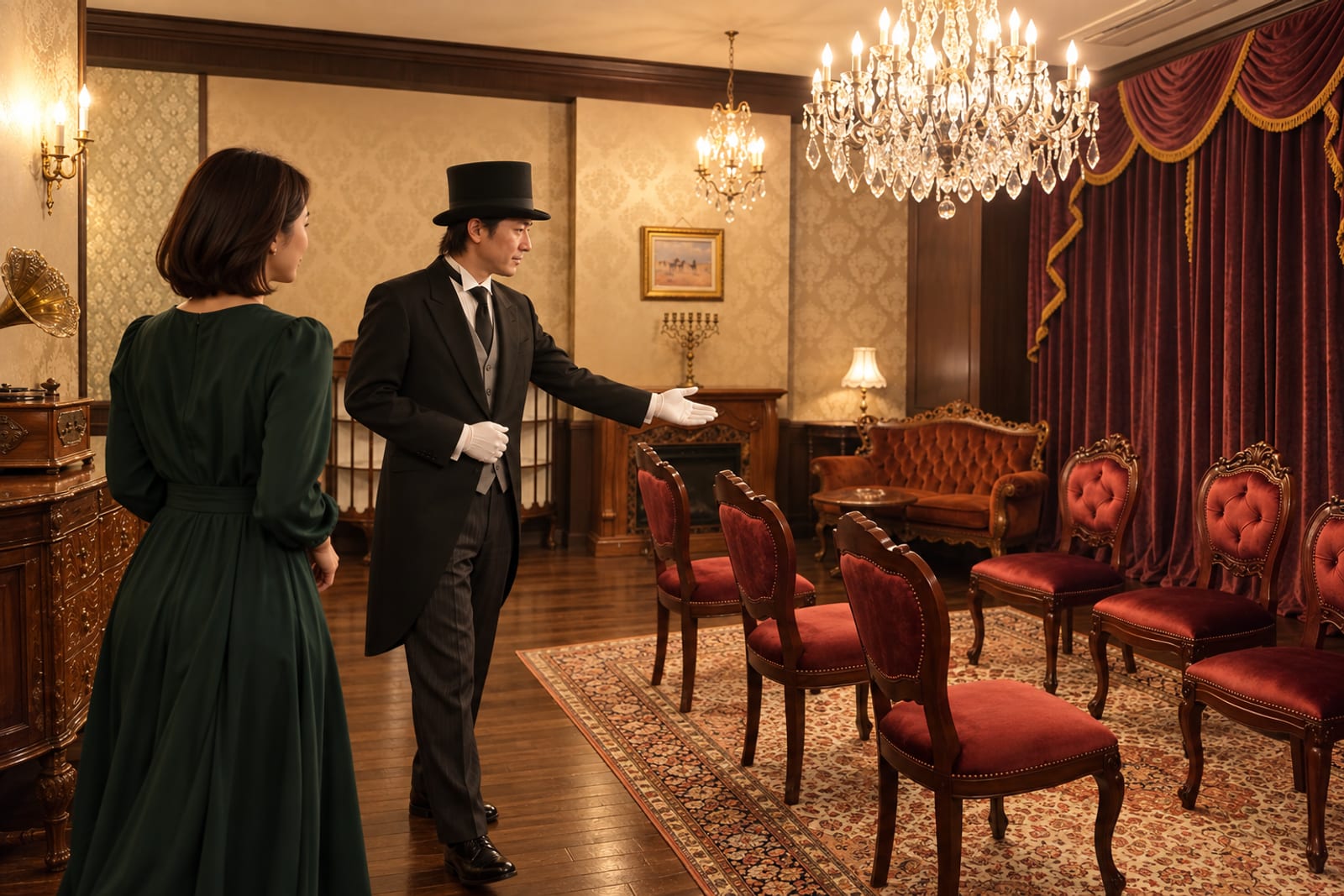
Walking before the line of sconces
Using the line of sconces receding into the distance, you can capture a butler from behind or the hem of a gown. Your butler watches the passage and gives the cue to begin walking.
Read more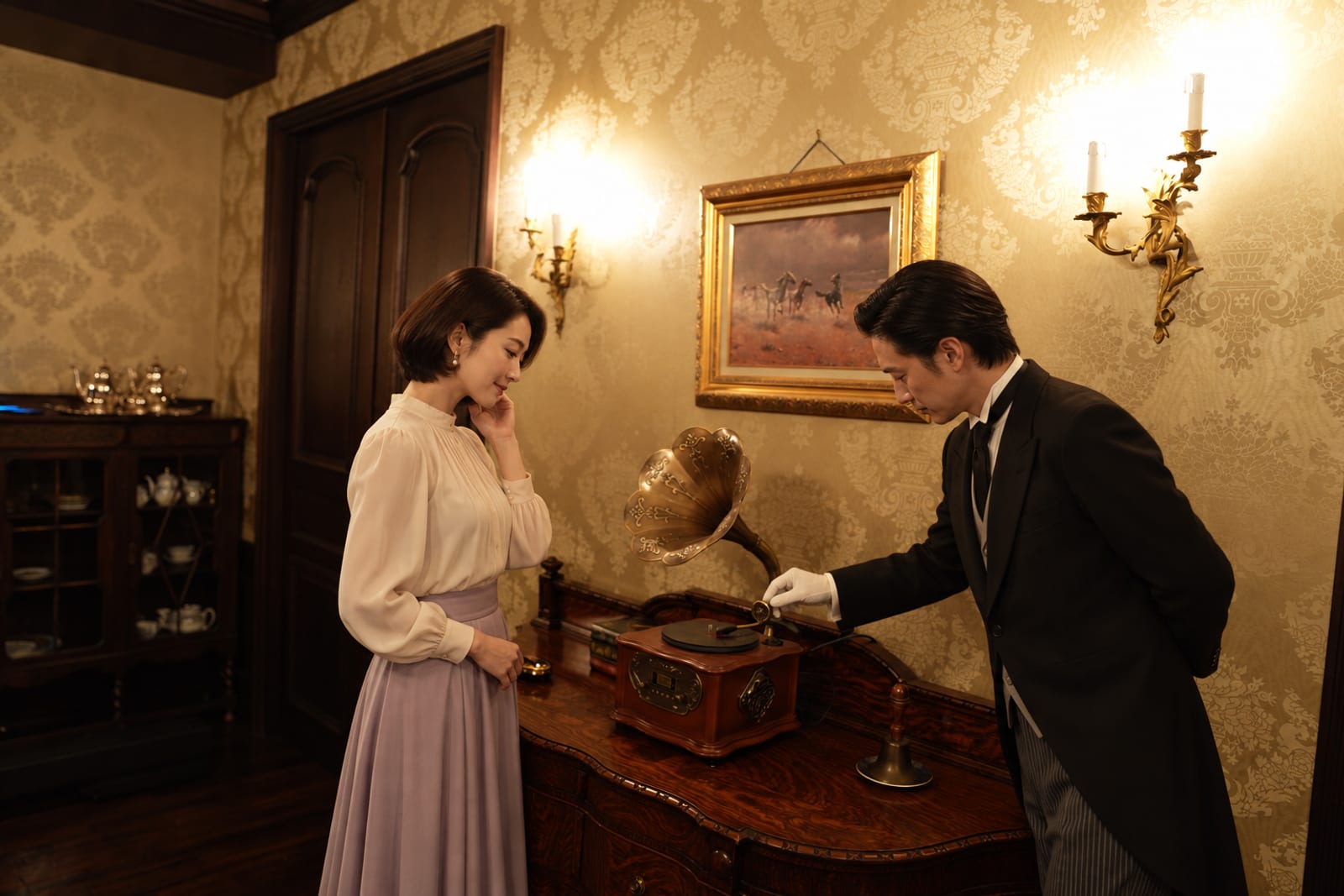
Lowering the needle onto the gramophone
Before the gramophone, the stillness before the music begins and the movement of the hands are a scene in themselves. Your butler handles the record and adds sound to the hour of the house.
Read more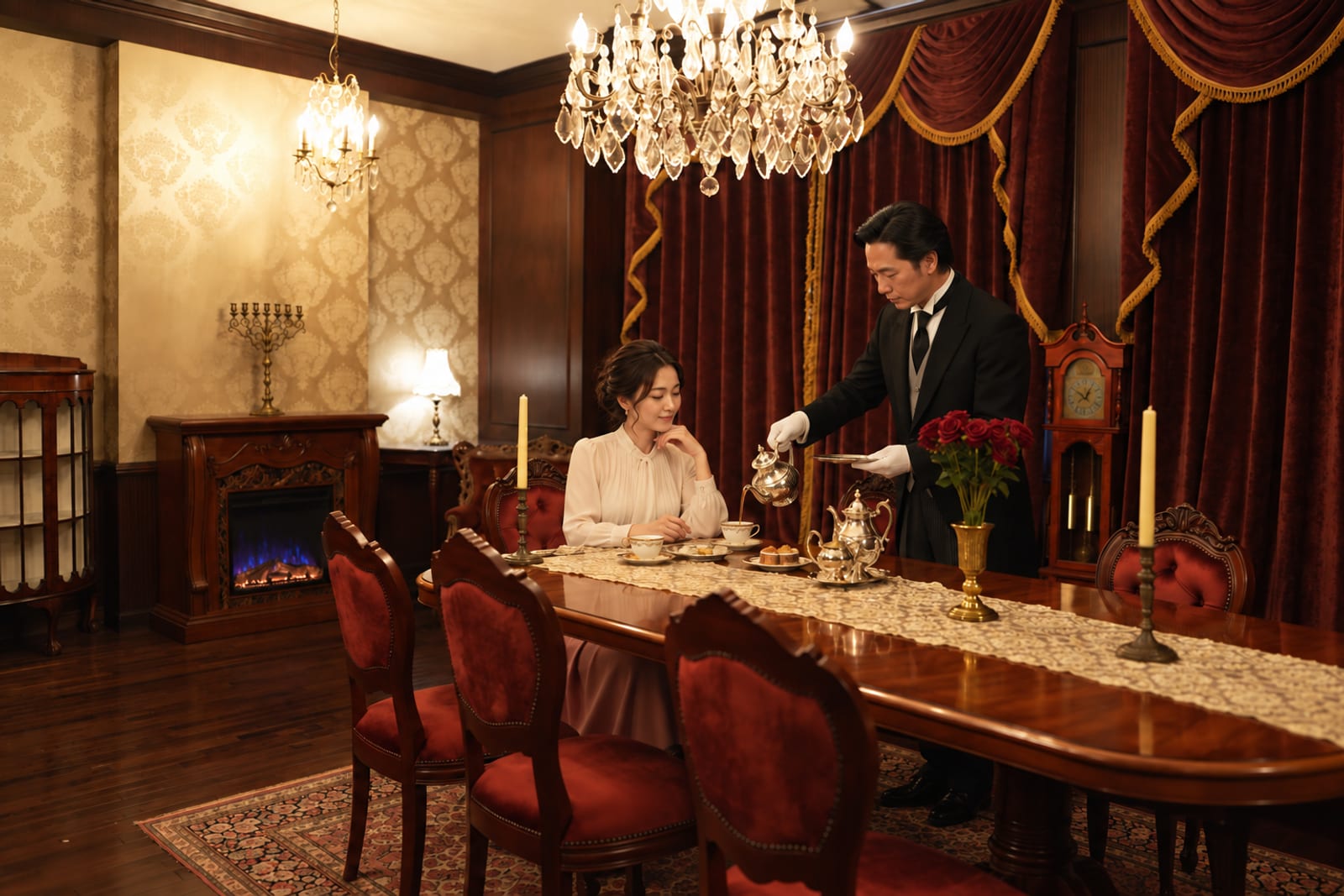
Standing as the double doors open
The contrast between the height of the great doors and a figure captures the threshold between the everyday and the story. Take in the whole, down to the bow of the butler holding the doors.
Read moreQDoes the hall clock always chime?
The sound of the chime is itself part of the Manor's setting. Should you prefer no sound, for a recording or a meeting, your butler will silence the chime.
QMay I take photographs or video in the gallery?
We guide you according to your booking. To make the most of the depth of the sconces, the clock and the double doors, your butler arranges positions with an eye to passage and the safety of the furnishings.
QMay I touch the silver and porcelain in the cabinet?
Please view them under your butler's guidance. Your butler opens the doors in white gloves and shows you the pieces, confirming which is to be handled and where it is to be returned.
QCan a larger party walk the gallery?
The Manor accommodates up to six guests. Your butler keeps an eye on both the front and the rear of the party, guiding you in turn at doors and narrower points.
QAre female butlers available to show us round?
Yes. Both male and female butlers are in residence. If you have a preference, please tell us when booking.
QMay I wait in the gallery if I arrive early?
The Manor is prepared for your appointed time. If you expect to arrive early, please let us know in advance.
In the gallery, the butler watches the order in which people and furnishings meet
A butler's role in the gallery is not simply to walk ahead, but to arrange the order of things so that doors, people, belongings and furnishings never collide in the same place. Before opening the double doors, the butler checks the far side; if someone is looking at the cabinet, a word goes to those who are walking on.
Guiding one guest, the butler leads at a distance where footsteps and chime do not disturb the quiet; with two or more, the pace slows so that conversation can pass through the doors unbroken. With a party of six, the butler sees the last guest through. On days with camera equipment or large luggage, the butler first decides where things will stand, away from the sconces, the clock and the curved glass, leaving the passage clear.
In the afternoon, the sconces and outside light can be played against each other; in the evening, the chime of the clock and the sound of the gramophone come into their own. Before you leave, the butler checks the cabinet, the clock and the walls for anything left behind. The gallery does not only join the rooms; it joins the first greeting to the final bow, and keeping it safe and courteous is the work of the butlers of Queen's Butler.
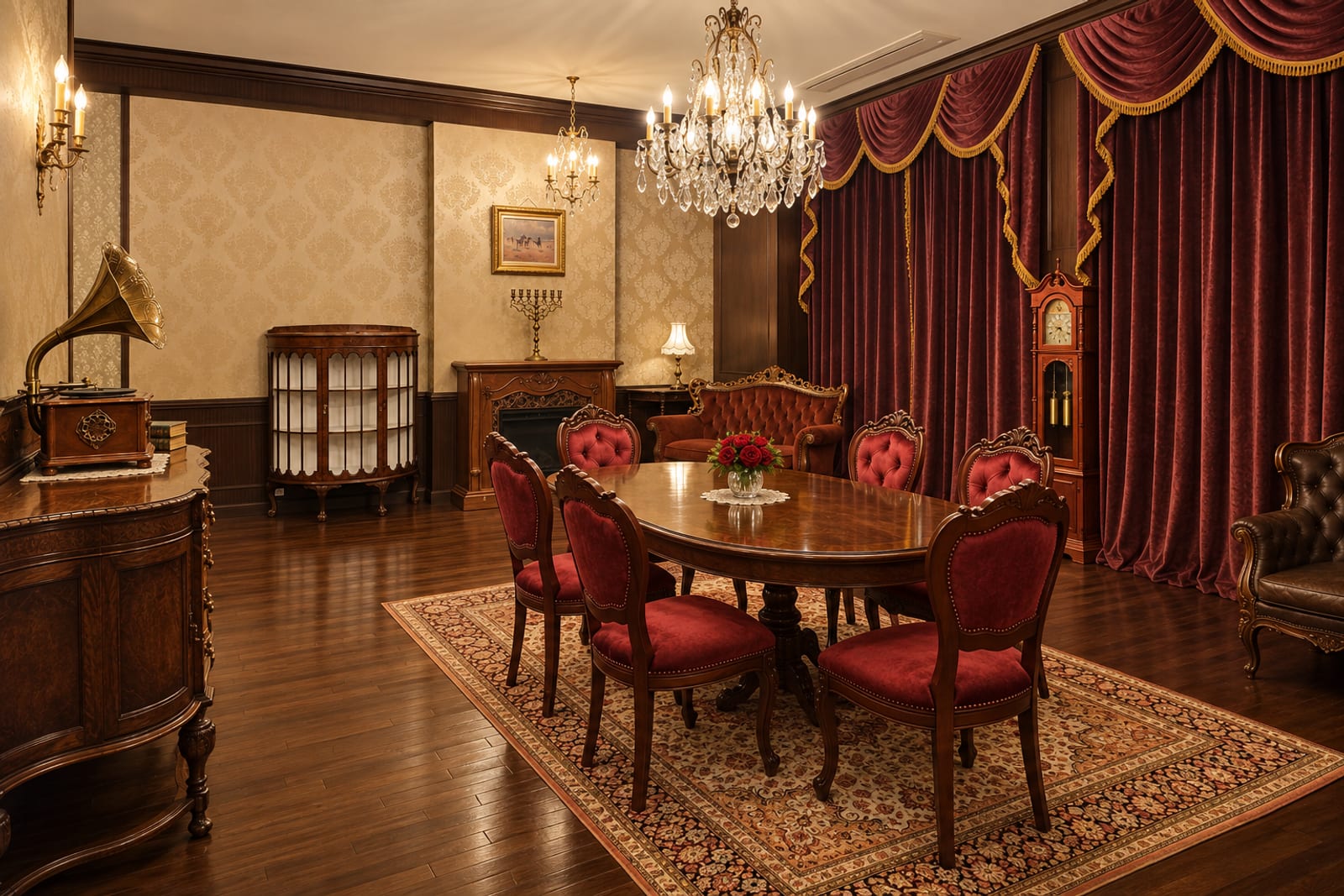
The light and sound of the gallery change with the hour
The hour in the gallery is the way the same walls and furnishings show different faces according to the direction of the light and how the house is being used. In the brighter hours, the outline of the curved glass and the silver stands out; as the lights are lowered, the presence of the sconces and the clock deepens. Even on the way from one room to the next, your butler does not miss the piece your eye has settled on.
Listening to the gramophone, waiting for the chime, gazing along the line of sconces: even without a purpose that calls for sitting down, the gallery offers ways to feel the time of the house. Rather than filling every minute, treat the passage itself as a scene to be enjoyed. At Queen's Butler, the time you pause is as much a part of your booking as any other.
For photography we choose angles where figures do not hide the furnishings; for a viewing we keep the sounds; for a recording the hall clock's chime can be silenced. We ask what you wish to see and which sounds you wish to keep, and arrange the same gallery to suit your purpose. For first-time guests, we explain the order of the left wall, the dividing wall and the right wall clearly.
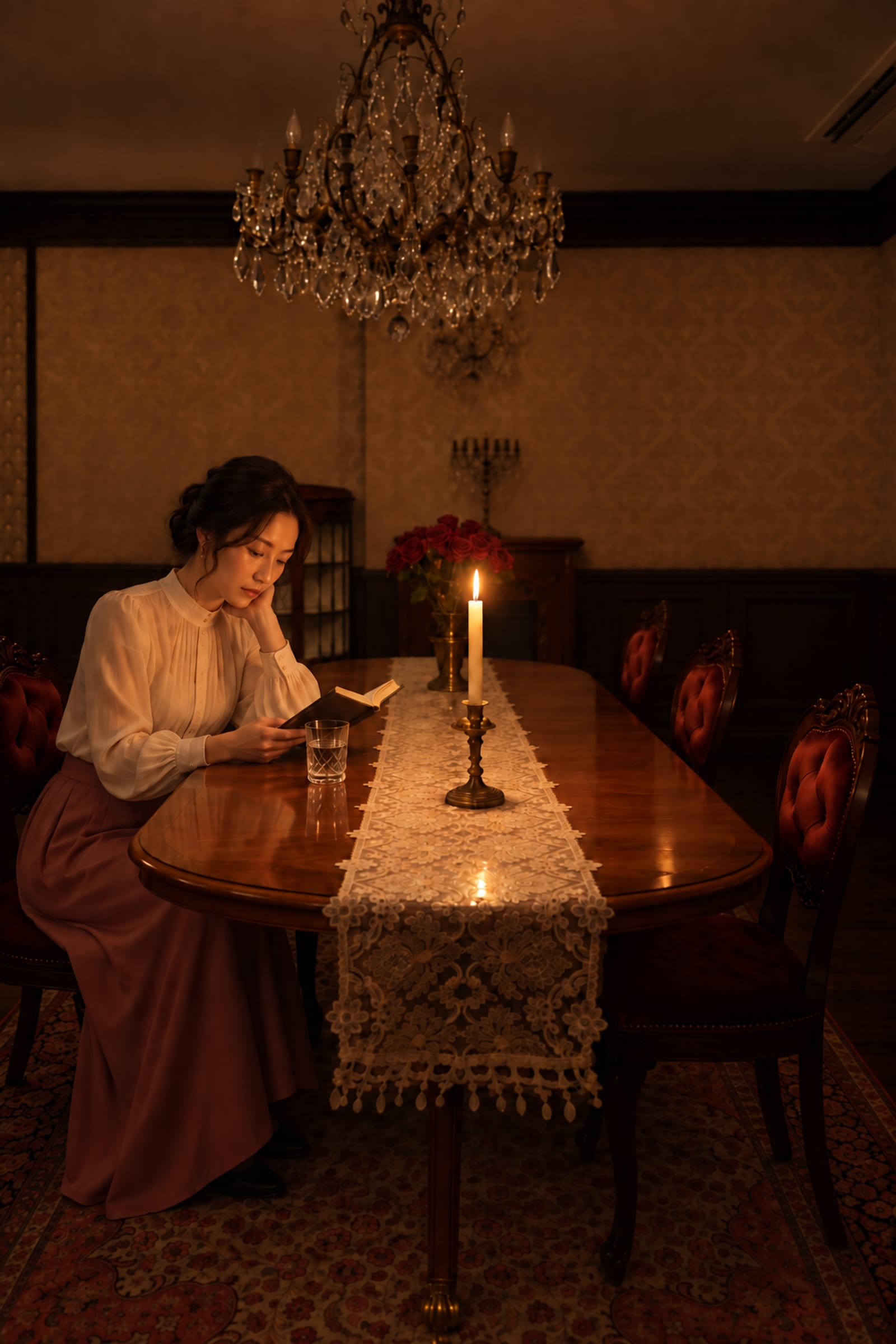
You may also wish to read


We await you before the clock.
Tell us how we may help. Your butler will guide you.