
Afternoon Tea Etiquette
Before the three-tier stand, the manner of not hurrying
About Afternoon Tea Etiquette
Afternoon tea etiquette is the manner of gathering around tea and a three-tier stand laid with what you have brought, sharing conversation and aroma at an unhurried pace. The butler brews the tea, carries the stand, and quietly shows you on the spot how to break a scone you have brought and in what order to proceed.
Before reaching out, a breath.
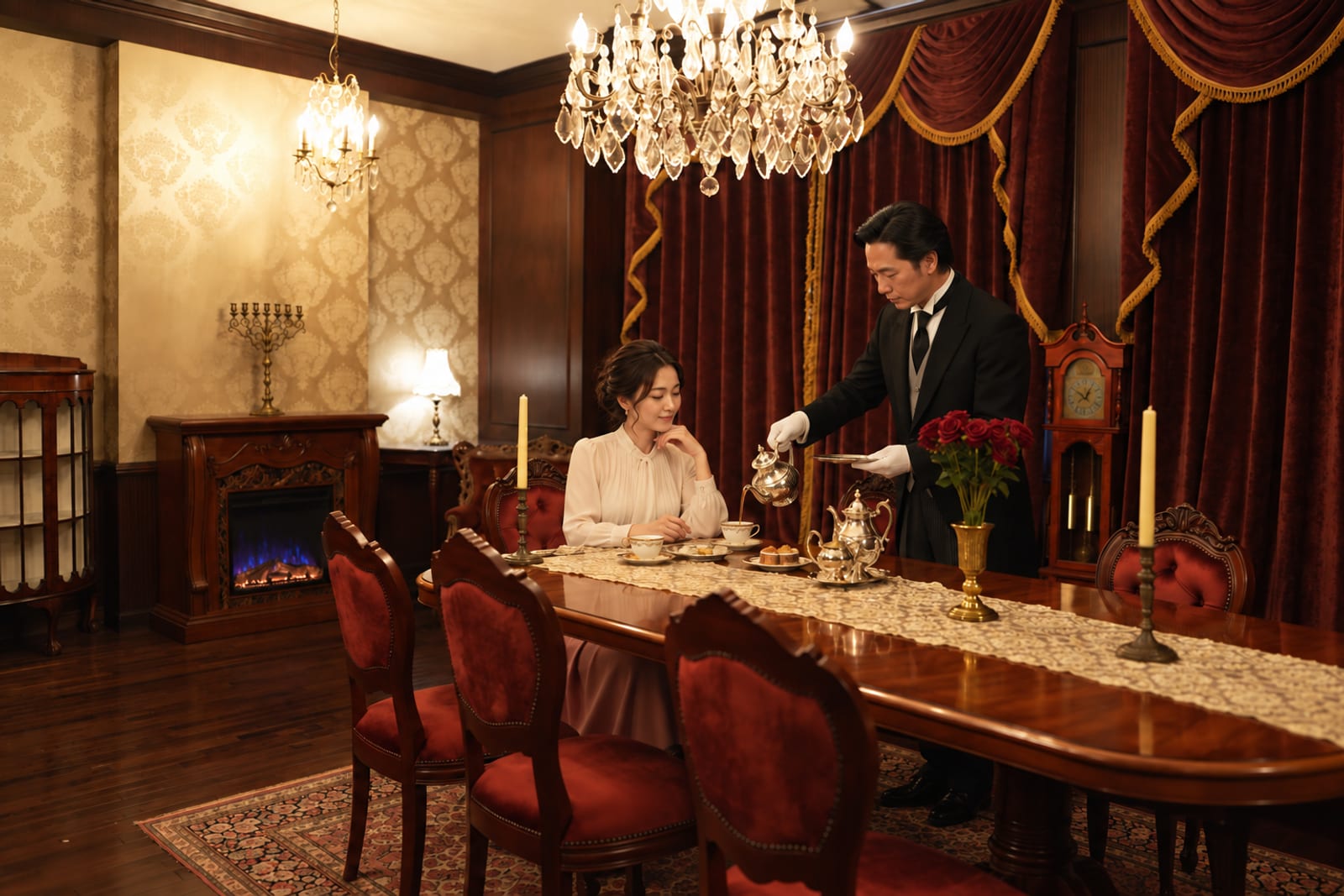
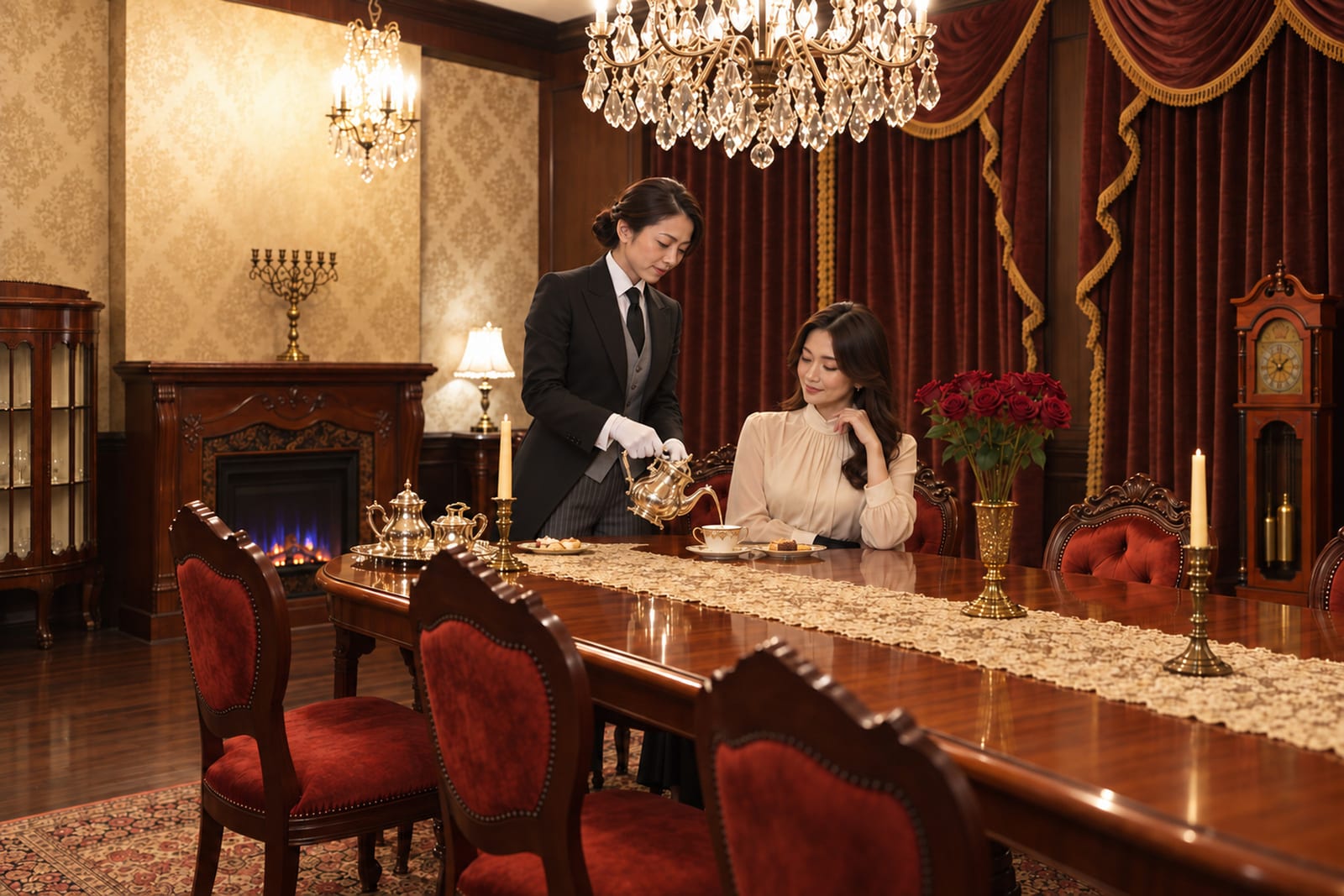
The butler arranges what you have brought on the three-tier stand and carries it to the table with the tea things. Silver and porcelain, red roses, the sound of tea being poured. Afternoon tea begins not by reaching out at once, but by receiving the brief moment in which the table is set.
That breath is not to show that a rule is being kept. It is the pause in which everyone settles into their seats, the butler finishes serving safely, and the conversation begins at the same pace for all. The butler never hurries you, and waits where the signal to begin will be seen.
Some reach for the cup, some look to the three-tier stand, some glance at the butler. There is no single way to begin. The butler watches each movement and sets the pace of the table so that no one is left behind. Should you hesitate before a scone you have brought, only the guidance you need is quietly offered.
The butler's guidance before the three-tier stand
| Moment | The heart of the etiquette | What the butler does |
|---|---|---|
| Until the table is set | Watch the serving without reaching for the tea things or the stand | Sets everything down safely and lets you know when you may begin |
| When unsure of the order | A hand pauses before the three-tier stand | The butler quietly tells you the order on the spot |
| When taking a scone | Do not interrupt the conversation or the movement at the table | Only if you hesitate, a brief word of support at your side |
| When taking more tea | Do not hurry your own pace or that of your companions | Watches the cups and reads what is needed before a word is spoken |
The order of the three-tier stand is quietly explained by the butler on the spot.
The three tiers are not there to confound you.
The etiquette of the three-tier stand is to remain unhurried even when unsure of the tiers, and to keep the time shared with your companions while accepting the butler's guidance. As the tiers sit at different heights, it is natural to wonder where to begin. The butler catches your glance before the question is spoken, and quietly tells you the order on the spot.
What matters is not to press ahead through a memorised sequence, but to savour each item while attending to the table and to your companions. The butler never raises the voice, reading the pauses in conversation and the movement of hands, adding only the words that are needed.
Five pauses for an unhurried afternoon tea
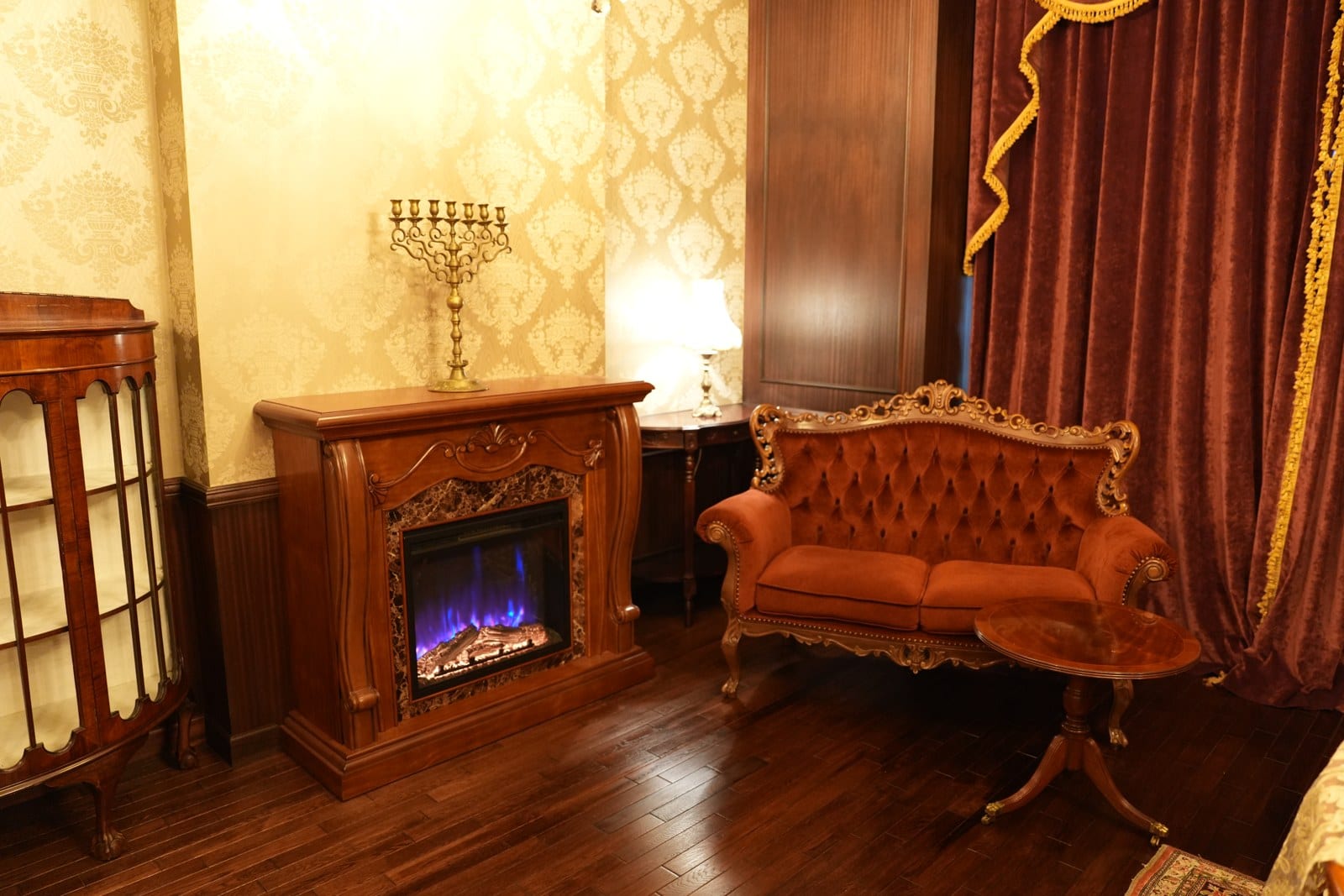
Wait for the table to be set
Until the butler has set down the tea things and the three-tier stand, enjoy the aroma and the scene before you.
Look at the stand
Take in all three tiers. If you are unsure, the butler quietly tells you the order on the spot.
Return to the conversation
Having taken one item, do not merely follow the procedure; return to the conversation with your companions.
Receive the aroma of the tea
The butler watches over the cups. Take your time to receive the aroma, at a pace shared with your companions.
Signal what you need
If you are unsure, a glance to the butler. The silver bell on the table is also yours to use without hesitation.
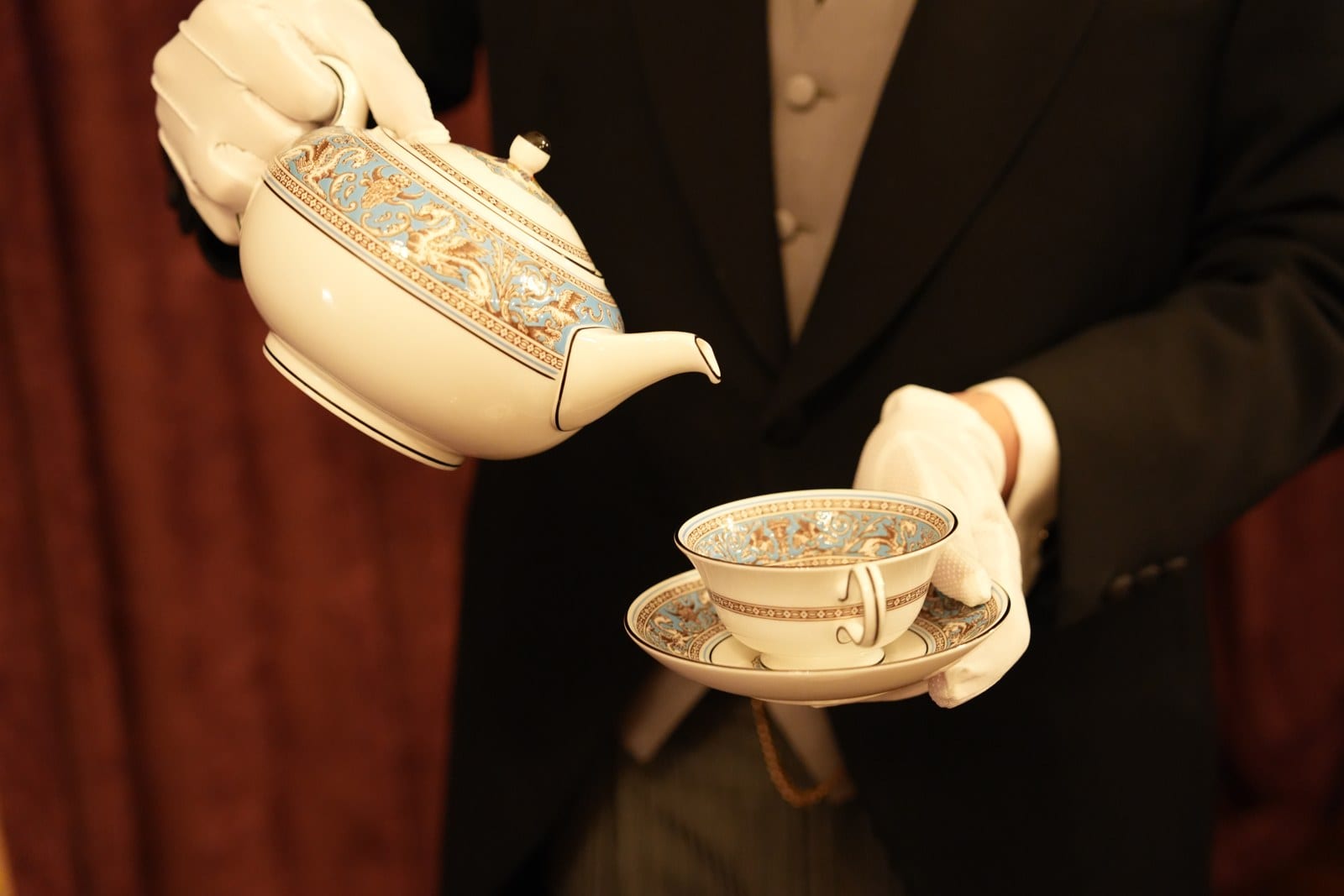
Afternoon tea is composed of the tea things, the silver and the butler's hands
| The beginning | The butler brews the tea and carries the three-tier stand to the table |
|---|---|
| Tea things | Porcelain cups and pot, handled by the butler in step with the flow of the table |
| Silver | The tea service and stand, quietly arranged by white-gloved hands |
| Order | Should you hesitate, the butler quietly explains according to what is on the table |
| Scones | Should you hesitate, the butler watches your hands and tells you only what is needed |
| Signals | A glance to the butler, a brief word, or the silver bell on the table |
What matters at afternoon tea
- Receiving the moment in which the table is set, until the butler has placed the tea things and the stand
- Turning your glance to the butler when unsure of the order or of a scone
- Respecting the conversation and pace of your companions, proceeding gently one item at a time
- Enjoying the aroma of the tea, the porcelain, the silver and the butler's hands as one continuous scene
What need not be decided in haste
- There is no need to have every step memorised before the three-tier stand
- There is no need to move faster than others, or to judge how your companions proceed
- There is no need to hurry so as to hide what you do not know, rather than ask the butler
Signals you may give the butler
- Ask with a glance
- Say simply, 'Butler'
- Ring the silver bell when the butler is in the anteroom
Whatever the number, the butler keeps to each guest's pace
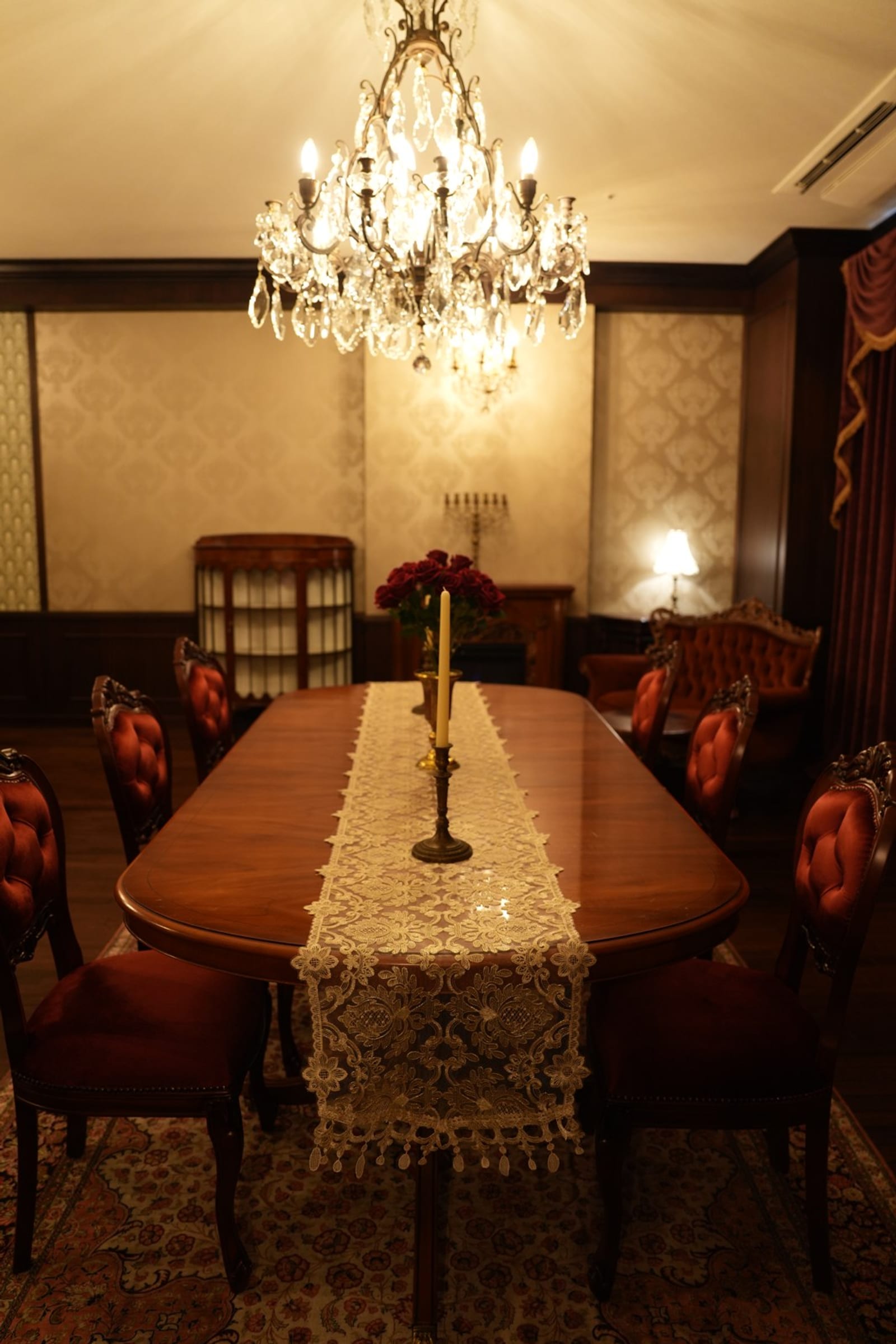
Afternoon tea etiquette is not a rule that demands the same pace of everyone. For one guest, the butler does not disturb the silence in which you regard the porcelain and silver, and waits at a distance where a question can be received. The aroma of the tea, the outline of the three-tier stand, the candlelight: all yours to take in at your own pace.
For two, the butler waits for a pause in the conversation before attending to the tea. If one of you moves ahead, the butler does not halt the table with a raised voice, but reads the next movement from hands and eyes. Guidance on the order is brief, leaving room to return to the conversation.
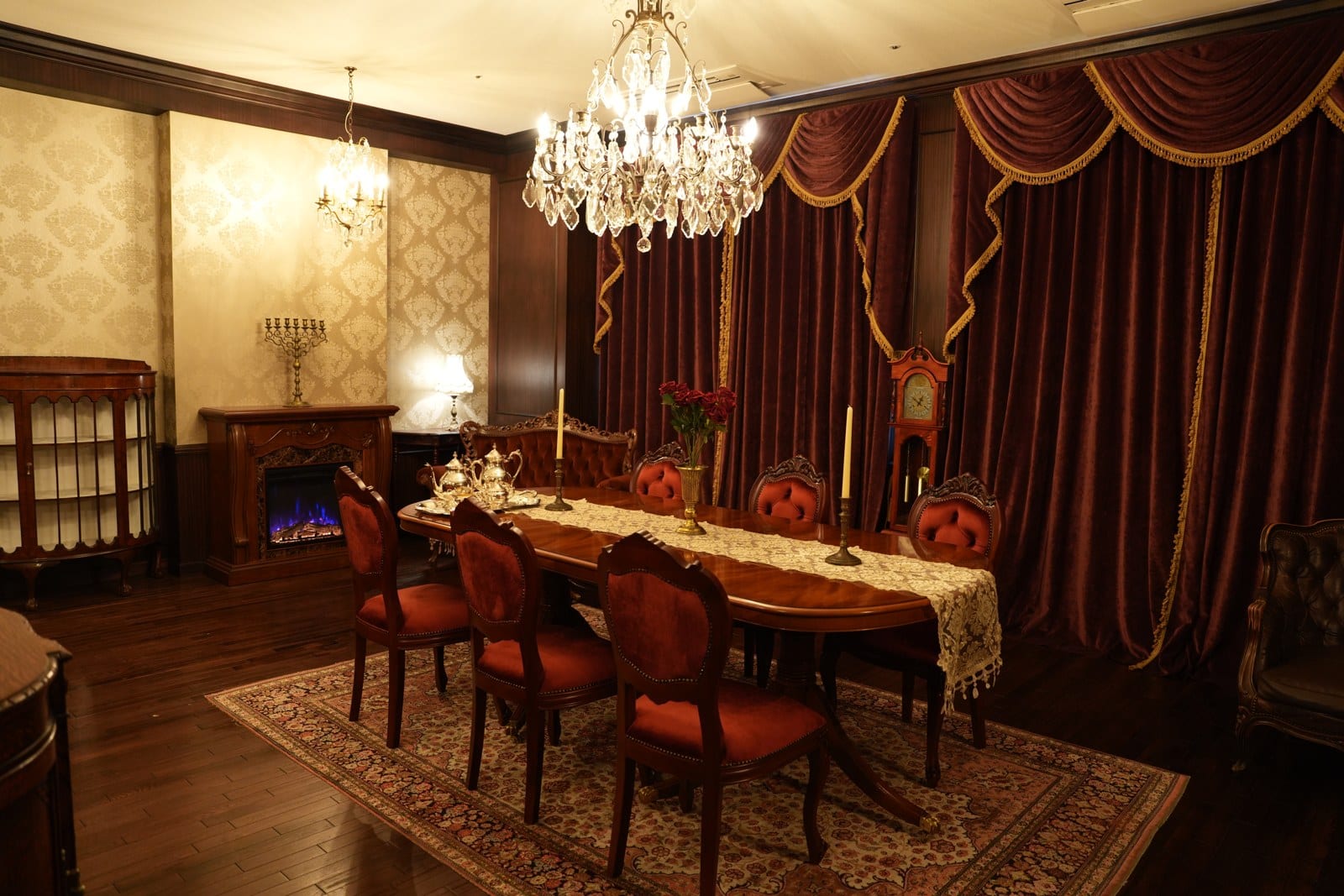
When up to six gather at the table, the butler watches the stand and every cup around it, so as to catch not only the glance of those who ask readily but also of those quietly unsure. Whatever the number, no one is hurried, and the same afternoon is shared by all.
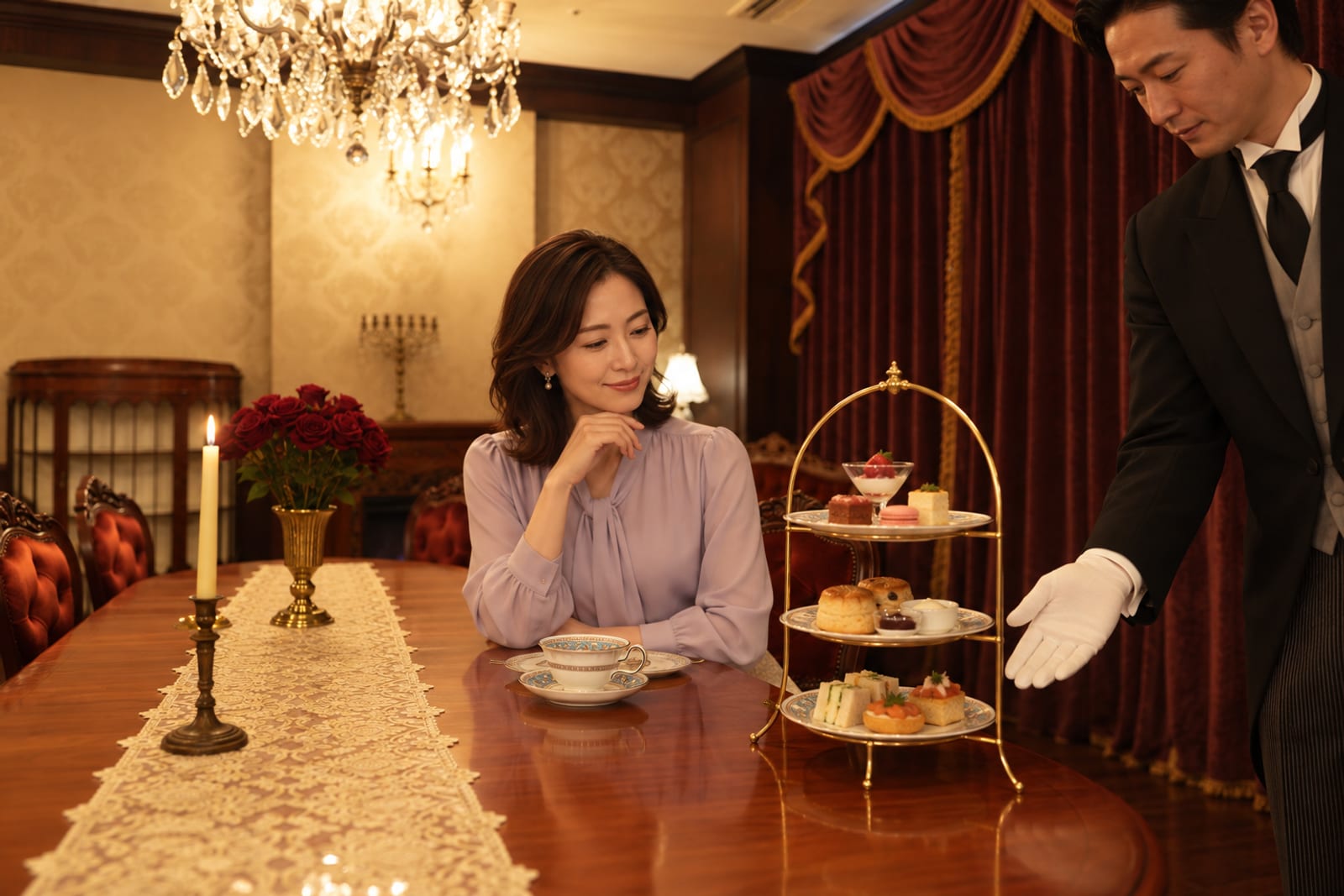
Even before a scone, the butler does not say too much.
Faced with a scone, one wonders how to break it and how to move the hands. The butler does not ask you to try a particular form. At the moment you hesitate, watching your hands, the butler tells you only what that moment requires.
Our male and female butlers understand that the centre of attention is not knowledge of the table but your time. Having answered briefly, the butler steps back and guards the space in which the aroma and the conversation return. The silence that supports etiquette is also part of a butler's deportment.
To sit down not knowing the order or how to break a scone is nothing to be ashamed of. Rather than hurrying so as not to show hesitation, a glance to the butler lets the time at the table continue quietly. The butler does not dwell on the answer, choosing only the words that let you move to the next mouthful.
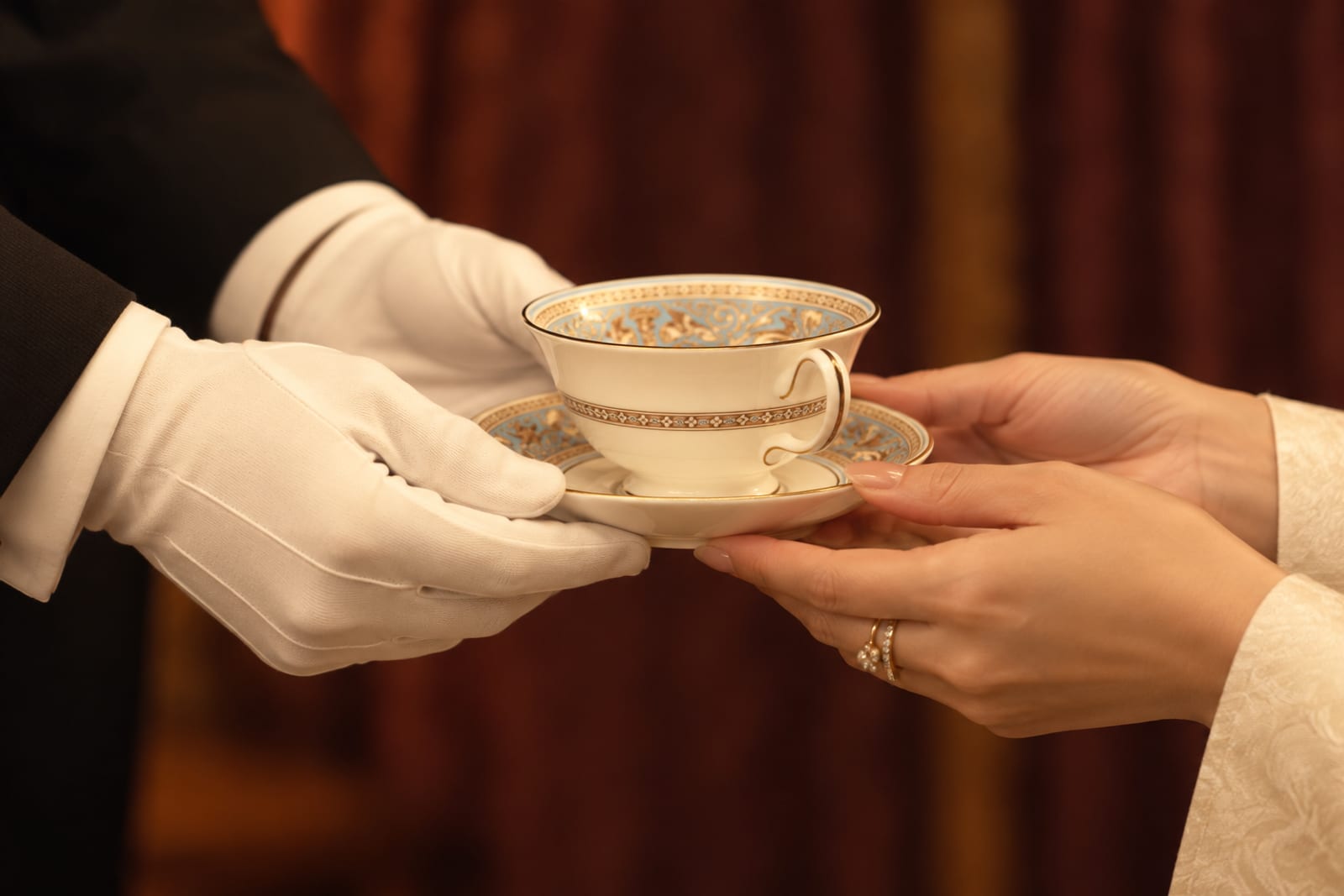
Three doorways to the manners of tea
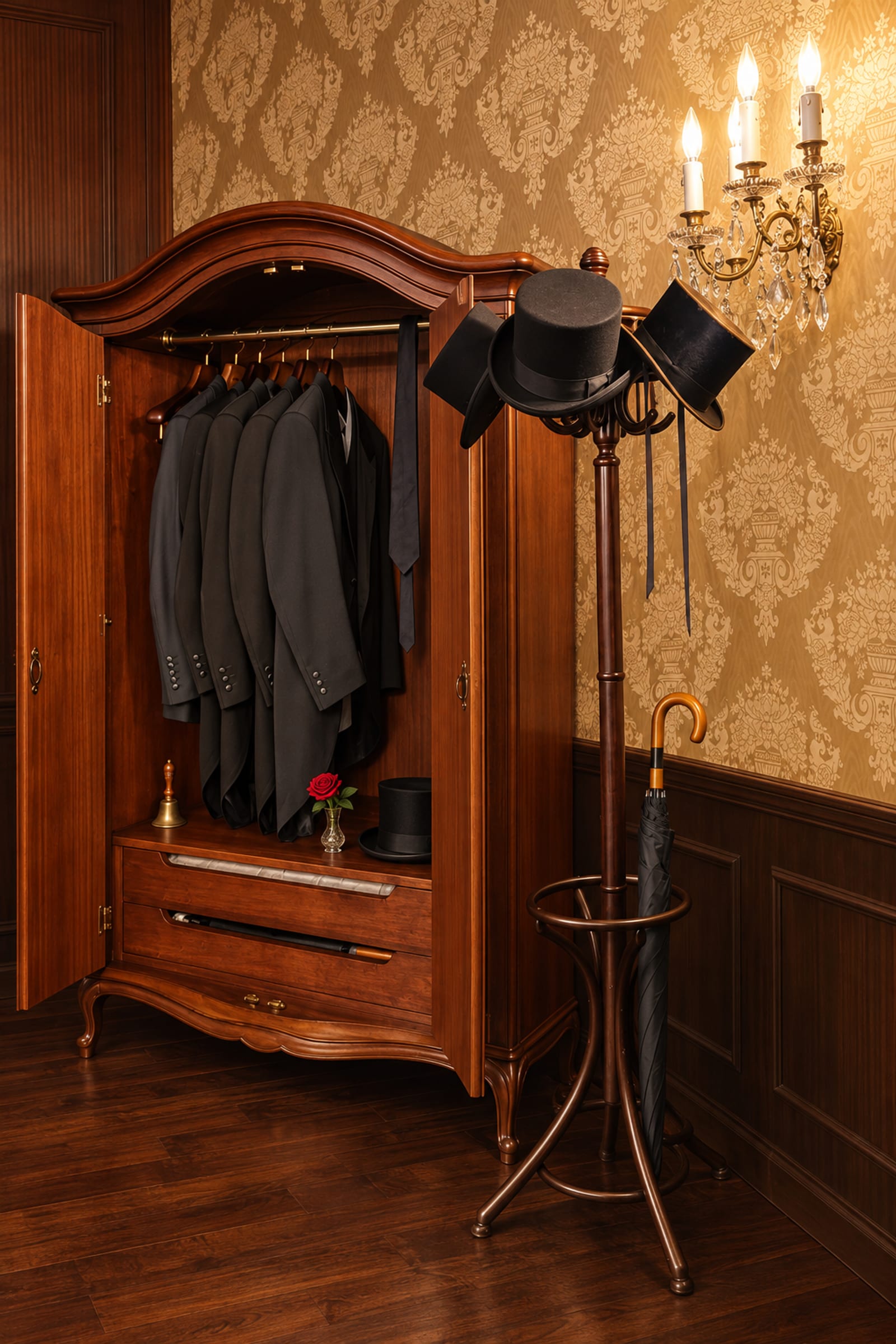
Ways to Spend Your Time
Eleven scenes of time spent with a butler at the Manor, afternoon tea among them.
Read more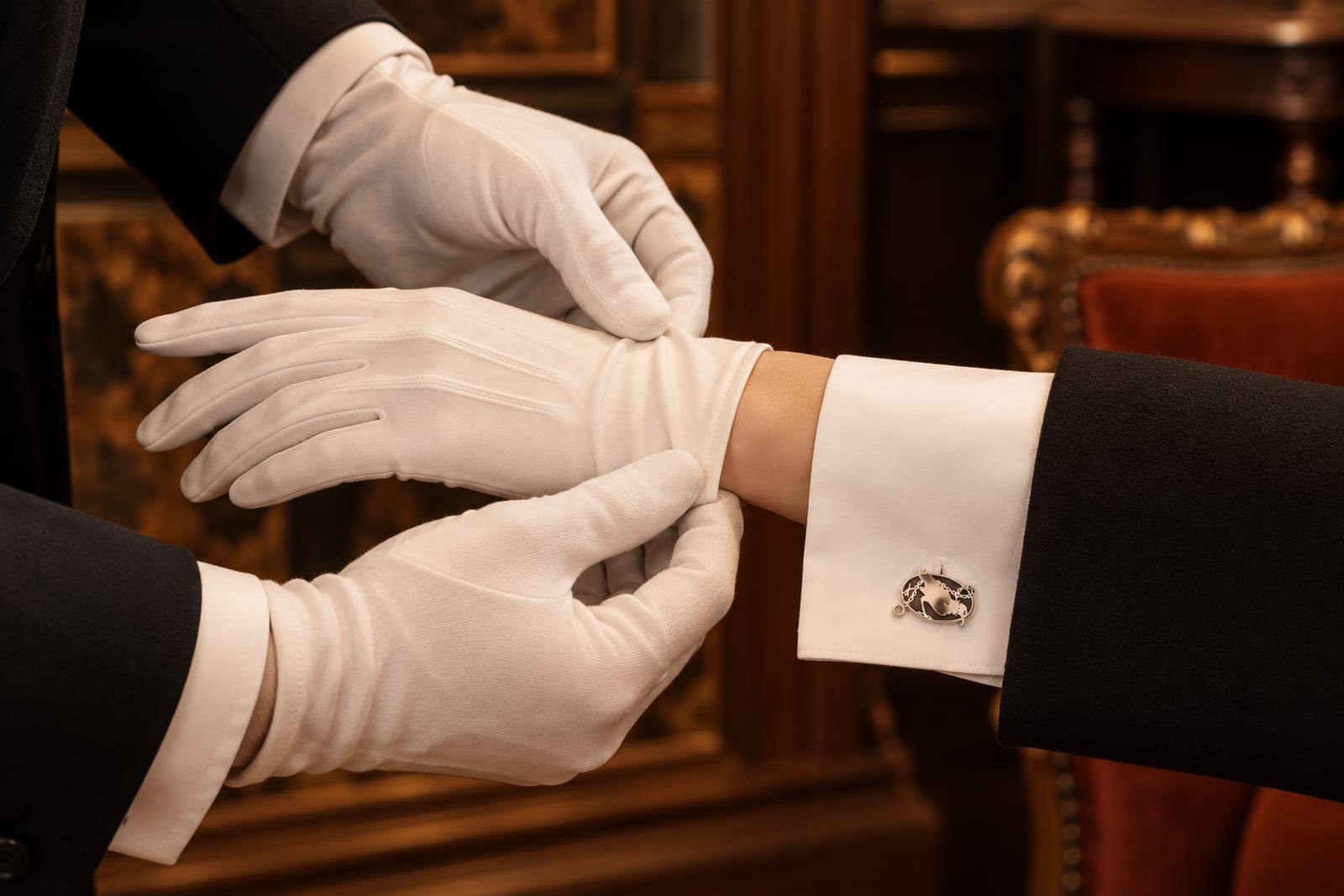
The Manner of Brewing Tea
As an apprentice butler, learn the hands and stance before the tea things.
Read more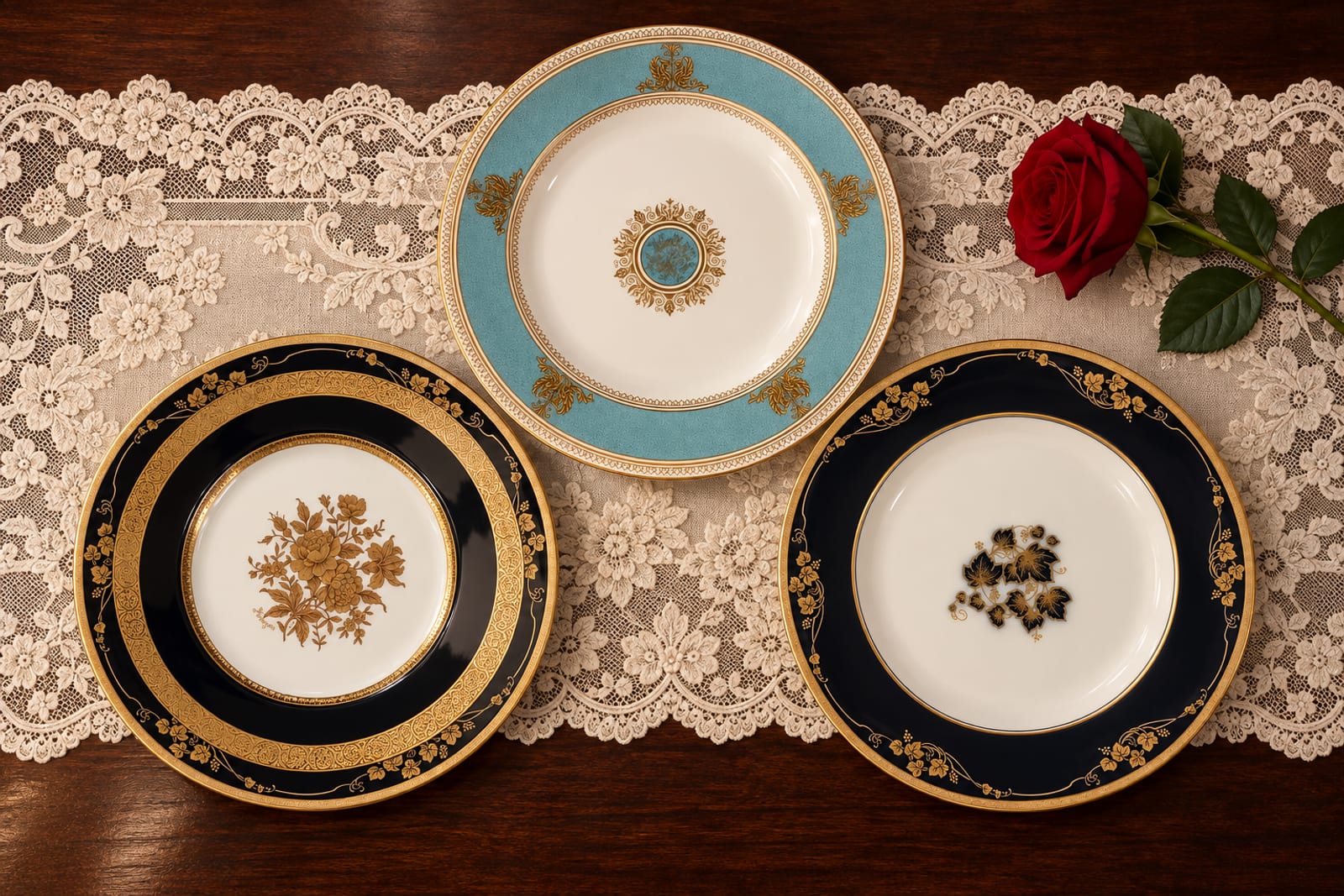
The Silver Tea Service and Glassware
The background to the silver and tea things the butler handles at the Manor.
Read moreNot only the three-tier stand: the tea things and the butler's hands also make the afternoon
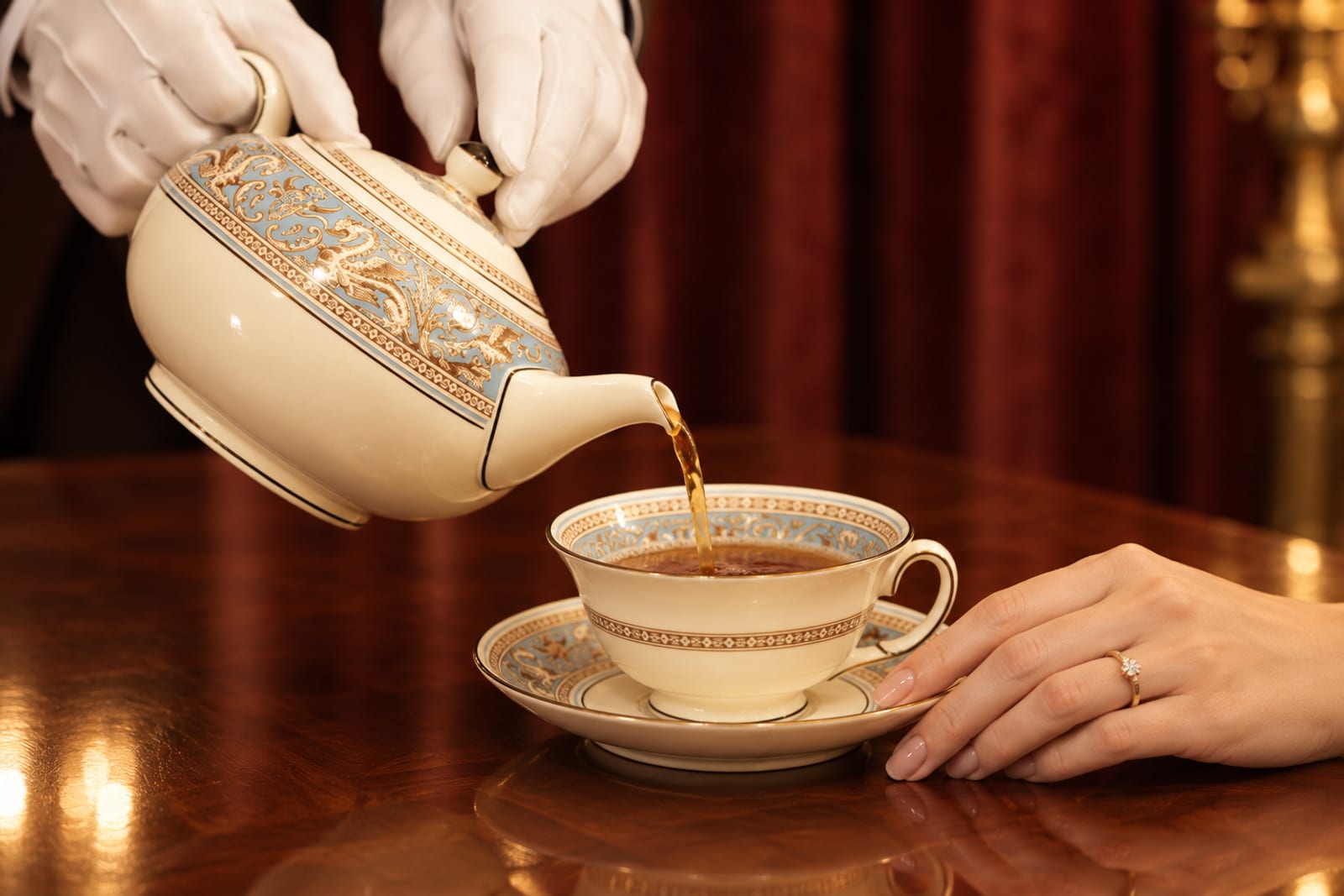
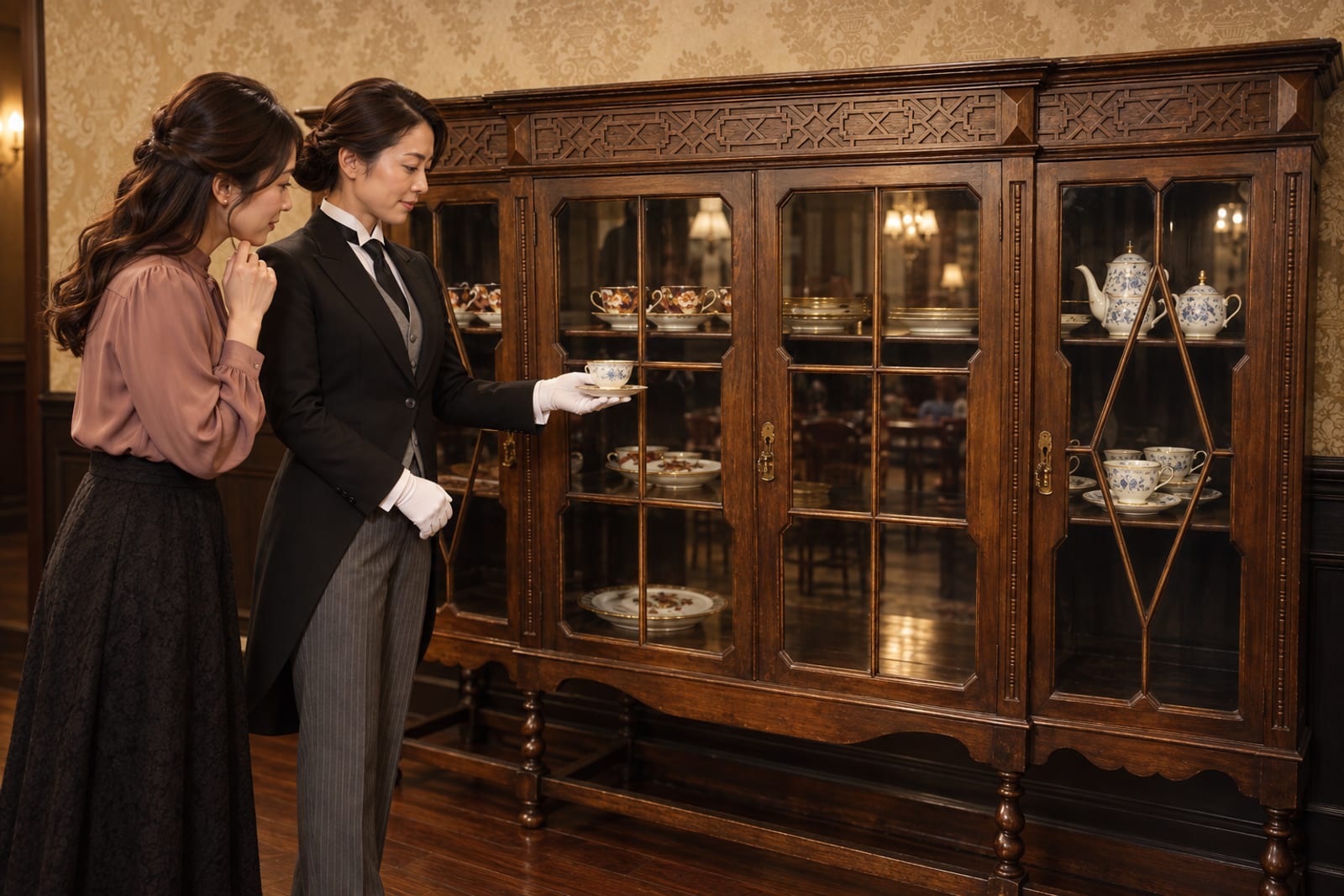
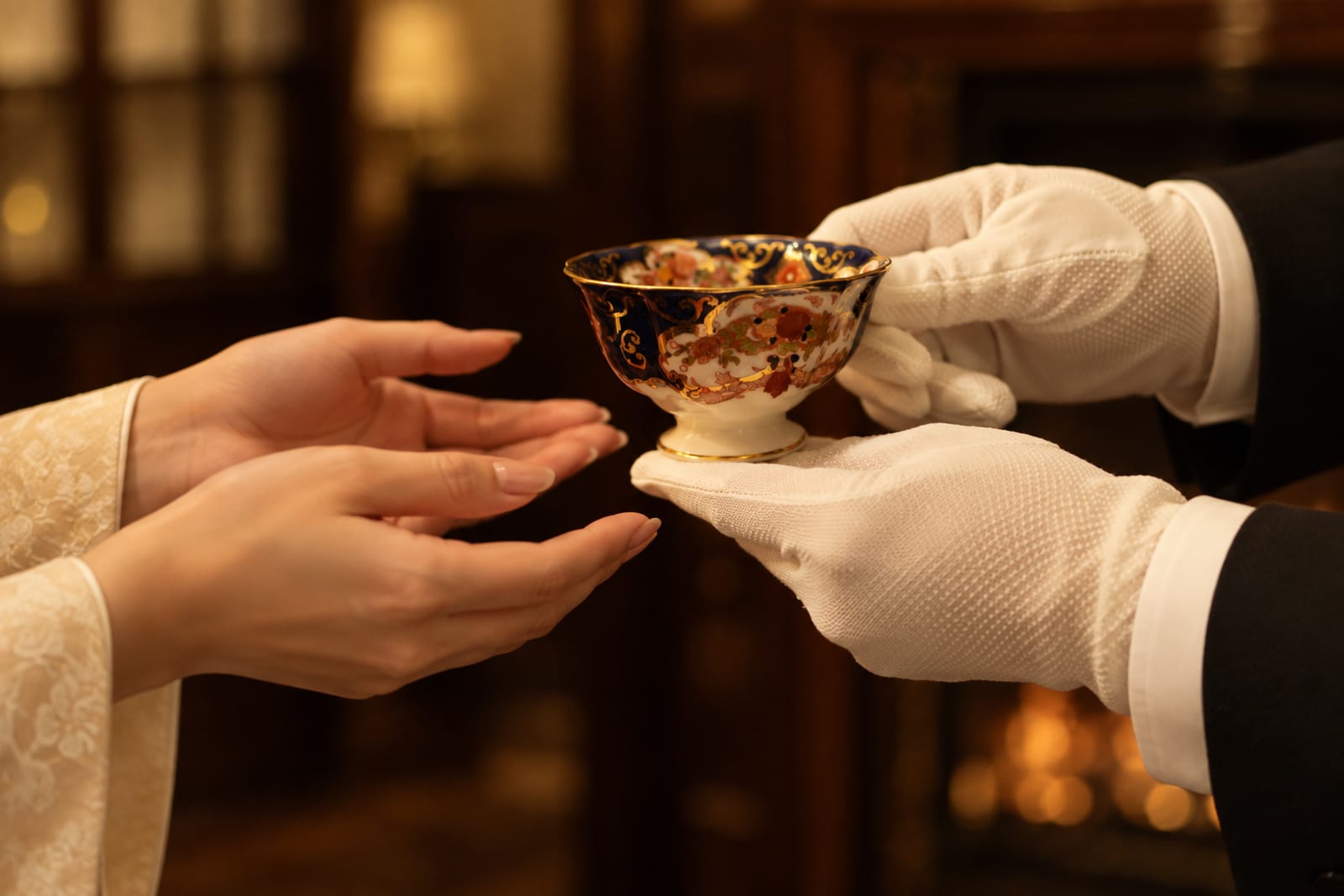
Afternoon tea etiquette is not a matter of fixing your attention on the three-tier stand alone. The butler's hand on the pot, the tea poured into the porcelain cup, the silver quietly set in order on the table: this sequence of movements, too, shapes the afternoon. When the butler's hands pause where you can receive the cup, take in the aroma and return to the conversation with your companions.
If unsure of the order, simply turn your glance to the butler without hurrying, rather than staring at the stand.
The Manor keeps a Wedgwood Florentine Turquoise teapot, sugar bowl, creamer, cups and saucers. The griffin pattern and turquoise colour bring a different expression to the table from the silver tea service. Rather than display porcelain and silver as separate exhibits, the butler joins them through the hands that actually use them.
QWhich tier of the stand do I start from?
The butler quietly tells you the order on the spot. There is no need to learn it before you come.
QIs it all right if I do not know how to handle a scone?
Yes. The butler watches your hands and offers a brief word only when needed. First, please take a breath.
QMay I request a female butler?
We have both male and female butlers. If you would like a female butler, please tell us when you reserve, along with what you will bring and how you wish to spend your tea.
QMay I bring food and drink?
You are welcome to bring your own food and drink. Please tell us your wishes in advance. The butler quietly guides you on the tea things and the manners of the table as needed.
QMay I enjoy afternoon tea on my own?
Yes. For one guest, the butler does not over-explain, and waits at a distance that lets you regard the tea things and silver at your own pace. When a question arises, simply turn your glance.
QWhat is the maximum number of guests?
The Manor may be used by up to six. The butler watches the whole table and every cup, so that no one is left unsure.
About bringing food and drink
- You are welcome to bring your own food and drink
Who may visit
- The Salon is a manor for ladies
- Both male and female butlers are in residence. If you have a preference, please tell us when you book
You may also wish to read


An afternoon in the company of a butler.
The order and the handling of scones are explained by the butler on the spot. Please tell us your preferred date and time.