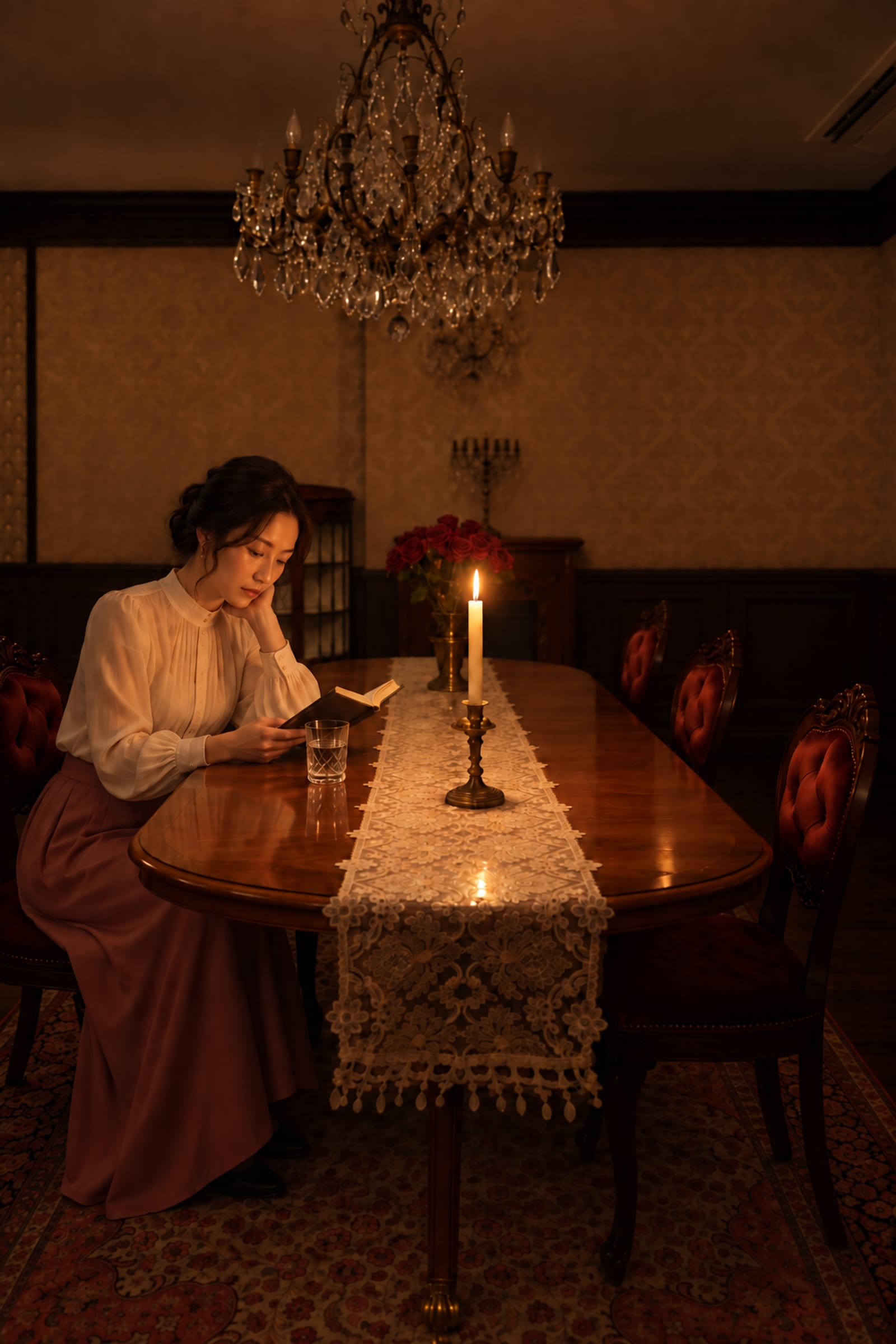
Light and Composition in an Antique Manor
Chandeliers, candles, mirrors, white gloves, roses
About Light and Composition in an Antique Manor
Photographing beautifully in an antique Manor means combining the house's own lights with studio lighting in a windowless space, deciding whether the person or the furnishings will be the subject, and composing the frame accordingly. Read the lines made by chandeliers, mirrors, white gloves and doors, agree the shooting order with your butler, and you can capture the story of the house on your own camera or smartphone.
IIn a windowless Manor, there is no waiting for the light: each scene is arranged in turn
Photographing in a windowless house means building light and shade scene by scene from the Manor's own lights and studio lighting, rather than following the shifting daylight. With no change in window light through the day, you may move from the dining room to the study and still choose the direction of the light to suit the story you wish to tell.
Begin by choosing one subject: the person, the costume or the furnishings. If the person, create a brightness that draws the eye to face and hands; if the furnishings, look for the angle that reveals wood grain, fabric and the gleam of metal. Lighting everything equally loses all depth, so decide what to keep and what to leave in shadow.
Queen's Butler The Studio is equipped with an Amaran 300C and an Aputure Quick Dome 90. Your butler checks the house lights and arranges the light stands and cables so that they do not obstruct doors, chairs or the photographer's movements.
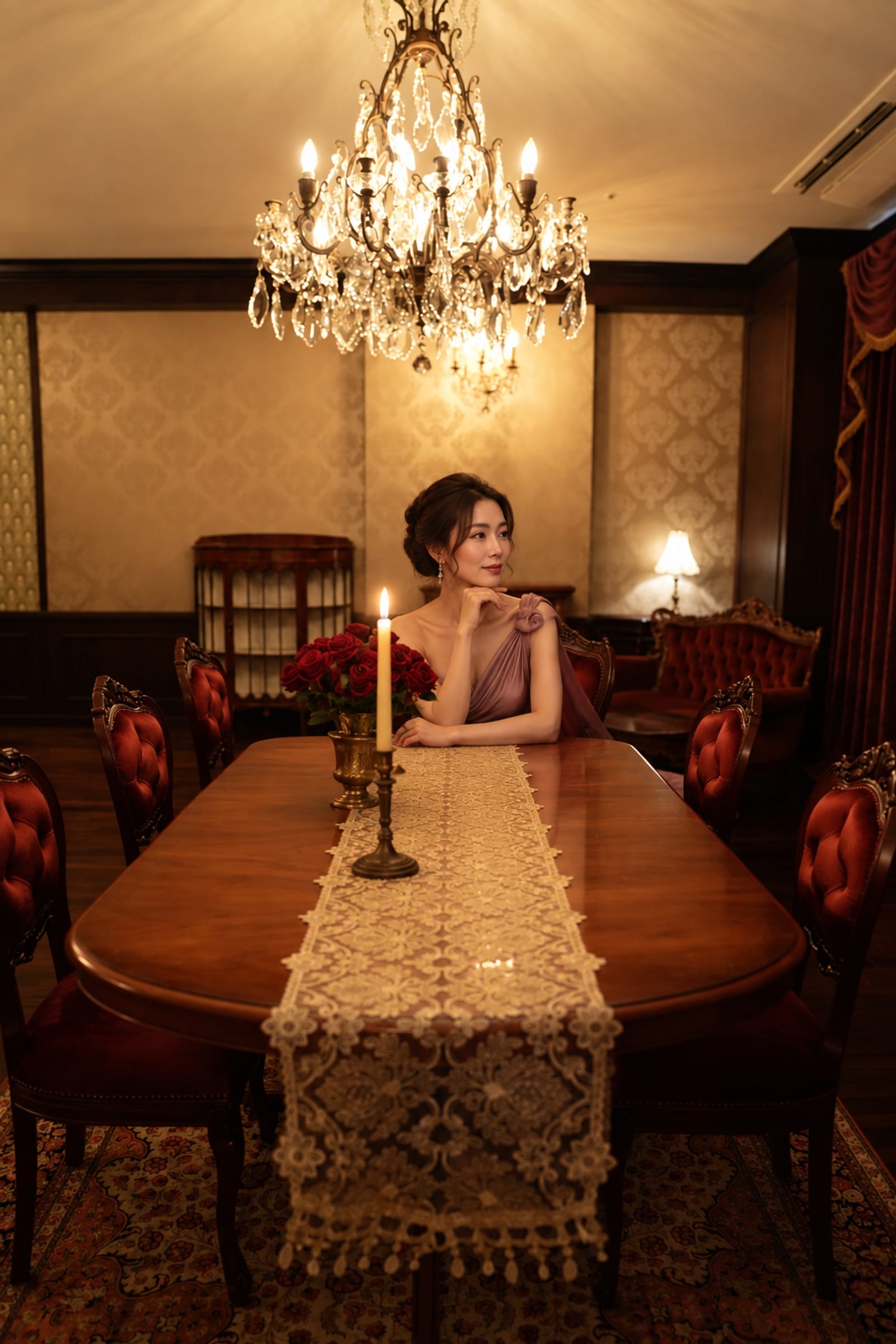
The first frame sets the standard for the light
Check person, costume and background at once, then change only one element at a time in the scenes that follow.
IIKeep the warm light of the house while watching skin and wood tones
Keeping the colour of the house means preserving the warmth cast by chandeliers and candlesticks while finding the point at which skin and antique wood both look natural. Left entirely to automatic correction, colour can drift from scene to scene and a series of pictures will not hang together.
First take a reference frame in the dining room and compare skin, white gloves, white porcelain and the red chairs. Rather than pulling the whites to a perfect neutral, leaving a trace of the house's atmosphere keeps the textures of fabric and wood connected. Within one scene, avoid frequent changes of settings; adjust position and the direction of light first.
On a smartphone, tap the face on screen and adjust brightness until the house lights no longer burn to a white mass. On a camera, do not judge from the rear screen alone: zoom in to confirm that the detail of white gloves and porcelain survives.
IIIDecide the height between chandelier and person before bringing it into frame
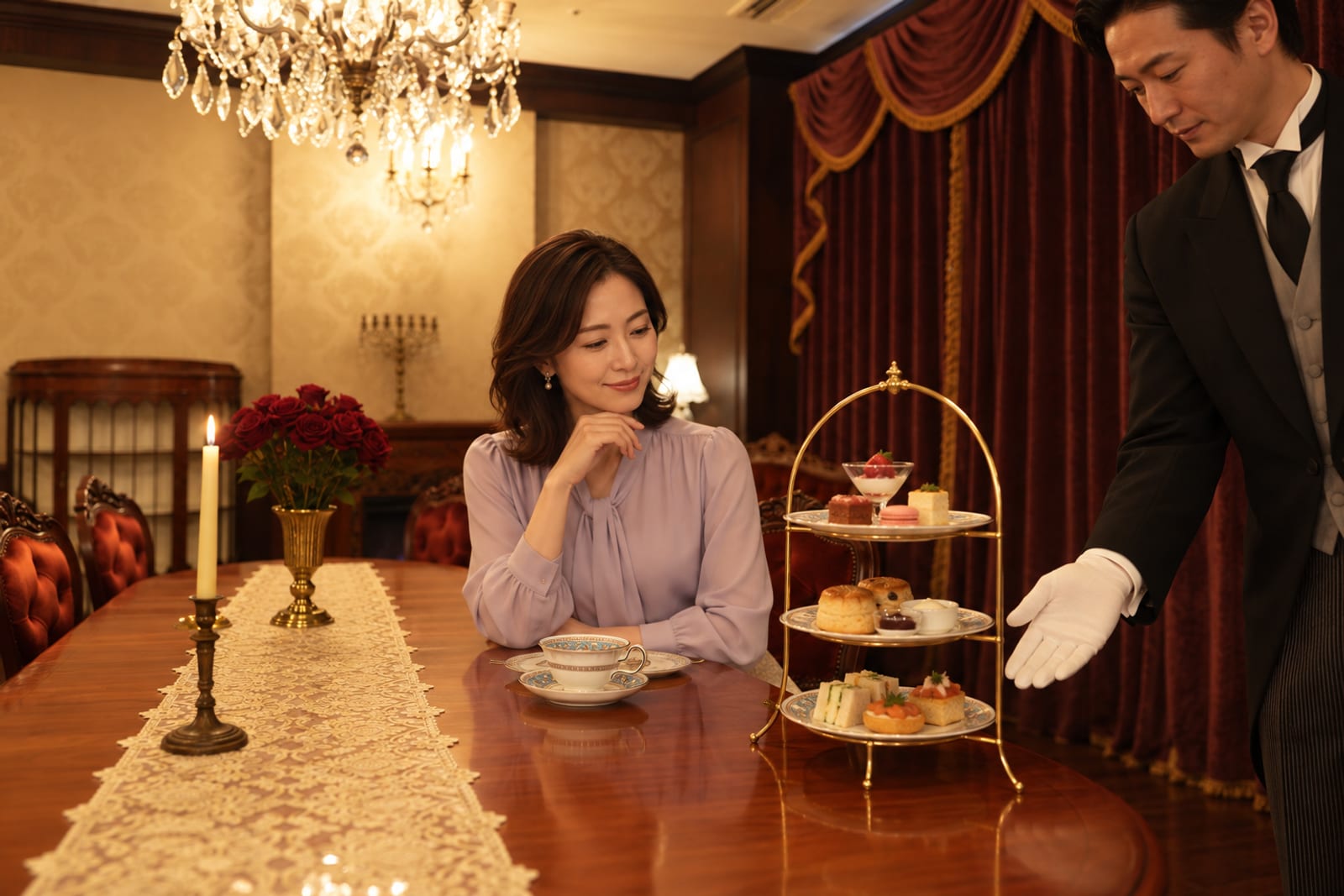
Composing with a chandelier is not a matter of placing the light itself in the centre, but of deciding the height, distance and line of sight between it and the person. In the dining room, linking a seated figure with the light overhead brings the vertical of the house into a single frame.
If the person is the subject, let the chandelier sit at the top of the frame at a size that does not pull the eye from the face. If the light is the subject, place the person small and show the outline of the crystal and the line rising to the ceiling. In either case, the photographer moves half a step at a time until the light no longer seems to sprout unnaturally from the person's head.
The Manor's Maria Theresa chandelier is the furnishing that defines the dining room. Your butler draws out the chair and settles the person's position. Even when shooting from low and looking up, please confirm with your butler the space that keeps clear of the passage and the furnishings.
The point of this article: arrange the chair and the line of sight so as to photograph not the light alone, but the person who spends time beneath it.
IVDo not shoot a mirror head-on; place person and butler on different planes
Composing with a mirror means treating the glass not as a backdrop but as a way to create a second scene within the frame. With the cheval mirror in the wardrobe, a figure adjusting an outfit in the foreground and a white-gloved butler in the reflection convey the before and after of dressing at once.
The photographer avoids the direct front of the mirror and moves sideways until the reflection clears. Check that the person's face is not cut by the edge of the mirror and that the lighting behind does not flare in the glass. Your butler quietly shifts a hand so that the black of the costume and the white of the gloves do not overlap.
A mirror shows more than the photographer sees. Luggage on the floor, light stands and open doors all appear, so look at all four corners of the mirror before pressing the shutter. Your butler moves stray props out of frame, remembers where they were and returns them.
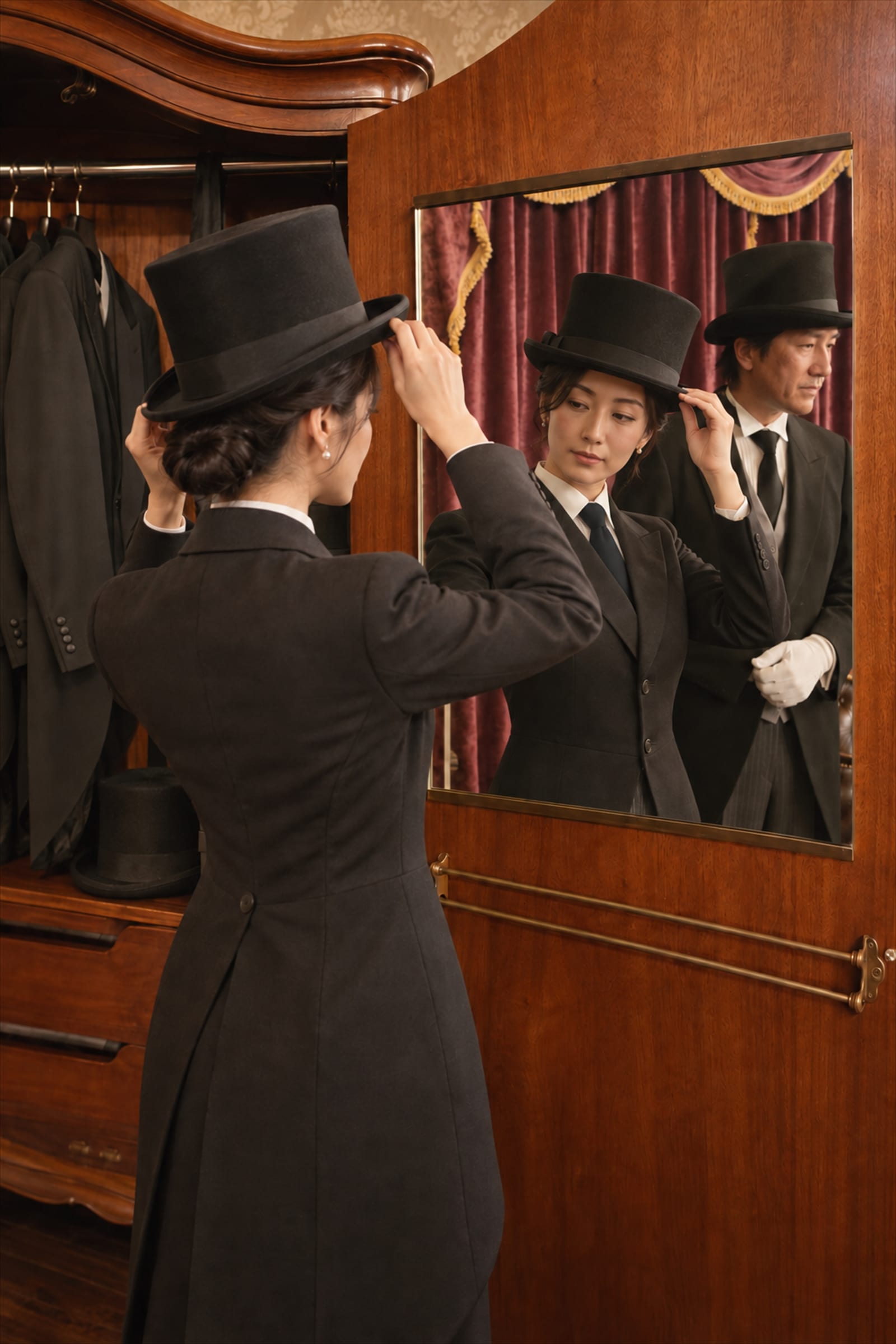
Make the edge of the mirror a second frame
The person before the mirror, the butler within it. Two distances tell the story of dressing.
VFollow white-gloved hands from just before the gesture begins
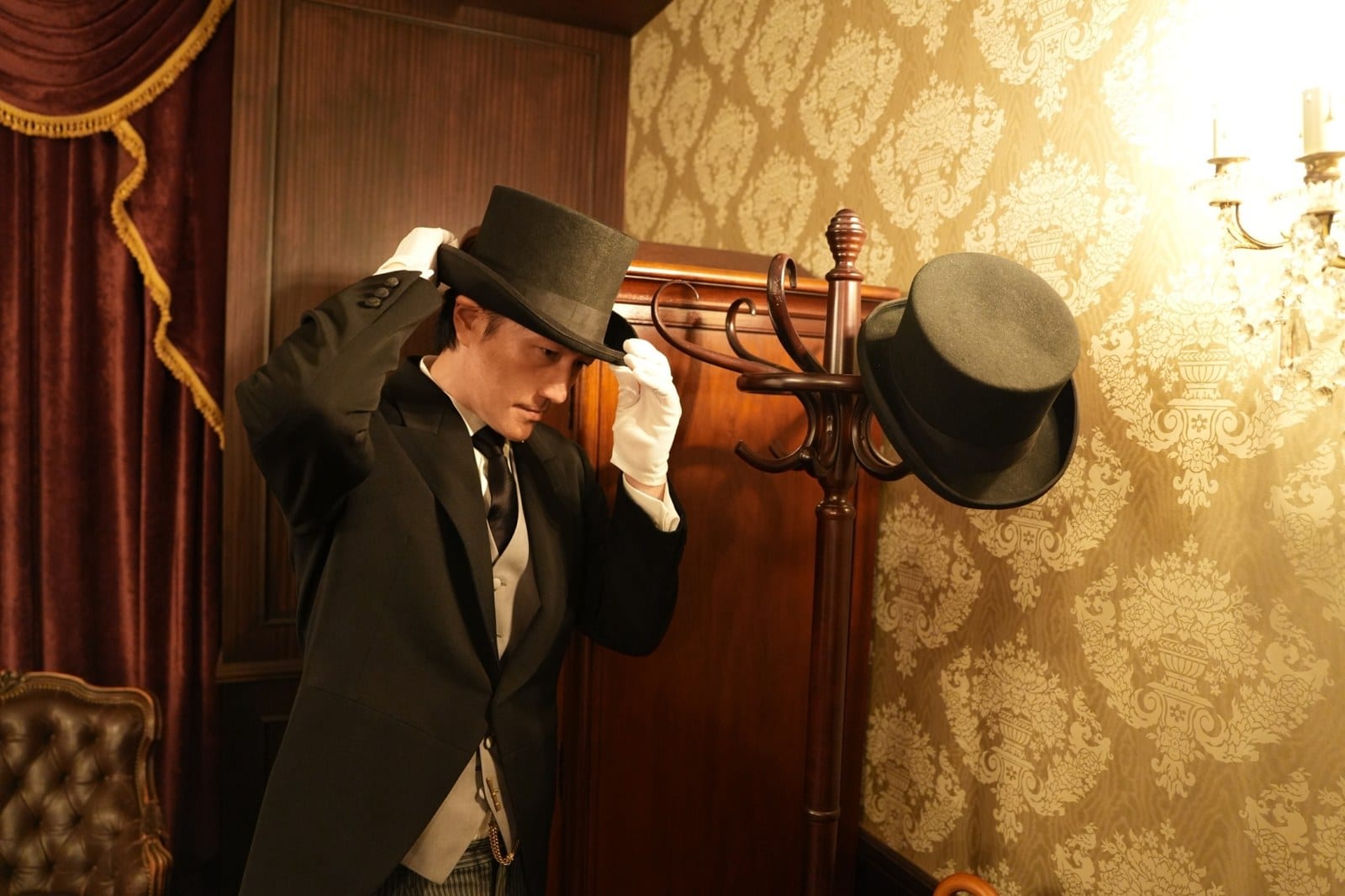
White-gloved hands are the butler's gestures — pouring tea, setting a plate, opening a door, adjusting a costume — photographed together with the person's gaze. Rather than cropping tightly on the hands alone, keeping part of the cup or the door explains what the movement is for and gives the picture its context.
A butler's movement changes shape before touching, while handling, and after withdrawing the hand. Ask where the gesture will begin and choose a position from which you can follow it through. White gloves catch the house lights and read bright, so check that the stitching at the fingertips survives.
In a tea scene, placing the spout, the receiving cup and the watching person's hand in a triangle lets the eye travel naturally. Female and male butlers handle the pieces with the same manner. If you have a preference, please tell us when booking.
VIDoors and the gallery give one frame both depth and a sense of before and after
A composition with depth gives foreground, middle ground and background each a role, and tells the viewer where in the house the person stands. With the double doors as a frame in front, a figure in the gallery and the hall clock beyond, a distance appears that a flat wall alone could never give.
In a scene of doors opening, place the butler's white gloves in the foreground, the person being welcomed in the middle, and the house lights beyond. Leave a little space in the direction the person is walking, so that it is clear whether they are arriving or being seen off. Your butler works the doors, so please tell us in advance the moment you wish to capture.
In the study, bring a desk or chair into the foreground and lead the line back to the shelves and the armour. In the gallery, avoid hugging the wall; look for the position where the floor line runs away into the distance. Choosing one object in the foreground, rather than simply shooting wide, gives the density that belongs to the house.
VIIRed roses and porcelain: one point at which the eye stops
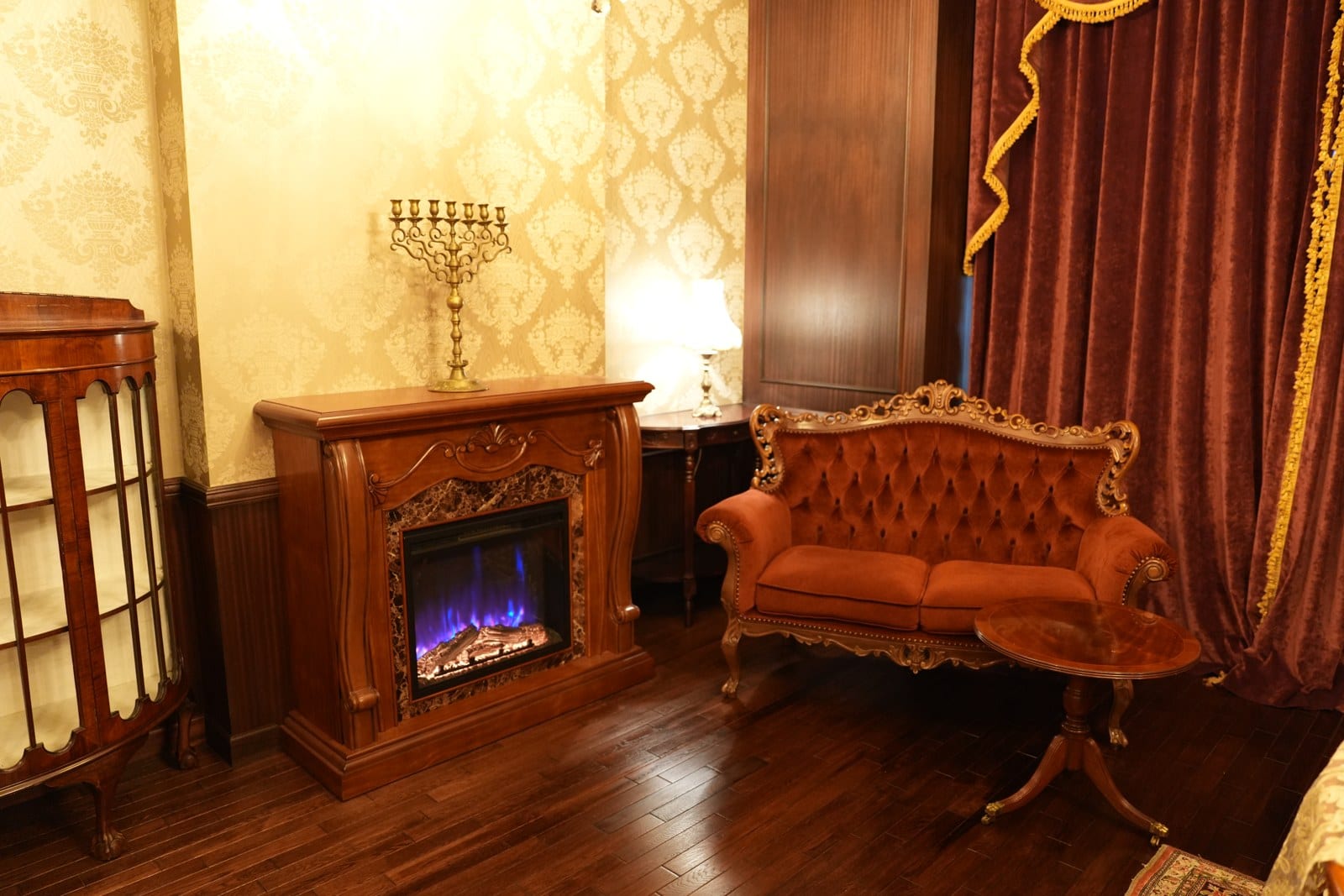
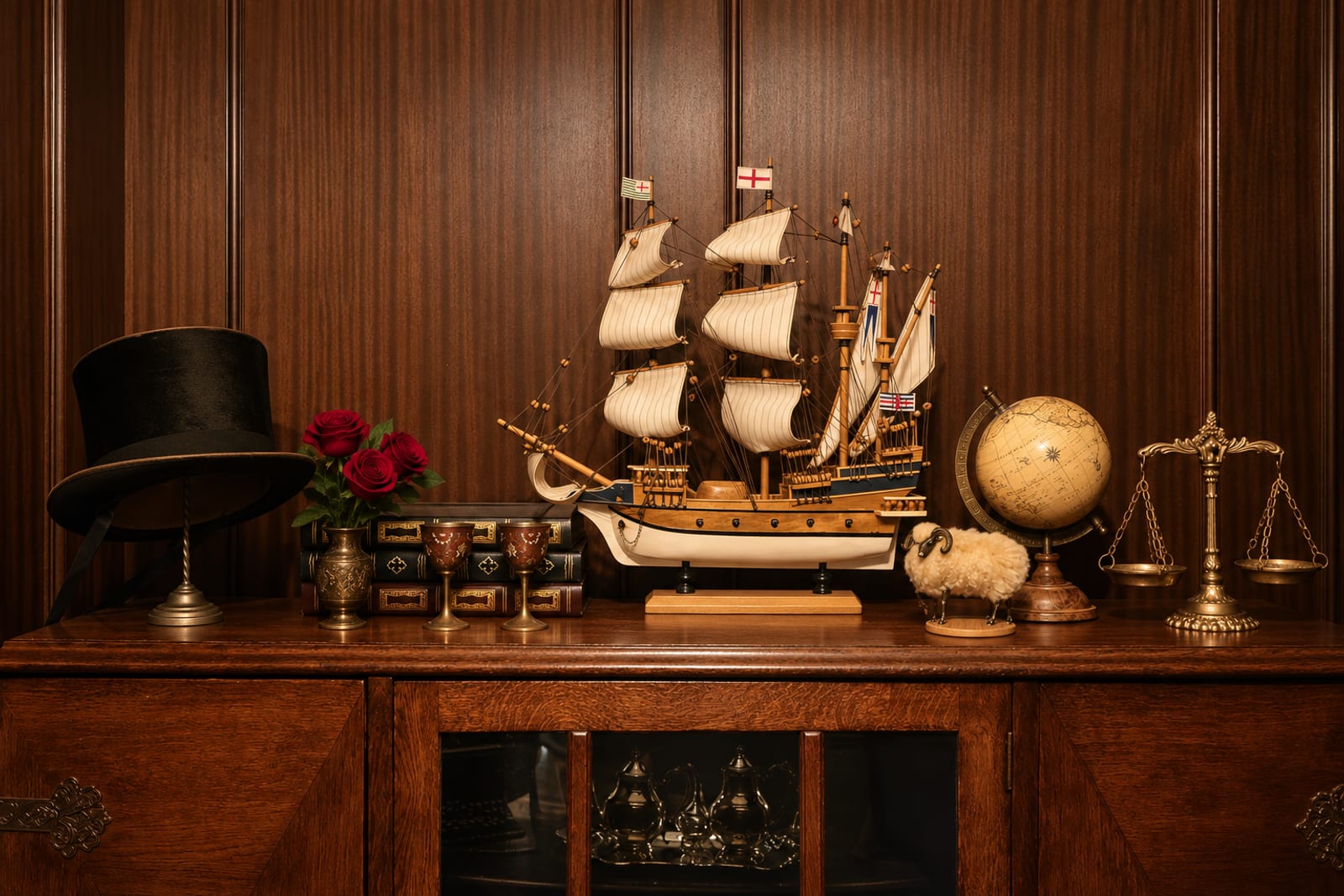
Placing props is not a matter of filling empty space, but of showing where the person's hands and gaze are heading. A red rose answers the wine-red chairs and curtains, so rather than scattering roses through the frame, place one at a single point: the hands, the table or the fireplace.
White porcelain and silver give a bright pause between the red and the wood. To show a pattern, do not lay the piece at a slant; find with your butler the angle at which the surface catches the light. Silver reflects its surroundings, so check that the colours of photographer and equipment do not intrude.
The furnishings are not decorations for photography but pieces that butlers handle in the course of the house's life. Please do not lift or move them yourself; tell your butler which piece you wish to use and where. Your butler handles it in white gloves and returns it to its place after the shoot.
VIIIShoot the same scene wide, then person, then hands, and it becomes a story
Building a shoot means gathering pictures that show place, person and gesture in turn, rather than chasing a single perfect frame. The whole room first, then a mid-shot including the person, and finally white gloves or a cup in close-up: laid side by side afterwards, they join into the time spent in the house.
In the dining room: the chandelier and table in full, a person seated in a chair, then in close on hands at the tea. In the wardrobe: the room of costumes, a figure before the mirror, then fingertips adjusting a hat or collar. Before moving on, check that all three are in hand.
Take the close-ups you need before changing the person's direction or the props. Your butler holds position and waits for the cue to move to the next gesture. Agreeing a single word as the cue between photographer and butler lets a quiet scene proceed unbroken.
IXA briefing before the shoot settles priorities and permissions
A briefing is where you share the pictures you want in words or reference images, and agree the rooms, costumes, furnishings, butler's gestures and the scope of publication. When everyone being photographed, not only the photographer, understands the purpose, discussion of expressions and positions proceeds calmly.
The basis is photography on your own camera or smartphone, with your butler taking commemorative pictures. For commercial shoots, video recording or publication outside the Manor, please tell us the content and the medium when booking. We also take care over the furnishings and any other guests who may appear.
On the day, your butler welcomes you with a bow, settles your luggage and costume, and leads you to the first scene. At the end, the pieces used and their positions are checked, restored, and you are seen off. Think of it not as the shoot alone but as one continuous progress from entering the house to leaving it.
How to separate subject and background in each scene
| Scene | Subject | Kept in the background | Butler's assistance |
|---|---|---|---|
| Dining room | The person or the chandelier | Table, red chairs, porcelain | Draws out the chair and positions the light and the pieces |
| Wardrobe | The person in costume | Cheval mirror, hats, shelves | Adjusts collar and hat, checks the reflection in the mirror |
| Double doors and gallery | The movement of arrival or departure | Doors, floor line, hall clock | Works the doors and gives the cue to start walking |
| Study | The reader, the writer | Desk, bookshelves, armour | Arranges the chair and the small objects to hand |
| Hands at the tea | White gloves and cup | The person's hands, the grain of the table | Holds the same gesture quietly and waits for the cue |
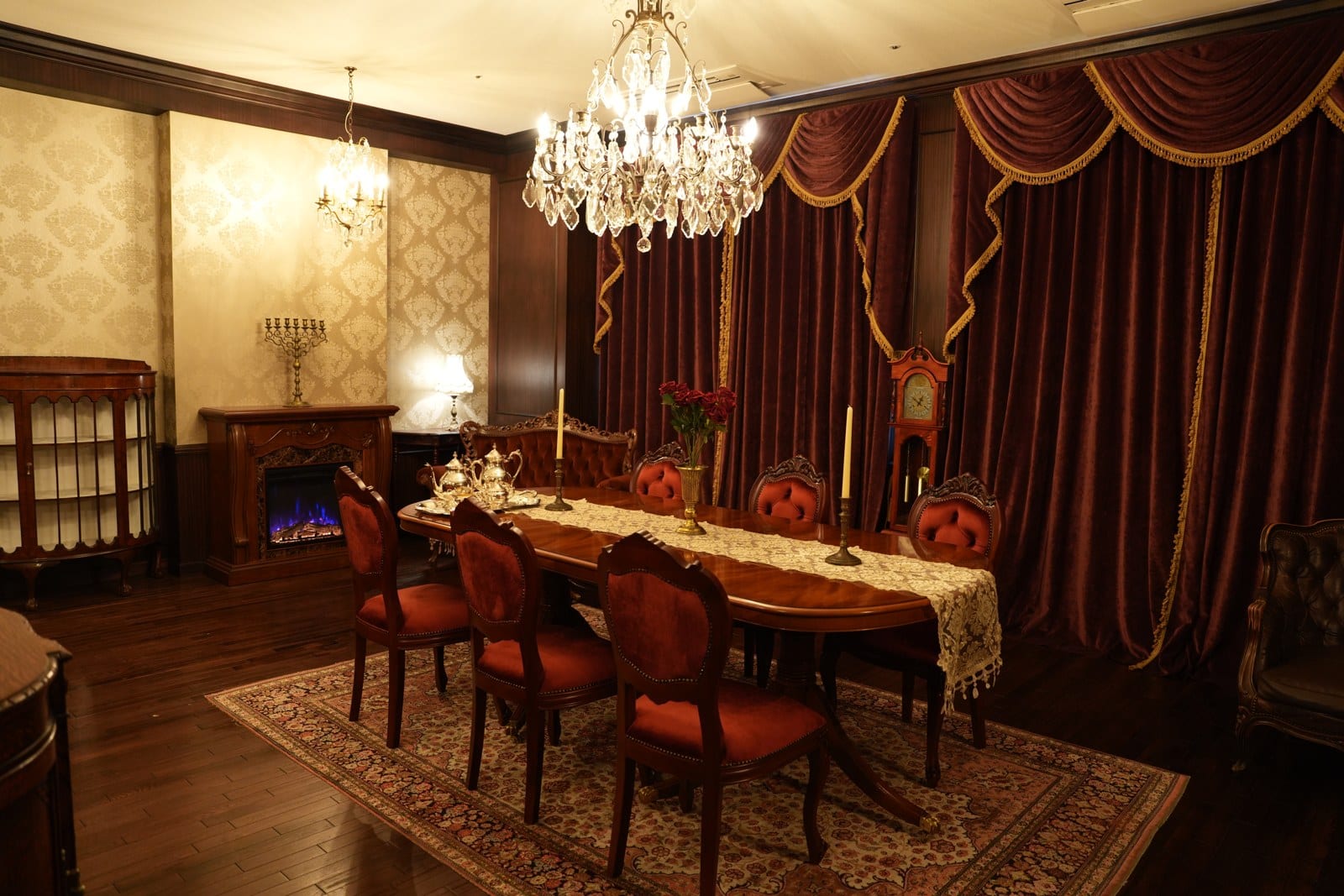
The light and shooting conditions available at the Manor
| Natural light | The Manor has no windows; scenes are arranged with the house lights and studio lighting |
|---|---|
| Studio lighting | Amaran 300C / Aputure Quick Dome 90 |
| Principal house lights | Chandeliers, candlesticks, the lights of the fireplace room |
| Camera | Your own camera or smartphone |
| Butler's assistance | Commemorative photographs, handling of furnishings, gestures, arrangement and progress |
| Guests | Up to six |
Three distances from a single scene
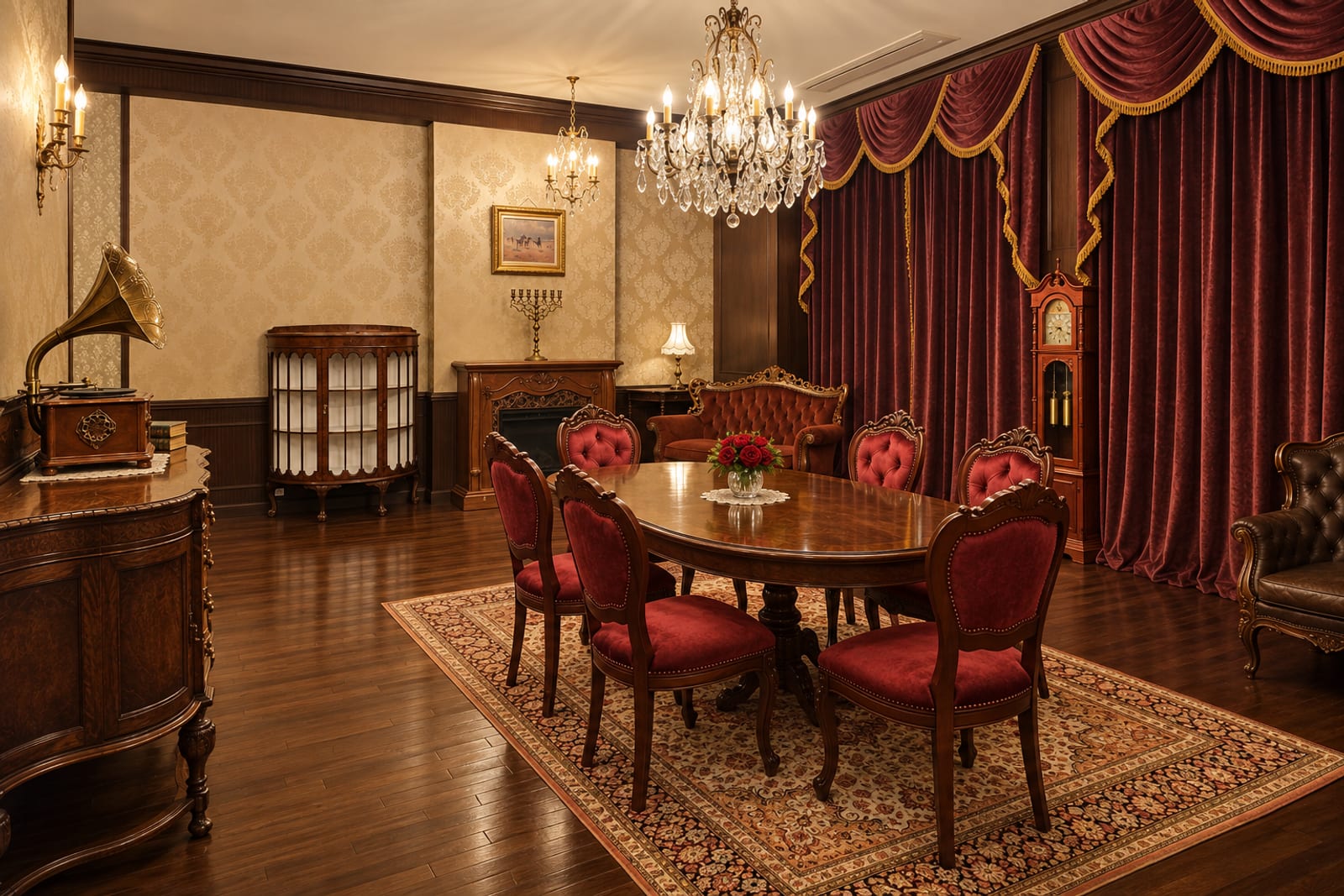
The wide shot that conveys the house
From a distance that shows the character of the room and the person's place in it at a glance, taking in doors and lights.
Read more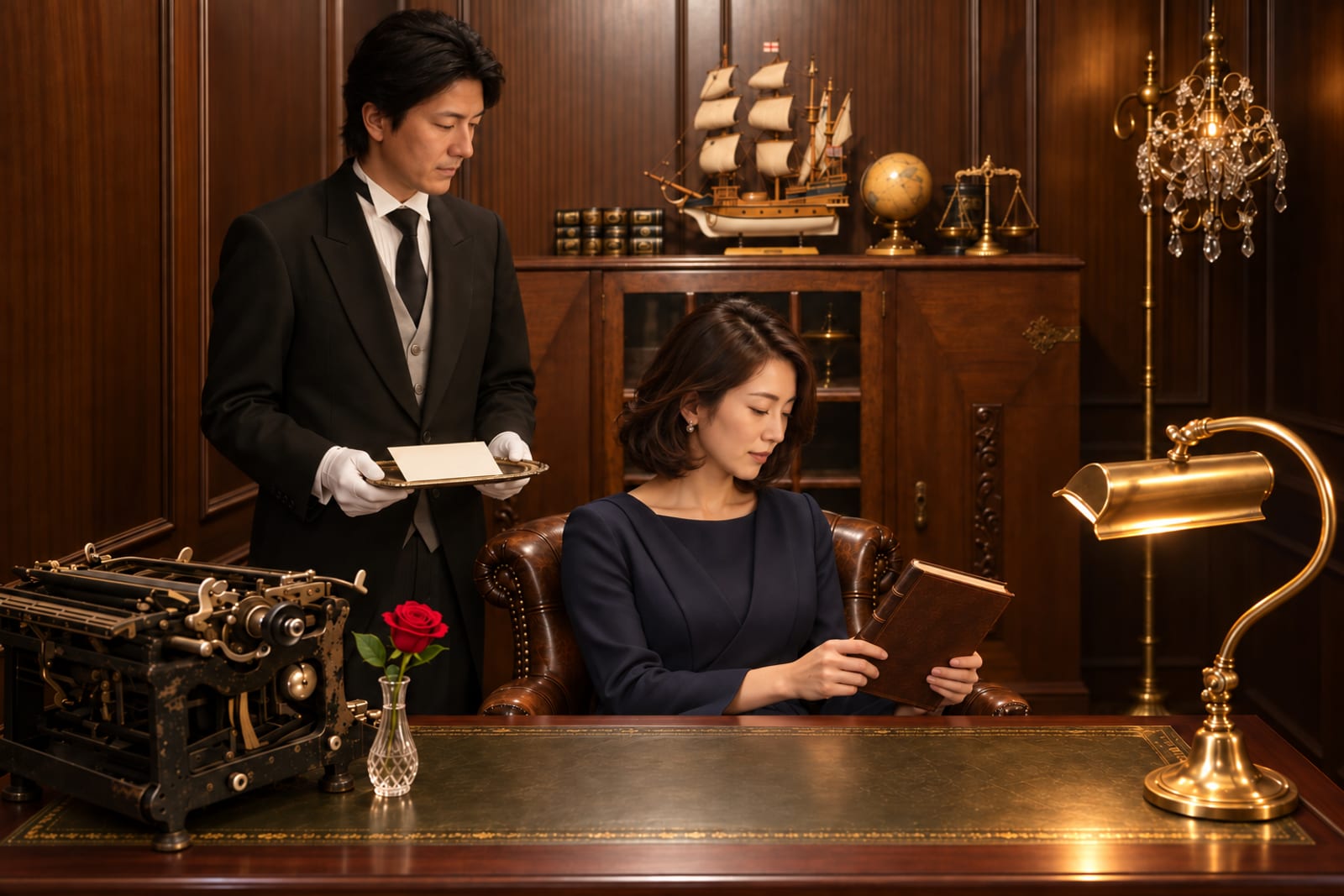
The person and the furnishings
Pairing the person with a single furnishing — a chair, a desk, a mirror — to capture how time is spent.
Read more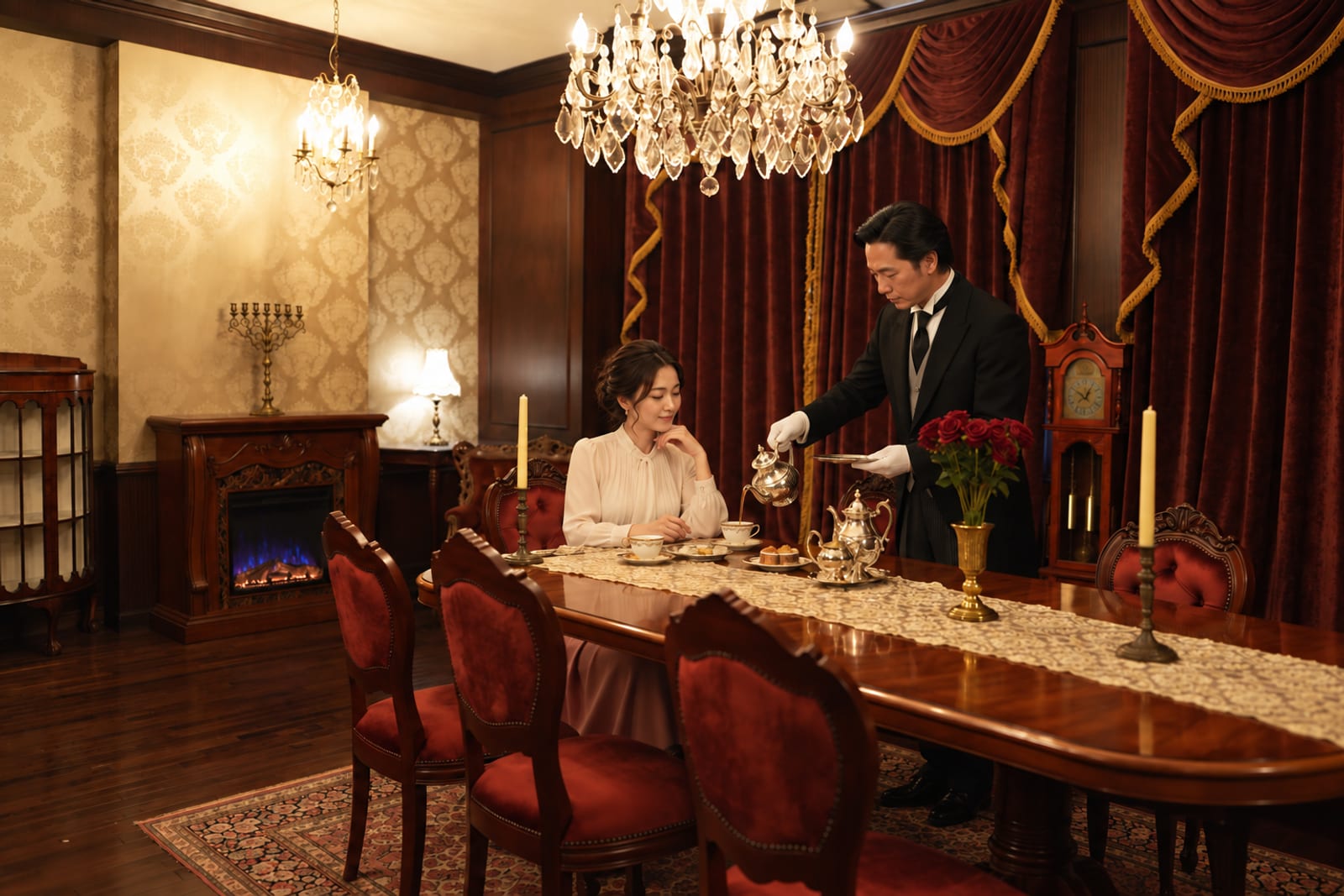
White gloves and the cup in close-up
Keeping enough to explain the gesture, then moving quietly in on fingertips and the detail of the piece.
Read moreOn the day, each scene is completed in five steps
Share the pictures you want
Agree the subject, the rooms, the costumes and the scope of publication with your butler.
Settle luggage and costume
Place luggage out of frame and check the outline of the costume.
Take the reference frame
Compare skin, white gloves, porcelain and wood tones in a single picture.
Keep the wide shot
Take a picture that establishes the place, including doors, lights and the floor line.
Close the distance to the person
Move to a position that conveys the relationship between subject and furnishings, and settle posture and gaze.
What your butler helps with
- Guidance on the scenes and furnishings of the Manor
- Help arranging chairs and small objects
- White-gloved gestures with tea, doors and costume
- Commemorative photographs on your own device
- Safety checks on light stands and the passage
What the photographer decides
- Arranging a photographer
- Editing or delivering the photographs
- Serving meals
- Photography without a butler present
- Commercial publication without confirmed permission
QCan I shoot on a smartphone?
Yes, you may photograph on your own smartphone. First take a reference frame with the person, white gloves and the house lights together, and check brightness and colour.
QWill it be dark without windows?
Scenes are arranged by combining the house lights with the Amaran 300C and Aputure Quick Dome 90. If you tell us in advance which people or furnishings you wish to photograph, your butler checks the passage and the arrangement.
QCan I photograph the chandelier and a person together?
In the dining room you can explore compositions by changing the person's position and the height of the camera. Deciding first whether the person or the light is the subject brings the frame together.
QCan I photograph the butler's white-gloved gestures?
Yes: gestures with tea, doors and costume may all be photographed. If you tell us in advance which movement you wish to capture, your butler settles the starting position and waits for your cue.
QCan a female butler appear in the photographs?
Female butlers are in residence. Please tell us when booking whether you have a preference, and whether the photographs will include the face or hands only.
QMay I move the furnishings or silver myself?
Please ask your butler to move any furnishings or silver. Your butler handles them in white gloves and returns them to their places after the shoot.
About using The Studio
- The manor is never let unattended. A butler is present for every booking, and keys are not handed over
- You are welcome to bring your own food and drink. We do not provide meals
- Please use the antique furnishings under the butler's guidance. The armour, hall clock, porcelain and silver are handled by the butler
- Please consult us in advance about loud sound or the use of naked flames
- Prices shown include tax
You may also wish to read

Leave the light to your butler.
Tell us the scenes you wish to capture. Your butler will have the lights and props ready for you.